


When you hear a new drivetrain noise, you can usually diagnose differential vs gearbox noise by matching when it happens (acceleration, coasting, turning, shifting) to how it sounds (whine, grind, clunk) and what changes it (vehicle speed, engine RPM, gear selection).
Next, you’ll learn a simple road-test workflow that isolates the noise source in minutes—without disassembly—so your gearbox noise diagnosis is based on repeatable clues instead of guesses.
Then, you’ll map each sound (whine vs grind vs clunk) to the most likely internal causes in the differential or transmission, including Low fluid noise and how to confirm with basic checks.
Introduce a new idea: you’ll also get safe-to-drive guidance and practical expectations for Diagnosis cost and typical next steps, so you can decide whether to keep driving, schedule service, or stop immediately.
What’s the difference between differential noise and gearbox/transmission noise?
Differential noise is typically tied to vehicle speed and load transfer, while gearbox/transmission noise often changes with gear selection, shifting, or engine RPM-related conditions. Next, that core difference becomes your “filter” for every test you do on the road.
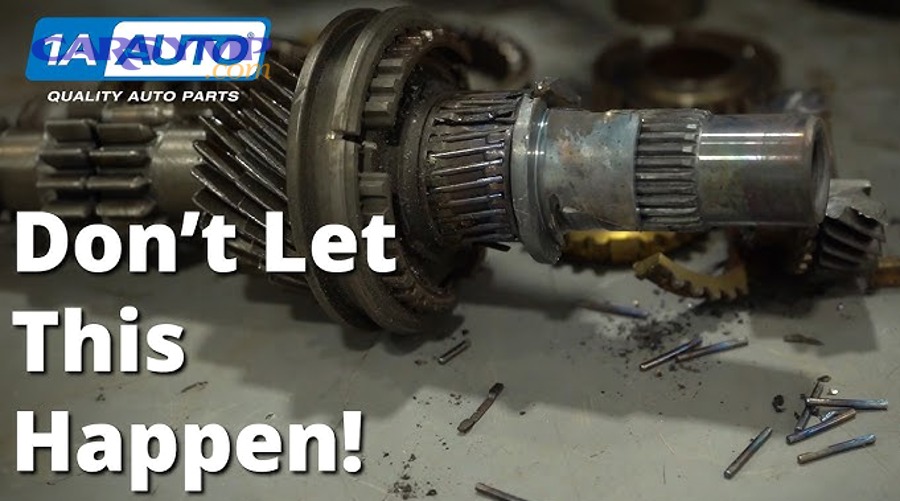
To illustrate the difference clearly, think in terms of what each unit is responsible for:
- The differential splits torque left/right and allows the wheels to rotate at different speeds in a turn. Its noises often come from ring-and-pinion gear mesh, pinion bearings, or carrier bearings, so the sound commonly scales with road speed and changes under load vs coast.
- The gearbox/transmission changes torque and speed through different ratios. Its noises often depend on which gear set is engaged, bearing loads on specific shafts, and hydraulic pump behavior (automatics). That’s why the sound can change when you shift gears or when the engine speed changes.
A practical way to keep terminology consistent:
- Use “differential noise” when you’re talking about final drive/ring-and-pinion/carrier issues.
- Use “gearbox noise” or “transmission noise” when you’re talking about the gearset/bearings/synchros/pump/valve body depending on transmission type.
What does the differential do, and where is it located in FWD vs RWD vs AWD?
The differential is the torque-splitting gearset that lets left and right wheels rotate at different speeds, and it may sit in the transaxle (FWD), in a rear axle (RWD), or in multiple locations (AWD). Next, location becomes a powerful clue because noise travels through different structures.
In real-world diagnosis, “where you feel it” matters as much as “what you hear”:
- FWD (front-wheel drive): The differential is usually inside the transaxle (shared casing with the transmission). That means differential and gearbox noises can blend, so you rely more on load vs coast and gear-selection changes.
- RWD (rear-wheel drive): The differential is in the rear axle. Noise often seems to come from behind you and may resonate through the trunk/floor. Road-speed-linked whine under load is a classic pattern.
- AWD/4WD: You may have a rear differential, a front differential (sometimes in the transaxle), plus a center differential or transfer case. Multiple torque paths create more “look-alikes,” so you must test carefully.
Driver guide tip: If the noise “moves” when you change where torque is sent (like AWD coupling behavior), treat that as a separate diagnostic branch later in the article.
What does the gearbox/transmission do, and why do its noises change with gear selection?
The gearbox/transmission multiplies torque through selectable ratios, so its noises often change when different gear pairs or shafts are loaded. Then, gear selection becomes your easiest “yes/no” clue for transmission involvement.
The biggest gearbox noise triggers are:
- Gear mesh and bearings (manual): A worn input bearing can whine in certain conditions; damaged gear teeth can whine in one gear; worn synchros can cause grinding mainly during shifts.
- Hydraulic pump and planetary sets (automatic): Pump whine may be more obvious at idle/low speed and can change with fluid condition. Planetary whine can show in specific ranges and loads.
- Belt/chain behavior (CVT): CVTs can create a distinctive “ratio sweep” tone as RPM and load change.
The key hook: If the noise changes significantly when you shift gears (while holding similar road speed), it leans toward gearbox/transmission rather than a standalone rear differential.
Is the noise tied to vehicle speed or engine RPM (and why does that matter)?
Yes—vehicle-speed-tied noise usually points to the differential/final drive or rotating driveline parts, while RPM/gear-dependent noise more often points to the gearbox/transmission. Next, you’ll run quick comparisons that separate these patterns with minimal tools.
Here’s the diagnostic logic in plain terms:
- Vehicle speed drives how fast tires, axles, differential gears, and driveshaft components rotate.
- Engine RPM and gear selection determine which shafts and gears inside the transmission are loaded and how they spin relative to the vehicle.
Does the pitch rise with vehicle speed even when RPM stays similar?
Yes—if pitch rises with vehicle speed while engine RPM is held roughly similar, the noise is more likely in the differential/final drive or another speed-linked rotating component. Then, you confirm by repeating the same speed in a different gear.
A practical road test:
- Find a safe, steady road where you can hold 40–60 mph smoothly.
- Hold a constant speed in one gear.
- Shift up or down so engine RPM changes, but vehicle speed stays close.
- Listen:
- If the noise pitch and volume stay similar, it’s speed-linked (diff/driveline/wheel bearing more likely).
- If the noise changes strongly, it’s gear/RPM-linked (gearbox more likely).
Why it works: A rear differential doesn’t care what gear the transmission is in—it mainly “cares” about driveshaft and wheel speed plus torque direction.
Does the noise change noticeably when you shift gears at the same road speed?
Yes—if the noise changes noticeably when you shift gears at the same road speed, gearbox/transmission noise becomes the leading suspect because you’re changing which gear pair and shaft loads are active. Next, you’ll refine whether it’s a single gear issue or a shaft/bearing issue.
Use this quick classification:
- Noise only in one gear (e.g., only 3rd): Likely gear tooth damage or wear specific to that gearset.
- Noise in several gears but not all: Could be shaft bearing wear, gearset alignment issues, or load path changes.
- Noise in all gears including neutral-clutch-in scenarios (manual): Can implicate input shaft bearing or clutch release components depending on exact behavior.
A mini table helps you see the pattern quickly. This table compares what “same speed, different gear” typically means.
| What you observe | Most consistent interpretation | Why it points that way |
|---|---|---|
| Noise stays the same at the same road speed | Diff/final drive or other speed-linked rotating parts | Their speed is tied to vehicle speed, not selected gear |
| Noise changes with gear selection | Gearbox/transmission | You changed active gear mesh and shaft load |
| Noise changes with both speed and gear | Mixed or ambiguous | Could be transaxle diff, AWD system, or multiple issues |
Does it happen on acceleration vs deceleration (load vs coast)?
Differential noise often reveals itself by load direction: pinion/ring gear contact and bearing load change between acceleration and deceleration, while gearbox noise may track gear engagement and shaft load more than coast vs load alone. Next, you’ll use this “load flip” to pinpoint the most likely unit.
Common patterns:
- Whine on acceleration (on-throttle): Often associated with differential gear mesh under drive torque.
- Whine on deceleration (off-throttle/coast): Can point to different contact patterns or bearing loads in the differential.
- Noise that appears when you lift and disappears when you apply throttle: Often a driveline lash, mount, or joint clue—though some differential whine patterns behave this way too.
Evidence supports the idea that axle/differential whine is a steady tonal phenomenon tied to hypoid gear behavior under torque. According to a study by Loughborough University from the Wolfson School of Mechanical & Manufacturing Engineering, in 2011, axle whine is described as a continuous tonal sound emitted from the differential unit’s hypoid gears and induced by torque variations. (Source: scispace.com)
What does each sound usually mean: whine vs grind vs clunk?
There are three main sound families—whine, grind, and clunk—and each points to different failure mechanisms depending on whether the differential or gearbox is involved. Next, you’ll match sound type to cause using a “Car Symp” checklist approach that prevents misreads.
Think of this as your Car Symp (car symptom) decoder:
- Whine: tonal, steady, rising pitch—commonly gear mesh or bearings
- Grind: rough, rasping, metal-to-metal—often synchros, damaged gears, or severe bearing failure
- Clunk: impact sound—often lash, mounts, joints, or sudden torque take-up
What does a high-pitched whine suggest in a differential vs in a gearbox?
Differential whine is most often a steady, speed-related tone that changes with load direction, while gearbox whine more often changes with gear selection or specific operating ranges. Then, you can separate the two by testing “same speed, different gear” plus “load vs coast.”
Differential whine usually connects to:
- Ring-and-pinion contact pattern changes (wear, setup, or damage)
- Pinion bearing wear (often changes between drive and coast)
- Carrier bearing wear (can be steady and speed-linked)
- Lubrication issues (low/contaminated gear oil increases wear/noise)
Gearbox whine usually connects to:
- Gear tooth wear or pitting on a particular gearset
- Input/output shaft bearings
- Automatic pump or line pressure behavior
- CVT belt/chain or pulley surface behavior
If you need a deeper “sound quality” angle, research on axle gear noise emphasizes that tonal whine is not always captured well by simple overall dB measurements and benefits from sound quality metrics. According to a study by Inha University from the Mechanical Engineering department, in 2021, researchers described axle gear whine as a key sound quality issue and proposed objective evaluation methods beyond only A-weighted sound pressure level. (Source: researchgate.net)
What does grinding indicate, and is it more likely transmission-related?
Yes—grinding is more likely transmission-related because it commonly comes from synchronizer mismatch, clutch release issues, or damaged gears/bearings that scrape under load. Next, you’ll separate shift-related grind from constant grind, because they mean very different things.
Two main grinding patterns:
- Grinding during shifts (manual):
- Worn or damaged synchros
- Clutch not fully disengaging (hydraulics, cable, or clutch wear)
- Incorrect fluid or severe internal wear
- Grinding while driving (not just shifting):
- Severely worn bearings or gears
- Potentially dangerous if accompanied by vibration, metal-on-metal sound, or sudden changes
Safe-to-drive guidance: a true grinding noise that grows quickly or comes with loss of drive is a “stop and inspect” situation. Grinding implies contact that can rapidly create metal debris and secondary damage.
What causes clunks, and how do you separate diff lash from mounts/CV/U-joints?
Clunks usually come from slack being taken up—either in the differential (backlash/lash) or in mounts and driveline joints—so you separate them by when they occur and whether they repeat over bumps vs torque changes. Then, you confirm with simple stationary and low-speed tests.
Common clunk sources grouped by trigger:
- Torque on/off clunk (apply throttle then lift):
- Worn engine/trans mounts
- Excess driveline lash (U-joints, CV joints, splines)
- Differential backlash that’s become excessive
- Shift-to-drive/reverse clunk:
- Normal driveline take-up can be mild
- Harsh clunk suggests mounts, worn joints, or excessive lash
- Bump-related clunk: More likely suspension-related than diff/trans
Quick isolation ideas (no disassembly):
- Parking lot test: gentle on/off throttle at 10–20 mph—listen for repeatable torque-takeup clunk.
- Reverse-to-drive engagement: note whether the clunk is mild (often normal) or harsh/violent (needs inspection).
- Vibration through the shifter or floor: more common with mounts or center tunnel driveline issues.
Does turning, cornering, or reversing help pinpoint differential vs gearbox noise?
Yes—turning and reversing can strongly narrow the source because different components load up in corners, while gearbox noise is usually less “left vs right” sensitive unless it’s related to transaxle/diff internals or mounts. Next, you’ll use directionality and tight-turn behavior to separate look-alikes.
Turning changes what matters:
- Wheel bearings and CV joints often change noise with left/right load.
- Differentials can change under corner load, especially with limited-slip behavior.
- Many gearbox noises remain more tied to gear selection and RPM than to turning direction.
Does the noise get louder when turning left or right?
Yes—if noise gets louder when turning left or right, wheel bearings or CV joints become more likely than a standalone gearbox, while a differential may change but usually not as cleanly “one direction louder.” Then, you verify by repeating the same turn at the same speed and throttle.
A simple rule of thumb:
- Wheel bearing roar/rumble often increases when the failing bearing is loaded (the “outside” wheel in a turn is loaded more).
- CV joint clicking is often more obvious on acceleration while turning at low speed.
- Differential whine may not flip as dramatically left vs right unless other factors are involved (like axle bearings or load distribution).
Is there chatter or shudder on tight turns at low speed?
Yes—chatter or shudder on tight turns at low speed often points to limited-slip differential behavior or incorrect/aged fluid, though CV joint issues can mimic it. Next, you connect the symptom to the simplest confirmation step: fluid type and behavior pattern.
What LSD chatter tends to look like:
- Low-speed tight turn (parking lot)
- More noticeable when warm
- Feels like skipping, hopping, or binding
What CV issues tend to look like:
- Clicking or snapping sounds on turning acceleration
- Often more “rhythmic” per wheel rotation
If the vehicle uses an LSD, the correct friction modifier or correct fluid spec can matter a lot—this is a classic case where “noise” is partly a lubrication behavior rather than broken parts.
Does the noise show up mainly in reverse (or only in one gear)?
Reverse-only noise often suggests a gear-specific issue (like an idler gear in a manual) or engagement/take-up behavior, while noise in only one forward gear strongly suggests a gearbox gearset problem rather than a differential. Then, you narrow whether it’s normal behavior or a warning sign.
Common patterns:
- Manual transmission reverse: Straight-cut gears and idler arrangements can sound louder by design. A sudden new whine or grind in reverse is not “normal,” but some extra gear noise can be.
- Automatic reverse engagement: A mild thunk can be normal; harsh engagement can indicate mounts, driveline lash, or hydraulic issues.
- One-gear-only whine: Strongly gearbox-related, because the differential doesn’t “switch gears.”
What quick checks can you do at home before booking a shop?
You can do three high-value checks at home—fluid condition, leak/mount inspection, and driveline play observation—to narrow differential vs gearbox noise and reduce the risk of driving on a failing unit. Next, you’ll apply Low fluid noise and how to confirm without turning this into a teardown.

Before anything: keep it safe. If you’re lifting the vehicle, use proper jack stands and a flat surface. If you’re unsure, skip under-car checks and go straight to a shop inspection.
Can low or wrong fluid cause differential or gearbox noise (and what does the fluid tell you)?
Yes—low or incorrect fluid can cause both differential and gearbox noise because lubrication film breaks down, raising friction, heat, and gear/bearing wear, and fluid appearance can reveal whether damage is already progressing. Then, you confirm with level checks and condition clues.
Here’s what to look for:
- Low level: can cause whining or growling that worsens with speed/load.
- Burnt smell: indicates overheating and degraded lubrication.
- Metallic glitter: suggests wear; chunks suggest severe damage.
- Wrong fluid type: can alter noise and shift quality (especially critical for automatics and some manuals).
How to confirm low fluid as the noise trigger:
- Check for visible leaks around seals and housings.
- Verify correct fluid spec for the unit (differential gear oil vs ATF vs specific manual fluid).
- If you top off and the noise improves quickly, it strongly supports lubrication involvement—but you still need to find the leak or root cause.
This is where good diagnosis prevents expensive mistakes: low fluid can be the cause, the consequence (leak), or both.
Should you check for leaks, mounts, and driveline play (and what’s “normal”?
Yes—checking for leaks, mounts, and obvious driveline play matters because many clunks and some hums come from mounts/joints rather than internal gears, and a visible leak can turn a minor whine into a major failure. Next, you’ll focus on the simplest “high signal” observations.
Checklist:
- Leaks:
- Differential cover, pinion seal, axle seals
- Transmission pan or case seams (automatic), axle seals (transaxle)
- Mounts:
- Torn rubber, collapsed mounts, excessive engine rock when shifting from P→D or D→R
- Driveline joints (as visible):
- Torn CV boots, slinged grease
- Rusty/loose U-joints (where applicable)
What’s “normal” depends on vehicle design, but a good general rule is: if movement is clearly excessive or you can hear/feel a sharp clunk with gentle torque changes, it’s worth inspection.
When should you stop driving and get it inspected immediately?
Yes—stop driving if you hear loud grinding, sudden banging/clunking with loss of drive, severe vibration, or you find major fluid loss, because these signs suggest rapid damage and safety risk. Then, you treat the diagnosis as urgent rather than “wait and see.”
Immediate-stop triggers:
- Grinding that gets louder within a short drive
- New, harsh clunks with jerks or loss of power delivery
- Smoke, burning odor, or visible fluid pouring out
- Warning lights plus abnormal shifting (automatic)
- Vehicle feels unstable or shudders heavily under load
In short, if the sound is accompanied by changes in drivability, treat it as a safety issue and avoid “one more trip.”
What special cases can mimic differential or gearbox noise, and how do you confirm the source?
Differential vs gearbox noise can be mimicked by AWD components, wheel bearings, CV joints, and even diagnostic “masking,” so confirmation often requires layout-aware testing or advanced listening tools when basic road tests are inconclusive. Next, you’ll handle these edge cases without losing the main diagnostic thread.
This section expands micro-semantics—the “what it’s not” side—so you don’t swap the wrong part.
How do AWD/4WD systems (transfer case/center diff) change the diagnosis?
AWD/4WD systems add another torque path, so a whine or rumble may come from the transfer case or center differential and can change with torque split, temperature, or binding—making it feel like a differential or gearbox problem. Then, you use repeatable conditions to isolate it.
Key cues:
- Noise changes when AWD engagement changes (if selectable)
- Binding or hopping sensations in tight turns (can indicate driveline wind-up or coupling issues)
- Multiple fluids to check (transfer case fluid is often neglected)
If basic tests point to “speed-linked” noise but front/rear localization is unclear, AWD components become a prime suspect category.
How do manual, automatic, and CVT transmissions produce different “whine” patterns?
Manual, automatic, and CVT units produce different whine patterns because they use different power transfer mechanisms: gear mesh and bearings (manual), pumps and planetary sets (automatic), and belt/chain ratio behavior (CVT). Next, you match the sound to the transmission architecture.
Pattern hints:
- Automatic pump whine: often more noticeable at idle/low speed; worsens with fluid issues.
- Manual input bearing whine: can change with clutch engagement/disengagement and load.
- CVT ratio sweep tone: can sound like a steady drone that changes character as ratios vary.
These differences matter because the same word—“whine”—can describe several distinct sources.
Can wheel bearings, CV joints, or driveshaft U-joints sound like diff/trans noise?
Yes—wheel bearings, CV joints, and U-joints can sound like differential or gearbox noise because they are speed-linked rotating components, and they often create humming, growling, clicking, or clunking that follows vehicle speed. Then, you separate them using turning sensitivity and vibration feel.
Most common look-alikes:
- Wheel bearing: humming/roaring that changes with left/right loading.
- CV joint: clicking on turning acceleration, often at low speed.
- U-joint/driveshaft: clunk on take-up, vibration under load, sometimes a rhythmic sound.
The core diagnostic tie-back: if the noise is speed-linked but changes strongly with turning direction, a wheel bearing or CV joint climbs higher on the suspect list.
Which advanced tools help confirm the source (chassis ears, frequency apps, shop diagnostics)?
Advanced confirmation tools like chassis ears and frequency analysis can pinpoint where the sound is loudest, which is especially helpful when the noise is masked by road noise or when transaxle differentials blend symptoms. Then, you can justify whether professional diagnosis is worth the cost.
Common tools:
- Chassis ears (wireless microphones): attach to differential housing, transmission case, wheel knuckles, and transfer case to compare sound intensity.
- Frequency analysis apps (FFT): can help you see tonal peaks that track speed.
- Shop diagnostics: lift-run tests, stethoscope checks, fluid inspection, and sometimes teardown estimates.
This is where Diagnosis cost and typical next steps become practical: many shops charge a diagnostic fee that can be applied toward repair, and a clear, repeatable symptom report can reduce labor hours spent “hunting.”
Evidence that combining vibration and acoustic signals improves mechanical fault diagnosis supports why these tools work in principle. According to a study by Inha University from the Mechanical Engineering department, in 2021, researchers emphasized the importance of evaluating axle gear whine with objective sound quality methods because simple overall measures can miss tonal annoyance characteristics. (Source: researchgate.net)
Evidence (summary)
According to a study by Loughborough University from the Wolfson School of Mechanical & Manufacturing Engineering, in 2011, axle whine is a continuous tonal sound emitted from the differential unit’s hypoid gears and is induced by torque variations, reinforcing why load vs coast testing is so informative. (Source: scispace.com)