


Gearbox noise repair costs usually fall into predictable ranges once you match the sound (whine, grind, clunk) to the likely failure area and the repair tier (service, external parts, internal repair, rebuild, replacement). This guide estimates those ranges and explains what each noise typically points to, so you can budget realistically without guessing.
Next, the same noise can mean a cheap fix or an expensive teardown depending on when it happens (neutral vs in gear, acceleration vs coasting, hot vs cold). That’s why this article also frames a practical Whine vs grind vs clunk diagnosis approach that aligns symptom patterns with repair tiers.
Then, costs change sharply by transmission design—manual, traditional automatic, CVT, and DCT do not fail the same way or price the same way. You’ll see how type-specific components (like synchronizers, a torque converter, or a belt-and-pulley CVT) influence what a shop quotes.
Introduce a new idea: you also need to know when a noise is not the gearbox at all, because mislabeling a differential howl or wheel bearing hum as “transmission noise” is one of the fastest ways to overpay—or repair the wrong part.
What are the typical repair cost ranges for common gearbox noises (whine, grind, clunk)?
There are 3 main cost tiers for common gearbox noises—minor (service/external), mid-level (component repair), and major (rebuild/replacement)—based on how deep the repair goes into the transmission assembly and whether hard parts are damaged.
Specifically, the same “noise” can land in any tier, so the smartest estimate starts with ranges plus the conditions that push you up or down a tier.
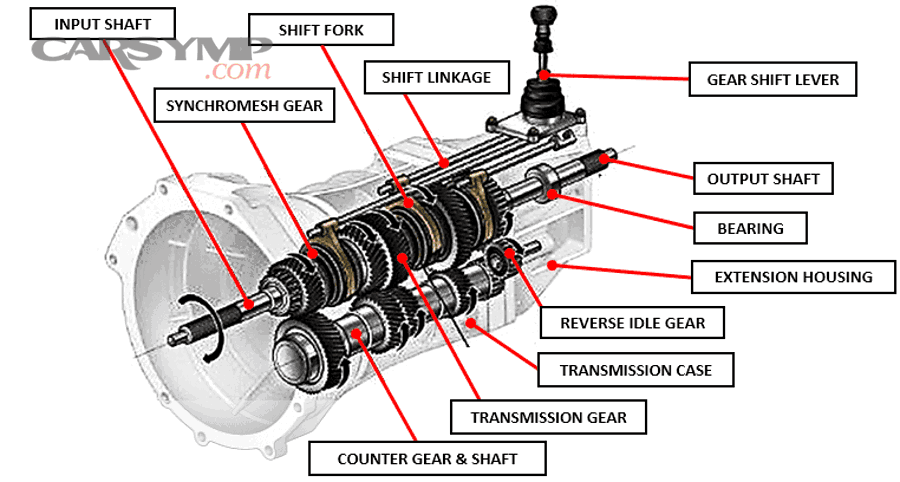
To keep the estimate usable, the table below summarizes common ranges you’ll see quoted in many markets for mainstream vehicles. It’s not a promise—think of it as a budgeting map that becomes accurate once a technician confirms the source during a proper gearbox noise diagnosis.
What this table contains: typical repair price bands by noise type and repair tier, so you can identify the “most likely” spend and the “worst-case” spend.
| Noise type | Minor tier (service/external) | Mid tier (targeted repair) | Major tier (rebuild/replacement) |
|---|---|---|---|
| Whine | ~$150–$450 | ~$600–$1,800 | ~$2,500–$7,100+ |
| Grind | ~$150–$600 | ~$900–$2,500 | ~$2,500–$7,100+ |
| Clunk | ~$150–$800 | ~$500–$2,000 | ~$2,500–$7,100+ |
The top end of “major tier” is driven by whether you’re rebuilding versus replacing the unit, plus vehicle complexity and parts availability. As one widely cited consumer pricing guide notes, new transmission replacement can average $2,900–$7,100 depending on vehicle and options. According to Kelley Blue Book, in 2024, you can “expect to pay an average of $2,900–$7,100 for a new transmission.” (kbb.com)
What does a whining gearbox noise usually cost to fix?
A whining gearbox noise typically costs $150–$450 if it’s fluid-related, $600–$1,800 if a bearing or pump issue is isolated, and $2,500–$7,100+ if it escalates to rebuild or replacement.
However, the key is whether the whine is tied to load, speed, or gear engagement, because that pattern points you toward very different root causes and budgets.
What “whine” often means (and why the price swings):
- Low fluid / wrong fluid / degraded fluid: A simple service may quiet a mild whine because the noise comes from poor lubrication film strength and aeration. This stays in the minor tier.
- Bearing wear (input/output bearings): A high-pitched whine that rises with road speed can be a bearing beginning to pit. If caught early, a targeted repair may be possible on some units; otherwise it becomes rebuild territory.
- Automatic transmission pump whine signs: A whine that changes with engine RPM, especially in a traditional automatic, can point toward pump cavitation, restriction, or wear—often paired with delayed engagement or hot shifting. That pushes the estimate toward mid or major tier because access and contamination risk increase.
How to estimate whine quickly (without over-diagnosing):
- If the whine is mild and stable, appears after a long interval without fluid service, and you have no slipping, you’re often in the lower band.
- If the whine grew quickly, is paired with slipping, burning smell, or metal in fluid, plan financially for rebuild/replacement even before confirmation.
Evidence matters most at the “major tier” edge because replacement pricing dominates budgets. According to J.D. Power (2023), replacement for a mainstream automatic transmission can range $2,500–$5,000, and manuals may range $1,500–$3,000.
What does a grinding gearbox noise usually cost to fix?
A grinding gearbox noise typically costs $150–$600 when it’s caused by clutch release problems or low fluid, $900–$2,500 when synchronizers or related shift components need repair, and $2,500–$7,100+ when gear clash has damaged hard parts and the unit needs rebuild or replacement.
Meanwhile, the most important question is when the grinding happens, because “grinds into gear” is not the same as “grinds while driving.”
Two common grinding patterns with very different price paths:
- Grinding during shifts (especially 1–2 or 2–3):
- Often involves synchronizer wear in manuals or engagement issues related to clutch release (hydraulics, linkage, clutch disc/pressure plate).
- If the clutch is not fully releasing, you can get grinding even with decent synchronizers—meaning you might be in the lower or mid tier.
- Grinding noise while moving in a gear:
- More concerning because it suggests a damaged bearing surface, damaged gear teeth, or debris circulation—this tends to jump toward rebuild.
Why grinding gets expensive fast: Grinding accelerates metal-to-metal contact. That contact creates debris, and debris circulates, which increases the chance the repair stops being “one part” and becomes “everything that touched contaminated fluid.”
A useful way to keep the estimate realistic is to treat grinding as a risk multiplier: even if the first fix attempt is modest, the longer you drive with grinding, the more likely you pay rebuild-level money.
According to a peer-reviewed engineering study of automotive gearbox synchronizers (2019), torsional vibration and lubricant parameters influence synchronizer wear and can lead to gear clash when wear gaps close—an explanation consistent with why “grinding on shifts” often worsens over time if ignored. (sciencedirect.com)
What does a clunking gearbox/driveline noise usually cost to fix?
A clunking noise typically costs $150–$800 when it comes from mounts or external driveline slack, $500–$2,000 when worn driveline joints or related components are involved, and $2,500–$7,100+ when the clunk is internal gearbox damage requiring rebuild or replacement.
More importantly, a clunk is the noise type most often misattributed to the gearbox when the real problem is outside the transmission.
Why clunk estimates vary so widely:
- Mounts and bushings: A failed mount can let the drivetrain “snap” under torque reversal (on/off throttle), producing a clunk that sounds catastrophic but isn’t.
- CV joints / U-joints / driveshaft slack: External driveline components can clunk on takeoff, shifts, or when transitioning from drive to coast.
- Internal backlash or damaged parts: If the clunk is paired with harsh engagement, delayed response, or new vibration, internal damage becomes more plausible—and that’s where budgets spike.
The practical budgeting move is to assume a clunk starts in the minor or mid tier until proven otherwise, but to upgrade your financial expectation if you have other warning signs (slip, burnt fluid, loss of drive, loud rhythmic knocks).
Is it safe to drive with gearbox noise, or should you stop driving immediately?
No, it is not always safe to drive with gearbox noise because it can signal loss of lubrication, hard-part damage, or debris circulation, and those conditions can turn a repair into a full replacement; you should stop driving immediately if the noise is sudden, loud, or paired with slipping or burning odor.
Besides cost, the safety question matters because a failing gearbox can suddenly lose drive or lock into a fault mode depending on design.
Stop driving and tow (high risk):
- Sudden loud grinding or banging
- Slipping that gets worse within minutes
- Burning smell, smoke, or overheating warnings
- Loss of drive (revving without movement)
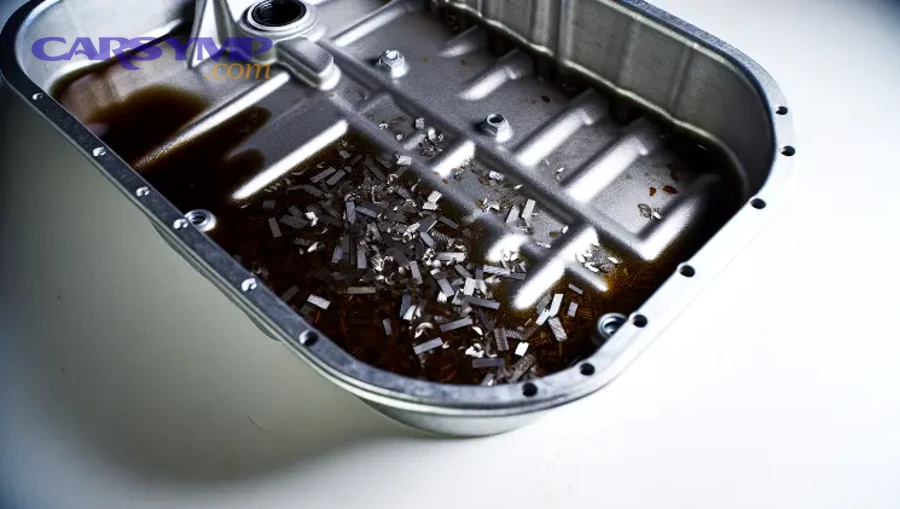
- Visible heavy metal flakes/chunks in fluid or on a magnetic plug
- New warning lights plus harsh shifting
Drive cautiously to a shop (lower risk, short distance):
- Mild whine that hasn’t changed
- Light clunk linked to throttle tip-in, with no slipping
- Noise only under a narrow condition and not worsening
Is a gearbox whine safe to drive with? (Yes/No)
Yes, a mild gearbox whine can be safe to drive with for a short period if (1) shifting remains normal, (2) the noise is stable, and (3) there are no signs of overheating or fluid loss; no, it is not safe if the whine is new, rapidly worsening, or paired with slipping.
However, whine is the noise type most likely to trick you into “it’s fine” while wear continues.
Three reasons a mild whine can still be manageable short-term:
- The gearbox still has functional lubrication and the noise may be early-stage bearing or fluid aeration.
- You can limit load (avoid towing, hard acceleration), reducing heat and stress.
- Early inspection can prevent escalation, especially if the fix is a fluid service or minor external issue.
Three reasons whine can be unsafe:
- Pump starvation or restriction in automatics/CVTs can quickly lead to overheating and clutch damage.
- Bearing failure can shed debris that contaminates the whole unit.
- Low fluid can cause rapid damage across multiple surfaces.
If your whine matches classic automatic transmission pump whine signs—RPM-related, louder when cold, and paired with delayed engagement—treat it as urgent rather than “just a noise.”
Is grinding safe to drive with? (Yes/No)
No, grinding is generally not safe to drive with because (1) it accelerates gear and synchronizer damage, (2) it creates contamination that spreads, and (3) it can lead to sudden loss of drive or inability to select gears.
Meanwhile, the only time “yes, briefly” makes sense is when the grinding is clearly linked to a clutch release problem and you can limp gently to a shop without repeated grinding shifts.
Three reasons grinding is a “stop-the-bleeding” noise:
- Hard-part contact increases each time gears clash.
- Heat rises and lubricant film breaks down.
- Debris multiplies, raising the odds you move from a mid-tier fix into a major-tier rebuild.
If you must move the vehicle, minimize shifts, keep speed low, and avoid traffic situations that force repeated gear changes.
Is a clunk safe to drive with? (Yes/No)
Yes, some clunks are safe to drive with short-term if (1) they come from mounts or driveline slack, (2) there’s no loss of drive or slipping, and (3) the clunk is not getting louder; no, it is not safe if the clunk is accompanied by vibration, delayed engagement, or a repeated knock that follows speed.
More importantly, clunks are where people misjudge urgency because “it still drives” feels reassuring.
Three reasons clunks can be lower risk:
- External components (mounts/joints) often make noise long before catastrophic failure.
- The transmission may be fine, meaning a repair stays in the minor or mid tier.
- Inspection can isolate the source quickly with a lift check.
Three reasons clunks can be high risk:
- Internal damage can progress suddenly if a component is cracking or a gear is damaged.
- Backlash-related clunks can signal wear that leads to loss of drive.
- Repeated knock at speed may indicate driveline failure risk.
How can you tell whether the noise is from the gearbox or something else?
You can tell whether a noise is from the gearbox by checking what it tracks (engine RPM vs road speed), when it appears (neutral vs in gear, clutch in vs out), and how it reacts to steering and load changes, because those patterns separate gearbox noise from wheel bearings, differentials, and accessory drives.
To better understand, treat this as a structured gearbox noise diagnosis rather than a guess, because “sounds like transmission” is not a reliable method.
Is the noise speed-related or RPM-related—and what does that mean?
Gearbox and driveline noise is usually speed-related, while engine accessory noise is usually RPM-related; a speed-related whine that rises with vehicle speed often points toward bearings, gears, or the differential, while an RPM-related whine often points toward pumps, torque converter behavior, or engine-driven components.
However, automatics blur this line because pump speed is tied to engine RPM, not road speed, which is why pattern testing matters.
Quick interpretation guide:
- RPM-related whine in Park/Neutral: suspect engine accessories or (in automatics) pump/torque converter circuit behavior.
- Speed-related hum/whine: suspect wheel bearings, differential, output bearings, or gear mesh.
- Changes only under load (accelerating): suspect gear mesh, mounts, driveline angles, or torque-dependent contact.
This is where a Differential noise vs gearbox noise comparison saves money: differentials often howl or whine on coast vs load in distinctive ways, while gearbox whine may change by gear selection or clutch state.
Does the noise change in neutral vs in gear—and what does that indicate?
Yes, neutral vs in-gear behavior often indicates where the noise is generated: a noise that changes when you press the clutch (manual) can implicate the clutch release system or input bearing area, while noise that appears only under power in a specific gear can implicate gear mesh or that gear’s components.
Meanwhile, this test is one of the fastest ways to narrow down the failure zone without tools.
Common patterns and what they usually suggest:
- Noise in neutral, clutch out; quieter with clutch in: points toward input shaft bearing or clutch-related rotating parts.
- Noise only in one gear: suggests wear localized to that gear set or synchronizer/hub area.
- Noise only when accelerating: suggests load-dependent gear mesh or mount/driveline movement.
This is also where Whine vs grind vs clunk diagnosis stays grounded: whine patterns often “follow” rotation speed, grinding patterns often show up in engagement moments, and clunks often show up in torque reversal moments.
Is it a wheel bearing/differential noise instead of a transmission noise? (Yes/No)
Yes, it can be a wheel bearing or differential noise instead of a transmission noise if (1) the sound changes significantly while turning, (2) it’s strongest at a specific corner of the vehicle, and (3) it tracks road speed more than gear selection.
On the other hand, if the sound changes with gear selection, clutch state, or engagement events, the gearbox becomes more likely.
Simple checks that support a Differential noise vs gearbox noise comparison:
- Turning test: wheel bearing hum often gets louder when loading that side of the vehicle in a turn.
- Coast vs load: differentials can howl differently on throttle vs off throttle.
- Gear selection sensitivity: gearbox noise can change by gear ratio; wheel bearings don’t care what gear you’re in.
When in doubt, a shop can confirm with chassis ears or lift testing in a way that prevents expensive guesswork.
Which repairs most often fix gearbox noises, and what do they cost by repair tier?
There are 5 common repair paths that fix gearbox noises—fluid service, mounts/external driveline repairs, clutch-related repairs, targeted internal repairs, and rebuild/replacement—based on how much of the noise is caused by lubrication, support components, or hard-part wear.
More importantly, matching the repair tier to the noise pattern is how you avoid paying rebuild money for a mount problem—or wasting money on fluid when hard parts are failing.
What low-cost fixes can reduce gearbox noise (fluid service, mounts, linkage)—and when do they work?
Low-cost fixes can reduce gearbox noise when the noise is caused by poor lubrication, excess movement, or misalignment, and they usually work best when the noise is mild and there are no signs of internal damage.
Specifically, these are the fixes most likely to keep you in the minor tier.
1) Fluid service (drain/fill or service with filter where applicable):
- Works best when: noise is mild, maintenance is overdue, fluid level/spec is suspect, no slipping.
- Less likely to work when: loud persistent whine, heavy metal in fluid, repeated grinding, or symptoms worsening quickly.
- Why it helps: restores correct viscosity/friction characteristics and reduces aeration/cavitation risk.
2) Mounts and bushings:
- Works best when: clunk on takeoff, clunk on throttle tip-in, drivetrain “thud” on shifts.
- Why it helps: reduces drivetrain rotation and prevents contact/impact events that sound like internal failure.
3) Linkage/adjustment (mostly manuals):
- Works best when: gear engagement feels vague or notchy and grinding appears only under certain shift patterns.
- Why it helps: improves synchronization timing and engagement quality, reducing clash.
A shop may still recommend a diagnostic road test before committing because noise fixes fail when the real source is elsewhere.
When does a gearbox noise require internal repair or a rebuild?
Yes, a gearbox noise requires internal repair or a rebuild when (1) the noise is persistent and worsening, (2) symptoms include slipping, harsh engagement, or inability to select gears, and (3) inspection suggests contamination or hard-part wear.
Besides the sound, the deciding factor is whether the gearbox can be repaired without opening the case; if not, your quote typically escalates.
Signs you’re likely in internal-repair territory:
- Grinding that continues after clutch system is verified
- Gear-specific whine plus vibration
- Loud bearing howl that rises with speed
- Metallic particles that are more than “fine fuzz” on a magnet
- Overheating, burnt odor, or repeated fault behavior in modern units
What “rebuild” usually includes (why it costs more):
- Full teardown and cleaning
- Replacement of friction elements/bearings/seals as needed
- Inspection of hard parts (gears, shafts, housings)
- Reassembly with updated clearances and fluids
According to a study by Xiamen University from the School of Aerospace Engineering, in 2022, abnormal operating conditions can increase the concentration and size of wear particles in lubricating oil, and monitoring wear particles helps diagnose wear condition of components.
When is replacement cheaper than repair (used vs reman vs rebuild)?
Rebuild wins for cost when the case and hard parts are usable and a reputable shop can control quality, remanufactured units win for convenience and warranty in many cases, and used units win upfront price but lose on risk; the cheapest total option depends on downtime, warranty, and contamination risk.
However, “cheaper than repair” is a full-cost question, not a parts-price question.
Comparison by option :
- Used transmission: best for older vehicles when budget is tight and you can accept uncertainty; risk depends on mileage, donor vehicle, and warranty.
- Rebuild (local): best when you want to keep your unit and a specialist can rebuild reliably; quality depends heavily on shop skill and parts availability.
- Remanufactured: best when you want a standardized build and a stronger warranty; may cost more but reduces uncertainty.
- New: best when required by platform or when total cost of repeated failures is unacceptable, but it’s usually the priciest.
As a practical anchor for budgeting, consumer pricing sources commonly place replacement averages into the several-thousand-dollar range for mainstream vehicles, reinforcing why “major tier” planning matters early. (kbb.com)
How do costs change across manual vs automatic vs CVT vs DCT transmissions?
Manual, traditional automatic, CVT, and DCT transmissions differ in cost because they use different friction systems, control strategies, and rebuildability; manuals often have cheaper common fixes, while CVTs and DCTs can be pricier due to specialized parts, calibration, and stricter fluid requirements.
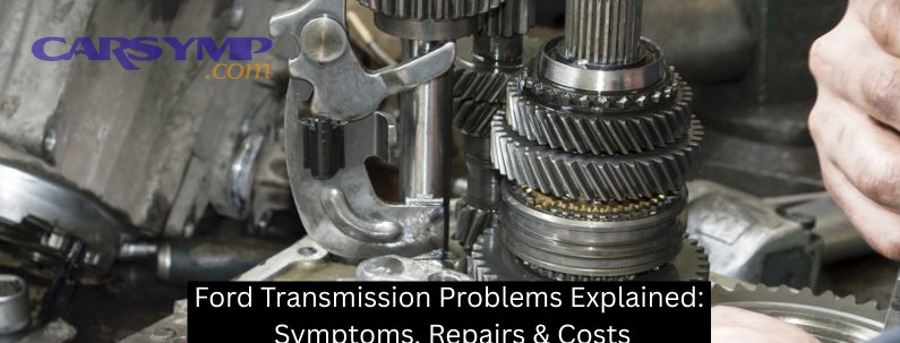
Meanwhile, the same sound label—like “whine”—can point to different components depending on the design, which changes the quote.
Is a manual gearbox noise usually cheaper to fix than an automatic? (Yes/No)
Yes, a manual gearbox noise is often cheaper to fix than an automatic because (1) common causes are external or clutch-related, (2) the unit has fewer hydraulic control components, and (3) some repairs involve simpler parts and labor; no, it is not always cheaper if hard parts or bearings are damaged and the gearbox must be fully rebuilt.
However, you should not assume “manual = cheap,” because a bearing-and-gear rebuild is still major work.
Why manuals are often cheaper in the real world:
- Many “grinding” complaints are clutch release or synchronizer related, and some can be addressed without full internal rebuild.
- External linkage and mounts frequently contribute to symptoms people call “transmission problems.”
When manuals stop being cheaper:
- Persistent gear-specific whine
- Metal contamination
- Output bearing failure
- Damage from prolonged grinding
The smarter move is to price by repair tier, not by transmission type alone.
Why can CVT or DCT noise repairs cost more than expected?
CVT and DCT noise repairs can cost more than expected because these designs rely on specialized friction elements and control calibration, and many internal components are not priced or serviced like traditional gearsets; CVTs can involve belt/pulley wear patterns, while DCTs involve dual clutches and complex mechatronics.
More specifically, strict fluid requirements and limited rebuild parts availability in some platforms can push you quickly toward replacement-level pricing.
Cost drivers that surprise owners:
- Specialized fluids and procedures: incorrect fluid can create noise and damage.
- Calibration/programming: some repairs require relearn or module procedures.
- Mechatronics complexity (especially DCT): noises can pair with control faults, raising diagnostic cost.
- Limited internal parts availability: if parts aren’t sold separately, replacement becomes the default.
This is why the same Whine vs grind vs clunk diagnosis framework must be filtered through transmission type before you accept a quote.
What information do you need to get an accurate quote for gearbox noise repairs?
You need vehicle details, symptom conditions, and basic inspection findings to get an accurate gearbox noise quote, because the price depends on whether the fix is a service, an external component, or an internal teardown and rebuild.

To better understand, think like a shop estimator: they price what they can verify, and they add contingency when the failure mode is uncertain.
What should you document before visiting a shop to speed up gearbox noise diagnosis?
You should document the noise conditions because that information narrows the failure zone and reduces diagnostic time, which often reduces the odds of paying for repeated “try this first” repairs.
Specifically, bring a short, structured symptom note:
- When it happens: cold start, fully warm, after highway driving
- Where it happens: neutral, in gear, only in one gear, while turning
- What triggers it: accelerating, coasting, steady speed, gear change, clutch in/out
- How it changes: louder with speed, louder with RPM, intermittent vs constant
- What else you feel: vibration, delayed engagement, slipping, harsh shifts
- Maintenance history: last fluid service, any recent repairs, leaks noted
- A short audio/video clip: 10–20 seconds with consistent throttle/speed
This is the simplest way to support a clean gearbox noise diagnosis and keep the quote anchored to evidence rather than guesswork.
What questions should you ask to avoid surprise costs?
You should ask about (1) diagnostic fees and what they include, (2) teardown authorization rules, and (3) parts/warranty options because those three items determine whether your “estimate” is a real commitment or a placeholder.
Moreover, good questions protect you from paying twice—once for diagnosis and again for avoidable rework.
Key questions to ask:
- “What’s the diagnostic fee, and does it apply toward the repair?”
- “Will you need to open the transmission to confirm the fault?”
- “If teardown is needed, what’s the maximum teardown charge before I approve further work?”
- “Are you quoting a rebuild, a reman unit, or a used unit—and what warranty comes with each?”
- “What findings would change the quote from mid tier to major tier?”
- “Will you inspect the differential/transfer case too if the noise could be driveline-related?”
These questions align your expectations with how transmission jobs are actually priced.
What rare or easily-misread noise patterns change the diagnosis and cost?
Rare noise patterns can change the diagnosis and cost because they point to specific components (like clutch release bearings, a single gear set, or debris contamination) that either keep the repair localized or force a full rebuild, even when the symptom sounds “minor.”
In addition, these patterns are where people most often confuse gearbox issues with driveline issues, so micro-level clarity protects your wallet.
If the noise goes away when you press the clutch, does that mean it’s the gearbox? (Yes/No)
Yes, it can still be gearbox-related if pressing the clutch changes which shafts are spinning and unloading certain bearings; no, it does not automatically prove the gearbox is failing because clutch release bearings and other clutch-side components can also change sound with pedal input.
However, this pattern is valuable because it narrows the rotating group involved.
How this pattern affects cost:
- If the source is clutch release (throwout) bearing or clutch hardware, the repair may stay mid-tier and be addressed during clutch service.
- If the source is an input shaft bearing inside the gearbox, the repair often escalates because access requires transmission removal and may require internal work.
This is a prime example of why Whine vs grind vs clunk diagnosis must include clutch-state testing before committing to a rebuild quote.
What does a gear-specific whine (only in 3rd/4th) suggest compared with a constant whine?
Gear-specific whine often suggests localized wear in that gear set or related bearings, while constant whine suggests a bearing or pump source that affects multiple operating states; gear-specific noises are more likely to point toward internal wear that becomes rebuild work if it progresses.
Meanwhile, the cost impact comes from certainty: gear-specific noise can make an internal fault more probable, which increases estimate confidence—and often increases the estimate.
What to take from this pattern:
- Gear-specific whine that grows quickly is often a “don’t delay” sign.
- Gear-specific whine plus metal in fluid strongly pushes toward major-tier budgeting.
Can “no noise but slipping” be worse than “noise but shifts fine”? (Yes/No)
Yes, “no noise but slipping” can be worse than “noise but shifts fine” because (1) slipping creates heat that destroys friction materials, (2) heat accelerates fluid breakdown and contamination, and (3) slipping can lead to sudden loss of drive; no, “noise but shifts fine” is not always safer because certain bearing failures can progress quietly until they fail.
More importantly, this antonym-style comparison helps you prioritize urgency based on failure physics, not volume.
Why slipping is financially dangerous:
- It can turn a targeted repair into a full rebuild by damaging multiple clutch packs or friction surfaces.
- It often indicates the transmission is already operating outside proper pressure or friction limits.
So even without dramatic sound, slipping deserves urgent inspection.
Does metal in the transmission fluid always mean rebuild or replacement? (Yes/No)
No, metal in the transmission fluid does not always mean rebuild or replacement because a small “fuzzy” paste on a magnet can be normal wear, especially over long service intervals; yes, it often means major work when the metal is chunky, shiny flakes are abundant, or symptoms are worsening.
However, metal findings are one of the strongest cost escalators because they imply contamination risk across the unit.
How shops interpret metal findings:
- Fine fuzz: may support a service-and-monitor approach if symptoms are mild.
- Flakes/chunks: often supports teardown because hard parts may be shedding material.
- Brassy/gold tint: can suggest bushing or synchronizer material in some contexts, which changes the suspected wear zone.
According to a study by Xiamen University’s School of Aerospace Engineering, in 2022, abnormal wear conditions increase wear particle concentration and size in lubricating oil, which is why heavy debris findings often shift a repair plan from “service” to “investigate internal wear.” (pmc.ncbi.nlm.nih.gov)