


A whining or groaning noise can come from low fluid, and you can usually confirm it by matching when the noise happens (turning vs shifting), then checking the fluid level and condition for the system that matches those triggers. If the noise clearly changes with steering input, power steering fluid (or air in that system) is the most likely cause; if it tracks shift events or transmission load, low transmission fluid (or internal wear) becomes more likely.
Next, you’ll want a fast way to separate “steering noise” from “transmission noise” without guessing, because the confirmation steps differ. Steering noises are often easiest to reproduce at low speed while turning, while transmission noises often follow acceleration, gear engagement, or a particular speed range.
Then, you need a safe, repeatable check routine: verify the fluid level correctly (hot/cold markings matter), inspect the fluid’s color and smell, and do a quick leak check. These steps help you confirm low fluid while avoiding common mistakes like overfilling or using the wrong fluid type.
Introduce a new idea: once you confirm the source, you can decide what to do next—top up, find the leak, or stop driving—using clear thresholds that prioritize safety and prevent expensive damage.
Is a whining or groaning noise a reliable sign of low transmission or power steering fluid?
Yes—whining or groaning can be a reliable low-fluid clue when it (1) appears under the correct system trigger, (2) changes with load or steering input, and (3) is paired with a low level or aerated/dirty fluid—but it is not definitive on sound alone. To reconnect this noise to the right system, the key is to reproduce it under controlled conditions and confirm the fluid evidence next.

Does the noise get louder when turning the steering wheel (especially at low speed)?
If the noise gets louder while turning—especially during parking-lot maneuvers—yes, it strongly points toward power steering fluid level/quality or air in the power steering system because steering input directly loads the steering pump. Below is how to turn that clue into a confirmation instead of a guess:
- Reproduce it safely: With the vehicle stationary and the engine running, turn the wheel slowly left and right. If the sound rises and falls with steering effort, you’re testing the power steering pump under load.
- Avoid full-lock abuse: Holding the wheel against the stop increases pressure sharply and can create noise even in healthy systems. Use a brief touch at near-full lock, then back off immediately.
- Check for aeration signs: Low power steering fluid often allows air to enter. Air creates bubbles, and bubbles create a characteristic whine/groan as the pump cavitates and the fluid compresses. A foamy surface in the reservoir is a useful “confirmation clue,” not just a symptom.
- Pair the sound with feel: If steering feels heavier, jerky, or inconsistent at the same time the noise peaks, that combination supports a low-fluid or aeration diagnosis.
A practical rule: steering-driven noise + bubbles/foam + low reservoir mark is a strong confirmation pattern.
Does the noise change during shifting, acceleration, or at steady cruise?
If the sound changes during shifting or tracks acceleration load, yes, it can indicate low transmission fluid or internal transmission wear—but the confirmation depends on pattern and fluid evidence, not on sound alone. Next, use a “pattern match” approach:
- Delayed engagement into Drive/Reverse: Low fluid can reduce hydraulic pressure, making engagement slower or softer than normal.
- Whine that rises with speed/RPM: A whine that increases with vehicle speed can come from pump, bearings, or gearset noise. Low fluid can worsen these conditions by reducing lubrication and cooling.
- Shift-event change: If the noise appears right as the transmission shifts and then fades, the transmission is a more likely source than the power steering system.
- Manual vs automatic cues: Manual gearboxes often show different behaviors (bearing/gear whine tied to a particular gear). Automatics can show pressure-related symptoms like slipping or flare if fluid is low.
This is where gearbox noise diagnosis matters: the same “whine” word can describe different mechanical realities. The confirm step is still the same—match the noise to the operating trigger, then verify fluid and leak evidence.
Can low fluid cause a “whine,” “hum,” “grind,” or “clunk”—and what does each usually mean?
Yes—low fluid can contribute to several noise types, but each sound has a different “most likely meaning,” so you should treat sound as a directional clue rather than a verdict. Then, use this sound-to-mechanism mapping to narrow the cause:
- Whine (high-pitched): Often linked to pump cavitation (power steering pump or transmission pump), or bearing/gear mesh noise made worse by poor lubrication.
- Groan (lower, strained): Common with power steering under load, especially if fluid is low, aerated, or degraded.
- Hum (steady tone): Can be fluid-related, but also overlaps with wheel bearings, tires, and driveline resonance—confirm with trigger tests (turning vs shifting vs speed-only).
- Grind (harsh, abrasive): More concerning—may indicate metal-to-metal contact, severe bearing failure, or a mechanical issue beyond low fluid. Low fluid can accelerate wear, but grinding often means the system needs inspection now.
- Clunk (impact sound): Often points to mounts, joints, or backlash rather than fluid level alone—though harsh shifts from low ATF can create clunk-like sensations.
To keep your confirmation accurate, treat “whine/groan” as the most fluid-linked pair, and treat “grind/clunk” as a red flag that requires stricter safe-to-drive judgment.
According to a study by J. Gan and colleagues, in 2022, bubble collapse and associated pressure-wave behavior were identified as central mechanisms in cavitation-related phenomena.
What does “low fluid noise” mean in transmission vs power steering systems?
“Low fluid noise” means the sound created when a hydraulic system runs with insufficient fluid volume or compromised fluid flow, causing aeration, cavitation, heat buildup, and reduced lubrication—and the meaning differs because transmissions and power steering systems generate and use pressure differently. To better understand which system you’re hearing, focus on how each one uses fluid and what happens when the fluid supply is not stable.
What is transmission fluid (ATF/gear oil) doing that prevents noise?
Transmission fluid is a lubricant and hydraulic working fluid that reduces friction, carries heat away, and (in automatics) creates the pressure needed to apply clutches and bands smoothly. Next, connect that role to noise:
- Lubrication: Bearings and gear meshes rely on a protective film. When fluid is low, the film thins, friction rises, and whine can increase—especially under load.
- Hydraulic pressure (automatics): Low fluid can allow air into the pump pickup, causing pressure instability that can produce whirring/whining and poor shift quality.
- Cooling: Less fluid volume generally means less heat capacity. Higher heat can thin fluid and worsen noise and wear.
If you’re trying to confirm low ATF, you’re not only confirming a level—you’re confirming that the transmission can maintain stable lubrication and pressure under normal driving.
What is power steering fluid doing that prevents pump noise?
Power steering fluid is a hydraulic medium that transmits pump pressure to provide steering assist while lubricating the pump and steering gear/rack components. Then, connect low fluid to the most common noise pattern:
- Air ingestion and aeration: Low fluid allows air to enter through the return side, hose connections, or a compromised seal. Air bubbles collapse under pressure, creating cavitation-related whine or groan.
- Flow stability: The pump expects a continuous fluid column. Any interruption—low level, restriction, or foaming—can make the pump louder.
- Heat sensitivity: As fluid heats and thins, any pre-existing aeration or wear can become more audible.
According to an industry overview from CarParts.com, cavitation (often tied to air bubbles interacting with pump components) is a common cause of power steering pump whining.
How can you confirm low fluid safely in 10–15 minutes at home?
Use a simple confirmation method with 5 steps—reproduce the noise, identify the trigger (turning vs shifting), check the correct reservoir/dipstick level, inspect fluid condition, and scan for leaks—to confirm low fluid with minimal tools and lower risk of misdiagnosis. Below is the fastest way to confirm without skipping the safety basics.
How do you check power steering fluid level and condition correctly?
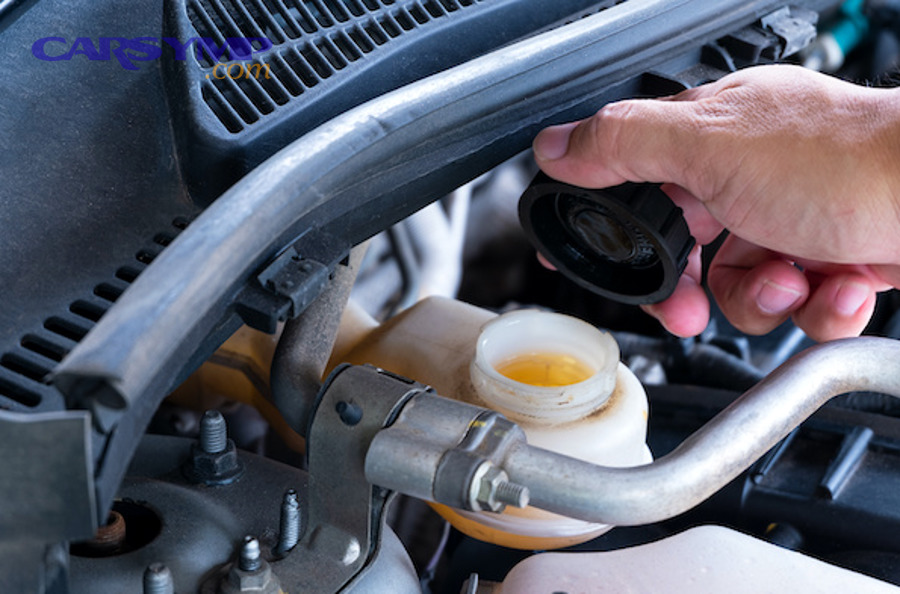
You confirm power steering fluid level by reading the reservoir marks accurately and checking for foaming, discoloration, or burnt odor that supports a low-fluid or aeration diagnosis. Then, follow this repeatable checklist:
- Park on level ground and set the parking brake.
- Locate the reservoir (often labeled) and wipe dirt away from the cap area so debris doesn’t fall in.
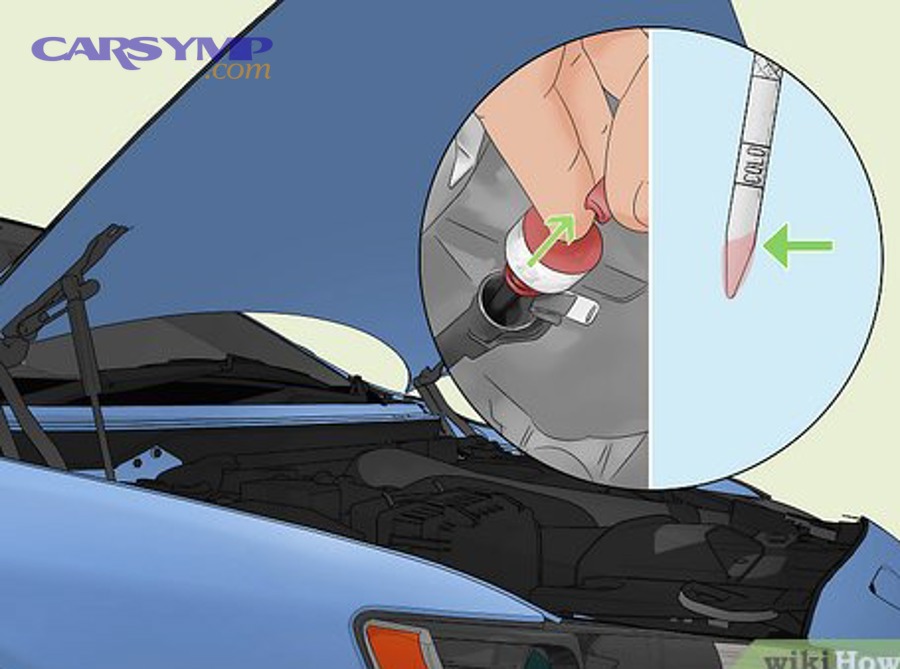
- Check the markings: Some reservoirs have marks on the outside; others have a dipstick attached to the cap with low/high lines. Many specify “HOT” and “COLD” ranges.
- Look for foam/bubbles: A foamy surface or many bubbles shortly after steering movement supports air-in-system suspicion.
- Assess color and smell: Fresh fluid is usually clearer; dark fluid or a burnt smell suggests heat and degradation.
- Do not overfill: Overfilling can cause spillover and aeration, creating more noise, not less.
According to guidance from Evans Halshaw, power steering reservoirs often include low/high marks and should not be filled past the high line because fluid expands with heat.
How do you check transmission fluid level if there is a dipstick?
You confirm low transmission fluid (with a dipstick) by checking level under the correct temperature and gear-state procedure, then inspecting color/smell for signs of overheating or contamination. Next, use these steps (generalized across many vehicles, but always prefer your owner’s manual if available):
- Warm the vehicle if required: Many automatics require checking at operating temperature.
- Cycle through gears: With your foot on the brake, move the shifter through each gear briefly, then return to Park. This helps distribute fluid.
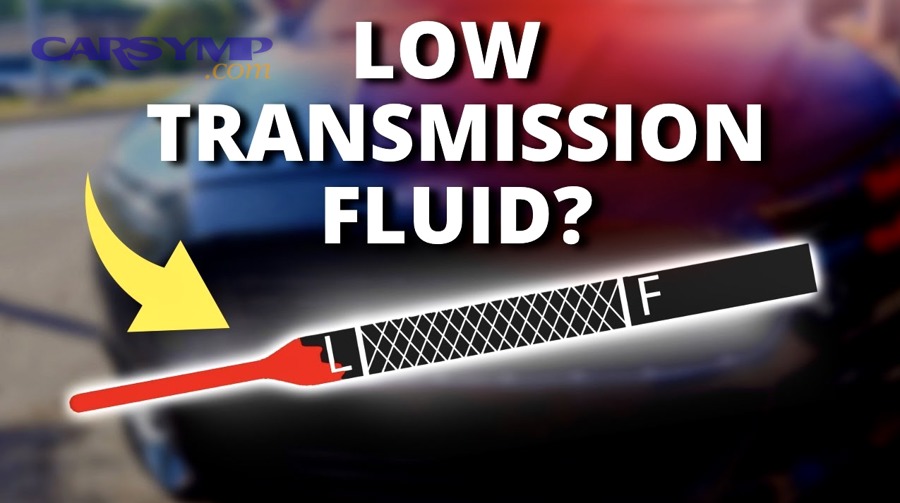
- Pull, wipe, reinsert, read: Wipe the dipstick clean, insert fully, then pull and read the level against “HOT” or “COLD” marks.
- Interpret the fluid:
- Pink/red and clear: typically healthier.
- Brown/dark with burnt smell: suggests heat/oxidation and possible wear.
- Foamy: suggests aeration (could be low, overfilled, or air entry).
- Top off carefully: Add small amounts, recheck, and stop at the correct mark—overfilling can also cause aeration and shift issues.
According to a how-to overview from 2CarPros, many vehicles with a dipstick can be checked and topped off via the dipstick method, while some vehicles do not have a traditional dipstick and require different procedures.
How do you confirm transmission fluid level if the transmission is “sealed” (no dipstick)?
You usually cannot fully confirm sealed transmission level accurately at home because many sealed designs require a specific fluid temperature and a level plug procedure; however, you can still confirm likelihood by pairing symptom patterns with leak evidence and then scheduling the correct level check. Then, use this practical approach:
- Confirm the design: “Sealed” typically means no dipstick tube, and level is checked via a service port/level plug.
- Look for external leak evidence: Cooler lines, pan gasket area, axle seals, and underbody wetness can support “low fluid likely.”
- Use symptom clustering: Delayed engagement, slipping, flare, and load-linked whine support low-fluid suspicion.
- Plan the correct next step: A proper check often requires the engine running, vehicle level, and ATF within a specified temperature window.
According to community technical guidance compiled on RAV4World, sealed transmission level checks often depend on specific temperature windows and procedures, making them less suitable for a generic at-home check without proper tools.
How do you tell power steering noise from transmission noise?
Power steering noise is most strongly linked to steering input (turning increases noise), while transmission noise is most strongly linked to drivetrain load and shifting (acceleration or gear changes change the noise), so the quickest way to tell them apart is to test which input reliably controls the sound. Let’s explore the most decisive tests so you can move from “I think” to “I’m confident.”
Power steering vs transmission: which tests are most decisive?
The most decisive tests are steering sweep tests for power steering and shift/load tests for transmission, because each test isolates the system that is being loaded. Next, run them in a safe order:
- Stationary steering sweep (PS focus): Engine running, vehicle stationary, turn wheel gently left-right. If noise follows steering angle and effort, suspect PS.
- Low-speed parking test (PS confirmation): Roll slowly and steer into a parking spot. PS noise often peaks under low-speed, high-assist demand.
- Gentle acceleration test (trans focus): Accelerate smoothly. If noise rises with speed/load but not with steering angle, suspect transmission/drivetrain.
- Shift event observation: Note if the noise changes at specific shift points; consistent shift-linked changes support transmission involvement.
If your noise is present only while steering, it’s rarely transmission fluid. If it’s present without steering input and changes with shifting, it’s rarely power steering fluid.
What other symptoms confirm the source (steering feel vs shift behavior)?
There are two main symptom groups that confirm the source: steering-performance symptoms and shift/driveability symptoms, based on which system the fluid supports. In addition, use this quick grouping to validate your conclusion:
Power steering–leaning symptoms
- Steering feels heavier than usual at idle or low speed
- Steering assist pulses or feels inconsistent
- Reservoir shows foam/bubbles after steering
- Noise peaks when turning into a spot
Transmission–leaning symptoms
- Delayed engagement into Drive/Reverse
- Slipping (RPM rises without matching acceleration)
- Harsh or erratic shifts, shudder on lockup
- Whine/hum tied to a particular speed range
If you’re building confidence for a shop visit, write down the conditions that trigger the sound; this is part of Diagnosis cost and typical next steps because better symptom notes usually reduce diagnostic time.
What should you do next if the fluid is low—top off, fix a leak, or stop driving?
If fluid is low, you should (1) confirm the correct fluid specification, (2) top off only enough to reach the safe range, and (3) immediately look for the leak or reason it dropped—while stopping driving if you have loss of assist, slipping, burning smell, or severe noise. More importantly, the “next step” is not just adding fluid—it’s preventing recurrence and avoiding expensive damage.
Is it safe to drive with low-fluid noise?
No, it’s not reliably safe to drive with low-fluid noise because (1) low fluid can cause rapid wear from poor lubrication/pressure, (2) it can lead to sudden loss of function (loss of steering assist or transmission slipping), and (3) it can overheat components and multiply repair costs. Next, use these practical thresholds for Safe-to-drive guidance with gearbox noise and steering noise:
Stop driving and consider towing if:
- Steering assist drops suddenly or steering becomes very heavy
- Transmission slips, bangs into gear, or fails to engage normally
- You smell burning fluid or see smoke/haze near the engine bay or underbody
- The noise becomes grinding, metallic, or abruptly louder
- A warning light appears and performance changes
Short, careful drive may be acceptable only if:
- Fluid is slightly low, you can top off correctly, and the noise reduces quickly
- Steering and shifting remain normal with no overheating signs
- You’re driving a short distance to a safer location or service facility
This is also the point where “gearbox noise diagnosis” shifts from curiosity to prevention—because continuing to drive through low-fluid symptoms is how minor leaks become major failures.
Should you top off the fluid—and how do you avoid the wrong fluid or overfilling?
Yes, you should top off if the fluid is below the minimum mark, but only if you use the correct fluid type and add it in small increments to avoid overfilling, aeration, and seal damage. Then, follow these guardrails:
- Use the right spec: Many vehicles specify particular ATF types or a dedicated power steering fluid. “Universal” fluids can work in some cases but can also create noise if viscosity/additives don’t match.
- Add slowly: Add a small amount, recheck, and repeat. Overshooting the mark is easy.
- Watch for foam: If fluid becomes foamy after topping off, you may have air in the system, a return-side leak, or an overfill condition.
- Recheck after a short run: Let the system circulate fluid, then recheck level under the proper hot/cold marking.
According to guidance from Evans Halshaw, power steering reservoirs should not be filled past the high line because fluid expands with heat, which can lead to spillover and related issues.
Where are the most common leak points to check first?
There are two main leak-point groups to check first—power steering leak points and transmission leak points—because a low level nearly always means fluid escaped or was contaminated/overheated. In addition, do a quick “where it drips” mapping:
Common power steering leak points
- Reservoir and cap seal
- Return hose clamps and hose connections
- Pressure hose fittings
- Rack-and-pinion seals (fluid inside boots can be a clue)
Common transmission leak points
- Pan gasket perimeter and drain/overflow plugs
- Cooler lines and fittings (especially near the radiator)
- Axle seals (fluid at the trans-to-axle area)
- Bellhousing area (can suggest front seal, but confirm carefully)
This is also where readers tend to ask about money, so set expectations: the Repair cost range for common gearbox noises can swing widely because a simple leak repair and top-off is very different from internal bearing or pump damage. A shop’s “diagnosis first” approach is often cheaper than guessing parts.
According to a technical explainer from Muncie Power Products, cavitation involves vapor bubble formation and collapse, and inlet restrictions and viscosity factors can increase the risk—conditions that can contribute to noise and component stress in hydraulic systems.
What if the fluid level is normal but the whine or groan continues?
If the fluid level is normal, the whine or groan is often caused by aeration (air trapped), wrong fluid type, a restriction, belt-driven accessory noise, or internal wear—so the next confirmation step is to test for air/foam, isolate accessories, and decide whether professional diagnosis is needed. To shift from “low fluid” to “not low fluid,” you’ll use an antonym-style diagnostic approach: confirm what it is not, then narrow what it is.

Could it be aerated fluid (air bubbles/foam) even if the level looks okay?
Yes—aerated fluid can cause whine/groan even when the level appears normal, because air bubbles compress and collapse under pressure, creating noise and reducing effective hydraulic performance. Then, confirm aeration with these checks:
- Foam after steering input: Turn the wheel gently, then look at the reservoir. Foam that grows after steering suggests air entrainment.
- Recent service: After a fluid change or hose replacement, trapped air can persist if the system wasn’t bled fully.
- Return-side seepage: Small leaks may not drip much but can still draw air in on the suction side, especially at hose joints.
According to a repair-focused explanation from Springs Automotive, trapped air bubbles can disrupt flow and contribute to cavitation-related noise in power steering systems.
Is the wrong fluid type causing noise (ATF vs power steering fluid vs OEM spec)?
Yes—the wrong fluid type can cause noise because viscosity and additive packages influence lubrication, seal behavior, and cavitation resistance; a mismatch can increase whine, especially in pumps and valves designed for a specific fluid. Next, use a practical confirmation path:
- Check the cap/manual spec: Many reservoirs specify the fluid type.
- Look for “new noise after top-off”: If noise began right after topping off, wrong fluid becomes more likely.
- Don’t “mix and hope”: If you suspect wrong fluid, the safest path is to consult the correct spec and have the system serviced properly.
This is also where Diagnosis cost and typical next steps becomes relevant: a professional flush/refill to the correct spec can be cheaper than replacing a pump damaged by prolonged aeration or incompatibility.
Could the noise actually be from a belt, alternator, wheel bearing, or A/C compressor instead?
Yes—many non-fluid issues mimic “low fluid noise,” especially belt-driven accessory whine, alternator whine, wheel bearing hum, and A/C compressor cycling sounds. Then, use these quick comparisons:
- Accessory/belt noise: Often changes with engine RPM even in Park, and may change when you switch A/C on/off or electrical load changes.
- Wheel bearing hum: Often rises with road speed and can change when you gently steer left/right at speed (load shifts side-to-side).
- A/C compressor: Noise may appear when the compressor engages and disappear when it disengages.
This is the “false positive” trap: you can have normal fluid levels and still hear a whine. Confirm triggers before you add fluid.
When should you get a pressure/flow test or a professional inspection?
Yes, you should get a professional inspection when noise persists after correct fluid confirmation because (1) pressure/flow tests can reveal pump weakness or restriction, (2) scan-tool temperature checks are needed for many sealed transmissions, and (3) internal wear needs expert confirmation before you spend money. To sum up, book a shop visit if:
- You cannot verify a sealed transmission level correctly
- The noise is paired with slipping, delayed engagement, or harsh shifts
- Power steering noise persists with correct level and no foam reduction
- You see metal debris, heavy discoloration, or burnt smell
If you want to plan financially, ask for a written diagnostic plan first—what tests they’ll run, what they cost, and what decisions follow—because that’s the most practical way to control both diagnosis cost and typical next steps and avoid paying twice for the same conclusion.