


A car diagnostic fee is the cost you pay for a technician to confirm why a symptom is happening—not just what code shows up—so you can understand the likely repair, the risk of waiting, and the realistic total cost before you approve work.
Next, you’ll learn what a diagnostic fee usually covers (time, testing, expertise, equipment), why a “free code scan” can’t replace real diagnosis, and how to tell whether you’re paying for a quick scan or a complete troubleshooting process.
Then, you’ll see how OBD2 scans and full diagnostics differ in scope and accuracy, what pushes the bill higher, and how to choose the right level of diagnosis based on warning lights and drivability symptoms.
Introduce a new idea: once you know the typical fee ranges and what you should receive after diagnosis, the rest of this guide shows the exact next steps to take—so you avoid guesswork repairs and make confident decisions.
What does a “car diagnostic fee” mean, and what are you actually paying for?
A car diagnostic fee is a paid troubleshooting service where a technician uses scan data, inspection, and targeted tests to identify the most likely root cause of a problem and outline the next repair steps—rather than just reading a code.
To better understand why the fee exists, it helps to separate “information” (codes, symptoms) from “proof” (tests that confirm which part, circuit, or condition is failing).
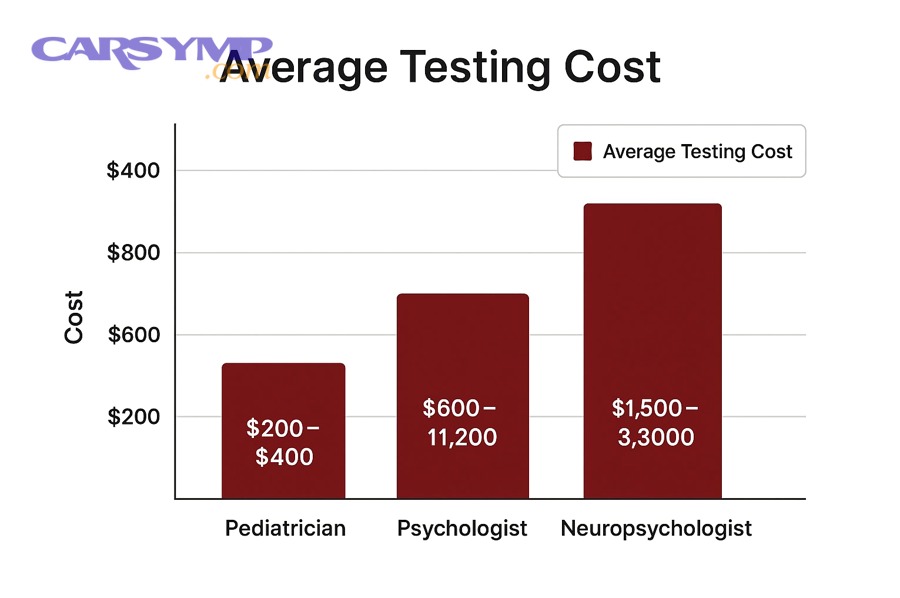
A diagnostic fee typically pays for time + method, including:
- Interview + symptom verification (what happened, when it started, what changed)
- Scan tool connection (reading modules, not only the engine computer)
- Initial inspection (fluids, leaks, damaged wiring/connectors, loose intake boots)
- Data interpretation (freeze-frame, live sensor values, monitors)
- Pinpoint testing (electrical checks, smoke test, pressure/vacuum tests, mechanical checks)
- Conclusion + documentation (what failed, why it failed, what to fix next, and what to re-test)
Is a diagnostic fee the same thing as an OBD2 code scan?
No—an OBD2 code scan is only one slice of diagnosis, and a diagnostic fee usually covers broader testing because a code points to a system or symptom pattern, not automatically a single failed part.
However, that difference matters most when the problem is intermittent, load-related, temperature-related, or involves multiple modules—situations where “replace the part named in the code” often fails.
A code scan is best described as:
- Fast identification of stored trouble codes
- Sometimes includes basic freeze-frame and live data (depending on the tool)
- Often limited to powertrain codes on generic readers
A diagnostic service is better described as:
- Confirming the failure mode (electrical, mechanical, software/calibration, fluid/pressure)
- Proving cause-and-effect (test results that change when you act on the suspected cause)
- Ruling out look-alikes (e.g., vacuum leak vs bad sensor vs fuel delivery issue)
What does a real diagnosis typically include beyond reading codes?
There are 6 common “layers” of real diagnosis, and shops move through them until evidence becomes strong enough to recommend a repair with confidence.
So, when you pay a diagnostic fee, you’re paying for a structured process that often includes:
- Verification test: reproduce the symptom (road test, idle test, load test)
- Visual + basic checks: fluids, hoses, connectors, grounds, intake/exhaust leaks
- Scan data review: DTCs, freeze-frame, readiness monitors, live sensor trends
- Functional tests: commanding components on/off (fans, valves, solenoids)
- Measurement tests: fuel pressure, vacuum, compression/leakdown, voltage drop, resistance
- Isolation: “If I change X, does the symptom change?” (the proof step)
How much does a diagnostic test cost, and what changes the price?
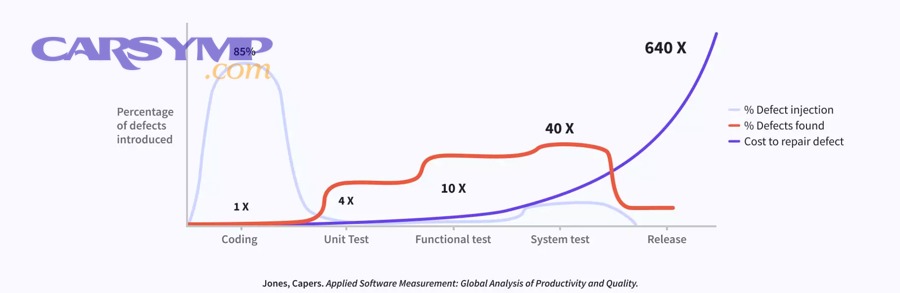
A diagnostic test typically costs more than a basic scan because price depends on time and complexity: the more testing required to confirm the root cause, the more billable diagnostic labor you’ll see.
To illustrate the pricing logic, it helps to think in tiers—because not all “diagnostics” are the same service.
What are the typical cost ranges for (1) code scan, (2) standard diagnosis, and (3) advanced diagnostics?
There are 3 main types of diagnostic service—based on scope and confirmation level:
- Basic code scan (information-level)
- Often low-cost or sometimes free at parts stores
- Reads generic powertrain codes and may clear codes
- Useful for direction, not proof
- Standard diagnostic appointment (confirmation-level)
- Commonly billed as a flat intake fee or ~1 hour of diagnostic labor
- Includes verification + basic tests + scan data interpretation
- Ends with a written recommendation and estimate
- Advanced / system-specific diagnostics (root-cause-level)
- Used for intermittent faults, network issues, electrical problems, drivability that doesn’t match codes, or complex systems (ABS/SRS/transmission/hybrid)
- May involve extended testing time, specialized tools, and service information
- Often the difference between “best guess repair” and “proven repair”
A helpful way to interpret price is: you’re buying certainty. A cheap scan buys clues; deeper diagnostics buy confirmed cause + the next steps that actually solve it.
Which factors most often raise diagnostic cost (and when is it justified)?
Diagnostic costs rise when the symptom is hard to reproduce, hard to access, or hard to separate from similar failures.
More specifically, these factors most often push diagnosis into the “advanced” tier:
- Intermittent problems (only happens sometimes, then disappears)
- Multiple codes across different systems (cause may be upstream)
- Electrical issues (voltage drop, CAN communication, corrosion in connectors)
- Aftermarket modifications (remote starters, stereos, lifts, non-OE sensors)
- Access time (components buried under intake manifolds or shields)
- Transmission/driveline concerns where sounds vary by load and speed
- Hybrid/EV safety procedures that add steps and time
This is also where your strategy matters: if you can describe the symptom clearly (when it happens, what triggers it, what you feel/hear/smell), you often shorten diagnostic time and cost.
Should you start with a parts-store “free scan” or go straight to a shop?
No single choice is best for everyone: a free scan is useful for low-risk situations, but a shop diagnosis is the safer and often cheaper overall move when the symptom suggests potential damage or when you need certainty fast.
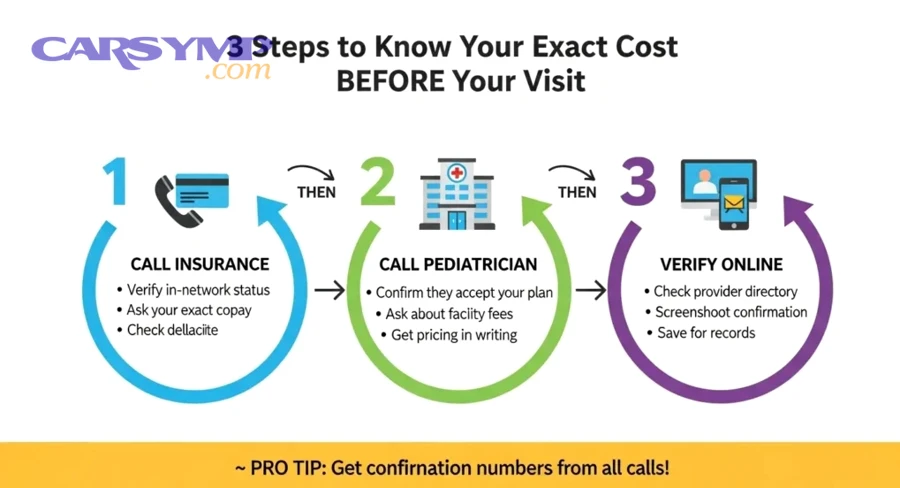
Next, use the warning lights and drivability behavior to decide how much diagnosis you need before you spend money on parts.
Is it safe to drive with a check engine light before you get diagnosis?
Yes, sometimes—but only if (1) the light is steady, (2) the car drives normally, and (3) you have no overheating, oil pressure, braking, or severe misfire symptoms.
However, you should not keep driving if any of these are true:
- Flashing check engine light
- Loss of power, shaking, strong fuel smell
- Temperature warning or overheating
- Oil pressure warning
- Brake warning with pedal changes
- Loud new mechanical noises (knocking, grinding) that change with RPM
A flashing check engine light commonly signals severe misfire risk, and misfires can overheat and damage the catalytic converter. According to a study by Chalmers University of Technology from the Department of Applied Mechanics (Division of Combustion), in 2011, continuous catalytic converter temperatures above roughly 900–1000°C can cause irreversible catalyst damage. (publications.lib.chalmers.se)
When does a free scan help—and when does it delay the real fix?
A free scan helps when:
- The symptom is mild and stable
- You mainly need a starting point to talk to a shop
- You want to confirm whether the issue is emissions-related and non-urgent
On the other hand, a free scan can delay the real fix when:
- You replace parts based only on the code (“parts cannon”)
- The code is a result of another upstream problem
- The symptom is intermittent and codes don’t capture the full story
- The problem involves ABS, SRS, transmission, network faults, or hybrid systems (often not fully covered by basic readers)
This is also where many noise complaints go wrong: a scan can’t “hear” the vehicle, so you still need a human-led process for gearbox noise diagnosis or driveline-related issues that don’t trigger a code.
What are the typical next steps after diagnosis—what happens after you pay the fee?
After you pay the diagnostic fee, the typical next steps are: verification of the cause, documentation of findings, an estimate with repair options, your authorization decision, then a post-repair confirmation test to ensure the symptom is gone.
Then, you can treat diagnosis like a decision checkpoint: you either approve the repair, ask for alternatives, or take the findings elsewhere—without losing the value of the troubleshooting.
What should you receive from the shop after diagnosis (results, proof, estimate)?
You should receive something concrete—not just “you need part X.” Specifically, a good diagnostic outcome includes:
- Symptoms verified (what the technician observed)
- Codes and data (DTCs, freeze-frame, notable live readings)
- Tests performed (smoke test, fuel pressure test, electrical checks, etc.)
- Conclusion (what failed, why it’s failing, and why that conclusion fits)
- Repair plan (parts + labor + timeline)
- Priority/urgency (safe-to-drive guidance and risk of waiting)
If the shop can’t confidently prove a single cause yet, they should explain the next test step (and why it’s needed) before adding more diagnostic time is billed.
Can you decline repairs after diagnosis—and still get value from the diagnostic?
Yes—because the value is in the confirmed direction and documentation, even if you don’t repair it there.
More importantly, you can use diagnostic results to:
- Compare repair quotes apples-to-apples
- Avoid unnecessary parts replacement
- Decide whether to repair now or later based on risk
- Plan budget and downtime
This is especially useful for noise issues where the “repair path” can branch widely. For example, Transmission/gearbox noise types and meanings (whine vs grind vs clunk) can point toward bearings, gear mesh, mounts, CV joints, or differential concerns—each with very different costs and next steps.
How can you reduce diagnostic cost and avoid unnecessary repairs?
Yes, you can reduce diagnostic cost and avoid unnecessary repairs by (1) controlling diagnostic scope upfront, (2) improving symptom clarity, and (3) demanding evidence-based recommendations before approving parts—so you pay for certainty, not guesses.
Next, treat the first diagnostic conversation like a contract: set limits, define deliverables, and require check-in points before extra time is billed.
Will the diagnostic fee be credited toward the repair bill?
Yes, sometimes—and it depends on the shop’s policy, the repair size, and whether the diagnostic scope matches the repair authorized.
However, you can improve your odds by asking these 3 questions before you approve diagnosis:
- “Is the diagnostic fee credited toward repair labor if I fix it here?”
- “What does the fee include—one hour, a flat process, or a staged approach?”
- “If you need more time, will you call me before proceeding?”
That small script prevents surprise bills and keeps the diagnostic process aligned with your budget.
Which questions should you ask before approving diagnosis or repairs?
There are 8 questions that consistently protect car owners from unnecessary expense:
- “What symptom will you verify first, and how?”
- “Is this a flat diagnostic fee or hourly diagnostic labor?”
- “What’s the maximum diagnostic time you’ll spend before calling me?”
- “What tests are included in the initial diagnostic fee?”
- “Will you provide the codes, freeze-frame, and test results in writing?”
- “What are the top two likely causes—and what evidence supports each?”
- “If you replace part X and it doesn’t solve it, what happens next?”
- “What warranty applies to parts and labor?”
These questions also apply to driveline noise complaints—where a Differential noise vs gearbox noise comparison can prevent the wrong expensive repair. A differential whine often changes on acceleration vs deceleration, while gearbox bearing or gear mesh noise may follow gear selection and load; without confirming tests, cost can spiral.
What’s the difference between “whats wrong” diagnosis and “how to fix” diagnosis?
OBD2 scans win at quickly identifying where to look, full diagnosis is best for proving what failed, and repair planning is optimal for deciding how to fix it cost-effectively—because a scan is a subset of diagnosis, and diagnosis is a subset of repair strategy.
Meanwhile, that “subset” relationship is exactly why many people overspend: they treat the first subset (codes) like the final answer.
Which problems are commonly misdiagnosed by code-only scans (misfire, O2 sensor, evap, transmission)?
There are 6 common problem categories that code-only scans frequently mislead—because the code reports a symptom, not the root cause:
- Misfire codes (P0300–P030x)
- Could be ignition, fuel delivery, vacuum leak, compression, injector control, or timing issues
- Misfire is a symptom pattern, not a part name
- Oxygen sensor codes
- Sensor may be reporting accurately while the real issue is exhaust leak, fuel trim problem, or air leak
- Replacing the sensor can “mask” the real problem temporarily
- EVAP leak codes
- Loose gas cap is possible, but so are cracked hoses, purge valve issues, or leak detection pump failures
- Proper diagnosis requires smoke testing or system command tests
- Catalyst efficiency codes
- Could reflect underlying misfires, fuel issues, exhaust leaks, or actual catalyst wear
- A wrong catalyst replacement is an expensive mistake
- Transmission-related codes
- Can be caused by fluid condition, solenoid behavior, sensor signals, wiring, or control logic
- Mechanical problems can exist without a clear code
- Noise complaints with no codes
- This is where scan-only fails entirely
- You need test drives, load testing, and physical inspection
That last point matters for owners searching for Repair cost range for common gearbox noises: a bearing whine, gear grind, or mount clunk can lead to very different repair paths—sometimes a fluid service or mount replacement, other times an overhaul. Diagnosis is what prevents paying overhaul money for a mount problem.
For advanced misfire detection specifically, research shows how deeper analysis can outperform basic approaches. According to a study by Michigan State University from the Department of Computer Science and Engineering, in 2022, a cascading convolutional neural network approach achieved 87.0% test accuracy for misfire fault detection and improved performance over baseline models. (pmc.ncbi.nlm.nih.gov)
What uncommon situations make car diagnosis harder, slower, or more expensive?
Intermittent faults, no-code symptoms, electrical network issues, and hybrid/EV safety procedures are the uncommon situations that most often make diagnosis slower and more expensive—because they require reproduction, data logging, isolation testing, and sometimes OEM-level tools.
In addition, these situations create a practical antonym that affects cost: constant vs intermittent. Constant problems are easier to prove quickly; intermittent problems resist quick confirmation.

How do intermittent problems or “no code stored” complaints change the diagnostic process?
Intermittent and no-code complaints change diagnosis by forcing the technician to prove the failure through conditions rather than stored evidence.
Specifically, the shop may need to:
- Recreate the issue with a longer road test
- Use data logging to capture the moment the failure appears
- Perform wiggle tests on harnesses and connectors
- Check grounds and voltage drops under load
- Inspect heat-related failures (relays, coils, cracked solder joints)
In practice, this is also why noise complaints are tricky: a gearbox or differential may only whine under a narrow load range. Good gearbox noise diagnosis often involves controlled tests like steady-speed cruise, accel/decel comparisons, and listening points to isolate where the sound originates.
What is freeze-frame data (and Mode $06), and when does it matter for cost and accuracy?
Freeze-frame data is a snapshot of engine conditions when a fault set (RPM, load, trims, temperatures), and Mode $06 provides results from onboard monitors that can reveal borderline performance before a code becomes consistent.
More specifically, these tools matter when:
- The code is intermittent and you need context to reproduce it
- Emissions monitors show a component trending weak (before failure becomes obvious)
- You want to avoid replacing parts based only on a generic DTC definition
When a shop uses freeze-frame and monitor results correctly, it can reduce repeat visits—because the next step becomes evidence-led rather than guess-led.
Why do electrical parasitic drains and CAN-bus/network faults often require more paid time?
Parasitic drains and network faults take longer because they require time-based testing and isolation, not quick part swaps.
For example, a parasitic drain test may require:
- Waiting for modules to “sleep”
- Measuring current draw across staged conditions
- Pulling fuses one-by-one to locate the offending circuit
- Narrowing the component causing the draw within that circuit
Similarly, CAN-bus faults can require:
- Checking module communication status
- Inspecting connectors for corrosion/water intrusion
- Measuring network resistance and signal integrity
- Isolating whether one module is “taking down” the network
Because these problems don’t always store a clear DTC, the proof step is slower—and that’s exactly what you’re buying with diagnostic labor.
What extra steps apply to hybrid/EV diagnostics that can raise costs?
Hybrid/EV diagnosis can cost more because technicians must follow high-voltage safety procedures, use specialized service information, and sometimes perform calibrations or relearns after repairs.
Those extra steps commonly include:
- High-voltage system disable/verify procedures
- Insulation resistance checks (where applicable)
- OEM-level scanning for battery and inverter subsystems
- Post-repair calibrations (depending on the system)
The payoff is real, though: these steps reduce the risk of misdiagnosis, repeat repairs, and safety hazards—so higher diagnostic cost often buys safer and more accurate outcomes.
Evidence (if any)
According to a study by Chalmers University of Technology from the Department of Applied Mechanics (Division of Combustion), in 2011, continuous catalytic converter operating temperatures above roughly 900–1000°C can cause irreversible catalyst damage—one reason a flashing check engine light should be treated as urgent. (publications.lib.chalmers.se)
According to a study by Michigan State University from the Department of Computer Science and Engineering, in 2022, a cascading convolutional neural network approach achieved 87.0% test accuracy for misfire fault detection, highlighting how deeper diagnostic methods can outperform simplistic baselines. (pmc.ncbi.nlm.nih.gov)