


Grinding brakes usually cost more than a standard pad swap because the noise often means the friction material is gone and metal is contacting metal—so your estimate needs to account for pads, rotor condition, and the chance of a sticking caliper rather than just “new pads.” (repairpal.com)
If you want the right number the first time, you also need to match the estimate to the most likely repair scope: pads-only vs pads + rotors vs caliper/hardware work—because each scope changes parts, labor hours, and the final quote.
Beyond the price range, most people also want to know what grinding implies, what makes the bill jump (vehicle type, parts grade, corrosion, labor rates), and how to avoid paying for the wrong work.
Introduce a new idea: once you understand what “grinding” usually means and what it typically requires to fix, you can use the headings below as a step-by-step pricing map—starting with diagnosis, then cost ranges, then scope fit, then safety and quote strategy.
What does “grinding brakes” mean, and why does it change the repair cost estimate?
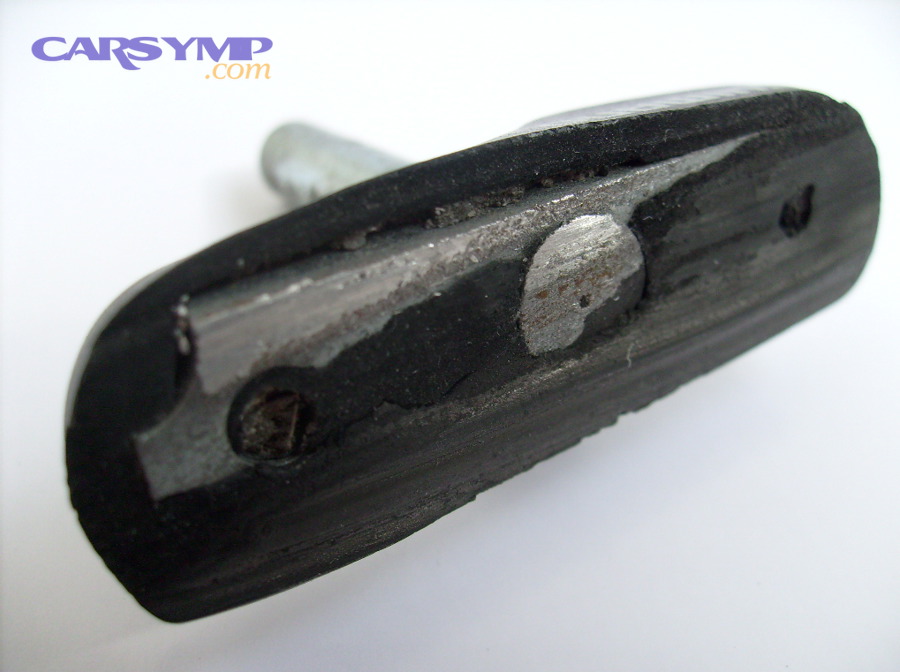
Grinding brakes is a friction-brake noise caused by abnormal contact—often pad backing plate against rotor—because the pad material is worn out, and that condition pushes the estimate beyond pads-only to include rotor damage risk and possible hardware or caliper issues. (repairpal.com)
Next, because “grinding” is a symptom—not a parts list—you get a better estimate when you treat it like a scope indicator: the louder, harsher, and more consistent the sound, the more likely you’re paying for rotors (and sometimes caliper-related work) in addition to pads.
Is grinding always metal-on-metal, or can it be something cheaper like a dust shield or debris?
No—grinding brakes is not always metal-on-metal, and that matters because (1) debris or a bent dust shield can mimic grinding, (2) surface rust can scrape briefly after rain, and (3) a loose backing plate or hardware can rub intermittently, all of which can cost far less than a full brake job.
Then, to keep the estimate realistic, use a fast “pattern check” before you assume worst-case:
- When does the sound happen?
- Only when braking: more likely pad/rotor friction surfaces or pad hardware alignment.
- While driving without braking: more likely dust shield contact, stuck caliper, or non-brake sources.
- Is it one wheel or both?
- One wheel strongly points to a localized issue (one rotor, one caliper, one shield), which also affects cost.
- Does it change after washing/rain?
- Light scrape that fades after a few stops can be rotor surface rust, not immediate rotor replacement.
- Do you feel heat or smell burning near one wheel?
- That’s a red flag for drag—often a sticking caliper or slider issue, which can turn a “pad and rotor” quote into a bigger repair.
A quick inspection is still the deciding factor, but this filter prevents you from budgeting for rotors when the real cause is a shield rub or debris.
What are the most common brake parts involved when grinding starts?
There are 3 main parts groups involved when grinding starts: brake pads, brake rotors, and caliper/hardware, based on which component is making abnormal contact and whether the system is dragging or just worn out.
Next, here’s what each group usually contributes to the repair scope—and to the estimate:
- Brake pads (worn to backing plate)
- The most common grinding noise when braking scenario is pad friction material worn down to metal.
- Cost impact: you must replace pads on the axle pair (both sides), not one pad.
- Brake rotors (scoring, heat damage, thickness loss)
- If pads grind metal-on-metal, rotors can develop deep grooves, heat spots, or cracking—sometimes beyond resurfacing limits.
- Cost impact: rotors add parts cost and often additional labor; many shops recommend replacing both rotors on the axle for balance.
- Caliper and hardware (stuck slider pins, seized piston, missing clips)
- A Caliper seized leading to grinding can keep a pad clamped to the rotor, overheating and chewing through pads/rotors quickly.
- Cost impact: caliper replacement or slider service increases both parts and labor, and may require brake bleeding.
How much does it cost to fix grinding brakes in 2026?
Fixing grinding brakes typically costs hundreds of dollars per axle, and the range depends on whether you need pads-only (least common for true grinding), pads + rotors (common once grinding begins), or pads + rotors + caliper/hardware (when drag or uneven wear is present). (kbb.com)
Then, instead of guessing, anchor your budget around real-world published ranges and adjust by scope:
- Brake pad replacement averages can land around the low-to-mid hundreds (often quoted per axle). (repairpal.com)
- Pads + rotors per axle commonly falls into a broader bracket depending on vehicle and parts. (kbb.com)
- Rotor replacement alone can be substantial, which is why grinding that damages rotors moves the estimate quickly. (repairpal.com)
To make those ranges easier to use, the table below summarizes typical “scope buckets” people see when the complaint is grinding.
Table context: This table compares common repair scopes for grinding brakes so you can match your likely diagnosis to a budget range before you call shops.
| Repair scope (per axle) | What it usually includes | When it fits grinding | Cost signals |
|---|---|---|---|
| Pads only | New pads + hardware service/check | Rare if true grinding; more common for squeal/early wear | Lowest cost tier; rotor surface must be acceptable |
| Pads + rotors | New pads + new rotors (or resurface where appropriate) | Common for metal-on-metal or severe grooves | Mid to higher tier; parts dominate |
| Pads + rotors + caliper/hardware | Above + caliper replacement or slider repair, possible fluid service | Common when one wheel is overheating/dragging or wear is uneven | Highest tier; labor + added parts |
For published reference points: one widely used estimator lists an average brake pad replacement range of $320–$379 (not location-specific and not including taxes/fees), and a brake rotor replacement range of $577–$719. (repairpal.com)
Another pricing guide notes $250–$400 per axle as an “average” expectation for pads and rotors in a basic brake job, while emphasizing that heavy-duty trucks and performance setups can be much higher. (kbb.com)
A separate consumer pricing guide reports $400–$900 per axle as a common range for pads and rotors together, with pads-only often lower. (consumeraffairs.com)
What is the typical price range for pads-only vs pads + rotors per axle?
Pads-only wins on price, pads + rotors is best for true grinding reliability, and pads + rotors + caliper work is optimal when dragging or uneven wear is present, because each scope targets a different failure level and cost driver.
Next, translate that comparison into what you’ll likely pay:
- Pads-only (lowest cost)
- Best fit: mild noise without severe scoring, rotor thickness and surface still within spec.
- Why it’s less common for grinding: grinding often starts after pads are already gone, and by then rotors may be damaged.
- Pads + rotors (most common for true grinding)
- Best fit: grooves you can catch a fingernail in, vibration/pulsation, or visible heat spots.
- The phrase Rotor scoring severity and fixes matters here: light scoring may be cosmetic, but deep scoring plus thickness loss often means replacement over resurfacing.
- Why per-axle matters
- Brakes are serviced in pairs on the same axle for balanced braking and predictable pedal feel. (repairpal.com)
If you’re building a budget fast, use this rule of thumb: if it’s truly grinding, assume rotors are in scope until an inspection proves otherwise, because that’s what most quotes will reflect.
How much can caliper or hardware repairs add to the estimate?
Caliper or hardware repairs can add a significant premium because they introduce (1) extra parts, (2) extra labor time, and (3) possible hydraulic work like bleeding—especially when a caliper seized leading to grinding overheats the rotor and destroys pads quickly.
Then, focus on the cost triggers that often show up on estimates:
- Caliper replacement vs slider service
- Slider pin cleaning/greasing is minor compared to replacing a caliper assembly.
- But a seized piston, torn boot with corrosion, or uneven pad wear can push a shop toward caliper replacement.
- Hardware kits and anti-rattle clips
- These are small parts, but they prevent misalignment and noise; missing clips can create scraping and uneven wear.
- Brake fluid considerations
- If a wheel has overheated, shops may recommend fluid service because heat can degrade brake fluid performance.

Which repair scope fits your grinding noise: pads, rotors, calipers, or something else?
There are 4 main scope matches for grinding brakes—pads-only, pads + rotors, pads + rotors + caliper/hardware, or non-brake rubbing—based on when the sound happens and whether one wheel is dragging.

Next, the fastest way to narrow it is to match symptom patterns to the most probable parts list.
If the grinding happens only when braking, what does that usually point to?
There are 3 main causes of grinding only when braking: worn pads, rotor scoring/warping, and pad hardware contact, based on the criterion “noise appears under brake pressure.”
Then, use these cues to estimate the scope:
- Worn pads to metal backing
- Sound: harsh, gritty, consistent, often worse at low speed.
- Likely scope: pads + rotor inspection; rotors often need replacement if heavily scored.
- Rotor scoring or heat spots
- Sound: grinding plus vibration/pulsation through pedal or steering wheel.
- Likely scope: pads + rotors. This is where Rotor scoring severity and fixes becomes practical: resurfacing is only possible if thickness and surface condition allow it; otherwise replacement is safer.
- Hardware contact or misfit
- Sound: scraping or metallic tick that changes with bumps or light braking.
- Likely scope: hardware correction, pad reseating, shield adjustment—sometimes cheaper than full replacement.
If you want a clean estimate, tell the shop: “The noise happens only under braking, mostly at low speed, and it’s louder on the left/right front”—that detail helps them budget the correct inspection and parts.
If the grinding happens while driving (even without braking), what does that usually point to?
Pads/rotors win as the cause when the sound is braking-only, but caliper drag, dust shield contact, and non-brake sources are best for grinding while cruising, because the noise is no longer tied to brake pedal input.
Next, use a simple comparison to avoid overestimating:
- Dust shield rubbing (cheap fix)
- Often constant “shhh/grind” that changes with bumps or steering angle.
- Estimate impact: minor labor to bend shield away from rotor.
- Stuck caliper or slider (bigger repair)
- Often accompanied by heat from one wheel, burning smell, pulling, or rapid pad wear.
- Estimate impact: pads + rotors + caliper/hardware is common because heat damage spreads.
- Wheel bearing/CV joint (not a brake job)
- Bearing noise often changes with steering load; CV noise may click on turns.
- Estimate impact: entirely different repair category—this is why diagnosis matters before you accept a brake quote.
What factors make grinding brake repair costs higher or lower?
Grinding brake repair costs swing mainly because of vehicle size, parts tier, labor market, and corrosion/drag complexity, which affect both the number of parts replaced and the labor time.
Next, treat your quote like a math equation:
Total estimate ≈ (parts cost by scope) + (labor hours × local labor rate) + (shop supplies/taxes/fees)
That equation is why the same symptom can quote differently in different cities or on different vehicles.
How do vehicle type and trim (sedan vs SUV vs truck) affect brake costs?
A sedan wins for lower brake cost, an SUV is best viewed as mid-cost, and a truck is often highest-cost, because heavier vehicles typically use larger rotors/pads and sometimes more expensive hardware—so parts and labor trend upward.
Then, add the trim-level multipliers:
- Towing/haul packages may use larger brake components.
- Performance trims may use specialized rotors and pad compounds with much higher parts pricing.
- One pricing guide explicitly warns that heavy-duty pickups and performance brake setups can raise costs substantially. (kbb.com)
How do pad and rotor material choices change price and outcomes?
Economy parts win on upfront cost, mid-tier parts balance noise and durability, and premium/OEM is optimal for consistent feel and warranty confidence, because material choices change heat handling, noise behavior, and wear rate.
Next, use material choices to match your driving:
- Ceramic pads
- Often quieter and lower dust; can cost more.
- Good for daily commuting.
- Semi-metallic pads
- Often handle heat well; may be noisier and dustier.
- Good for heavier vehicles, towing, or aggressive driving.
- Rotor choices
- Standard blank rotors are common; coated rotors resist rust better in salted climates.
- For grinding repairs, rotors are less about “looks” and more about restoring a flat, safe friction surface.

Can you drive with grinding brakes, and when is it unsafe?
No—you should not keep driving with grinding brakes because (1) grinding often means reduced braking effectiveness, (2) it can destroy rotors quickly and raise your repair bill, and (3) it increases the risk of heat-related brake fade or sudden performance loss—especially if one wheel is dragging.

Then, to answer the exact question people type—“Can you drive with grinding brakes”—the safest interpretation is: drive only as far as needed to get to a safe place or repair facility, and avoid high-speed traffic whenever possible.
Should you stop driving immediately if you hear grinding?
Yes—stop driving immediately if the grinding is loud, continuous, or paired with danger signs, because (1) it can signal metal-on-metal contact, (2) it can indicate a dragging caliper overheating the brake, and (3) it can precede longer stopping distances and unpredictable braking.
Next, use this “stop now” checklist:
- Brake warning light is on
- Pedal feels soft, sinks, or requires pumping
- Car pulls hard to one side under braking
- Burning smell, smoke, or one wheel is extremely hot
- Grinding gets worse rapidly over a single trip
If none of these are present and the sound is mild/intermittent, you still want an inspection quickly—but the urgency level may be “go straight to a shop” rather than “pull over and tow.”
Evidence: According to a study by The University of Texas at Austin from the Center for Transportation Research, in 1969, typical brake reaction time for most people was reported around 0.5 to 0.7 seconds, which is a major component of real-world stopping distance even before you account for reduced brake effectiveness. (library.ctr.utexas.edu)
How fast can grinding increase the total repair bill?
Grinding can increase the bill fast because it escalates the repair scope: pads wear through → rotors get scored/overheated → caliper hardware may seize or wear unevenly → you pay for more parts and more labor.
Then, think in terms of “damage stacking”:
- Early stage (noise begins): pads may still have enough material; rotor may be salvageable.
- Middle stage (consistent grinding): rotors often need replacement; hardware is suspect.
- Late stage (drag/heat): caliper replacement becomes more common; fluid service may be recommended.
This is why the cheapest estimate is the one you get before the rotor becomes deeply scored.
How do you get an accurate estimate from a shop (and avoid overpaying)?
You get an accurate estimate by requesting an itemized quote, confirming scope per axle, and asking for measurements or photos, because those steps prevent mismatched comparisons and reduce the chance of paying for unnecessary parts.

Next, treat every quote as a scope document, not just a price.
What should a proper brake inspection and quote include?
There are 6 must-have items in a proper brake inspection and quote: pad thickness, rotor condition, caliper/slider check, axle pairing, parts tier, and warranty, based on the criterion “does the quote prove the problem and match the fix.”
Then, ask for these specifics:
- Pad thickness (mm) and whether inner vs outer pads differ (drag clue)
- Rotor measurement (thickness compared to minimum spec) and visible scoring/heat spots
- Caliper and slider pin condition (free movement? boots intact? corrosion?)
- Axle scope confirmation (both sides on same axle)
- Parts tier/brand (economy vs premium vs OEM-equivalent)
- Warranty terms (months/miles; what’s covered)
A quote that can’t tell you why rotors are needed is often a quote you should question.
How can you compare two brake quotes (dealer vs independent shop) fairly?
The dealer wins on OEM alignment, the independent shop often wins on price flexibility, and a specialist brake shop can be optimal for diagnosis depth, because each option optimizes a different criterion.
Then, compare apples-to-apples with this method:
- Match scope: pads-only vs pads + rotors vs caliper work
- Match parts tier: ceramic vs semi-metallic; coated rotors vs basic blanks
- Match services included: hardware kit, brake fluid bleed, rotor resurfacing vs replacement
- Match warranty: duration and what it covers
- Match proof: measurements/photos and a clear explanation of Rotor scoring severity and fixes
When both quotes truly match, the lower price is meaningful. When they don’t match, the cheaper quote can be misleading—or the expensive quote can be unnecessary.
At this point, you have the core cost ranges, the scope map, and the safety guidance needed to estimate grinding brakes correctly. Next, we’ll expand into uncommon causes that can mimic grinding and swing the estimate from “cheap adjustment” to “major repair.”
What uncommon issues can mimic grinding brakes and change the estimate (cheap fixes vs expensive surprises)?
There are 2 main categories of uncommon grinding look-alikes—cheap rubs and expensive drags—based on whether the wheel spins freely and whether heat builds at one corner, and confusing them is how people overpay or delay a real problem.
Next, use the micro-checks below to understand which side of that “cheap vs expensive” line you’re on.
Could a bent dust shield or trapped debris cause grinding (and cost almost nothing)?
Yes—a bent dust shield or trapped debris can cause grinding, and it’s often cheap because (1) the fix may be repositioning the shield, (2) debris removal can be quick, and (3) no major parts are required if the rotor and pad faces aren’t damaged.
Then, the telltale signs are:
- Noise changes with bumps or steering angle
- Noise persists lightly even without braking
- No burning smell or heat from one wheel
- No strong vibration under braking
This is the “don’t panic, still inspect” scenario—because it’s real, but you don’t want to assume it without checking.
Can seized caliper slide pins or a stuck piston turn a “brake job” into a major repair?
Yes—seized slide pins or a stuck piston can turn a simple brake job into a major repair because (1) the pad stays in contact and grinds continuously, (2) heat can damage the rotor quickly, and (3) uneven wear can require replacing additional parts to restore balance.
Next, watch for:
- One wheel is much hotter than others after a short drive
- Car pulls to one side while braking or even cruising
- Inner pad is worn far more than outer pad (or vice versa)
- A “thump” or harsh grind that grows rapidly
This is the classic caliper seized leading to grinding pathway—and it’s exactly why grinding that happens while driving (not just braking) often costs more.
Can wheel bearings or CV joints be mistaken for brake grinding—and how do you tell?
Brake grinding wins when it’s tied to pedal input, but bearings/CV issues are more likely when noise follows speed and steering load, because they’re driven by rotation and load transfer rather than brake pressure.
Then, differentiate quickly:
- Wheel bearing: hum/growl that changes when you turn left/right (load shift)
- CV joint: clicking on turns, especially under acceleration
- Brakes: noise changes strongly with braking, and may come with pedal feel changes or vibration
If you misclassify a bearing as brakes, you’ll chase pads/rotors without fixing the actual issue—so it’s worth the extra diagnostic minute.
Do hybrids/EVs and regenerative braking change how brake wear (and grinding) shows up?
Yes—hybrids/EVs can show unusual patterns because regenerative braking reduces friction-brake use, which can allow corrosion or glazing to build until the friction brakes engage harder, making noise feel sudden.
Next, the practical takeaway is simple: if you drive a hybrid/EV and hear new scraping or grinding, you still follow the same scope logic—pads, rotors, calipers—but you also consider corrosion-related surface issues as a more common contributor.
Evidence (if any)

- Published estimator ranges show brake pad replacement averages and brake rotor replacement averages, which support budgeting by scope. (repairpal.com)
- Brake job per-axle pricing guidance and outlier examples (heavy-duty and performance brake systems) support why vehicle class and trim change estimates. (kbb.com)
- A consumer pricing guide summarizes typical pads+rotors per-axle ranges and notes what services are often included in a “brake job.” (consumeraffairs.com)
- A transportation research report from The University of Texas at Austin documents common driver brake reaction time ranges, a key variable in stopping distance risk discussions. (library.ctr.utexas.edu)