


Coolant loss and engine overheating are linked in most real-world cases because the cooling system needs the right coolant volume and the right pressure to keep temperatures stable; when coolant drops or pressure control fails, heat transfer collapses and the engine temperature climbs fast.
Next, the fastest way to reach a correct diagnosis is to separate external coolant leaks (coolant escaping the system) from internal failures (combustion gases or coolant crossing the head gasket boundary), because those two paths lead to very different tests and repairs.
Then, symptom patterns—like overheating at idle vs highway speed, coolant smell with no puddle, or bubbles in the reservoir—help you prioritize what to test first so you don’t replace parts blindly.
Introduce a new idea: you can follow a safe, driver-friendly workflow that starts with “don’t damage the engine” decisions, then moves through pressure and cap testing, and finally confirms or rules out internal head gasket leakage with targeted checks.
Is coolant loss linked to engine overheating? (Yes/No)
Yes—coolant loss is linked to engine overheating because it reduces heat transfer capacity, lowers the system’s ability to hold pressure (and therefore boiling point), and often introduces air pockets that block coolant circulation. Then, once you understand why coolant loss pushes temperature up, you can diagnose faster by looking for the specific mechanism: leak, pressure failure, circulation failure, or internal combustion intrusion.
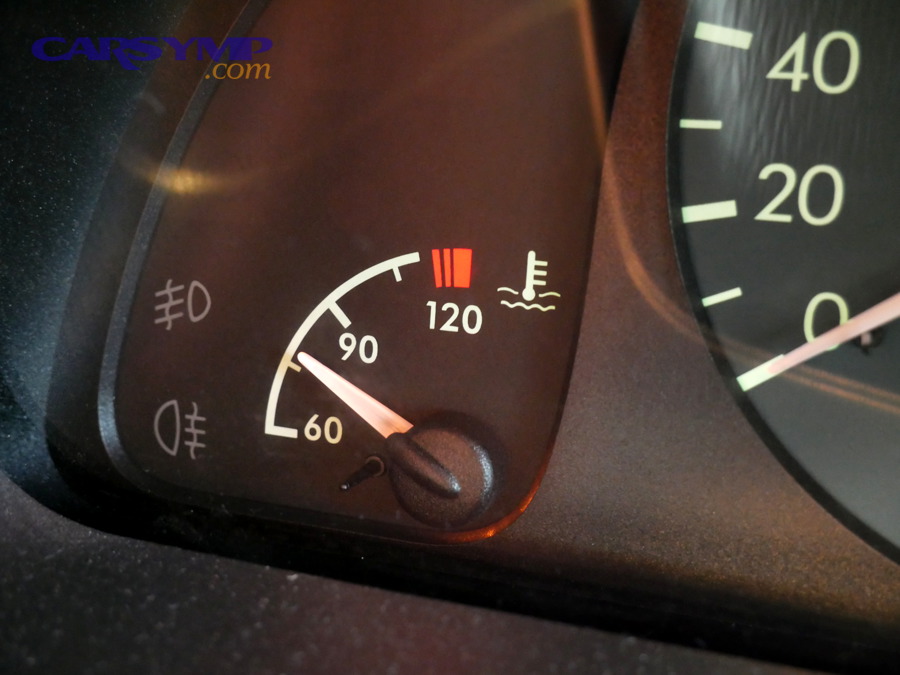
Why coolant loss makes overheating more likely
Coolant is the working fluid that carries heat away from the cylinder head and engine block to the radiator. When the system is low, three things commonly happen:
- Less coolant = less heat capacity. The remaining coolant heats up faster because there’s less fluid mass to absorb engine heat.
- Lower pressure control = earlier boiling. Cooling systems rely on pressure to raise boiling temperature; when coolant is low, the system may not stay fully sealed, and boiling begins sooner.
- Air replaces coolant in hot areas. Air pockets collect at high points (often in the cylinder head). Air does not transfer heat nearly as well as liquid coolant, so hotspots form and the temperature gauge climbs.
A useful rule of thumb you’ll see in cooling-system training material is that increasing pressure raises boiling point substantially—some sources describe roughly ~3°F per psi increase in system pressure. (macsmobileairclimate.org)
When overheating can happen even if coolant “seems” only a little low
Even a modest coolant drop can trigger overheating if:
- the leak is intermittent (only when hot or under load),
- the radiator cap can’t hold pressure,
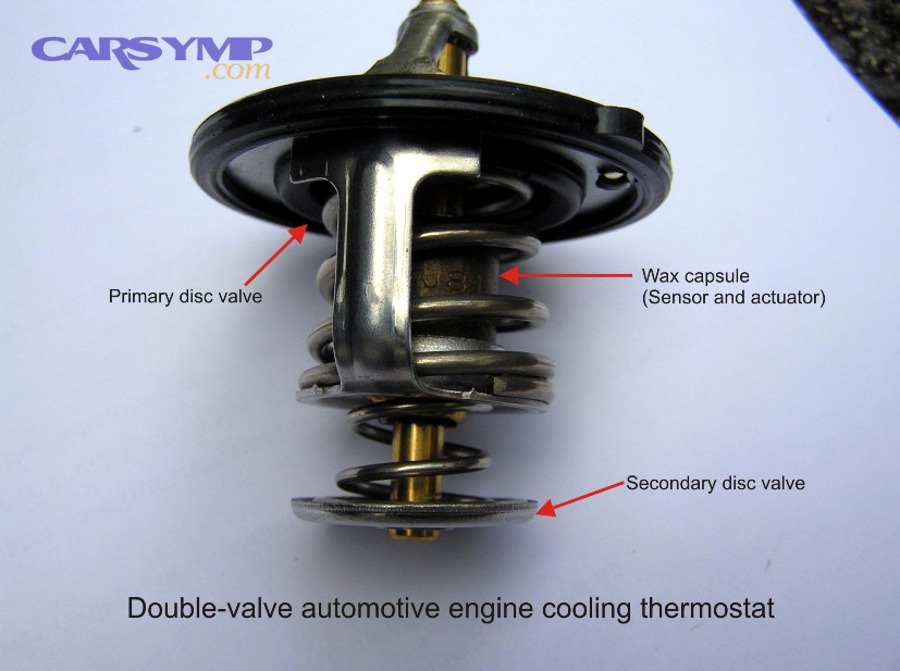
- the thermostat sticks or the water pump can’t circulate properly,
- cooling fans don’t run, especially at idle.
So yes, coolant loss and overheating are linked—but the type of failure determines the test you should do next.
What does “coolant loss + overheating” mean in plain terms?
Coolant loss + overheating is a cooling-system failure pattern where the engine can’t keep temperature stable because coolant is escaping, boiling off due to lost pressure, circulating poorly, or being forced out/consumed by an internal sealing fault such as a head gasket breach. Below, that plain definition becomes actionable when you translate it into observable signs and decision points.
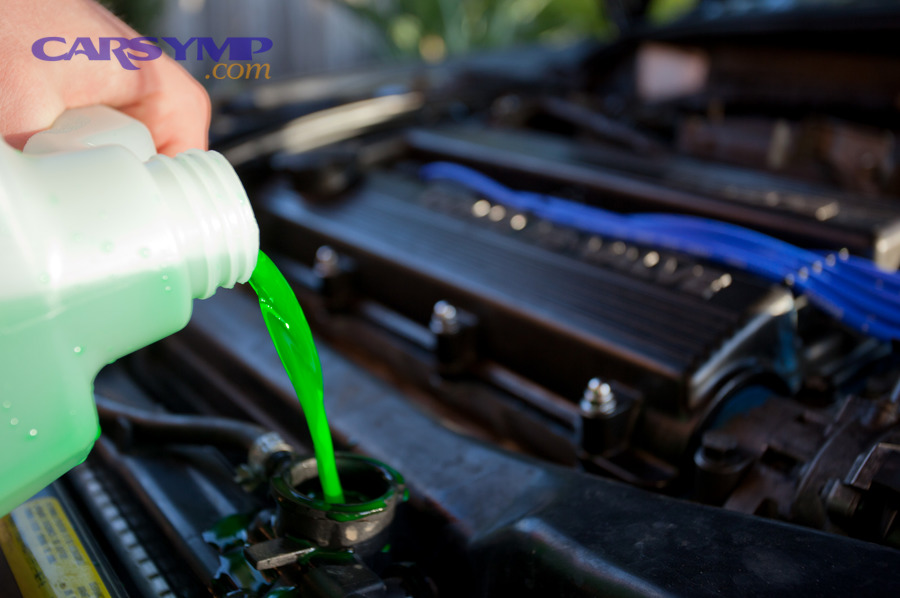
The “plain English” interpretation drivers need
When these two symptoms appear together, the vehicle is typically telling you one of four stories:
- “I’m leaking coolant somewhere.” You may see puddles, wet hoses, crusty residue, or a sweet smell near the front of the car.
- “I can’t hold pressure.” The radiator cap or expansion tank cap fails, coolant boils earlier, and the system may vent or push coolant into/through the overflow.
- “Coolant isn’t flowing or isn’t being cooled.” Thermostat, water pump, fans, or a clogged radiator prevent normal heat rejection.
- “Combustion and coolant are mixing.” A failing head gasket can push combustion gases into coolant (over-pressurizing and forcing coolant out) or allow coolant into cylinders (white steam, rough start).
This is why the title’s contrast—external coolant leak vs internal head gasket fault—is so important: the symptoms may overlap, but the confirmation tests differ.
Which cooling-system problems most often cause BOTH coolant loss and overheating?
There are 4 main types of problems that cause both coolant loss and overheating: external leaks, pressure-control failures, circulation failures, and internal sealing failures—grouped by where the coolant goes and why temperature control breaks down. Next, you can use this grouping to avoid the most common diagnosis mistake: treating every overheating event as a thermostat problem or every coolant drop as a head gasket.
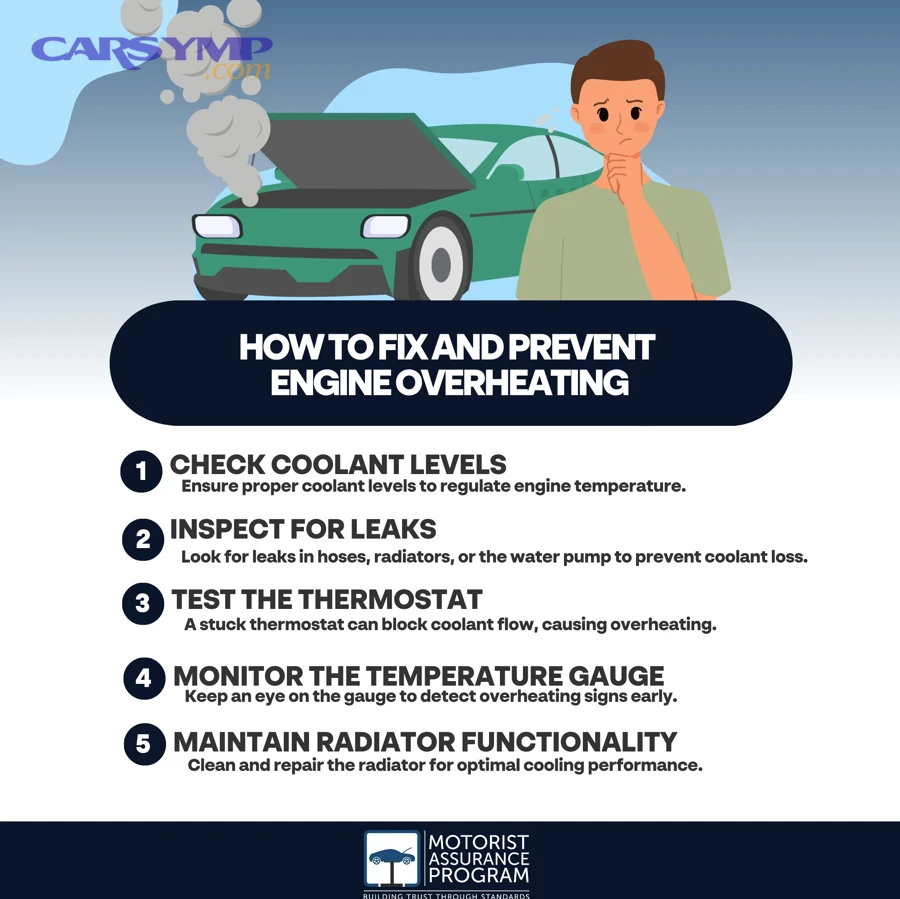
Type 1: External coolant leaks (coolant leaves the system)
These usually create visible evidence if you know where to look:
- Radiator end tanks and seams
- Upper/lower radiator hoses and clamps
- Heater hoses
- Water pump weep hole (seal leak)
- Thermostat housing gasket
- Plastic fittings and quick-connects
- Expansion tank cracks
External leaks cause overheating because the system slowly (or suddenly) runs low and introduces air.
Type 2: Pressure-control failures (coolant boils earlier and vents)
A weak or wrong radiator cap/expansion cap can:
- vent coolant into the overflow too early,
- fail to draw coolant back from the reservoir as the engine cools,
- drop system pressure and cause boil-over.
This can mimic a “mystery coolant loss” because coolant may leave as vapor/overflow without a big puddle.
Type 3: Circulation failures (coolant stays in the engine too long)
Common culprits:
- Stuck thermostat (often closed or partially closed)
- Water pump impeller wear/cavitation or belt slip
- Air pockets after service (improper bleeding)
- Collapsed hoses under suction (rare but real)
Circulation failures can trigger overheating even before coolant loss becomes obvious—then overheating itself can force coolant out.
Type 4: Internal sealing failures (coolant is pushed out or consumed)
Most commonly discussed: head gasket breach or warped head/block interface. It can:
- pressurize the cooling system rapidly with combustion gases,
- push coolant out of the overflow,
- consume coolant through the combustion chamber (white steam),
- contaminate oil (less common but serious).
Industry-facing repair education often notes that early symptoms of head gasket trouble can include slow coolant loss with no visible leak and overheating. (brakeandfrontend.com)
How can you quickly tell “external leak” vs “internal head gasket” from symptoms?
External leaks win on “visible evidence,” internal head gasket faults are best identified by “pressure behavior and combustion-gas signs,” and pressure/circulation faults sit in the middle because they can imitate either scenario. However, you can still make a fast first-pass decision by comparing symptom clusters instead of chasing one clue.
Symptom cluster comparison: what usually points where
External coolant leak is more likely when you have:
- Puddles under the car after parking
- Wet hose ends, radiator seams, or crusty white/green residue
- Sweet smell near the front after driving
- Coolant dripping from water pump area or under timing cover region
- Cooling system fails a pressure test with an obvious drip
Internal head gasket fault is more likely when you have:
- Coolant loss with no visible leak repeatedly
- Bubbles in the reservoir or radiator neck that worsen with throttle
- Overheating under load (uphill/highway) and pushing coolant out
- White steam from exhaust, especially at startup (not always present)
- Cooling system becomes rock-hard quickly after cold start (early pressurization)
Pressure/circulation issues are more likely when you have:
- Overheating at idle but not at speed (fan/airflow problem)
- Temperature swings (thermostat sticking)
- Recent coolant service followed by overheating (air pocket/bleeding)
The fastest “triage” move
If you want one quick divider before tools:
- Look for external evidence cold + hot (hot leaks can evaporate on engine parts).
- Watch the reservoir behavior (does it rise aggressively and vent?).
- Note when overheating happens (idle vs load tells you airflow vs pressurization).
This comparison sets up the next section: a safe workflow that confirms the cause instead of guessing.
What is the safest step-by-step diagnosis workflow for drivers?
The safest workflow is a 7-step cooling-system diagnosis that starts with “stop damage,” then verifies coolant level/pressure integrity, then checks circulation and airflow, and finally uses combustion-gas testing to confirm or rule out internal head gasket leakage. To better understand the workflow, treat each step as a gate: you only move forward when the previous gate is answered.

Should you keep driving if it’s overheating and losing coolant? (Yes/No)
No—if your engine is overheating and losing coolant, you should not keep driving because continued heat can warp the cylinder head, blow the head gasket, and seize the engine, and because sudden coolant loss can cause temperature spikes faster than the gauge can warn you. More importantly, once you accept the “don’t drive it hot” rule, you create space for accurate diagnosis instead of expensive secondary damage.
Practical “stop now” signals:
- Steam from under the hood
- Temperature gauge in the red or warning chime
- Coolant smell plus visible venting/overflow
- Misfire/rough running during overheating
- Coolant light flashing and temperature climbing
If you must move the car for safety, shut it down, let it cool, and move it a short distance only when temperature is controlled and coolant is at safe level.
According to a study by researchers published in 2025, thermal damage to the cylinder head can be possible within seconds after cooling failure in an emergency overheating mode. (researchgate.net)
Can a pressure test confirm an external leak? (Yes/No)
Yes—a cooling-system pressure test can confirm an external coolant leak because it pressurizes the system without engine heat, making weak seals, hose connections, radiator seams, and water pump seals weep visibly in a controlled way. Then, once you see where it leaks under pressure, you can stop guessing and fix the actual exit point.
How to interpret results like a pro:
- Pressure drops + visible drip/weep: external leak confirmed.
- Pressure drops + no visible leak: leak may be internal, evaporating, hidden behind covers, or only occurs when hot.
- Holds pressure steady: leak may be intermittent, cap-related, or triggered by combustion gases under load.
Pro tip: use a bright light, check under hose clamps, around thermostat housings, and beneath the water pump snout.
Can a radiator cap cause coolant loss and overheating by itself? (Yes/No)
Yes—a failing radiator cap can cause coolant loss and overheating because it can’t hold rated pressure (lower boiling point), can vent coolant prematurely, and may fail to pull coolant back from the reservoir during cooldown. However, cap failure is also a “cheap liar”: it can mimic more serious issues, so you confirm it with a cap test and reservoir behavior.
What it looks like in real life:
- Coolant smell after driving, but minimal puddle
- Overflow bottle repeatedly rising and not returning to normal level
- Wetness around cap, crusty deposits at the filler neck
- Overheating mostly in traffic or after shutoff heat soak
Many training/diagnostic references note that radiator caps commonly regulate system pressure in the rough range of single digits to mid-teens psi (varies by vehicle), and that pressure meaningfully raises the boiling point of a coolant mix. (fjcinc.com)
Can a head gasket failure be confirmed without tearing the engine apart? (Yes/No)
Yes—head gasket failure can often be confirmed without disassembly because a block (combustion gas) test, cooling-system pressurization behavior, and complementary checks (spark plug inspection, leak-down, or coolant-in-cylinder signs) can reveal combustion-to-coolant leakage. Next, you use these tests to decide whether you’re facing a repairable external leak or a more involved head gasket repair.
The simplest confirmation stack:
- Block test (combustion gas test): detects exhaust gases in the cooling system; many kits change color when combustion gases are present. (blocktester.com)
- Cold-start pressure spike: system goes hard quickly from cold (suggests combustion pressurization).
- Bubbles that increase with throttle: especially at radiator neck (if safe to observe) or in reservoir return flow.
- White steam + coolant loss: more convincing when persistent and paired with other signs.
Important limitation: a negative test does not always mean “no head gasket issue,” especially if the leak is intermittent, the test was performed incorrectly, or coolant was accidentally drawn into the tester (which can distort results). (reddit.com)
What tests confirm each root cause and what do the results mean?
There are 6 core diagnostic tests that confirm the root cause of coolant loss and overheating: pressure test, cap test, thermostat verification, fan/airflow check, water pump flow/leak inspection, and combustion-gas (block) testing—each tied to a specific failure mode. Specifically, the goal is not “more tests,” but “the right test for the right hypothesis.”
1) Cooling-system pressure test (confirms external leaks and some internal leaks)
- Confirms: hoses, radiator, thermostat housing, expansion tank, water pump seal.
- Meaning: visible seepage under static pressure is direct evidence of an external leak path.
2) Radiator/expansion cap pressure test (confirms pressure-control failure)
- Confirms: cap spring weakness, wrong pressure rating, seal damage.
- Meaning: if cap opens early, coolant boils earlier and vents, causing “loss” that looks like a leak.
3) Thermostat verification (confirms flow restriction pattern)
- Confirms: stuck closed/partially closed thermostat.
- Meaning: overheating with delayed or uneven hose temperature changes often points to restricted coolant flow.
4) Fan/airflow function check (confirms idle overheating causes)
- Confirms: fan motor, relay, fuse, temperature sensor/control issue, fan clutch failure (older designs).
- Meaning: if overheating mainly occurs at idle/traffic and improves at speed, airflow is a prime suspect.
5) Water pump inspection (confirms leakage or circulation weakness)
- Confirms: weep-hole leakage (seal failure), bearing play, belt slip, impeller problems (harder to see).
- Meaning: coolant at the water pump’s weep hole usually indicates a seal leak that worsens over time. (gmb.net)
6) Block (combustion gas) test (confirms internal combustion leakage)
- Confirms: combustion gases in coolant, often due to head gasket breach or cracked head/block.
- Meaning: a positive color change strongly suggests an internal sealing problem, though you should confirm with symptom alignment and possibly a leak-down test. (blocktester.com)
According to a study by the University of Bath (research thesis work), in 2015, researchers reported a strong correlation (R² roughly 0.77–0.83) between energy transfer to coolant and heat transfer conditions during parts of the drive cycle—supporting why coolant flow/heat rejection breakdown can translate quickly into overheating. (researchportal.bath.ac.uk)
Which repairs typically follow each diagnosis result?
There are 5 typical repair paths after diagnosis: (1) seal-and-hose repairs, (2) radiator or reservoir replacement, (3) cap/pressure-control service, (4) thermostat/fan/water pump circulation repairs, and (5) internal engine sealing repairs such as head gasket repair—chosen based on what the tests prove. In addition, the most cost-effective strategy is to repair the confirmed cause first, then re-test, because cooling systems can fail in layers.
Repair path 1: External leak repairs (when pressure test shows seepage)
- Replace swollen/cracked hoses and worn clamps
- Replace thermostat housing gasket or plastic outlet fittings
- Replace radiator if seams/end tanks leak
- Repair heater hoses; address heater core leaks if cabin symptoms exist
Repair path 2: Pressure-control repairs (when cap test fails or boil-over occurs early)
- Replace radiator cap / expansion tank cap with the correct rated part
- Inspect filler neck sealing surface
- Verify overflow hose routing and reservoir integrity
Repair path 3: Circulation/flow repairs (when temperature pattern and checks point to restriction)
- Thermostat replacement (and gasket)
- Cooling fan relay/motor/sensor repairs
- Radiator cleaning (external fins) or replacement if internally clogged
- Water pump replacement if flow is weak or seal/bearing is failing
Repair path 4: Water pump seal/bearing repairs (weep hole leakage)
If the weep hole is actively leaking, replacement is usually the correct fix because the internal seal is failing and tends to worsen rather than self-heal. (reddit.com)
This is also where belt inspection matters: a slipping belt can reduce pump speed and mimic a thermostat issue.
Repair path 5: Internal sealing repairs (when block test/pressure behavior indicates internal leakage)
This is where head gasket repair becomes the central decision, and it’s crucial to understand scope, labor, and risk.
- Head gasket repair labor time and steps generally include teardown to the cylinder head, inspection, machining checks, gasket replacement, new head bolts (often torque-to-yield), and careful reassembly with timing system alignment. The exact labor time varies widely by engine layout and access.
- If a head is warped, machining or replacement may be needed.
- If overheating caused damage, you may also need to address radiator, thermostat, and water pump to prevent repeat failure.
You also need to weigh Risks of driving with a bad head gasket:
- combustion gases can over-pressurize the system and dump coolant suddenly,
- overheating events become more frequent and severe,
- coolant can wash cylinders and damage catalytic converters,
- oil contamination can destroy bearings in worst cases.
Preventing repeat failures after the repair
Preventing head gasket failure is less about “one magic additive” and more about removing the root stressors:
- Maintain correct coolant mixture and level
- Replace weak caps that can’t hold pressure
- Fix small leaks early before air pockets form
- Keep radiator fins clear and fans functional
- Avoid overheating events; shut down early when temperature climbs
According to a study by Clemson University (Department of Mechanical Engineering thesis work), in 2006, research on internal combustion engine cooling strategies emphasized how thermal management and cooling system behavior directly affect engine operating temperature control, supporting why sustained overheating conditions can create sealing and component stress that escalates failures. (open.clemson.edu)
Why can a car overheat even when the coolant looks “full”?
A car can overheat even when coolant looks “full” because coolant quantity is not the same as coolant performance: pressure, circulation, airflow, and trapped air can fail while the reservoir still shows fluid. Meanwhile, this section matters because it explains why some drivers misdiagnose overheating as “impossible” when they see coolant in the tank.
Is an air pocket after coolant service a common cause of overheating? (Yes/No)
Yes—an air pocket after coolant service is a common cause of overheating because trapped air blocks coolant contact in hot engine passages, prevents proper thermostat sensing, and can create pump cavitation, all while the reservoir may still appear full. Next, if overheating started right after a coolant drain/refill, air is one of your highest-probability suspects.
Common clues:
- Heater blows cold or fluctuates hot/cold
- Temperature spikes then drops suddenly
- Gurgling sounds behind the dash
- Coolant level changes dramatically after cool-down
Best practice is to follow the manufacturer’s bleeding procedure (some engines require a specific fill point or bleed screw). If you skip this, you can accidentally create symptoms that resemble internal leakage.
What does it mean if it overheats at idle but cools down at speed?
If it overheats at idle but cools down at speed, it usually means the car lacks airflow or low-speed heat rejection—most commonly due to cooling fan control failure, blocked radiator/condenser fins, or poor shrouding—rather than a pure coolant-volume problem. However, you still confirm by checking whether the fans engage when the temperature rises or A/C is turned on (varies by vehicle logic).
Quick checks:
- Does the electric fan run when the gauge climbs?
- Are relays/fuses intact?
- Are radiator fins packed with debris?
- Is the fan shroud missing or broken?
What does it mean if it overheats at highway speed more than in traffic?
If it overheats at highway speed more than in traffic, it often points to coolant flow restriction (thermostat/radiator clog), weak water pump circulation under load, or internal pressurization that worsens with throttle—because highway load generates more heat and stresses the system. More specifically, this is where internal head gasket leakage can show itself: higher cylinder pressure under load can push more combustion gas into the cooling system.
Highway-weighted overheating clues:
- Temperature rises on hills, towing, or sustained high speed
- Reservoir vents coolant after a highway pull
- Cooling system becomes unusually hard/pressurized
Can an internal coolant loss come from something other than a head gasket?
Yes—there are 4 main internal coolant-loss sources besides a head gasket: heater core leaks into the cabin, intake manifold gasket leaks (on some engines), EGR cooler failures (on certain turbo/diesel designs), and cracks in the head or block. In addition, these alternatives explain why a driver might chase a head gasket diagnosis while the true leak is “hidden” inside a subsystem.
How to differentiate quickly:
- Heater core: sweet smell inside, foggy windshield, wet passenger carpet.
- Intake manifold gasket (engine-dependent): coolant loss with localized external seepage near intake valley or internal mixing signs.
- EGR cooler (engine-dependent): coolant loss + white vapor, often without classic reservoir bubbling.
- Cracked head/block: similar to head gasket signs but may be more persistent or resistant to gasket replacement.
Evidence (if any)
- Cooling system pressure raises coolant boiling point significantly; cap pressure and system pressure behavior are central to diagnosing boil-over and “missing coolant.” (macsmobileairclimate.org)
- Combustion gas (block) testing is widely used to detect exhaust gases in coolant, a common sign of head gasket or cracking issues. (blocktester.com)
- Water pump weep holes are designed to show seal leakage; persistent weeping is commonly treated as evidence the seal is failing and will worsen. (gmb.net)