


Head gasket failure symptoms usually show up as a repeatable pattern: the engine runs hotter than normal, coolant disappears without an obvious puddle, exhaust turns persistently white after warm-up, or fluids begin to mix. This guide gives you a driver-focused checklist so you can recognize the most telling signs early and avoid guessing.
Next, you’ll learn the simple logic behind each symptom—what it means mechanically and why certain combinations (like overheating + coolant loss) matter more than any single clue. That context helps you separate “possible” from “probable.”
Then, you’ll get a practical path to confirm or rule out the problem using safe, basic checks and the most reliable tests (chemical block test, compression, leak-down). The goal is to move from “I suspect it” to “I can justify it.”
Introduce a new idea: once you can spot the pattern and understand what it implies, you can make a smarter decision about what to do next—including when to stop driving—before you turn a fixable gasket issue into a much bigger engine problem.
What is head gasket failure (and what does “blown head gasket” mean)?
Head gasket failure is a sealing failure between the engine block and cylinder head that lets combustion pressure, coolant, and engine oil leak into places they don’t belong, often triggered or worsened by overheating.
To better understand why the symptoms look so “weird” (steam, bubbles, milky oil), let’s explore what the head gasket actually seals and the specific leak paths that create each sign.

Where is the head gasket and what does it do in the engine?
The head gasket sits sandwiched between the engine block and the cylinder head, and it has one job: keep three systems separated while the engine runs.
- Combustion chambers must stay sealed so each cylinder can build compression and make power.
- Coolant passages must circulate coolant through the block and head to control temperature.
- Oil passages must move pressurized oil to bearings and valvetrain parts for lubrication.
When the gasket seals correctly, combustion pressure stays in the cylinders, coolant stays in the cooling system, and oil stays in the oiling system. When the seal breaks, the engine starts “cross-contaminating” those systems—and the symptoms you see are basically the side effects of that mixing.
What are the main ways a head gasket can fail (internal vs external leaks)?
There are 4 common leak paths for head gasket failure symptoms, grouped by where the leak goes:
- Coolant → cylinder (internal coolant leak)
Coolant enters the combustion chamber and burns/evaporates, often producing white exhaust smoke and coolant loss with no external leak. - Combustion gases → cooling system (combustion leak into coolant)
Exhaust gases pressurize the cooling system, which can cause bubbling in the reservoir, overheating, and hoses that feel unusually hard. - Oil ↔ coolant (cross-contamination)
Oil can seep into coolant or coolant into oil, creating a milky, foamy “milkshake” look in oil or an oily sheen in coolant. - External leak (coolant or oil leaking outward)
The gasket can leak externally, leaving wetness or streaks along the head-to-block seam—sometimes with a burning smell if fluids hit hot parts.
This is why a “symptom list” is never just random: each symptom is a clue pointing to a specific leak path. (felpro.com)
Is a “blown head gasket” the same as “head gasket failure”?
Yes—“blown head gasket” is a common synonym for head gasket failure, and people use it whether the gasket is slightly leaking or completely failed.
What changes is severity:
- A small leak might only show up under load or at high temperature (subtle coolant loss, occasional overheating).
- A major failure can cause rapid overheating, thick white smoke, misfires, and fast contamination of oil/coolant.
In other words, the phrase changes, but the core problem is the same: the head gasket no longer seals the block and head properly. (felpro.com)
What are the most common head gasket failure symptoms drivers can spot first?
There are 6 most common head gasket failure symptoms drivers notice first—overheating, white exhaust smoke, unexplained coolant loss, bubbling in the cooling system, milky oil, and poor running—based on the criterion that they’re visible without disassembly and strongly linked to the gasket’s sealing jobs.
Next, we’ll rank the “high-signal” red flags and explain what each one means so you can connect the symptom to a cause instead of just collecting scary signs.
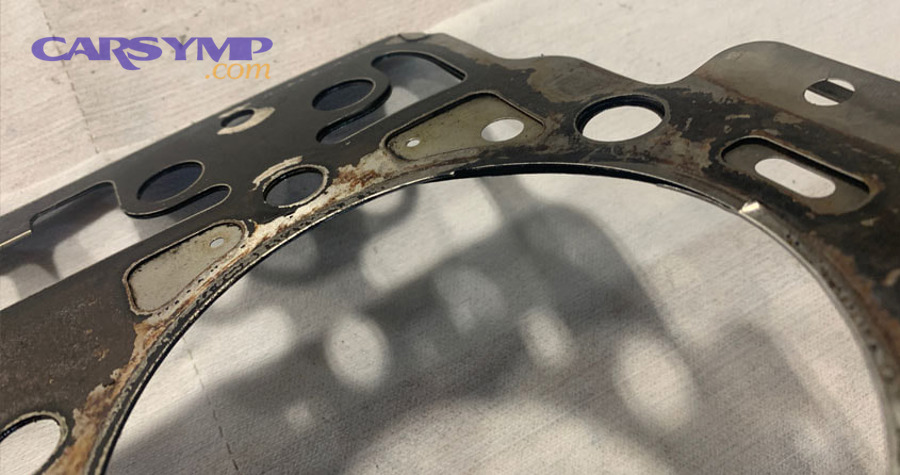
Which symptoms are the “top red flags” that strongly suggest a head gasket problem?
Some symptoms are common across many issues, but a few are highly suggestive of a blown head gasket—especially when they stack together.
Top red flags (high signal):
- Persistent overheating that returns quickly after cooling down, especially if it happens repeatedly on normal drives. (felpro.com)
- Unexplained coolant loss with no visible leak, meaning you keep topping off but don’t see puddles. (felpro.com)
- White smoke from the tailpipe after warm-up, often with a sweet smell (burning coolant). (felpro.com)
- Bubbling in the radiator or coolant reservoir while the engine is running (combustion gases entering the cooling system). (felpro.com)
- Milky/foamy oil on the dipstick or under the oil cap (coolant mixing with oil). (felpro.com)
A single symptom can mislead you. The real diagnostic power comes from combinations that point to one leak path—like white smoke + coolant loss = coolant entering cylinders, or bubbling + overheating = combustion gases pressurizing coolant.
Can head gasket failure cause overheating even when coolant looks full?
Yes—head gasket failure can cause overheating even when coolant looks full for at least three reasons: combustion gases can create hot spots and air pockets, cooling system pressure can spike and disrupt flow, and the thermostat/heater circuit can behave erratically due to trapped gas.
More specifically, “full coolant” doesn’t guarantee effective cooling when gas is entering the system.
Here’s how it happens in real driving:
- Combustion gases displace coolant and create air pockets
Coolant can’t absorb heat properly where it’s replaced by gas. The temperature gauge may climb fast, then drop, then climb again. - Cooling system pressure rises unnaturally
The system is designed to build pressure from heat expansion, not from combustion pulses. Excess pressure can force coolant into the overflow bottle and out of the system. - Coolant circulation becomes inconsistent
A pump moves liquid, not vapor. If vapor pockets form, flow can become uneven—especially under load or after a hard acceleration.
So if you see overheating that doesn’t match your “coolant level logic,” that mismatch is itself a clue pointing toward a sealing issue. (autozone.com)
What does white exhaust smoke mean, and when is it normal vs a warning sign?
Coolant-burning white smoke is the warning sign, while brief cold-start vapor is normal; the difference is persistence, thickness, and context—especially whether you’re losing coolant or overheating.
However, many drivers get tripped up by weather-related condensation, so use this comparison:
Normal condensation (usually harmless):
- Happens on cold mornings
- Looks like thin vapor
- Fades as the engine warms
- No consistent coolant loss
Possible head gasket failure smoke (warning):
- Continues after warm-up
- Looks thick, billowy, and persistent
- Often has a sweet smell
- Appears alongside coolant loss or overheating
If white smoke shows up with the other red flags (coolant disappearing, bubbling, overheating), it stops being a generic “smoke issue” and starts behaving like a blown head gasket pattern. (autozone.com)
How do you do a quick diagnosis checklist at home without special tools?
A quick at-home diagnosis is a 7-step observation routine—cold-to-hot checks, fluid inspection, and symptom tracking—that helps you connect head gasket failure symptoms to a consistent leak pattern without disassembly.
Next, we’ll keep it safe and practical, because the biggest risk in DIY diagnosis isn’t the engine—it’s opening a hot cooling system or misreading a normal condition as a failure.

DIY checklist (no special tools):
- Start cold: note how it starts and idles (smooth vs shaky).
- Watch the exhaust: vapor that disappears vs smoke that persists.
- Track the temp gauge: steady vs spikes; overheating at idle vs at speed.
- Check coolant level (cold only): mark the level and recheck after drives.
- Check oil condition: dipstick and oil cap for foam/milky residue.
- Look for external leaks: along head seam, hoses, radiator, water pump area.
- Note cabin heater behavior: sudden cold air at idle can suggest coolant flow issues.
You’re not trying to “prove it” in one moment—you’re trying to build a consistent story that matches one leak path.
Is it safe to open the coolant cap when you suspect a head gasket issue?
No—it is not safe to open the coolant cap on a hot or recently overheated engine, and head gasket problems can make the system even more pressurized than normal for at least three reasons: combustion gases add pressure, coolant can flash-boil into steam, and pressure can surge unpredictably.
To better understand, treat the cooling system like a pressurized container.
Safe approach:
- Only open the cap when the engine is fully cold (hours after driving).
- Use a thick towel and open slowly to release any residual pressure.
- Prefer observing the overflow reservoir level and behavior instead of opening the cap frequently.
If you need one takeaway: diagnosis is not worth a burn injury.
What can you learn from checking the oil cap, dipstick, and coolant reservoir?
You can learn whether fluids are mixing, which is one of the most diagnostic head gasket failure symptoms because the head gasket seals oil and coolant passages next to each other.
Specifically, look for these high-value cues:
Oil cap / dipstick clues
- Milky tan foam (“milkshake”) can indicate coolant in oil.
- A slight pale film can also be short-trip condensation, so compare it with dipstick oil color and driving habits (lots of short trips vs long drives).
- Oil level rising without adding oil can be suspicious (coolant dilution), but you still need confirmation.
Coolant reservoir clues
- Oily sheen or sludge in coolant suggests contamination.
- Bubbling while running can suggest combustion gases entering the cooling system.
- Coolant pushing out into the overflow bottle repeatedly can match over-pressurization.
Fel-Pro and AutoZone both highlight milky oil, bubbling in coolant, unexplained coolant loss, overheating, and white smoke as key symptoms tied to gasket sealing failures. (felpro.com)
Which symptom patterns matter most (cold start vs under load vs idle)?
The most important patterns are the ones that repeat under the same conditions, because a head gasket leak can be temperature- and load-sensitive.
Cold start patterns
- Rough idle that improves quickly can be many things, but rough idle + white smoke + coolant loss is more concerning.
- Misfires on startup can happen if coolant seeps into a cylinder overnight, then burns off at start.
Under load patterns (driving uphill / highway pull)
- A small gasket leak may show up only under cylinder pressure—so symptoms can spike during acceleration.
- Overheating that appears during load, combined with bubbling or overflow, is meaningful.
Idle patterns (traffic / parked)
- Overheating at idle can also be fan/radiator-related, so look for overlap with coolant loss, smoke, or oil contamination.
- Heater output turning cold at idle (then warm again while driving) can hint at air pockets and coolant circulation problems.
Pattern tracking turns scattered observations into a diagnosis path you can explain—and that’s exactly what helps when you’re deciding whether to proceed with head gasket repair or investigate other causes first.
Which tests confirm head gasket failure and how reliable are they?
The chemical block test wins for detecting combustion gases in coolant, compression testing is best for finding cylinder sealing loss, and leak-down testing is optimal for pinpointing where a cylinder is leaking—so reliability depends on which failure mode you’re trying to confirm.
However, the most reliable diagnosis comes from matching the right test to the symptom pattern you already observed.
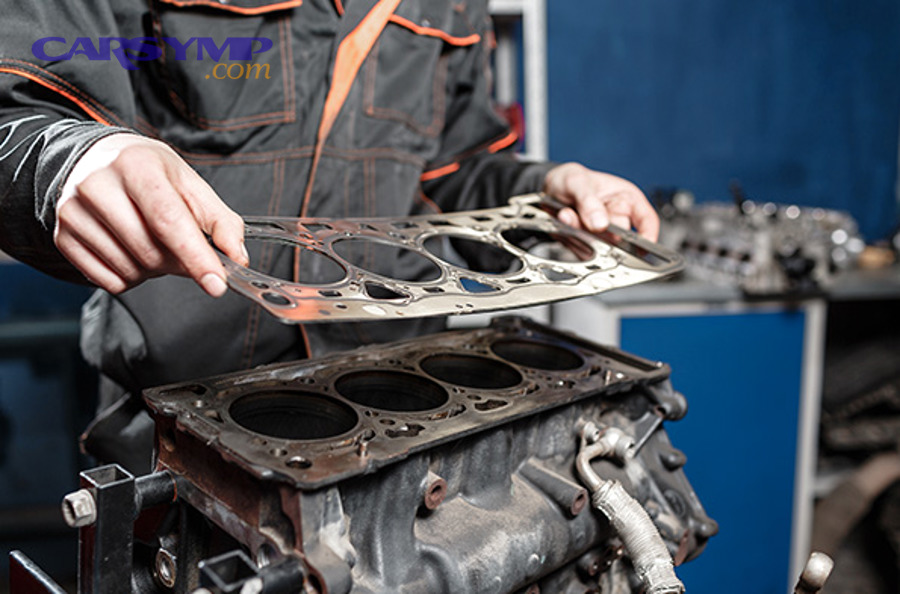
Which test is best: block test vs compression test vs leak-down test?
Here’s a practical comparison—what each test proves and when it’s most useful.
1) Chemical block test (combustion leak test)
- What it detects: combustion gases in coolant
- Best for: bubbling in reservoir, unexplained pressure buildup, overflow events
- Strength: confirms gas intrusion into the cooling system
- Limitations: may miss intermittent leaks if the leak doesn’t occur during the test
2) Compression test
- What it detects: low compression in one or more cylinders
- Best for: loss of power, misfires, rough running
- Strength: fast way to identify a weak cylinder seal
- Limitations: may look normal if the leak is small or only occurs hot/under load
3) Leak-down test
- What it detects: where the cylinder is leaking (air escaping into cooling system, intake, exhaust, crankcase)
- Best for: confirming borderline cases and pinpointing leak direction
- Strength: very specific when interpreted correctly
- Limitations: requires more equipment/skill
If your key symptom is bubbling/pressurization, start with the block test. If your key symptom is misfire/power loss, start with compression and follow with leak-down when results are unclear.
Can you have head gasket failure with normal compression?
Yes—you can have head gasket failure symptoms with normal compression for at least three reasons: the leak can be intermittent, it can be primarily coolant-to-cylinder without major ring seal loss, or it can occur only when the engine is hot and parts expand.
More specifically, early-stage leaks can act like a “pressure valve” that opens under heat and load, then closes when cold. That’s why relying on one test alone can mislead you.
A smarter approach is to use a two-track confirmation:
- Track A (cooling system clues): bubbling, overflow, unexplained coolant loss, block test
- Track B (combustion performance clues): misfires, power loss, compression/leak-down
When both tracks point toward the gasket, your confidence increases dramatically.
What other problems can mimic head gasket symptoms ?
A head gasket issue has several “look-alikes,” so you rule them out by comparing which system is failing and whether contamination/pressurization is present.
Overheating look-alikes
- Thermostat stuck closed: overheating happens, but you usually don’t get persistent white smoke or milky oil.
- Radiator or fan problem: overheating at idle is common, but coolant doesn’t typically vanish internally.
- Water pump issue: overheating and poor heater output can occur, but bubbling/combustion gases are less likely.
Coolant loss look-alikes
- External leaks (hoses, radiator, heater core): look for wetness, crusty residue, sweet smell near leaks.
- Radiator cap failure: can cause overflow and coolant loss, but won’t explain oil contamination.
White smoke look-alikes
- Normal condensation: disappears after warm-up and doesn’t consume coolant.
- Other internal coolant leaks: cracked head/block can mimic gasket symptoms, which is why some guides compare them directly. (felpro.com)
If you can’t find external leaks, and you have bubbling/pressurization or contamination, the “mimic” list shrinks fast.
Can you drive with head gasket failure symptoms, and what should you do next?
No—you generally should not keep driving with head gasket failure symptoms because overheating can escalate rapidly, coolant loss can cause sudden breakdown, and contaminated oil can destroy bearings; the safest next step is to reduce load, stop overheating, and plan a controlled inspection or tow.
More importantly, this is the decision point where a “symptom checklist” becomes a risk-management plan.
Should you stop driving immediately if you see these symptoms?
Yes—stop driving immediately if you see any of these combinations, because they strongly predict fast damage:
- Overheating + coolant loss (even if you top off, it returns)
- Overheating + white smoke after warm-up
- Milky oil / coolant contamination
- Bubbling + repeated overflow events
CRC’s guidance emphasizes stopping driving and seeking professional help when classic signs appear, because continuing can lead to more extensive engine repairs. (crcindustries.com)
If you only have one mild symptom (for example, slight coolant loss) and the engine is not overheating, you may have time to diagnose carefully—but you still should treat it as urgent until ruled out.
What is the safest next step: top off coolant, test, or tow?
Towing wins for safety when overheating or contamination is present, topping off coolant is only a short-term move to reach a safe location, and testing is the best choice when the engine is stable and you can reproduce symptoms safely.
Choose towing when:
- The temperature gauge climbs into the danger zone
- Coolant disappears quickly
- Oil looks milky/foamy
- White smoke is heavy and persistent
Top off coolant only when:
- You must move the car a very short distance to safety
- The engine is cool enough to add coolant safely
- You understand it’s not a fix—just damage control
Test when:
- You can keep the engine at normal temperature
- Symptoms are present but not escalating
- You can run a block test/compression/leak-down without risking overheating
This is also where repair planning begins. If tests confirm the gasket, you’ll typically weigh head gasket repair against the broader condition of the engine—because a high-mileage, already-worn engine may change the math.
What information should you document before visiting a mechanic?
Documenting evidence reduces diagnostic time and helps a shop choose the right tests first.
Bring these notes:
- When overheating happens (idle, highway, uphill, after 10 minutes, etc.)
- How often you add coolant and how much
- Whether white smoke persists after warm-up
- Any bubbling/overflow behavior you observed
- Oil appearance (dipstick and under cap)
- Any check engine light and scanned codes (misfire codes are useful)
- Recent history: overheating event, coolant service, radiator/thermostat changes
That “symptom timeline” often saves you from paying twice—once for general inspection and again for targeted testing.
Why do head gaskets fail, and how can you prevent a repeat failure after repair?
Head gaskets fail mainly from overheating-related warping, detonation/combustion stress, or long-term wear, and you prevent repeat failure by fixing the cooling system root cause, ensuring proper surface prep and torque procedure, and maintaining coolant/oil health after the repair.
In addition, this section helps you connect the “why” to smarter decisions about Preventing head gasket failure and choosing Alternatives: engine replacement vs repair when repair risk is high.

What are the most common causes of head gasket failure (overheating, detonation, age)?
There are 3 main causes of head gasket failure based on the criterion of what physically overwhelms the seal:
- Overheating and thermal warping
- The cylinder head can warp slightly when overheated.
- Warping reduces clamping uniformity, letting the gasket leak.
- Overheating is both a cause and a symptom, which is why the problem can snowball.
- Detonation / abnormal combustion pressure
- Excessive cylinder pressures can stress the sealing ring areas.
- This is more likely if the engine runs lean, has incorrect timing, or experiences knock.
- Age, corrosion, and clamping loss over time
- Heat cycles, corrosion, and material fatigue degrade gasket layers.
- Over time, small leaks become larger leaks—especially after a single overheating incident.
Once you see it this way, the prevention logic becomes straightforward: control heat, control pressure, and keep fluids healthy.
How can you prevent head gasket failure (cooling system maintenance checklist)?
You prevent head gasket failure by maintaining the cooling system so it can do its job consistently—especially under load and in hot weather.
Cooling system prevention checklist:
- Keep coolant at the correct mix ratio and change it on schedule (old coolant loses corrosion protection).
- Fix small coolant leaks early (hoses, clamps, radiator tanks, heater core seepage).
- Ensure the radiator cap holds pressure (pressure raises boiling point and improves cooling stability).
- Confirm fans operate correctly and the radiator is not clogged externally (debris) or internally (scale).
- Replace a thermostat that sticks or behaves inconsistently.
- Bleed air properly after coolant service (air pockets create hotspots).
This “maintenance first” approach is the antonym of how head gasket problems usually happen: neglect → overheat → warp → leak.
What mistakes lead to repeat head gasket failure after replacement?
Repeat failures often happen because the gasket replacement solved the seal but not the cause—or because installation details weren’t handled to spec.
Common repeat-failure mistakes:
- Cooling system root cause not repaired (bad radiator, fan, cap, thermostat, water pump)
- Cylinder head not checked for flatness after overheating (a warped surface can’t seal reliably)
- Improper torque sequence or torque-to-yield bolt reuse (clamping force becomes uneven)
- Dirty mating surfaces or incorrect sealant use where not specified
- Air not bled from the cooling system, causing localized hotspots right after the repair
So head gasket repair is rarely just the gasket—it’s a system fix: cooling + sealing + verification.
What’s the difference between a true “milkshake” oil contamination and harmless condensation?
Milkshake oil indicates significant coolant contamination, while harmless condensation is usually light, seasonal, and linked to short trips; the difference is the amount, location, and persistence.
Harmless condensation (common):
- Light beige film under oil cap in cold weather
- Mainly in vehicles driven on short trips
- Dipstick oil still looks normal and clears after longer drives
Coolant contamination (“milkshake,” serious):
- Thick, creamy, consistent foam
- Visible on dipstick and under cap
- Often accompanied by coolant loss and overheating
- Oil may look lighter, frothier, and may smell “off”
Why it matters: coolant in oil can change oil properties and lubrication behavior. A University of Southampton PhD study (Faculty of Engineering and the Environment, Tribology) in 2014 showed oil-related measurements like conductivity can shift significantly with temperature—e.g., a measured conductivity difference between samples was about 0.64×10⁻¹⁰ S/cm at 20°C and increased to ~1×10⁻⁹ S/cm at 90°C, highlighting how oil condition indicators can vary with operating temperature. (eprints.soton.ac.uk)
That’s one more reason not to “eyeball it once” and assume you’re safe—if you suspect contamination, confirm it and treat it as urgent.
Evidence (if any)
- Key symptom patterns (overheating, white smoke, bubbling, unexplained coolant loss, milky oil) are consistently identified as classic blown head gasket indicators in manufacturer/parts and automotive guidance. (felpro.com)
- Temperature-dependent changes in oil-related measurements (relevant when coolant contamination is suspected after head gasket failure) are documented in university tribology research. (eprints.soton.ac.uk)