


If your car says “Key Not Recognized” (or cranks but won’t start) and you suspect key transponder and antenna ring issues, the fastest solution is to confirm whether the immobilizer can read the chip and then fix the weak link—often the antenna ring/reader coil (transceiver) around the ignition barrel or its wiring.
Next, you’ll learn how to interpret the symptoms you’re seeing—especially Immobilizer warning light meaning—so you don’t replace the wrong part when the real cause is low voltage, connector corrosion, or a failing transponder key.
Then, you’ll get a practical DIY process for Spare key testing and troubleshooting, connector checks, and simple electrical tests that can verify an antenna ring/transceiver problem before you spend money on parts.
Introduce a new idea: once you’ve confirmed the fault, you’ll also see how to choose the safest fix (clean/secure, wiring repair, replacement, or programming) and when it’s smarter to stop DIY and involve a locksmith or dealer to avoid lockouts and repeat immobilizer problems.
What does “Key Not Recognized” mean in a transponder key + antenna ring system?
“Key Not Recognized” is a security message that means the immobilizer system cannot authenticate the transponder chip in your key through the antenna ring (reader coil/transceiver), so the ECU blocks starting even if the mechanical key turns the ignition.
To better understand why this happens, it helps to visualize the “handshake” between parts:
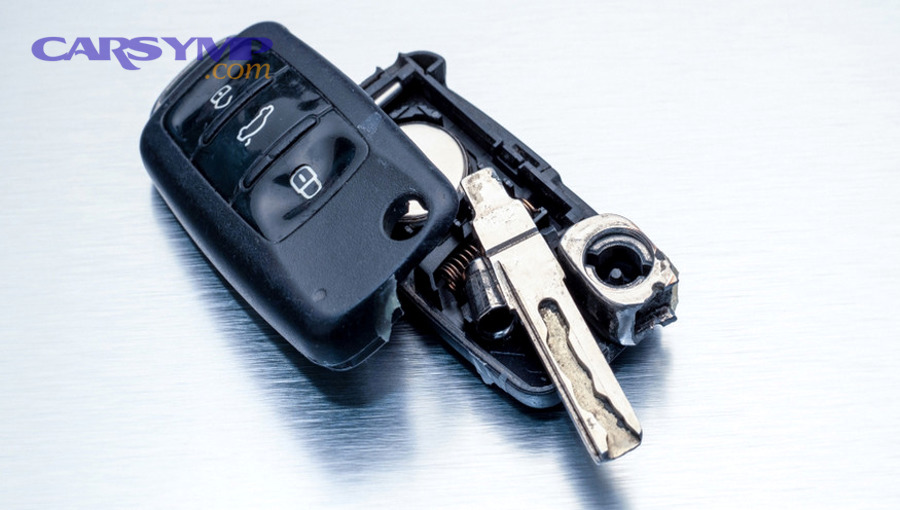
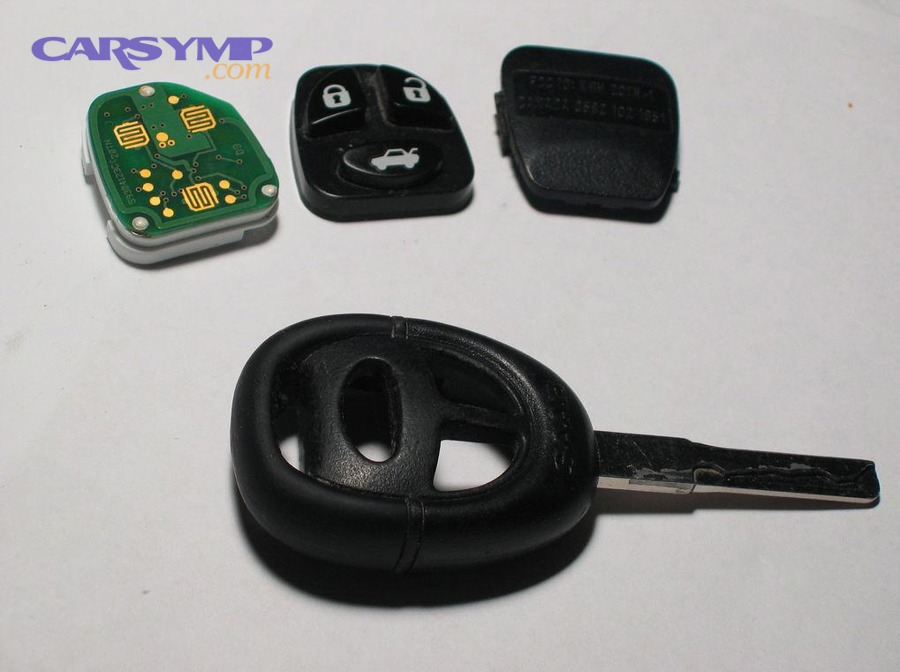
- Transponder key (chip): stores an ID (and sometimes cryptographic data).
- Antenna ring / reader coil / transceiver: sits near the ignition barrel (or within a start button area on some models) and energizes/reads the chip.
- Immobilizer module + ECU: decides “allow start” or “deny start.”
When the ring/reader can’t energize or read the chip reliably, the system behaves exactly like a theft attempt. That’s why the vehicle may:
- crank but not fire,
- refuse to crank at all (depending on design),
- start intermittently, then fail again,
- show a security/immobilizer warning or a “key” icon.
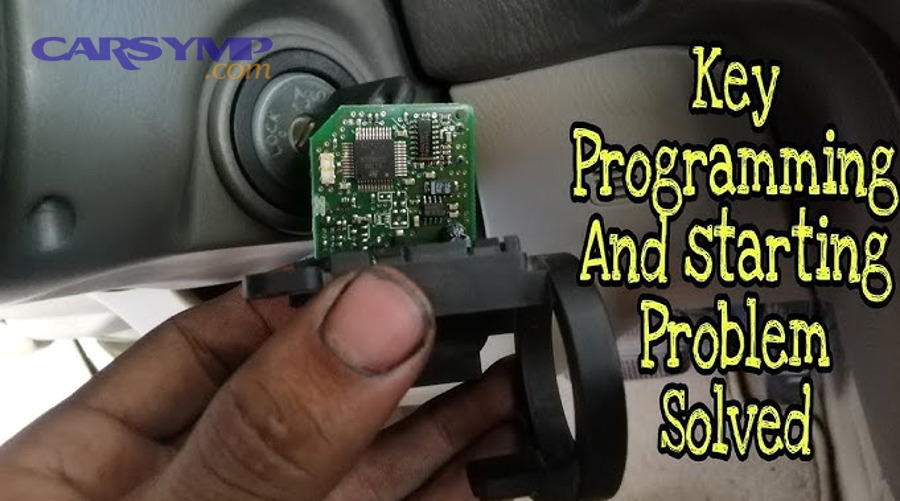
The key point is that authentication must happen every time you start the vehicle. Even a tiny wiring break, a loose connector, or a marginal reader coil can create intermittent failures that look “random,” especially when temperature and steering-column movement change the connection.
According to NHTSA’s vehicle theft prevention guidance, immobilizing-type devices can include keys with computer chips and can disable systems to prevent hot-wiring, which is why the vehicle refuses to start when authentication fails. (nhtsa.gov)
Is the antenna ring (reader coil/transceiver) the most likely cause of your no-start?
Yes—the antenna ring (reader coil/transceiver) is a leading suspect in “Key Not Recognized” scenarios because (1) it’s physically stressed near the steering column, (2) it relies on clean connectors and stable voltage, and (3) its failures are often intermittent, matching real-world symptoms of immobilizer problems.
Below is how to confirm you’re on the right track without guessing.
Does the security/immobilizer light behavior confirm a key-recognition problem?
Yes, immobilizer light behavior can confirm a recognition problem because it’s directly tied to the authentication state, it often changes pattern between “armed” vs “fault,” and it frequently appears alongside “Key Not Recognized.”
However, the exact pattern differs by vehicle, so use this as a directional clue, not a final verdict. Here’s a reliable way to interpret it:
- Normal behavior: brief light-on at key-on, then off after authentication.
- Recognition fault behavior: rapid flashing, persistent solid light, or a message displayed at the same time as the no-start.
- Lockout behavior: the system may stop accepting attempts for a period after repeated failures.
This is where readers get stuck: they want one universal code. The better approach is “pattern + context.” If the light changes behavior exactly when the key won’t start the car, you’re likely dealing with a recognition path issue (key, reader coil, wiring, immobilizer module, or voltage).
Can a weak battery or low voltage mimic antenna ring issues?
The antenna ring wins as the likely cause when the security warning is strong and repeatable, but a weak battery is best for explaining random electronics glitches, and a failing key is optimal for “one key works, the other doesn’t.”
In practice, low voltage can absolutely mimic key transponder and antenna ring issues because the reader coil and immobilizer electronics need stable power. Use this quick comparison:
- Weak battery tends to cause: slow crank, clicking, dim lights, multiple modules acting weird.
- Reader coil/transceiver tends to cause: normal crank but no start, or an immediate “denied” start with a security warning.
- Both together can happen: a marginal reader coil may only fail when voltage dips during cranking.
A fast sanity check is to look for “classic battery” clues (slow crank, recent cold weather, battery age). If you have a multimeter, you can confirm battery health before deep diagnosis—but don’t stop there if the immobilizer indicator is clearly implicated.
Can a damaged key transponder chip look identical to a bad antenna ring?
Yes, a damaged transponder chip can look identical because the immobilizer only cares about authentication, the symptom is the same (“key not recognized”), and physical key damage isn’t always visible.
That’s why the best early test is the simplest: Spare key testing and troubleshooting.
- If a spare key starts the car consistently, your “reader coil path” is probably fine, and your primary key is suspect.
- If both keys fail the same way, suspect the antenna ring/transceiver, wiring, or immobilizer module.
- If the failure is intermittent on both keys, suspect wiring/connector strain or a marginal reader coil.
Here’s a short “triage table” to keep diagnosis objective (it summarizes what the next sections will prove with tests):
| What you observe | Most likely bucket | Why it fits |
|---|---|---|
| Only one key fails; spare always starts | Key transponder issue | Authentication differs by key |
| Both keys fail; security light consistent | Reader coil / wiring / module | Common path is failing |
| Failures worsen when turning wheel/tilting column | Wiring/connector strain | Movement changes contact |
| Works after waiting, then fails again | Lockout or intermittent electronics | Timing suggests system state |
What are the most common causes of antenna ring/transceiver failures?
There are 5 main causes of antenna ring/transceiver failure symptoms—coil failure, connector corrosion, wiring breaks, mechanical misalignment, and low-voltage sensitivity—based on where the immobilizer signal path is most physically stressed and electrically fragile.
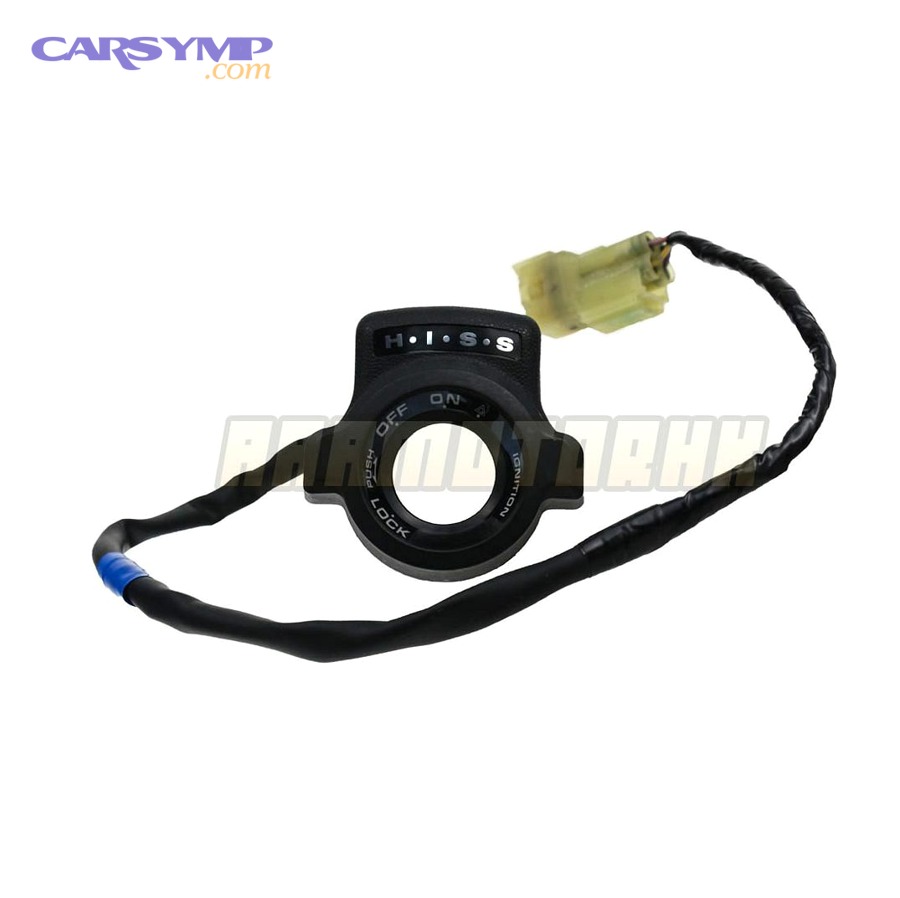
More specifically, the highest-frequency problems happen where the steering column moves, where trim rubs wiring, and where connectors sit just close enough to pick up moisture or vibration over years.
Which faults are “intermittent” vs “hard fail,” and why does that matter?
Hard-fail faults win for quick confirmation, intermittent faults are best for explaining “it starts tomorrow,” and thermal/movement faults are optimal for repeated comebacks.
This matters because your test strategy changes:
- Hard fail (often open circuit / fully dead coil): car almost never recognizes the key; security indicator is repeatable.
- Intermittent (connector/wire strain): recognition depends on wheel position, column tilt, temperature, or vibration.
- Thermal intermittent (marginal components): works cold then fails hot, or the reverse.
If your car fails “randomly,” assume it’s not random—it’s a condition you haven’t isolated yet. The fix is to reproduce the failure safely (without excessive cranking or repeated lockouts) while watching the immobilizer indicator and scanning for codes.
Which scan codes point to an antenna ring/transceiver issue vs a key or immobilizer module?
There are 3 common code groupings you’ll see—key authentication/ID errors, antenna/transceiver communication errors, and immobilizer/ECU handshake errors—based on which stage of the security handshake fails.
Specifically:
- Key authentication/ID errors: suggest the ECU/immobilizer didn’t like the key’s response (could be key or reader).
- Antenna/transceiver communication errors: suggest a reader coil/transceiver circuit issue (power, ground, wiring, or coil).
- Immobilizer/ECU handshake errors: suggest module communication or configuration issues (sometimes after module swaps).
Important caution: generic OBD-II scanners often miss immobilizer-specific detail. If your tool is limited, don’t “force” the diagnosis from incomplete codes. Use codes as a supporting signal, not the only signal.
How can DIY drivers test the antenna ring and related wiring safely before replacing parts?
A practical DIY test method is a 6-step triage sequence—spare key check, battery sanity check, visual/connector inspection, reproduce-by-movement test, basic coil/wiring measurement (if appropriate), and scan validation—designed to confirm the failure path and reduce unnecessary parts swapping.
Below, each step connects directly to what fails most often on real vehicles.
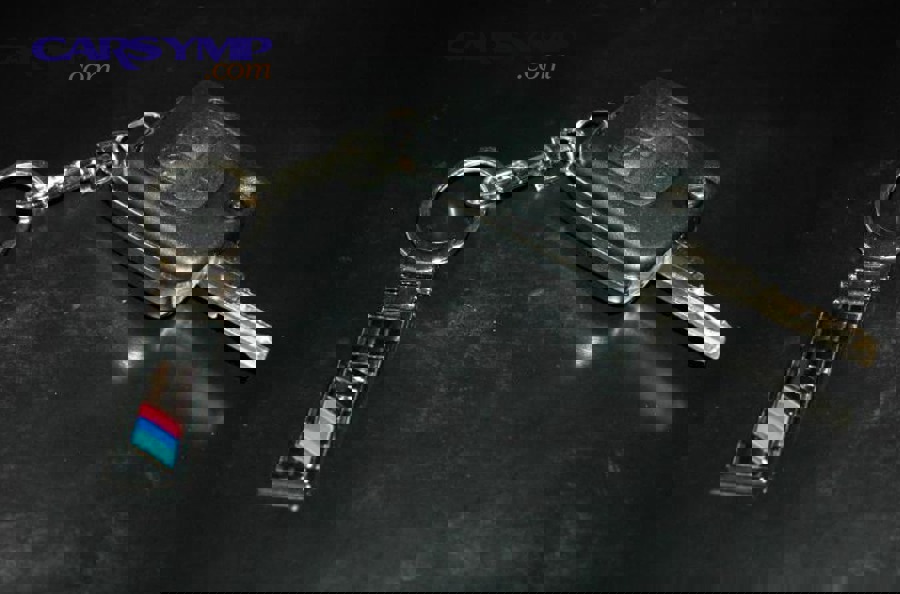
Can you confirm the problem with a spare key test in under 5 minutes?
Yes, you can confirm the direction quickly because a spare key isolates the “key chip” variable, it’s non-invasive, and it’s the highest-signal test before disassembly.
Do it like this:
- Use the spare key in the same starting conditions (same temperature, same parking angle).
- Try 3 starts (not 20)—you want a consistent signal, not a lockout.
- Compare security light behavior between keys.
Interpretation:
- Spare works consistently: your original key is likely bad or borderline.
- Spare fails the same way: move focus to reader coil/transceiver, wiring, module, or voltage.
This is exactly why technicians start here—it saves you from replacing a ring when the key is the culprit.
What connector and harness checks find the highest percentage of “free fixes”?
The highest-yield checks are (1) reseating connectors, (2) inspecting for chafing near column movement points, and (3) cleaning light corrosion, based on how frequently vibration and steering-column motion loosen small electrical contacts over time.
Work methodically:
- Remove trim carefully (use plastic trim tools).
- Locate the reader coil/transceiver connector.
- Inspect for:
- loose locking tabs,
- green/white corrosion,
- stretched or pinched wires,
- signs of water intrusion,
- rubbing marks where the harness touches metal edges.
Then:
- Reseat the connector firmly.
- If corrosion is present, use appropriate electrical contact cleaner and ensure it’s fully dry before reconnecting.
- Secure the harness so steering-column adjustment doesn’t tug it.
These are “free fixes” because they cost time, not parts—and they often resolve intermittent immobilizer problems.
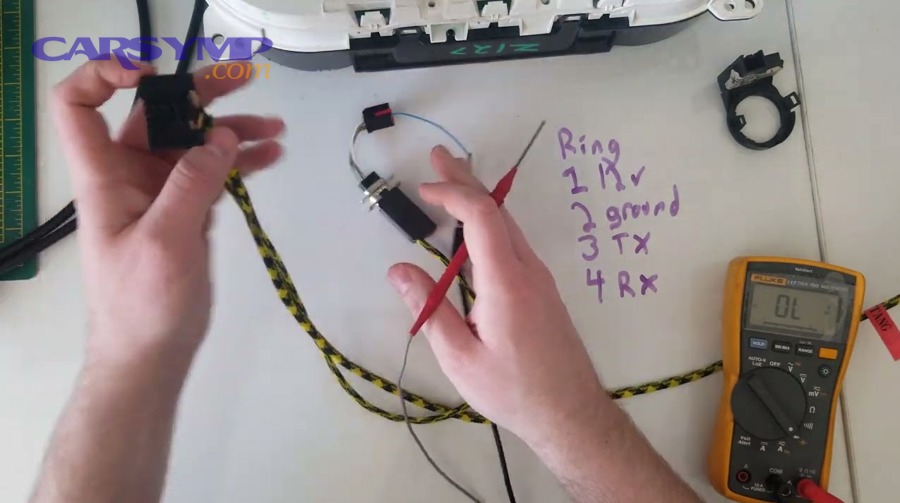
Should you measure resistance/continuity on the reader coil, and what are the limits of that test?
Yes, you can measure continuity because a fully open coil is a clear failure, it’s quick, and it can confirm a hard fault—but no, you should not treat “in-range resistance” as proof the coil is good, because many failures are intermittent or load-dependent.
Use this rule:
- Open circuit (infinite resistance): strong evidence the coil/transceiver circuit is broken.
- Some resistance present: only means “not completely open,” not “healthy.”
Why the limit exists:
- Different vehicles have different coil designs and expected values.
- Some systems integrate electronics so resistance alone is not meaningful.
- Intermittent breaks may only appear when the harness is flexed.
If you do measure:
- Disconnect the battery as recommended by your service manual and follow airbag safety precautions.
- Don’t probe connectors blindly—avoid damaging terminals.
- Combine the reading with a gentle “wiggle test” (move the harness slightly and see if continuity drops).
How do you avoid triggering airbag faults when working near the steering column?
The safest approach is to disconnect power properly, avoid airbag connector circuits, and follow the wait time guidance for your vehicle, because steering columns often share space with SRS wiring and a mistake can trigger faults or worse.
Then, keep it practical:
- Turn ignition off and remove key.
- Disconnect battery negative terminal.
- Wait the recommended time (varies by vehicle and manual).
- Avoid yellow SRS connectors and harnesses.
- Reconnect carefully and verify you didn’t pinch wiring during reassembly.
If you’re not confident with steering-column trim work, skip the deeper steps and move to professional help—this isn’t the place for “trial and error.”
What fixes work best for antenna ring/transceiver problems, and when is replacement the right call?
There are 4 main fix types—connector service, wiring repair, reader coil/transceiver replacement, and key/programming actions—based on whether the failure is contact-related, circuit-related, component-related, or credential-related.
More importantly, the best fix is the one that matches what your tests proved, not what “usually fails.”
Does replacing the antenna ring/transceiver require programming or relearn procedures?
Yes (sometimes)—replacement may require programming or a relearn because some vehicles treat the transceiver as a matched security component, some store keys in immobilizer memory, and some require security access to re-enable starting after parts changes.
Here’s the practical decision logic:
- If the transceiver is a simple reader coil assembly: it may be plug-and-play (vehicle dependent).
- If the system ties transceiver/immobilizer identity together: you may need a relearn procedure or dealer/locksmith programming.
- If you’re in an “all keys lost” situation: programming becomes the main event, not the transceiver swap.
Ford explicitly sells parts labeled “Transceiver Ignition Immobilizer Antenna,” reflecting how common and modular this component is in some platforms. (ford.com)
How do you choose between “replace ring,” “replace key,” and “diagnose immobilizer module”?
Replacing the ring wins when both keys fail with consistent security warnings, replacing the key is best when only one key fails, and diagnosing the immobilizer module is optimal when codes and behavior suggest handshake/configuration problems beyond the reader circuit.
Use this structured choice:
Choose “key replacement/programming” when:
- spare key works reliably,
- your main key is physically damaged or water-exposed,
- problem follows the key, not the car.
Choose “reader coil/transceiver repair or replacement” when:
- both keys fail,
- failures correlate with column movement/temperature,
- connector/harness inspection shows strain or corrosion,
- continuity/open-circuit points to a broken reader circuit.
Choose “immobilizer module/ECU diagnosis” when:
- you have module communication errors,
- the vehicle recently had module swaps,
- security access is required and DIY tools can’t proceed.
A big reason this matters: incorrect parts swapping can trigger deeper immobilizer lockouts or leave you stuck with a car that needs security access anyway.
When should you stop DIY and call a locksmith or dealer?
Yes, you should stop DIY and call a locksmith/dealer in several scenarios because immobilizers can lock out after repeated failed attempts, some repairs require security access/programming, and steering-column work has safety risks—especially when symptoms point beyond a simple reader coil issue.

Use these three “stop now” reasons:
- All keys lost or both keys are failing and you can’t confirm the reader circuit.
You’re likely entering a programming/security-access job, not a simple part swap. - You’re seeing repeated lockouts or escalating immobilizer problems.
More attempts can make recovery slower and more expensive. - Your diagnosis requires steering column disassembly and you’re not confident.
Airbag/SRS risk is real; mistakes can create new faults.
A good locksmith with immobilizer capability can often confirm whether the key is being read in minutes, which prevents wasted parts. A dealer is often needed if the platform requires proprietary security access.
What vehicle-specific and edge-case factors can cause recurring transponder + antenna ring problems?
Recurring issues usually come from system-specific differences (like Ford PATS), interference, thermal/movement intermittents, or “all keys lost” security states, which is why some vehicles seem “fixed” and then fail again under the same hidden condition.
In addition, these edge cases explain why two people can have the same symptom but need different fixes.
How do Ford PATS transceiver issues differ from other immobilizer systems?
Ford PATS terminology often makes diagnosis clearer because the “transceiver” is a defined component near the ignition area, while other platforms may hide the reader function inside a different module or integrate it with the ignition switch housing.
Practically, this means:
- PATS vehicles may present straightforward “transceiver circuit” issues when the ring/wiring fails.
- Other systems may surface more abstract “key authentication” faults where the reader function is less obviously separate.
This is why parts catalogs and service info frequently call out “PATS transceiver” as a replaceable item on many models, while other brands emphasize key programming or module-level diagnosis.
Can aftermarket remote starts, keychain transponders, or RFID interference cause “key not recognized”?
Yes, interference can cause recognition failures because multiple transponders near the reader can confuse the handshake, some aftermarket systems alter the immobilizer path, and certain key cases or accessories change how the key sits relative to the antenna ring.
Try these isolation steps:
- Remove extra keys/transponders from the keychain.
- Don’t store an RFID badge on the same ring during testing.
- If you have an aftermarket remote start or bypass module, test with it disabled (if safe and supported).
If the problem disappears after removing accessories, you’ve found a “micro” cause that looks like a hardware failure but isn’t.
Why do heat/cold and steering-column movement trigger intermittent antenna ring failures?
Heat/cold and movement trigger intermittent failures because thermal expansion changes resistance and contact pressure, and column movement physically flexes harnesses and connectors near the ignition barrel—exactly where the reader coil wiring lives.
To confirm without over-cranking:
- Reproduce the condition (cold morning vs warm afternoon).
- Use gentle harness movement while observing whether the immobilizer indicator changes.
- Stop after a few attempts to avoid lockouts.
Once proven, the fix is usually securing the harness, repairing the weak wire, or replacing a marginal transceiver.
What should you do in “all keys lost” or immobilizer lockout situations to avoid making it worse?
In all-keys-lost or lockout situations, the best move is to stop repeated attempts, document your vehicle details, and involve a locksmith/dealer with security access, because the immobilizer may require timed procedures or authorized programming to restore starting.
Do this instead of guessing:
- Verify VIN, ownership documents, and key type.
- Ask whether the platform supports on-site programming.
- Avoid swapping random immobilizer-related modules (can complicate matching).
This is where “DIY enthusiasm” often increases cost—because the immobilizer is designed to resist trial-and-error.
According to research by Tilburg University (Department of Economics), in 2013, uniform adoption of engine immobilizers reduced the probability of car theft by an estimated ~50% on average in the Netherlands during 1995–2008, illustrating how strictly these systems block unauthorized starts. (research.tilburguniversity.edu)