


If you’re dealing with a car lock or key problem, the fastest fix usually comes from calling the right professional first: a locksmith for mechanical access/key services, or a mechanic for electrical/module/actuator diagnosis. The goal is to avoid unnecessary towing, prevent damage, and get you back on the road with the least friction.
Next, this guide will map the most common symptoms—lockout, broken key, key that won’t turn, remote that won’t work, and “turns but won’t start”—to the most likely system at fault. That symptom-to-system link is what determines whether an automotive locksmith or a mechanic is the better first call.
Then, you’ll learn a quick, safe triage process you can do in under 10 minutes to separate a purely mechanical lock issue from power lock or anti-theft electronics—so you don’t pay for the wrong service call or diagnostic route.
Introduce a new idea: once you can confidently choose the right provider, you can also decide whether a dealership or roadside service makes more sense in special cases—like smart keys, warranty restrictions, or complex security systems.
What does “locksmith vs mechanic” mean for car lock and key problems?
A “locksmith vs mechanic” decision means choosing the specialist whose tools and training match the type of failure: a locksmith is best for access and key/cylinder work, while a mechanic is best when locks are fine but electronics, actuators, wiring, or vehicle modules are failing.
To better understand that choice, it helps to define what each professional normally does on modern vehicles—and where the overlap ends.
What does an automotive locksmith do (and not do)?
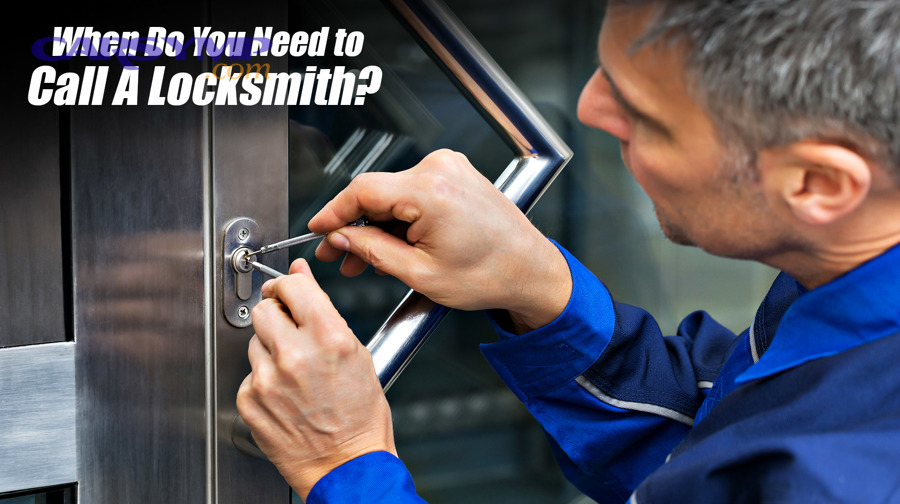
An automotive locksmith is a mobile specialist who solves mechanical access and key/cylinder problems—especially when you’re locked out, your key breaks, or your key needs cutting/programming.
More specifically, locksmith work typically includes:
- Lockout entry (non-destructive entry when possible): Opening a locked vehicle without breaking glass or damaging weather seals.
- Key cutting and duplication: From basic metal keys to high-security cuts depending on the vehicle.
- Transponder and smart key programming: Many locksmiths can program transponder chips and, in many cases, proximity keys.
- Broken key extraction: Removing key fragments from the door cylinder or ignition cylinder.
- Lock cylinder repair/replacement: Rebuilding or replacing worn door cylinders and, sometimes, ignition cylinders.
- Rekeying to match one key: When door and ignition keys don’t match after previous repairs.
Where locksmiths usually stop is deep diagnosis of vehicle electrical systems—like diagnosing a body control module (BCM), chasing intermittent wiring faults, or analyzing why the starter circuit isn’t being permitted.
What does a mechanic do (and not do) for lock/key/ignition issues?
A mechanic is the better first call when the “lock and key” symptom is actually caused by electrical controls, actuators, wiring, or security modules—especially when physical locks work but the system won’t execute.
Specifically, mechanic work commonly includes:
- Diagnosing power lock failures: Door actuator motors, wiring harness faults, switches, BCM outputs, and fuse/relay issues.
- Diagnosing starting authorization issues: Many “key-related” no-starts are immobilizer problems or module communication faults rather than a bad metal key.
- Steering column and ignition switch repairs: Distinguishing between an ignition cylinder (mechanical) and an ignition switch (electrical).
- Module-level fault tracing: BCM, ECU/PCM permissions, anti-theft communication problems, and CAN bus issues.
Where mechanics often stop is cutting keys or providing mobile lockout service on the spot. A mechanic shop can replace parts, but they may still subcontract key cutting/programming to a locksmith or dealer depending on the vehicle.
Should I call a locksmith first for this symptom?
Yes—call a locksmith first when the problem is mainly mechanical access or key/cylinder-related, because (1) they can usually come to you, (2) they solve lockouts and broken keys without towing, and (3) their tools are designed to minimize damage to locks and trim.
Next, match your symptom to the most likely “locksmith-first” scenario so you don’t lose time or money on the wrong call.
Am I locked out, or is the key broken in the door/ignition?
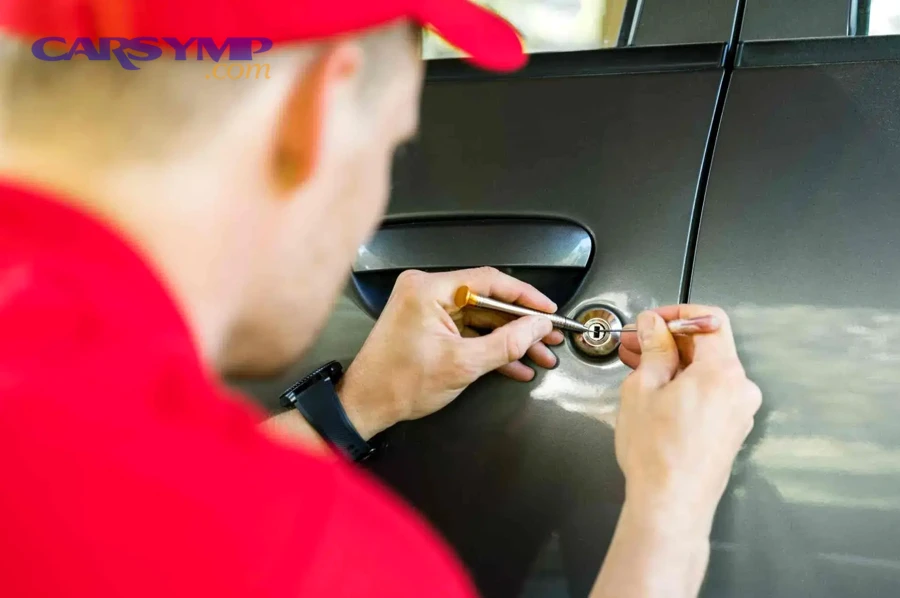
If you’re locked out or the key broke in the lock, a locksmith is usually the fastest fix because the solution is access + extraction—not electrical diagnostics.
Specifically, locksmith-first situations include:
- Keys locked in the car (doors closed, trunk closed, spare key unavailable).
- Key broke in the door cylinder (you can’t insert or turn another key).
- Key broke in the ignition cylinder (key fragment stuck, cylinder won’t accept a new key).
- Trunk lock problems (mechanical key/trunk cylinder issues on older vehicles).
Practical tip: if your vehicle has frameless windows or tight weather seals, inexperienced entry attempts can bend trim or damage seals—so the locksmith’s specialized tools and technique matter.
Does the key physically not turn, stick, or feel rough in the lock/ignition?
If the key won’t turn and it feels like a mechanical bind, a locksmith is often the better first call—especially when the steering wheel is locked or the cylinder is worn.
For example, locksmith-first mechanical indicators include:
- Key inserts fully but will not rotate, and the steering wheel is “loaded” against the lock.
- Key rotates with grinding/roughness or requires wiggling to turn.
- Key won’t insert smoothly (debris, worn wafers, damaged key blade).
- Key is stuck in the cylinder (often a worn cylinder or binding mechanism).
However, if the key turns normally but the vehicle won’t start, the issue may be electronic authorization—so you’ll decide differently in the mechanic-first section below.
Do I need a replacement key, spare key, or reprogramming?
If your goal is “get a working key again,” a locksmith is often the best first call because they handle cutting and many forms of programming without requiring a dealership visit.
More specifically, locksmith-first key needs include:
- Spare key creation (you still have at least one working key).
- Lost key replacement (depending on model and security system).
- Transponder key programming (chip-in-key systems that must be recognized by the car).
- Remote/key fob pairing (when supported by the vehicle and the locksmith’s tools).
This is also where modern systems complicate the picture: if your car uses a proximity smart key and the system requires dealer-only security access, the dealership can become the better option—but you should still start by identifying the key type so you don’t overpay.
According to a study by Tilburg University from the Department of Economics, in 2016, researchers found that mandatory electronic engine immobilizers reduced car theft by an estimated 40%, which helps explain why many modern “key issues” are actually security-authorization failures rather than simple mechanical problems.
Should I call a mechanic first for this symptom?
Yes—call a mechanic first when the lock hardware is not the core problem and the symptom points to (1) power lock actuators or wiring, (2) body control module behavior, or (3) starting authorization and security electronics, because those require diagnostic workflows and scan tools.
Then, use the symptom patterns below to recognize mechanic-first problems quickly.
Do the power locks behave oddly (one door, intermittent, clicking, no response)?
If your remote or lock switch is inconsistent—or only one door fails—this is usually an actuator, wiring, or module issue, which is a mechanic-first path.
Specifically, these patterns often indicate an electrical/system problem:
- Only one door won’t lock/unlock: Commonly a door actuator motor or a broken wire in the door jamb harness.
- Locks click rapidly or cycle: Can point to a failing actuator, water intrusion, or BCM logic reacting to abnormal feedback.
- Locks work from inside switch but not from remote: Could be a fob issue, receiver issue, or programming—but also can be module-side.
- No doors respond: Check battery, fuses, and BCM power/ground—mechanic territory.
A locksmith can replace a mechanical cylinder, but they can’t efficiently trace an intermittent door harness short or a BCM output issue the way a mechanic can.
Does the key turn but the car won’t start (security light / immobilizer warnings)?
If the key turns but the engine won’t start—especially with a security indicator—this is often an electronic authorization problem, and a mechanic is typically the best first call to confirm system status and fault codes.
More specifically, this is where immobilizer problems appear, and the culprit may be:
- A failed or unrecognized transponder chip in the key
- A vehicle-side reader fault such as Key transponder and antenna ring issues (the antenna ring around the ignition cylinder on many cars reads the key’s chip)
- BCM/ECU permission problems (modules not agreeing on “authorized start”)
- Aftermarket alarm/remote-start conflicts preventing authorization
A locksmith can help if the problem is a bad key or the key needs programming, but a mechanic’s scan tool and diagnostic workflow are often necessary first to determine whether the car is refusing authorization or another start system is failing.
According to a study by the University of Birmingham from the School of Computer Science, in 2016, researchers reported that weaknesses in certain keyless entry implementations could put millions of vehicles at risk of theft, which is one reason modern security systems can produce confusing “key-related” symptoms even when the mechanical key is fine.
Is the issue tied to the steering column, ignition switch, or electrical accessories?
If the dashboard stays dark, accessories don’t power on, or the starter doesn’t engage even though the key rotates, the issue may be the ignition switch or column wiring—not the key or cylinder—so mechanic-first makes sense.
For example, mechanic-first indicators include:
- Key turns, but no dash lights (possible ignition switch electrical failure, fuse/relay, or power feed problem).
- Accessories cut in/out with bumps (wiring/connector issues in the column).
- Starter doesn’t click (could be switch, relay, neutral safety switch, or module permission).
- Intermittent failures that don’t correlate with key movement or lock feel.
This is where “it feels like the key” often misleads drivers—because the key is simply an input, while the failure is downstream in electrical control.
How can I diagnose “lock problem vs electrical problem” in under 10 minutes?
You can diagnose lock vs electrical problems in under 10 minutes by using three checks—spare key behavior, manual vs remote behavior, and battery symptoms—to separate mechanical binding from electronic authorization and power lock control.
Below, follow this quick triage because it reduces wrong calls and helps you describe the issue accurately to the provider.
Does a second key/spare fob change the outcome?
Yes—if a second key solves the problem, your issue is likely key-side rather than vehicle-side, which often points to locksmith-first solutions like key replacement, cutting, or programming.
Specifically:
- Second key starts the car: the original key’s transponder or internal electronics may be failing.
- Second key unlocks remotely: the first fob may have a dead battery or internal button contact failure.
- Both keys fail the same way: vehicle-side fault is more likely (mechanic-first path).
A spare key test is powerful because it isolates the key variable quickly without tools.
Does the manual key work differently than the remote/fob?
Manual vs remote behavior is one of the cleanest separators between mechanical and electrical problems.
However, interpret it like this:
- Manual key works, remote doesn’t: likely fob battery, fob programming, receiver, or BCM logic—often mechanic-first if programming/receiver/module is suspected.
- Remote works, manual key doesn’t: likely a worn or damaged door cylinder—locksmith-first.
- Neither works consistently: likely power, module, actuator, or wiring—mechanic-first.
If you can explain this difference to the provider, you shorten the diagnostic path immediately.
Do battery symptoms explain the lock/key behavior?
Yes—battery problems can mimic lock and key failures because locks, modules, and immobilizer authorization rely on stable voltage.
Moreover, check for:
- Slow crank or clicking: weak car battery can cause “no start” that looks like a key problem.
- Remote range suddenly short: often a fob battery issue.
- Random module behavior: low voltage can cause odd lock cycling, false warnings, or intermittent no-start.
In practice, a quick voltage check or jump start can clarify whether you’re chasing a key/cylinder issue or a system voltage problem.
What are the most common scenarios and who is best to call?
A locksmith wins in lockouts and key/cylinder work, a mechanic is best for actuator/module diagnosis, and a dealership becomes optimal for certain smart-key security workflows—so the “best call” depends on whether access, programming, or electrical authorization is the bottleneck.
To illustrate, the scenarios below act like a decision tree you can follow when you’re stressed and need a clear next step.
Which pro is best for “all keys lost”?
A locksmith is often the best first call for “all keys lost” because mobile key creation can avoid towing, but the dealership may be required for certain encrypted smart-key systems.
Specifically, your best path depends on:
- Vehicle year and key type: older transponder keys are often easier for locksmiths; newer proximity systems may have tighter security.
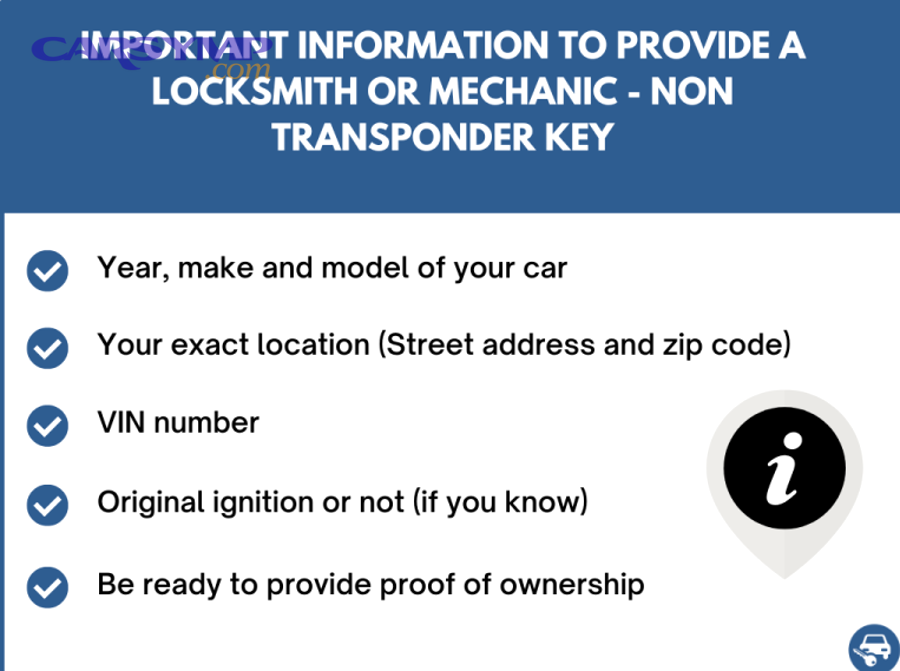
- Proof of ownership: reputable providers will require ID and registration/title.
- Whether modules require dealer-level security access: some models restrict programming workflows.
If you want the fastest outcome, start by identifying your key type (metal/transponder/smart) and asking the provider what they can support for your exact year/make/model.
Which pro is best for “key stuck in ignition” or “ignition won’t turn”?
A locksmith is often best if the issue is mechanical binding in the ignition cylinder, while a mechanic is better if the key turns but the electrical switch or shift interlock is the actual failure.
More specifically, common splits look like this:
- Key won’t turn + steering wheel is locked hard: likely steering lock binding (often solved with wheel relief + key technique, or cylinder wear).
- Key stuck + feels physically jammed: worn cylinder wafers or damaged key blade (locksmith-first).
- Key turns but won’t release from ignition: can be shift interlock or electrical control issue (mechanic-first).
The key is to separate rotation resistance (mechanical) from vehicle logic preventing release (electrical).
Which pro is best for “remote works sometimes” or “only one door fails”?
A mechanic is usually best for intermittent remote behavior or one-door failures because actuators, wiring breaks, and module logic are common culprits.
However, if the remote works perfectly but the manual key binds or doesn’t match, a locksmith may be needed for cylinder repair or rekeying. In short, intermittent = system; consistent mechanical bind = cylinder.
How much does a locksmith vs a mechanic typically cost, and what affects the price?
A locksmith usually costs less for lockouts and key services, a mechanic can cost more when diagnostics and electrical tracing are needed, and the dealership often costs the most for smart-key restricted workflows—so your price depends mainly on key type, labor time, and whether parts/modules are involved.
Next, focus on cost drivers rather than a single number, because the same symptom can route to very different work scopes.

What factors raise the cost for locksmith work?
Locksmith cost rises with key complexity, security level, and urgency.
Specifically, the biggest cost multipliers are:
- After-hours or emergency mobile service
- Smart/proximity keys and advanced programming
- High-security or laser-cut keys
- All-keys-lost service (more time, more programming steps)
- Cylinder replacement + rekeying (parts + labor)
If you’re comparing quotes, make sure you’re comparing the same scope: “unlock only” vs “unlock + new key” vs “unlock + programming” are very different services.
What factors raise the cost for mechanic work?
Mechanic cost rises when the issue requires diagnostic time, electrical tracing, and module/actuator replacement.
More importantly, mechanic bills often include a diagnostic fee even before parts are replaced, especially when symptoms are intermittent or security-related.
This is also where the phrase Diagnostic cost for immobilizer issues matters: immobilizer and module authorization faults can take longer to confirm than a simple mechanical failure, because the technician may need to scan multiple modules, verify key recognition, and confirm antenna/reader signals.
According to a cost estimate compiled by RepairPal in January 2026, a general diagnosis commonly averages $122 to $179 in the U.S., and immobilizer-related diagnostic time can be higher if the fault is intermittent or requires deeper module testing.
How do I choose a trustworthy provider and avoid damage or scams?
You can choose a trustworthy provider by verifying credentials and scope upfront, because (1) reputable pros confirm ownership, (2) they explain the method before drilling or replacing parts, and (3) they provide clear pricing and documentation—reducing damage risk and scam exposure.
Then, use the checklist below to protect your vehicle and your wallet.

What questions should I ask before the service starts?
Ask questions that confirm method, scope, and accountability. For example:
- “What exactly is included in the price?” (unlock only vs unlock + key cutting vs programming)
- “Will you attempt non-destructive entry first?” (for lockouts)
- “Do you need proof of ownership?” (a good sign if yes)
- “Is there a warranty on parts/labor?”
- “If this turns out to be electrical/module-related, what’s the next step?” (prevents dead-end spending)
For mechanics, also ask whether the diagnostic fee is credited toward the repair if you approve the fix.
What are red flags that should make me stop and choose someone else?
Yes—there are clear red flags you should treat as “stop now,” because they often predict overcharging or unnecessary damage.
However, the biggest warning signs are:
- Immediate drilling with no explanation: drilling is sometimes necessary, but it should never be the first move without attempts and justification.
- Vague pricing or refusal to itemize: “We’ll see when we get there” often becomes a blank check.
- No ownership verification: reputable providers protect themselves and you by requiring ID/registration.
- Pressure tactics: “Pay now or I leave” before any work is performed is a common scam pattern.
In short, the most trustworthy providers communicate process, confirm identity, and document everything.
When should I choose a dealership or roadside assistance instead of a locksmith or mechanic?
A dealership is best for certain restricted smart-key and warranty workflows, roadside assistance is best for simple lockouts when you trust the method, and locksmith/mechanic remain best for most practical scenarios—so the “instead of” choice depends on security restrictions, urgency, and risk of damage.
Below, use these comparisons to decide when alternatives are truly better, not just more familiar.

Is a dealership better for smart keys, warranty work, or security reprogramming?
Yes—dealerships can be better for certain smart-key systems and warranty situations because (1) they have OEM tooling and security access, (2) they can update module software if needed, and (3) warranty rules sometimes require dealer documentation.
Meanwhile, dealerships can be slower and more expensive, and they often require towing if you have no working key, so the tradeoff is access vs authority.
If your vehicle is newer and uses proximity keys with strict security processes, a quick call to the dealer parts/service desk can confirm whether locksmith programming is supported for your model.
Should I use roadside assistance for lockouts—and when is it a bad idea?
Yes—roadside assistance is a good option for lockouts when you want a low-effort solution and the vehicle is easy to enter safely, but it’s a bad idea when the entry method risks damage or when the lockout involves complex access constraints.
Specifically, avoid roadside-only solutions when:
- The vehicle has frameless windows or delicate trim that can be bent
- You suspect a broken key fragment or damaged lock cylinder
- The car is in a high-risk spot and you need the fastest specialized response
According to AAA’s Via roadside reporting, 10% of AAA roadside calls in 2024 were for vehicle lockouts, which shows how common the problem is even in the keyless era.
Can aftermarket alarms/remote starts cause “lock/key” symptoms that need a specialist?
Aftermarket alarms and remote starts can cause lock/key symptoms by interrupting authorization signals or power lock control, so you may need a specialist when symptoms started after installation or appear only under certain conditions.
For example, these systems can conflict with factory anti-theft logic, produce intermittent no-start events, or create unexpected lock cycling—making the problem look like a “bad key” when it’s really a control conflict.
If the issue began right after an install, contacting the installer or an automotive electrical specialist can be faster than swapping parts blindly.
How can I prevent repeat lockouts or lock/ignition failures?
You can prevent repeat lockouts and lock/ignition failures by combining habit changes with low-cost maintenance: keep a spare strategy, replace fob batteries proactively, and address early mechanical binding before it becomes a stuck key or broken blade.
To sum up, prevention that actually works includes:
- Maintain a spare key plan (home, trusted person, or secure hideaway—not in the vehicle)
- Replace the fob battery on a schedule (especially before winter or long trips)
- Stop forcing a binding key (binding often precedes breakage)
- Address intermittent lock behavior early (actuator/wiring issues usually worsen, not improve)
According to a study by Tilburg University from the Department of Economics, in 2016, the broad effectiveness of immobilizers in reducing theft also implies that modern vehicles rely heavily on correct key authorization—so maintaining your keys, programming, and related electronics is now part of practical “lock and key” prevention, not just convenience.