


Aftermarket alarms can absolutely create immobilizer problems—including “no crank,” “cranks but won’t start,” and random security lockouts—because many systems interrupt the starter or ignition circuit (or confuse the vehicle’s anti-theft logic) when wiring, relays, or power supply isn’t perfect.
Next, this guide shows you how to confirm the alarm is truly the cause before you start cutting wires, because a weak battery, blown fuse, or a factory immobilizer/key issue can look identical from the driver’s seat.
Then, you’ll follow a step-by-step diagnostic flow that isolates the most common failure points—starter-kill relays, poor splices, bad grounds, and low-voltage behavior—so you can repair the circuit cleanly or decide to remove the alarm safely.
Introduce a new idea: even if you plan to “just get it started,” the safest long-term fix is the one that restores factory continuity and avoids repeat lockouts, which is exactly what the sections below are built to do.
What does it mean when an aftermarket alarm causes “immobilizer (anti-theft) faults”?
An aftermarket alarm causes “immobilizer (anti-theft) faults” when it blocks the vehicle’s start authorization path—usually by interrupting the starter/ignition circuit, dropping voltage, or mis-signaling the anti-theft system—so the engine cannot crank or cannot run reliably.
To better understand why this happens, start by separating what you see (symptoms) from what’s actually happening electrically (where the start path is being broken).
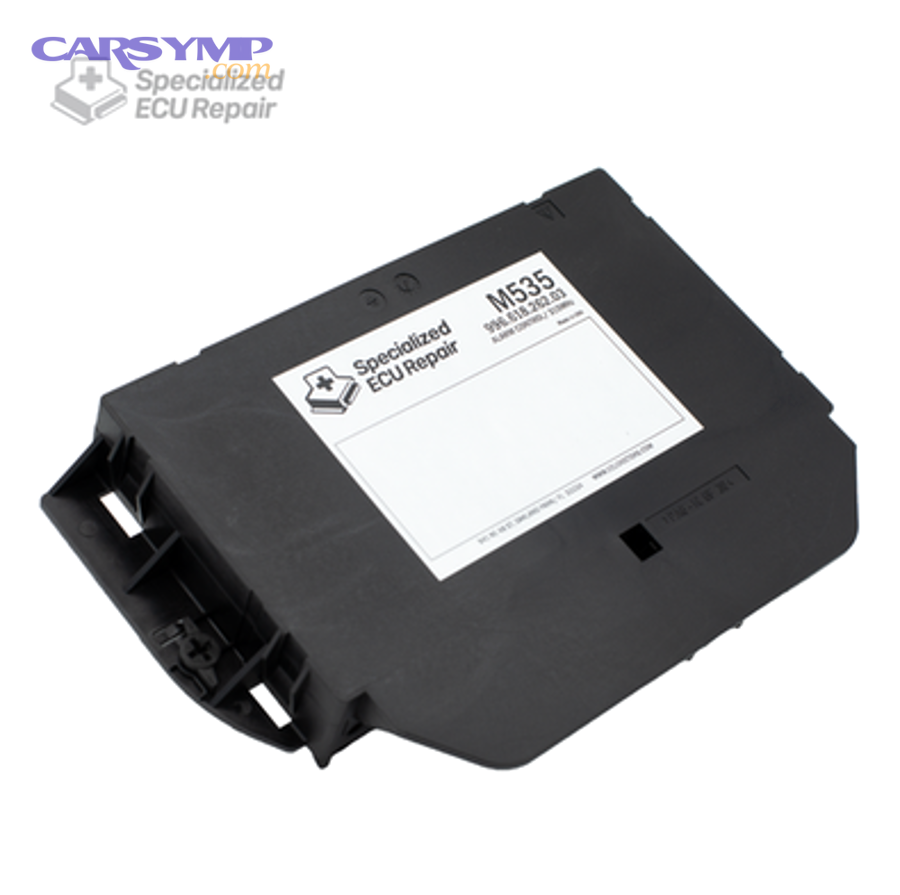
What are the most common symptoms of an alarm–immobilizer conflict (no crank vs crank/no start)?
Aftermarket alarm conflicts usually fall into a few repeatable symptom patterns, and the pattern tells you where to look first.
1) No crank (starter never turns)
- You turn the key (or push start), lights come on, but the starter is silent—or you only hear a click.
- This is classic starter-kill behavior: the alarm interrupts the starter trigger wire using an inline relay.
2) Cranks but won’t start
- Starter spins the engine, but it never fires, or it starts then immediately dies.
- This often points to an ignition feed interrupt, a fuel/ECU enable interruption, or a factory immobilizer that isn’t seeing the right “OK to run” state.
3) Intermittent start / random stall
- Works for days, then suddenly locks out; or it dies when hitting bumps.
- This strongly suggests a loose splice, corroded connection, or a relay that’s failing under heat/vibration.
4) Security indicator behavior changes
- The immobilizer light stays on, flashes abnormally, or behaves differently after the alarm arms/disarms.
- In many cars, the immobilizer lamp is tied to authorization logic; in others it’s tied to the body control module’s security state—either way, it’s a clue that the anti-theft pathway is being disrupted.
The key transition is this: “no crank” is usually a starter-circuit interruption, while “crank/no start” is usually an enable/authorization interruption—and aftermarket alarms can cause either depending on where the installer tied in.
Can an aftermarket alarm trigger an immobilizer lockout even if the key is good?
Yes—an aftermarket alarm can trigger an immobilizer lockout even if the key is good because it can (1) cut the starter or ignition circuit, (2) create low-voltage conditions that disrupt authorization, and (3) introduce electrical noise or incorrect signals that the security system interprets as tampering.
More specifically, a “good key” only solves one part of the chain: the transponder/authorization step. If the alarm breaks the chain after authorization (starter-kill relay opens) or prevents authorization from completing (voltage drop on ignition sense), the car still won’t start.
Here’s what that looks like in real life:
- Starter-kill relay stuck open: the immobilizer might be happy, but the starter never gets the trigger signal.
- Ignition sense missing: the immobilizer/BCM expects to see ignition voltage transition; the alarm prevents it, so it denies run authorization.
- Low battery voltage event: after a weak battery, jump-start, or long parking period, the security modules may behave erratically; the alarm can amplify the problem by adding parasitic draw or weak connections.
Is “immobilizer fault” always the immobilizer, or can it be a starter/ignition interrupt masquerading as one?
A starter/ignition interrupt can masquerade as an immobilizer fault in the same way a broken light switch can look like a blown bulb: the symptom is “no light,” but the root cause is upstream.
However, the difference matters because:
- A true immobilizer failure often involves key recognition, immobilizer antenna, or module communication.
- A false immobilizer-looking failure from an alarm is usually a broken circuit (starter-kill, ignition feed, ground, fuse, relay).
Practically, you don’t “guess” which it is—you triage the chain:
- Is battery voltage stable?
- Is the starter trigger path intact?
- Is ignition power present where it should be?
- Does the vehicle show security/authorization faults in codes or indicator behavior?
That triage is exactly what the next section is for.
Is the aftermarket alarm really the cause of the immobilizer fault?
Yes—an aftermarket alarm is often the root cause when the problem began after installation, the symptoms change with arming/disarming, and the starter/ignition circuit shows an added relay or non-OEM splice, because those three signs directly link the failure to the alarm’s control path.
Next, confirm the alarm’s involvement with quick checks that reduce risk, because many people accidentally create a worse no-start by unplugging modules before restoring the interrupted circuit.
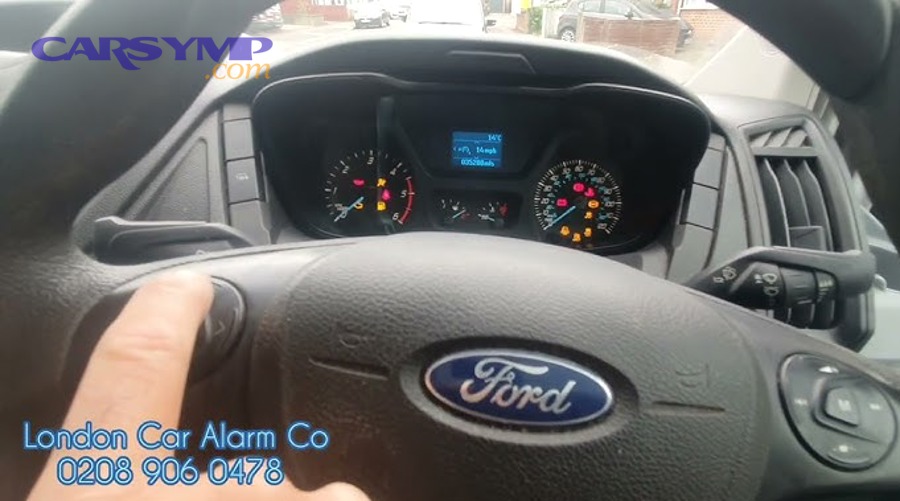
Did the problem start right after alarm installation, battery replacement, or jump-start?
Yes—timing is one of the strongest diagnostic signals, because a fresh install, battery work, or jump-start often disturbs the exact weak points that cause security lockouts.
For example:
- Right after alarm install: common issues include mis-identified wires, weak crimp connections, wrong relay wiring, or a missing fuse.
- After battery replacement/jump-start: low voltage and sudden voltage spikes can expose marginal alarm wiring, cause alarm “brain” glitches, or trigger a security state that needs a proper reset sequence.
- After long parking: alarms can contribute to parasitic draw; a low battery causes modules to behave unpredictably, and the immobilizer may deny start even though the key is fine.
The transition to keep in mind: when the fault begins right after a change, the change is part of the cause until proven otherwise.
What “quick checks” confirm the alarm is interfering (valet switch, alarm status, starter-kill relay click)?
There are five fast checks that can confirm alarm interference without cutting any wires.
1) Check if arming/disarming changes the symptom
- If the car starts only when the alarm is disarmed a certain way, or fails only when armed, the alarm is implicated.
2) Locate the valet/override switch (if installed)
- Many aftermarket alarms include a hidden switch; toggling it can place the system into valet mode, disabling starter-kill.
- If valet mode makes the car start normally, the starter-kill circuit is the likely fault area.
3) Listen for relay behavior
- When you arm/disarm, you may hear a relay click under the dash. A missing or repeated clicking can indicate relay failure or power/ground issues.
4) Inspect the under-dash harness near the ignition cylinder
- Starter-kill installs often cut a factory wire and route it through an alarm relay. Non-OEM tape, butt connectors, and inline fuses are common clues.
5) Check alarm power and ground integrity
- A loose ground can make the alarm behave randomly—arming/disarming inconsistently and intermittently blocking start.
These checks are useful because they keep you in “observation mode” before you do anything irreversible.
Should you disconnect the alarm module first, or test the starter/ignition circuit first?
You should test the starter/ignition circuit first, because disconnecting the alarm module can leave the starter-kill relay in an “open” state that permanently blocks starting until the interrupted wire is restored.
However, there’s a safer approach that balances speed and risk:
- Step 1: identify whether the symptom is “no crank” or “crank/no start.”
- Step 2: verify battery voltage and key indicators.
- Step 3: inspect for a starter-kill relay and confirm whether the factory wire has been cut and rerouted.
Once you see the interrupt point, you can decide whether to temporarily bypass for testing (carefully) or move directly to a proper repair.
How do you diagnose the problem step-by-step without causing more damage?
Use a structured isolation method with 7 steps—observe the symptom, stabilize battery voltage, verify fuses and grounds, identify the alarm interrupt (starter-kill/ignition), test continuity, scan for security-related codes, and confirm repair by restoring factory continuity—so the car starts reliably again.
To begin, treat diagnosis like a chain: if you fix the first broken link, the rest of the system often “magically” works again.
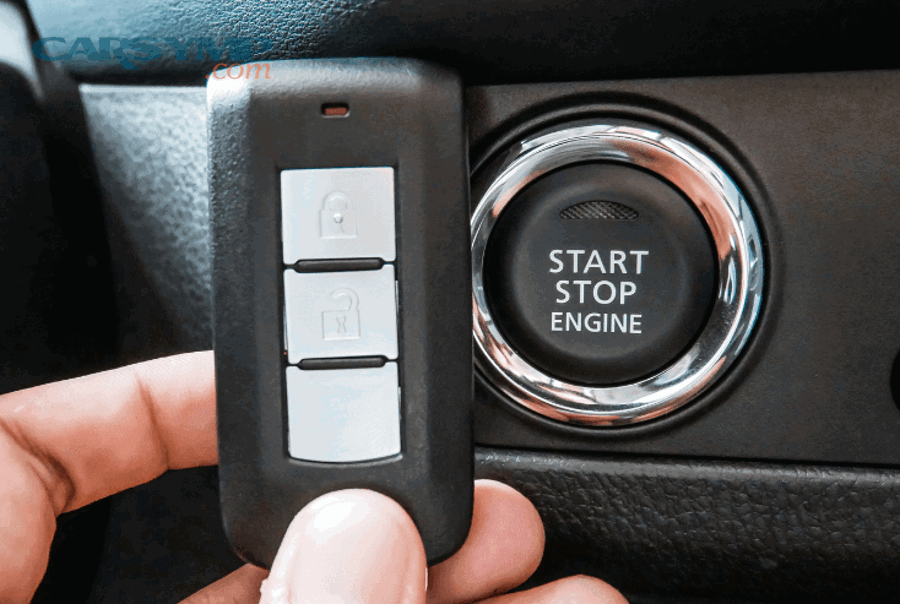
What is the safest diagnostic order for no-start with an aftermarket alarm installed?
Follow this order because it starts with low-risk checks and only moves to invasive steps once you have evidence.
Step 1 — Identify the symptom precisely
- No crank? Cranks/no start? Starts/dies? Intermittent?
- Write it down; this prevents guesswork later.
Step 2 — Stabilize power
- Low voltage can create false immobilizer behavior.
- If possible, charge the battery or use a stable power supply before deeper testing.
Step 3 — Check fuses tied to ignition/start/security
- Look for blown fuses in both the interior and engine bay fuse boxes.
- Aftermarket alarms often add inline fuses; a blown inline fuse can disable the alarm brain in a way that locks the starter-kill.
Step 4 — Quick visual inspection for alarm integration
- Look under the dash near the steering column and ignition harness.
- Identify non-OEM splices, taped bundles, and aftermarket relays.
Step 5 — Identify the interrupt type
- Starter-kill relay in the starter trigger wire?
- Ignition feed interrupt?
- Data/CAN integration?
Step 6 — Test continuity and voltage at the interrupt point
- For no crank: test the starter trigger wire continuity through the alarm relay.
- For crank/no start: verify ignition-run power and any ECU enable-related feeds.
Step 7 — Scan codes (engine + body/security if possible)
- A basic OBD-II scan can help, but many immobilizer faults live in body modules.
This order works because it prevents a common trap: “unplug everything” can turn a simple intermittent splice into a guaranteed no-start.
Where is the starter-kill/ignition interrupt usually installed, and how do you identify it?
A starter-kill/ignition interrupt is usually installed in the driver footwell under the dash, spliced into the ignition switch harness (or starter trigger wire), because that location provides easy access to the start circuit and a short wire run to the alarm brain.
More specifically, look for these identifiers:
- A relay with four or five terminals (often a small cube relay) tied to the alarm harness
- A factory wire that is cut and reconnected through the relay (two ends of the same-color OEM wire routed to the relay)
- Non-OEM connectors: butt connectors, Scotch-locks, or solder joints wrapped in electrical tape
- Inline fuse holders near the alarm power feed
If you’re trying to understand the concept visually, a generic alarm diagram shows how “engine cut” relays are commonly wired into the start path:
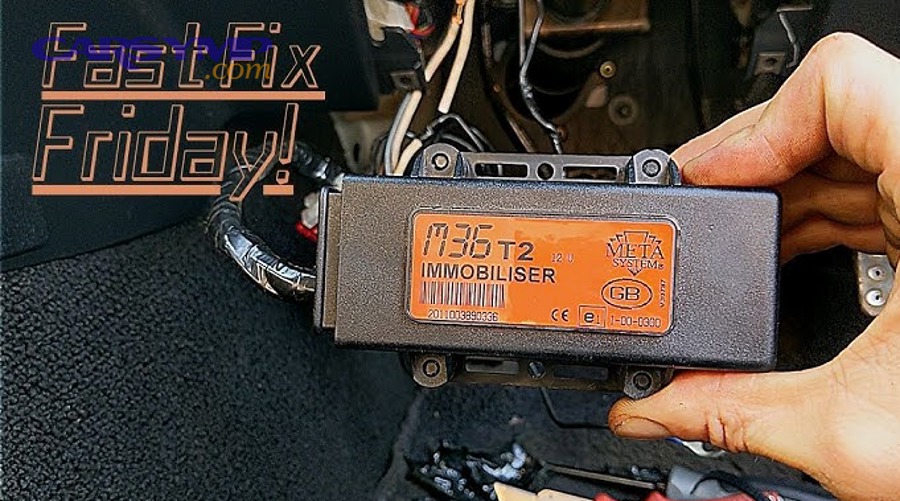
The hook to carry forward: if you find a cut factory wire routed through a relay, you’ve found the most likely no-start bottleneck.
What should you scan for: OBD engine codes or body/immobilizer codes—and why?
Body/immobilizer codes are the most valuable for true authorization failures, while OBD engine codes are more useful for fuel/air/spark issues and some communication faults—so the best answer is: scan both, but interpret them differently.
However, here’s the practical reality:
- Many cheap scanners read only powertrain (engine) codes.
- Immobilizer faults may be stored in the body control module (BCM), immobilizer module, or security gateway.
That’s why it helps to separate the failure into two questions:
- Is the engine being allowed to start/run? (authorization)
- If allowed, is the engine capable of running? (fuel, spark, compression)
This is where an Immobilizer vs battery/fuel issues checklist keeps you honest. The table below compares what each root cause typically looks like.
Table: This checklist compares common symptom clues to help you distinguish immobilizer/anti-theft problems from battery/power issues and fuel/spark issues.
| Symptom/Clue | Immobilizer / anti-theft issue | Battery/power issue | Fuel/spark issue |
|---|---|---|---|
| Starter behavior | Often no crank or starts then dies | Slow crank, clicking, dim lights | Normal crank speed |
| Security light | On/flashing abnormally | Usually normal | Usually normal |
| Dash resets / clock resets | Sometimes (after low voltage) | Common | Rare |
| Happens after alarm arm/disarm | Common | Unrelated | Unrelated |
| Codes | Security/BCM codes possible | Low-voltage and module reset codes | Misfire, fuel pressure, crank sensor, etc. |
| Quick confirm | Restore starter-kill continuity | Charge/replace battery; check grounds | Fuel pressure / spark test |
Use this table as a guardrail: it prevents you from calling everything “immobilizer” when the real issue is power supply or fuel delivery.
What are the most common fixes for alarm-caused immobilizer/no-start issues?
There are five main fixes for alarm-caused immobilizer/no-start issues: stabilizing battery voltage, resetting/overriding alarm state, replacing a failed starter-kill relay, repairing bad splices/grounds, and restoring the factory circuit (with or without removing the alarm), based on what your diagnosis found.
Next, apply fixes in order from least invasive to most permanent—because the goal is not just “start once,” but “start every time.”
Which “reset” steps can work first (battery reset, valet mode, alarm override), and when should you skip them?
Reset steps can work first when the alarm is glitched but the wiring is intact; you should skip them when you have clear evidence of a broken interrupt circuit (like a cut starter wire routed through a failing relay).
Specifically, try these reset/override options only after you stabilize battery voltage:
- Valet/override mode: if your system has a valet switch, use it to disable starter-kill temporarily.
- Alarm brain reset: disconnect power to the alarm module (not the whole car) only if you can confirm it won’t leave the starter-kill open.
- Battery disconnect reset: sometimes clears a “stuck” alarm state, but it can also create new module sync issues on some vehicles—so treat it as a controlled experiment, not a default.
When to skip reset steps:
- If you already found a burnt relay, loose splice, or corroded ground, resetting won’t fix physical faults.
- If the problem is intermittent and changes with vibration, it’s usually connection-related, not software-related.
As you work, keep the phrase “Key programming and reprogramming steps” in the right place: that belongs to true immobilizer/key authorization problems, not starter-kill wiring issues. If your diagnosis points to the factory immobilizer, you may need those steps later; if it points to the alarm relay, you don’t.
How do you repair a failed starter-kill relay or bad splice so the factory circuit is restored?
To repair a failed starter-kill relay or bad splice, you restore the original factory wire path with a solid, low-resistance connection (correct gauge, proper joint, protected from vibration), then verify that the starter trigger signal is continuous from the ignition switch to the starter circuit.
More specifically, the high-reliability approach looks like this:
- Identify the factory wire that was cut
- You should see two ends of the same-color OEM wire routed to an aftermarket relay.
- Confirm that wire controls starter trigger (for no crank symptoms)
- Use continuity testing or wiring reference information if available.
- If you’re unsure, pause—misconnecting the wrong wire can create new faults.
- Remove the relay from the critical path
- If the relay is the failure point, it should no longer be between the two ends of the cut OEM wire.
- Reconnect OEM wire end-to-end
- Prefer OEM-style repair methods:
- Solder + heat-shrink (done correctly, not a cold joint)
- High-quality crimp connector rated for automotive vibration + sealed heat-shrink
- Avoid twist-and-tape repairs. They fail, and failures look like “mystery immobilizer faults.”
- Secure and protect
- Use loom/tape similar to OEM harnessing.
- Anchor the repair so it isn’t hanging, pulling, or rubbing against sharp edges.
- Verify
- The car should crank reliably across multiple start attempts.
- Wiggle test gently: if vibration recreates the problem, the connection still isn’t solid.
This is the “restore factory continuity” principle: it solves the root cause rather than temporarily overpowering it.
If the alarm is integrated on CAN-bus, what’s different about the fix compared to wire-cut installs?
CAN-bus integrated alarms fail differently: instead of breaking a physical starter wire, they can create communication errors, incorrect security states, or module wake/sleep problems—so the fix is more about removing the device cleanly and restoring data integrity than reconnecting a single cut wire.
However, even CAN-bus systems sometimes include a physical starter-kill as a backup, so you still need to check for:
- an inline relay
- an ignition interrupt
- an aftermarket harness adapter
The practical differences:
- Wire-cut install: you repair by restoring the original wire path.
- CAN-bus integration: you repair by ensuring the alarm is removed/disabled without leaving the car in a confused security state, and sometimes by reinitializing vehicle modules.
If your troubleshooting suggests the issue is in the factory immobilizer rather than the alarm hardware, that’s where professional tooling matters—especially for true Key programming and reprogramming steps. Many vehicles require security access and correct procedures to relearn keys or resync immobilizer modules.
Should you bypass, disable, or remove the aftermarket alarm to solve immobilizer faults?
Bypass wins for fast diagnosis, disabling is best for reversible troubleshooting, and full removal is optimal for long-term reliability—because bypass proves the root cause, disabling reduces risk without rewiring everything, and removal plus factory restoration prevents repeat failures.
Meanwhile, your decision should be guided by two realities: (1) safety and legality, and (2) whether the system will keep failing due to poor installation quality.
Is it safe to temporarily bypass the starter-kill to confirm the diagnosis?
Yes, it can be safe to temporarily bypass the starter-kill to confirm the diagnosis if you (1) secure the vehicle so it cannot move unexpectedly, (2) perform a reversible bypass that does not damage the harness, and (3) treat it strictly as a short diagnostic step—not a permanent solution.
More specifically, here are three reasons it’s considered a valid diagnostic move:
- It isolates the alarm from the start circuit, proving whether the alarm is the bottleneck.
- It reduces guessing, which prevents unnecessary parts replacement.
- It speeds professional repair, because you can tell a shop exactly where the failure is.
Safety rules that keep this responsible:
- Work in park/neutral with the parking brake set.
- Keep the vehicle in a controlled environment.
- Remember that bypassing a theft deterrent increases theft risk; don’t leave it that way.
If you discover the bypass restores starting, your next step is not “leave it bypassed”—it’s “repair the circuit correctly.”
When is full alarm removal the best option, and what must be restored afterward?
Full alarm removal is the best option when the install quality is poor, the fault is recurrent, or the alarm brain/relay system is failing—and the non-negotiable requirement afterward is restoring factory wiring continuity and module behavior exactly as designed.
More specifically, removal tends to be the best long-term play when:
- You find multiple weak splices, corroded grounds, or “mystery wires.”
- The alarm is an old/unbranded unit with unreliable behavior.
- You’ve already repaired one failure and a different one appears (a sign of systemic install problems).
What must be restored after removal:
- Starter trigger wire continuity (if it was cut)
- Ignition power integrity (if it was interrupted)
- Ground quality (no shared weak grounds)
- No leftover inline fuses feeding dead-end circuits
- Harness protection (insulated, secured, and not rubbing)
This is exactly why many “won’t start after removing alarm” stories happen: the module is removed, but the cut wire that used to go through the relay is never rejoined.
What’s the difference between “disable the alarm brain” and “restore the immobilizer/start circuit”?
Disabling the alarm brain means the alarm stops making decisions; restoring the immobilizer/start circuit means the vehicle’s original electrical path is intact and no longer depends on the alarm to complete the starting chain.
On the other hand, you can disable a brain and still have a no-start if:
- the starter-kill relay is still wired inline and stuck open
- the cut factory wire ends are still separated
- the alarm harness is still providing a partial ground/power path that confuses modules
So, if you want a reliable start, focus on the circuit first:
- restore the cut wire
- verify the starter trigger signal
- confirm ignition power behavior
- then decide whether to keep, disable, or remove the alarm system
That approach keeps you from “solving” the alarm while the car remains immobilized.
When should you stop DIY and take it to an auto electrician?
Yes—you should stop DIY and take it to an auto electrician when the fault involves module communication, repeated security lockouts, unclear wiring identification, or any need for key/immobilizer programming, because those situations require specialized tools, security access, and experience that prevents expensive mistakes.
Besides avoiding damage, the right professional at the right time can reduce total cost because they diagnose faster and repair correctly the first time.
Are there red-flag symptoms that point to immobilizer programming/key relearn rather than alarm wiring?
Yes—red flags point to immobilizer programming or key relearn when (1) multiple keys suddenly fail, (2) the security light indicates authorization failure even with the alarm fully bypassed, and (3) the vehicle behaves the same with the alarm physically removed and the factory circuit restored.
More specifically, look for these patterns:
- The car cranks but immediately dies and shows strong “anti-theft active” behavior.
- A known-good spare key behaves identically.
- The immobilizer antenna ring or key recognition seems inconsistent (starts only when holding the key in a certain position).
- The issue appears after module replacement or a severe low-voltage event.
This is where Key programming and reprogramming steps can become the actual fix. Many modern vehicles require secure procedures that locksmiths or dealers handle with licensed tools.
What information should you provide to the shop to speed up diagnosis (codes, photos, wiring notes)?
Bring a concise “evidence package” because it turns the visit from exploratory labor into targeted repair.
Include:
- A written symptom description: no crank vs crank/no start vs intermittent.
- Timeline: when the issue started (install day, battery change, jump-start, cold weather, etc.).
- Photos under the dash showing the alarm brain, relays, and any cut/spliced wires.
- Any scan results (even if it’s only engine codes).
- Brand/model of the alarm (if visible on the module).
- Whether valet mode changes the behavior.
This is also the right place to decide When to call a locksmith vs a mechanic:
- Call a locksmith if the core problem appears to be key authorization, lost keys, transponder issues, or you need keys added/relearned.
- Call a mechanic/auto electrician if the problem is wiring integrity, starter/ignition circuits, parasitic draw, or module communication issues.
That division saves time because the best locksmiths are key/immobilizer specialists, while the best auto electricians excel at wiring and network diagnosis.
Evidence (if any): According to a study by Tilburg University from the Department of Economics, in 2013, uniform application of electronic engine immobilizers reduced the probability of car theft by an estimated 50% on average in the Netherlands during 1995–2008.
What other issues can mimic an alarm-caused immobilizer fault, and how do you tell the difference?
Other issues can mimic an alarm-caused immobilizer fault because “no start” is a shared symptom across power, fuel, key authorization, and wiring failures—so the only reliable way to tell the difference is to compare security indicators, power stability, and whether restoring the starter/ignition circuit fixes the symptom.
More importantly, this is where many DIY efforts go sideways: they assume “immobilizer,” replace parts, and never verify the starting chain end-to-end.
Can low battery voltage or parasitic draw from the alarm create intermittent immobilizer errors?
Yes—low battery voltage or parasitic draw can create intermittent immobilizer errors because modules may reset, lose synchronization, or misread authorization signals when voltage dips during crank, and alarms can contribute to that dip through added electrical load or poor connections.
Specifically, watch for:
- Slow crank and dimming lights right when the immobilizer lamp behaves oddly
- A dead battery after sitting (parasitic draw pattern)
- A problem that disappears after charging the battery—then returns days later
In those cases, the “fix” is not just a new battery. You also need to correct what causes the draw or voltage drop—often a wiring/ground issue in the alarm install.
How do transponder keys, immobilizer antennas, and bypass modules complicate alarm installs?
Transponder keys, immobilizer antennas, and bypass modules complicate alarm installs because they add an authorization layer that must be satisfied before the vehicle permits starting, and some aftermarket systems (especially remote-start combos) rely on bypass modules that can fail or be installed poorly.
For example:
- A bypass module may “spoof” a valid key signal for remote start. If it malfunctions, the vehicle may deny start even with the real key present.
- Antenna placement and wiring quality can influence key recognition consistency.
- Some vehicles are extremely sensitive to voltage drop during the key read phase, which ties back to battery and ground quality.
If your diagnosis points here, that’s where When to call a locksmith vs a mechanic becomes decisive:
- Locksmith: key/chip issues, programming, adding keys, immobilizer relearn.
- Mechanic/auto electrician: wiring integrity, module power/ground, network faults.
What are the “rare” wiring faults (backfeeding, hidden splices) that cause on-and-off no-starts?
There are three common rare wiring faults: (1) backfeeding that powers a circuit the wrong way, (2) hidden splices buried deep in taped harnesses that intermittently open, and (3) marginal grounds that pass a quick test but fail under load.
To illustrate:
- Backfeeding can make the car act haunted—dash lights glowing when they shouldn’t, alarm acting “armed” without being armed, or relays chattering.
- Hidden splices are often found where an installer tapped a wire mid-harness and rewrapped it; vibration and heat cycles slowly break the joint.
- Marginal grounds create the worst intermittent faults because they look fine visually but fail as soon as current demand rises (like during crank).
These are the exact situations where a professional saves money, because their diagnostic process identifies the fault without turning the harness into a guessing game.
Aftermarket alarm vs factory immobilizer: which is the weaker link long-term?
Aftermarket alarms are usually the weaker link long-term, while factory immobilizers tend to be more reliable, because OEM systems are engineered for vibration, corrosion resistance, and module coordination—and aftermarket installs often depend on splices, relays, and grounding quality that varies widely by installer.
In short, if your primary goal is reliability, the most defensible strategy is:
- keep the factory immobilizer intact
- avoid unnecessary starter/ignition interrupts
- and if an aftermarket system is installed, ensure the start circuit is restored to OEM-grade integrity (or remove the system cleanly)
That brings you full circle to the core lesson of this article: the best “immobilizer fix” is often a wiring integrity fix, supported by a clear Immobilizer vs battery/fuel issues checklist and a realistic decision about whether you should DIY or escalate.