


A suspension knock over bumps is diagnosable when you treat it like a symptom with a repeatable test, then confirm the failing component with a simple checklist—starting with the most common looseness points (links, bushings, mounts, and joints) before you replace parts.
Next, you’ll get a practical way to narrow the sound down by location—front vs rear and left vs right—so you’re not guessing. That “where is it coming from?” step is the foundation of any accurate knocking noise diagnosis.
Then, you’ll work through a part-by-part checklist and learn the signature clues that separate a sway bar link clack from a strut mount thunk, or a ball joint knock from a tie-rod click—especially when the symptom changes during a Steering knock when turning diagnosis.
Introduce a new idea: once you can reproduce and isolate the noise, the rest becomes a step-by-step process—confirm the culprit, prioritize what to fix first, and finish with habits for Preventing knocking with maintenance.
What does a “suspension knock over bumps” mean (and is it the same as a clunk or rattle)?
A “suspension knock over bumps” is a repeatable impact sound caused by unwanted movement between suspension parts, and it often overlaps with “clunk” or “rattle” depending on how loose the component is and how the road load hits it.
More specifically, the fastest way to stop guessing is to translate the sound into mechanics: knock/clunk usually means clearance or looseness, while rattle often means small hardware vibrating and creaks/squeaks often point to dry or binding rubber interfaces.
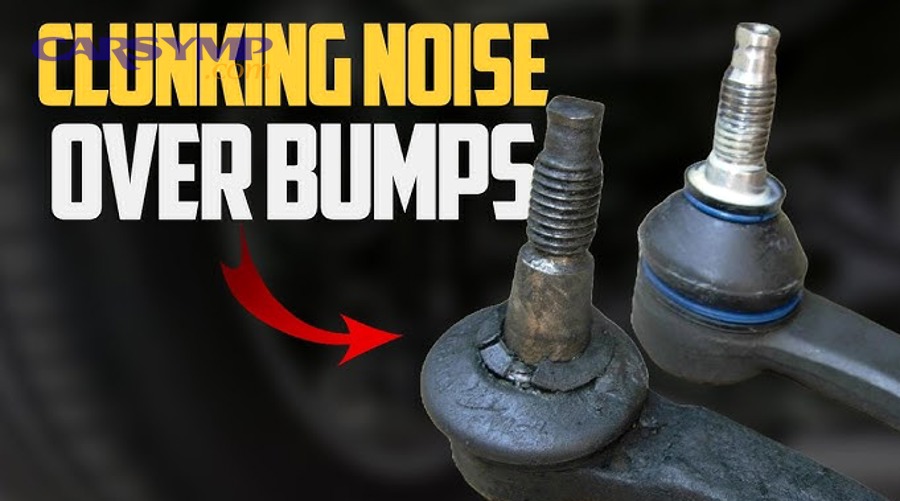
A suspension does two jobs at the same time: it holds alignment under load and it absorbs energy from the road. When a component can no longer control movement, the wheel and suspension links shift quickly, and metal-to-metal contact (or bushing-to-sleeve contact) creates a sharp noise.
Is a suspension knock usually a sign of a loose or worn part (Yes/No)?
Yes—most of the time a suspension knock over bumps is caused by a loose or worn part, for three practical reasons: (1) road impacts amplify small clearances, (2) worn joints/bushings “shift” before they carry load, and (3) fasteners and linkages can loosen without obvious visual damage.
Then, the most important reason is the first one: bumps create a rapid vertical force that “loads” the suspension instantly. Even a small amount of play in a sway bar link, ball joint, or strut mount can turn into a loud knock because the impact happens faster than the part can settle smoothly.
- Reason 1: Impact amplification — a pothole can load a joint abruptly, turning tiny looseness into a loud knock.
- Reason 2: Shift-before-load behavior — worn bushings and ball sockets move to their limit before resisting force.
- Reason 3: Fastener relaxation — sway bar brackets, strut top nuts, and control arm hardware can lose clamp load over time.
The exception is important: sometimes the knock isn’t suspension wear at all. Brake pad shift, a loose undertray, or a worn engine mount can mimic suspension noises. That’s why you’ll confirm with checks later instead of replacing parts on sound alone.
How can you tell knock vs clunk vs rattle by sound and steering feel?
Knock is usually a single dull impact, clunk is a heavier “metallic thud,” and rattle is a fast repetitive tapping, and each one tends to pair with a different “feel” in the steering wheel or body.
However, the best comparison is not just volume—it’s frequency and trigger:
- Knock (dull thud): often felt through the floor or lower dash; common with bushings, mounts, or a joint that has play but still carries load.
- Clunk (heavier, sometimes metallic): often happens on larger bumps or when weight shifts; common with sway bar links, strut mounts, loose subframe bolts, or control arm movement.
- Rattle (rapid tapping): often on small chatter bumps; common with loose hardware (heat shields, splash guards), brake pad movement, or a worn stabilizer bushing that chatters.
Steering feel adds another layer: if the steering wheel “ticks” or feels loose, you should treat steering-linked parts (tie rods, ball joints) as higher priority than comfort-only components.
Which symptoms indicate the problem is urgent and unsafe to drive?
There are 4 urgent symptom groups that signal you should stop driving until you inspect the car: steering instability, visible component separation, severe metal-on-metal impact, and abnormal tire behavior.
In addition, here are practical red flags that should change your plan from “diagnose this weekend” to “inspect today”:
- Steering instability: wandering, sudden pull, delayed response, or a steering wheel that doesn’t self-center properly.
- Knock during turns or braking: especially if it’s loud and repeatable—this can indicate a ball joint, tie rod, or control arm bushing issue that changes alignment under load.
- Visible damage: torn ball joint boots leaking grease, broken sway bar link studs, cracked control arm bushings with obvious separation, or a strut leaking heavily.
- Tire clues: rapid uneven wear, scalloping/cupping, or a tire rubbing the wheel well during bumps.
A safe rule: if the noise is paired with control loss, steering change, or alignment shift, treat it as a safety issue first—not just an annoyance.
Where is the knock coming from: front, rear, or one corner?
The knock’s location is discoverable when you classify it by where you hear it, when it happens, and what changes it, and this is the most reliable way to build “Knocking noise sources by location” before you touch a wrench.
To better understand the location, use the same short test route (a speed bump, a rough patch, and a slow tight turn) and repeat it at low speed. Consistency matters more than loudness.
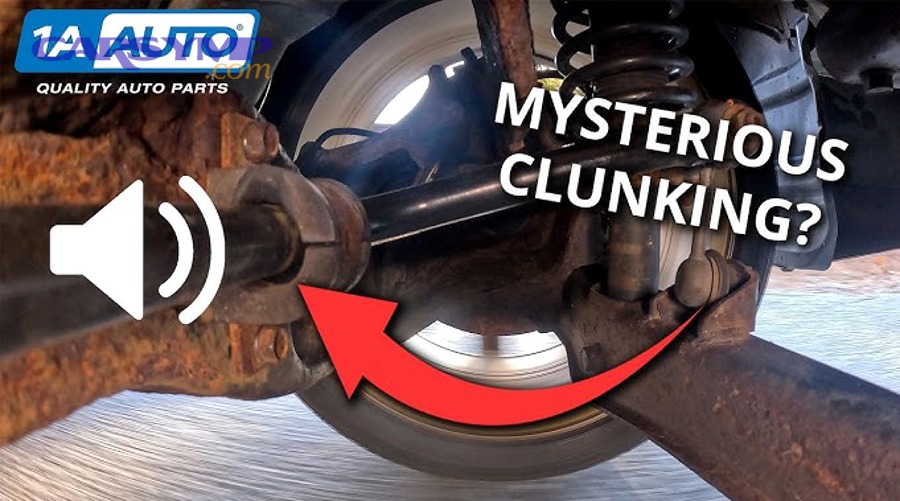
Location matters because different parts load differently:
- Front suspension carries steering forces and braking dive.
- Rear suspension often carries lateral stability and body control.
- A noise that’s one-corner-specific usually indicates a localized joint, mount, or bushing—not a center-mounted component.
Does the knock happen only over small bumps, only over big bumps, or both (and why)?
There are 3 common “bump-size patterns”—small-bump only, big-bump only, and both—and each pattern points to different failure mechanics.
Specifically, think in terms of frequency (chatter) vs travel (big compression):
- Small bumps only: often indicates a stabilizer bushing/link, loose brake hardware, or small-hardware rattle because the suspension is moving quickly but not far.
- Big bumps only: often indicates strut mount movement, control arm bushing shift, or damper bottoming/top-out issues because the suspension reaches larger travel and loads mounts harder.
- Both small and big bumps: often indicates a joint with measurable play (ball joint/tie rod) or a bushing that has separated enough to move in multiple conditions.
A practical interpretation: if the noise is worse on washboards or broken pavement, suspect “fast chatter” sources; if it’s worse on speed bumps and potholes, suspect “travel and impact” sources.
Does turning, braking, or accelerating change the knock (Yes/No)?
Yes—when turning, braking, or accelerating changes the knock, it strongly suggests a load-sensitive joint or bushing problem, for three reasons: (1) weight transfer changes joint angles, (2) braking loads steering/suspension links, and (3) acceleration/engine torque can shift mounts and subframes.
Moreover, this is where Steering knock when turning diagnosis becomes systematic:
- Knock gets worse when turning left: the right-side suspension often loads more; suspect right-side ball joint, tie rod, sway link, or strut mount.
- Knock appears when braking over bumps: suspect control arm bushings, ball joints, or loose caliper hardware because braking adds a forward load.
- Knock appears during acceleration or on/off throttle: suspect engine/trans mounts or subframe bushings—especially if the sound is more central than corner-specific.
If turning changes the sound, prioritize checks on steering-linked parts first because their failure can affect vehicle control.
How can you isolate left vs right without special tools?
You can isolate left vs right by using 3 no-tool tests: a one-wheel bump test, a low-speed slalom test, and a safe “listen and feel” repeat—each designed to load one corner more than the other.
Next, use these simple methods:
- One-wheel bump test: drive slowly so only one side hits a bump (like the edge of a driveway). If the knock happens only when the right wheel hits, you’ve narrowed the source.
- Low-speed slalom: in an empty lot, weave gently left and right. A sway link or strut mount issue often knocks as weight shifts side to side.
- Passenger listening position: have a passenger sit on the side you suspect and focus on “near/far” sound. Human ears can help localize a knock better than you’d expect.
If you later lift the car, you’ll confirm your guess with play checks. But this step prevents you from chasing “front end” noises that are actually rear, or left that is actually right.
What are the most common parts that cause a knock over bumps (parts checklist)?
There are 6 main part groups that cause a suspension knock over bumps—sway bar links/bushings, strut mounts, shocks/struts, control arm bushings, ball joints, and tie rods—based on whether the part controls roll, vertical travel, alignment, or steering.
Especially for DIY owners, this checklist is the heart of accurate knocking noise diagnosis because it prioritizes high-probability causes before rare edge cases.
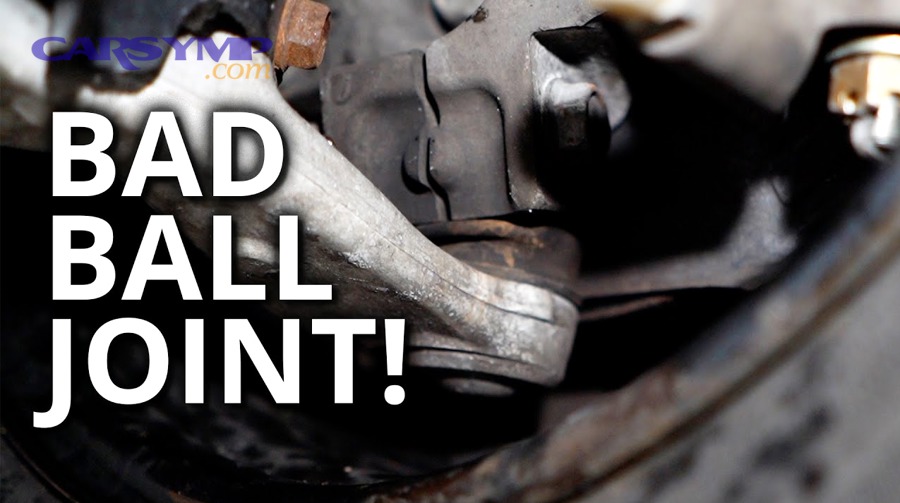
Which suspension parts most commonly cause a knock over bumps?
The most common suspension knock sources are stabilizer link hardware, worn rubber bushings, and joints with play, because these parts see constant small movements and repeated road impacts.
To illustrate the “most common first” logic, here’s a practical ranking many DIY checks follow:
- Sway bar links (often knock/clack on uneven bumps)
- Sway bar bushings (often chatter/rattle on small bumps)
- Strut mounts/top bearings (often thunk on bigger bumps or during turns)
- Control arm bushings (often dull thud and alignment shift under braking)
- Ball joints (often knock + steering looseness; can become dangerous)
- Tie rods (often click/knock + steering play, especially over bumps)
This list is not “universal truth,” but it is a high-yield starting point. Your earlier location tests determine whether you check front or rear first.
How do sway bar links and sway bar bushings create a clunk over bumps?
Sway bar links and bushings create a clunk when their joints develop clearance or when the bar shifts in its mounts, causing metal parts to tap under rapid wheel movement.
Then, here’s what’s happening mechanically:
- The sway bar link connects the sway bar to the strut or control arm. When its ball socket wears, it taps as the wheel goes over uneven bumps.
- The sway bar bushing holds the bar to the chassis. When it dries, cracks, or loosens, the bar can chatter inside the bracket, especially on small bumps.
High-signal DIY clues:
- The knock is often worse on uneven bumps (one wheel at a time).
- The noise can sound like it’s “near the firewall” in front suspensions.
- Sometimes you can reproduce it by pushing the body side-to-side while parked.
A common mistake is to replace bushings when the link is worn (or vice versa). Later, you’ll use a “confirm vs maybe” rule so you don’t waste time.
How do strut mounts, shocks/struts, and spring seats cause a knocking noise?
Strut mounts, shocks/struts, and spring seats cause knocking when the top mount shifts, the damper loses control, or the spring isn’t seated properly, creating a sudden transfer of load that you hear as a thunk.
Moreover, each component produces a slightly different signature:
- Strut mount/top bearing: can knock during bumps and also during steering because the mount must rotate smoothly as you turn the wheel. A worn bearing can “bind and release,” producing a knock.
- Strut/shock: when damping is weak or internal parts are worn, the suspension can “hit” its travel limit more abruptly, creating a heavier impact sound on big bumps.
- Spring seat/isolation: if the coil spring has shifted, broken, or is missing an isolator, it can pop or knock as it twists under load.
Practical DIY indicators:
- Excessive bounce after pushing down on the corner (not perfect, but useful).
- Visible strut leakage (a strong clue when paired with knocking).
- Noise that changes with steering input even at low speed.
How do ball joints, tie rods, and control arm bushings create knocks (and what do they feel like)?
Ball joints and tie rods knock when their ball-and-socket joints develop play, while control arm bushings knock when rubber separates and allows the arm to shift, and you can often feel these failures as looseness, wandering, or a delayed “set” after bumps.
However, the most useful comparison is how the car behaves:
- Ball joint issues: can feel like the front end is vague; you may feel a knock during turns or when braking over bumps.
- Tie rod issues: often come with steering play, a light “click/knock” as the wheel loads, and sometimes uneven toe-related tire wear.
- Control arm bushing issues: often produce a dull thud plus alignment shift—like the car “moves” slightly before it tracks straight after a bump.
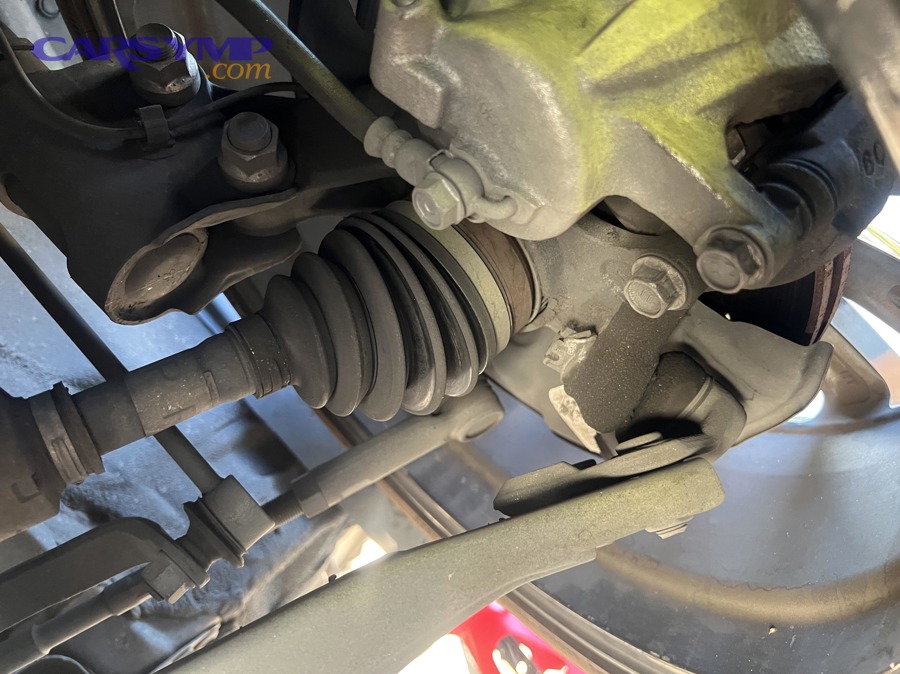
One more key point: even if the noise feels “minor,” steering-and-alignment parts deserve priority because their failure can escalate from annoying to unsafe.
Evidence (source-based, non-sales): According to a study by Chongqing University of Technology from School of Vehicle Engineering, in 2024, dynamic stiffness prediction errors for rubber subframe bushings were reported as low as 1.03% at certain test amplitudes, underscoring how strongly bushing behavior influences vibration and noise transfer paths. (nature.com)
How can you diagnose the culprit step-by-step (DIY checks that confirm, not guess)?
You can diagnose a suspension knock over bumps with a 5-step DIY workflow—reproduce the noise, localize it, inspect the highest-probability parts, confirm play/leakage, and re-test—so you replace only what’s proven faulty.
Below, the key is confirmation: you’re not trying to “name a part,” you’re trying to prove which part moves when it shouldn’t.
What is the fastest DIY diagnostic flow from “most likely” to “least likely”?
The fastest flow is a location-first checklist that starts with sway components and fasteners, then moves to mounts, then to steering and control parts, because those items combine high failure rate with easy inspection.
Then, follow this sequence (front or rear depending on your earlier localization):
- Quick visual sweep (2 minutes): look for hanging shields, loose undertrays, shiny “rub marks,” or obvious broken link studs.
- Sway bar links/bushings: grab and shake links (if accessible), look for torn boots, check bushing brackets for movement.
- Strut mount area: look for shifted mount hardware, cracked rubber, or unusual gap changes.
- Control arm bushings: inspect for cracks, separation, and “wet-looking” degraded rubber.
- Ball joints and tie rods: check boots, look for grease leakage, and plan a play test when lifted.
- Shocks/struts: check for leaking and repeat bounce/rebound behavior; confirm on-road big-bump pattern.
- Subframe/engine mounts (if symptoms match): investigate if the knock changes with throttle or feels central.
This is the practical core of a reliable knocking noise diagnosis: start where the odds are highest.
What can you check with the car on the ground vs safely lifted?
Ground checks win for reproducing and localizing, while lifted checks win for measuring play and confirming joint wear, and you need both for a complete diagnosis.
However, here’s the clear split:
On the ground (fast, safe, high-signal):
- Bounce test and rebound observation
- Steering lock-to-lock listening (strut mount/top bearing clues)
- Slow turn + bump test (does turning change the knock?)
- Visual checks for obvious looseness, missing hardware, or shifted components
Safely lifted (confirmation stage):
- Wheel play checks (12–6 and 3–9 positions)
- Pry tests on bushings (controlled force to see separation)
- Link/joint articulation checks (feel for clicking or looseness)
- Inspect boots closely and look for grease flung outward (leak sign)
A crucial safety note for DIY owners: use proper jack stands and chock wheels. Never rely on a jack alone.
Which findings confirm a bad part versus a “maybe”?
A finding is “confirmed” when you can see or feel abnormal movement, leakage, or separation that matches the noise trigger, and it’s only a “maybe” when the symptom is indirect and not repeatable.
More specifically, use these confirm rules:
Confirmed (replace/repair is justified):
- Visible separation: bushing rubber torn away from sleeve, mount rubber cracked through, or bracket shifting
- Measurable play: ball joint or tie rod movement you can feel during a play test
- Leaking damper + poor control: shock/strut leaking combined with excessive bounce or harsh bottoming
- Loose fastener eliminated noise: you find a clearly loose sway bracket or mount bolt, tighten it properly, and the knock disappears on re-test
Maybe (needs more proof):
- Slight surface cracks in bushings with no movement
- “Noise only” with no play, no leak, no shift
- Multiple parts equally worn in a high-mileage front end (you may need a prioritized replacement plan)
If you treat “confirmed vs maybe” like a rule, you reduce the most common DIY error: swapping parts until the noise stops.
Evidence (method relevance): According to a study by Chongqing University of Technology from School of Vehicle Engineering, in 2024, rubber bushing dynamic behavior varies across frequencies and amplitudes, which helps explain why some knocks appear only under certain bump conditions—your tests must reproduce the same load state to confirm the source. (nature.com)
What should you fix first, and what does it typically cost/time for DIY owners?
You should fix a suspension knock by prioritizing safety-critical steering and alignment components first, then structural bushings/mounts, then comfort-related links and isolators—because the same knock can range from “annoying” to “loss of control” depending on the part.
Next, think like a triage system: fix what can change wheel direction or wheel attachment before anything else.
Which repairs should be prioritized for safety (and why)?
There are 3 priority tiers for suspension knock repairs, based on how directly the part affects control and wheel location.
Tier 1 (highest priority — safety and control):
- Ball joints
- Tie rods (inner/outer)
- Severely separated control arm bushings that cause alignment shift
- Any component with visible fracture, severe play, or imminent separation
Tier 2 (medium priority — stability and alignment):
- Control arm bushings with moderate separation
- Strut mounts with severe movement or binding during steering
- Subframe bushings/bolts if movement is detected
Tier 3 (lower priority — noise/comfort, but still important):
- Sway bar links and sway bar bushings
- Minor mount wear without alignment/steering symptoms
- Non-suspension lookalikes (undertrays, shields) once safety is confirmed
This order is practical because it matches risk: steering-linked problems can escalate quickly, especially if the knock appears during turning or braking.
Do you need an alignment after replacing suspension parts (Yes/No)?
Yes—often you need an alignment after replacing suspension parts, for three reasons: (1) many parts set camber/caster/toe, (2) new bushings/joints restore geometry and change toe, and (3) disturbed fasteners can shift subframe or strut position.
However, the honest “Yes/No” depends on what you replaced:
- Usually YES: tie rods, control arms, struts/strut mounts (front), subframe movement, anything affecting toe or camber
- Often NO: sway bar links/bushings (unless you loosened alignment-setting bolts), some rear shock replacements on certain designs
A helpful DIY mindset: if the replaced part can change where the wheel points, plan for alignment.
What is the DIY difficulty comparison for each common fix?
Sway links are usually the easiest, struts/control arms are moderate to advanced, and steering joints can be easy or difficult depending on rust and access—so the “best DIY path” is to start with confirmed simple fixes and stop before you exceed your tools or safety comfort.
Here’s a practical comparison you can use to plan time:
- Sway bar links/bushings: usually quick; common rust issues; basic tools
- Tie rod ends: moderate; requires measuring toe roughly; alignment afterward is smart
- Strut mounts/struts: moderate to advanced; spring compression and safety procedures matter
- Control arms/bushings: moderate; may require prying, press tools, or full arm replacement
- Ball joints: moderate to advanced; often requires press tools and can be safety-critical
When you add a table, it should help you decide, not just list parts. The table below summarizes which repairs most often need alignment, typical DIY time ranges, and the “risk level” if ignored.
| Component | Typical DIY time (varies by car) | Alignment afterward? | Risk if ignored |
|---|---|---|---|
| Sway bar link | ~30–90 min | Usually no | Low–Medium (noise/stability) |
| Sway bar bushing | ~45–120 min | Usually no | Low–Medium |
| Outer tie rod end | ~45–120 min | Yes | Medium–High (steering control) |
| Control arm | ~1.5–4 hours | Yes | Medium–High (alignment shift) |
| Strut + mount | ~2–5 hours | Often yes | Medium (handling/ride) |
| Ball joint | ~1.5–5 hours | Often yes | High (wheel location/control) |
Evidence (why tightening and geometry matter): According to a study by Chongqing University of Technology from School of Vehicle Engineering, in 2024, rubber bushing stiffness changes measurably with frequency and amplitude, which explains why worn bushings can shift wheel geometry differently under braking versus bumps—an alignment check verifies the restored geometry after repair. (nature.com)
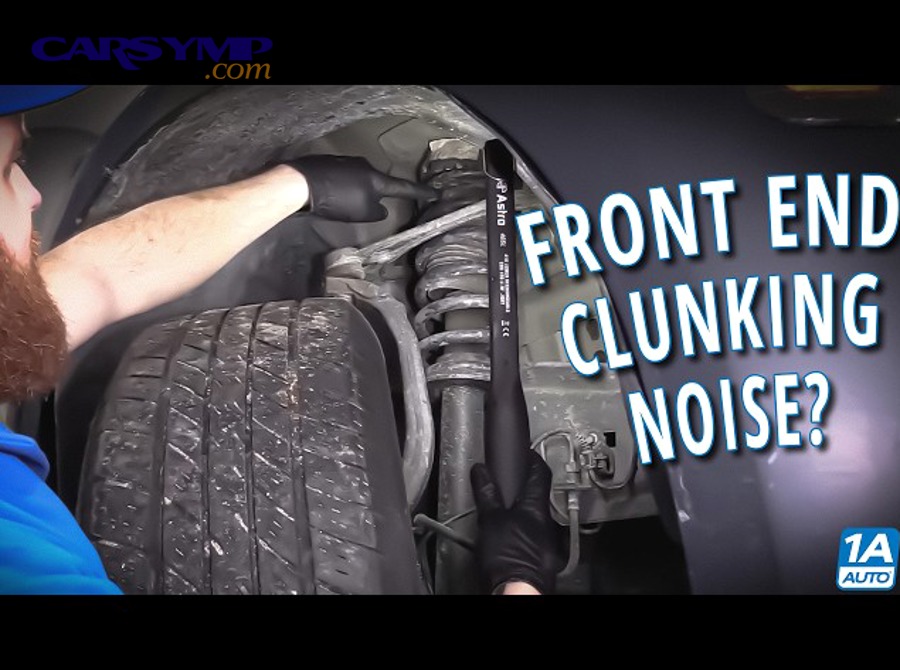
What else can sound like a suspension knock over bumps ?
A “suspension knock” can be caused by non-suspension components that rattle or shift under road impact, so you rule them out by checking whether the noise follows braking, engine torque, or body-mounted hardware rather than wheel travel.
In addition, this section expands the diagnosis using an antonym-style contrast: wheel-and-suspension causes vs body-and-powertrain causes. This prevents the frustrating scenario where you replace suspension parts and the knock remains.
Can brake hardware or loose calipers mimic a suspension clunk (Yes/No)?
Yes—brake hardware can mimic a suspension clunk, for three reasons: (1) pads can shift in the bracket, (2) worn slide pins allow caliper movement, and (3) missing anti-rattle clips let small bumps create sharp tapping that sounds like a knock.
Next, use these quick differentiators:
- If the noise changes or disappears when you lightly apply the brakes over a bump, suspect pad shift or caliper movement.
- If the sound is sharper on small bumps and seems to come from near the wheel, brake hardware becomes more likely.
- Visual confirmation matters: check clips, pad fit, and pin condition.
This is one of the most common “false suspension knocks,” especially after brake jobs.
How can engine/trans mounts or subframe bushings create a “suspension-like” knock?
Engine/trans mounts and subframe bushings can create a suspension-like knock when torque or road impacts cause the drivetrain or subframe to shift, transferring a thud into the cabin that feels like it came from the wheel area.
Moreover, the triggers are different from pure suspension knocks:
- The knock increases during on/off throttle transitions.
- The knock feels more central (not clearly left/right).
- You might feel a “driveline thump” paired with the sound.
A practical test: in a safe area, gently apply throttle from a stop and then lift off. If you can reproduce a similar knock without hitting a bump, you’re likely dealing with mounts or subframe movement rather than a sway link.
Does suspension design (strut vs double wishbone vs solid axle) change the likely causes?
Strut setups tend to highlight mount and link noises, double wishbones highlight ball joints and bushings, and solid axles highlight bushings and trailing-arm hardware—so design changes which parts are statistically “loudest” when worn.
However, the underlying diagnostic logic remains the same: identify what controls wheel location and what can develop play.
- MacPherson strut: strut mount/top bearing and sway links are frequent noise sources because the strut assembly carries both damping and steering rotation.
- Double wishbone: more joints and bushings means more possible play points, often with clearer “steering-linked” symptoms.
- Solid axle: trailing arm bushings, panhard bar bushings, and mounts can thud under load shifts, often heard from the rear.
Knowing your design doesn’t replace tests—it just helps you prioritize which checks to run first.
When should you use advanced tools like a chassis ear to pinpoint the noise?
You should use a chassis ear when multiple components show mild wear, the noise is hard to localize, or you’ve confirmed that common parts are tight but the knock persists—because it lets you compare vibration/noise at multiple points simultaneously.
In short, a chassis ear is a time-saver when your diagnosis is stuck in the “maybe” zone. It doesn’t replace mechanical inspection, but it can tell you whether the loudest impulse is at the strut mount, sway bar bracket, control arm, or another mount point—so your next repair is targeted.
Evidence (why isolating transfer paths works): According to a study by Chongqing University of Technology from School of Vehicle Engineering, in 2024, rubber bushing properties significantly affect how road forces transmit into the vehicle body and cabin, reinforcing why sensor-based localization can separate true suspension knocks from body-mounted or subframe transfer knocks. (nature.com)