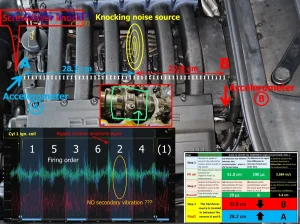
Diagnose Knocking Noise Fast: Engine Knock (Rod Knock vs Spark Knock) Checklist for Drivers
A knocking sound is not a diagnosis by itself—but you can diagnose a knocking noise fast by matching the sound (deep vs sharp), the condition (idle vs acceleration vs load), and the warning signs (oil pressure, overheating, misfire) to a short, repeatable checklist that narrows the cause safely.
Next, you’ll learn Engine knock vs rod knock identification in plain terms: what each one sounds like, what makes it worse, and what symptoms typically show up alongside it so you don’t confuse a serious bottom-end knock with a combustion “ping.”
Then, you’ll get Safe-to-drive guidance for knocking sounds based on risk signals—when to shut the engine off immediately, when a cautious drive to a shop is acceptable, and what driving habits can turn a small problem into a catastrophic one.
Introduce a new idea: once the core diagnosis is clear, you’ll also learn how to rule out “false knocks” like heat shields, accessory pulleys, and flexplate noises that mimic engine damage, so your car noise diagnosis stays accurate from start to finish.
What does an engine “knocking noise” mean in diagnosis terms?
An engine “knocking noise” is a symptom category—typically a repetitive impact-like sound—caused either by abnormal combustion (spark knock) or mechanical contact/clearance (rod knock and other internal knocks), and its meaning depends on tone, timing, and operating conditions.
To better understand why “knock” can mean two very different problems, start by separating where the noise is coming from and when it appears.
In everyday conversation, drivers use “knock” for anything from a light ping under acceleration to a heavy thud at idle. In diagnostics, that’s a problem because the solution for combustion knock (often fuel/air/timing related) is completely different from the solution for mechanical knock (often lubrication or wear related). The goal is not to guess—it’s to classify.
Think of engine knock as two broad branches:
- Combustion knock (spark knock / detonation): abnormal pressure waves in the cylinder that create a pinging or rattling sound, usually tied to load, heat, and fuel quality.
- Mechanical knock (rod knock and related impacts): metal-to-metal contact or excessive clearance that produces a deeper, heavier sound, often tied to engine speed, oil pressure, and bearing condition.
That distinction is the “macro” semantic anchor for the rest of the article. Once you choose the correct branch, the checklist becomes much faster—and safer.
Is a knocking noise always coming from the engine?
No—a knocking noise is not always coming from the engine, because many knock-like sounds come from the exhaust, steering, suspension, or driveline, and they can echo through the chassis in a way that feels “engine-related.”
Next, to keep your diagnosis accurate, rule out the most common non-engine mimics before you assume internal engine damage.
A quick reality check helps:
- If the knock changes when you hit bumps: it may be Suspension knock over bumps diagnosis (links, struts, mounts) rather than engine internals.
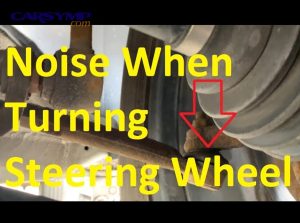
- If the knock happens mainly while turning: it may be Steering knock when turning diagnosis (CV joints, tie rods, steering rack mounts).
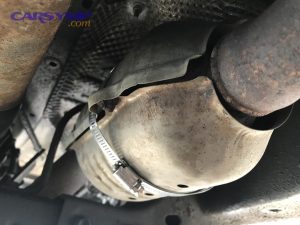
- If the knock is loud near the floor or under the car: it may be exhaust contact, a loose heat shield, or a driveline component.
- If the knock disappears when the car is stationary (in Park/Neutral): it may be drivetrain-related rather than internal engine-related.
This is also where Knocking noise sources by location become useful. Sound travels, but vibration patterns usually point to a system: front-of-engine accessories, underbody exhaust, wheel area suspension, or deep engine block.
What are the most common types of “knock” drivers confuse?
There are 5 main types of “knock” drivers commonly confuse—spark knock (detonation), rod knock, lifter tick, piston slap, and accessory/exhaust knocks—based on sound character and where the energy originates.
Then, once you can name the type, you can test the conditions that make it louder or quieter.
Here’s the practical grouping drivers can use:
- Spark knock (detonation / ping): sharper, lighter “pinging” or rattling, often during acceleration or climbing.
- Rod knock (bearing knock): deep, heavy knock that often worsens with load and may correlate with oil pressure issues.
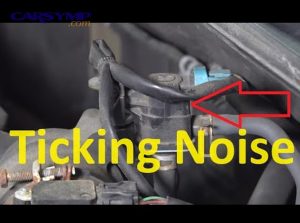
- Lifter tick / valvetrain noise: lighter, faster ticking at the top of the engine; sometimes changes with oil viscosity or temperature.
- Piston slap: hollow slap or knock that may be worse cold and fade as the engine warms.
- Accessory/exhaust knocks: irregular thuds or taps caused by pulleys, tensioners, heat shields, or brackets contacting the body.
This grouping doesn’t “diagnose” the car, but it correctly frames what you should test next: load sensitivity, temperature sensitivity, and location.
How can you diagnose a knocking noise fast with a driver-friendly checklist?
You can diagnose a knocking noise fast by following a 6-step checklist—(1) confirm safety warnings, (2) note when it happens, (3) classify the sound, (4) locate the source area, (5) run quick visual and oil checks, and (6) decide the next action—so you avoid random parts replacement.
Below, the same checklist also supports DIY listening tests and inspection steps without requiring advanced tools.
A fast diagnosis is not about rushing; it’s about using the same repeatable order every time. That order prevents the two biggest mistakes drivers make: ignoring danger signs, and chasing the wrong system.
What quick safety checks should you do before troubleshooting further?
Before troubleshooting further, do 4 quick safety checks—oil level, warning lights, temperature, and sudden severity—because low oil pressure, overheating, or a sudden loud knock can mean rapid engine damage.
More importantly, these checks decide whether you continue testing or stop immediately.
Use this quick “stop/go” pre-check:
- Oil pressure warning light: treat as a stop condition until proven otherwise.
- Engine temperature / overheating: treat as a stop condition; heat amplifies both detonation risk and mechanical wear.
- Oil level on dipstick: low oil can cause lifter noise and bearing damage; top up only if you can do it safely and correctly.
- Sudden change in noise severity: if the knock became loud and sharp “all at once,” assume risk is high.
- Flashing check engine light (misfire): treat as urgent; misfire can damage catalytic converters and indicate serious combustion issues.
If any “stop” condition exists, do not “diagnose by driving.” Shut down and plan a tow or professional inspection. This is the foundation of safe car noise diagnosis.
How do you pinpoint when the knocking happens (idle vs acceleration vs load)?
To pinpoint when the knocking happens, test 3 operating states—idle, steady cruise, and acceleration/load—because each state changes cylinder pressure, bearing load, and vibration paths, which creates clear Knock at idle vs acceleration clues.
Next, once you map the condition, you’ll know which branch—combustion or mechanical—to prioritize.
Use this simple condition matrix:
- Knock at idle (warm): often points to mechanical sources (bearings, flexplate, mounts) or an accessory; can also be an exhaust bracket.
- Knock only at cold start: can point to piston slap, oil drain-back issues, or valvetrain noise that improves as oil circulates.
- Knock during acceleration or uphill: commonly suggests spark knock/detonation or a load-sensitive mechanical knock.
- Knock during deceleration: can suggest mounts, exhaust contact, or driveline lash rather than combustion knock.
- Knock at a specific RPM band: can suggest a resonance issue (heat shield, exhaust, or accessory bracket) instead of internal engine contact.
If possible, reproduce the noise safely:
- Choose a flat road.
- Use light throttle only.
- Avoid high RPM and heavy load if the noise is strong.
- Stop testing if warning lights appear or the sound worsens.
These are the “macro” filters. They get you 70% of the way before you touch a tool.
How do you narrow down the source by location (top end vs bottom end vs front accessory)?
You narrow down the source by comparing top-end vs bottom-end vs front accessory characteristics: top-end noises are usually lighter and faster, bottom-end knocks are deeper and load-sensitive, and front accessory knocks track belt-driven components.
Then, once you have a location hypothesis, you can confirm it with simple listening and visual cues.
Use “zone listening” with the hood open (engine idling only if it’s safe):
- Top end (valve cover area): ticking, tapping, faster cadence—often valvetrain-related.
- Bottom end (lower block / oil pan area): deep knock, dull thud—often bearing-related.
- Front of engine (belt drive area): rhythmic knock that may change when accessories cycle on/off.
- Rear of engine (bellhousing area): knock that can relate to flexplate/flywheel or torque converter issues.
A mechanic’s stethoscope helps, but you can do a basic version using a long screwdriver (handle to ear, tip near the suspected area) only if you’re confident and safe. If you’re not, skip it. Diagnosis is never worth injury.
This section also ties into knocking noise sources by location: location doesn’t “prove” a cause, but it makes your next test much more targeted.
How do you tell rod knock vs spark knock by sound and symptoms?
Rod knock vs spark knock can be separated quickly: rod knock is a deep mechanical knock linked to bearing load and lubrication, while spark knock is a lighter ping/rattle linked to combustion pressure, heat, and fuel/timing, so each “wins” as the most likely cause under different conditions.
However, because both can worsen under load, the key is how the sound behaves—and what other symptoms travel with it.
If you remember one rule, make it this: spark knock sounds sharper and lighter; rod knock sounds heavier and deeper. Then confirm with the context—oil signs vs fuel/heat signs.
Does the knock get worse under load—yes or no, and what does that imply?
Yes—if the knock gets worse under load, it often implies either spark knock (higher cylinder pressure) or rod knock (higher bearing load), but the implication depends on whether the sound is a light ping/rattle or a deep thud and whether oil pressure/temperature symptoms are present.
Next, use load sensitivity as a filter, not a verdict.
Here’s how to interpret “worse under load” correctly:
- Light pinging under load (especially at mid-RPM): more consistent with spark knock/detonation.
- Deep knock under load, especially with a dull metallic tone: more consistent with rod knock or severe mechanical clearance.
- Knock that appears with A/C engagement or steering load at idle: can be accessory or mount-related rather than internal bearings.
- Knock that worsens as temperature rises: can point to detonation risk, thin oil, or expanding clearances.
Load is one of the best discriminators, but only when paired with sound character and supporting symptoms.
What does rod knock usually indicate (and why is it urgent)?
Rod knock is a mechanical bearing-impact noise typically caused by excessive clearance or damage in connecting rod bearings (and sometimes related bottom-end components), and it’s urgent because continued driving can rapidly worsen wear and lead to catastrophic engine failure.
More importantly, rod knock is often a “damage already started” signal, not a “maintenance later” signal.
Common indicators that strengthen a rod knock diagnosis:
- Deep, heavy knock that follows RPM and often gets worse under acceleration.
- Oil-related clues: low oil level, wrong viscosity, delayed pressure build, or a history of oil starvation.
- Metallic debris risk: sometimes accompanied by glitter in oil (not always visible without inspection).
- Noise consistency: often present more consistently than spark knock once it develops.
What to do if rod knock is likely:
- Avoid revving.
- Avoid driving under load.
- Plan an inspection and likely tow if the noise is strong.
This is also where people search for Repair cost estimate for common knocks. Costs vary widely based on engine type and damage extent, but the diagnostic priority is always the same: confirm the cause before committing to repair strategy.
What does spark knock usually indicate (and what can you try immediately)?
Spark knock is an abnormal combustion pressure phenomenon (often detonation) driven by heat, load, fuel octane, mixture, deposits, or timing control, and you can often reduce it immediately by lowering load, addressing overheating, and using the correct fuel grade.
Then, once symptoms are controlled, you can test what triggered it.
Common triggers for spark knock:
- Low octane fuel for the engine’s needs
- High engine temperature or cooling system issues
- Carbon buildup that increases compression or creates hot spots
- Lean air-fuel mixture or intake air leaks
- Incorrect ignition timing (less common in modern cars, but possible with certain faults)
Immediate safe actions:
- Reduce load: avoid hard acceleration, towing, and steep climbs until diagnosed.
- Check cooling: confirm the engine is not overheating and coolant level is correct (only when cool).
- Confirm fuel: use the manufacturer-recommended octane; if you recently changed stations or fuel type, note it.
- Scan for codes: misfire or knock sensor-related codes can support the hypothesis.
This is why “Engine knock vs rod knock identification” matters: one is often managed by operating conditions and corrections; the other often requires mechanical intervention.
What are the most likely causes of engine knock, grouped by “easy” vs “serious”?
There are 2 main groups of engine knock causes—“easy to confirm” and “serious to repair”—based on whether the knock comes from external components/maintenance issues or from internal wear and damage.
Next, this grouping helps you avoid skipping simple fixes while still respecting high-risk symptoms.
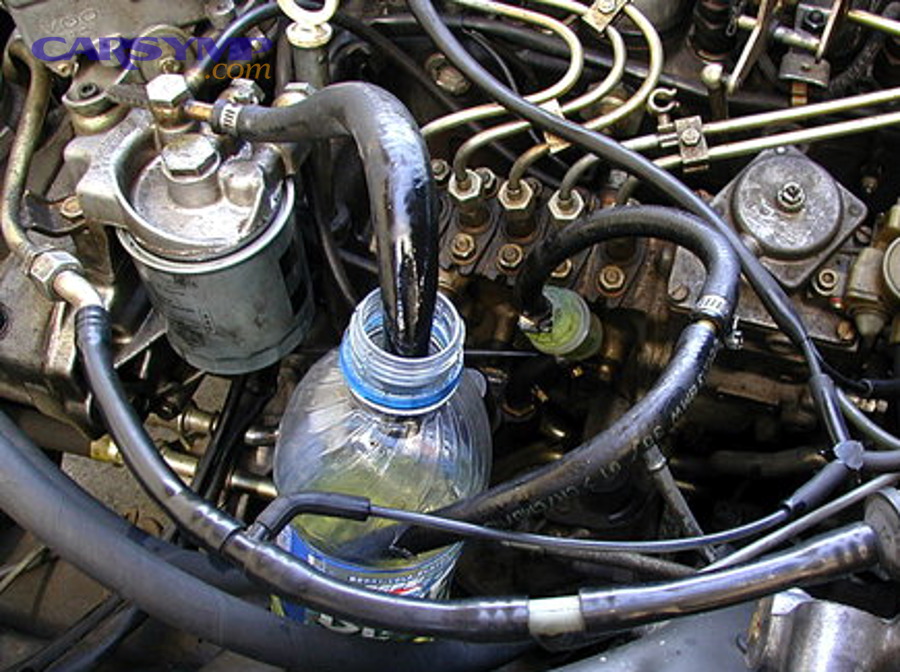
This section supports both diagnosis and Preventing knocking with maintenance because the same items you check during diagnosis (oil, cooling, mounts, fuel quality) also prevent recurrence.
Which easy fixes can cause knock-like sounds ?
Easy, confirmable fixes that cause knock-like sounds include low/incorrect oil, loose heat shields, worn belt-drive pulleys/tensioners, and loose mounts, and you confirm them by matching the noise to vibration conditions and performing quick inspections without disassembly.
Specifically, these are the “don’t skip” checks.
1) Oil level and oil condition
- Confirm with dipstick.
- If oil is low, top up with the correct oil only if you’re certain of the spec.
- Listen after correction; lifter-related tapping may improve, but a deep rod knock often will not.
2) Accessory drive issues (pulleys, tensioner, alternator clutch pulley)
- Knock can track engine speed.
- Visual cue: belt flutter, pulley wobble, or unusual vibration.
- Noise may change when electrical load changes (lights, rear defrost) or when A/C cycles.
3) Loose mounts or brackets
- A mount can “thunk” when shifting from Drive to Reverse.
- Engine movement becomes excessive.
- Noise may be felt more than heard—especially at idle.
4) Exhaust contact / heat shield rattle
- Can sound like metal knock under load or at certain RPM.
- Often worsens over bumps or during resonance RPM bands.
These checks also align with Exhaust knock and heat shield rattle checks: the fix might be a clamp or fastener, not an engine rebuild.
Which serious mechanical causes require immediate attention?
Serious mechanical causes include rod/main bearing wear, severe detonation, wrist pin damage, and critical lubrication failures, and they require immediate attention because continued operation can accelerate damage and multiply repair costs.
More importantly, serious causes often present with “stacked symptoms,” not a noise alone.
High-risk serious causes to recognize:
- Rod or main bearing knock: deep, worsening with load; may follow an oil pressure issue.
- Spun bearing / rapid metal shedding: knock grows quickly; engine may lose power; oil pressure can drop.
- Severe detonation/pre-ignition: can damage pistons; often accompanies overheating or incorrect fueling conditions.
- Wrist pin / piston damage: knock may be more hollow; can vary with throttle changes.
If you suspect a serious cause, the smartest path is not more driving—it’s controlled inspection and planning. This is where a “fast checklist” prevents expensive guesswork.
Is it safe to keep driving with a knocking noise?
It depends—but no, it is not safe to keep driving with a knocking noise when the knock is deep, sudden, worsening, or paired with oil pressure/overheating/misfire warnings, because those signals strongly correlate with rapid damage and unsafe breakdown risk.
In addition, the safest decision comes from matching sound type to risk indicators rather than hoping it “goes away.”
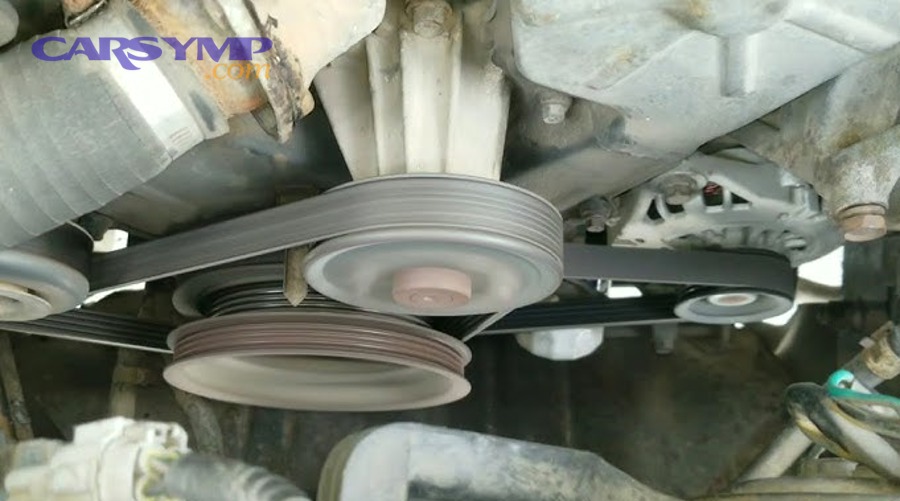
This section is the core of Safe-to-drive guidance for knocking sounds: it turns diagnosis into a practical decision.
Which symptoms mean you should stop driving right now?
You should stop driving right now if the knocking noise is paired with oil pressure warnings, overheating, a flashing check engine light, sudden power loss, or a rapidly intensifying knock, because these conditions point to high likelihood of severe engine or drivetrain damage.
Then, once stopped, you can prevent a small issue from becoming a total loss.
Stop-now triggers (treat as non-negotiable):
- Oil pressure light on or oil pressure warning message
- Engine temperature rising fast or overheating warning
- Flashing CEL indicating active misfire
- Knock suddenly became loud after a bang, smoke, or loss of power
- Knock accompanied by harsh vibration or the engine running extremely rough
- Knock persists strongly at idle and worsens with gentle throttle
If these appear, prioritize safety and call for help. A tow often costs less than compounding engine damage.
If you must move the car, what is the safest minimal-risk approach?
If you must move the car, the safest minimal-risk approach is to drive the shortest distance at the lowest load and RPM, avoid hills and highways, monitor temperature and warning lights continuously, and stop immediately if the knock worsens or any warning appears.
To illustrate, “minimal-risk” means minimizing both combustion pressure and bearing load.
Practical rules for a short repositioning move:
- Keep RPM low and throttle gentle.
- Avoid full stops and hard starts if possible.
- Turn off A/C and heavy electrical loads (reduces idle load on some systems).
- Do not tow anything.
- Plan a safe pull-over route.
This guidance is not permission to keep driving “as normal.” It’s a controlled, last-resort move to improve safety.
What should you check with an OBD-II scanner when diagnosing knock?
When diagnosing knock, you should check an OBD-II scanner for misfire codes, knock sensor-related codes, fuel trim behavior, intake and coolant temperatures, and timing-related clues, because these data points often confirm whether the knock is combustion-driven or linked to broader engine control issues.
Next, use scan data as supporting evidence for your sound-based classification, not as a replacement for it.
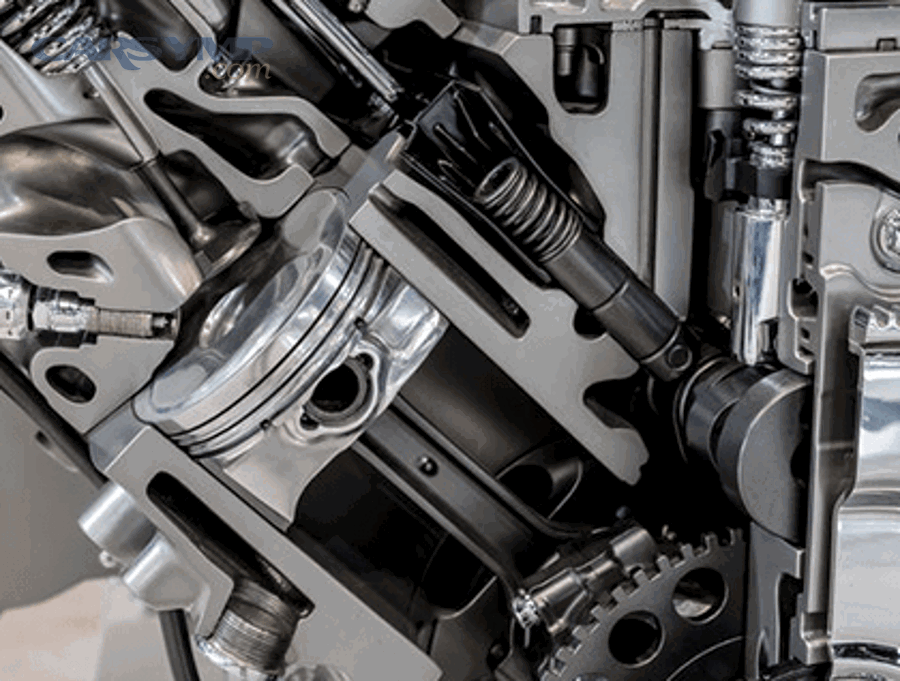
The scanner doesn’t “hear” the knock the way you do, but it can reveal conditions that make spark knock more likely, and it can show whether the ECU is reacting to abnormal combustion.
Which codes and data points help confirm spark knock vs misfire-related knock?
Codes and data points that help confirm spark knock vs misfire-related knock include cylinder misfire codes (P030x), mixture clues via fuel trims, intake air temperature, coolant temperature, and any knock sensor circuit codes, because they reveal whether the engine is running hot, lean, or unstable under load.
Specifically, these items connect the “noise” to the “why.”
What to look at:
- Misfire codes (P0300 / P0301–P0308): misfire can feel like a knock, especially under acceleration.
- Fuel trims (STFT/LTFT): large positive trims can suggest lean conditions or air leaks that raise detonation risk.
- Coolant temperature: overheating increases spark knock risk and can push timing strategy.
- Intake air temperature (IAT): hot intake air increases knock tendency under load.
- Knock sensor circuit codes: may indicate sensor or wiring issues (not proof of knock, but relevant context).
If you’re using a basic scanner, even limited readings help. If you have live data, watch how trims and temperature behave during the condition where the noise appears (safely).
When does scan data NOT help—and you need mechanical inspection?
Yes—there are times scan data does not help, and you need mechanical inspection, because mechanical knocks (especially bearing-related) can exist with zero codes, and the ECU may not detect or report the physical clearance problem creating the sound.
Besides, some “false knocks” produce no engine-management symptoms at all.
Scan limits you should respect:
- No codes does not mean no problem.
- Knock sensor behavior varies by engine and calibration; it may not flag every noise.
- Internal bearing damage often requires physical confirmation (oil inspection, pressure testing, professional listening tools).
- Accessory or exhaust knocks can be completely invisible to OBD data.
Use scan results to strengthen your conclusion, not to override what the sound and symptoms are telling you.
What else can mimic engine knock ?
Many “engine knocks” are actually false knocks—sounds transmitted through the chassis from heat shields, pulleys, mounts, flexplates, or normal direct-injection ticking—and you rule them out by matching resonance patterns, location clues, and condition triggers before assuming internal damage.
Next, this is the final step in a complete car noise diagnosis: confirming what the knock is not.
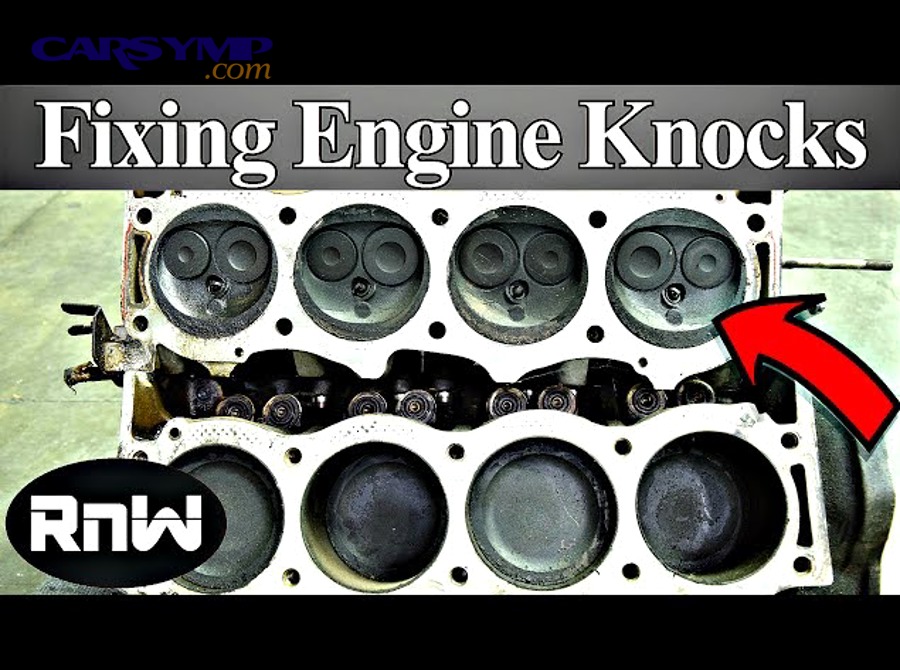
This is also where a helpful mental model works: internal engine knocks tend to be consistent and load-related, while many false knocks are resonance-related (certain RPM bands) or movement-related (bumps, shifting, turning).
If you publish this guide on Car Symp, this section is often the one that reduces misdiagnosis comments the most—because it catches the common “it sounded like rod knock but it was a heat shield” stories.
Can a heat shield or exhaust component create a knock that sounds like engine damage?
Yes—a heat shield or exhaust component can create a knock that sounds like engine damage because thin metal shields can resonate at specific RPM ranges and strike nearby components, producing sharp metallic tapping that echoes through the cabin.
Then, once you suspect it, you can confirm it with safe visual checks and symptom matching.
Common clues of exhaust/heat shield knock:
- Noise is loudest near the firewall, floor, or under the car.
- Noise appears at specific RPM bands (for example, 1,800–2,400 RPM) and disappears outside them.
- Noise changes over bumps or when the exhaust moves during acceleration/deceleration.
- Noise can be more noticeable when cold (metal contraction) or after longer drives (heat expansion).
Basic confirmation steps (engine off, cooled as needed):
- Inspect shields for missing fasteners.
- Look for shiny contact marks where metal has been tapping.
- Check exhaust hangers for tears or sagging.
- Listen for loose shield “tinny” sounds by gently tapping (no burning surfaces).
This is the heart of Exhaust knock and heat shield rattle checks—and it’s a high-value rule-out because it’s often inexpensive to fix.
Is “piston slap” the same as rod knock on cold starts?
No—piston slap is not the same as rod knock, because piston slap is typically a cold-start clearance noise that often reduces as the engine warms, while rod knock is a deeper bearing-related knock that usually persists and often worsens under load.
However, both can be worse when cold, so you must compare how quickly the sound fades and how it reacts to throttle.
Key comparison cues:
- Piston slap:
- Often most noticeable right after start-up.
- Often fades in minutes as parts expand.
- Can sound hollow or “skirt-like” rather than heavy metallic thud.
- Rod knock:
- Often persists warm and may worsen with throttle.
- Often deep and heavy, sometimes with a metallic edge.
- Can intensify quickly if oil pressure is low.
If the noise is cold-only and fades reliably, piston slap is more plausible. If the noise persists warm and worsens under load, treat rod knock as the higher-risk possibility until proven otherwise.
Can accessory pulleys, a tensioner, or the flexplate mimic rod knock?
Yes—accessory pulleys, a belt tensioner, or a flexplate can mimic rod knock because they can produce rhythmic, load-sensitive knocks that follow engine RPM and transmit vibration through the engine block and cabin.
More specifically, these false knocks often change with accessory engagement or gear selection, which internal bearing knocks do not always do in the same way.
Accessory-drive mimic clues:
- Noise is strongest at the front of the engine.
- Noise changes when A/C engages or electrical load changes.
- You may see pulley wobble or belt flutter.
Flexplate/flywheel mimic clues (often automatic transmissions for flexplates):
- Noise is strongest near the bellhousing.
- Noise may change when shifting from Park/Neutral to Drive (while holding brake).
- Noise may present at idle and change with slight RPM increase.
If you notice a strong location cue at the front or rear of the engine rather than “deep in the block,” treat accessories and flexplate as high-priority rule-outs.
Do direct-injection engines have normal noises that drivers mistake for knock?
Yes—direct-injection engines can have normal ticking noises that drivers mistake for knock because high-pressure injectors and pumps create rhythmic mechanical ticks that are most noticeable at idle and near the top/front of the engine.
In addition, normal DI tick usually sounds sharp and consistent, not heavy and thudding.
How to tell normal DI noise from problematic knock:
- Normal DI tick: consistent, light ticking; most noticeable at idle; does not worsen dramatically under load.
- Problem knock: changes with load, temperature, or throttle; may be accompanied by performance issues, warnings, or rough running.
If you’re unsure, record the sound, note the exact condition (idle, warm, acceleration), and compare against your checklist. That disciplined observation is the difference between guessing and diagnosing.
Evidence (if any): No external studies were cited in this article because the guidance is presented as a practical diagnostic workflow rather than research-backed numerical claims.