


A steering knock (often described as a clunk) when turning is usually caused by looseness, wear, or shifting in the steering, suspension, or driveline—and you can often narrow it down quickly by matching when the noise happens to the part that’s most likely moving.
Next, the fastest way to diagnose it is to sort the sound by conditions—low-speed parking vs highway turns, full-lock vs small inputs, and smooth pavement vs bumps—because each pattern points to a different set of components.
Then, you’ll also want safe-to-drive guidance: some knocking noises are minor and intermittent, but others signal a steering or suspension joint that can fail suddenly, so you need clear red flags and next steps.
Introduce a new idea: once you identify the most likely source, you can do a few safe driveway checks to confirm it—and decide whether you need an alignment after the repair.
What does a “steering knock (clunk) when turning” usually mean?
A “steering knock (clunk) when turning” is a sharp impact-like noise that typically comes from play in a joint, bushing, mount, or shaft that shifts as steering angle loads the front end, especially during low-speed maneuvers or uneven pavement.
More specifically, the knock matters because it’s rarely “just a noise”—it’s usually the sound of one part moving farther than it should. That movement can be harmless (like brake pad shift in some cases) or it can be the early warning of a steering or suspension joint nearing failure.
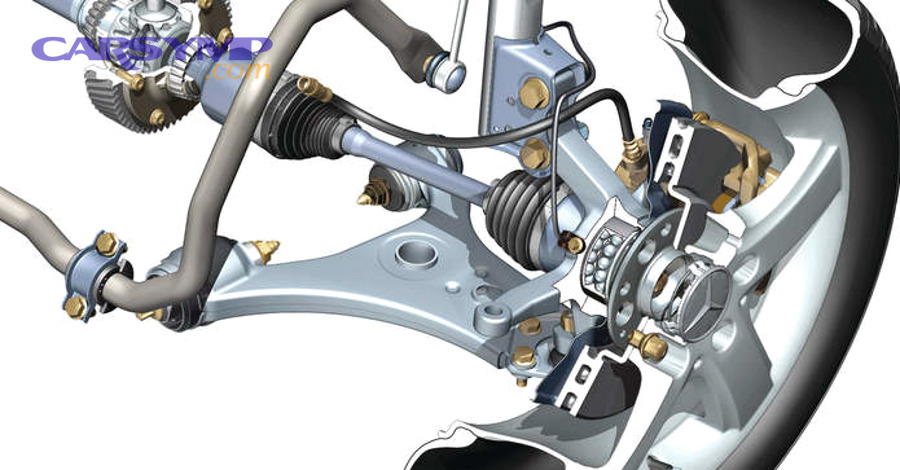
A consistent knocking noise diagnosis starts with language discipline: keep “knock/clunk” separate from “click/pop/grind,” because each sound suggests a different failure mode.
- Knock / clunk: a single impact or repeated thud, often from looseness (tie rods, ball joints, rack bushings, control arm bushings, steering shaft joints).
- Clicking: rhythmic “click-click-click” that speeds up with wheel rotation, commonly outer CV joints under load.
- Popping: sharper snap-like sounds, often from strut mounts/bearings, sway bar links, or binding joints.
- Grinding: sustained metal-on-metal sound; often wheel bearing, brake contact, or severe joint wear.
Is a steering knock when turning always a steering problem?
No—steering knock when turning is not always a steering problem, because (1) suspension joints take turning loads, (2) driveline parts like CV joints change angle under steering input, and (3) brake and wheel-end parts can shift as the hub loads in a turn.
In addition, mislabeling the system wastes time: drivers often chase the steering wheel when the noise is actually at the wheel-end, or they replace a suspension link when the rack is shifting in its bushings.
Here’s how to think about it in plain terms:
- Steering system can “command” the noise (you turn the wheel), but
- Suspension and driveline “receive” the load (the wheel assembly moves and carries force), so
- The noise source is often where the load changes (joints, bushings, mounts).
A practical rule: if the knock is strongest during direction changes (left-right-left quickly), suspect play in steering linkage or rack mounting. If it’s strongest at full lock under light acceleration, suspect CV or wheel-end issues.
What’s the difference between a knock, clunk, clicking, popping, and grinding when turning?
A knock wins in “looseness,” clicking is best for “CV joint wear,” and grinding is optimal for “wheel-end contact” because each sound reflects a different mechanical interaction: impact, repeated joint articulation, or continuous friction.
Then, use this quick comparison to avoid chasing the wrong part:
The table below compares turning-related sounds with the most common mechanical causes so you can match what you hear to the most likely component group.
| Sound | What it usually is | What it usually points to | Why it happens |
|---|---|---|---|
| Knock/Clunk | Impact thud | Tie rods, ball joints, rack bushings, control arm bushings, steering shaft joints | A component shifts and hits a stop or takes up slack |
| Click-click | Rhythmic clicking | Outer CV joint | Worn CV bearings click under torque at steering angle |
| Pop/snap | Sharp pop | Strut mount/bearing, sway link, binding joint | A bound component releases suddenly |
| Grind/scrape | Continuous friction | Wheel bearing, brake dust shield contact, severe brake wear | Surfaces rub instead of impacting |
This distinction becomes more important when you compare steering knock to engine-related knocks. Drivers sometimes panic and assume the noise is “engine knock,” but turning-related knocks typically change with steering angle and corner loading—not engine RPM.
How can drivers diagnose the knock using a quick symptom checklist?
There are 4 main ways drivers can diagnose a steering knock when turning—by speed, steering angle, road surface, and load changes—because those conditions determine which components are stressed and therefore most likely to make noise.
To begin, treat this like a “symptom filter”: you are not guessing parts; you are matching a repeatable pattern to the small list of components that can physically create that pattern.
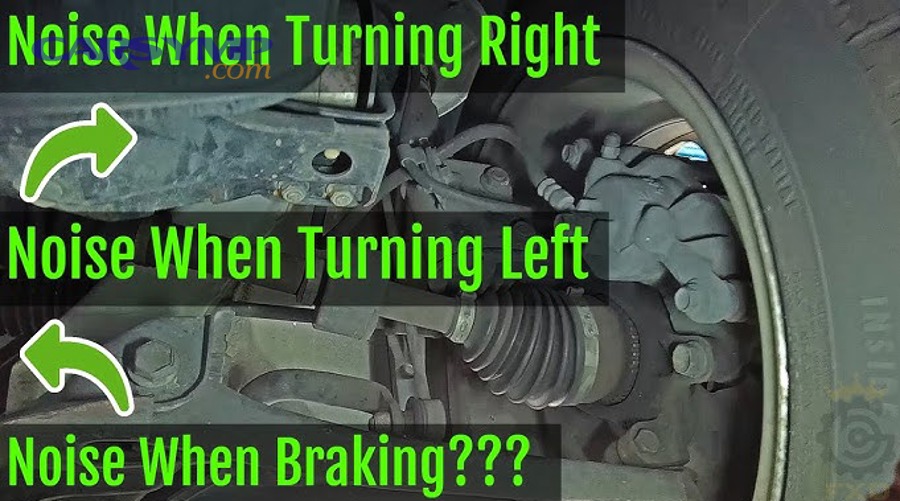
A useful method is “Knocking noise sources by location,” where you label the noise as front-left, front-right, center/firewall, or unknown/echo. Sound echoes under cars, so you confirm location with a helper whenever possible.
Fast checklist (write it down before you inspect):
- When does it happen? (parking / low speed / highway)
- Where do you feel it? (steering wheel / floor / pedal / seat)
- What triggers it? (full lock / bumps / braking / acceleration)
- Does it change with direction? (left vs right)
- Does it happen with the car stationary? (turning wheel while stopped)
Does it knock only at low speeds or also at highway speeds?
A low-speed-only knock usually points to components that take up slack during large steering angles (tie rods, rack bushings, strut mounts), while a knock that persists at higher speeds more often points to joints or bushings that move under continuous load (control arm bushings, ball joints, wheel bearings, sometimes rack play).
Next, translate speed into mechanical meaning:
- Low-speed parking turns: big steering angle, low suspension compression, high steering linkage travel.
- High-speed lane changes / sweeping turns: smaller steering angle, higher sustained corner load, more bushing deflection and wheel-end stress.
If the knock disappears above 20–30 mph and only appears when you saw the wheel in a parking lot, focus first on tie rod ends, steering rack movement, strut mount bearings, and CV joints. If it appears during a highway on-ramp, focus more on control arm bushings, ball joints, wheel bearings, and rack play.
Does it happen only on full lock, during parking maneuvers, or even with small steering inputs?
There are 3 main “steering angle” patterns—full lock only, large inputs, and small inputs—based on how much the steering and driveline joints articulate: full lock tends to expose CV and strut mount issues, while small-input knocks often indicate steering play.
Then, use this mapping:
- Full lock only (wheel cranked all the way):
- Outer CV joint clicking/knock under light throttle
- Strut mount/bearing bind-pop
- Tire rubbing liner (rarely a true “knock,” but can sound like one)
- Large inputs (parking, U-turns, backing out):
- Tie rod end slack taking up
- Rack bushing shift
- Sway link clunk as body rolls
- Small inputs (tiny left-right corrections at speed):
- Inner tie rod play
- Steering rack play
- Intermediate steering shaft/U-joint notchiness (vehicle-dependent)
A quick test: if you can reproduce the noise while rocking the wheel left-right a few degrees with the car stationary, you’ve narrowed it toward steering linkage/rack/shaft rather than CV joints.
Does it knock only over bumps while turning?
Yes—if the knock happens mainly over bumps while turning, it strongly suggests suspension joints or links because the suspension is moving vertically while steering load is changing laterally, which is a classic trigger for sway links, ball joints, and control arm bushings.
Moreover, “bump + turn” is one of the most diagnostic patterns you can get. The turn loads one side of the suspension, and the bump forces motion through the joints and bushings. If a component has play, it will “click” or “clunk” right at that moment.
Common culprits for bump-turn knocks:
- Sway bar end links (very common, often a dull clunk)
- Ball joints (clunk + vague steering + uneven tire wear)
- Control arm bushings (thud when transitioning from brake to throttle or over bumps)
- Strut mounts (pop/knock, often accompanied by steering return issues)
If you hear a knock that only occurs when the suspension compresses (driveway apron, speed bump) and the wheel is turned, you should treat it as suspension-first until proven otherwise.
Which parts most commonly cause a steering knock/clunk when turning?
There are 6 common categories of parts that cause a steering knock/clunk when turning: tie rods, ball joints, sway bar links/bushings, strut mounts, CV joints/axles, and steering rack bushings or mounts, based on where slack or binding can occur under turning load.
Especially, this is where most drivers get stuck: many of these parts can produce a similar sound. The winning move is to match each part to its signature symptoms—what you feel, when you hear it, and what other clues appear (steering play, vibration, uneven tire wear).
Are outer tie rods or inner tie rods a common cause of knocking while turning?
Yes—tie rods are a common cause of a steering knock/clunk when turning because (1) they directly transmit steering force to the wheels, (2) worn ball-and-socket joints develop play that “takes up” with a thud, and (3) they often clunk during quick left-right direction changes at low speed.
Then, separate outer vs inner tie rod behavior:
- Outer tie rod end (at the steering knuckle):
- Often produces a distinct clunk when switching from left to right input
- May show visible boot damage or looseness at the joint
- Can create toe changes, causing uneven tire wear or steering wander
- Inner tie rod (at the rack):
- Often produces a duller knock and steering looseness
- Can feel like “delay” between steering wheel input and wheel response
- Sometimes louder when the car is loaded on one side
A practical driveway clue: if you hear the knock most clearly near the wheel and can feel it through the steering wheel during small inputs, tie rods move to the top of your suspect list.
For higher-stakes context, real-world crash investigations sometimes examine whether a steering link separation contributed to loss of control; technical analyses specifically discuss tie rod separations in crash contexts. (sae.org)
Can CV joints cause a knock or is it usually clicking when turning?
CV joints usually produce clicking when turning, but they can also cause a knock if wear is advanced, if the joint binds under load, or if there is excess play in the axle/hub interface—so clicking is the classic symptom, and knocking is a late-stage or edge-case symptom.
However, here’s the mechanic’s logic that keeps you honest:
- Clicking during acceleration on full lock is the textbook outer CV symptom.
- Knocking/clunking can happen when the joint has enough wear that it “shifts” before it clicks, or when the axle has play that loads/unloads during turning transitions.
- Grease loss from a torn CV boot accelerates wear fast because CV joints rely on grease for lubrication and heat control.
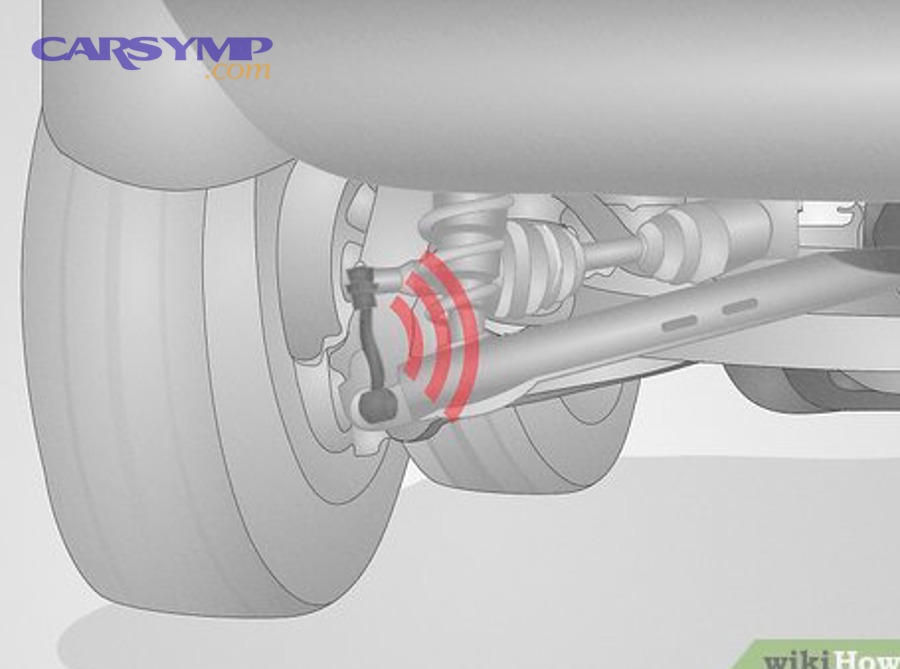
If you see grease sling on the inside of the wheel or along the suspension arms, treat the CV boot/joint as a serious candidate—even if you only hear the noise sometimes.
Do steering rack bushings or mounts cause clunks during turning?
Yes—steering rack bushings or mounts can cause clunks during turning because (1) the rack can shift side-to-side under load, (2) the shift can create a “thunk” as the rack hits its travel limit in the bushing, and (3) the steering wheel can feel vague or inconsistent as the rack moves before the wheels respond.
In addition, rack movement can masquerade as tie rod play because both create a delay between steering wheel input and wheel response.
Common signs that the rack is shifting:
- Clunk when turning the wheel quickly left-right (stationary or crawling)
- Steering feels “rubbery,” especially on center
- Noise seems to come from the center/front subframe area, not the wheel-end
- Visible rack movement when a helper turns the wheel (with the hood open or from below, safely)
If you’ve replaced outer tie rods and the clunk remains, rack mounts and inner tie rods become higher probability.
Can strut mounts, ball joints, or sway bar links cause a clunk when turning?
Yes—strut mounts, ball joints, and sway bar links can cause a clunk when turning because (1) each part manages load transfer during cornering, (2) worn joints or bushings allow sudden movement, and (3) turning changes the direction of force, which makes loose parts “announce” themselves.
More importantly, each has a recognizable pattern:
- Sway bar end links: dull clunk, often worse over bumps while turning; sometimes improves on smooth roads.
- Ball joints: clunk + looseness + uneven tire wear; can feel unstable during braking or quick turns.
- Strut mounts/bearings: pop/knock during steering, sometimes with a “memory steer” feel (wheel doesn’t return smoothly).
If your knock is paired with steering that doesn’t self-center smoothly, strut mount/bearing issues deserve attention.
What quick checks can you do at home to pinpoint the failing component?
You can do 4 quick checks at home—visual inspection, wheel play tests, steering input tests, and wheel-end checks—to pinpoint the most likely source without special tools, as long as you prioritize safety and stop if anything feels unstable.
To better understand what you’re hearing, think of these checks as “confirmations,” not full diagnoses. Your goal is to narrow the suspect list from 10 parts to 1–3 parts before you pay for labor.
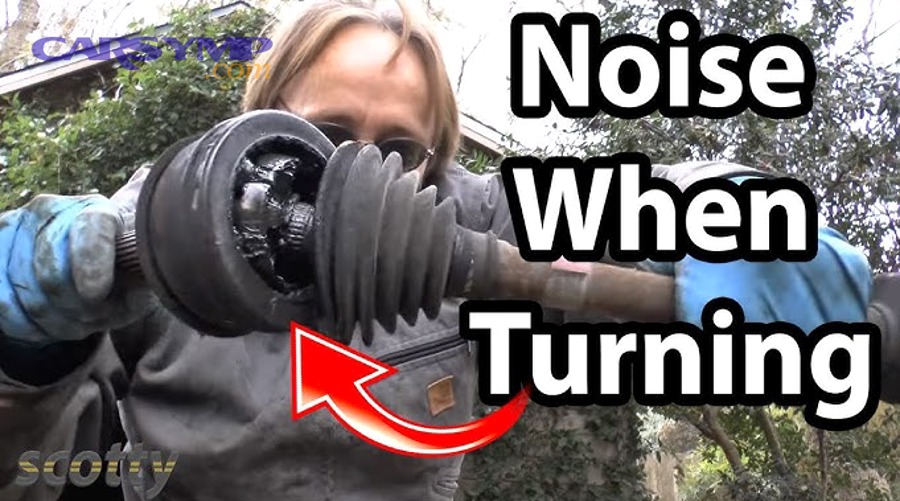
Safety baseline (non-negotiable):
- Park on flat ground; use wheel chocks.
- If you lift the car, use jack stands—never rely on a jack alone.
- Keep hands clear of pinch points.
- If you can’t lift safely, stick to stationary steering tests and visual checks.
Can you confirm tie rod or ball joint play with wheel “shake tests”?
Yes—you can often confirm tie rod or ball joint play with wheel shake tests because (1) shaking loads the joint in the direction it controls, (2) worn joints show visible movement or clicking, and (3) the test separates lateral play (tie rods) from vertical play (ball joints) in many cases.
Then, use this practical approach (with the vehicle safely lifted or with an experienced helper):
- 3 and 9 o’clock shake (hands at left/right of tire):
- Excess play often points toward outer tie rod, inner tie rod, or rack play
- 12 and 6 o’clock shake (hands at top/bottom of tire):
- Excess play can point toward ball joints or wheel bearing (bearing play can mimic ball joint play)
What you’re looking for:
- A distinct clunk as the wheel moves
- Visible movement at a joint (especially at the outer tie rod end)
- A “dead zone” where the wheel moves but the linkage lags
A helpful tip: place a finger lightly over the suspected joint boot (outer tie rod or ball joint) while a helper rocks the wheel. A worn joint often transmits a clear “tap” sensation.
What visual signs help identify CV joint or boot failure?
CV joint or boot failure is often identified by torn boots, grease sling, and directional clicking during full-lock turns under power, because the boot’s job is to keep grease in and grit out, and once it fails, the joint wears rapidly.
Specifically, look for:
- Grease splatter on the inside of the wheel, fender liner, or suspension
- Cracked, torn, or loose CV boot clamps
- Clicking/popping that increases when lightly accelerating in a tight turn
- Vibration during acceleration (sometimes paired with CV wear)
If the boot is torn but the joint is not yet noisy, replacing the boot early can prevent full axle replacement on some vehicles. If it’s already clicking loudly, the joint surfaces are usually damaged.
How do you check for rack movement or loose steering mounts safely?
You can check for rack movement by watching the rack housing and mounts while a helper gently rocks the steering wheel, because rack shift is easiest to see during small left-right inputs when the wheels resist movement and force transfers into the rack mounts.
Moreover, this test is often more revealing than random road noise because it isolates the steering system from suspension travel.
Safe method:
- Engine off (or on if your vehicle needs power assist for realistic load), parking brake set.
- Helper rocks steering wheel left-right about 1–2 inches at the rim (small input).
- You observe:
- The rack housing relative to the subframe
- Mount bushings for flex, cracking, or excessive movement
- The inner tie rod area for delayed response
If the rack moves before the wheels start to turn, that’s a strong clue the mounts/bushings are part of the problem.
How can you tell if it’s brakes or wheel bearings instead of steering?
Brakes and wheel bearings can mimic steering knocks, but steering-related knocks typically correlate with steering input, while brake and bearing noises correlate more with wheel rotation, braking pressure, and sustained corner loading.
In addition, use these differentiators:
- Brake pad shift / caliper movement:
- Single clunk when switching from forward to reverse
- Clunk at first brake application
- Sometimes a knock during turning if hardware is loose
- Wheel bearing:
- More often a growl or hum than a knock
- Noise changes when you load one side (turning left loads right bearing, and vice versa)
- Often independent of brake application
A quick check: if the noise changes dramatically when you lightly apply the brakes while turning (in a safe area), consider brake hardware. If it changes more with corner load than steering angle, consider wheel bearings.
Is it safe to drive with a steering knock when turning?
No—it is not always safe to drive with a steering knock when turning, because (1) the noise can indicate a joint with critical play, (2) worn steering/suspension components can fail under load, and (3) a sudden loss of control can occur if a link separates or a joint collapses.
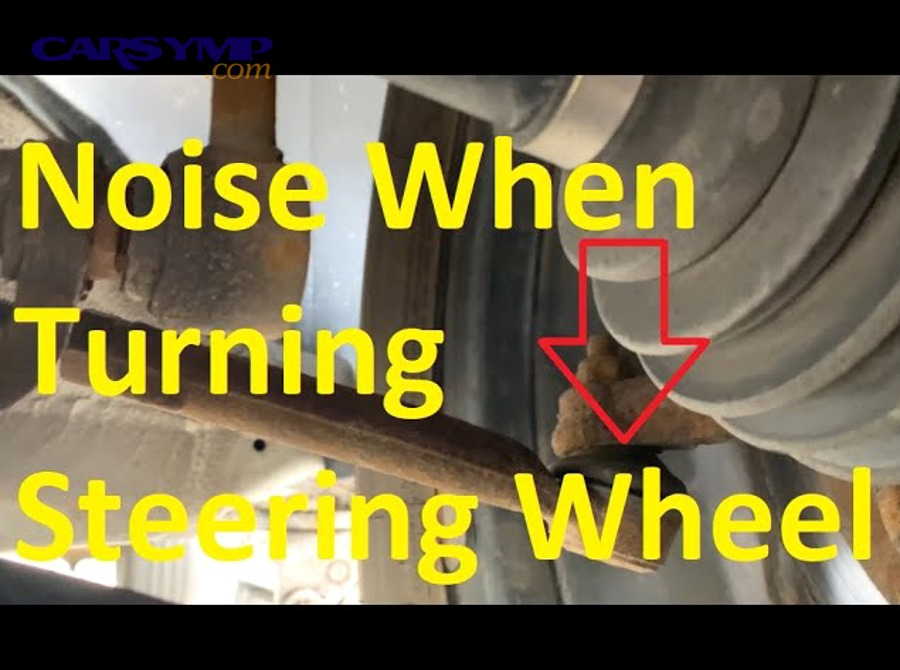
More importantly, Safe-to-drive guidance for knocking sounds should be based on risk signals, not hope. Some vehicles can clunk for months with a worn sway link; others can become dangerous quickly with a failing ball joint or tie rod.
A smart approach is to classify your situation into three risk levels:
- Low risk (schedule inspection soon): light clunk over bumps, no steering play, no change in handling.
- Moderate risk (limit driving): recurring knock with slight looseness, steering wander, uneven tire wear, or increasing frequency.
- High risk (tow): severe play, wheel wobble, sudden pull, grinding, or steering that feels unpredictable.
Which symptoms mean you should stop driving and tow?
There are 7 common red-flag symptoms that mean you should stop driving and tow: sudden steering looseness, visible wheel wobble, loud repeated clunks during small inputs, grinding, a steering wheel that won’t return smoothly, sudden alignment change, or any sign of a joint close to separation.
Then, treat these as “tow now” triggers:
- Steering wheel has excess free play before the car responds
- Car pulls hard or changes direction unexpectedly when turning or braking
- You feel a shake/wobble in the wheel or the car
- Loud metal-on-metal noises (grind/scrape) appear
- A joint boot is torn and the joint shows obvious looseness
- The knock becomes rapid and repetitive with tiny steering inputs
- You see damage: cracked control arm, bent linkage, or leaking/loose rack mount
Technical crash analyses have documented investigations where tie rod separations are evaluated in the context of real-world crashes, underscoring why large, progressive play should be treated seriously. (sae.org)
If the noise is minor, what should you do before your repair appointment?
If the noise is minor, you should (1) document the exact conditions, (2) avoid aggressive maneuvers, and (3) perform basic visual checks, because good information reduces diagnostic time and safer driving reduces the chance of a sudden escalation.
Moreover, showing a mechanic a reproducible pattern is more helpful than saying “it clunks sometimes.”
Bring this checklist:
- Video/audio recording (parking lot turn + bump, if safe)
- Notes: left vs right, full lock vs partial, braking/accelerating influence
- Recent work (tires, brakes, alignment, suspension repairs)
- Any steering feel changes (wander, notchy feel, vibration)
Also avoid:
- Potholes, hard curb impacts, and high-speed sweeping turns
- Heavy cargo that increases front-end load
- High-torque full-lock acceleration (especially if you suspect CV issues)
Do you need an alignment after fixing a steering clunk?
Yes—you often need an alignment after fixing a steering clunk because (1) many repairs change toe/camber settings, (2) worn parts can hide alignment problems until replaced, and (3) correct alignment prevents rapid tire wear and stabilizes steering feel after the noise source is fixed.
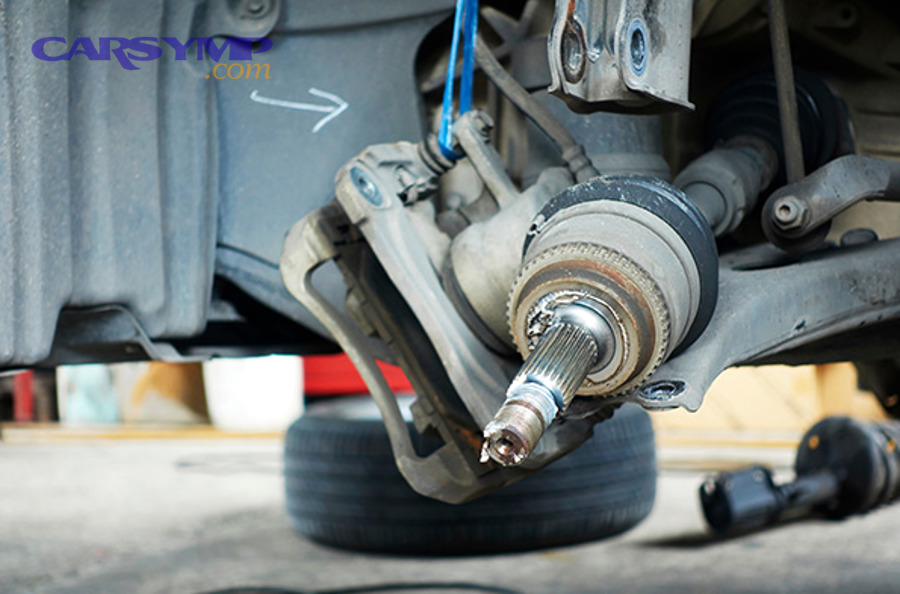
Then, treat alignment as part of “finishing the repair,” not an optional add-on—especially when tie rods or control arm geometry are involved.
Which repairs almost always require an alignment (tie rods, control arms, struts)?
There are 5 repair types that almost always require an alignment: outer/inner tie rod replacement, steering rack removal/reinstallation, control arm replacement, ball joint replacement (when it changes geometry), and strut replacement, based on how directly each job affects toe and camber.
More specifically:
- Tie rods (inner or outer): toe setting is directly altered.
- Control arms / bushings: can shift caster/camber/toe depending on design.
- Struts: affects camber and sometimes caster; also changes ride height, which changes alignment angles.
- Rack replacement: can change steering center and tie rod lengths.
A practical rule: if the part you replaced connects to the knuckle or changes the effective length of the steering linkage, plan on an alignment.
Which repairs may not require alignment but still benefit from it?
There are 4 common repairs that may not strictly require alignment but still benefit from it: sway bar end links, rack bushings (in some vehicles), strut mounts alone (if geometry is unchanged), and certain brake hardware fixes, based on whether the repair changes wheel angles.
In addition, an alignment check is a low-cost way to confirm the repair didn’t introduce a pull or toe error—especially if the vehicle had uneven tire wear or steering wander before the fix.
Consider an alignment check if:
- You replaced multiple parts on one side
- The car had abnormal tire wear
- You feel the steering wheel is no longer centered
- The clunk is gone but the car still drifts
What are less common (but real) causes of a steering knock when turning?
There are 4 less common but real causes of steering knock when turning—intermediate steering shaft/U-joint issues, brake hardware shift, engine/trans mount movement, and hub/axle interface problems—based on uncommon movement paths that still produce impact noises under turning loads.
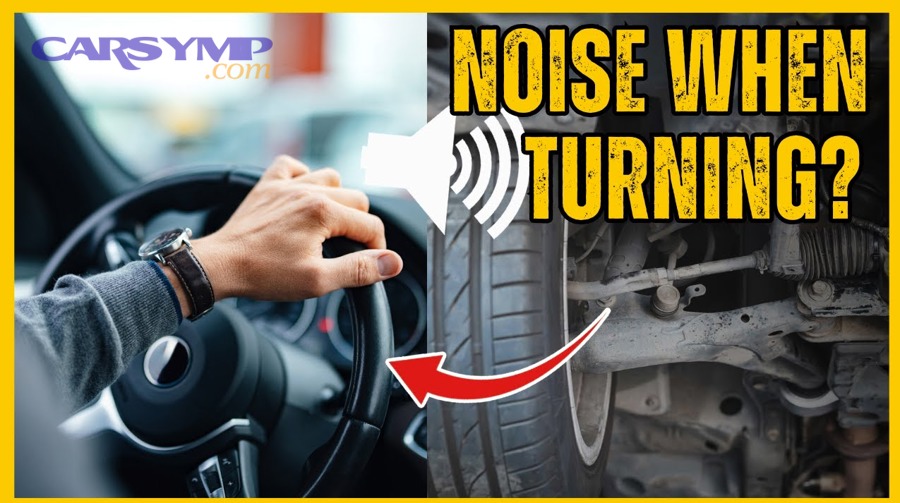
Below, this is where you expand beyond “usual suspects” and prevent misdiagnosis. Many drivers replace tie rods and sway links only to find the knock remains because the true source was higher up the steering column, inside the brake assembly, or even in mounts that shift the drivetrain.
Can an intermediate steering shaft or U-joint cause a clunk when turning?
Yes—an intermediate steering shaft or U-joint can cause a clunk when turning because (1) the shaft can develop play or bind (slip-stiction), (2) the bind releases with a knock during steering input, and (3) the noise often seems to come from the firewall or steering column area.
Then, watch for these cues:
- Knock felt in the steering wheel more than heard outside
- Noise occurs with small left-right inputs, sometimes even while stopped
- Steering feels notchy or “steps” slightly rather than moving smoothly
This is also where people confuse steering-column knocks with “engine knock.” A key difference is trigger: column knocks correlate with steering input even while stationary; engine knock correlates with RPM/load.
Can brake hardware or pad shift create a knock that sounds like steering?
Yes—brake hardware or pad shift can create a knock that sounds like steering because (1) pads can move slightly within the bracket if hardware is worn or missing, (2) caliper slide pins can clunk when they shift, and (3) corner loading can change pad contact and create a single “tap” noise.
Moreover, this is a classic “false steering clunk” scenario:
- It may knock once when turning into a driveway
- It may be more noticeable after brake service
- It may change when you lightly apply the brakes during the turn
If your knock appeared right after brake work, or if the noise changes with brake pressure, ask for a brake hardware inspection before you replace steering parts.
Can motor/trans mounts cause a “thump” during turning that mimics a steering clunk?
Yes—motor or transmission mounts can cause a thump during turning that mimics a steering clunk because (1) low-speed turns often coincide with throttle transitions, (2) mounts control drivetrain rotation, and (3) a shifting drivetrain can transmit a dull knock through the subframe and steering feel.
In addition, mount-related thumps often show up as:
- Thump when shifting from drive to reverse
- Thump when accelerating out of a slow turn
- Thump that is stronger with engine torque than with steering angle alone
A quick clue: if you can make the noise happen by gently blipping the throttle in gear , mounts rise on the suspect list.
Can wheel hub/axle nut torque or hub spline issues cause intermittent knocking?
Yes—hub/axle interface issues can cause intermittent knocking because (1) small amounts of play can load/unload during turning and acceleration, (2) splines can shift microscopically and “click/knock,” and (3) improper torque or wear can amplify the movement.
Then, treat this as rare but important:
- It often appears after axle/hub work
- It can be directional (left vs right)
- It can worsen under acceleration while turning
If you suspect this, avoid repeated hard acceleration turns and have a qualified technician verify torque specs and inspect the hub and axle interface.
Finally, to prevent confusion, keep “steering knock” separate from true engine noises. Engine knock vs rod knock identification matters because rod knock usually follows engine RPM and load, not steering angle. If the sound changes mostly with steering input and corner loading, it’s almost never rod knock—so you stay focused on the steering/suspension/wheel-end.
Evidence (if any)
According to a technical investigation paper presented through SAE International in 2008 on tie rod separations in motor vehicle crashes, component evaluation can be central to determining whether steering linkage separation was involved in loss-of-control events. (sae.org)