


A rattling heat shield or a knocking exhaust can usually be diagnosed at home by matching the sound (buzz vs thud) to a repeatable trigger (idle, rev, bumps, or load) and then confirming the exact contact point with a short, safe inspection routine.
If the noise turns out to be heat-shield related, the fix is often straightforward: restore tight mounting, restore clearance, and replace missing or rusted hardware so the shield can’t vibrate against the exhaust system again.
If it’s a true exhaust knock, the job becomes a movement-and-clearance problem: you confirm which mount, hanger, clamp, or joint is allowing the exhaust to swing and tap the body, crossmember, or another component.
Introduce a new idea: once you’ve handled the common causes, you also want to avoid misdiagnosis—because several uncommon exhaust noises can mimic heat-shield rattle and waste your time (or hide a more urgent problem).
What does “exhaust knock” and “heat-shield rattle” mean, and why do they sound different?
Exhaust knock and heat-shield rattle are two distinct exhaust-area noise patterns: knock is a dull, impact-style sound caused by movement and contact, while rattle is a high, metallic vibration caused by a loose shield or thin metal resonating against the exhaust system.
More specifically, the key is to treat the noise like a clue: its pitch, rhythm, and trigger tell you where to start your knocking noise diagnosis without guessing.
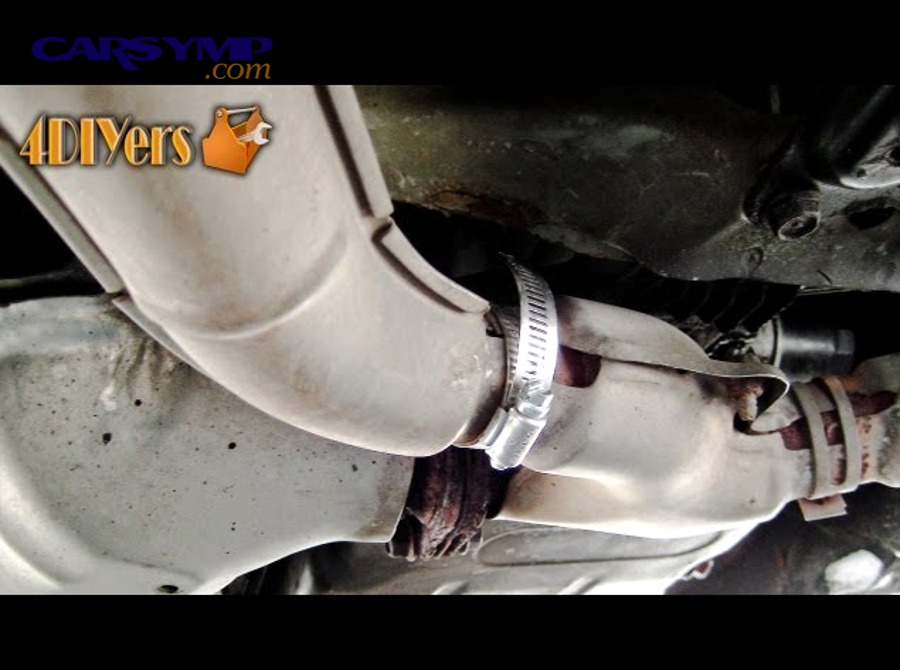
Is the noise more likely a rattle (high metallic buzz) or a knock (dull thud)?
Yes—most drivers can tell rattle vs knock reliably by listening for (1) pitch, (2) repeatability, and (3) what “turns it on” during driving.
Then, because sound can echo under the car, you confirm your first impression with a couple of simple checks:
- Pitch and texture
- Rattle: thin “tinny” buzz, metallic chatter, sometimes like shaking a soda can.
- Knock: dull thump, “tap” or “clunk,” like something heavier striking metal.
- Trigger pattern
- Rattle often changes with RPM or engine vibration (idle → light rev).
- Knock often shows up with bumps, torque changes, or engine roll (shift from Drive to Reverse, gentle acceleration).
- Temperature dependence
- Rattle may get worse hot (metal expands, clearance changes).
- Knock may appear more under load (exhaust shifts more when mounts flex).
Next, treat this like a branching path: if it’s buzzing, start with shields; if it’s thudding, start with hangers, mounts, and contact marks.
What are the most common parts that create heat-shield rattle noises?
There are 4 main types of heat-shield rattle sources based on where the shield sits in the exhaust system: manifold/catalyst shields, mid-pipe shields, underbody tunnel shields, and muffler/rear shields.
Then, within each type, the rattle usually comes from a predictable failure point:
- Manifold / catalyst heat shield rattle
- Thin shield metal corrodes around mounting holes.
- Bolts loosen, studs snap, or clips/speed nuts disappear.
- Mid-pipe heat shields
- Shield edges contact the pipe after minor impacts or sagging hangers.
- Underbody tunnel shields
- Large “tray-like” shields loosen and buzz over bumps or at certain RPM bands.
- Muffler / rear heat shields
- Cracks or broken tabs let the shield flap against the muffler body.
To better understand why manufacturers use these shields, remember the lexical relationship: a heat shield is a part of the exhaust system , and when that part becomes loose, the whole system becomes a noise amplifier.
Evidence: According to a study by University Tenaga Nasional (Centre for Advanced Computational Engineering) from 2012, a heat-shield design in underhood simulations reduced peak temperatures of components and the firewall, showing why shields matter—and why a loose one can’t be ignored. (researchgate.net)
How can you do fast, safe exhaust-system checks at home without guessing?
A fast, safe inspection is a how-to method with 6 steps—cool the exhaust, secure the vehicle, reproduce the noise safely, isolate the zone, confirm contact or looseness, and document the exact part—so you can stop the rattle/knock with the right fix instead of trial-and-error.
Specifically, you’re solving two problems at once: where the noise comes from and what motion creates it.
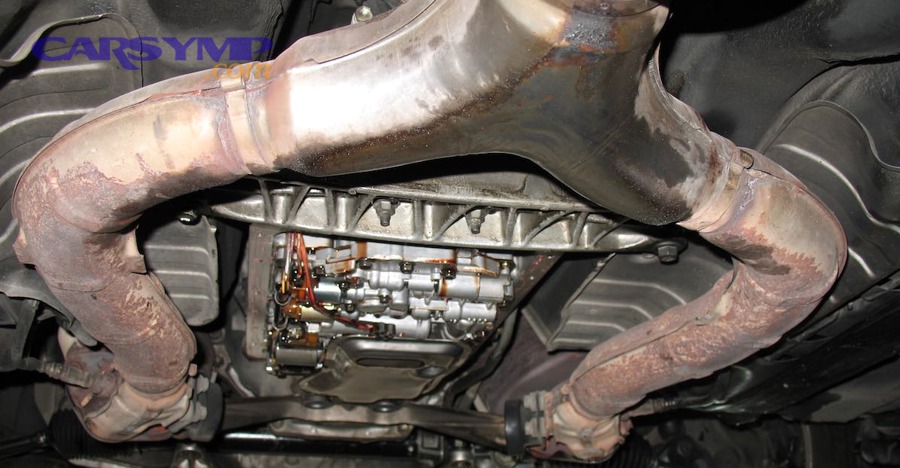
Can you reproduce the noise safely at idle without driving the car?
Yes, in many cases you can reproduce an exhaust-area rattle/knock at idle because (1) engine vibration is present, (2) shields resonate at certain RPM bands, and (3) loose mounts often reveal themselves during gentle rev changes.
Then, do it safely and deliberately:
- Start cold if possible
- A cold start can highlight shield buzz before metal expands.
- Listen from two positions
- From the side of the engine bay (hood open) and from behind the vehicle (at a safe distance).
- Use gentle RPM “steps,” not hard revs
- Bring RPM up briefly (e.g., 1,500–2,500) and release.
- Avoid risky zones
- Keep hands clear of belts, fans, and hot surfaces.
If you cannot reproduce at idle, that’s still valuable: it pushes your diagnosis toward bump-triggered contact or load-triggered movement, which is common with exhaust knock.
Which quick tests confirm a loose heat shield in under 10 minutes?
There are 3 quick confirmation tests for heat-shield rattle based on the criterion “does the shield move or ring when you touch/tap it”: hand-wiggle test, tap test, and hardware/edge inspection.
Next, use them in this order (fastest to most revealing):
- Hand-wiggle test (engine off, exhaust cool)
- Grab the shield edge and try to move it.
- A good shield feels tight; a loose one “clicks” or shifts.
- Tap test
- Tap the shield lightly (rubber mallet preferred).
- A loose shield produces a sharp metallic ring plus movement.
- Hardware + witness mark inspection
- Look for:
- missing fasteners
- rust-widened mounting holes
- shiny rub marks on the shield edge or pipe (metal-on-metal “polish”)
- Look for:
A quick professional parallel: NHTSA-posted service bulletins repeatedly describe rattle complaints traced to heat shields found cracked or out of spec, reinforcing that a “simple rattle” is frequently shield-related. (static.nhtsa.gov)
How do you check for exhaust pipe contact that causes a “knock” over bumps?
Exhaust contact knock is a definition-type mechanical problem: the exhaust system is moving enough for the pipe, muffler, or bracket to strike the body or frame, usually because clearance is reduced or a hanger is weak.
Then, check contact like an investigator:
- Look for “witness marks”
- Shiny spots on a pipe bend, flattened insulation, chipped undercoating.
- Inspect hangers and rubber isolators
- Torn rubber lets the exhaust swing farther.
- Check alignment at joints
- A rotated clamp or mis-seated slip joint can aim the pipe at a crossmember.
- Simulate bump movement
- With the car safely supported, push the exhaust side-to-side gently (do not pry against fragile components).
- You’re looking for the moment the pipe taps something solid.
This is where people confuse exhaust knock with Suspension knock over bumps diagnosis—because both are bump-triggered. The difference is that exhaust knock often leaves metal witness marks and is easiest to reproduce by moving the exhaust by hand.
What are the most likely causes of exhaust knock and heat-shield rattle—and how do you confirm each one?
There are 6 main causes of exhaust knock and heat-shield rattle based on the criterion “what physically moves and what it hits”: loose heat shield hardware, corroded shield tabs, worn hangers/isolators, loose clamps/joints, broken brackets/welds, and internal muffler/catalyst issues.
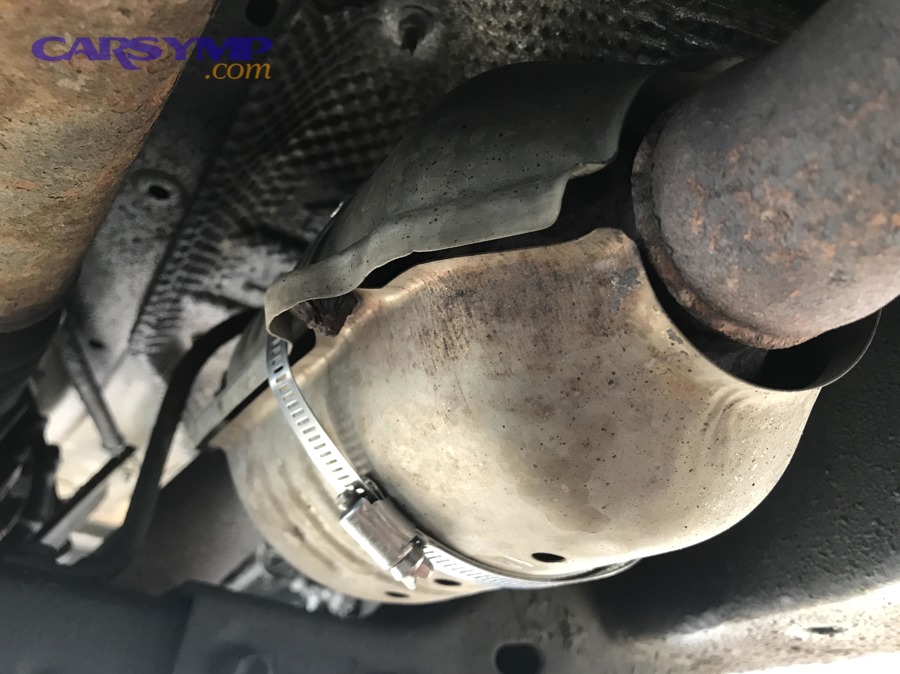
Next, use the table below as a quick “confirm or rule out” guide before you buy parts. (This table summarizes the most common causes and the fastest confirmation cue for each.)
| Likely Cause | Typical Sound | Trigger | Fast Confirmation Cue |
|---|---|---|---|
| Loose heat shield bolt/clip | Metallic buzz | Idle, light rev | Shield moves by hand; ringing tap test |
| Corroded shield mounting hole/tab | Tinny rattle | Hot + vibration | Rust-widened holes; cracked tabs |
| Torn rubber isolator / weak hanger | Knock / thump | Bumps, torque | Exhaust swings too far; sagging visible |
| Loose clamp / slip joint | Knock + possible leak tick | Load changes | Joint shifts; soot streaks near joint |
| Broken bracket / cracked weld | Heavy knock | Bumps, engine roll | Visible crack; localized movement |
| Internal muffler/catalyst rattle | Rattle inside can | RPM band | Pressing shield doesn’t change sound; tapping can resonates |
Is a loose hanger or torn rubber isolator causing the exhaust to swing and knock?
Yes, it often is, because (1) rubber isolators age and tear, (2) a sagging exhaust loses clearance, and (3) bumps amplify swing and contact.
Then, confirm it with three direct checks:
- Visual sag
- One side of the exhaust sits lower than the other.
- Excessive swing
- You can move the exhaust noticeably by hand without much resistance.
- Rubber condition
- Cracks, elongation, tears, or missing material around hanger holes.
If you find this, you’re not “fixing a noise” anymore—you’re restoring the exhaust system’s designed movement range so it can’t strike the car.
Is a loose clamp, bracket, or broken weld creating a metal knock under load?
Yes, it can be, because (1) clamps can loosen, (2) brackets fatigue from vibration, and (3) broken welds turn one solid piece into two pieces that can collide.
Then, confirm it with:
- Movement at a joint
- Slip joints shouldn’t “clack” when you push/pull.
- Soot streaks
- Dark soot near a joint can indicate a small leak, often paired with a ticking sound.
- Crack visibility
- Brackets or welds often show a hairline crack before full separation.
This is also where you keep terminology tight: rattle usually equals thin metal vibration; knock usually equals heavier impact from movement or separation.
Could it be an internal muffler/resonator rattle instead of a heat shield?
Exhaust heat shields win for “most common external rattle,” but internal muffler/resonator failure is best for persistent, can-like rattles, while heat-shield rattle is best explained by vibration that changes when you press the shield.
Then, use these comparisons:
- Press test
- If pressing on a shield changes the sound dramatically, it’s likely the shield.
- If nothing changes, suspect internal baffles or a different component.
- Tap test
- Tap the muffler body: a damaged baffle can sound like loose debris inside.
- RPM band behavior
- Internal rattles often occur at a narrow RPM range and persist even when stationary.
If you land here, document the exact RPM range and whether the noise follows road bumps—those details matter for a clean fix.
How do you fix a confirmed heat-shield rattle the right way (tighten, resecure, or replace)?
You fix a confirmed heat-shield rattle with 3 repair paths—tighten hardware, resecure with improved fastening, or replace the shield—so the shield maintains clearance and cannot resonate against the exhaust system.
More importantly, the goal is not “silencing”; the goal is removing free play and restoring clearance so the vibration has nothing to strike.
Can tightening or adding new hardware solve it without replacing the shield?
Yes, most of the time, because (1) the shield metal is often fine, (2) fasteners are the failure point, and (3) restoring clamp force stops vibration.
Then, choose the hardware approach based on what failed:
- Loose bolt/nut
- Re-torque (to spec if available), and replace missing washers.
- Rust-widened mounting hole
- Use a larger washer or a backing plate so the fastener clamps solid metal.
- Missing clip/speed nut
- Replace with the correct clip or equivalent high-temperature hardware.
- Edge contact
- Gently restore clearance so the shield doesn’t touch the pipe.
A practical reminder: some manufacturer service procedures explicitly replace shields and fasteners when cracking is found, which shows that fastener integrity matters as much as the shield itself. (static.nhtsa.gov)
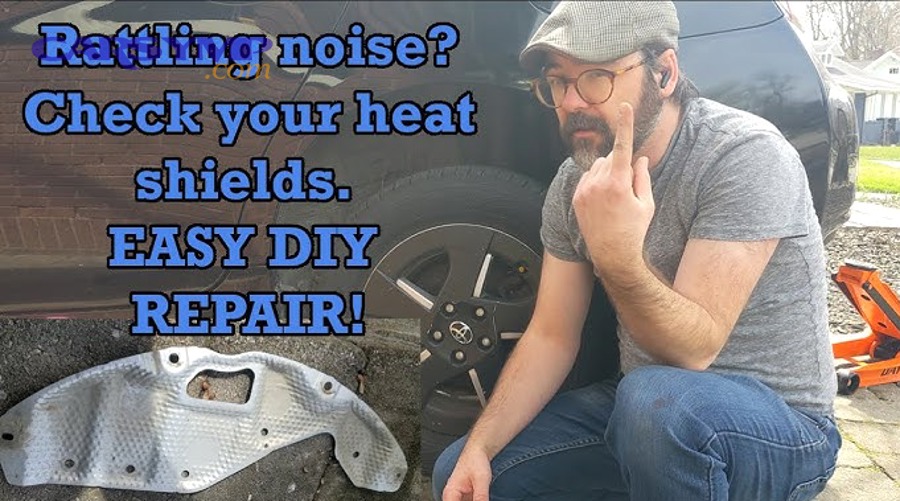
When should you replace the heat shield instead of patching it?
Tightening wins when hardware is the issue, but replacement wins for durability when the shield is structurally compromised, while patching is best for minor corrosion or a single loosened point.
Then, use this decision line:
- Replace the shield when
- tabs are broken
- cracks are spreading
- mounting holes are torn out
- the shield no longer holds shape and keeps contacting the exhaust
- Patch/tighten when
- the shield is intact and only needs secure mounting
- corrosion is superficial and the metal still supports clamp force
If you want a fast “sanity check”: a shield that flexes like a thin lid and won’t hold firm after tightening is usually past the point of a clean repair.
How do you fix exhaust knock caused by movement or contact (hangers, alignment, clearance)?
You fix exhaust knock by applying a 4-factor method—restore hanger strength, correct alignment, restore clearance at contact points, and recheck under torque—so the exhaust system can move within its normal range without striking the body or frame.
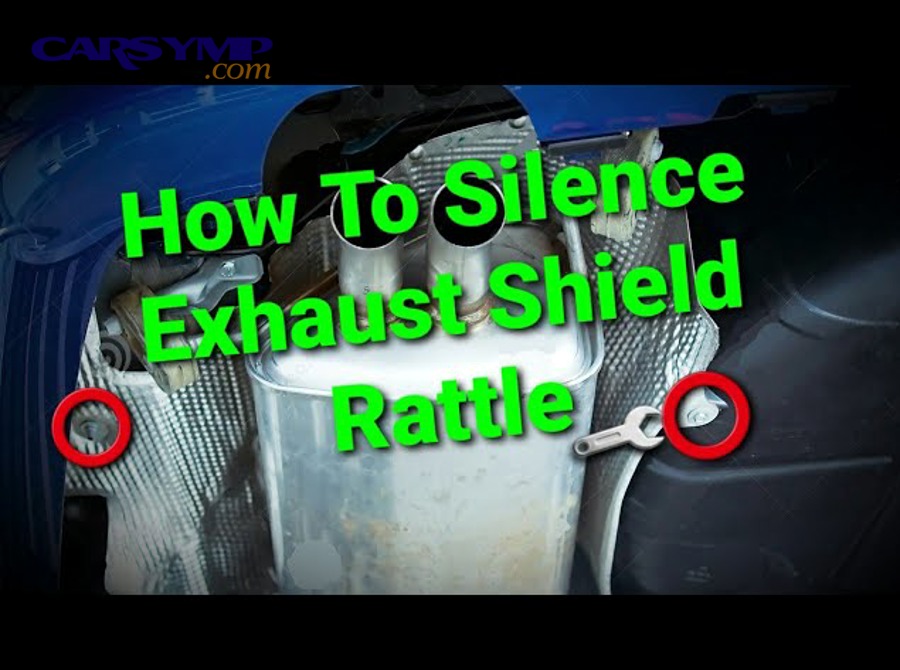
Then, treat it like a controlled movement problem rather than a random sound.
Is repositioning the exhaust enough, or do you need new hangers/isolators?
Repositioning wins for minor misalignment, but new hangers/isolators are best when rubber is torn or the system sags, and a combined approach is optimal when misalignment happened because the mount aged.
Then, decide by criteria:
- Reposition (adjustment) is enough when
- isolators are intact
- the pipe is simply rotated toward a crossmember
- clamps can be re-seated and tightened with good support
- Replace isolators/hangers when
- rubber holes are stretched or torn
- exhaust sits visibly low
- contact returns after a short drive
If you want to be systematic, take a photo of the exhaust position before you loosen anything. That single step prevents “I fixed one noise and created another.”
Can you drive with an exhaust knock or heat-shield rattle, or should you stop?
No, you should not assume it’s safe to drive, because (1) some knocks indicate loose parts that can drop, (2) exhaust leaks can route fumes where they don’t belong, and (3) repeated impacts can damage the exhaust system and nearby components.
Then, follow Safe-to-drive guidance for knocking sounds using clear “green/yellow/red” rules:
- Green (usually ok for a short trip to confirm)
- light rattle only, no exhaust smell, no performance change, no dragging parts
- Yellow (limit driving; schedule repair soon)
- rattle/knock increases with bumps, visible sagging, or fasteners missing
- Red (stop driving / tow)
- strong exhaust smell in cabin, loud sudden knock, visible contact sparks, exhaust hanging low, or new warning lights tied to exhaust components
Evidence: According to a study by Poznan University of Medical Sciences (Department of Forensic Medicine) from 2019, experimental reconstruction of car exhaust exposure recorded momentary CO concentrations up to 790 ppm under certain conditions, demonstrating how vehicle exhaust gases can reach dangerous levels and why leak-related symptoms should be treated as urgent. (pmc.ncbi.nlm.nih.gov)
If you need a quick practical rule: any exhaust odor in the cabin is a “stop and diagnose” signal, not a “wait and see” signal.
What uncommon exhaust noises mimic heat-shield rattle, and how can you avoid misdiagnosis?
Uncommon exhaust noises that mimic heat-shield rattle fall into 4 categories based on what’s resonating: catalyst substrate rattle, thermal expansion noises, active exhaust/fitment resonance, and prevention-related recheck issues—and you avoid misdiagnosis by using pressure/tap tests plus trigger tracking.
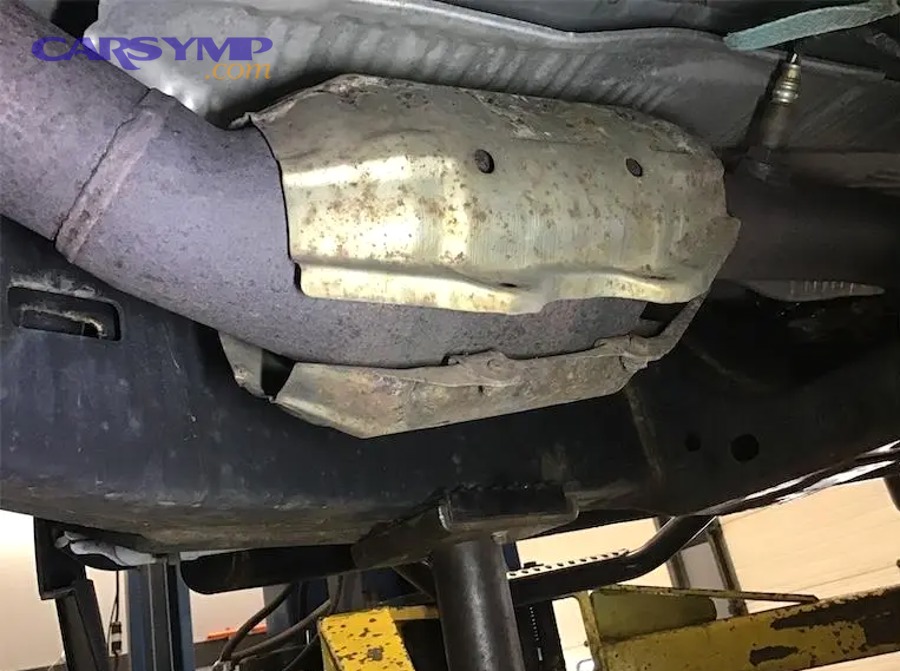
Next, this is where you expand micro semantics: “rattle” has close synonyms like buzz and chatter, while its practical antonym is a consistent, non-vibratory tick/knock that doesn’t change when you stabilize the shield.
Could a catalytic-converter substrate rattle sound like a loose shield?
Yes, it can, because (1) a damaged substrate can break into pieces, (2) those pieces rattle inside the shell, and (3) the sound can resemble thin metal vibration from outside.
Then, confirm it by contrast:
- Pressing on the heat shield does not change the sound.
- Tapping the converter body can produce a debris-like internal rattle.
- The rattle may be strongest at a specific RPM band and persist even when stationary.
If you suspect this, avoid aggressive “fixes” like hammering the shell; you want diagnosis, not damage.
Can thermal expansion “pings” be confused with rattle—and what’s the antonym (a true constant rattle)?
Thermal “pings” are best described as intermittent, single-impact sounds during heating/cooling, while a true constant rattle is the practical antonym: repeatable buzzing that continues under steady vibration.
Then, separate them by timing:
- Thermal ping
- often appears after shutdown or during warm-up transitions
- sounds like a brief “ting” rather than continuous chatter
- True rattle
- repeats during idle, rev, or bumps
- continues as long as vibration continues
This distinction prevents you from “repairing” a normal thermal behavior that doesn’t need repair.
Do active exhaust valves or aftermarket exhaust tolerances create resonance-only rattles at certain RPM?
Active valves and tight aftermarket fitment can create definition-level resonance behavior: components are not fully loose, but their natural frequency matches an RPM band, causing audible vibration.
Then, look for:
- rattle appears only in a narrow RPM range
- rattle changes with drive mode (if equipped)
- contact marks appear near hangers, brackets, or underbody edges
A helpful mental model: this is not “a bolt fell out”; this is “a clearance is too small for real-world movement.”
Which prevention checks reduce repeat heat-shield rattles after repairs?
There are 4 prevention checks based on the criterion “does vibration return after heat cycles”: re-torque after a short drive, clearance recheck hot, corrosion control, and re-inspection of adjacent parts.
Then, use this quick routine:
- Re-listen after one heat cycle
- Drive, warm up, cool down, then recheck for buzz.
- Recheck clearance where witness marks existed
- If it touched once, it can touch again under load.
- Address root corrosion
- Rust will keep enlarging holes and weakening tabs.
- Confirm the noise isn’t elsewhere
- If the sound persists, revisit the earlier table and re-run the isolation tests.
If you publish or share your process, consider labeling your checklist as Car Symp style—short, repeatable steps—so readers can follow the same confirmation path without replacing parts blindly.