


If your coolant level keeps dropping, a cooling-system pressure test is the fastest DIY method to force a coolant leak to reveal itself by pressurizing the system to a safe, controlled value and then inspecting for seepage, drips, or spray.
Next, you’ll get the exact tools, setup steps, and safety rules that prevent burns, protect components, and keep the test accurate—because most “failed” pressure tests are actually bad adapters, wrong pressure targets, or testing a warm system.
Then, you’ll learn how to interpret the gauge like a diagnostic instrument: what a slow pressure drop means, what a fast drop means, and how to connect those results to real symptoms like a low coolant warning light and overheating behavior.
Introduce a new idea: once you can pressure test confidently, you can also decide when the problem is a Coolant leak vs sensor fault diagnosis—and when you need a cap test, UV dye, or a combustion-gas check to finish the job.
What is a cooling-system pressure test and what does it prove about coolant loss?
A cooling-system pressure test is a diagnostic procedure that pressurizes the sealed coolant loop (radiator, hoses, engine passages, heater core, reservoir) to a specified pressure so coolant loss becomes measurable and leaks become visible under controlled conditions.
To better understand what it proves, think of coolant loss as “escape routes” in a closed system—pressure simply makes those escape routes easier to spot.
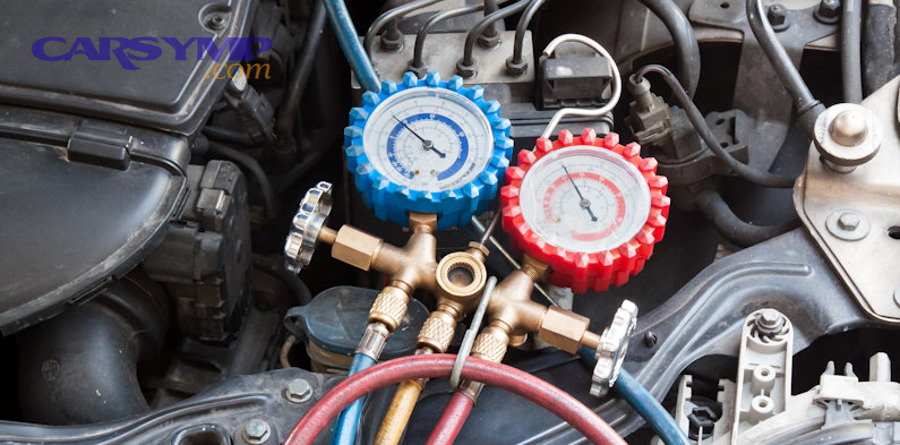
In practice, this test answers two essential questions at once:
- Can the system hold pressure? If it can’t, coolant is leaving the system (or the tester connection is leaking).
- Where is pressure escaping? The location of wetness, crusty residue, mist, or dripping usually points directly to the failing part.
A pressure test is most powerful for external leaks—hosen, clamps, radiator seams, thermostat housings, water pump seals, heater hoses, and plastic fittings. It can also hint at internal coolant loss when pressure drops with no external evidence, especially if other symptoms support it (misfires at startup, white exhaust smoke, or coolant smell without puddles).
According to a study by Yale University from the Department of Chemical and Environmental Engineering, in 2015, researchers described that coolant (ethylene glycol) can leak from vehicles and even evaporate from a malfunctioning cooling system, and they listed common leak points including water pump seals, head gaskets, radiator caps, rubber hoses, and radiators.
Does a pressure test find most coolant leaks if you can’t see coolant dripping?
Yes—most coolant leaks can be found with a cooling-system pressure test because (1) pressure amplifies small seepage into visible wetness, (2) it stabilizes conditions so you can inspect methodically, and (3) it confirms whether coolant loss is real or just an observation error from expansion/overflow changes.
Next, the key is understanding why “no drip” doesn’t mean “no leak.”
Reason 1: Many leaks don’t drip onto the ground.
Coolant can leak onto a hot engine surface, then evaporate before it reaches the floor. You may only notice a sweet odor or a faint haze after shutdown.
Reason 2: Some leaks only show under pressure.
Hairline radiator cracks, O-ring seepage, and hose pinholes can stay dry at idle but show wetness when pressurized.
Reason 3: The test gives you a measurable signal.
Even if you can’t see the leak instantly, a pressure drop tells you where to focus and whether to escalate to UV dye or cap testing.
That said, the answer becomes “not always” in three common situations:
- Intermittent leaks that only occur when hot and moving (thermal expansion + vibration).
- Very slow seepage that needs longer hold times to reveal.
- Internal coolant loss (coolant entering combustion chambers) that won’t leave an external trail.
What pressure should you pump to—cap rating, system spec, or a universal PSI?
Cap rating wins for safety, the service spec wins for precision, and a universal PSI is only a rough fallback when you lack vehicle-specific information.
Then, here’s how to choose the right target without risking damage:
- Best default (most DIY cases): Pump to the radiator/expansion cap rating.
The cap is stamped with its pressure rating (commonly around 13–20 psi on many vehicles, but it varies). Pumping to that value matches what the system is designed to hold under normal operation. - Best accuracy: Use the manufacturer’s specified test pressure (service manual).
Some systems have special procedures or specific limits, especially on newer designs with pressurized reservoirs and multi-loop cooling. - Avoid the “universal PSI” habit.
A blanket “15 psi for everything” can under-test some vehicles and over-stress others. If you don’t know the correct number, your safer play is to find the cap rating and use that.
A simple rule keeps you out of trouble: Never exceed the cap rating or the manufacturer test spec, and never pressure test a hot system.
What tools and setup do you need to pressure test a coolant system at home?
You need one core tool and a short safety-and-setup checklist to pressure test correctly: a cooling-system pressure tester (with the right adapter) plus basic inspection tools that help you see leaks in tight spaces.
Below is the setup that prevents the most common DIY failure: chasing a “leak” that’s actually coming from the tester connection.
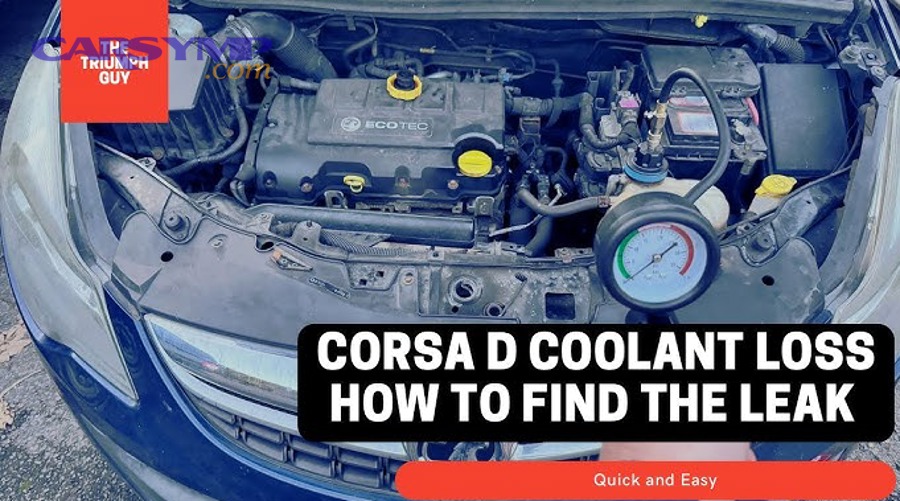
There are 5 main tool groups based on what they help you do:
- Pressure and seal the system
- Hand-pump pressure tester with gauge
- Correct adapter for your radiator neck or pressurized reservoir
- Optional: cap-test adapter (often included in kits)
- See and confirm leaks
- Bright flashlight or headlamp
- Small inspection mirror or borescope (helpful, not mandatory)
- Clean rags / paper towels (wipe, then re-check for fresh wetness)
- Contain coolant safely
- Catch pan
- Gloves and safety glasses
- Absorbent pads (coolant is slippery and toxic)
- Access hidden areas
- Basic hand tools to remove engine covers or undertrays
- Jack and stands (only if you’re trained and safe—never rely on a jack alone)
- Mark findings
- Chalk marker or masking tape to mark suspected points
- Phone camera for before/after comparisons
Do you need a specific adapter for your radiator or expansion tank?
Yes—you usually need a specific adapter because (1) different vehicles seal at different cap shapes and diameters, (2) pressurized reservoirs often require a dedicated “tank-cap style” adapter, and (3) a poor seal gives false pressure drops that look like system leaks.
Then, here’s the practical way to get it right:
- If your vehicle has a radiator cap on the radiator, you typically use a radiator neck adapter that locks like the cap does.
- If your vehicle uses a pressurized expansion tank (common on many modern cars), you pressure test at the tank cap with the matching adapter.
- If your kit has “universal” rubber cones, treat them as a last resort. They can work, but they’re more likely to leak at the interface and waste your time.
A quick sanity check saves you: once connected, pump just a few psi and watch the gauge. If the gauge drops immediately and you see no system wetness, suspect the adapter seal first.
What safety steps prevent burns and false results during a coolant pressure test?
There are 6 safety steps that also make the test more accurate: cool engine, relieve pressure slowly, use correct pressure, protect electronics, control spills, and stop if spraying occurs.
Next, use this checklist every time:
- Cool engine only: Let the engine cool fully before removing any cap. Hot coolant can flash into steam and cause severe burns.
- Relieve pressure slowly: Turn the cap to the first detent (if applicable) to release residual pressure, then remove.
- Stay under the rating: Use the cap rating or service spec—never exceed it “to be sure.”
- Keep coolant off belts and electrical connectors: Coolant contamination can cause squeals, slippage, and corrosion.
- Prevent spills: Place a catch pan and keep rags ready; coolant is toxic to pets and wildlife.
- Stop if you see a spray: Spraying coolant indicates a large leak or improper connection. Depressurize and correct the setup.
If your problem includes a low coolant warning light, don’t assume the car is “safe to keep driving” while you test—low coolant can cause rapid overheating and engine damage.
How do you perform a cooling-system pressure test step-by-step?
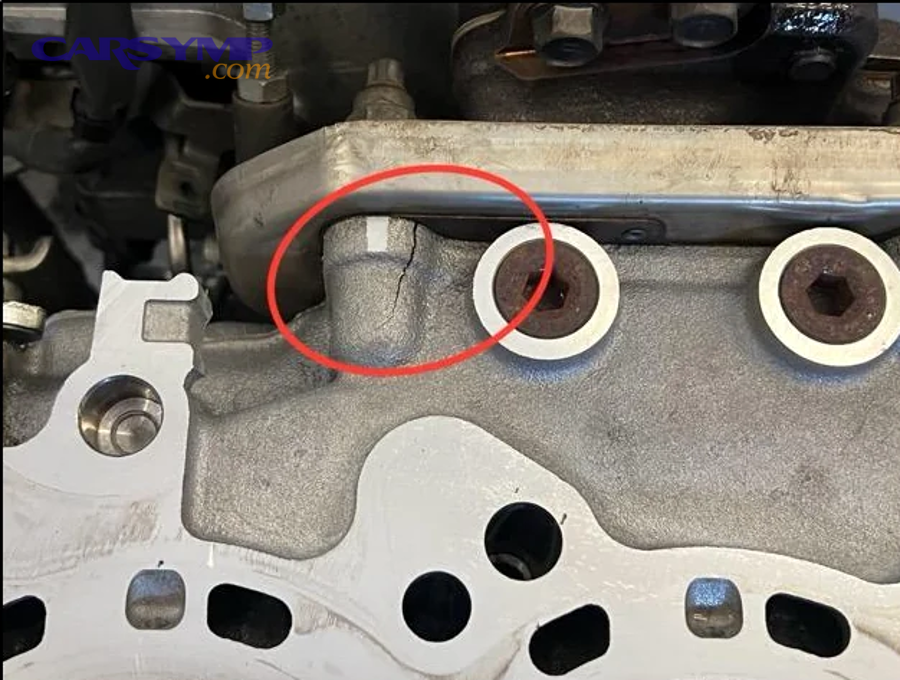
Perform a cooling-system pressure test in 7 steps to pressurize the system safely, hold pressure, and locate coolant leaks by inspection, so you can confirm the cause of coolant loss instead of guessing.
Then, follow this method exactly to avoid the two big mistakes: wrong test point and wrong pressure.
- Start with a cold engine.
Let the vehicle cool completely. A cold system gives safer access and more stable readings. - Identify your test point.
Find whether your system is designed to be filled/tested at the radiator cap or at the pressurized reservoir cap. - Remove the cap safely.
Turn slowly, stop if you hear pressure release, then remove fully once pressure is gone. - Install the correct adapter and tester.
Lock it in place like a cap. Ensure it’s seated evenly. - Pump to the correct pressure.
Pump gradually to the cap rating or service spec. Stop at target—don’t overshoot. - Hold and observe the gauge while inspecting.
Watch the needle, then inspect systematically: upper hoses → radiator seams → thermostat housing → water pump area → heater hoses → reservoir → undercarriage. - Depressurize before removal.
Release pressure at the tester valve, then remove the adapter, and reinstall the cap.
If your goal is Preventing low coolant warnings, this step-by-step approach matters because it confirms the leak rather than letting coolant loss continue until the warning returns.
Should you pressure test through the radiator cap or through the reservoir cap?
Radiator-cap testing is best when the radiator is the system’s pressure point, reservoir-cap testing is best when the reservoir is pressurized, and the wrong choice gives misleading results.
Next, use the “design clue” to decide:
- Radiator cap on radiator (traditional layout): pressure test at the radiator neck.
- Pressurized expansion tank (common modern layout): pressure test at the reservoir cap.
- Non-pressurized overflow bottle: do not test there—test at the radiator/pressure point instead.
The simplest confirmation is functional: whichever cap is stamped with the system pressure rating and seals the pressurized loop is usually the correct test point.
How long should you hold pressure and what time checkpoints matter?
A proper hold time is long enough to reveal leaks without confusing normal micro-settling, which typically means 2–5 minutes for obvious leaks and 10–30 minutes for slow leaks.
Then, use checkpoints to keep your diagnosis disciplined:
- 0–30 seconds: Immediate drops often point to a bad adapter seal, a large leak, or a cap-seat issue.
- 1–5 minutes: Most active leaks show wetness here—drips, weeping, or spray.
- 10–30 minutes: Slow seepage becomes visible as fresh moisture or a growing bead at fittings.
- After inspection wipe: Wipe a suspected point dry, then watch for new wetness to confirm it’s active.
If you’re diagnosing Low coolant light causes and what to do, longer holds are often necessary because small leaks can trigger repeated low coolant warnings without leaving a puddle.
Where should you look first to find the leak after pressurizing the system?
You should inspect leak points in a high-probability order—starting at hoses, seams, and known failure areas—because most coolant leaks occur at connections and seals that degrade from heat cycles and vibration.
Next, a structured inspection prevents you from missing a hidden leak and wrongly blaming the sensor when the low coolant warning light comes back.
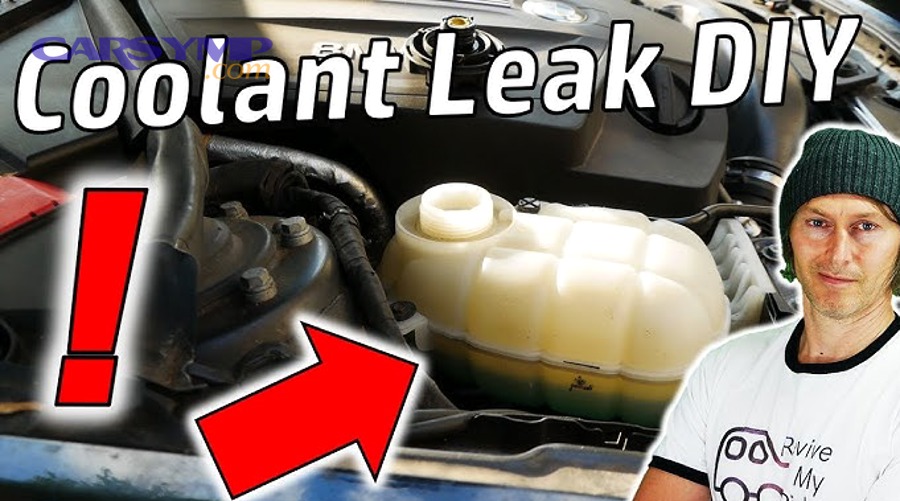
There are 6 main inspection zones based on where leaks typically appear:
- Upper radiator hose + clamps (easy access, frequent failures)
- Radiator seams and end tanks (plastic-to-aluminum joints can seep)
- Thermostat housing and nearby fittings (gaskets/O-rings)
- Water pump area (weep hole, shaft seal, gasket edge)
- Heater hoses and firewall connections (often overlooked)
- Under the engine and undertrays (pools or streaks that never reach the ground)
What are the most common external leak points that cause coolant loss?
There are 7 most common external leak points based on frequency and exposure to heat/pressure: hoses, clamps, radiator seams, thermostat housing, water pump weep hole, reservoir cracks, and small plastic tees/connectors.
Next, here’s what to look for at each point:
- Hoses: bulges, cracks, wet banding near ends, soft spots
- Clamps: white/green crust at the clamp edge, slow seep that “tracks” along the hose
- Radiator seams/end tanks: damp seam lines, staining, mist patterns on the fan shroud
- Thermostat housing: wetness at the gasket line, residue around bolts
- Water pump weep hole: damp underside of pump snout, residue on nearby surfaces
- Reservoir: hairline cracks at seams, wet cap area, stained mounting points
- Plastic connectors/quick-connects: wetness at locking tabs, brittle plastic fractures
A practical trick: use a light and look for “clean spots” on a dusty engine bay—coolant often washes dirt away, leaving a telltale clean trail.
How do you check hard-to-see leaks like heater core or coolant crossover pipes?
You check hard-to-see leaks by holding pressure while inspecting secondary evidence—smell, cabin moisture, residue trails, and hidden wetness—then confirming with access tools like mirrors or a borescope.
Then, focus on these locations:
- Heater core indicators (inside the cabin):
- Sweet coolant smell from vents
- Fogging windows when using heat/defrost
- Damp carpet (often passenger side)
- Oily film on windshield
- Firewall connections (engine bay):
- Wet heater hose fittings at firewall
- Staining below hose routes
- Crossover pipes (often under intake components):
- Residue at pipe joints
- Wetness collecting in engine “valleys”
- Drips that appear only after shutdown
If you suspect a heater core leak, don’t ignore it just because the engine bay looks dry—heater core seepage can still drive repeated low coolant warnings.
How do you interpret the gauge reading and leak symptoms correctly?
You interpret the gauge by treating pressure as a leak-rate signal: stable pressure suggests a sealed system (or a very slow leak), a slow drop suggests seepage or internal loss, and a fast drop suggests a significant external leak or a poor tester connection.
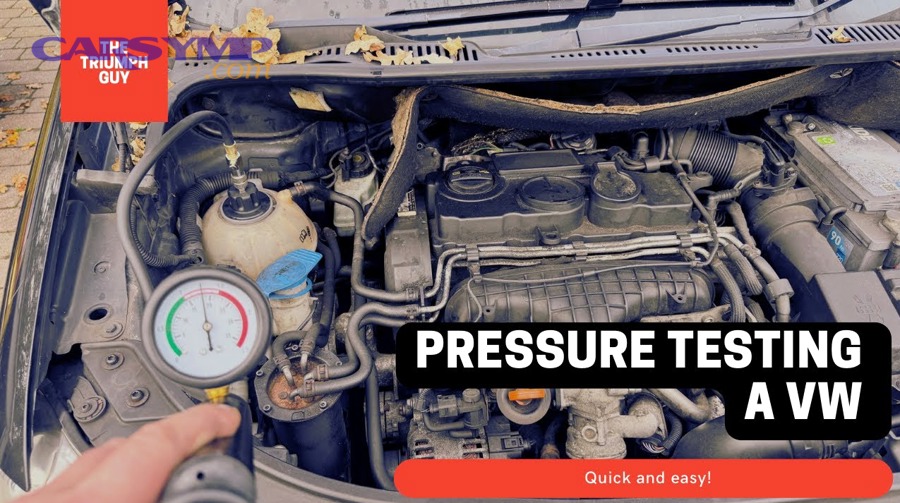
Next, you connect the gauge behavior to what you can observe, which is how you avoid misdiagnosing Coolant leak vs sensor fault diagnosis.
Here’s the practical interpretation model:
- Stable pressure + no wetness: likely sealed externally; consider cap function, overflow behavior, or internal/evaporating leak.
- Slow pressure drop + faint residue: seepage—common at hoses, clamps, O-rings, small cracks.
- Fast drop + obvious wetness/spray: active external leak—hose rupture, seam split, loose clamp, cracked housing.
- Immediate drop + no system signs: likely tester/adapter leak; reseat and retest.
Symptoms help you rank possibilities:
- Sweet smell after parking: often evaporating leak onto hot surfaces
- Visible steam/mist: significant leak or overheating venting
- Repeated low coolant warning light: either true coolant loss or a sensor/level issue
If the pressure drops, does that always mean there’s an external leak?
No—a pressure drop does not always mean an external leak because (1) the tester/adapter can leak at the seal, (2) the radiator cap seat or filler neck can leak under the adapter, and (3) coolant can be lost internally (or as vapor) without leaving a wet trail.
Then, eliminate the false alarms in this order:
- Check the tester connection first.
Listen for hiss at the adapter, spray soapy water around the seal (external only), and reseat. - Inspect the filler neck/cap seat.
Corrosion or damage can prevent sealing and mimic system leakage. - Look for internal-loss clues.
Misfire at startup, unexplained coolant odor in exhaust, persistent bubbles in the reservoir, or recurring overheating despite “no leak found.”
If your dashboard repeatedly shows a low coolant warning light but your test setup was imperfect, you can waste hours chasing the wrong cause—so validate your equipment seal before concluding anything.
What’s the difference between a slow pressure drop and a fast drop?
A fast drop usually indicates a large external leak or a bad test seal, while a slow drop is more consistent with seepage, micro-cracks, or internal/evaporating loss that needs longer observation.
Next, use this quick diagnostic comparison:
- Fast drop (seconds to a couple minutes):
- Large hose split or loose clamp
- Radiator seam crack
- Thermostat housing failure
- Tester/adapter not seated
- You’ll often see active dripping or spraying
- Slow drop (over 10–30 minutes):
- Weeping hose ends
- Water pump seal seepage
- Small reservoir crack
- Heater core seep
- Internal leak suspicion when no external sign appears
Your goal isn’t just to label the drop—it’s to match it with evidence so you can repair the actual cause and stop repeat warnings.
What should you do if the pressure test shows no leak but coolant keeps disappearing?
If the pressure test shows no visible leak, you should follow a 4-path checklist—cap performance, evaporating leaks, internal coolant loss, and sensor/level faults—because one of those paths explains most “mystery coolant loss” cases.
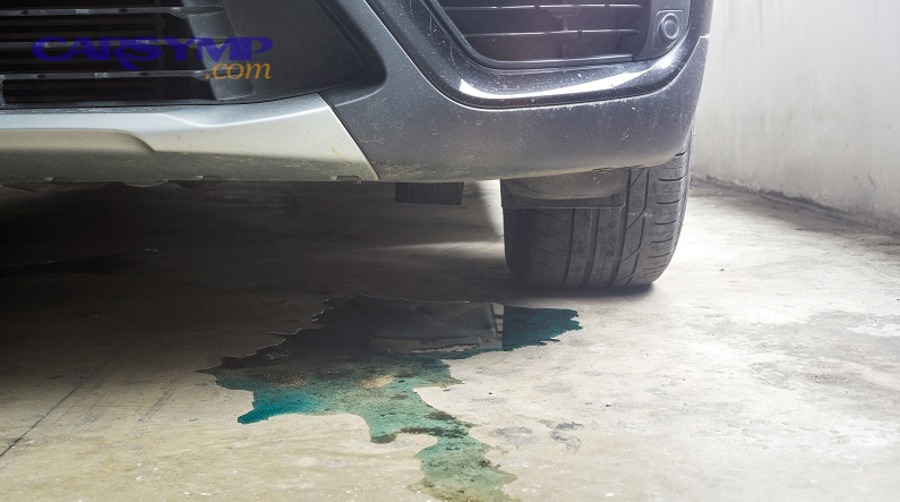
Next, this is where diagnostic discipline matters most, especially if you’re trying to stop recurring alerts and focus on Preventing low coolant warnings rather than topping off endlessly.
There are 4 main next steps based on the failure mode:
- Test the radiator/expansion cap separately (cap may vent early)
- Look for evaporating leaks (use longer holds or UV dye)
- Check for internal coolant loss (symptoms + confirmatory tests)
- Verify the level sensor and wiring (coolant leak vs sensor fault diagnosis)
Should you pressure test the radiator cap separately when diagnosing coolant loss?
Yes—you should pressure test the radiator cap separately because (1) a weak cap can vent coolant into overflow at too low a pressure, (2) it can fail to hold system pressure and accelerate boil-off, and (3) cap issues can mimic coolant loss while the engine bay stays dry.
Then, link cap behavior to what you observe:
- If your overflow bottle rises after driving and the system seems to “push coolant out,” a weak cap is a prime suspect.
- If you smell coolant after shutdown but see no wetness, early venting can create vapor and odor.
A formal cap test procedure often checks whether the cap holds its rated pressure and releases correctly; for example, an NHTSA service bulletin procedure describes verifying cap ratings and checking whether pressure holds at the stamped rating.
What are the most likely “hidden” causes of coolant loss when pressure holds steady?
There are 6 likely hidden causes when pressure holds steady based on where coolant can go without leaving obvious wetness: evaporating leaks, undertray pooling, heater core seepage, intermittent hot-only leaks, internal combustion-chamber entry, and a false low-level signal.
Next, here’s how each cause typically looks:
- Evaporating external leak
- Coolant hits hot metal and disappears
- Sweet smell, occasional haze, no puddle
- Undertray pooling
- Coolant collects on splash shields
- Ground stays dry until the tray overflows or you remove it
- Heater core seep
- Damp carpet, fogging windows, smell in cabin
- Heat/defrost makes it worse
- Intermittent hot-only leak
- Only leaks under full operating temperature and vibration
- Pressure test cold may not reproduce it; longer hold helps but isn’t perfect
- Internal coolant loss
- White exhaust smoke (especially at startup)
- Misfire after sitting
- Overheating without external leak evidence
- Coolant leak vs sensor fault diagnosis
- Coolant level is stable in the reservoir when cold, but the low coolant warning light triggers
- Sensor float sticks, connector corrodes, wiring intermittently opens
If you’re dealing with “Low coolant light causes and what to do,” your best move is to confirm the level in a cold state, note whether it changes over several days, and then pair that data with the cap test and an evaporating-leak search.
What tests complement (or replace) a coolant pressure test when diagnosing coolant loss?
A pressure test is best for finding external leaks, UV dye is best for slow/evaporating leaks, a combustion-gas (block) test is best for confirming internal leakage, and vacuum fill/hold is best for refill integrity and air-pocket prevention.
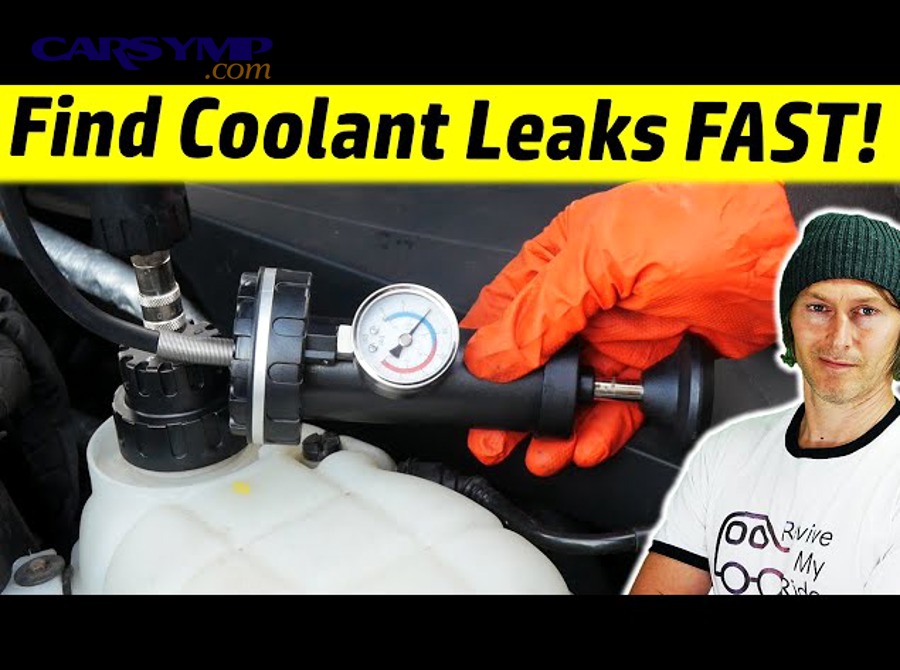
Next, use one complementary test only when the pressure test stops giving you new information, so you don’t replace diagnosis with random part swapping.
When should you use UV dye with a pressure test for “evaporating” leaks?
UV dye testing is a leak-finding method that adds fluorescent dye to coolant so even tiny leaks leave a glowing trace under a blacklight, which is ideal when coolant evaporates before dripping.
Then, the best time to use it is when:
- You smell coolant but never see wetness
- The pressure drop is slow and inconsistent
- Leaks are suspected around cramped areas (water pump, crossover pipes, heater hoses)
A strong workflow is: add dye → drive normally for a day or two → pressure test → inspect with UV light → repair → clean → recheck.
What’s the difference between a pressure test and a combustion-gas (block) test for head gasket suspicion?
A pressure test reveals whether the system can hold pressure and where coolant may escape, while a block test detects combustion gases in coolant and is more direct for head gasket suspicion.
Next, decide based on symptoms:
- If you have external signs (wetness, residue, drips): pressure test first.
- If you have internal signs (startup misfire, white smoke, bubbles, unexplained overheating): a block test becomes more decisive.
You don’t need to assume worst-case early—use the pressure test to rule out common external leaks before escalating.
What’s the difference between testing the cooling system vs testing the radiator cap?
Cooling-system testing evaluates the integrity of the entire sealed loop, while radiator-cap testing evaluates whether the cap holds and releases pressure at the correct thresholds.
Next, connect this to real-world behavior:
- A system can be “tight” but still lose coolant if the cap vents early into overflow.
- A cap can be perfect, but a hose clamp seep can still drop coolant over weeks.
Testing both is how you stop recurring warnings instead of chasing symptoms.
Can a vacuum-fill / vacuum-hold test be an “opposite” approach to pressure testing?
Yes—a vacuum-fill/vacuum-hold test is the opposite approach because it pulls the system into vacuum to check sealing and refill without air pockets, while pressure testing pushes leaks outward under positive pressure.
Next, here’s why that matters for repeat issues:
- Vacuum fill reduces trapped air that can trigger erratic temperature spikes and sometimes contribute to repeated top-offs.
- Vacuum hold can reveal leaks that behave differently under suction versus pressure (rare, but useful in stubborn cases).
If your core goal is Preventing low coolant warnings, the best strategy is simple: confirm the leak with pressure testing, confirm cap behavior, then use dye or block testing only when the first two steps don’t explain the coolant loss.