


You can plan a realistic used-car maintenance budget by separating routine maintenance from unexpected repairs, then funding both with a simple monthly set-aside that matches your car’s age, mileage, and driving conditions.
Next, you’ll learn how much to set aside per month using practical ranges (not a single “magic number”), plus how to create a clear maintenance cost estimate that won’t collapse the first time a real repair shows up.
In addition, you’ll see how to turn your car’s service schedule into a budget you can actually follow—so you know How to estimate routine maintenance costs from intervals, not guesswork.
Introduce a new idea: once your plan is built, the real win is keeping it accurate—by tracking what you spend, spotting What maintenance items are often skipped, and learning How to compare written estimates when shops quote different work.
What is a used-car maintenance budget (and what does it include)?
A used-car maintenance budget is a planned monthly and annual savings system that funds routine service and wear items while also reserving money for likely repairs, so the car stays reliable without sudden financial shocks.
To better understand what you’re budgeting for, it helps to define the boundaries first—because “maintenance,” “repairs,” and “ownership costs” get mixed together and that’s where most budgets fail.
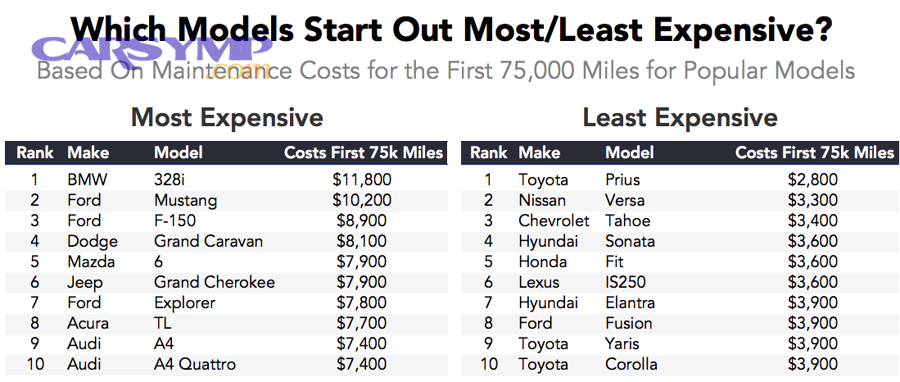
Does a maintenance budget include unexpected repairs?
Yes—your maintenance budget should include unexpected repairs because used cars have unpredictable failure risk, repair timing is rarely convenient, and a separate repair reserve prevents routine maintenance money from being wiped out by one big invoice.
More specifically, “include” does not mean you throw everything into one bucket. The most reliable approach is two connected buckets:
- Routine maintenance fund: predictable services and wear items (oil changes, filters, brakes, tires, fluids).
- Repair reserve: unpredictable fixes (starter, alternator, cooling leaks, sensors, electrical issues).
This split is the difference between “I saved for an oil change” and “I can handle the oil change and the surprise water pump.” Specifically, routine maintenance protects the car; the repair reserve protects the budget.
A practical way to define your repair reserve is to treat it like a “shock absorber.” You might go months without using it—then use it all at once. If you don’t separate it, you’ll either postpone maintenance (risking bigger damage later) or reach for high-interest credit.
What costs should be excluded from a maintenance budget to avoid confusion?
There are 7 main cost groups you should exclude from a used-car maintenance budget—fuel, insurance, registration/taxes, parking/tolls, car payments/interest, depreciation, and optional upgrades—because they are ownership or operating costs, not maintenance-and-repair funding.
Besides keeping your budget clean, exclusions help you compare “maintenance budgets” apples-to-apples with other drivers and with shop quotes.
Exclude these categories:
- Fuel/charging costs (operating)
- Insurance premiums (ownership)
- Registration, inspections, taxes (ownership)
- Parking, tolls, tickets (operating/behavior)
- Loan payment and interest (financing)
- Depreciation (asset value change)
- Upgrades and mods (optional spending)
The core idea is simple: your used-car maintenance budget exists to keep the car mechanically sound and financially manageable. Everything else can live in other budget lines without corrupting your maintenance cost estimate.
How much should you set aside per month for used-car maintenance and repairs?
A realistic used-car budget is built by setting a monthly base amount and then adjusting it by risk level (age, mileage, vehicle type, and driving conditions) so routine maintenance stays funded while repairs don’t become emergencies.
Next, let’s turn “how much should I save?” into a repeatable method you can apply to any used car—because the right number depends on your specific risk profile.
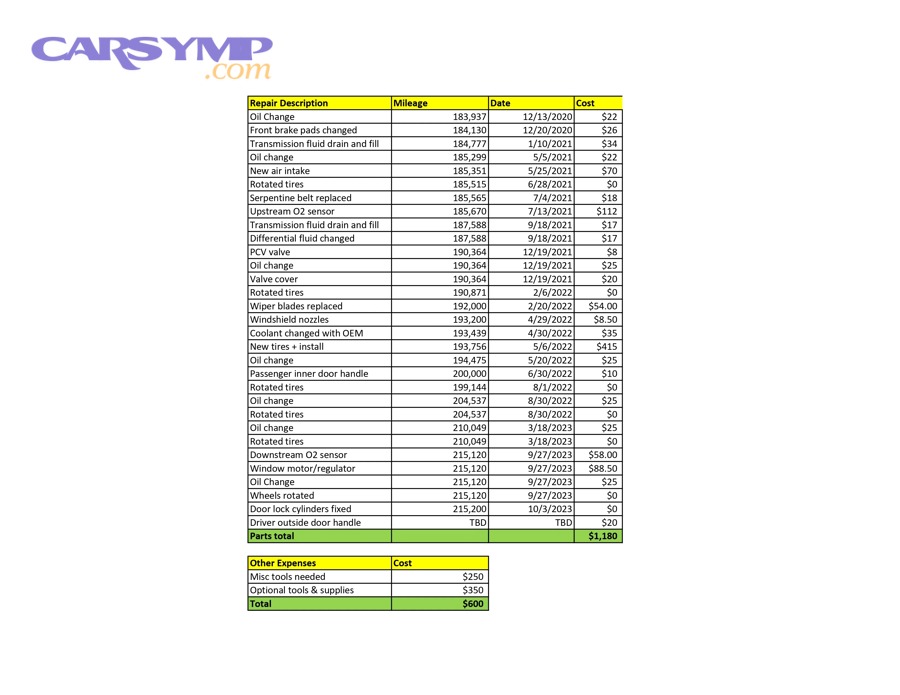
Is there a simple rule of thumb for a monthly used-car maintenance budget?
Yes—a simple rule of thumb works because it gives you a starting baseline, it prevents underfunding routine maintenance, and it forces you to acknowledge repair risk instead of pretending it won’t happen.
However, the best “rule” is a tiered range (low/medium/high) rather than one number. Use these tiers as a starting point:
- Lower-risk used car (newer used, solid records, moderate miles): set aside a lower monthly amount.
- Medium-risk used car (average history, average miles, normal wear): set aside a mid-range amount.
- Higher-risk used car (older, higher mileage, unknown records): set aside a higher monthly amount plus a stronger repair reserve.
To illustrate what this looks like in practice, you can think in percentages of income (small but consistent) or in a fixed monthly sinking fund you won’t touch for anything else. The goal isn’t to guess perfectly—it’s to avoid the two most common failures: saving nothing or saving only for oil changes.
What factors change the budget the most (age, mileage, make/model, driving conditions)?
There are 6 main factors that change a used-car maintenance budget the most: age, mileage, prior maintenance history, vehicle category (economy vs luxury), local labor/parts costs, and driving conditions.
More importantly, these factors don’t just change the total—they change where the money goes, which is what makes your budget accurate.
- Age: rubber components, seals, gaskets, hoses, electronics aging, corrosion.
- Mileage: wear items (brakes, suspension, wheel bearings), drivetrain stress, fluids and filters more frequently.
- Service history: “catch-up maintenance” risk if work was skipped or undocumented.
- Make/model and powertrain complexity: parts pricing and labor hours can swing drastically.
- Driving conditions: stop-and-go traffic, short trips, towing, hills, extreme heat/cold.
- Where you live: labor rates and parts availability can increase total cost even if the car is identical.
This is where many drivers misjudge the plan: they budget based on one factor (like mileage) while ignoring the others (like history and driving conditions). A stronger approach is to grade your car as low/medium/high risk, then fund accordingly.
How should you budget differently for high-mileage used cars vs low-mileage used cars?
High-mileage used cars win on purchase price, while low-mileage older cars can win on fewer wear cycles—but high-mileage is best funded with higher wear-item sinking funds, and low-mileage (but older) cars need an age-related “rubber and corrosion” buffer.
Meanwhile, the budgeting method stays the same; what changes is the category emphasis.
High-mileage used car budget focus
- Bigger sinking funds for brakes, tires, suspension, and frequent fluid services.
- Higher probability of mid-size repairs (cooling, charging system, leaks).
- More frequent maintenance intervals because miles accumulate quickly.
Low-mileage older car budget focus
- “Age decay” items: battery, belts, hoses, tires aging, fluids that degrade with time.
- More attention to corrosion, especially if the car lived in harsh climates.
- Fewer wear cycles, but potentially more “it sat too much” problems.
To make this concrete, here’s a simple comparison table showing what typically gets weighted higher. This table helps you allocate your budget categories rather than guessing one total number.
| Budget category | High-mileage used car | Low-mileage older used car |
|---|---|---|
| Tires & alignment | Higher | Medium |
| Brakes | Higher | Medium |
| Suspension/steering wear | Higher | Medium |
| Fluids & filters frequency | Higher | Medium |
| Battery/electrical aging | Medium | Higher |
| Rubber/seals/hoses | Medium | Higher |
| Corrosion-related risks | Location-dependent | Location-dependent |
The key move is not “pick one number forever.” The key move is: allocate your monthly set-aside into the categories most likely to hit your car.
How do you build a realistic budget from your car’s actual maintenance schedule?
Build your used-car maintenance budget by converting each service interval into a monthly sinking fund line—then adding a “catch-up” buffer if records are incomplete—so your monthly saving matches what the car will realistically require.
Then, once the schedule becomes numbers, you stop guessing and start forecasting.
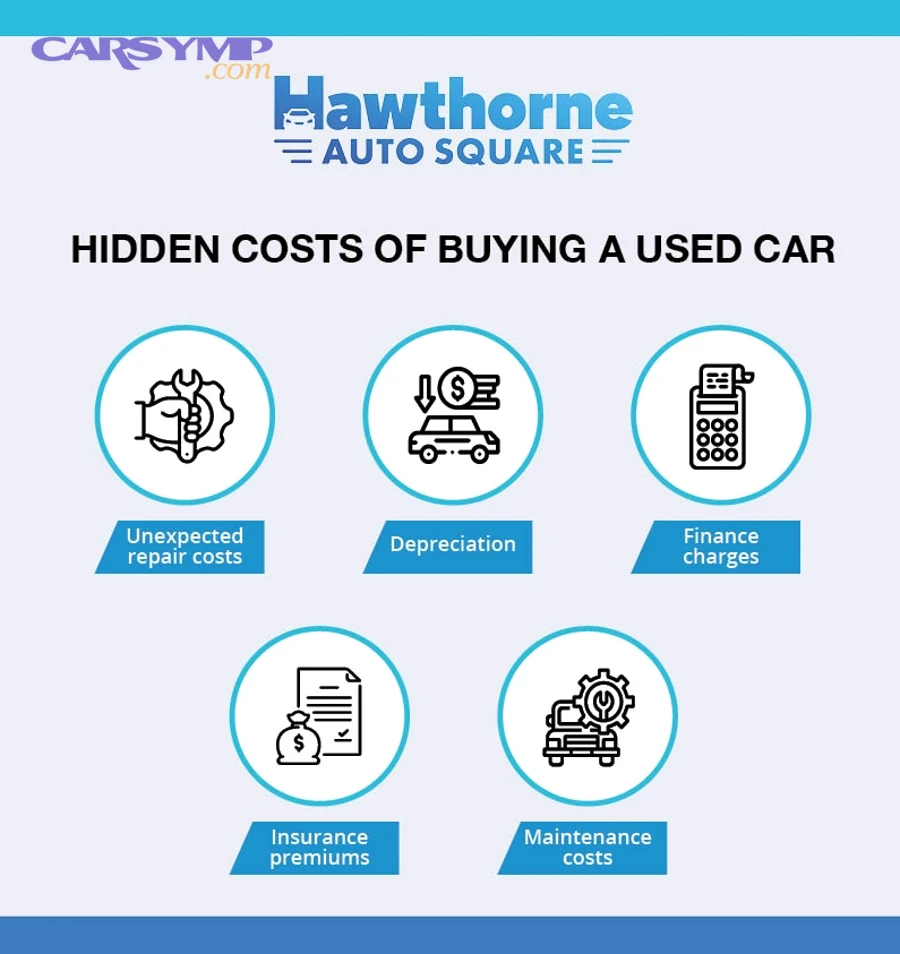
How do you convert service intervals into a monthly budget line item?
You convert intervals into a monthly budget by annualizing the cost: estimate the service price, estimate when it will be due (months or miles), then divide the cost by the time until due to set a monthly amount.
Specifically, you can do it two ways:
Method A: Time-based (months)
- If a service is due every 12 months and costs $240, then budget $20/month.
Method B: Mileage-based
- Estimate your miles per month (e.g., 1,000).
- Take the service interval in miles (e.g., 30,000).
- Convert to months until due: 30,000 ÷ 1,000 = 30 months.
- If the service costs $600, budget $20/month.
This is the cleanest way to produce a maintenance cost estimate that scales to your driving pattern. It also makes your budget “self-correcting”—if you start driving more, the interval hits sooner, and your monthly funding should increase.
What maintenance categories should be budgeted as sinking funds vs pay-as-you-go?
There are 2 main ways to fund maintenance—sinking funds and pay-as-you-go—based on whether the cost is large/irregular or small/frequent.
Especially for used cars, sinking funds reduce stress because the biggest expenses are rarely monthly.
Sinking funds (best for larger, irregular items)
- Tires and alignment
- Brakes (pads/rotors)
- Battery replacement
- Major fluid services (coolant, transmission service if applicable)
- Suspension/steering wear items (shocks/struts, control arms)
- “Inspection-driven” replacements (belt, hoses, mounts)
Pay-as-you-go (best for predictable, frequent items)
- Oil changes (if frequent and consistent in cost)
- Air and cabin filters (often predictable and inexpensive)
- Wiper blades and small bulbs
A good rule is: if it would annoy you to pay it from one paycheck, it belongs in a sinking fund. That’s how you keep “routine” from becoming “emergency.”
Should you budget extra “catch-up maintenance” right after buying a used car?
Yes—budget extra catch-up maintenance because used cars often have incomplete records, sellers commonly defer routine services, and baseline work early prevents compounding failures that cost more later.
To begin, treat the first 30–90 days as a reset period where you confirm the car’s true condition. This is also where many owners discover What maintenance items are often skipped, such as:
- Brake fluid service and inspection
- Coolant condition and leaks
- Transmission fluid service (where appropriate)
- Tire alignment and rotation history
- Cabin air filter (commonly ignored)
- PCV valve and small vacuum leaks (model-dependent)
- Worn belts, aging hoses, cracked engine mounts
A practical “catch-up” approach:
- First 30 days: inspection + basic fluids/filters + urgent safety items.
- 60 days: tires/brakes/alignment decisions based on measured wear.
- 90 days: schedule-dependent services (coolant, transmission, spark plugs if due).
Evidence matters most here because small maintenance habits can drive big costs. According to a study by Williams College from the Geosciences Department, in 2010, under-inflated tires were associated with measurable economic impacts through efficiency and tread-wear effects in an applied campus analysis.
How big should your emergency repair fund be for a used car?
An emergency repair fund for a used car should be sized as a separate reserve that can cover common moderate-to-major repairs without wiping out your routine maintenance fund or forcing high-interest debt.
Next, we’ll make this concrete with a staged target system—because most people can’t (and shouldn’t) fund a perfect reserve overnight.
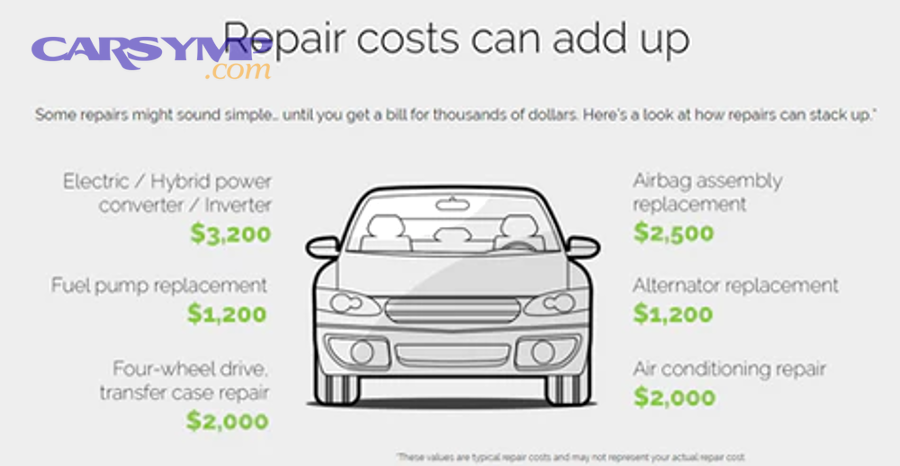
Is it better to keep a dedicated repair fund separate from general savings?
Yes—keep a dedicated repair fund separate because it preserves your maintenance budget, reduces the temptation to spend it elsewhere, and makes it easier to refill after a repair without derailing your other savings goals.
Specifically, “separate” can be as simple as a dedicated savings account label or a budgeting category that you refuse to borrow from. The benefit is clarity: when the car breaks, you don’t have to debate which bill gets delayed.
A simple rule:
- Routine maintenance fund pays for scheduled services.
- Repair reserve pays for breakdowns and unexpected fixes.
- If a repair reserve is used, you rebuild it before you increase discretionary car spending again.
What’s a practical repair-fund target for common used-car failures?
There are 3 practical repair-fund targets—starter, stable, and strong—based on the typical size of real-world repair events rather than theoretical worst cases.
More importantly, the goal is not predicting the exact repair; it’s staying solvent when something happens.
Starter target (get this first)
- Covers small-to-medium surprises (battery, sensor, minor leak fixes, towing).
Stable target (covers the “annoying” repairs)
- Handles more expensive single repairs without panic (cooling repairs, alternator, some suspension work).
Strong target (covers major stress events)
- Reduces the chance you must delay repairs, skip maintenance, or use debt.
Practical advice: build to starter first, then maintain momentum until stable. If your car is older or higher mileage, prioritize reaching stable sooner.
How does your repair-fund target change if you have a warranty or service contract?
A warranty can reduce certain repair risks, but your repair-fund target still needs to exist because wear items are often excluded, deductibles and coverage limits can still cost you, and denied claims can happen when maintenance history is weak.
However, the balance can shift:
- You might reduce the peak reserve target if major failures are truly covered.
- You should keep the routine maintenance sinking funds fully funded, because warranties often require proper maintenance anyway.
The most important move is to read the contract like a budget document: identify what it covers, what it excludes, and what you’d still pay out of pocket. That’s part of building a reliable maintenance cost estimate—because “covered” does not always mean “free.”
How do you keep your maintenance budget accurate over time?
You keep a used-car maintenance budget accurate by tracking actual spending, reviewing it on a consistent schedule, and adjusting your monthly set-aside when real costs diverge—so the budget evolves with the car rather than falling behind.
Then, the budget becomes a living system instead of a one-time guess.
What should you do if your actual costs are higher than your budget?
Yes—you should change your budget when costs run higher because ignoring the gap causes deferred maintenance, repeated emergency spending, and long-term reliability loss that costs more than a small monthly increase.
Specifically, use a quick triage process:
- Identify repeat vs one-off costs
- One-off: a single breakdown repair.
- Repeat: tires wearing fast, frequent brake jobs, recurring leaks.
- Find the driver
- Driving style, mileage increase, cheap parts, skipped services, or a car aging into a new wear cycle.
- Adjust the monthly set-aside
- Increase the sinking fund category that is actually causing the variance.
- Rebuild the repair reserve if it was used.
This is also where you learn to prevent “estimate drift.” Many people set a number once and never update it, even as the car ages. An accurate budget updates with the car’s lifecycle.
How can you track maintenance spending without turning it into a full-time job?
You can track maintenance spending simply by using 3–6 categories, saving every receipt/photo, and doing a 10-minute monthly review so you capture trends without building an accounting system.
For example, keep categories like:
- Routine service (oil, filters, fluids)
- Tires & alignment
- Brakes & suspension
- Repairs (unexpected)
- Inspections/diagnostics
A practical tracking rhythm:
- After each service: save the invoice, note mileage, note what was recommended.
- Monthly: update totals and compare to your planned set-aside.
- Quarterly: re-check upcoming intervals and adjust sinking funds.
This is also the foundation for How to compare written estimates later: if you know what you’ve spent and what is due, you can spot inflated or duplicated line items.
DIY maintenance vs shop service: which budgeting approach costs less long-term?
DIY wins on direct cost for basics, shop service is best for complex diagnostics and safety-critical work, and a hybrid approach is optimal for most everyday drivers who want lower cost without increased risk.
However, the right answer depends on capability, tools, and time—not just money.
DIY tends to win for
- Filters, wipers, bulbs
- Basic fluid top-offs
- Some brake pad jobs (skill-dependent)
Shop service tends to win for
- Complex diagnostics (electrical, intermittent issues)
- Safety systems and steering/suspension work if you’re not equipped
- Work that requires lifts/special tools
Budgeting approach:
- If you DIY basics, reduce routine service line items slightly.
- If you rely on shops, increase routine line items and protect the repair reserve.
- In both cases, keep the same structure: routine sinking funds + repair reserve.
Evidence supports that basic maintenance behaviors can affect operating outcomes in measurable ways. According to a study by the University of South Florida from the Department of Physics (published via its undergraduate research journal platform), in 2012, tire-pressure changes were quantified as increasing the power required to maintain constant speed when pressure was lower, indicating efficiency impacts tied to maintenance practices.
What special cases can change a used-car maintenance budget dramatically?
There are 4 major special cases that can dramatically change a used-car maintenance budget: unknown maintenance history, harsh climate exposure, luxury/performance ownership, and high-mileage commercial-style driving—because each case increases either failure risk, parts/labor costs, or service frequency.
In addition, these scenarios don’t require a new budgeting system; they require stronger assumptions and bigger buffers.
How should you adjust your budget for an older used car with unknown service history (catch-up maintenance)?
You adjust by funding a front-loaded catch-up bucket, prioritizing safety and fluids, and increasing the repair reserve until the car proves reliable over a full maintenance cycle.
Specifically, unknown history is not a minor detail—it’s a risk multiplier. Budgeting actions that work:
- Increase the first-90-day maintenance allocation
- Inspections, fluids, filters, and baseline replacements.
- Assume some deferred services
- Especially the ones people skip because they aren’t urgent today.
- Raise the repair reserve temporarily
- Not forever—just until the car completes a cycle without major surprises.
This is where your maintenance cost estimate becomes more conservative on purpose. You’re paying for uncertainty now to avoid chaos later.
How does climate (snow/salt vs mild weather) change maintenance and repair planning?
Snow and road salt increase corrosion and brake/line wear risk, while mild climates reduce rust risk but can still accelerate rubber aging and heat-related battery stress—so budgeting should shift toward the most climate-sensitive wear patterns.
For example:
- Snow/salt regions: underbody corrosion, brake lines, exhaust components, stuck fasteners (labor time increases).
- Hot climates: battery life, coolant system stress, tire wear patterns, interior rubber/plastic deterioration.
- Wet climates: rust pockets, electrical moisture issues, wiper/visibility-related wear.
Climate doesn’t just change what breaks—it changes repair labor complexity. A rusted bolt can turn a quick job into a longer one, which is why climate buffers matter.
Do luxury or performance used cars need a different budgeting model than economy cars?
Yes—luxury and performance used cars often need a different budget because parts costs are higher, labor specialization increases repair pricing, and wear items like tires and brakes can be more expensive and more frequent.
However, the structure stays the same:
- Routine sinking funds (just larger)
- Repair reserve (often larger)
- More frequent inspections and proactive replacements
A practical adjustment is to increase both your monthly set-aside and your “stable/strong” repair reserve targets, then track more closely. These cars can still be affordable for the right owner—but they punish under-budgeting more aggressively than economy cars.
Is ride-share or high-mileage driving a reason to budget differently?
Yes—high-mileage driving requires a different budget because service intervals arrive faster, wear items cycle sooner, and downtime becomes a real cost, making preventive maintenance more valuable and repairs more disruptive.
To begin, convert everything to mileage-based budgeting:
- Increase sinking funds proportional to miles/month.
- Shorten review cadence (monthly, not quarterly).
- Budget more for tires, brakes, and fluid services because you are compressing time.
For high-mileage use, the biggest budgeting mistake is pretending the car is on “normal” intervals. Your calendar might say it has been two months, but your odometer might say you just burned through half a service cycle.
Evidence (if any)
- According to a study by Williams College from the Geosciences Department, in 2010, tire-pressure conditions were analyzed for their economic and environmental effects, linking maintenance behavior to measurable efficiency and tread-wear impacts in an applied campus context.
- According to a study by the University of South Florida from the Department of Physics (published through its undergraduate research venue), in 2012, lower tire pressures increased the power required to maintain constant speed, indicating maintenance-linked efficiency impacts.