


Routine home upkeep becomes affordable when you treat it like math instead of surprises: you create a maintenance cost estimate using a repeatable method, then fund it monthly so routine tasks never compete with your other bills.
Next, you can choose between quick rules of thumb (fast baseline) and a line-item estimator (more accurate), depending on how new your home is, how much history you have, and how precise you need the number to be.
In addition, you’ll learn how to adjust your estimate for the real-world drivers that change costs—home age, climate, labor rates, and how much you DIY—so your upkeep fund reflects your home, not an “average” home.
Introduce a new idea: once you’ve built a working routine budget, you can optionally refine it for special cases like HOA coverage, climate risks, and long-term inflation so your upkeep plan stays accurate year after year.
What are “routine maintenance costs” for a home (and what do they include)?
Routine maintenance costs are the recurring, planned expenses you pay to keep a home’s systems and surfaces working safely—covering labor and materials for predictable tasks like servicing HVAC, clearing gutters, replacing filters, sealing small gaps, and testing safety devices.
Next, to keep the estimate accurate, you need a clear boundary between routine upkeep and bigger “repair/replacement” events.
Is routine maintenance the same as repairs or replacements?
Routine maintenance is not the same as repairs or replacements because maintenance prevents failure, repairs fix a failure that already happened, and replacements renew a component at the end of its life.
However, the confusion is normal because all three can show up in the same year and come from the same contractor.
Think in three buckets:
- Routine maintenance (planned): tasks you schedule because they’re recommended on an interval. Examples: HVAC tune-ups, gutter cleaning, changing air filters, flushing water heater (where recommended), testing smoke/CO alarms, sealing exterior gaps, re-caulking high-moisture areas.
- Repairs (unplanned but common): something breaks or stops working and you restore function. Examples: leaking trap under a sink, a stuck toilet fill valve, a broken garage door spring, a failed disposal, a small roof leak repair.
- Replacements (capital / end-of-life): you replace a major component when it’s worn out or uneconomical to repair. Examples: roof replacement, HVAC replacement, water heater replacement, window replacement, major flooring replacement.
This distinction matters because a routine upkeep fund should not be asked to carry every major replacement. A clean estimate starts by budgeting routine tasks first, then deciding how you’ll handle bigger replacements (often a separate “major systems” reserve).
What routine maintenance categories should homeowners budget for?
There are 3 main categories of routine maintenance costs—exterior, interior, and systems/safety—based on where the task occurs and what it protects.
Besides making the estimate easier, categories keep you from overpaying for one area while ignoring another.
1) Exterior (weather protection and drainage)
- Gutters and downspouts (cleaning, securing, checking slope)
- Roof checks for visible damage after storms
- Caulking and sealing around windows/doors
- Siding/wall penetrations and small openings (pest prevention)
- Yard drainage basics (keeping water away from foundation)
- Deck/patio surface checks and minor sealing (where applicable)
2) Interior (humidity control and wear prevention)
- Bathroom and kitchen caulk touch-ups
- Cabinet under-sink leak checks
- Appliance cleaning that improves longevity (dryer vent lint management; refrigerator coils where accessible)
- Simple door/window hardware adjustments
3) Systems and safety (mechanical reliability)
- HVAC service and filter changes
- Water heater checks/maintenance (where manufacturer recommends)
- Smoke and carbon monoxide alarms testing
- GFCI outlet testing and basic electrical safety checks (non-invasive)
To keep terminology consistent for your estimator, define each category once, then keep using the same labels across your checklist, spreadsheet, and bank transfers.
How often do common maintenance tasks happen (monthly vs seasonal vs annual)?
There are 3 timing groups for routine maintenance tasks—monthly, seasonal, and annual—based on how quickly risk grows when you skip them.
More specifically, “how often” is the lever that turns a small unit cost into a meaningful annual total.
Below is a simple timing framework you can copy into a budget planner. It’s not a universal checklist; it’s a structure you’ll customize.
| Timing group | What it’s for | Typical examples |
|---|---|---|
| Monthly | Small tasks that prevent fast-growing problems | Change HVAC filters (as needed), quick leak checks under sinks, test smoke/CO alarms, clear visible debris near drains |
| Seasonal | Weather-driven tasks that protect surfaces and drainage | Gutter cleaning (often fall/spring), exterior sealing touch-ups, HVAC prep before heavy-use seasons |
| Annual | Professional checkups and deeper maintenance | HVAC tune-up, dryer vent service (if needed), water heater maintenance (if applicable), roof/exterior walk-around inspection |
This schedule mindset is also how you keep the article’s “hook chain” intact: you estimate routine maintenance costs by listing tasks, assigning frequency, then translating each line into yearly dollars.
Can you estimate routine maintenance costs quickly with rules of thumb?
Yes, you can estimate routine maintenance costs quickly with rules of thumb because they give you a baseline without needing receipts, a checklist, or contractor quotes—especially useful for new homeowners or recent movers.
Then, once you have a baseline, you can decide whether to stop there or build a more accurate line-item model.
What is the percent-of-home-value method for estimating upkeep costs?
The percent-of-home-value method is a quick estimator where you budget a small percentage of your home’s value per year to cover maintenance and repair spending, with older homes typically needing a higher percentage than newer homes.
Specifically, this method works because many upkeep costs scale with the overall size/complexity and condition of the home.
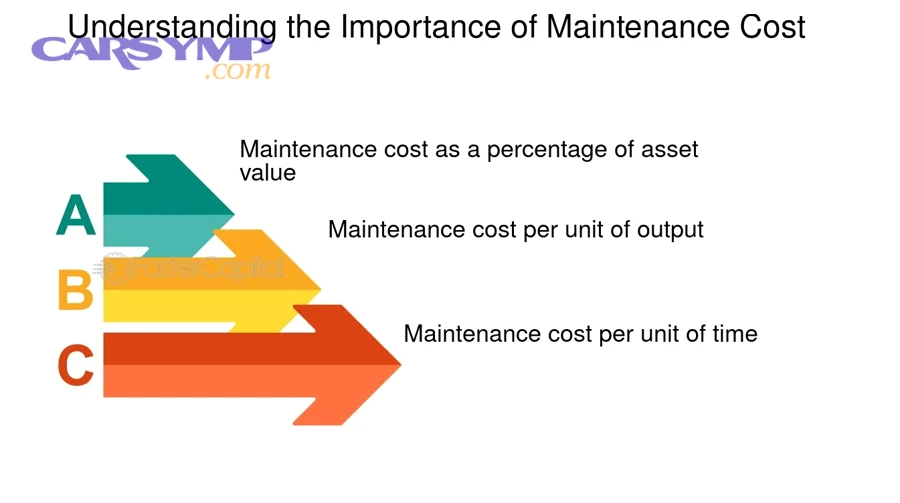
A common rule-of-thumb range used in homeowner budgeting resources is about 1%–4% of home value per year, where the higher end is often suggested for older homes.
How to use it (simple):
- Find a reasonable home value (purchase price, appraisal, or a conservative estimate).
- Pick a percentage range based on age/condition (lower for newer, higher for older).
- Convert annual to monthly by dividing by 12.
- Treat the result as your starting “upkeep fund” target.
When it’s helpful:
- You have little spending history (first year in the home)
- You need a fast number to start saving this month
- You want a broad “all-in” planning range
Where it can mislead:
- Two homes with the same value can have very different maintenance needs
- High-value markets can inflate the estimate compared to physical wear realities
- Major replacements can distort what “maintenance” means if you don’t separate buckets
What is the per-square-foot method and when is it more accurate?
The per-square-foot method is a quick estimator where you budget a fixed amount per square foot per year, and it can be more accurate when home value is inflated by location while the home’s physical upkeep is driven more by size.
However, it can understate costs for older homes with complex systems and deferred upkeep.
A commonly cited version is the “$X per square foot per year” style approach, which is often presented alongside the percent method as a practical baseline option. (investopedia.com)
When per-square-foot tends to fit better:
- Your home value is high mainly because of the neighborhood, not the building
- Your home is average age/condition and you want a size-based baseline
- You’re comparing multiple houses during shopping (same market, different sizes)
When it tends to fit worse:
- Older homes with higher maintenance complexity
- Homes with unusual features (pools, extensive decks, large irrigation)
- Harsh climates where exterior wear rises sharply
Which quick estimator should you choose for your situation?
The percent-of-value method wins for capturing age/condition risk, the per-square-foot method is best for size-based comparison, and a history-based baseline is optimal for accuracy once you have 6–12 months of real spending.
Meanwhile, your best choice is the one you’ll actually use to start saving now.
Use this decision guide:
- New homeowner, little history: start with percent-of-value and set a monthly transfer immediately.
- Comparing homes while shopping: use per-square-foot to normalize size differences, then adjust up for older homes. (investopedia.com)
- You’ve lived there a year: calculate your actual annual spending, separate routine vs repairs vs replacements, then update your monthly target.
If you’re choosing one method today, pick the one that creates consistent behavior: a routine transfer into a maintenance budget (your upkeep fund) every month.
How do you build a line-item “maintenance budget estimator” that’s more accurate than a rule of thumb?
A line-item maintenance budget estimator is a step-by-step method where you list routine tasks, assign a realistic frequency, apply a unit cost (DIY materials or pro service), and total the annual figure so your monthly upkeep fund matches your home’s real needs.
To better understand the method, start by gathering the right inputs before you touch the calculator.
What information do you need before you estimate (home age, systems, history)?
You need four inputs before you estimate: home profile, system inventory, task schedule, and local pricing signals.
In addition, these inputs reduce guessing and help you avoid a “pretty spreadsheet” that fails in real life.
1) Home profile (the context that changes frequency)
- Age and last renovation year (kitchen/bath/systems)
- Climate pattern (freeze-thaw, heavy rain, high humidity, salt air)
- Property layout (trees near roof, slope/drainage, basement/crawlspace)
2) System inventory (the “what can fail” list)
- HVAC type and service interval
- Water heater type and recommended maintenance
- Roof type and visibility/access
- Major appliances and their basic upkeep tasks
- Safety devices (smoke/CO, fire extinguisher if used)
3) Your routine task schedule (the repeating checklist)
- Monthly: filters/alarms/leak checks
- Seasonal: gutters, sealing touch-ups, HVAC prep
- Annual: tune-ups, deeper inspections
4) Local pricing signals (so your unit costs aren’t fantasy)
- One or two quote ranges from local providers for common services
- Your own DIY material costs (filters, caulk, sealant)
- Service call minimums and trip fees (very real in many markets)
When you don’t have history, the goal is not perfection; the goal is to build a stable first estimate that you can refine.
How do you convert tasks into annual costs (unit cost × frequency)?
You convert tasks into annual costs by multiplying unit cost × frequency per year for every routine task, then summing all lines to create one annual maintenance cost estimate you can fund monthly.
Specifically, this is the “math engine” behind your estimator.
Use this simple formula for each line item:
- Annual cost per task = (Cost per occurrence) × (Occurrences per year)
Examples:
- HVAC tune-up: $X per year × 1 = $X
- Gutter cleaning: $Y per visit × 2 = $2Y
- Filters: $Z per filter pack × 4 (quarterly) = $4Z
- Caulk touch-up: $W in materials × 2 = $2W
To keep your estimator practical, include both DIY lines and pro lines when it matters. A homeowner may DIY filters but hire out gutter work if roof access is risky.
Here’s a simple template you can adapt. This table shows how a line-item estimator is structured, not exact pricing for your home:
| Category | Task | Unit cost type | Frequency | Annualized total |
|---|---|---|---|---|
| Systems | HVAC tune-up | Pro service | 1×/year | cost × 1 |
| Exterior | Gutter cleaning | Pro service | 2×/year | cost × 2 |
| Interior | Caulk touch-ups | DIY materials | 2×/year | cost × 2 |
| Safety | Smoke/CO testing | DIY time | 12×/year | minimal $ |
Once you build this table once, updating it becomes easy: you adjust unit costs and frequencies as you learn.
How much buffer should you add for surprises in routine maintenance?
Yes, you should add a buffer to your routine maintenance estimate because real homes produce small surprises, prices change, and seasonal needs are uneven—so a buffer protects your upkeep fund from going negative.
Moreover, a buffer is what turns an estimate into a functioning budget.
A practical buffer approach is to add a “miscellaneous routine” line that covers: extra filters during heavy-use seasons, minor hardware replacements, small sealant jobs, and unexpected service minimums.
What your buffer is not:
- It is not a replacement fund for a roof or HVAC replacement.
- It is not a blank check to ignore leaks or safety issues.
If you already have good spending history, your buffer can shrink because your estimate becomes evidence-based. If you’re in year one, your buffer is a confidence tool: it keeps your plan stable while you gather data.
According to a study by Harvard University’s Joint Center for Housing Studies, in 2026 projections, homeowner spending trends for repairs and improvements continue to shift as costs and demand change, which is a practical reason to review and update your estimator rather than treating any first-year estimate as permanent. (jchs.harvard.edu)
What factors change routine maintenance costs the most ?
Routine maintenance costs change most based on home age/condition, local labor pricing, and your DIY-vs-pro choices, because these three factors directly alter frequency, unit cost, and risk tolerance.
Especially when your budget feels “too high,” these factors tell you where to adjust without skipping safety-critical work.
Does home age and condition increase routine maintenance costs?
Yes, home age and condition increase routine maintenance costs because older components need more frequent attention, older homes hide more minor issues, and deferred upkeep compounds into higher-frequency “small fixes” that become routine.
To illustrate, the same gutter cleaning and sealing tasks can become more frequent if water intrusion has already started.
Why age drives costs (3 clear reasons):
- More frequent servicing: older HVAC systems and appliances often require more monitoring and tune-ups.
- More small “maintenance-adjacent” repairs: drip leaks, minor electrical fixes, hardware failures.
- Higher risk from weather exposure: aging caulk, flashing, and seals fail faster.
How to adjust your estimator for an older home:
- Increase frequency on water-related tasks (gutters, drainage checks, sealing)
- Add small inspection lines (attic/basement/crawlspace quick checks)
- Use higher unit costs if contractors commonly recommend more time on older systems
This is also where analogies help: just like an older vehicle may need more attention than a new one, an older home needs more frequent preventive work to avoid bigger repairs later.
How do local labor rates and contractor minimums affect your budget?
Local labor rates and contractor minimums affect your budget by raising the unit cost of routine services—especially when a “simple job” triggers a service-call minimum, travel fee, or minimum labor block.
However, you can manage this without sacrificing quality by pricing smarter.
How labor pricing shows up in real estimates:
- Service-call minimums: a technician visit may cost a minimum amount regardless of time spent.
- Bundling discounts: doing multiple tasks in one visit can lower effective cost per task.
- Seasonality pricing: peak seasons (HVAC during heat/cold spikes) can raise rates.
How to make your estimate more accurate:
- Get 1–2 quotes for common services you’ll likely outsource (HVAC tune-up, gutter cleaning).
- Ask if there’s a maintenance plan price (sometimes lowers per-visit cost).
- Use local averages as a check, but validate with at least one real quote.
According to a study by Harvard University’s Joint Center for Housing Studies, in 2025 reporting and forecasts, repair and remodeling costs and spending trends have been shaped by labor and market conditions, reinforcing why “local pricing” must be baked into your maintenance cost estimate rather than copied from a national average. (apnews.com)
Is DIY cheaper than hiring pros for routine upkeep?
DIY is often cheaper than hiring pros for routine upkeep because you avoid labor markups, you can handle small tasks immediately, and you can prevent minor issues from growing—yet pros are worth it when safety, warranty, or specialized tools are involved.
On the other hand, the cheapest option becomes expensive if it causes damage.
Use this three-part rule:
DIY is usually a good fit when:
- The task is low-risk and repetitive (filters, smoke/CO testing, simple sealing)
- The cost is mostly materials (caulk, weatherstripping)
- The downside of a mistake is small and easily corrected
Hire a pro when:
- The task involves height, electricity, gas, or refrigerant
- The task affects warranty requirements (some HVAC programs)
- The task requires diagnostic tools or code compliance
A useful analogy (and where the extra phrases fit naturally):
When people talk about Building a maintenance budget for used cars, they often separate “routine” from “risk”: oil changes and brakes are predictable, while big failures are less predictable. Homes work the same way. You want the upkeep fund to cover predictable routines, while a separate reserve handles larger, less frequent events. And just like Car Symptoms can warn you early (squealing brakes, vibrations), home symptoms—musty smells, slow drains, uneven temperatures—often signal a small maintenance task before it becomes a repair.
How do you turn the estimate into a monthly upkeep fund that actually works?
You turn an annual maintenance cost estimate into a monthly upkeep fund by converting the total into a consistent monthly transfer, keeping routine and major replacements in separate buckets, and reviewing the estimate on a schedule so it stays aligned with your home’s real spending.
Thus, the budgeting system becomes behavior—not a one-time calculation.
How do you convert an annual maintenance estimate into a monthly amount?
You convert an annual estimate into a monthly amount by dividing your annual routine total by 12, then adding a small seasonal float so high-spend months don’t create a shortfall.
Next, you make the transfer automatic so the plan survives busy life.
Practical setup steps:
- Annual total → monthly transfer (annual ÷ 12).
- Add a small “seasonality float” if you have known seasonal services (gutter cleaning, HVAC).
- Automate the transfer to a separate account or sub-account labeled “Upkeep Fund.”
- Pay routine maintenance from that fund so tracking is clean.
This is the same logic people use with other predictable expenses: you smooth uneven spending into a steady monthly habit.
Should you separate “routine maintenance” from “major replacements” in your budget?
Yes, you should separate routine maintenance from major replacements because they operate on different timelines, require different savings strategies, and mixing them hides the true cost of routine upkeep while making both buckets unreliable.
Besides clarity, separation prevents a single big replacement from wiping out the money you need for regular preventive tasks.
Two-bucket model (simple and effective):
- Bucket A: Routine Upkeep Fund
- Covers repeating maintenance tasks and small preventive work
- Bucket B: Major Systems Reserve
- Covers infrequent, high-cost replacements (roof, HVAC, water heater)
This structure also keeps your estimator clean: your routine maintenance cost estimate stays stable and comparable year-to-year, while your major reserve is planned on component lifecycles.
According to a study by Harvard University’s Joint Center for Housing Studies, in 2026 projections, spending on improvements and maintenance continues to evolve with economic conditions, which supports the practice of separating routine upkeep from larger project spending so homeowners can maintain consistency even as costs shift. (jchs.harvard.edu)
How often should you review and update your maintenance budget estimator?
You should review and update your maintenance budget estimator at least annually because your home’s condition changes, prices change, and your task mix changes as you learn what your home actually needs across seasons.
More importantly, annual review turns a rough estimate into an accurate system.
Review triggers that justify an update immediately:
- You move into a new home (first-year baseline)
- You replace a major component (your routine needs may drop for a while)
- You get a new recurring service plan (HVAC, pest control, gutter service)
- You experience a weather event that changes the home’s needs (storm damage, flooding)
According to a study by North Carolina State University Extension, in 2023 homeowner guidance, housing experts commonly recommend setting aside a percentage of home value for maintenance and repair spending, reinforcing the value of setting a baseline and revisiting it as the home ages and needs change. (content.ces.ncsu.edu)
How can you refine your estimate for special cases (HOAs, climate risks, and inflation)?
You can refine your estimate for special cases by adjusting your maintenance task list to reflect what an HOA covers, adding climate-specific modifiers that change frequency and wear, and planning for cost increases over time so your upkeep fund remains realistic.
To sum up, these refinements deepen accuracy without changing the core estimator you built above.
How does an HOA or condo setup change what you should budget for?
An HOA or condo setup changes what you should budget for by shifting certain exterior and shared-system costs into dues while leaving you responsible for interior systems and in-unit maintenance, which changes both categories and unit costs.
Specifically, you refine your estimator by subtracting covered tasks and adding any owner-responsible tasks you assumed were “included.”
How to refine:
- Read the HOA responsibility list and mark each task as HOA vs Owner.
- Remove HOA-covered lines from your routine estimator.
- Add owner-only lines you might overlook (in-unit HVAC, appliances, interior plumbing fixtures).
This adjustment makes your budget honest: you stop double-paying for tasks that are already embedded in dues.
Which climate-related risks can raise upkeep costs (freeze-thaw, salt air, storms)?
There are 3 major climate risk groups that raise upkeep costs—freeze-thaw, salt air/humidity, and storm/wind/rain extremes—based on how they accelerate wear and increase maintenance frequency.
Moreover, these risks are “silent multipliers” because they change how often you need to do routine tasks, not just how much each task costs.
Freeze-thaw climates:
- Increase attention to sealing, drainage, and exterior cracks
- Make gutter and downspout reliability more critical
Salt air / high humidity:
- Accelerate corrosion and exterior wear
- Increase mold/moisture vigilance (bathroom sealing, ventilation checks)
Storm-heavy regions:
- Increase post-storm inspections (roof edges, exterior penetrations)
- Increase debris management and drainage checks
If your climate is harsh, you often adjust frequency first, not just cost: the same task happens more times per year.
Should you include inflation when projecting maintenance costs for the next few years?
Yes, you should include inflation when projecting maintenance costs because labor and materials do not stay flat, and even a solid first-year estimate can become underfunded in a few years if you never update unit costs.
Then, the simplest safe approach is to re-price your line items annually rather than trying to forecast perfectly.
A practical way to handle this without complicated math:
- Keep your task list stable.
- Update unit costs once per year using recent invoices or refreshed quotes.
- If you must project, use conservative increases and confirm with real prices next review.
According to reporting that references Harvard University’s Joint Center for Housing Studies and cost tracking in the repair/remodeling market, repair and remodeling costs have been meaningfully higher than a decade ago, which supports regularly re-baselining your estimator instead of assuming today’s costs will hold. (apnews.com)
What’s the difference between preventive maintenance spending and deferred maintenance costs?
Preventive maintenance wins for controlling costs and reducing risk, while deferred maintenance is “spend less now” but often becomes “pay more later,” because small issues expand into repairs and replacements when ignored.
Meanwhile, the real difference is timing: preventive spending is planned; deferred costs arrive unplanned and usually at the worst time.
How preventive spending protects your budget:
- It stabilizes the number of emergencies you face
- It keeps the home’s systems operating efficiently
- It reduces the odds of damage cascading (water intrusion is the classic example)
A simple decision test:
If skipping a task increases the chance of water damage, fire risk, or structural deterioration, it is not a “nice-to-have.” It is a core line in your upkeep fund.
According to a study by the International Facility Management Association (IFMA), in a preventive maintenance economic analysis, preventive approaches can produce strong long-term value compared with reactive strategies, supporting the homeowner logic of funding routine upkeep before problems escalate. (cdn.ifma.org)