


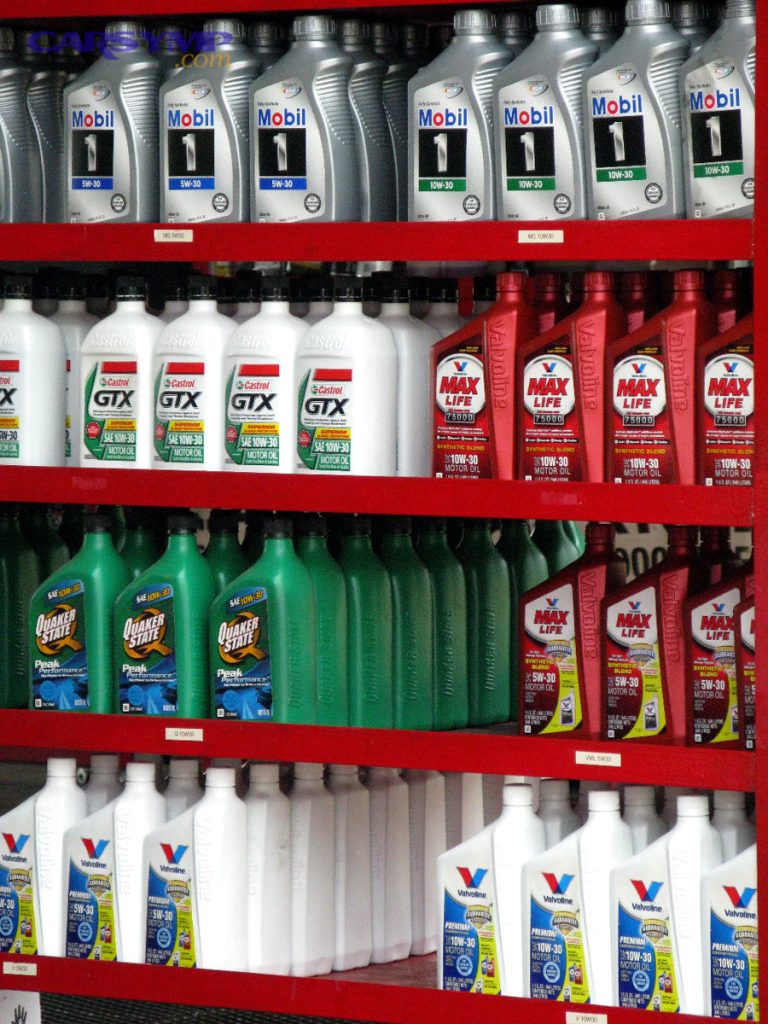
Choosing the correct engine oil viscosity is simple when you follow one rule: use the SAE grade your manufacturer specifies first, then adjust only if your manual explicitly allows alternatives for temperature or driving conditions. That single decision protects cold-start lubrication, maintains the right oil film when hot, and keeps modern systems like VVT and turbo bearings happy.
Most drivers still want the numbers decoded, so you’ll learn exactly what xW-yy means—how the “W” portion affects cold starts and how the second number relates to protection at operating temperature. Once those two pieces click, the label on the bottle stops feeling like a guess.
Next, you’ll compare the grades people search for most—like 5W-30 vs 10W-30 and 0W-20 vs 5W-30—so you can understand what changes (and what doesn’t) in real-world driving, climate, and engine design.
Introduce a new idea: once you have the right viscosity choice, you can connect it to practical maintenance decisions—like planning an oil change, knowing Signs you’re overdue for an oil change, and even Resetting oil life/service reminder after service—so the oil you choose keeps doing its job for the full interval.
What does engine oil viscosity (oil weight) mean in the SAE xW-yy rating?
Engine oil viscosity (oil weight) is the oil’s resistance to flowing, and the SAE xW-yy rating tells you how it behaves in the cold (“xW”) and how thick it remains at operating temperature (“yy”).
To better understand what you’re buying at the parts counter, it helps to break the label into two separate promises.
What does the “W” number control at cold start—and why does it matter for wear?
The “W” number controls how easily oil can be pumped and circulated during cold starts, and lower W grades (like 0W or 5W) flow faster in cold temperatures than higher W grades (like 10W).
More importantly, cold starts create a short window where parts need oil quickly, so faster flow reduces the time the engine runs with less-than-ideal lubrication.
Cold-start viscosity matters because engines do not begin a day fully lubricated at operating temperature. Oil thickens as temperatures drop, and thick oil resists moving through narrow oil passages, filters, and pump pickups. Even a small delay in reaching critical areas—cam lobes, timing chains, turbo bearings, and valve-train components—can increase friction and metal-to-metal contact risk.
Here’s the practical way to think about the W rating:
- Lower W = easier cranking and faster oil circulation in cold weather.
- Higher W = more resistance when cold, which may be fine in warm climates but risky in freezing temperatures.
- Cold-start protection isn’t only about “wear”; it’s also about drivability and system stability (VVT actuation, oil pressure behavior, and noise).
If your winters are real—regular mornings below freezing—choosing the correct “W” grade is one of the most protective choices you can make without spending extra money.
What does the second number control when the engine is hot?
The second number (the “yy” in xW-yy) controls how thick the oil remains when the engine is hot, which helps maintain a protective oil film under heat and load.
More specifically, that hot viscosity influences oil film strength between moving parts—especially bearings, cam journals, and other high-load surfaces.
When an engine reaches operating temperature, oil becomes much thinner than it was at startup. The hot grade helps ensure the oil doesn’t become too thin under heat, because an overly thin film can reduce protection at high load, high RPM, towing, steep grades, or extended highway driving in hot conditions.
In practical terms:
- Higher hot grade (40 vs 30) can improve film thickness under high heat and sustained load, but it may increase pumping losses and reduce fuel economy.
- Lower hot grade (20 vs 30) can reduce friction and improve efficiency in engines designed for it, but it may not be appropriate for engines that need a thicker film at operating temperature.
That’s why the manufacturer spec matters so much: your engine’s bearing clearances, oil pump design, and control systems were validated using a specific viscosity range.
Is “thicker oil” always better protection?
No, thicker oil is not always better protection because modern engines often need fast flow, precise hydraulic control, and stable pressure behavior—and overly thick oil can reduce flow at startup, increase drag, and disrupt systems like VVT.
However, the key is not “thin vs thick” in general; the key is the correct viscosity for your engine and climate.
Thicker oil can help in specific scenarios—high heat, heavy load, or engines designed for higher viscosity—but it can also create problems:
- Cold-start flow slows down, increasing the time critical parts wait for full oil circulation.
- Fuel economy can drop because thicker oil increases pumping and frictional losses.
- Modern oil-controlled components may respond poorly, especially variable valve timing, hydraulic lifters, and turbo lubrication circuits that depend on predictable oil behavior.
So instead of asking “Should I go thicker?” the better question is: “What viscosity did my engine’s design and validation assume—and does my manual allow alternatives for temperature or service conditions?”
How do you choose the correct oil viscosity for your specific vehicle?
You choose the correct oil viscosity by following a simple method: start with the manufacturer-specified SAE grade, then evaluate climate, driving conditions, and engine condition to confirm whether an approved alternative grade is allowed and beneficial.
Next, you’ll turn that method into a repeatable checklist you can use every time you buy oil for an oil change.
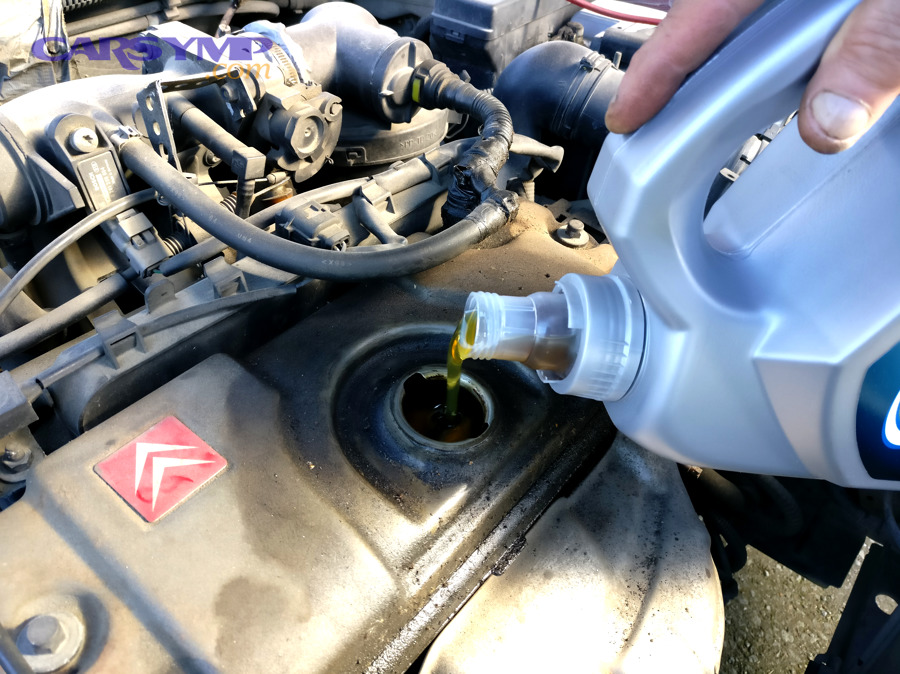
What viscosity does your owner’s manual (and oil cap) specify—and why should you start there?
Your owner’s manual (and often the oil cap) specifies the viscosity grade your engine was designed and tested to use, so starting there gives you the highest-confidence choice for protection, performance, and system compatibility.
To better understand why this is the anchor point, remember that viscosity is not a preference—it’s an engineering requirement.
Manufacturers validate engines using:
- oil pump sizing and pressure targets,
- bearing clearances and oil passages,
- timing chain lubrication behavior,
- VVT response and control logic,
- emissions and fuel economy targets,
- durability testing under hot and cold conditions.
If the manual lists one viscosity, treat it as the default. If it lists a range of viscosities, treat those as approved options depending on temperature or usage. If you’re under warranty, following the manual is also the safest path because it aligns with manufacturer requirements.
Which viscosity should you choose for your climate and seasons?
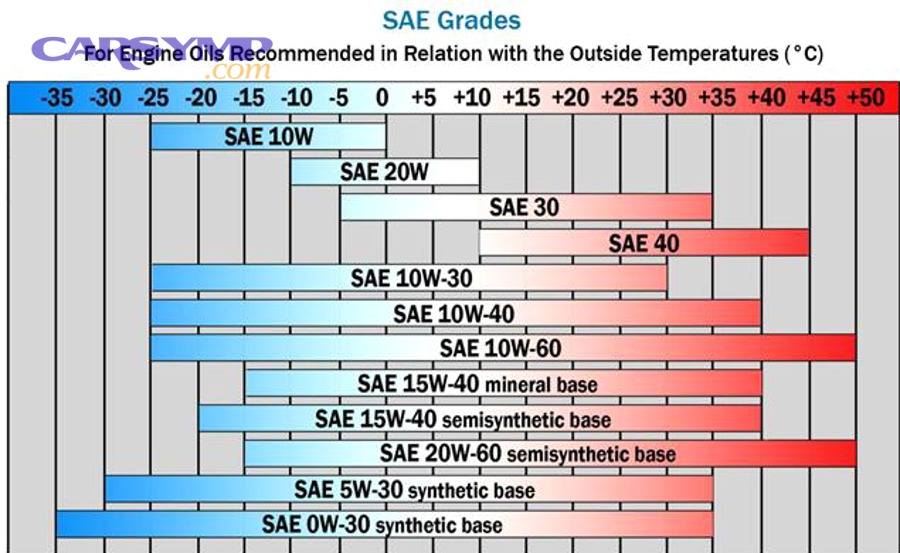
There are 3 main climate-based viscosity choices—cold-climate, moderate-climate, and hot-climate/severe-service—based on how often your ambient temperatures drop below freezing or rise into sustained high heat.
Then, you match those conditions to the manufacturer-approved viscosity range, not the other way around.
Here’s a climate-first framework (assuming your manual allows these grades):
- Cold-climate priority (frequent freezing mornings): favor lower W grades like 0W or 5W to improve cold-start flow.
- Moderate climate (rare freezing, normal summers): the manual’s default grade usually fits year-round.
- Hot climate or sustained high load: if the manual lists a higher hot grade option (like 5W-30 or 5W-40 depending on temperature), the higher hot grade can help maintain film strength at operating temperature.
A useful way to present this is a quick mapping table. The table below summarizes how the W number and hot number typically align with temperature demands when the manual permits it:
| Label pattern | What it tends to prioritize | Where it typically helps most |
|---|---|---|
| Lower W (0W/5W) | Cold-start flow | Freezing starts, short trips in winter |
| Higher W (10W/15W) | Less emphasis on cold flow | Warm climates, older designs, not for harsh winters |
| Lower hot grade (20) | Efficiency, lower friction | Engines designed for 0W-20/5W-20 |
| Higher hot grade (30/40) | Film strength under heat/load | Hot summers, towing, sustained highway load |
The key is to use the table as context, not permission. Your manual is still the authority.
Which viscosity fits your driving style (short trips, highway, towing, hills)?
There are 3 main driving-condition categories—short-trip severe service, steady highway cruising, and high-load severe service (towing/hills)—and each one affects oil temperature, stress, and how strongly you should prioritize hot-viscosity stability.
In addition, your driving style influences how quickly oil warms up and whether it spends much of its time below optimal temperature.
Use this driving-style filter:
- Short trips and stop-and-go: oil may not reach full operating temperature, which increases moisture and fuel dilution risk; choosing the correct manufacturer grade matters more than “going thicker.” You may need a shorter oil change interval more than a different viscosity.
- Steady highway: oil reaches stable temperature; the manual’s default grade is usually ideal.
- Towing, steep grades, high-speed heat: oil temps rise; if your manual allows a higher hot grade, it may help maintain film thickness under sustained load.
This is where people often confuse viscosity choice with maintenance. If you’re doing severe service, the biggest win is often changing oil at the right time—watching for signs you’re overdue for an oil change—rather than jumping to a thicker grade without approval.
Should you change viscosity for high-mileage engines?
Yes, you can change viscosity for a high-mileage engine, but only if the manufacturer allows alternatives and you have a reason—because high-mileage behavior is driven by wear, clearances, and consumption patterns, not age alone.
More importantly, High-mileage oil: when it helps is often about additives and seal conditioners as much as viscosity.
Here are three valid reasons a high-mileage engine might justify a change (again, only within approved grades):
- Oil consumption has increased (burning or leaking) and a slightly higher hot grade within the approved range reduces consumption.
- Oil pressure is borderline (warning light flickers, confirmed by diagnosis), and an approved higher hot grade stabilizes pressure.
- Operating conditions are severe (heat + load), and the manual includes a higher hot grade option.
But there are also reasons not to change viscosity:
- If your engine uses oil-controlled systems (VVT, turbo) and is sensitive to cold-start flow, going thicker can worsen startup lubrication and response.
- If you’re masking a mechanical issue (worn rings, PCV problems, leaks), viscosity is not a repair.
High-mileage oil may help when minor seal shrinkage or small seepage issues exist, or when mild consumption becomes noticeable—yet it’s not a substitute for addressing the root cause.
Which oil viscosities are most common—and what are they best for?
There are 5 main common engine oil viscosities—0W-20, 5W-20, 5W-30, 10W-30, and 0W/5W-40—based on what modern passenger cars most often specify and what climates/driving conditions they target.
Next, you’ll see what each one is typically “best for” in plain language, while still keeping the manufacturer spec as the final decision-maker.
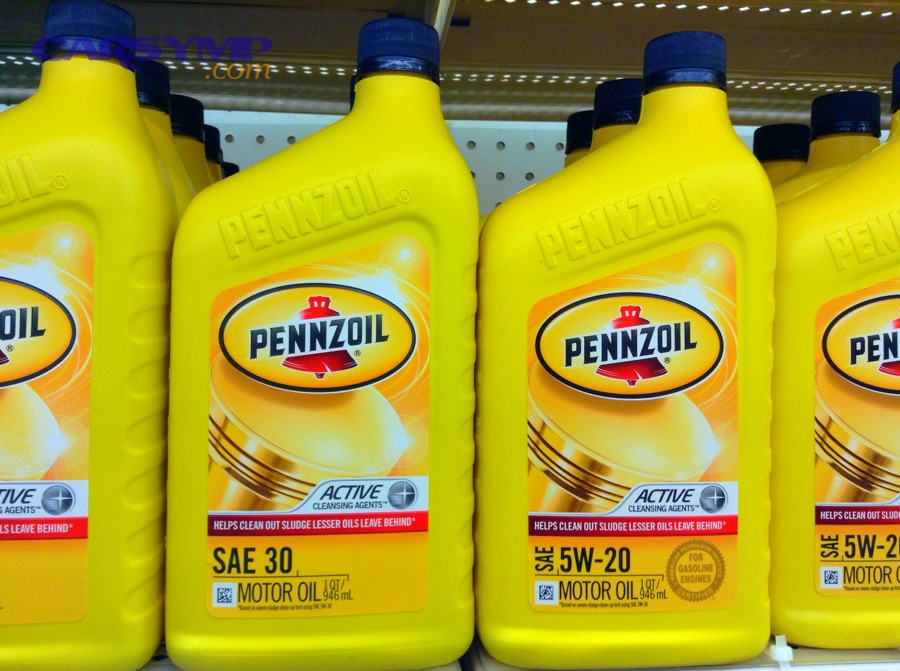
What are 0W-20, 5W-20, 5W-30, 10W-30, 0W-40 typically used for?
These grades are typically used for distinct combinations of engine design, climate, and efficiency targets, and the easiest way to understand them is to group them by their most common real-world role.
To better understand the grouping, remember: the W number is about cold behavior, while the second number is about hot behavior.
- 0W-20: Common in many modern engines designed for efficiency and fast cold-start flow, especially in cold-to-moderate climates.
- 5W-20: Similar intent to 0W-20 but slightly less optimized for extreme cold; used where manufacturers specify it.
- 5W-30: One of the most common “balanced” grades; widely used across many engines and climates when specified.
- 10W-30: Often used in warmer climates or certain older designs; typically not ideal for frequent freezing starts.
- 0W-40 / 5W-40: Common in some high-performance or European-spec applications where manufacturers approve it, especially for higher-temperature stability.
If you’re shopping for oil during an oil change, this grouping helps you recognize what the label implies—but it does not replace the manual.
Which viscosity is best for cold weather: 0W vs 5W vs 10W?
0W is best for cold weather, 5W is a close second for most winters, and 10W is generally least suitable for freezing starts because it resists flow more at low temperatures.
However, the “best” choice is the lowest W grade your manufacturer approves, because your engine’s oil system design still matters.
In real cold weather, the goal is simple: get oil moving fast. Lower W grades reduce the work the starter must do, help build oil pressure sooner, and reduce cold-start friction.
If your region sees harsh winters, choosing 0W-xx or 5W-xx (if approved) is one of the most practical protections you can add without changing anything else.
Which viscosity is better for hot weather or heavy load: 30 vs 40 vs 50 weight?
30 weight is the most common “default” for hot operation, 40 weight is often best for sustained high-heat/high-load operation when approved, and 50 weight is typically a niche choice for engines specifically designed or specified for it.
More specifically, the correct choice depends on whether your manual lists a higher hot grade option for severe service.
Higher hot grades can increase film thickness under heat and load, but they also increase pumping losses and can reduce efficiency. In modern engines, “going up to 50” without approval can create more harm than benefit—especially in cold starts or in oil-controlled systems.
So if you tow, climb long grades, or drive in sustained heat, look for manufacturer language like:
- “Use X viscosity for temperatures above…”
- “Severe service: alternative viscosity permitted”
- “Approved grades: …”
If the manual doesn’t permit it, use the specified grade and adjust maintenance instead (shorter intervals, correct oil spec/approval, and ensuring the cooling system is healthy).
What’s the difference between popular grades like 5W-30 vs 10W-30 (and 0W-20 vs 5W-30)?
5W-30 vs 10W-30 differs mainly in cold-start flow (5W flows better in the cold), while 0W-20 vs 5W-30 differs in both cold-start behavior and hot-viscosity thickness, affecting efficiency and protection tradeoffs depending on engine design.
Next, you’ll compare them in the exact situations people worry about—winter mornings, highway heat, and “will it hurt my engine?”
5W-30 vs 10W-30: what changes in winter starts and why?
5W-30 wins in winter starts, while 10W-30 can be acceptable in mild climates, because the “5W” portion is designed to circulate more easily at lower temperatures than “10W.”
However, if your climate regularly reaches freezing temperatures, 10W-30 can increase startup resistance and delay oil circulation compared with 5W-30.
What changes:
- Cranking effort: 10W-30 generally makes cold cranking harder than 5W-30 at the same low temperature.
- Oil delivery speed: 5W-30 generally reaches critical components faster in cold conditions.
- Noise and response: some engines may exhibit more startup noise or slower VVT response with thicker cold viscosity.
What doesn’t change (as much):
- Hot viscosity grade: both are “30” when hot, so at operating temperature their nominal SAE grade targets are similar.
The real-world takeaway: choose the lower W grade if you experience cold starts—especially if you want smoother starts and faster lubrication.
0W-20 vs 5W-30: how do fuel economy and protection trade off?
0W-20 tends to win fuel economy and cold-start flow, while 5W-30 can provide a thicker oil film at operating temperature, so the “best” choice depends on what your engine was designed and specified to use.
More specifically, engines built for 0W-20 often rely on that viscosity for correct hydraulic control and efficiency targets, while engines specified for 5W-30 often rely on its hot-film thickness for validated durability.
Instead of thinking “0W-20 is thinner so it’s weaker,” think in design terms:
- If your manual specifies 0W-20, your engine’s clearances, oil pump behavior, and control systems were validated around it.
- If your manual specifies 5W-30, your engine was validated for that thicker hot grade, and stepping down may not be approved.
A smarter way to compare is to ask: Which grade is “native” to my engine’s spec? That’s the grade that usually balances economy and protection as the manufacturer intended.
If two oils share the same hot grade (e.g., 5W-30 vs 10W-30), do they protect the same when hot?
Yes, two oils that share the same hot grade generally provide similar viscosity at operating temperature, but they may not protect identically because formulation quality, shear stability, and specifications/approvals can differ even within the same SAE grade.
In addition, “same grade” doesn’t mean “same oil.”
Protection when hot depends on more than the number on the bottle:
- Additive package (detergents, anti-wear chemistry, dispersants)
- Base oil quality
- Shear stability (whether it stays in grade over the interval)
- OEM approvals (performance tests passed)
So if you’re comparing 5W-30 vs 10W-30 strictly for hot protection, both are “30,” but the better choice is the one that matches your climate (cold starts) and the required spec/approval for your engine.
Can you safely deviate from the recommended viscosity—and when should you not?
Yes, you can safely deviate from the recommended viscosity only when your manufacturer allows an alternative grade and you have a clear reason—because unapproved viscosity changes can reduce cold-start lubrication, disrupt oil-controlled systems, and increase wear risk under certain conditions.
Next, you’ll see exactly when a small change is reasonable and when it’s a hard “don’t.”
Is it OK to go one step thicker or thinner than the manual says?
Yes, it can be OK to go one step thicker or thinner if (1) the manual lists that grade as an approved option, (2) your climate/usage matches the conditions for that option, and (3) the change addresses a real need like extreme cold starts or sustained high heat.
However, if any of those three conditions is missing, you should not treat “one step” as automatically safe.
Here’s a practical decision filter:
- Approved by the manual? If not, stop.
- Alternative grade listed for temperature range? If yes, match it to your actual climate.
- You have a specific goal? (cold starts, towing heat, oil consumption within reason)
- You can monitor results? (oil level, startup behavior, warnings, consumption)
This is also where many drivers confuse viscosity changes with maintenance timing. If your engine feels “rough,” the fix may be an overdue oil change—especially if you notice signs you’re overdue for an oil change like dark, gritty oil, noisy starts, or a service reminder you’ve ignored.
What problems can the wrong viscosity cause?
There are 6 common problems the wrong viscosity can cause: hard cold starts, delayed oil pressure, increased startup noise, poor VVT operation, higher oil consumption (in the wrong direction), and reduced fuel economy.
More specifically, the wrong viscosity creates either flow problems (too thick) or film problems (too thin) relative to what your engine expects.
Common “too thick” symptoms (especially in cold weather):
- Slower cranking and harder starting
- Delayed oil pressure buildup
- Temporary ticking or valvetrain noise after startup
- Sluggish VVT response or related fault codes in sensitive engines
Common “too thin” symptoms (especially under heat/load):
- Lower oil pressure at hot idle (in engines that expect higher pressure)
- Increased mechanical noise when hot under load
- Higher consumption in some engines
- Reduced protection margin in severe-service scenarios
If you experience warning lights or abnormal oil pressure behavior, stop experimenting and diagnose the issue—viscosity is not a bandage for a failing oil pump, clogged pickup, or mechanical wear.
When should you stick strictly to the manufacturer viscosity (no exceptions)?
You should stick strictly to the manufacturer viscosity when you are under warranty, when your engine requires specific OEM approvals, when you drive in extreme cold, or when your engine uses sensitive oil-controlled systems like VVT and turbo lubrication that can misbehave with unapproved viscosity changes.
In addition, you should stick to the spec when your manual lists only one grade with no temperature-based alternatives.
This “no exceptions” rule is especially important for:
- Many modern turbocharged engines
- Engines with known timing chain or VVT sensitivity
- Vehicles that specify an approval (not just viscosity), where the approval is tied to performance tests
Evidence: According to a study by the University of Nottingham from the Department of Mechanical Engineering, in 1998, cold-start testing showed that at -20°C, initial engine friction was about twice the steady value, highlighting how strongly low temperature affects friction behavior and why cold-start flow properties matter.
How do you verify you picked the right viscosity after switching?
You verify you picked the right viscosity by checking 4 practical signals over the next few weeks: cold-start behavior, hot-idle behavior, oil consumption rate, and the absence of warning lights or abnormal noises.
Then, you connect those signals to whether the oil is flowing fast enough when cold and maintaining stable protection when hot.
What are the “good signs” after an oil change (start-up, noise, consumption, MPG)?
Good signs after an oil change include quicker, smoother startups, stable idle behavior when hot, normal oil level stability between checks, and no new mechanical noises—plus MPG staying consistent with your usual driving.
More specifically, a correct viscosity choice tends to “disappear,” meaning the engine feels normal across temperatures.
Use this quick checklist:
- Cold start: engine cranks normally, oil pressure light goes out quickly (if equipped), minimal startup ticking
- Warm operation: stable hot idle, no new noises under load
- Oil level: minimal change between level checks (always check on level ground)
- Fuel economy: stays within your normal range (small changes can happen due to weather and driving)
If you’re using an oil-life monitor, this is also the time to handle Resetting oil life/service reminder properly so your maintenance tracking stays accurate after service.
What are the “red flags” that your oil is too thick or too thin?
Red flags that your oil is too thick include hard cold starts and delayed oil pressure, while red flags that your oil is too thin include persistently low hot-idle pressure (where measurable) and increased noise under heat/load—especially if these issues appear right after switching.
However, any warning light is a reason to stop and diagnose, not to keep experimenting.
Watch for these red flags after switching viscosity:
Likely too thick (especially in cold weather):
- Slower cranking than before
- Longer time for quiet operation after starting
- Noticeable sluggishness during the first minutes of driving in cold weather
Possibly too thin (especially under heat/load):
- New knocking/ticking under load when hot
- Hot-idle pressure concerns (if you have real pressure data, not just a warning light)
- Oil consumption that increases noticeably versus your baseline
If you see these signs, return to the manufacturer-specified viscosity and confirm there isn’t an underlying issue (cooling system, PCV, leaks, or oil dilution).
Now that you know how to choose the correct SAE viscosity for your car based on the manual, climate, and driving conditions, the next section goes beyond the basics—covering advanced specifications and niche scenarios that can further refine your decision.
What advanced specs and niche scenarios can further refine oil viscosity choice?
Advanced viscosity decisions come down to specs and edge cases—because OEM approvals, high-temperature/high-shear behavior, and shear stability can make two oils with the same SAE grade perform very differently in the real world.
Next, you’ll expand your decision from “the number on the bottle” to “the performance standard behind the number.”
What are OEM oil approvals (dexos, VW/MB/BMW specs), and can they matter more than viscosity?
OEM oil approvals are manufacturer performance standards that oils must pass, and yes, they can matter more than viscosity because they test deposit control, wear protection, oxidation resistance, and compatibility with modern engine and emissions systems.
More specifically, approvals help ensure the oil performs correctly over the entire oil change interval, not just on day one.
Two oils can both say “5W-30” and still behave differently in:
- sludge and deposit control,
- turbocharger cleanliness,
- timing chain wear protection,
- volatility and consumption tendency,
- aftertreatment compatibility (for some applications).
So if your manual lists an approval, treat it as non-negotiable. Choose an oil that meets the approval and then select the viscosity grade from the approved list.
What is HTHS viscosity, and when should drivers care (towing, track, high heat)?
HTHS (high-temperature/high-shear) viscosity is a measure of oil’s film strength under extreme heat and shear forces, and drivers should care when they tow, drive in sustained high heat, or operate under high load where the oil film is stressed the most.
In addition, HTHS helps explain why some “same-grade” oils protect differently under severe service.
Everyday drivers don’t need to obsess over HTHS, but it becomes useful when:
- you tow regularly,
- you drive long mountain grades in summer,
- you track the car or run sustained high RPM,
- your manual references high-temperature protection requirements.
In those cases, choosing an oil that meets the correct approval (which often implies certain HTHS performance) is a smarter move than simply jumping to a thicker SAE grade.
Can oil “shear down” over time—and does that affect your chosen grade?
Yes, oil can shear down over time, meaning it can lose some viscosity due to mechanical stress and the behavior of viscosity index improvers, and this can affect your chosen grade by making a borderline choice less protective near the end of the interval.
However, high-quality oils designed for the required approvals are typically formulated to resist harmful shear within normal service intervals.
Shear stability matters more when:
- you extend oil change intervals,
- you run high heat (towing, turbocharged driving),
- your engine is known to be hard on oil,
- you experience fuel dilution (lots of short trips).
If you suspect severe service, the best first step is often adjusting your oil change schedule—watching for signs you’re overdue for an oil change—rather than changing viscosity outside approved options.
Do turbocharged/GDI engines change the viscosity decision (and why)?
Turbocharged and GDI engines can change the viscosity decision because they often run hotter, stress oil in the turbo bearing housing, and rely on precise oil flow for control systems, making manufacturer viscosity and approvals more critical than “thicker feels safer.”
More importantly, these engines can punish the wrong oil with deposits, consumption, or control issues.
For these engines, the safest high-performance strategy is:
- Use the exact viscosity grade(s) the manual approves.
- Use the required OEM approval if listed.
- Don’t ignore service reminders—do the oil change on time and handle Resetting oil life/service reminder so the monitor stays meaningful.
- Consider high-mileage oil only when it helps (minor seepage/consumption patterns), not as a default upgrade.
When you combine correct viscosity with correct spec and correct maintenance timing, you get the result drivers actually want: stable starts, consistent protection, and fewer oil-related surprises over the life of the vehicle.