


If your engine temperature keeps climbing, you can usually estimate the repair bill by matching the symptom to the most common cooling-system fix—and the cost difference between a small leak and a major internal failure can be thousands. This guide breaks down the typical cost building blocks (diagnosis, parts, labor, fluids) and then maps the most frequent overheating repairs to realistic price ranges so you can budget with fewer surprises.
Next, you’ll learn how to avoid pricing the wrong repair by using a simple symptom-to-cause approach (idle vs highway overheating, heater behavior, coolant loss, fan operation). That’s the fastest way to narrow your likely fix before you approve a major quote.
Then, you’ll see why repair estimates swing high or low: labor access, shop rates, OEM vs aftermarket parts, and “while you’re in there” add-ons that can be smart—or unnecessary—depending on your car and the root cause.
Introduce a new idea: once you understand cost ranges and comparisons, you can spot hidden cost traps that turn a basic overheating repair into repeat visits, extra diagnostics, or preventable engine damage.
What does “overheating repair cost” actually include (parts, labor, tests, and fluids)?
Overheating repair cost includes diagnostic testing + parts + labor time + fluids and bleed/flush work, and those “small” line items often explain why two quotes for the same symptom don’t match.
To better understand where your money goes, start by reading an estimate like a checklist: each line item usually ties to a required step in confirming the fault and restoring proper cooling system operation.

A typical overheating repair invoice tends to include:
- Diagnostic fee (scan, road test, cooling-system inspection)
- Targeted tests (cooling-system pressure test, fan command test, thermostat opening check, combustion gas test if needed)
- Parts (thermostat, radiator, pump, hoses, cap, fan assembly, sensors)
- Labor (remove/replace parts, refill coolant, bleed air, verify temperature stability)
- Consumables (coolant, distilled water, sealant if specified, clamps, shop supplies)
- Optional services (coolant flush, belt replacement when accessing a pump, resurfacing head if doing a gasket)
The practical takeaway: a cheap part can still produce an expensive bill if access is tight, bleeding is complex, or additional testing is needed to prevent repeat overheating.
Is the diagnostic fee separate from the repair bill?
Yes—overheating repair diagnostics are often billed separately, because shops need at least three reasons to justify the time: (1) overheating has multiple root causes, (2) incorrect parts replacement wastes money, and (3) confirmation tests prevent repeat overheating and engine damage.
More importantly, diagnosis protects you from “guess-and-swap” repairs; however, you should understand how the shop handles that fee.
Reason 1: Overheating is a symptom, not a part.
A hot gauge can come from low coolant, a stuck thermostat, weak water pump flow, restricted radiator, non-functioning fans, or combustion gases entering the cooling system. A good shop charges diagnosis because the same symptom can point to very different repairs.
Reason 2: Testing changes the estimate.
A pressure test that shows an external leak might reduce the job to a hose, clamp, or radiator cap. A combustion-gas test that suggests a head gasket can raise the estimate dramatically.
Reason 3: Diagnostic time is real labor.
Many modern vehicles require commanded fan tests, infrared temperature checks across the radiator, and careful bleeding procedures. That’s skilled time, not a quick glance.
How to use this in real life:
- Ask whether the diagnostic fee is credited toward the repair if you approve the work.
- Ask what tests they ran (pressure test, fan activation, thermostat behavior, etc.).
- Ask what result made them confident in the recommended fix.
What cost range should you expect before any major parts are replaced?
Before replacing major components, you can expect a “baseline” cost range that covers inspection and small corrective steps—typically a diagnostic fee plus minor supplies, then a decision point based on test results.
Next, treat these as the common “starter” costs that often happen before a large repair is approved:
- Diagnostic + basic inspection: scan for codes, visual leak check, fan check, coolant level check.
- Pressure test (if not already included): helps locate external leaks.
- Coolant top-off and bleed (only if the system is simply low and no leak is found): sometimes resolves air-pocket overheating.
- Radiator cap replacement (low cost, high impact when cap can’t hold pressure).
- Hose clamp / small hose repair (common, especially near the radiator or heater hoses).
Even if these don’t “solve” the overheating, they frequently prevent wasted parts by identifying whether you’re dealing with a leak, airflow issue, flow restriction, or internal engine problem.
Which overheating fixes are most common, and what do they typically cost?
There are four main types of common overheating repairs—thermostat, radiator, water pump, and coolant-leak/fan-related repairs—based on the core cooling-system functions of temperature control, heat exchange, coolant circulation, and airflow.
To illustrate how these costs stack up, it helps to see parts and labor as separate levers: the same overheating repair can be cheap on one car and expensive on another because access and labor hours differ.
Here’s a practical cost snapshot using widely referenced consumer estimators (good for ballpark budgeting, not a guaranteed quote):
- Thermostat replacement often falls in the mid-hundreds. RepairPal lists an average thermostat replacement range of $574–$667. (repairpal.com)
- Radiator replacement frequently lands around the low-to-mid thousands. RepairPal lists $1,307–$1,471 for radiator replacement. (repairpal.com)
- Water pump replacement is commonly high hundreds to low thousands. RepairPal lists $857–$1,106. (repairpal.com)
- Head gasket replacement is typically several thousand because labor is intensive. RepairPal lists $2,475–$3,246. (repairpal.com)
What is the typical cost to replace a thermostat (and when is it the right fix)?
A thermostat is a temperature-control valve that opens to let coolant flow to the radiator, and Thermostat replacement for overheating is typically the right fix when the thermostat sticks closed, sticks intermittently, or reacts slowly, causing temperature spikes.
Specifically, thermostat issues often show up as a rapid climb to hot shortly after warm-up, inconsistent heat output, or overheating that improves when you reduce load.
Typical cost range:
- RepairPal’s thermostat replacement estimate is $574–$667 on average. (repairpal.com)
- Other guides often show a wider range depending on design (simple thermostat vs integrated housing). For example, AutoZone notes an average range of $150–$500 (often reflecting simpler vehicles or DIY-friendly access). (autozone.com)
Why the thermostat cost can jump:
- Some vehicles use an integrated thermostat housing with sensors.
- Some engines require removing intake components to reach it.
- Bleeding air properly can add time—especially on systems with complex routing.
When it’s the right fix:
- Upper radiator hose stays cool while engine gets hot (suggesting thermostat not opening).
- Temperature spikes happen soon after reaching operating temp.
- No obvious coolant loss, and fans/radiator appear functional.
When it’s not enough:
If the cooling system is low on coolant, has a leak, or has combustion gases entering, a thermostat may be a “victim,” not the cause.
What is the typical cost to repair or replace a radiator (repair vs replacement)?
Radiator repair can be the cheaper path for minor leaks, while radiator replacement is usually the better choice for cracked plastic tanks, widespread corrosion, or internal blockage, because those problems don’t reliably “patch.”
However, the best choice depends on whether the radiator is leaking externally or failing internally as a heat exchanger.
Typical cost range (replacement):
RepairPal lists radiator replacement at $1,307–$1,471 on average. (repairpal.com)
Repair vs replacement :
- Repair may apply to small leaks in certain metal radiators or fittings. Some consumer guides cite radiator repair often landing in the hundreds; ConsumerAffairs reports an average radiator repair range of $250–$750 (based on mechanic feedback). (consumeraffairs.com)
- Replacement is common when the radiator’s plastic end tanks crack, the core clogs, or the unit is old enough that repairs won’t hold.
When replacement is usually the smarter buy:
- You see repeated coolant loss and visible seeping across the core.
- The radiator shows widespread fin damage or corrosion.
- The car overheats at highway speeds and tests show poor heat dissipation.
What is the typical cost to replace a water pump (and what else is often replaced with it)?
A water pump replacement typically costs high hundreds to low thousands because the job may require removing belts, pulleys, and sometimes timing components, and it’s often bundled with other wear items.
Moreover, when the pump fails, you can also get belt slip, coolant leaks from the weep hole, or poor circulation that mimics a thermostat problem.
Typical cost range:
- RepairPal lists water pump replacement at $857–$1,106. (repairpal.com)
- Kelley Blue Book notes water pump replacement often falls around $400–$800 depending on difficulty and vehicle. (kbb.com)
(These differences usually reflect vehicle mix, access complexity, and whether related parts are included.)
What else is often replaced “while you’re in there”:
- Drive belt (if worn and removed anyway)
- Coolant (system drained)
- Sometimes thermostat (not always required, but commonly bundled to reduce repeat labor)
When bundling is smart vs unnecessary:
- Smart: worn belt, visible coolant contamination, or a known pattern of thermostat failure on that engine.
- Unnecessary: adding parts without evidence, especially if the shop can demonstrate the pump leak or circulation problem directly.
Optional video (diagnosis mindset):
How can you estimate repair cost by symptom so you don’t pay for the wrong part?
You can estimate repair cost by symptom by using a cause-mapping approach: identify whether your overheating is driven by airflow, coolant level/leak, coolant circulation, or heat exchange, then match that category to the most likely fix and its cost range.
Next, treat symptoms like filters—each one removes several possibilities and makes it harder for a shop (or you) to chase the wrong repair.
Here’s a simple symptom-to-cause map before we go deeper:
- Overheats at idle, improves at speed → airflow/fan problem, low coolant, or radiator efficiency at low airflow
- Overheats at highway speeds → restricted radiator, weak circulation, low coolant under load, or internal pressure issue
- Heater blows cold while engine is hot → low coolant/air pocket or poor circulation
- Coolant loss with visible puddle → external leak (hose, radiator, pump, fitting, heater core)
- Bubbles in coolant / sweet exhaust / repeated overheating → possible internal leak; consider Head gasket repair when overheating persists
If the car overheats at idle but not at speed, what repairs are most likely and what do they cost?
There are three main types of fixes for “idle-only overheating”: (1) fan and airflow repairs, (2) low coolant/leak repairs, and (3) radiator efficiency problems—based on the criterion of what changes between idle and cruising (airflow and engine load).
Specifically, speed provides “ram air,” so if the car cools while moving, suspect airflow control at idle first.
1) Cooling fan system issues (often the top suspect):
- Failed fan motor, relay, resistor module, wiring, or temperature signal.
- Costs vary widely because diagnosis can be simple but fan assemblies can be pricey on some cars.
- A shop should be able to command the fan on and measure power draw to confirm.
2) Low coolant or small leak:
- At idle, heat builds quickly and poor coolant volume shows up faster.
- Pressure testing often reveals hoses, clamps, radiator seams, or pump seepage.
3) Radiator airflow blockage or fin damage:
- External blockage (debris) reduces idle cooling.
- Bent fins and grime reduce heat transfer.
How to keep this from becoming wasted spending:
Ask for a demonstrated result—fan activation, pressure test leak location, or temperature drop across the radiator—before approving a major replacement.
If the car overheats at highway speed, what repairs are most likely and what do they cost?
There are four main types of repairs for highway-speed overheating: (1) restricted radiator/poor heat exchange, (2) coolant circulation issues (pump), (3) thermostat sticking under load, and (4) internal pressure/combustion-gas intrusion—based on the criterion of sustained heat load at speed.
More specifically, highway overheating is often where “small” cooling weaknesses become obvious because the engine is producing continuous heat.
1) Restricted radiator or internal clogging:
- If coolant can’t shed heat, temperature climbs even with good airflow.
- Replacement costs commonly align with radiator estimates in the low-to-mid thousands on many vehicles; RepairPal’s radiator replacement range is $1,307–$1,471. (repairpal.com)
2) Weak circulation (water pump):
- A worn impeller or pump issue can reduce flow at higher loads.
- RepairPal’s water pump range is $857–$1,106. (repairpal.com)
3) Thermostat sticking or slow response:
- A thermostat can behave differently at sustained high load.
- RepairPal’s thermostat range is $574–$667. (repairpal.com)
4) Internal engine issues (head gasket risk):
- Combustion gases raise cooling-system pressure and displace coolant.
- If overheating persists despite “normal” cooling parts, Head gasket repair when overheating persists becomes a real possibility; RepairPal’s head gasket estimate is $2,475–$3,246. (repairpal.com)
A practical cost ladder (lowest to highest):
Thermostat / minor leaks → water pump → radiator → head gasket (and possibly engine machine work depending on damage).
Does the heater blowing cold air during overheating change the likely repair and cost?
Yes—heater blowing cold during overheating strongly shifts the likely repair toward low coolant/air pockets or circulation problems, for at least three reasons: (1) the heater core needs coolant flow to make heat, (2) air in the system blocks circulation, and (3) a weak pump can’t push coolant through the heater core reliably.
Besides, this symptom can help you avoid paying for the wrong part because it’s a “flow” clue rather than just a “temperature” clue.
What it often means (and what it can cost):
- Low coolant due to an external leak (hose, radiator seam, pump seep): repair cost depends on the leak source and labor access.
- Air pocket after improper fill: may require correct bleeding or vacuum fill.
- Water pump issue: aligns with pump replacement ranges (often high hundreds to low thousands). (repairpal.com)
What to do with this information:
Don’t approve a radiator replacement purely because “it got hot” if the heater is cold—first confirm coolant level and circulation with proper tests.
Radiator vs thermostat vs water pump vs head gasket: which repair is most expensive and why?
Thermostat “wins” for lowest cost, radiator and water pump are typically mid-tier, and head gasket is usually the most expensive because it requires extensive disassembly and precision work—so thermostat is best for budget, radiator/pump are best explained by access and parts cost, and head gasket is optimal to discuss in terms of risk and labor intensity.
Meanwhile, the comparison becomes clearer when you evaluate three criteria: labor hours, part price, and consequence of delay.
The table below summarizes what you’re comparing and why the gap is so large.
| Repair | Why it fails in overheating scenarios | Typical cost driver | Example cost range source |
|---|---|---|---|
| Thermostat | Sticks closed/slow response | Access + bleeding | RepairPal thermostat range (repairpal.com) |
| Radiator | Leaks, clogs, poor heat exchange | Part price + labor | RepairPal radiator range (repairpal.com) |
| Water pump | Leak, bearing failure, poor circulation | Labor + bundled parts | RepairPal pump range (repairpal.com) |
| Head gasket | Overheat warps sealing surfaces | Labor + machining risk | RepairPal gasket range (repairpal.com) |
Is a head gasket always the costliest overheating repair?
No—head gasket replacement is often the costliest common overheating repair, but it isn’t always the maximum bill, for three reasons: (1) severe overheating can require cylinder head machining or replacement, (2) repeated overheating can damage multiple systems, and (3) some vehicles have labor-intensive layouts where other major engine work rivals gasket labor.
However, as a typical category, head gasket jobs are the “big jump” most car owners feel.
Why head gasket cost is so high:
- Access: intake, exhaust components, timing elements, and the cylinder head must be removed.
- Precision: sealing surfaces may need inspection and resurfacing.
- Verification: post-repair pressure/combustion tests are often required.
A realistic cost anchor:
RepairPal’s average head gasket estimate is $2,475–$3,246. (repairpal.com)
Other financial guides cite broader ranges (e.g., $2,000–$6,000 depending on vehicle and damage). (synchrony.com)
Evidence (why overheating leads to gasket risk):
According to a study by the University of Michigan-Dearborn from its engineering research context on thermo-mechanical loading of cast aluminum alloys, in 2018, researchers examined fatigue life prediction under repeated thermal and mechanical loading—work that supports why repeated thermal stress cycles can contribute to fatigue-related failures in engine components. (researchgate.net)
What’s the fastest-to-fix overheating repair (lowest labor) and how much does it usually save?
A radiator cap, small hose repair, or straightforward thermostat replacement is often the fastest-to-fix overheating repair, and it can save hundreds because it avoids high labor hours—so small external cooling fixes win on labor, thermostat often wins on speed vs effectiveness, and pump/radiator jobs rise when access is tight.
In addition, the “savings” comes from two places: fewer labor hours and fewer add-on fluids/parts.
Fast repairs that can prevent a big bill:
- Radiator cap replacement when the system can’t hold pressure
- Hose clamp/hose replacement when a visible leak is found
- Thermostat replacement when tests indicate a stuck thermostat and access is reasonable
Why speed matters:
Overheating damage is cumulative; catching the root cause early can prevent the cost from escalating into Head gasket repair when overheating persists.
What factors make overheating repair estimates swing high or low?
There are five main factors that swing overheating repair estimates: vehicle design, shop labor rate, parts tier, severity of overheating, and bundled “while-you’re-in-there” work—based on the criterion of what changes total labor time and parts cost.

More importantly, these factors explain why your friend paid half as much for “the same overheating repair.”
Does OEM vs aftermarket parts choice meaningfully change the total repair cost?
Yes—OEM vs aftermarket choice can meaningfully change overheating repair total cost, because (1) OEM parts often cost more but can reduce fitment risk, (2) aftermarket offers multiple quality tiers, and (3) warranty and labor rework risk can outweigh upfront savings.
However, the “best value” depends on which component you’re replacing and how hard it is to access.
Where OEM can be worth it:
- Integrated thermostat housings with sensors
- Vehicles where a radiator replacement is labor-heavy
- Water pump jobs where repeat labor would be expensive
Where aftermarket can be a smart value:
- Simple thermostats on common engines
- Radiator caps and hoses from reputable brands
- Fan relays or standardized components (when specs match)
How to decide without getting lost:
Ask what brand the shop plans to use and what warranty covers parts and labor. A cheap part with no labor coverage can be expensive if it fails.
How do labor rates and vehicle design (tight engine bays) change the estimate?
Labor rates and vehicle design change the estimate because shops bill time, and tight access increases time—meaning a “simple” part can require hours of disassembly on certain cars.
Specifically, transverse engines, crowded engine bays, and integrated assemblies (like combined thermostat housings) can raise labor.
Common design-driven cost multipliers:
- Thermostat buried under intake plumbing
- Water pump behind timing components
- Radiator replacement requiring bumper/front-end removal (on some designs)
How to use this when reading a quote:
- Ask how many labor hours they’re billing and what labor guide they use.
- Ask which steps drive the time (access, bleeding, reassembly).
- Ask what “related repairs may be needed” means in your case (some estimators explicitly warn this). (repairpal.com)
When is it unsafe to keep driving, and how does that affect total repair cost?
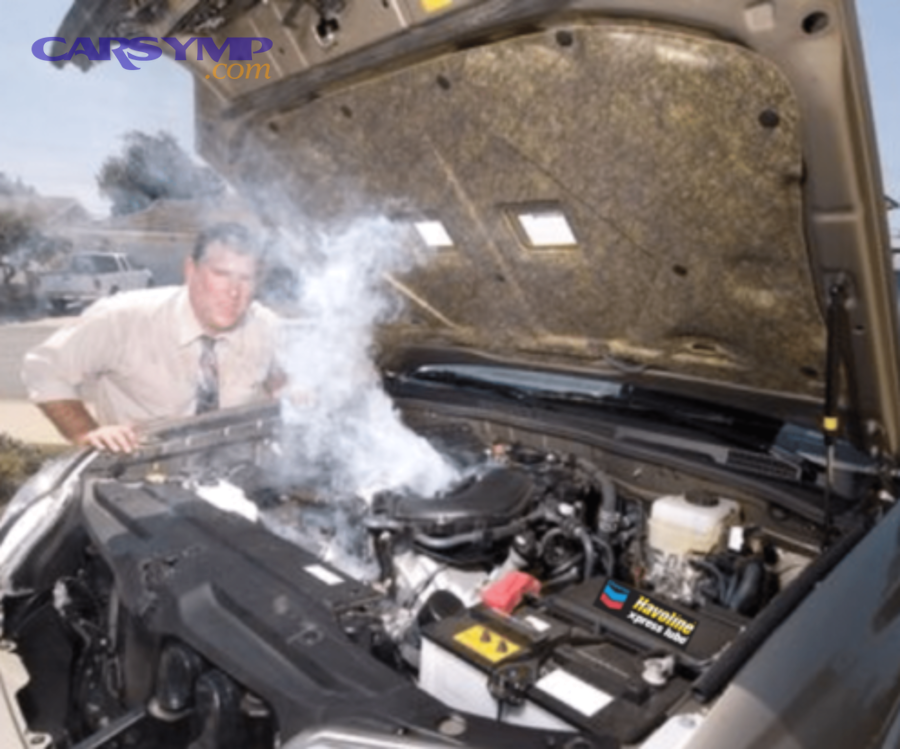
It is unsafe to keep driving when the engine is in the hot zone, steaming, losing coolant rapidly, or showing signs of internal leakage—because continuing can turn a modest overheating repair into catastrophic engine damage and a far higher total cost.

Besides, this is the moment where the cheapest decision is often to stop and tow, not “try to make it home.”
Should you stop immediately when the temperature gauge spikes (yes/no)?
Yes—you should stop immediately when the temperature gauge spikes, because (1) overheating can warp sealing surfaces, (2) coolant loss can cause rapid temperature runaway, and (3) ongoing heat can damage the head gasket and other components.
More specifically, the cost consequence of ignoring a spike is that you may add engine damage to what started as a cooling-system repair.
What “stop immediately” looks like (practical, not panic):
- Safely pull over, turn off A/C, and let the engine cool.
- Do not open a hot radiator cap.
- Check for obvious leaks after cooling and consider towing if coolant is pouring out.
Why this saves money:
A tow can be cheaper than escalating into Head gasket repair when overheating persists, which RepairPal estimates in the several-thousand range. (repairpal.com)
Now that you can estimate costs by the most common fixes and compare radiator vs thermostat vs water pump vs head gasket, the next section covers micro-level cost traps and less-obvious factors that can quietly inflate (or reduce) your final bill.
What hidden cost traps can make overheating repairs more expensive (or cheaper) than expected?
There are four main hidden cost traps in overheating repair: misdiagnosis/parts swapping, incomplete testing, coolant chemistry mistakes, and skipping verification, based on the criterion of what causes repeat overheating and repeat labor.
Next, use these traps like a checklist before you approve a big job—because the most expensive overheating repair is the one you pay for twice.
Can “parts swapping” without diagnosis increase total cost even if each part is cheap?
Yes—parts swapping can increase total overheating repair cost even if each part is cheap, because (1) labor repeats each time, (2) wrong parts don’t remove the root cause, and (3) repeated overheating can create new damage.
In addition, guesswork often stacks costs: thermostat + radiator + pump becomes a multi-part bill when one targeted test could have identified the real failure first.
What to ask to avoid this trap:
- “What test result proves this part is failing?”
- “If this part doesn’t fix it, what’s the next most likely cause—and what test will confirm it?”
- “Will you verify the fix with a road test and temperature check?”
What additional tests might be worth paying for before authorizing major repairs?
Before authorizing major repairs, there are three main tests worth paying for: (1) pressure testing for external leaks, (2) fan and temperature validation under load, and (3) combustion-gas testing when symptoms suggest an internal leak—based on the criterion of preventing expensive wrong repairs.
More specifically, tests are cheaper than replacing major components blindly.
High-value tests and what they prevent:
- Cooling-system pressure test: finds leaks you can’t see at idle.
- Infrared temperature scan across radiator: spots cold sections suggesting internal blockage.
- Combustion-gas test (block test): helps confirm if exhaust gases are entering coolant—important when Head gasket repair when overheating persists is being considered.
- Fan command test: confirms the fan actually runs at the right time and speed.
Evidence (why cooling system integrity matters):
According to a study by Clemson University from its automotive engineering research (dissertation work on advanced engine cooling systems), in 2016, research emphasized that advanced cooling strategies can improve reliability by controlling temperature more precisely—reinforcing why verifying cooling performance matters before and after repairs. (open.clemson.edu)
Does using the wrong coolant type (or mixing coolants) create extra repair costs?
Yes—using the wrong coolant type or mixing incompatible coolants can create extra overheating repair costs, because (1) coolant chemistry affects corrosion protection, (2) contamination can cause deposits that reduce heat transfer, and (3) a corrective flush adds labor and materials.
Moreover, the “extra cost” is often not immediate—it shows up later as clogged passages, degraded seals, or recurring overheating symptoms.
How this becomes a bill:
- Incorrect coolant can require a full flush and refilling with the correct spec coolant.
- Deposits can reduce radiator efficiency and mimic a failing radiator.
- Corrosion can shorten the life of components like radiators and heater cores.
When can preventive maintenance be the “cheaper opposite” of emergency overheating repairs?
Preventive maintenance can be the cheaper opposite of emergency overheating repair when it reduces the chance of sudden coolant loss or undetected restriction—so prevention wins on cost stability, emergency repair loses on collateral damage, and timely service is optimal for avoiding escalation into head gasket risk.
To sum up, prevention is not just “nice to have”—it is often the lowest-cost strategy to avoid high labor and high-stakes failures.
High-impact preventive steps that reduce big repair odds:
- Periodic inspection of hoses, clamps, and radiator condition
- Replacing worn belts before they slip or fail
- Keeping coolant at the correct level and specification
- Addressing small leaks immediately
- Verifying fan operation before hot weather or long trips
How this ties back to cost:
A small leak repair now is often cheaper than the chain reaction that leads to repeated overheating, warped sealing surfaces, and Head gasket repair when overheating persists—the exact scenario that turns an ordinary cooling repair into a multi-thousand-dollar event. (repairpal.com)