


If you’re searching for PCV valve replacement labor time, the practical answer is this: most shops bill flat-rate hours (book time), and your job can land anywhere from a quick 0.3–1.0 hour “easy-access swap” to 2–6+ hours when parts must come off to reach a buried PCV design.
Next, you’ll want to translate those billed hours into an actual cost range you can compare across quotes, because the same labor time can cost very differently depending on the shop’s hourly rate, line items, and what’s included in the estimate.
Then, it helps to understand why labor time varies so widely—especially when some engines use a simple standalone valve while others integrate the PCV into a valve cover or separator assembly that requires major disassembly.
Introduce a new idea: once you understand how book time works and how access changes the labor hours, you can predict your likely range in minutes and avoid paying for the wrong repair.
What is “PCV valve replacement labor time” (flat-rate hours), and what does it include?
PCV valve replacement labor time is the standardized “book time” (flat-rate hours) a shop uses to bill the work of accessing, removing, and installing the PCV valve or PCV assembly—regardless of how long the job takes on the clock. To better understand why this matters, you need to separate billing time from real time and clarify what’s included in a normal quote versus add-on work.
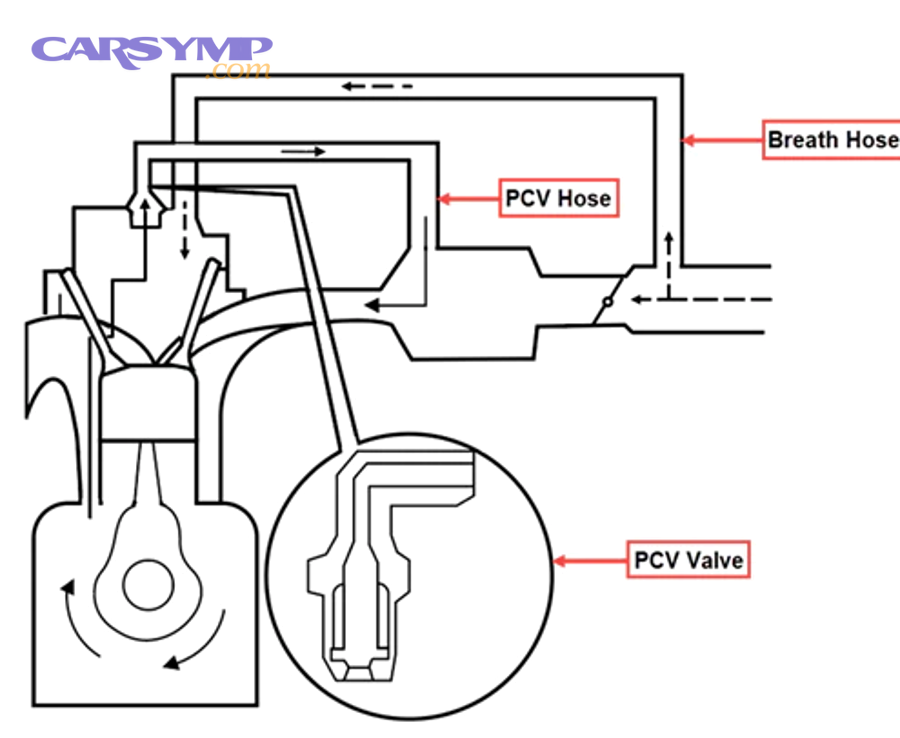
In most repair shops, labor is priced using flat-rate hours (also called book time). That means the shop charges a standardized number of hours for the operation based on labor guides and service procedures. This is why you’ll see two quotes that look “close” on parts but wildly different on labor: each shop may be using different labor operations, different assumptions about what must be removed, or different policies about what counts as included work.
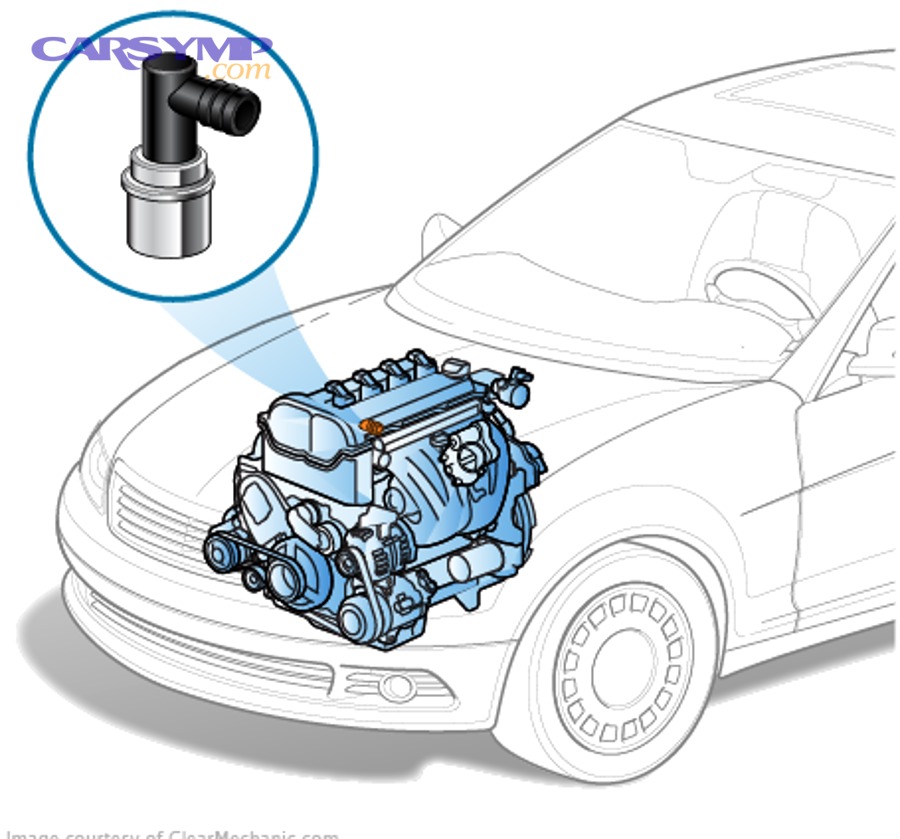
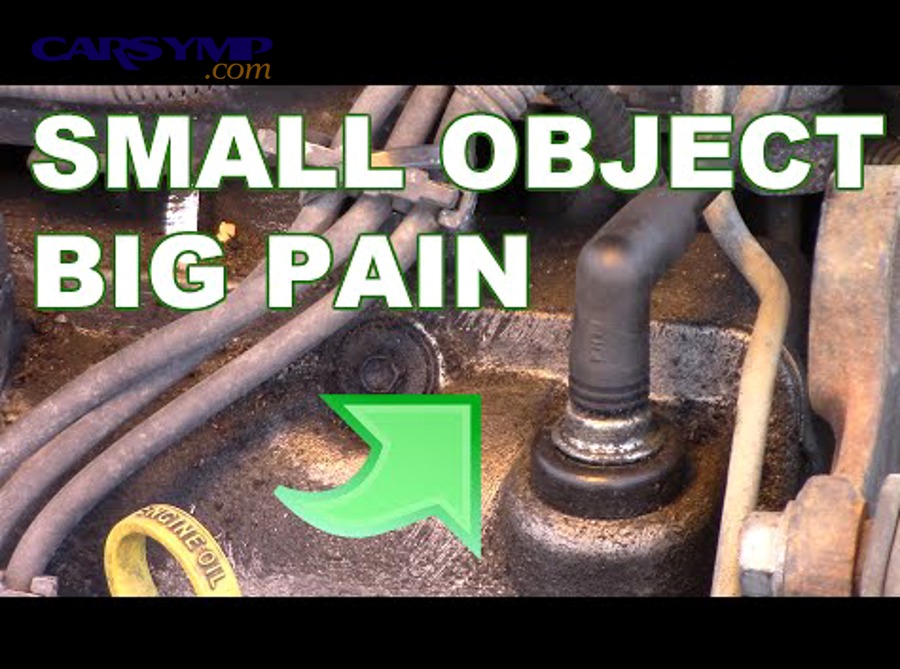
For PCV valve replacement, labor time is primarily driven by access. Some engines place the PCV valve directly on the valve cover with a short hose. Others hide it under intake plumbing, behind a throttle body, or integrate it into a larger assembly.
Does flat-rate labor time equal the real time a DIYer or mechanic spends?
No—PCV valve replacement labor time (flat-rate hours) is a billing standard, not a stopwatch measurement, and it differs from real time because (1) technician skill affects speed, (2) vehicle condition changes difficulty, and (3) shops bill consistent hours even when the job runs fast or slow. More specifically, once you know that book time is a pricing method, you can use it as a comparison tool rather than a prediction of how long you’ll personally spend.
Here’s why the two times diverge:
- Skill and repetition compress time: A technician who has replaced the same PCV design dozens of times can finish under book time on a clean car.
- Vehicle condition expands time: Heat-cycled plastic connectors, hardened hoses, or corrosion can turn a “simple” step into careful, slow work.
- Book time stays fixed: Flat-rate hours are designed to standardize pricing and compensation, so the billed time can remain the same even if real time changes.
For DIYers, real time often stretches because you’re learning the layout, looking up torque specs, and moving slowly to avoid breaking brittle PCV hose fittings. That’s normal—and it’s also why DIY clock time can be longer than the shop’s billed hours even when the procedure is “easy.”
What tasks are usually included—and not included—in the quoted labor time?
There are 2 main buckets in PCV valve replacement labor time: included core tasks (access → replace → reassemble) and commonly excluded add-ons (diagnosis, broken fittings, extra cleaning) based on shop policy and vehicle condition. Next, the fastest way to avoid surprise charges is to confirm what your quote includes before approving the repair.
Usually included in labor time (core operation):
- Removing basic engine covers and simple intake tubes needed for access
- Disconnecting the PCV hose at the valve or at the intake connection
- Removing the PCV valve (or PCV assembly) and installing the replacement
- Reconnecting hoses, reinstalling removed covers/tubes
- Basic functional check (idle quality, obvious vacuum leak sound)
Often not included (add-ons that change labor hours):
- Diagnostic time (smoke test, vacuum leak isolation, code tracing)
- Replacing extra components not listed in the original operation (hoses, grommet, oil separator)
- Repairing broken plastic ports or stuck fittings
- Intake manifold removal if the shop originally quoted a simpler operation and then discovers the PCV is integrated deeper
- Cleaning heavy sludge/deposits beyond normal disassembly
This is where the phrase PCV hose and separator issues matters. A shop may quote “PCV valve replacement” but then find the real problem is a cracked hose, an oil separator restriction, or a valve-cover-integrated PCV design that can’t be serviced as a standalone valve. Those aren’t “scams,” but they are common reasons a quote changes.
How many labor hours does PCV valve replacement usually take on most cars?
There are 3 common labor-time ranges for PCV valve replacement—0.3–1.0 hours (easy access), 1.0–2.5 hours (moderate access), and 2.5–6+ hours (major disassembly)—based on how much must be removed to reach the PCV valve or PCV assembly. Then, once you can place your vehicle into a range, you can estimate cost and compare quotes without guessing.
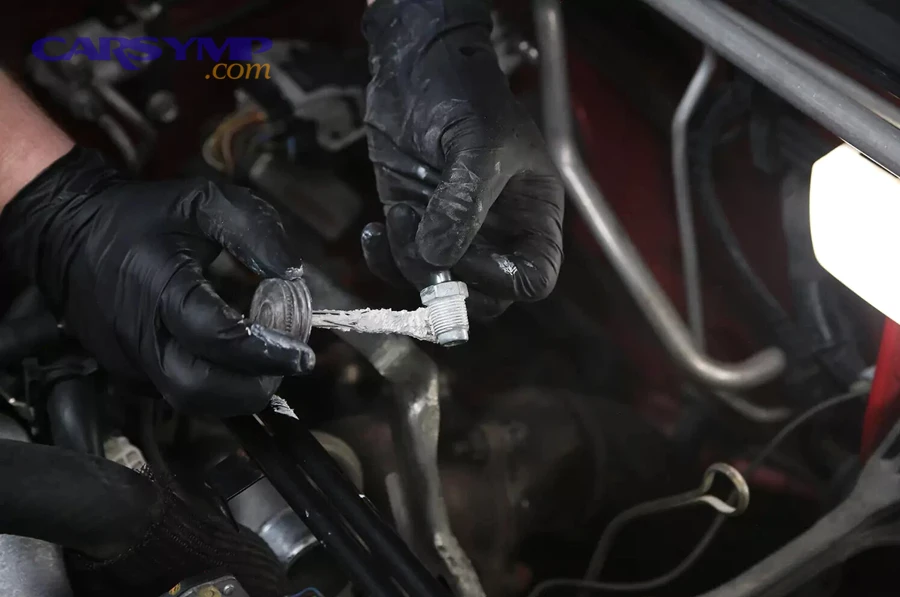
A helpful way to think about labor time is not “what’s typical for all cars,” but “what’s typical for this access category.” The same model line can even vary by engine option: a four-cylinder might have a simple valve-cover PCV valve, while the turbo model uses a more complex separator layout.
Below is a quick reference table to help you map likely book time. This table summarizes how access affects billed hours, not your personal clock time.
| Access category | What you typically remove | Typical flat-rate labor time | Common risk factor |
|---|---|---|---|
| Easy access | Engine cover, one hose clamp | 0.3–1.0 hr | Brittle hose/grommet |
| Moderate access | Intake tube/airbox, brackets, small hoses | 1.0–2.5 hr | Hidden clamps, tight space |
| Major disassembly | Intake manifold or large assemblies | 2.5–6+ hr | Broken plastic ports, extra gaskets |
Is PCV valve labor time often under 1 hour on many engines?
Yes—PCV valve replacement labor time is often under 1 hour when the PCV valve is a standalone part on the valve cover or near the intake with minimal disassembly, because access is direct, parts are simple, and reassembly is fast. However, the key is confirming your engine’s PCV design before assuming your job fits this “easy” category.
Under-1-hour jobs are common when:
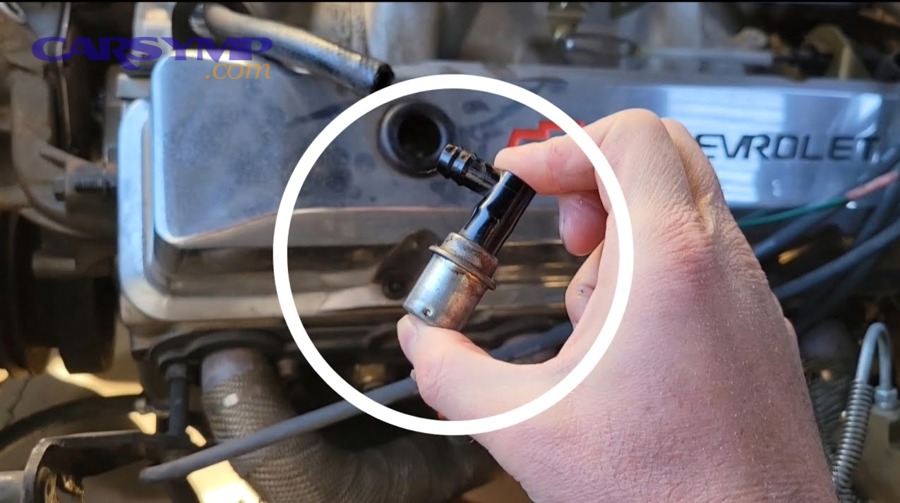
- The PCV valve is visible on the valve cover (often held by a grommet or threaded in).
- The PCV hose path is short and uses accessible clamps.
- You don’t need to remove the intake manifold, throttle body, or major brackets.
If your engine bay looks open and the PCV valve sits right on top, your quote should generally reflect this category unless the shop is including extensive diagnostic time.
Which vehicle/engine layouts push PCV labor time into the 2–6+ hour range?
There are 4 layout patterns that commonly push PCV valve replacement labor time into the 2–6+ hour range: (1) intake manifold removal required, (2) rear-of-engine PCV placement, (3) turbocharged packaging with dense plumbing, and (4) PCV integrated into a valve cover or separator assembly. More importantly, you can often spot these patterns before you approve a quote.
Look for these red flags in quotes and visual inspections:
- “Remove intake manifold” on the estimate: this alone can add hours because it requires disconnecting fuel/air/vacuum components and resealing.
- Rear bank placement on V-engines: the PCV assembly may be against the firewall where access is limited.
- Turbo and charge piping: more hoses, more clamps, and more tight routing means more time to reach the PCV system safely.
- Integrated designs: some engines don’t have a cheap, serviceable valve; the PCV function lives inside a larger part (often a valve cover), so replacement becomes a larger operation.
This is why you see labor times that feel “unfair” compared to the cost of the part. The part can be small, but the access can be huge.
How can you estimate labor hours for your specific car in 3 steps?
Estimate PCV valve replacement labor time in 3 steps—identify the PCV design, determine required removals, and match the job to an access category—so you can predict a realistic flat-rate range before getting quotes. Specifically, you don’t need a labor guide subscription to get a strong estimate—you need correct identification.
Step 1: Identify your PCV design (standalone vs integrated).
- Standalone PCV valves are often visible on the valve cover with a hose to the intake.
- Integrated designs are often described as “PCV assembly,” “oil separator,” or “valve cover with PCV.”
Step 2: Determine what must be removed to reach it.
Ask: Can you see it from above? Is it behind the throttle body? Under intake runners? At the rear of the engine? If you can’t physically reach it without removing major components, it’s not an “easy” job.
Step 3: Match to a labor-time band (and sanity-check quotes).
- Visible and reachable: 0.3–1.0 hr
- Some intake tubes/airbox/brackets: 1.0–2.5 hr
- Intake manifold or deep teardown: 2.5–6+ hr
If a shop quotes 4 hours for a clearly visible valve-cover PCV, you should ask what’s included—diagnosis, smoke test, hose replacement, or additional seals can legitimately raise labor time, but it should be transparent.
Why does PCV valve replacement labor time vary so much between vehicles?
PCV valve replacement labor time varies because access and design differ—some engines use a simple, serviceable PCV valve, while others integrate PCV into assemblies that require major disassembly, and each additional removed component increases billed flat-rate hours. Besides that, the age and condition of the engine bay can increase the time needed to complete the work without damage.
Labor time isn’t arbitrary; it’s a proxy for steps and risk. Every extra hose, connector, bracket, or gasket is another step—and another chance for a brittle part to break or for a seal to need replacement.
Is the PCV valve a standalone part or integrated into the valve cover/PCV assembly on your engine?
Standalone PCV valves win for low labor time, while integrated valve-cover/PCV assemblies are best described as “replace the whole module,” because the integrated design increases disassembly and parts handling even if the PCV function itself is small. Meanwhile, recognizing which you have is the fastest predictor of your flat-rate hours.
Standalone design (lower labor time):
- The PCV valve is a discrete part: pull it out (or unthread it), install the new one, reconnect the hose.
- Typical labor stays low because access is straightforward and the number of steps is limited.
Integrated design (higher labor time):
- The “PCV valve” may not be separately serviceable; it may be built into a valve cover, separator plate, or sealed assembly.
- Replacement becomes a larger job: remove components for access, remove the larger assembly, replace seals/gaskets, reassemble.
If your estimate line item says “valve cover assembly” or “oil separator,” you’re likely in the integrated category, and the labor time you see is often reflecting that reality.
Do you have to remove the intake manifold (or major components) for PCV access?
Yes, on many engines the PCV valve replacement labor time jumps sharply when intake manifold removal is required because (1) multiple systems must be disconnected, (2) sealing surfaces must be cleaned and resealed, and (3) reassembly needs careful leak prevention. However, if manifold removal is not required, the job usually stays within the easier labor-time bands.
A quick way to detect this without tearing your car apart: ask the shop whether the procedure includes intake manifold R&R (remove and reinstall). If the answer is yes, request a breakdown that includes:
- New intake gaskets (often recommended)
- Any one-time-use clamps or fasteners
- Post-repair leak check expectations
A real-world illustration of how extreme this can get appears in enthusiast discussions where a PCV replacement becomes a manifold-off job and books several hours due to access constraints. (community.cartalk.com)
What “complication factors” commonly add time and cost?
There are 5 common complication factors that add time to PCV valve replacement: brittle PCV hoses, stuck grommets, broken plastic ports, heavy sludge/deposit buildup, and follow-up vacuum leak diagnosis after reassembly. Especially on older vehicles, these risks explain why some shops quote higher labor time as a buffer.
- Brittle hoses and connectors: Heat and oil vapor age plastic and rubber. A PCV hose that cracks on removal becomes an extra replacement step.
- Stuck grommets: Some PCV valves press into rubber grommets that harden and tear.
- Broken intake ports: Plastic intake fittings can snap, forcing repair or replacement.
- Sludge and deposits: A neglected system can be physically harder to disassemble and may reveal additional clogged passages.
- Vacuum leak chasing: If a seal is slightly off, the shop may need time to confirm and correct it.
This is where “Preventing sludge with a healthy PCV system” becomes more than a slogan. A clean, properly ventilated crankcase reduces moisture and contamination, which supports oil quality and can keep PCV passages from becoming restricted over time.
According to a study by Massachusetts Institute of Technology from the Department of Mechanical Engineering, in 2004, an experimental investigation of the PCV system found that blowby-related oil transport/consumption characteristics vary with operating conditions, reinforcing why PCV system design and flow conditions matter for maintenance outcomes. (dspace.mit.edu)
How do you convert PCV labor time into a realistic labor cost and total repair estimate?
Convert PCV valve replacement labor time into cost by multiplying flat-rate hours by the shop’s hourly rate, then adding parts, fees, and taxes, so you can compare quotes using the same math instead of guesswork. More specifically, when you calculate labor cost from billed hours, you’ll immediately see whether a quote is high because of hours, rate, or extra line items.
Repair costs are usually the sum of:
- Labor cost = labor time (flat-rate hours) × labor rate
- Parts cost (PCV valve or assembly, hoses, gaskets)
- Shop supplies/fees (varies)
- Taxes (varies by area)
To ground your expectations, many consumer estimators publish typical total cost ranges for PCV valve replacement, including the labor portion. (repairpal.com)
What is the simplest formula to estimate your total PCV valve replacement cost?
The simplest formula is: Total estimate ≈ (Flat-rate hours × Hourly labor rate) + Parts + Fees/Tax, which lets you build a realistic range even if you only know your likely labor-time band. Then, once you have that range, you can spot quotes that are outliers and ask better questions.
Here’s a practical way to use the formula:
- Pick your likely labor band (for example, 1.0–2.5 hours for moderate access).
- Multiply by typical shop rates in your area (or the rate on the quote).
- Add parts cost (standalone valve is often low; assemblies can be much higher).
- Add a small buffer for supplies/fees.
Example (illustrative):
- Labor band: 1.5 hours
- Rate: $150/hr
- Labor cost: $225
- Parts: $40 (standalone valve)
- Total before tax/fees: ~$265
But if your engine uses an integrated PCV assembly, parts might dominate the total. The same labor hours can produce a very different bill if the job includes additional hoses, separators, or valve cover components—classic PCV hose and separator issues territory.
How do you compare two repair quotes fairly if labor hours differ?
To compare two PCV valve replacement quotes fairly, treat labor hours as only one variable and compare (1) the labor operation included, (2) the labor rate, and (3) the parts scope and warranty, because different quotes can bundle different work under the same label. However, a quote comparison becomes much easier when you force both estimates into the same checklist.
Use this apples-to-apples checklist:
- Are both quotes replacing the same thing?
Standalone PCV valve vs PCV assembly vs valve cover with integrated PCV - Do both include diagnosis?
A smoke test or vacuum leak check can be billed separately. - Are hoses/grommets included?
These are common failure points and often replaced to prevent comebacks. - Is intake manifold removal included?
If one quote includes it and the other doesn’t, they are not comparable. - What warranty is offered?
A higher price can sometimes include a stronger labor/parts guarantee.
If you’re building content for Car Symp readers, this is a key trust-builder: instead of telling people “this is expensive,” show them exactly what to confirm so they can decide confidently.
When is PCV valve replacement the wrong repair—and what should you check first?
PCV valve replacement is the wrong repair when the real issue is a different vacuum leak, an intake gasket leak, or a breather/separator restriction—so you should verify the PCV system is truly failing before paying labor time and parts cost. In addition, confirming the correct failure mode prevents the frustrating cycle of “replace the valve, symptoms remain.”
PCV-related symptoms overlap with many other problems:
- Rough idle (could be PCV leak, could be intake leak, could be misfire)
- Oil leaks (could be crankcase pressure from PCV failure, could be aging seals)
- Lean codes (could be vacuum leak anywhere)
- Whistling noises (could be PCV diaphragm failure on some designs, could be a split hose)
This doesn’t mean you should avoid PCV valve replacement—it means you should avoid replacing it blindly.
Can PCV-like symptoms be caused by vacuum leaks or clogged breather hoses instead?
Yes—PCV-like symptoms can be caused by vacuum leaks or restricted breather hoses because (1) both change airflow and fuel trim, (2) both can create rough idle and lean codes, and (3) both can disturb crankcase pressure and oil control in ways that mimic a failed PCV valve. More importantly, this is why smart shops often recommend a quick verification step before committing to parts replacement.
Common “look-alikes” include:
- Cracked intake boots or couplers
- Split vacuum lines under the intake manifold
- Clogged breather passages or a restricted separator
- Intake manifold gasket leaks
If a shop diagnoses “PCV problem,” ask what test or observation confirmed it. Even a simple visual inspection of the PCV hose condition can reveal obvious cracks.
What quick checks help confirm the PCV system is the real problem before paying labor?
There are 4 quick checks that help confirm a PCV system problem: (1) inspect PCV hoses and connections, (2) check for obvious vacuum leak signs, (3) verify oil cap/idle behavior cautiously, and (4) confirm the PCV design and common failure mode on your engine. To better understand your next move, treat these as a screening step—not a substitute for professional diagnosis when symptoms are severe.
- Inspect PCV hoses and fittings:
Look for oil wetness at connections, cracks, collapsed hoses, or broken clips. - Listen and look for vacuum leaks:
A loud hiss near the intake can indicate a leak that may not be the PCV valve itself. - Check for crankcase pressure clues (carefully):
Excessive pressure can push oil from seals; excessive vacuum can change idle behavior on some failures. - Confirm your engine’s PCV failure pattern:
Some engines are known for torn diaphragms in integrated assemblies; others just clog a small valve.
If the check reveals damaged hoses or separator restrictions, it may shift the repair scope from “PCV valve replacement” to “PCV hose and separator issues,” which directly affects labor time and parts cost.
Contextual Border: At this point you can estimate the booked labor hours for your PCV valve replacement, understand why they vary, and translate hours into a cost range. Next, we’ll expand into related micro-questions—DIY realities, design-specific scenarios, and pitfalls that can change the job time.
What else can change PCV valve replacement time—DIY approach, design quirks, and edge cases?
PCV valve replacement time can change dramatically due to DIY learning curve, integrated PCV designs, and edge-case failures like brittle fittings or sludge-related restrictions, so you should plan for variability even after estimating flat-rate hours. Next, understanding these micro-details will help you decide whether to DIY, how to avoid broken parts, and when a “cheap valve” becomes a bigger job.
How long does PCV valve replacement take for DIYers compared with flat-rate hours?
DIY PCV valve replacement usually takes longer than flat-rate hours because (1) you spend time locating the PCV system, (2) you work slower to avoid breaking hoses and clips, and (3) you may remove extra components for visibility and safety. However, DIY time can still be worthwhile when access is easy and the part is truly standalone.
A realistic DIY expectation by access category:
- Easy access: 30–90 minutes for first-timers (including tool setup and checking hose condition)
- Moderate access: 1–3 hours (especially if you remove intake tubes and covers carefully)
- Major disassembly: Often not a casual DIY unless you’re experienced—time can expand quickly when gaskets, torque sequences, and brittle parts enter the picture
If your goal is budget control, remember: flat-rate hours are a billing tool, while DIY time is a planning tool. They answer different questions.
Which PCV “sub-parts” (hoses, grommets, oil separator) are commonly replaced at the same time—and why?
There are 4 commonly replaced PCV sub-parts—PCV hose, grommet/seal, oil separator components, and clamps/connectors—because replacing them together reduces repeat labor, prevents vacuum leaks, and addresses PCV hose and separator issues that can mimic a “bad valve.” Specifically, this is how you prevent paying labor twice.
- PCV hose: Rubber hardens and cracks; plastic lines become brittle.
- Grommet/seal: A hardened grommet won’t seal well and can cause vacuum leaks.
- Oil separator (where applicable): Restriction or failure can create oil consumption and pressure issues.
- Clamps/connectors: Broken clips cause leaks and rattles; new clamps restore reliability.
This bundle approach also supports Preventing sludge with a healthy PCV system because restricted ventilation accelerates moisture and contaminant retention in the crankcase over time.
Can an “easy” PCV job become expensive because of broken plastic fittings or sludge?
Yes—an “easy” PCV valve replacement can become expensive because (1) brittle fittings can break during removal, (2) sludge can restrict passages and force extra cleaning or parts replacement, and (3) vacuum leaks after reassembly can require additional diagnostic time. More specifically, these edge cases explain why some shops pad labor or recommend related parts proactively.
If you want to reduce the chance of escalation:
- Warm the engine bay slightly (when safe) so hoses are less stiff.
- Use proper hose removal technique—don’t twist hard on brittle plastic.
- Replace obviously aged hoses rather than reusing cracked lines.
According to a study by Pukyong National University from the School of Mechanical Engineering, in 2005, computational analysis of a PCV valve showed that flow behavior depends strongly on pressure conditions—supporting why restrictions, contamination, or design differences can change PCV performance and maintenance outcomes. (koreascience.kr)
What is the opposite problem—when a shop quote is unusually low—and when should you be cautious?
A very low PCV valve replacement quote can be a warning sign because (1) it may assume a standalone valve when your engine uses an integrated assembly, (2) it may exclude needed hoses/seals that prevent vacuum leaks, and (3) it may exclude diagnosis that confirms the PCV system is truly at fault. However, low isn’t automatically bad—you just need to verify scope.
Be cautious if:
- The quote doesn’t specify whether it’s a PCV valve or a PCV assembly/valve cover.
- There’s no mention of checking or replacing obvious PCV hoses and seals.
- The shop can’t explain what’s included in their labor time.
A fair low quote is usually one where the shop clearly states: “This is a standalone valve on top of the engine, no manifold removal, and we’ll replace the valve and inspect the hose.”
Evidence (if any)
- Repair cost ranges and the presence of a labor portion in PCV valve replacement estimates are reflected in consumer repair estimators. (repairpal.com)
- Real-world examples show labor time can exceed 4 hours when access requires intake manifold removal and deep disassembly. (community.cartalk.com)
- University research supports that PCV system flow and blowby/oil transport behavior depends on operating conditions and valve flow characteristics. (dspace.mit.edu)