


Power steering leaks originate from three main sources: the pump assembly, the hoses and lines, or the steering rack, with each component displaying distinct leak patterns and symptoms that DIYers can identify through systematic visual inspection. The pump typically leaks at the shaft seal where it connects to the pulley, creating drips directly below the front of the engine bay. Hoses fail at connection points or develop cracks along their length, producing spray patterns or wetness along the line path. The steering rack leaks from end seals or the pinion input shaft, often depositing fluid inside the protective bellows boots or near the wheel areas.
Understanding how to differentiate between these three leak sources saves diagnostic time and prevents unnecessary part replacements. Each component has characteristic failure points that become visible once you know where to look and what signs indicate which part is failing. The diagnostic process relies on cleaning the system, performing a lock-to-lock pressure test, and tracing fresh fluid back to its source rather than guessing based on where puddles form underneath the vehicle.
The symptoms accompanying each type of leak provide additional diagnostic clues beyond visual inspection alone. Pump failures typically produce whining noises and complete loss of power assist, while hose leaks may cause intermittent assist loss with a burning smell from fluid contacting hot engine components. Rack seal failures often manifest as stiff steering when the vehicle is cold, known as “morning sickness,” which improves as the system warms up and seals expand.
Successfully diagnosing your power steering fluid leak requires proper preparation, the right inspection technique, and understanding the unique characteristics of each component’s failure patterns. Below, we’ll walk through the complete identification process, from recognizing the three main leak zones to performing systematic testing that reveals exactly which part needs attention.
What Are the Three Main Sources of Power Steering Leaks?
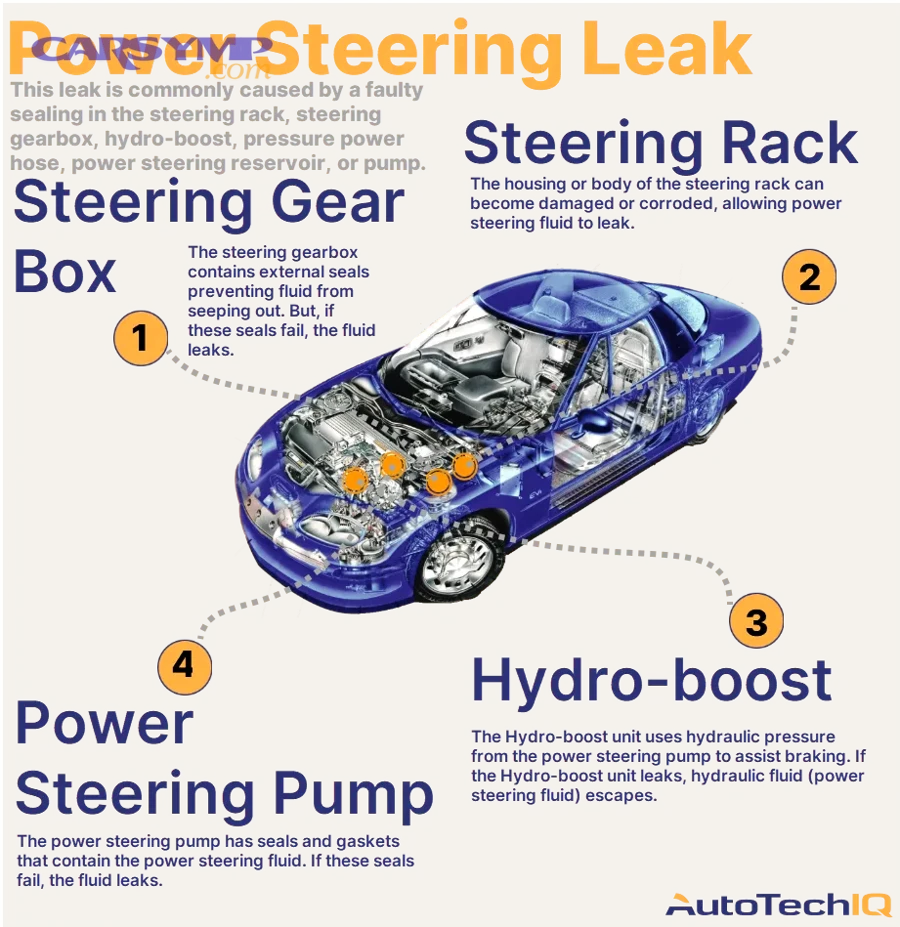
Power steering systems develop leaks in three primary locations: the pump assembly (including the reservoir), the hoses and connecting lines, and the steering rack or gearbox, with failure rates varying based on component age, operating pressure, and environmental exposure.
To better understand where leaks originate, consider how hydraulic power steering operates. The pump pressurizes fluid and sends it through high-pressure hoses to the steering rack, where hydraulic force assists your steering input. The fluid then returns to the pump reservoir through low-pressure return lines, completing the circuit. Each component in this pressurized system has seals, gaskets, or connection points that can fail over time.
The pump assembly sits at the front of the engine, driven by a belt connected to the crankshaft. This component houses the reservoir that holds power steering fluid and contains multiple seals where the pump shaft exits the housing. The constant rotation and pressure generation make the pump shaft seal particularly vulnerable to leakage, especially in vehicles with over 100,000 miles. The plastic reservoir itself can develop cracks at seams or corners, particularly in climates with extreme temperature fluctuations.
Hoses represent the second major leak category and include both high-pressure supply lines and low-pressure return lines. High-pressure hoses must withstand up to 1,300 psi during hard steering maneuvers, while return hoses operate below 50 psi. These rubber and reinforced components deteriorate from heat exposure, constant pressure cycling, and environmental factors like road salt and oil contamination. Leaks typically develop at junction points where rubber hoses transition to hard metal lines or at threaded connections where lines attach to the pump and rack.
The steering rack forms the third leak zone and represents the most complex diagnostic challenge. This component converts rotational steering wheel movement into lateral wheel motion through a pinion gear and toothed rack bar. Internal seals around the rack piston and spool valves prevent fluid from escaping the pressurized chambers. External seals at both ends of the rack keep fluid contained where the rack bar extends to connect with the tie rods. The pinion input shaft seal, located where the steering column connects to the rack, provides another potential leak point. Road grime, dirt, and constant motion gradually wear these seals, with the protective rubber bellows boots often concealing end seal failures until fluid accumulates inside them.
How Do You Identify a Power Steering Pump Leak?
A power steering pump leak appears as fluid seepage at the pump shaft seal, wet spots on the reservoir body, or drips directly below the pump assembly, accompanied by whining noises, belt squealing, and progressive steering difficulty as fluid levels drop.
Identifying pump-specific leaks requires examining three distinct areas: the shaft seal location, the reservoir integrity, and the overall pump housing. Let’s explore each area systematically to build your diagnostic skills.
What Are the Telltale Signs of a Pump Shaft Seal Leak?
The pump shaft seal sits where the drive shaft exits the pump body to connect with the pulley that’s turned by the serpentine belt. When this seal fails, power steering fluid seeps along the shaft and onto the pulley, creating a distinctive wet, oily appearance on the pulley face and surrounding area. You’ll often notice fluid being flung outward by the spinning pulley, creating spray patterns on nearby components like the engine block or inner fender well.
To inspect this area, use a flashlight to examine the pump pulley while the engine is off. Look for fresh, wet fluid around the center hub of the pulley where the shaft enters. The fluid may appear pink, red, or amber depending on your vehicle’s power steering fluid type. If you see dried, crusty deposits, this indicates an older leak that has been present for some time. Belt contamination from shaft seal leakage often causes squealing sounds during startup or when turning the wheel at idle, as the fluid reduces friction between the belt and pulley.
The drip pattern from a shaft seal leak typically appears directly below the pump, toward the front of the engine compartment. If you place white paper or cardboard under this area overnight, you’ll find fresh spots in a concentrated area rather than a wide spread pattern. The leak severity often correlates with pump age and operating hours, with high-mileage vehicles (150,000+ miles) showing increased seal degradation.
How Do You Check the Power Steering Reservoir for Leaks?
The power steering reservoir, often integrated into the pump body or mounted separately, holds the system’s fluid supply and features a cap with a built-in filter and dipstick. Reservoir leaks develop at seams where plastic components are welded together, at the base where the reservoir attaches to the pump, or through cracks in the plastic body itself. Age and heat cycles cause the plastic to become brittle, making older reservoirs particularly susceptible to stress cracks.
Start your reservoir inspection by cleaning the entire exterior with a degreaser and wiping it completely dry. Pay special attention to the corners and seams, as these areas concentrate stress and fail first. With the engine running and the reservoir cap removed, look for bubbling or fluid weeping from seams. Fill the reservoir to the “full cold” line, replace the cap, and turn the steering wheel lock-to-lock several times while observing the reservoir body for fresh wetness.
The cap seal represents another common failure point. A deteriorated cap gasket allows fluid to escape during pressure fluctuations when turning the wheel. You might notice wetness around the cap threads or see fluid residue on the filler neck. Additionally, check where the reservoir mounts to the pump body (if it’s a two-piece design). The O-ring or gasket at this junction can fail, causing fluid to leak from the bottom of the reservoir where it meets the pump housing.
What Symptoms Indicate a Failing Power Steering Pump?
Beyond visible leaks, a failing pump produces distinctive operational symptoms that confirm the pump as the leak source. The most recognizable symptom is a high-pitched whining or groaning noise that varies with steering wheel movement, particularly noticeable when turning at low speeds or holding the wheel at full lock. This noise results from the pump struggling to maintain pressure when internal components wear or fluid levels drop due to leakage.
Steering effort increases progressively as pump performance deteriorates. You’ll notice the wheel becoming harder to turn during parking maneuvers or slow-speed turning, while highway driving may still feel relatively normal since less steering assist is required at speed. If the leak has significantly reduced fluid levels, the steering may alternate between easy and difficult, creating an inconsistent feel that worsens over time.
During your lock-to-lock pressure test (turning the wheel fully left and right with the engine running), observe the pump area for bubbling fluid or spray. A failing pump under pressure will often reveal leaks that aren’t visible when the system is at rest. The fluid level in the reservoir will drop noticeably during this test if the pump seal is compromised. Check the fluid color as well—if it appears dark brown or black instead of the normal red or amber, internal pump wear has contaminated the fluid, often accompanying seal failure.
According to automotive service data compiled by the Automotive Service Association, power steering pump failures account for approximately 35% of all power steering system repairs, with shaft seal leaks representing the most common pump-related issue in vehicles over eight years old.
How Can You Tell If a Power Steering Hose Is Leaking?
Power steering hose leaks manifest as spray patterns near connections, wet spots along hose bodies, burning oil smell from fluid contacting exhaust components, and fluid loss that’s traceable to the hose path between pump and rack.
Understanding the difference between high-pressure and low-pressure hose failures helps you prioritize repairs and predict leak behavior. These two hose types serve different functions and fail in characteristic ways.
What’s the Difference Between High-Pressure and Low-Pressure Hose Leaks?
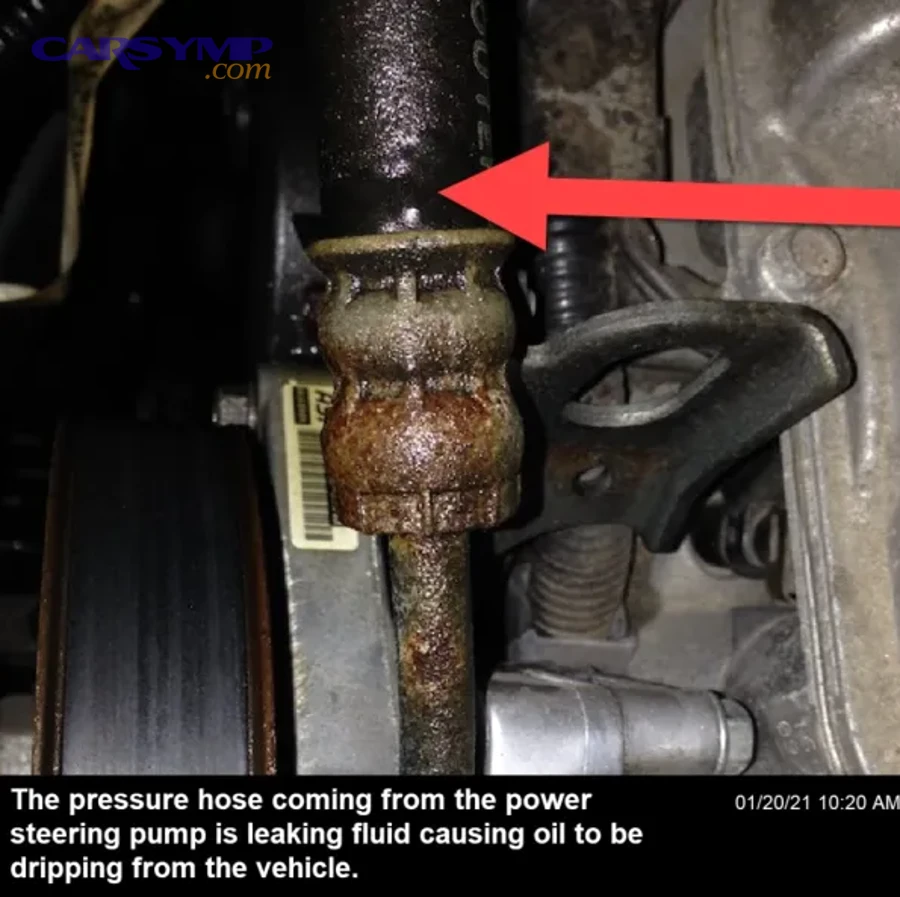
The high-pressure hose carries pressurized fluid from the pump to the steering rack, operating at 600-1,300 psi during normal steering and potentially higher during extreme maneuvers like hitting a curb. This hose features reinforced construction with multiple layers of synthetic rubber and braided steel or fabric reinforcement to withstand these pressures. When a high-pressure hose fails, the leak appears dramatic—fluid sprays forcefully from the failure point, creating visible mist or stream that can reach several inches from the hose. You’ll often see fluid coating nearby components in the direction of the spray.
Low-pressure return hoses, by contrast, operate below 50 psi and simply route fluid back from the rack to the reservoir. These hoses use standard rubber construction without reinforcement. When they fail, fluid drips or seeps rather than sprays, creating puddles underneath the vehicle or slow wetness along the hose path. Return hose leaks are less urgent but still require attention to prevent running the system dry.
Visually differentiating these hoses helps target your inspection. High-pressure hoses typically have a more rigid appearance with visible reinforcement, metal fittings at both ends, and may include heat shielding to protect them from exhaust manifold temperatures. They run from the pump outlet (usually on top or side of the pump) to the rack input (typically on the driver’s side of the rack). Return hoses appear as simple black rubber lines, often secured with spring clamps, running from the rack back to the reservoir. They feel softer and more flexible when squeezed.
The failure mechanisms differ between these hose types as well. High-pressure hoses typically fail from internal delamination, where the inner liner separates from the reinforcement layers, creating bubbles or soft spots that eventually burst. Return hoses fail from external deterioration—age-hardening makes the rubber crack and split, particularly at bend points and where clamps compress the hose.
Where Do Power Steering Hoses Most Commonly Leak?
Replacing steering hoses basics starts with understanding the five primary failure points where leaks most frequently develop. The first and most common location is at threaded connection fittings where metal hard lines screw into the pump and rack. These connections rely on metal-to-metal sealing surfaces or small O-rings to prevent leakage. Over time, vibration loosens these fittings, or the O-rings deteriorate from heat and chemical exposure, allowing fluid to seep from the threads.
The second common failure point occurs at junctions where rubber hoses transition to hard metal lines. These transition points use crimped fittings that can corrode or develop cracks in the crimp collar. Road salt accelerates corrosion in these areas, particularly on vehicles in northern climates. The crimp itself may fail from vibration fatigue, creating gaps between the hose and the metal fitting that allow high-pressure fluid to escape.
Hose bodies fail at their third common location—along sections exposed to extreme heat from the exhaust manifold or turbocharger. Even with heat shielding, prolonged exposure degrades the rubber compounds, causing the outer layer to crack and eventually penetrate through to the pressure-bearing inner liner. These cracks appear as small splits that weep fluid initially but progressively worsen into larger ruptures.
The fourth leak zone involves clamp-secured connections, typically found on return hoses. Spring clamps or worm-drive clamps compress the rubber hose onto a metal nipple or barbed fitting. As rubber ages and hardens, it loses its ability to maintain a seal under clamp pressure. The hose may also develop cracks right at the clamp location from stress concentration. You’ll recognize these leaks by wetness appearing specifically at the clamp area, often with visible fluid seeping from under the clamp band.
Finally, hoses develop leaks at areas subjected to repeated flexing or where they contact other components. Vibration causes hoses to rub against brackets, engine components, or each other, wearing through the outer protective layer over thousands of miles. These wear-through failures appear as shiny, smooth areas on the hose that eventually penetrate the wall, creating small holes that leak under pressure.
How Do You Inspect Hose Connections for Leaks?
Effective hose leak diagnosis requires a clean surface to see fresh fluid appearance clearly. Begin by spraying all hoses, connections, and surrounding areas with automotive degreaser. Let it dwell for the recommended time, then wipe everything thoroughly with shop rags until completely dry. This cleaning reveals the true condition of components and establishes a baseline for your pressure test.
With the system cleaned, top off the power steering reservoir to the full line using the correct fluid type specified in your owner’s manual. Start the engine and let it reach idle. Have a helper slowly turn the steering wheel fully to the left, hold for two seconds, then turn fully to the right and hold. Repeat this lock-to-lock cycle five times while you observe all hose connections and bodies with a bright flashlight. Fresh fluid appearing during this test indicates an active leak.
Pay particular attention to threaded connections at the pump outlets and rack inlets. Can you drive with a steering fluid leak of this type? Technically yes for short distances, but the risk of sudden pressure loss makes it inadvisable. Look for wetness appearing at the threads or around the hex fitting body. If you see fresh fluid, determine whether it’s coming from the threads (loose connection or failed O-ring) or from a crack in the fitting body itself (requires line replacement).
For rubber hose sections, run your hand along the entire length while wearing a glove, feeling for wet spots. Flex the hose gently at various points—if you see cracks open up in the rubber, replacement is necessary even if it’s not actively leaking yet. These cracks will fail soon. Check all clamps by wiggling the hose where it connects to nipples—excessive movement indicates the hose has hardened and no longer seals properly under clamp pressure.
The decision to tighten, reseal, or replace depends on what you find. Slightly weeping threaded connections can sometimes be resolved by carefully tightening the fitting one-sixth turn at a time, checking for leaks after each increment. However, avoid over-tightening, as this strips threads or cracks fittings. If tightening doesn’t stop the leak after one full turn, the O-ring has failed and the line needs replacement. For clamp connections, try replacing the clamp first—if the hose rubber still feels pliable, a fresh clamp may restore the seal. But if the rubber feels hard or shows cracks, replace the entire hose.
How Do You Diagnose a Steering Rack Leak?
Steering rack leaks appear as fluid inside bellows boots, drips near wheel areas, stiff steering when cold that improves when warm, or wetness at the pinion input shaft where the steering column connects to the rack assembly.
Rack leak diagnosis requires understanding internal versus external seal failures and knowing the specific inspection points that reveal each type. Let’s examine the three critical areas systematically.
What Are the Signs of Rack End Seal Failure?
The rack end seals sit at both ends of the rack housing where the rack bar extends outward to connect with the inner tie rods. These seals prevent pressurized fluid from escaping the rack body while allowing the rack bar to slide back and forth during steering. Rubber bellows boots cover these seals and the tie rod connections, protecting them from road debris and contamination. When end seals fail, fluid leaks into these boots rather than immediately dripping onto the ground, making the leak less obvious.
To check for end seal leakage, locate the bellows boots on both sides of the rack—they appear as accordion-style rubber or plastic covers connecting the rack body to the tie rod. Remove or loosen the clamps securing the boots to access the interior. Pull back the boot to expose the end of the rack bar and the seal area. If power steering fluid has pooled inside the boot, the end seal has failed. Fresh, wet fluid indicates an active leak, while dried, crusty residue suggests an older leak that may have progressed.
Distinguishing between an active drip and a slow weep helps prioritize repair timing. An active drip produces visible fluid accumulation that increases noticeably over days or weeks. You’ll see fresh fluid inside the boot even shortly after cleaning it out. A slow weep creates minimal fluid accumulation—you might find only slight dampness or oily residue after several weeks. While both conditions require eventual seal replacement, an active drip demands immediate attention as it rapidly depletes fluid levels.
The leak location also matters for diagnosis. If only the driver’s side boot contains fluid, only that end seal has failed. However, rack end seals typically age similarly, so if one has failed, the opposite side will likely fail soon. Some mechanics recommend replacing both end seals simultaneously during rack service to avoid returning for the same repair months later. The labor to access one end seal is identical to accessing both, making simultaneous replacement cost-effective.
How Do You Check for Internal Rack Leaks?
Internal rack leaks represent the most challenging diagnostic situation because fluid doesn’t escape the rack housing—it bypasses internal seals, allowing high-pressure and low-pressure chambers to communicate improperly. The primary symptom of internal seal failure is called “morning sickness,” a condition where steering feels extremely stiff during cold starts but gradually improves as the vehicle warms up. This occurs because the rubber seals shrink slightly when cold, creating gaps that allow pressure to bypass. As the system warms, the seals expand and temporarily restore some sealing function.
Spool valve seals inside the rack control hydraulic pressure distribution to either side of the rack piston depending on steering direction. When these seals deteriorate, they fail to maintain pressure differentiation between the left-turn and right-turn chambers. You’ll notice the steering feels sluggish or requires extra effort at low speeds, particularly when first driving the vehicle. Making a sharp turn from a stop might require significantly more muscle than expected, yet after several minutes of driving, the steering lightens up noticeably.
To test for internal leaks, perform a cold-start steering test. Let the vehicle sit overnight so everything reaches ambient temperature. Start the engine and immediately attempt slow, full-lock turns without allowing the system to warm up. If you experience significant resistance that progressively decreases over 5-10 minutes of operation, internal seals are bypassing. Compare this to the steering feel after the vehicle has been running for 20 minutes—if there’s a dramatic difference in effort required, internal seal failure is highly likely.
Fluid consistency changes also indicate internal problems. Check the power steering fluid when cold versus hot. If it appears thicker or more viscous when cold, this viscosity increase contributes to the morning sickness symptom. However, the seal condition is the root cause—even properly viscous fluid won’t bypass healthy seals. Additionally, if the fluid appears dark brown or contains visible particles, internal rack components are wearing, likely compromising seal surfaces and accelerating seal failure.
Where Is the Pinion Input Shaft Seal and How Does It Leak?
The pinion input shaft seal occupies the location where your steering column shaft connects to the rack’s pinion gear, typically positioned on top or on the driver’s side of the rack assembly depending on vehicle design. This seal prevents fluid from leaking out where the rotating pinion shaft enters the rack housing. Unlike end seals that handle linear sliding motion, the pinion shaft seal must contain pressure while accommodating rotational movement, making it subject to different wear patterns.
Visually identifying pinion shaft leaks requires looking at the rack from the side or from underneath. You’ll see the steering shaft (coming down from the column) connect to the rack via a coupling or u-joint. The pinion shaft seal sits just below this connection point where the shaft enters the rack body. Leaks from this seal create wetness on the rack housing around the shaft entry point, often appearing as a dark, wet circle on the rack body. Fluid may drip down the side of the rack or onto the subframe below.
Differentiating pinion shaft leaks from end seal leaks is straightforward once you know what to look for. Pinion shaft leakage appears centrally on the rack body near where the steering column connects, whereas end seal leaks appear at the far ends of the rack near the tie rods. The fluid pattern differs too—pinion leaks create wetness on the top or upper side of the rack housing, while end seal leaks accumulate inside the bellows boots or drip from the extreme ends of the rack near the wheels.
Though less common than end seal failures, pinion shaft seal leaks still occur, particularly in high-mileage vehicles or those with steering systems that have experienced impact damage from hitting curbs or road debris. The constant rotation combined with pressure creates wear on the seal lip, eventually causing it to lose contact with the shaft surface. Repair requires removing the rack from the vehicle in most cases, as the pinion shaft seal sits deep within the rack assembly and can’t be accessed while installed.
What Is the Step-by-Step Process to Diagnose Your Power Steering Leak?
Diagnosing power steering leaks follows a four-step process: prepare the system through thorough cleaning, refill fluid to establish baseline levels, perform a lock-to-lock pressure test to reveal active leaks, then trace the fresh fluid appearance back to its source component.
This systematic approach eliminates guesswork and prevents misdiagnosis that leads to replacing the wrong component. Let’s walk through each step in detail.
How Do You Prepare the Power Steering System for Leak Diagnosis?
Preparation determines diagnostic accuracy more than any other factor because dirt, grime, and old fluid residue obscure leak sources. Begin by gathering your diagnostic tools: a quality automotive degreaser, clean shop rags or paper towels, a bright flashlight or work light, white paper or cardboard for ground testing, and the correct power steering fluid for your vehicle. Having everything ready before starting prevents interruptions during the critical observation phase.
Park the vehicle on level ground in a well-lit area, preferably in your driveway or garage where you can work without time pressure. Set the parking brake and place wheel chocks behind the rear tires for safety. Open the hood and locate your power steering reservoir—consult your owner’s manual if you’re unsure, as location varies by vehicle make and model. Note the current fluid level on the dipstick or reservoir markings before doing anything else.
Apply automotive degreaser liberally to the entire power steering system. Spray the pump body, reservoir, all visible hoses, connection points, and the accessible portions of the steering rack. Don’t neglect areas that appear clean—old leaks leave residue that can confuse new leak detection. Let the degreaser dwell for 3-5 minutes to dissolve oil and grime, then wipe everything thoroughly with clean rags until all surfaces are completely dry. This might require multiple rags and repeated wiping, especially on heavily soiled components.
After cleaning, inspect the ground underneath the vehicle for fluid spots. Place white paper or cardboard under the front of the engine and under the area below the steering rack. Mark these papers with the current date and time. This establishes a reference point—any new spots appearing on these papers over the next few days indicate active leaking when the vehicle is parked, helping you distinguish slow weeps from pressure-dependent leaks.
Check the fluid level again and mark the exact level on the reservoir with a marker or piece of tape. Some reservoirs have “cold” and “hot” level markings—use the appropriate one based on engine temperature. This marked baseline lets you quantify fluid loss, which helps estimate leak severity. A system losing fluid rapidly (noticeable drops over hours) indicates a severe leak requiring immediate repair, while slow loss over weeks suggests a minor weep that allows more flexibility in scheduling repairs.
How Do You Perform the Lock-to-Lock Pressure Test?
The lock-to-lock pressure test creates maximum system pressure to reveal leaks that might not appear when the vehicle is parked or during straight-ahead driving. This test requires a helper to operate the steering wheel while you observe the system components, so recruit someone before starting. Safety is paramount—the engine will be running with the hood open, so keep hands, clothing, and tools clear of moving belts and pulleys.
Start the engine and let it reach normal idle speed. If the fluid level is low, top it off to the full mark using the correct fluid type. Have your helper sit in the driver’s seat while you position yourself to observe the pump, hoses, and rack. Good visibility is essential, so use a work light to illuminate all areas you’ll be watching. Communicate clearly with your helper about what you need them to do.
Instruct your helper to slowly turn the steering wheel fully to the left until it reaches the steering lock (the point where it won’t turn further). Have them hold it there for 2-3 seconds while you observe. During this hold, system pressure reaches its maximum—often 700-1,300 psi depending on vehicle design. Watch carefully for fluid spraying, bubbling, or fresh wetness appearing anywhere on the system. Then have them slowly turn the wheel fully to the right and hold for another 2-3 seconds while you continue observing.
Repeat this lock-to-lock cycle 5-10 times, watching different areas during each cycle. First, focus on the pump area, looking for shaft seal spray or reservoir weeping. Second, trace along the high-pressure hose from pump to rack, noting any misting or wetness at connections. Third, observe the rack body and bellows boots for drips or spray. Finally, check the ground papers you placed earlier for fresh drops. This methodical observation pattern ensures you don’t miss leaks by trying to watch everything simultaneously.
Listen carefully during the test as well. A loud whining that increases when holding at full lock suggests pump cavitation from low fluid or pump internal wear. Groaning sounds might indicate rack internal problems. While you’re primarily looking for visible leaks, these auditory clues provide valuable supplementary diagnostic information. After completing the pressure test, recheck the fluid level—if it dropped noticeably despite adding no drops on the ground, internal leakage (bypassing) may be occurring.
According to testing performed by automotive engineering programs at technical colleges, the lock-to-lock pressure test reveals approximately 85% of power steering leaks that would otherwise remain hidden during static inspection, making it an essential diagnostic procedure.
How Do You Trace the Leak Source After Testing?
Once your pressure test reveals wetness or dripping, tracing the fluid back to its origin requires patience and systematic observation. The key principle: fluid flows downward due to gravity and may travel along components before dripping, so the lowest point of wetness isn’t necessarily the leak source. You must trace upward to find where fluid first appears.
Start at the lowest point of wetness and work your way up, examining each component above it. For example, if you find fluid on the subframe below the rack, look directly above that spot. Is the rack body wet? Are the bellows boots wet? Are the hoses running above that area wet? Continue upward until you find the highest point where wetness appears—that’s likely your leak source. Use paper towels to wipe sections clean as you trace upward, then watch for fresh wetness to reappear, confirming you’ve found the actual leak point.
Distinguish between primary leaks and contamination from fluid that has sprayed or dripped from the actual source. A fine mist coating multiple components usually indicates a high-pressure hose or connection spraying fluid that’s settling on everything nearby. A concentrated wet area with clear fluid trails leading away from it suggests a primary leak source. Clean the suspected area completely, then observe for 30-60 seconds—if fresh fluid appears, you’ve located the leak.
Use the white paper towel overnight test for leaks that are difficult to pinpoint during pressure testing. After your lock-to-lock test, place clean paper towels or white rags in suspected leak areas, securing them with zip ties or tape if necessary. Let the vehicle sit overnight with the paper towels in place. In the morning, check which towels absorbed fluid. The towel with the most saturation sits closest to the leak source. This passive detection method works especially well for slow weeps that don’t appear dramatic during active testing.
For multiple leak scenarios—yes, you can have simultaneous pump and hose leaks or rack and hose leaks—prioritize by severity and accessibility. Fix the most severe leak first (the one losing the most fluid), then retest to see if other apparent leaks were actually just contamination from the primary leak. Sometimes what appears to be multiple leaks is actually fluid from one source spreading to other components. Repair that single source and the other “leaks” disappear.
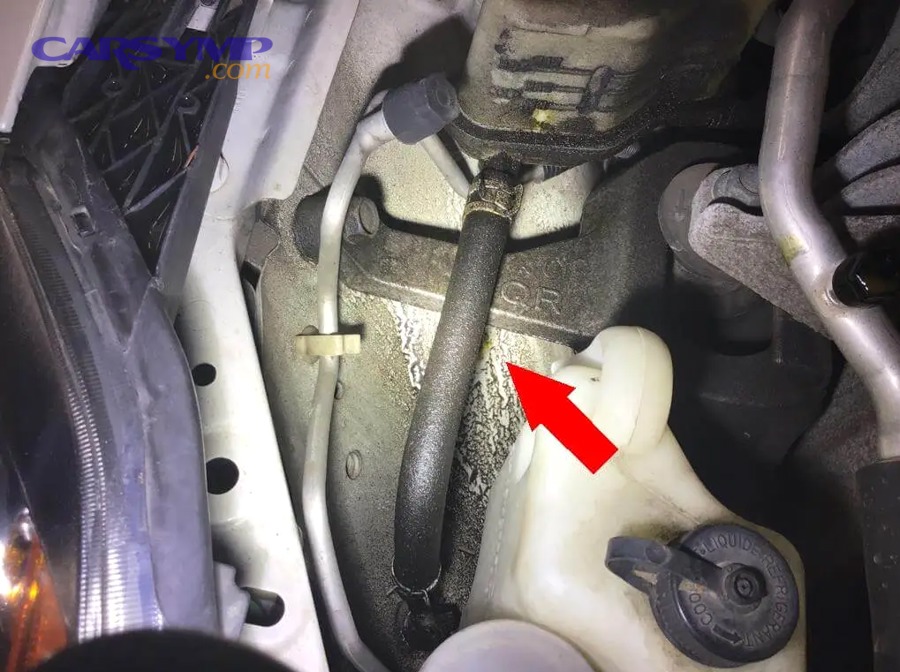
How Do Leak Symptoms Differ Between Rack, Pump, and Hose Failures?
Rack leaks produce fluid in bellows boots and stiff cold-start steering, pump leaks cause whining noises with drips below the pump, and hose leaks create spray patterns or wetness specifically at connection points and along hose paths.
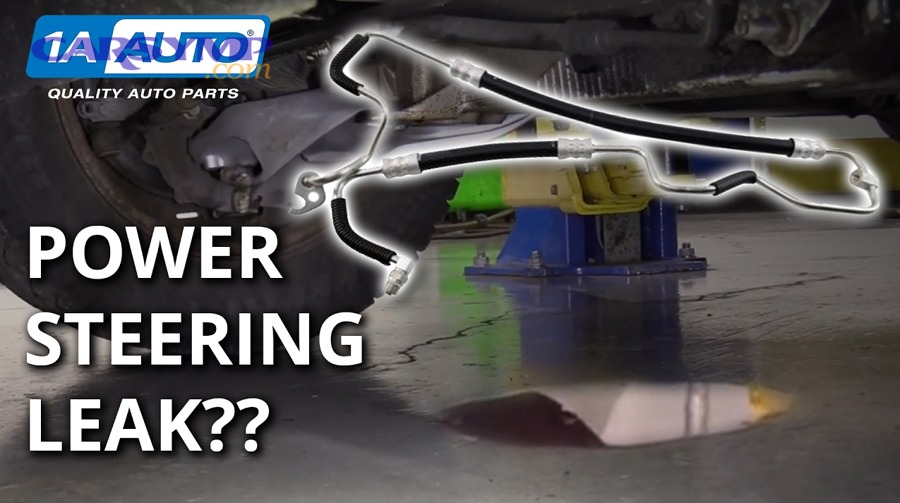
Recognizing these distinctive symptom patterns allows quick component identification without extensive testing. Understanding what each failure type looks and sounds like accelerates diagnosis significantly.
What Leak Patterns Indicate Each Component Type?
Pump leaks concentrate fluid directly below the pump assembly, typically appearing toward the front-center of the engine bay. When you place cardboard under the vehicle overnight, pump leak drips appear in a compact area roughly the size of a softball, located where the pump sits above. The fluid appears relatively clean if it’s a fresh leak, showing the characteristic red, pink, or amber color of power steering fluid. If you trace upward from this drip, you’ll find wetness on the pump body, particularly around the pulley shaft or on the reservoir seams.
Hose leaks create distinctively different patterns. A high-pressure hose rupture produces dramatic spraying that coats multiple components in a fan pattern radiating from the leak point. You’ll find fine droplets or mist on the engine block, inner fender, wiring harnesses, and other nearby parts. This widespread contamination makes the leak appear worse than it is in terms of volume, though it’s serious because high-pressure spray can create fire hazards if fluid contacts hot exhaust components. Low-pressure return hose leaks show as concentrated wetness along the hose path or puddles directly beneath the hose routing without the spray pattern.
Connection point leaks from threaded fittings produce wetness that appears to seep from the threads or fitting body. These leaks often create streaks running down from the connection point along the hose or component surface. The leak rate varies with system pressure—you might see bubbling at the connection during lock-to-lock testing that doesn’t appear when the vehicle sits idle. This pressure-dependent leakage confirms the connection as the source rather than contamination from somewhere else.
Rack leaks appear in the center-rear of the engine bay or underneath the vehicle near the wheel areas. Bellows boot contamination is the hallmark symptom—when you pull back the boots and find fluid inside, the rack end seals have failed. Unlike pump or hose leaks that drip externally, rack end seal leaks remain hidden inside these protective boots until the fluid volume exceeds the boot’s capacity and begins dripping out. Pinion shaft seal leaks create wetness on the rack body near the steering column connection, appearing as a wet spot on top or on the driver’s side of the rack housing.
The volume and rate of fluid loss also indicates component type. Pump shaft seal leaks typically produce slow but steady fluid loss—you might need to add a few ounces every week or two. Hose burst or connection failure causes rapid loss—the reservoir empties within minutes or hours. Rack end seal leaks fall in between, with slow weeps taking weeks to lower fluid levels while severe rack seal failure can drain significant fluid over a few days.
What Steering Performance Issues Point to Specific Components?
Pump failures announce themselves through distinctive noises that other components don’t produce. A high-pitched whining or squealing that varies with steering wheel speed indicates pump cavitation or internal wear. When the pump struggles to maintain pressure due to worn internal components or low fluid from leakage, it creates this characteristic sound. The whining intensifies when holding the wheel at full lock during parking maneuvers, as this creates maximum pressure demand on the pump. If you ignore pump whining and continue operating with low fluid, complete pump seizure can occur, resulting in sudden, total loss of power steering assist—a dangerous situation that makes the vehicle nearly impossible to steer at low speeds.
The belt squealing associated with pump shaft seal leaks differs from whining. Squealing occurs because leaked fluid contaminates the serpentine belt and pump pulley, reducing friction. You’ll hear this squealing most prominently during startup or when initially turning the wheel after the vehicle has been parked. The sound may temporarily decrease as the belt warms and gains traction, but it returns when the engine is cold. This symptom specifically implicates the pump shaft seal rather than other system components.
Hose leaks cause intermittent power steering assist, where steering feels normal sometimes and heavy other times. This inconsistency occurs because hose leaks often worsen under pressure—when you make a hard turn, the leak expands and fluid loss accelerates, temporarily reducing system pressure. As you straighten out and pressure decreases, the leak slows and assist partially returns. You might also smell burning oil, which happens when spraying power steering fluid contacts hot engine components like the exhaust manifold. This burning smell is distinctive and immediately suggests a pressurized spray from a hose rather than simple dripping.
Rack seal failure produces the “morning sickness” symptom described earlier—stiff, heavy steering when cold that progressively improves as you drive. This specific pattern indicates internal rack seals that shrink when cold and expand when warm. You won’t experience this with pump or hose failures; they cause consistent symptoms regardless of temperature. Additionally, rack failures may cause loose, wandering steering at highway speeds. When internal seals bypass, the rack can’t maintain firm pressure differentiation between chambers, allowing the steering to feel vague or requiring constant small corrections to maintain straight-line tracking.
Steering wheel position issues also point to the rack. If your steering wheel doesn’t self-center after turns, or if it returns very slowly to center, rack internal problems are likely. The hydraulic assist should help return the wheel to center after a turn; when this assist disappears due to internal bypassing, the wheel may stay off-center. Similarly, if one direction feels significantly heavier than the other (left turns easy, right turns hard, or vice versa), asymmetric rack seal failure or internal valve problems are probable.
The table below summarizes the diagnostic patterns for quick reference during your inspection:
| Component | Leak Location | Fluid Pattern | Sound Symptoms | Steering Feel | Temperature Behavior |
|---|---|---|---|---|---|
| Pump | Below pump, front of engine | Concentrated drip area | Whining/squealing | Progressive difficulty as fluid drops | Consistent |
| Hose | Along hose path, connections | Spray or seep pattern | Burning smell, no mechanical noise | Intermittent loss of assist | Consistent |
| Rack | Inside bellows boots, rack body | Hidden in boots or wet rack housing | Usually quiet | Stiff when cold, loose when warm | Temperature-dependent |
What Should You Do After Identifying the Leak Source?
After identifying your leak source, determine whether temporary measures like stop-leak additives will suffice, assess driving safety with the leak present, calculate repair costs against vehicle value, and implement preventive maintenance to avoid future failures.
Understanding your repair options and their implications helps you make informed decisions about timing and approach. Below we examine each consideration in detail.
Can You Temporarily Fix a Power Steering Leak or Must You Replace Parts?
Power steering stop-leak additives offer temporary solutions for minor seal weeps but cannot repair torn seals, cracked hoses, or failed connection gaskets, making them suitable only for buying time before proper mechanical repair. These chemical additives work by causing rubber seals to soften and swell slightly, which can help older, shrunken seals make better contact with their mating surfaces. The controlled swelling forces the seal material to press more tightly against metal surfaces, potentially slowing minor leakage.
Stop-leak products work best on rack end seal weeps and minor pump shaft seal seepage where the seal itself remains intact but has hardened with age. You simply pour the additive into the power steering reservoir according to package directions, run the engine, and cycle the steering lock-to-lock to circulate the chemical throughout the system. Results typically appear within 100-200 miles of driving as the additive reaches all seals and begins its swelling action. Leaks may slow noticeably or stop completely for weeks or even months.
However, stop-leak cannot repair mechanical damage. If a hose has cracked through its wall, no chemical will seal the rupture. If a threaded connection is loose or its O-ring has extruded out of position, swelling agents won’t help. If a pump shaft seal has torn rather than simply shrunk, additives won’t bridge the gap. Attempting stop-leak in these situations wastes money and delays necessary repairs. Additionally, some mechanics argue that stop-leak additives leave residue in the system that can clog sensitive valve passages or contaminate new components installed during eventual repair.
The key question is severity: a slow weep that requires topping off fluid every few weeks might respond to stop-leak, while an active drip demanding fluid additions every few days needs mechanical repair. Use stop-leak only as a temporary bridge—for example, if you’ve identified a rack seal weep but can’t afford rack replacement for two months, stop-leak might extend your timeline. Never view it as a permanent fix.
For threaded connections that weep, retightening represents another temporary measure. Using the correct wrench size, carefully tighten the fitting while someone else observes for leak stoppage. Turn in small increments—one-sixth turn at a time—checking after each adjustment. If the leak stops, you’ve achieved a temporary fix, though the underlying O-ring deterioration will likely cause recurrence. If you reach one full turn beyond the original position without stopping the leak, stop immediately; over-tightening will strip threads or crack the fitting, converting a minor leak into a major failure requiring line replacement.
Is It Safe to Drive with a Power Steering Leak?
Driving with a power steering fluid leak is technically possible but presents escalating safety risks as fluid levels drop, with the primary dangers being sudden steering loss during parking maneuvers, progressive pump damage from running dry, and potential fire hazards from fluid spraying onto hot exhaust components.
The immediate drivability impact depends on leak severity and remaining fluid level. A minor weep that drops fluid levels slowly over weeks allows continued driving if you monitor and maintain fluid levels religiously. Check the reservoir daily, top off as needed, and avoid situations requiring maximum steering effort like tight parking or low-speed maneuvering in confined spaces. Highway driving presents less risk because steering assist requirements decrease at speed; the mechanical connection between your steering wheel and the road wheels still functions even without hydraulic assist.
However, can you drive with a steering fluid leak when levels drop critically low? Absolutely not safely. When the pump runs dry, several problems cascade simultaneously. First, you lose all power assist, making the steering wheel extremely heavy and difficult to turn, particularly at parking lot speeds or when stopped. Second, the pump itself suffers damage—the hydraulic fluid lubricates internal pump components, and running dry causes metal-on-metal contact, accelerating wear and potentially seizing the pump. A seized pump can lock the serpentine belt, which may damage the belt tensioner or even snap the belt, causing loss of alternator and water pump function in addition to power steering.
Fire hazard escalates with high-pressure spray leaks. Power steering fluid is petroleum-based and flammable. When a high-pressure hose ruptures and sprays fluid onto the exhaust manifold, catalytic converter, or turbocharger—all components operating at 400-1,200°F—ignition becomes possible. Though rare, power steering fluid fires do occur, typically in older vehicles with deteriorated hoses routed near exhaust. If you smell burning oil or see smoke from under the hood, pull over immediately and shut off the engine.
For short-distance emergency driving (getting home from a parking lot, moving the car to a safe location), monitor fluid levels before starting and drive slowly, avoiding sharp turns and parking maneuvers if possible. Keep a bottle of correct power steering fluid in your vehicle for emergency top-offs. But understand that each drive with an active leak worsens the situation—fluid loss accelerates pump wear, which increases leakage, creating a degenerative cycle. Plan for repair as soon as possible rather than extending the temporary driving period.
Professional guidance varies, but most mechanics agree that driving more than a few days with an active leak is unwise. A slow weep might allow a week or two of careful driving while arranging repair appointments, but an active drip demands immediate attention. If you’re adding fluid daily to maintain levels, the leak has crossed into the severe category requiring urgent repair.
How Much Does It Cost to Repair Each Type of Power Steering Leak?
Power steering hose replacement costs $150-400 at professional shops including parts and labor, pump replacement runs $300-700 depending on vehicle make and pump accessibility, and rack replacement typically costs $600-1,500 due to labor intensity and mandatory post-repair alignment.
Hose repairs offer the most affordable option, especially if you tackle them yourself. A high-pressure hose costs $40-120 for the part alone, while a low-pressure return hose runs $20-50. Labor adds $100-280 depending on hose routing and accessibility. Some vehicles require removing other components to access hoses, increasing labor costs. If you have mechanical aptitude, hose replacement makes an excellent DIY project requiring basic tools—wrenches, a drain pan, and the correct replacement hose. Replacing steering hoses basics involves disconnecting the old hose at both ends, catching spilled fluid, and installing the new hose with fresh O-rings at threaded connections. Total DIY cost: $50-200 depending on whether you need one or both hoses.
Pump replacement increases costs due to part expense and labor complexity. A new power steering pump costs $120-300 for most vehicles, though luxury or specialty vehicles may require $400-600 pumps. Remanufactured pumps offer savings, typically running $80-200, but verify warranty coverage and the rebuilder’s reputation. Labor for pump replacement takes 1.5-3 hours depending on engine bay configuration, translating to $150-400 in shop charges at typical rates. The serpentine belt may need replacement simultaneously if fluid contamination has damaged it, adding $25-75. Total professional pump replacement: $300-700, or $150-350 DIY if you’re comfortable working on your engine.
Rack replacement represents the costliest repair because of intensive labor and mandatory alignment. A new steering rack costs $300-800 for most vehicles, with remanufactured units offering 30-40% savings at $200-500. Luxury and European vehicles may require $1,000+ racks. Labor dominates the cost equation—rack replacement takes 3-6 hours involving subframe lowering on many modern vehicles, extensive component removal, and precise installation. Shop labor charges add $300-700 to parts cost. Crucially, wheel alignment is mandatory after rack replacement because disconnecting tie rods disturbs alignment settings; alignment services cost $80-150. Total rack replacement at a shop: $600-1,500 for most vehicles, potentially reaching $2,000-2,500 for luxury or AWD vehicles with complex steering systems.
Some shops offer rack rebuilding services as an alternative to full replacement. Rebuilding involves removing your rack, disassembling it, replacing all internal seals and worn components, and reinstalling it. This approach costs $300-800 less than new rack installation, making it attractive for expensive racks. However, rebuilding quality varies significantly by shop, and warranty coverage typically provides shorter protection than new parts. If your rack has extensive internal wear or damaged housing, rebuilding won’t succeed.
Cost-benefit analysis should consider vehicle value and expected remaining service life. Spending $1,200 on rack replacement for a 15-year-old vehicle worth $3,000 may not make economic sense if other major repairs loom on the horizon. Conversely, a $600 rack replacement on a well-maintained 7-year-old vehicle worth $12,000 preserves value and safety. Discuss options with your mechanic, weighing repair costs against safe alternatives like trading the vehicle or selling it with disclosed issues.
How Can You Prevent Future Power Steering Leaks?
Preventing power steering leaks requires performing fluid flushes every 50,000 miles, using only manufacturer-specified fluid types, conducting visual inspections during routine maintenance, avoiding over-tightening at connection points, and protecting components from road debris and environmental contamination.
Fluid maintenance stands as the most effective preventive measure. Power steering fluid deteriorates over time, accumulating moisture, metal particles from component wear, and heat-degraded compounds that increase viscosity. This contaminated, thickened fluid accelerates seal wear and deposits varnish on internal components. Flushing removes old fluid and replaces it with fresh fluid that maintains proper viscosity and lubrication properties. The flush process involves either draining the system completely and refilling, or performing successive partial replacements where you remove fluid from the reservoir, refill it, run the engine, and repeat until the fluid appears fresh throughout.
Use precisely the fluid type specified in your owner’s manual. Power steering fluid formulations vary significantly—some vehicles require ATF (automatic transmission fluid), others need specific power steering fluid, and European vehicles often demand specialized mineral-based fluids. Using incorrect fluid causes seal swelling or shrinkage, changes system pressure characteristics, and may void warranties on remanufactured parts. The $8-15 cost difference between generic and correct fluid is insignificant compared to leak repair costs.
Visual inspections during routine maintenance catch problems early. Every oil change presents an opportunity to examine power steering components. While your vehicle is raised for oil draining, inspect hoses for cracks, soft spots, or age-hardening. Check connection points for wetness. Examine the rack bellows boots for damage or fluid. Look at the pump for shaft seal seepage. These five-minute inspections identify developing problems when they’re still minor weeps rather than active drips, allowing scheduled repair before roadside failure.
Proper tightening technique protects threaded connections. Some steering systems, particularly Ford models, intentionally design flex into hose connections to accommodate engine movement. Over-tightening eliminates this flex and transfers stress to the connection threads, causing stripping or cracking. When replacing hoses or servicing connections, tighten to manufacturer-specified torque values using a torque wrench. If specifications aren’t available, tighten until snug plus one-quarter turn—resist the urge to crank connections ultra-tight, as this creates future problems.
Environmental protection extends component life. Road salt, oil contamination, and heat accelerate hose and seal deterioration. If you live in northern climates with road salt, rinse your engine bay monthly during winter to remove salt buildup from steering components. Check that heat shields remain properly positioned between hoses and exhaust manifolds. Ensure battery acid hasn’t leaked onto the pump or reservoir—battery acid degrades rubber aggressively. These simple protective measures cost nothing but significantly extend power steering system lifespan.
According to a study by the Car Care Council analyzing 2,500 vehicles during inspection events, regular power steering fluid maintenance reduced leak incidents by 62% compared to vehicles that never received fluid service, demonstrating the effectiveness of preventive care.

Understanding how to diagnose power steering leaks empowers you to identify rack, pump, or hose failures through systematic inspection rather than expensive guesswork. The three-step diagnostic process—cleaning components, performing lock-to-lock pressure testing, and tracing fluid to its source—reveals leak locations with accuracy. Recognizing the distinctive symptoms each component produces allows quick identification: pumps whine and drip below the assembly, hoses spray at connections or along their path, and racks leak into bellows boots while exhibiting temperature-dependent stiffness. Armed with this knowledge, you can make informed repair decisions, communicate effectively with mechanics, and maintain your power steering system proactively to prevent future failures.