


Welding provides superior durability and permanent sealing for exhaust systems, while clamping offers flexibility and easier installation at lower upfront costs—your choice depends on whether you prioritize long-term permanence or reversible serviceability. For daily drivers expecting harsh conditions and minimal future modifications, welding delivers unmatched structural integrity and leak resistance. Conversely, vehicles requiring frequent exhaust changes, warranty preservation, or DIY-friendly repairs benefit substantially from quality clamp systems that allow disassembly without cutting torches.
Understanding the fundamental differences between these exhaust joining methods helps vehicle owners make informed repair decisions. Welding fuses metal permanently through high-temperature bonding, creating seamless joints that become integral pipe components. Clamping relies on mechanical compression using band clamps, V-bands, or U-bolt designs that secure slip-fit connections without altering the pipe material. Each approach carries distinct advantages in durability, cost structure, installation complexity, and future serviceability.
Cost considerations extend beyond initial material expenses to encompass labor rates, tool investments, and long-term maintenance requirements. Professional welding shops typically charge premium rates reflecting skilled labor and specialized equipment, while quality exhaust clamps range from budget-friendly U-bolts to expensive V-band systems. DIY enthusiasts face equipment barriers with welding—requiring MIG or TIG welders, safety gear, and skill development—whereas clamp installation demands only basic hand tools and pipe preparation knowledge.
Installation difficulty separates these methods dramatically for home mechanics and professional installers alike. Below, we’ll explore comprehensive comparisons covering durability metrics, cost breakdowns, decision frameworks, and technical considerations that determine which exhaust joining method suits your specific vehicle needs.
What Are the Key Differences Between Welding and Clamping Exhaust Systems?
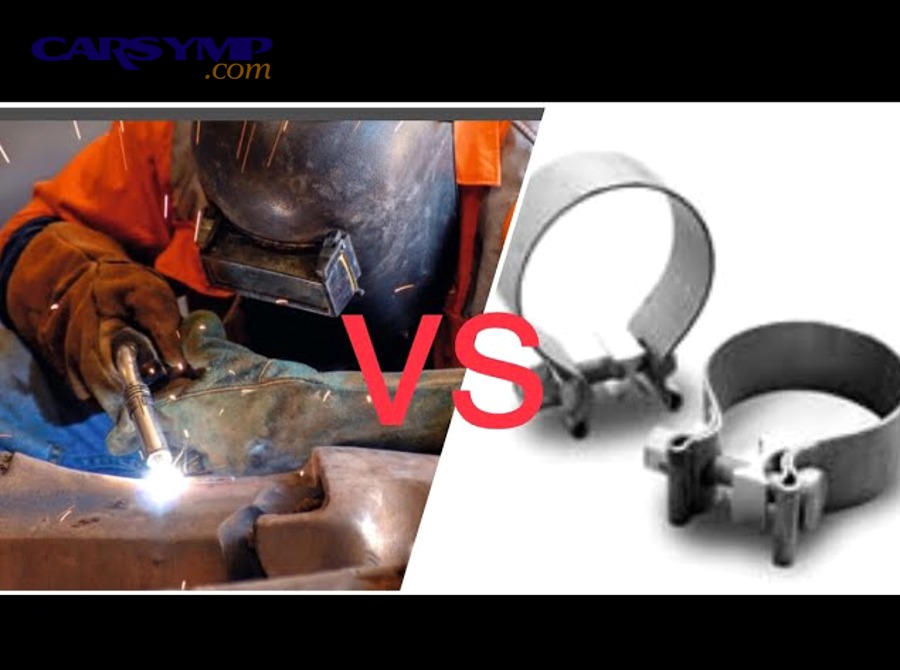
Welding creates permanent exhaust connections through metal fusion at high temperatures, forming molecular bonds that integrate joints into continuous pipe structures, while clamping uses mechanical fasteners like band clamps or V-bands to compress slip-fit joints without material alteration. The core distinction centers on permanence versus reversibility—welded systems become single unified components requiring cutting for disassembly, whereas clamped assemblies allow repeated separation with basic hand tools.
To better understand how these methods function in automotive applications, examining their operational principles reveals fundamental differences in construction and serviceability.
How Does Welding Create a Permanent Exhaust Connection?
Welding generates exhaust permanence by heating base metals beyond their melting points, allowing molten material to flow together and solidify into homogeneous joints. Metal inert gas (MIG) welding feeds consumable wire electrodes through shielding gas, creating molten puddles that fuse exhaust pipe edges as the welder moves along seams. Tungsten inert gas (TIG) welding uses non-consumable tungsten electrodes with separate filler rods, producing cleaner beads ideal for stainless steel exhaust components common in performance applications.
The metallurgical bonding process transforms two separate pipes into a single continuous structure. Heat-affected zones (HAZ) extend several millimeters from weld beads, where extreme temperatures alter grain structures in the base metal. Properly executed welds achieve strength exceeding the parent material, preventing joint failure under thermal cycling, vibration, and corrosive exhaust gas exposure. This molecular integration explains why welded exhausts resist loosening from road vibrations that plague inferior clamped installations.
Professional welders control heat input to prevent burn-through on thin-wall exhaust tubing, typically 18-gauge mild steel or thinner stainless alloys. Excessive heat creates warping, holes, or brittle welds prone to cracking. Conversely, insufficient heat produces cold welds with poor penetration that appear bonded but separate under stress. This technical precision requirement explains why exhaust welding demands skill development beyond beginner capabilities.
How Do Exhaust Clamps Secure Pipe Connections?
Exhaust clamps achieve secure connections through radial compression force applied around slip-fit joint perimeters, creating friction-based sealing without permanent deformation. Band clamps wrap stainless steel strips completely around pipe circumferences, distributing pressure evenly through tightening mechanisms—typically worm-drive screws or bolt assemblies. This 360-degree contact pattern prevents the pipe deformation and leak paths common in point-contact fasteners.
The slip-fit joint design requires one pipe end with expanded diameter sliding over another pipe’s standard outer diameter, creating overlapping sections typically 2-3 inches long. This overlap length distributes clamping loads across sufficient surface area to resist separation forces from thermal expansion, vibration, and exhaust pressure pulses. Quality installations ensure proper overlap depth before clamp installation—insufficient engagement causes joint separation under thermal cycling.
V-band clamps employ interlocking flanges welded to pipe ends, with V-profile bands compressing opposing flange faces together. The wedging action creates high contact pressure at the flange interface, forming gas-tight seals without crushing the exhaust tubing itself. Racing applications favor V-bands for their quick-release capability and superior sealing compared to conventional band clamps, though their higher cost limits mainstream adoption.
U-bolt clamps represent the most economical fastening option, using U-shaped threaded rods that pass through saddle plates on opposite pipe sides. Tightening nuts on the threaded ends draws the saddle plates together, compressing the pipe. However, this point-loading creates oval deformation that reduces seal quality and makes future disassembly difficult as crushed pipe sections resist separation. Mechanics increasingly recommend band clamps over U-bolts for installations prioritizing longevity and serviceability.
Which Method Is More Durable: Welding or Clamping?
Welding delivers superior long-term durability through permanent molecular bonding that eliminates moving parts, loose fasteners, and compression-dependent sealing, making welded joints the most reliable choice for vehicles facing harsh environments, high mileage, and minimal future modifications. However, properly installed quality clamps using stainless band designs provide comparable service life for most applications when maintained correctly.
Examining specific durability advantages reveals why each method excels in different operational contexts and failure mode patterns.
What Are the Durability Advantages of Welded Exhaust Systems?
Welded exhaust systems eliminate mechanical failure points inherent in clamped assemblies—no fasteners loosen from vibration, no compression seals degrade from thermal cycling, and no corrosion occurs at clamp-pipe interfaces. The monolithic structure distributes stress uniformly across joints rather than concentrating loads at discrete fastener locations. This stress distribution pattern prevents the fatigue cracking that eventually develops around bolt holes and clamp contact zones.
Seal integrity remains constant throughout a welded system’s service life because molecular bonding creates hermetic barriers impervious to pressure differentials and temperature fluctuations. Exhaust gases cannot escape through properly executed weld beads, whereas clamped joints rely on maintained compression force to prevent leak paths. As vehicles age and experience countless thermal expansion cycles, clamped connections may develop microscopic gaps allowing exhaust leakage—welded joints simply cannot develop such defects without catastrophic structural failure.
Vibration resistance represents welding’s most significant durability advantage in automotive applications. Modern vehicles transmit substantial vibration from engine operation, road irregularities, and exhaust pulse waves throughout the exhaust system. Welded joints flex as unified structures, while clamped connections experience micro-movements between separate components. Over hundreds of thousands of vibration cycles, even minimal relative motion at clamped interfaces causes fretting wear and eventual loosening.
Road salt exposure in northern climates accelerates clamped system degradation through galvanic corrosion at dissimilar metal interfaces and fastener thread seizure. Stainless steel clamps contacting mild steel pipes create electrochemical cells that promote rapid corrosion in salt-contaminated moisture. Welded systems using compatible base and filler metals avoid this galvanic couple, though HAZ corrosion can occur with poor welding practices or dissimilar metal combinations.
Can Exhaust Clamps Provide Long-Term Reliability?
Quality exhaust clamps deliver reliable long-term performance when properly selected, correctly installed, and periodically inspected—matching welded system longevity in applications avoiding extreme conditions. Stainless steel band clamps resist corrosion effectively, maintain consistent clamping force through thermal cycling, and distribute loads evenly to prevent pipe deformation. Multiple forum discussions document band-clamped exhausts operating leak-free for 5-10 years on daily driven vehicles.
The critical distinction separating successful clamped installations from premature failures centers on clamp quality and installation technique. Premium band clamps manufactured from 304 or 316 stainless steel with continuous weld seams provide corrosion resistance and mechanical strength matching OEM specifications. These quality components cost significantly more than hardware store U-bolt clamps but justify premium pricing through extended service life and superior sealing.
Installation technique determines whether clamps achieve their design potential or fail prematurely. Proper pipe preparation includes cleaning mating surfaces, ensuring adequate overlap depth, and applying anti-seize compound to prevent thread seizure during future maintenance. Torque specifications matter—insufficient tightening allows leakage and vibration-induced loosening, while excessive torque crushes pipes or strips threads. Mechanics recommend checking clamp tightness after initial heat cycling, typically within the first 50-100 miles of operation.
Maintenance requirements represent clamped systems’ primary disadvantage compared to welded installations. Periodic inspection intervals checking for loose fasteners, corrosion development, and leak formation add ongoing attention requirements absent from welded assemblies. Vehicle owners comfortable with basic mechanical tasks view this inspection requirement as minimal inconvenience, while those preferring hands-off maintenance favor welding’s install-and-forget nature.
Environmental operating conditions dramatically influence clamped system longevity. Vehicles in dry climates with minimal road salt exposure see extended clamp life matching welded equivalents. Conversely, harsh winter environments with heavy salt application accelerate corrosion and fastener degradation, reducing service intervals. Off-road vehicles experiencing severe vibration and impact loading stress clamped connections more than highway-driven cars, potentially justifying welding despite higher initial costs.
What Are the Cost Differences Between Welding and Clamping?
Welding costs $150-400 for professional installation depending on system complexity and regional labor rates, while quality clamp systems range from $35-150 in materials with minimal DIY labor or $50-150 professional installation, making clamping initially cheaper but potentially requiring periodic replacement versus welding’s one-time permanent expense. The total cost analysis must account for equipment investments, skill development time, and long-term maintenance expenses beyond simple material price comparisons.
Understanding detailed cost structures for each method helps vehicle owners make financially informed decisions aligned with their budgets and mechanical capabilities.
How Much Does It Cost to Weld an Exhaust System?
Professional exhaust welding shops charge $80-150 per hour for skilled labor, with typical muffler installations requiring 1-2 hours totaling $150-300 depending on access difficulty and pipe modifications needed. Complex custom exhaust fabrication involving multiple cuts, bends, and welds can exceed $400-600 for complete cat-back systems. These labor rates reflect specialized equipment overhead, liability insurance, ventilation requirements, and certified welder wages justifying premium pricing compared to general automotive repair.
Geographic location significantly impacts welding costs—metropolitan areas with higher living expenses command premium rates reaching $200+ hourly, while rural shops may charge $60-100 for equivalent work. Mobile welding services add convenience premiums of $50-100 beyond shop rates but eliminate towing expenses for immobile vehicles. Requesting quotes from multiple local shops reveals typical regional pricing and identifies outliers charging excessive rates.
DIY welding equipment represents substantial upfront investment for vehicle owners lacking existing capabilities. Entry-level MIG welders suitable for automotive exhaust work cost $300-600, while quality machines delivering consistent performance range $800-1500. TIG welders for stainless steel applications start around $600 and extend beyond $2000 for professional-grade units. Additional expenditures include welding helmets ($50-200), safety equipment ($50-100), consumables like welding wire and shielding gas ($50-100 initially), and practice materials ($50+).
The skill development investment often exceeds equipment costs for beginners attempting exhaust welding. Thin-wall exhaust tubing challenges novice welders due to burn-through risk and warping tendencies—mastering proper heat control requires extensive practice on scrap materials before attempting actual vehicle repairs. Professional welding courses cost $200-800 and accelerate learning beyond trial-and-error approaches, though online tutorials provide free alternatives for patient learners.
Material costs remain minimal for welding—filler wire, shielding gas, and consumables typically add $20-50 to project expenses. However, mistakes destroying exhaust components through burn-through or excessive warping create hidden costs as damaged pipes require replacement. This failure risk explains why many DIY enthusiasts choose professional welding despite owning capable equipment.
How Much Do Exhaust Clamps and Installation Cost?
Quality stainless steel band clamps cost $10-25 each depending on diameter and brand, with typical muffler installations requiring 2-4 clamps totaling $20-100 in materials. Premium V-band clamp systems including flanges and bands range $40-80 per connection point, justifying higher costs through superior sealing and quick-release convenience. Budget U-bolt clamps available at hardware stores cost $3-8 each but deliver questionable long-term reliability compared to band designs.
Professional installation services for clamped exhaust systems charge $50-150 depending on complexity—significantly less than welding due to faster installation times and lower skill requirements. Many muffler shops actually charge premium rates for clamped installations compared to welding, as custom shops prefer permanent welded work over bolt-together assemblies. Chain muffler outlets and franchise operations commonly use clamped systems exclusively, reflecting their business model favoring rapid installation and parts replacement revenue.
DIY clamped installation costs remain minimal beyond clamp purchases—basic hand tools including ratchets, sockets, and pipe expanders suffice for most projects. Harbor Freight pipe expanders cost $30-50 and enable tight slip-fit connections essential for quality clamp installations. Anti-seize compound ($8-15) prevents fastener seizure during future maintenance. Total DIY investment rarely exceeds $150 including quality clamps and basic tools, representing 25-40% of professional welding costs.
Long-term cost analysis must consider replacement intervals for clamped systems. Quality installations in favorable environments may never require clamp replacement, matching welded system economics. However, harsh operating conditions or budget clamp selections could necessitate replacement every 3-5 years at $50-100 per service interval. Over a 15-year vehicle ownership period, multiple clamp replacements potentially exceed a single welding expense, though this calculation assumes clamp failure rather than whole exhaust component replacement driving service needs.
The cost-effectiveness determination ultimately depends on individual circumstances—vehicles driven extensively in harsh climates with long-term ownership intentions favor welding’s permanent solution, while short-term ownership, frequent modifications, or budget constraints make clamping financially sensible. Neither method universally wins the cost comparison across all use cases.
Should You Choose Welding or Clamping for Your Exhaust Repair?
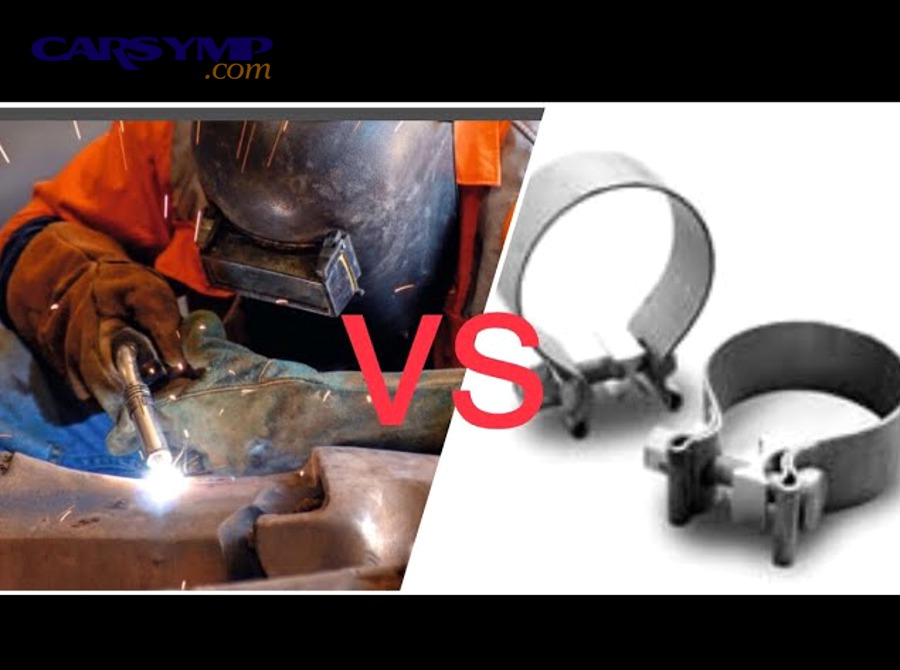
Choose welding for permanent daily driver installations prioritizing maximum durability and leak-free operation in harsh environments, while selecting clamps for trial installations, frequent modifications, DIY-friendly repairs, or situations requiring future disassembly without cutting tools. The optimal method depends on specific factors including ownership duration, modification frequency, operating environment, budget constraints, and available installation capabilities.
Applying a structured decision framework helps match repair methods to individual vehicle circumstances and owner priorities.
When Is Welding the Better Choice for Exhaust Work?
Welding excels for long-term vehicle ownership scenarios where exhaust system permanence provides maximum value. Owners planning to keep vehicles beyond 100,000 additional miles benefit from welding’s superior durability and elimination of periodic clamp maintenance. The permanent installation prevents future loosening, leakage, and replacement costs that may accumulate over extended service periods, justifying higher upfront investment through lifecycle cost reduction.
Daily drivers operating in harsh winter climates with road salt exposure gain substantial advantages from welded exhaust systems. The corrosion resistance of properly executed welds using compatible materials outperforms clamped connections vulnerable to galvanic corrosion and fastener degradation. Vehicles stored outdoors or driven in coastal salt-air environments similarly benefit from welding’s elimination of clamp-specific corrosion pathways.
High-performance applications demanding absolute reliability and minimal restriction favor welded construction. Racing vehicles cannot tolerate mid-event exhaust failures from loosened clamps, and enthusiasts optimizing every performance parameter prefer welding’s seamless flow characteristics. Track day participants, autocross competitors, and performance street cars benefit from welding’s vibration resistance under high-RPM operation and aggressive driving conditions.
Aesthetic considerations influence some vehicle owners toward welding for its clean, professional appearance. Welded joints create smooth transitions between exhaust components without visible clamp hardware, appealing to show car builders and enthusiasts valuing visual presentation. While purely cosmetic, this appearance factor matters to owners investing significantly in vehicle aesthetics and seeking factory-quality finishes.
Warranty preservation occasionally requires welded exhaust repairs when replacing failed OEM components. Some manufacturer warranty terms specify approved repair methods, and welding may satisfy these requirements where aftermarket clamped assemblies void coverage. Consulting dealer service departments clarifies whether repair method choices affect remaining warranty protection.
When Should You Use Clamps Instead of Welding?
Clamps provide optimal solutions when testing new muffler selections before permanent installation commitment. Enthusiasts uncertain whether a specific muffler delivers desired sound characteristics install systems using clamps, evaluate performance over several weeks, then either commit permanently through welding or swap alternatives. This trial-and-error approach prevents costly mistakes from welding incompatible components that require cutting removal.
Frequent modification scenarios make clamping essential for vehicles serving as experimental platforms. Off-road enthusiasts regularly replacing damaged exhaust sections, tuners testing various configurations for performance optimization, and racers switching between street and track setups all benefit from clamp-enabled disassembly. The labor savings from bolt-on changes versus cutting and rewelding quickly justify premium clamp investments.
DIY installation capabilities favor clamped systems for mechanically inclined owners lacking welding equipment or skills. The hand-tool-only requirement makes exhaust repair accessible to home mechanics with basic automotive maintenance experience. Successfully installing quality clamped systems builds confidence and saves $200-400 in professional labor while providing equivalent functionality to welded assemblies in most applications.
Warranty considerations sometimes mandate reversible modifications to preserve coverage. Manufacturers may void powertrain warranties when detecting aftermarket exhaust modifications, creating incentives for removable clamped systems enabling quick restoration to stock configuration before dealer service visits. This reversibility also benefits lease vehicle operators facing end-of-term inspections requiring OEM component restoration.
Budget constraints often determine repair method selection when financial resources limit available options. The $35-100 total cost for quality DIY clamped installations fits tight budgets better than $300+ professional welding expenses. While welding may provide superior long-term value, immediate affordability takes priority when facing unexpected exhaust failures on limited budgets.
Temporary vehicles approaching end-of-life don’t justify permanent welding investments. Owners planning vehicle replacement within 12-24 months benefit from inexpensive clamped repairs maintaining functionality until disposal rather than investing in welding that won’t provide sufficient service life to recover costs. Similarly, vehicles with extensive rust or mechanical issues limiting longevity make temporary clamped repairs economically sensible.
Can You Install Exhaust Clamps Yourself, or Do You Need Welding?
Installing exhaust clamps yourself requires only basic hand tools, proper pipe preparation, and careful attention to overlap depth and torque specifications, making DIY completion feasible for most mechanically inclined vehicle owners, while exhaust welding demands specialized equipment costing $500-2000, significant skill development, and safety training typically beyond novice capabilities. The installation difficulty gap between methods explains why home mechanics overwhelmingly favor clamping for independent exhaust repairs.
Comparing specific tool requirements, skill demands, and common pitfalls helps vehicle owners realistically assess their DIY capabilities for each method.
What Tools and Skills Do You Need to Weld Exhaust Pipes?
Exhaust welding requires MIG or TIG welding machines capable of controlled heat output for thin-wall metal fabrication, with quality automotive-suitable units starting around $600 and professional-grade equipment exceeding $2000. MIG welders offer easier learning curves for beginners through wire-feed automation and forgiving arc characteristics, while TIG welders provide superior control for stainless steel exhaust components common in performance applications. Both machine types demand dedicated 220-volt electrical circuits unavailable in many residential garages, potentially adding $200-500 electrical upgrade costs.
Safety equipment represents mandatory investments beyond the welder itself. Auto-darkening welding helmets ($50-200) protect vision from intense UV radiation and molten metal splatter while automatically adjusting shade levels for different welding processes. Leather welding gloves ($15-40), flame-resistant jackets ($30-80), and steel-toed boots ($60-150) prevent burns from spatter and radiant heat. Adequate ventilation through exhaust fans or outdoor work locations removes toxic fumes generated by burning paint, galvanizing, and flux coatings on exhaust components.
The skill development timeline for competent exhaust welding extends 20-50 hours of practice before attempting actual vehicle repairs. Thin-wall exhaust tubing presents challenges including burn-through risk, warping from excessive heat input, and incomplete penetration from insufficient amperage. Beginners must master travel speed, electrode angle, arc length maintenance, and heat control before producing structural welds meeting safety and durability requirements. Professional welding courses accelerate this learning curve but add $200-800 to total project costs.
Common DIY welding mistakes include burn-through holes requiring pipe replacement, excessive heat warping creating misalignment issues, poor penetration producing weak joints prone to cracking, and insufficient shielding gas coverage causing porosity defects. These errors often destroy exhaust components, forcing expensive replacements that eliminate any cost savings from DIY approaches. The risk-reward calculation favors professional welding for single-project vehicle owners lacking extensive welding backgrounds.
Diagnosing rattles from resonator internals or addressing Resonator failure symptoms through welded repairs demands additional diagnostic skills beyond basic welding technique. Choosing aftermarket resonators for sound characteristics then permanently installing them through welding creates irreversible commitments that may disappoint if acoustic results differ from expectations. These resonator-specific considerations add complexity to welding projects involving more than simple pipe repairs.
How Easy Is It to Install Exhaust Clamps as a DIY Project?
Exhaust clamp installation requires only basic ratchets, sockets, and cutting tools available in most home tool collections, making DIY completion accessible to anyone capable of changing oil or rotating tires. A 9/16-inch socket handles most clamp fasteners, while hacksaw or reciprocating saw removes damaged exhaust sections. The entire tool investment for first-time DIY installers rarely exceeds $50 assuming basic hand tool ownership.
The step-by-step installation process follows straightforward mechanical procedures requiring care but no specialized skills. First, support the vehicle securely on jack stands and remove damaged exhaust sections through clamp loosening or cutting rusted joints. Second, measure remaining pipe ends and new components to determine required overlap and ensure proper fit before final assembly. Third, clean pipe surfaces with wire brush or sandpaper, removing rust and corrosion that prevents proper sealing. Fourth, apply anti-seize compound to clamp threads preventing future seizure, then slide new components into position checking alignment and overlap depth.
Pipe preparation represents the most critical installation step determining long-term success. Proper slip-fit joints require one pipe end expanded slightly to accept another pipe’s outer diameter with 2-3 inches overlap. Harbor Freight pipe expanders ($30-50) provide controlled expansion avoiding the oval deformation created by hammer-and-drift improvisation. Alternatively, notching the outer pipe’s end with 4-6 equally spaced 1-inch cuts allows compression around the inner pipe when clamps tighten, creating effective seals without specialized expansion tools.
Common installation mistakes include insufficient overlap causing joint separation under thermal expansion, misalignment creating stress concentrations and exhaust leaks, and improper torque application either crushing pipes or leaving connections loose. Following manufacturer torque specifications—typically 30-40 ft-lbs for band clamps—prevents these errors. Experienced mechanics recommend hand-tightening initially, driving the vehicle through heat cycles, then rechecking torque after cooling to account for thermal settling.
Quality control verification involves visual inspection of clamp positioning, checking alignment through exhaust hanger observation, and leak testing using shop vacuum blower mode connected to the tailpipe with soapy water sprayed at joints. Proper installations show no bubbles indicating escaping air, confirm centered clamp positioning over overlap zones, and display straight pipe routing without visible stress from misalignment. These simple checks prevent premature failures from installation errors.
resonator replacement projects using clamped installation avoid permanent commitments while testing sound characteristics. Vehicle owners uncertain about aftermarket resonators for sound can install trial units, evaluate acoustic results over several weeks, then commit permanently through welding or swap alternatives if disappointed. This flexibility represents clamping’s primary advantage over welding for modification-prone vehicles.
What Are the Different Types of Exhaust Clamps and When Should You Use Each?
The four main exhaust clamp types include band clamps offering even 360-degree pressure distribution, V-band clamps providing quick-release professional-grade sealing, guillotine clamps replicating factory saddle designs, and U-bolt clamps delivering budget-friendly point compression, each excelling in specific applications based on sealing quality, ease of removal, and cost considerations. Selecting appropriate clamp designs for particular exhaust repairs dramatically impacts installation success, long-term reliability, and serviceability.
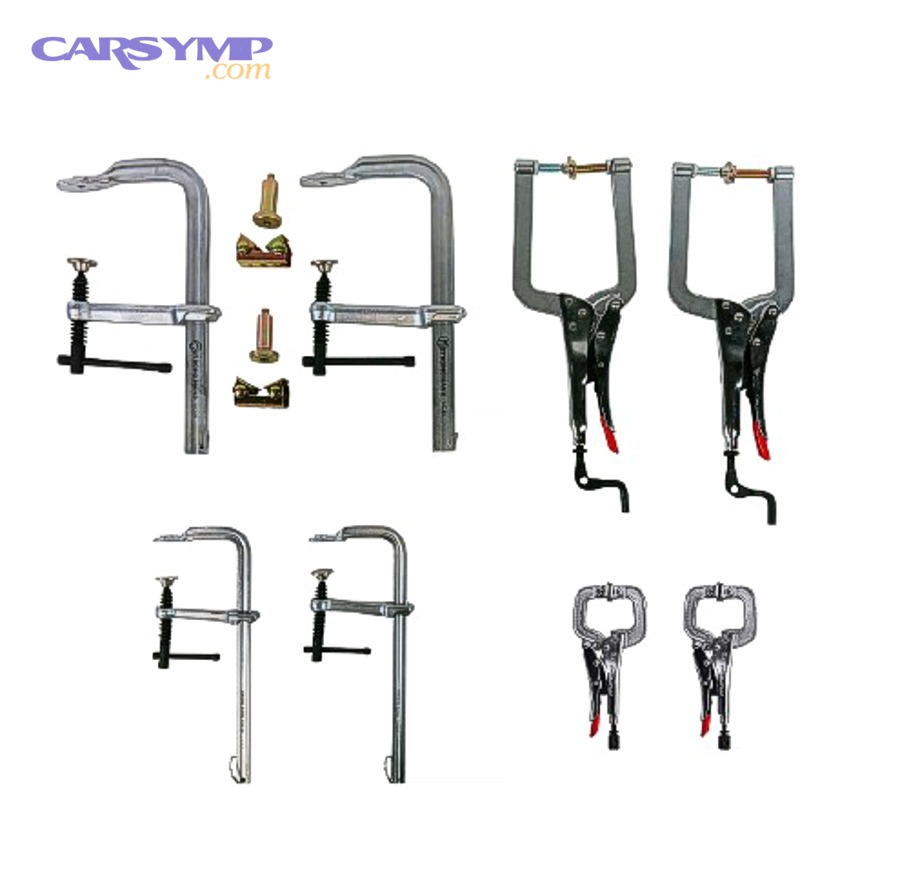
Understanding each clamp type’s mechanical principles, advantages, limitations, and ideal use cases enables informed selection matching repair requirements to component capabilities.
What Are Band Clamps and Why Are They Popular?
Band clamps wrap continuous stainless steel strips completely around pipe circumferences, distributing clamping force evenly through 360-degree contact that prevents the pipe deformation and leak paths inherent in point-contact designs. The full-circle engagement creates uniform radial compression maintaining consistent sealing pressure across the entire joint perimeter. This design characteristic explains why band clamps deliver superior leak resistance compared to alternative fastening methods concentrating loads at discrete points.
Stainless steel construction provides excellent corrosion resistance in harsh automotive environments, maintaining clamping force integrity through years of road salt exposure, moisture cycling, and high-temperature operation. Quality band clamps manufactured from 304 or 316 stainless steel resist rust formation that eventually seizes carbon steel fasteners, ensuring removability for future maintenance. The material selection justifies premium pricing over mild steel alternatives prone to rapid degradation.
Installation advantages include minimal pipe deformation preserving disassembly capability and reduced torque sensitivity compared to U-bolt designs. Band clamps tighten gradually as worm-drive screws or bolts draw band ends together, allowing precise pressure adjustment without sudden crushing that damages thin-wall tubing. This forgiving tightening characteristic makes band clamps ideal for DIY installations where precise torque control may challenge inexperienced mechanics.
The primary limitation centers on cost—quality band clamps retail $10-25 each versus $3-8 for equivalent-diameter U-bolts. However, the longevity and performance advantages typically justify the 3-5x price premium for installations prioritizing quality over minimum cost. Mechanics recommend band clamps for all permanent clamped installations where budget permits, reserving cheaper alternatives only for temporary emergency repairs.
How Do V-Band Clamps Differ from Standard Band Clamps?
V-band clamps employ interlocking flange pairs welded to pipe ends, with V-profile metal bands compressing opposing flange faces together through wedging action that creates high contact pressure and gas-tight sealing without crushing exhaust tubing. The flange-based design separates clamping function from pipe compression, eliminating deformation entirely while enabling rapid disassembly through simple band release—a critical advantage for racing applications requiring frequent exhaust removal.
The mechanical advantage of V-profile geometry amplifies applied torque through wedge effects, achieving sealing pressures far exceeding band clamp capabilities at equivalent tightening forces. This pressure multiplication enables reliable sealing even with minimal fastener torque, reducing installation effort while improving leak resistance. The flange faces contact over large surface areas rather than narrow band widths, distributing loads that resist vibration-induced loosening better than conventional designs.
Performance and racing applications favor V-bands for their quick-release capability enabling exhaust removal in under one minute per connection—essential for track day participants accessing components behind exhaust routing or race teams performing rapid repairs between events. The tool-free or minimal-tool requirements contrast sharply with conventional clamps demanding socket sets and careful tightening procedures. This serviceability advantage justifies V-band premium pricing in applications valuing maintenance speed.
Cost represents V-band’s primary adoption barrier—complete systems including flanges and bands range $40-80 per connection point versus $10-25 for quality band clamps. The permanent flange welding requirement also creates installation complications, as DIY installers without welding capabilities must hire professionals to attach flanges before enjoying bolt-together convenience. These factors limit V-band usage primarily to enthusiast and professional applications where performance and serviceability justify additional expense.
When Should You Avoid U-Bolt Clamps?
U-bolt clamps concentrate clamping loads at two discrete saddle points on opposite pipe sides, creating substantial local compression that deforms circular pipes into oval cross-sections reducing sealing effectiveness and complicating future disassembly. The point-loading pattern creates stress concentrations potentially initiating fatigue cracks in thin-wall exhaust tubing subjected to thermal cycling and vibration. This mechanical disadvantage explains why automotive professionals increasingly recommend band clamps despite U-bolt cost advantages.
Pipe deformation from U-bolt compression makes joints extremely difficult to separate during future maintenance, as crushed sections resist sliding apart even after clamp removal. Mechanics often resort to cutting deformed pipes rather than attempting separation, eliminating reusability and increasing repair costs. The permanent deformation effectively converts supposedly reversible clamped connections into destructive assemblies matching welded systems’ service difficulty.
Budget applications where minimum cost takes absolute priority over performance and longevity represent U-bolt’s remaining viable use cases. Emergency roadside repairs, temporary fixes on vehicles approaching end-of-life, or extremely constrained budgets may justify U-bolt selection despite their limitations. The $3-8 per-clamp cost enables exhaust functionality restoration when alternatives exceed available resources.
Quality concerns plague U-bolt clamp selection as hardware stores stock poorly-manufactured versions using thin stamped saddles, undersized U-bolts, and low-grade steel prone to corrosion and thread stripping. Even when properly manufactured, the fundamental design limitations prevent U-bolts from matching band clamp performance. Mechanics universally recommend avoiding U-bolts for any installation intended to exceed 12-month service life.
What Are Guillotine Clamps and Are They Better Than Other Types?
Guillotine clamps replicate factory-style saddle designs using formed metal channels that wrap approximately 270 degrees around pipe circumferences, secured by bolt assemblies drawing opposing channel ends together. The extended contact arc distributes loads more evenly than U-bolt point compression while avoiding band clamp costs, creating middle-ground solutions balancing performance and economy. OEM manufacturers favor guillotine designs for production exhaust assembly, validating their reliability in automotive applications.
The saddle channel design contacts pipes over substantial circumferential and longitudinal areas rather than U-bolt point compression, reducing deformation while maintaining adequate sealing pressure. Quality guillotine clamps achieve near-band-clamp performance at lower costs, though they remain more expensive than basic U-bolts. The partial-wrap geometry permits easier pipe insertion compared to full-circle bands, simplifying installation in confined spaces where complete circumferential access proves difficult.
Torque specifications matter critically for guillotine clamps, as the bolted assembly requires precise tightening achieving adequate compression without crushing. Manufacturers specify 25-35 ft-lb ranges for most sizes—tighter than band clamps but lower than U-bolt installations. Following specifications prevents both insufficient sealing from under-tightening and pipe damage from excessive torque.
Aftermarket guillotine clamps replacing failed OEM components must match original specifications including saddle width, bolt grade, and material finish. Generic replacements may fit dimensionally while providing inferior sealing or durability compared to OEM parts. Mechanics recommend sourcing guillotine clamps from reputable exhaust component suppliers rather than general hardware sources to ensure automotive-appropriate quality.
How Does Material Compatibility Affect Welding vs Clamping Decisions?
Material compatibility determines whether exhaust joining methods will survive long-term thermal cycling and corrosive environments, with dissimilar metal combinations requiring either specialized welding procedures using compatible filler materials or isolation strategies that make clamping more reliable than potentially problematic welds. Modern exhaust systems frequently mix stainless steel performance components with mild steel OEM piping, creating compatibility challenges that significantly impact repair method selection.
Understanding metallurgical interactions between common exhaust materials helps predict which joining approaches will provide durable, corrosion-resistant connections.
Can You Weld Stainless Steel Exhaust to Mild Steel Pipes?
Welding stainless steel to mild steel succeeds when using appropriate filler metals formulated for dissimilar metal joining, typically 309L stainless electrodes or ER309L TIG rods that create intermediate compositions resisting cracking and corrosion at the fusion zone. The filler metal must accommodate differing thermal expansion rates, melting points, and chemical compositions between base materials while providing corrosion resistance matching the more noble stainless steel component.
TIG welding offers superior control for stainless-to-mild-steel joints through precise heat input management and contamination-free shielding, producing cleaner welds with better penetration control than MIG processes. The non-consumable tungsten electrode and separate filler rod enable independent control of heat and metal deposition, preventing the dilution issues that compromise MIG welds when base metals mix unevenly. However, TIG’s slower speed and higher skill requirements limit adoption among DIY welders favoring MIG’s ease of use.
MIG welding can successfully join stainless to mild steel using 308L or 309L wire with appropriate shielding gas—typically 90% argon / 10% CO2 blends—though results prove more sensitive to technique variations than TIG. The consumable wire electrode continuously feeds through the molten puddle, creating potential for inadequate fusion if travel speeds exceed proper penetration rates. Practice on scrap materials before attempting actual exhaust repairs prevents costly mistakes destroying components.
Galvanic corrosion concerns arise when welding creates electrical contact between dissimilar metals with different electrochemical potentials. Stainless steel’s higher nobility compared to mild steel establishes corrosive couples in moisture presence, with the less noble mild steel corroding preferentially. Using 309L filler creates intermediate-composition weld beads that minimize potential differences, though heat-affected zones in the mild steel base metal remain vulnerable. Coating welds with high-temperature paint provides additional corrosion protection in harsh environments.
The practical reality finds many professional exhaust shops successfully welding stainless aftermarket components to factory mild steel pipes using standard automotive MIG welders with minimal special procedures beyond proper filler selection. While metallurgical purists identify potential failure mechanisms, real-world durability often exceeds theoretical concerns when welders follow basic best practices. This pragmatic approach explains why millions of mixed-material exhaust systems operate reliably despite dissimilar metal joining.
Do Clamps Work Better for Mixed Material Exhaust Systems?
Clamps provide superior reliability for mixed-material exhaust assemblies by eliminating heat-affected zones where welding alters base metal properties and creating mechanical joints that accommodate thermal expansion rate differences between stainless steel and mild steel components. The physical separation maintained by slip-fit joints prevents galvanic couples from forming at component interfaces, as no electrical contact exists between dissimilar metals beyond minimal friction at overlapping surfaces.
Thermal expansion coefficients differ approximately 20% between austenitic stainless steels (17-18 × 10⁻⁶/°C) and mild carbon steels (11-13 × 10⁻⁶/°C), creating differential movement during heating and cooling cycles. Welded joints must accommodate this mismatch through elastic and plastic deformation, potentially inducing stress concentrations that initiate cracks over thousands of thermal cycles. Clamped slip-fit connections permit relative movement between components, relieving thermal stress that would otherwise accumulate in rigid welded assemblies.
Heat-affected zone degradation from welding operations represents a significant concern when joining corrosion-resistant stainless exhaust components to uncoated mild steel pipes. The intense localized heating during welding destroys protective chromium oxide layers in stainless steel HAZs while annealing mild steel grain structures, creating zones of increased corrosion susceptibility. Clamping avoids these metallurgical changes entirely, preserving base material properties throughout joined components.
Galvanic corrosion prevention through clamping requires attention to isolation principles—stainless clamps should incorporate rubber or plastic insulators when securing mixed-material joints, preventing direct metal-to-metal contact that establishes corrosive electrical paths. Anti-seize compounds applied to slip-fit interfaces further reduce galvanic couple formation while providing lubrication for thermal movement. These simple precautions enable clamped mixed-material exhausts to exceed welded assembly longevity in corrosive environments.
The installation simplicity and reversibility of clamped mixed-material joints particularly benefits vehicles with partial stainless exhaust upgrades, where enthusiasts replace specific components while retaining factory mild steel sections. Testing compatibility and fit before committing to permanent welding prevents expensive mistakes, and future modifications remain straightforward rather than requiring cutting and refabrication.
What Are the Pros and Cons of Welded Flanges vs Direct Welding?
Welded flange systems combine welding’s permanent flange attachment with bolt-together flexibility between major exhaust sections, providing modular serviceability for long-term installations while maintaining superior sealing compared to conventional slip-fit clamps, though they cost 50-100% more than direct welding or standard clamping. This hybrid approach particularly benefits performance vehicles requiring frequent component access while maintaining race-quality leak-free connections.
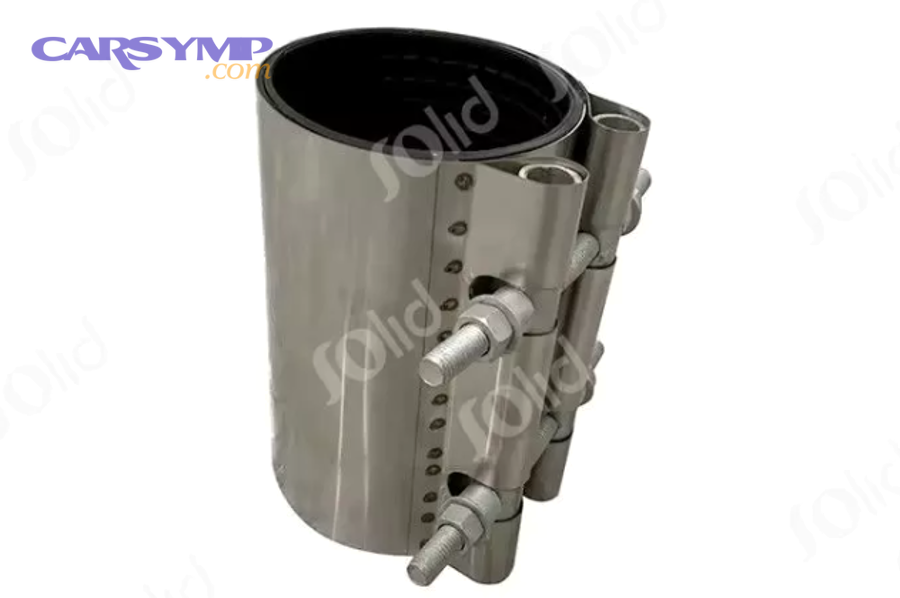
Examining specific advantages, limitations, and cost-benefit calculations reveals when welded flange complexity justifies additional investment.
How Do Welded Flange Systems Provide “Best of Both Worlds”?
Welded flange systems permanently attach precision-machined flanges to pipe ends through structural welds, then join flange pairs using bolt assemblies with gaskets creating serviceable connections matching welded joint strength while enabling tool-based disassembly. The flanges themselves become permanent pipe features preventing rotation, misalignment, or separation under normal service conditions. Meanwhile, the bolted flange interface allows deliberate disconnection for component replacement, inspection, or modification without cutting equipment.
The dual-sided approach places permanent welds at ideal locations for structural integrity while creating serviceable joints at points requiring future access. For example, performance exhaust systems might weld flanges immediately before and after catalytic converters, enabling converter removal for inspection or replacement while maintaining permanent connections throughout remaining pipe sections. This strategic placement optimizes both durability and serviceability based on component-specific maintenance requirements.
Sealing quality from bolted flange connections with proper gaskets often exceeds slip-fit clamp performance through consistent compression loading across entire flange faces. Metal or composite gaskets compressed between flat machined surfaces create intimate contact preventing leak paths that may develop in pipe-overlap clamped joints. The bolt preload maintains constant sealing pressure independent of thermal cycling effects that may loosen conventional clamps over time.
Performance applications extensively employ welded flange systems for their vibration resistance, leak-free operation, and serviceability combination. Turbo exhausts requiring periodic turbine inspection or replacement use flanged connections at critical interfaces, while the permanent welded construction throughout high-temperature sections ensures reliability. Racing exhaust systems similarly benefit from rapid component swapping enabled by flange designs while maintaining competition-quality sealing and durability.
Are Welded Flanges Worth the Extra Cost?
Welded flange systems add $40-80 per connection point in materials plus increased welding labor, typically doubling total installation costs compared to direct pipe welding or conventional clamping, making cost-benefit analysis dependent on specific serviceability requirements and owner priorities. Vehicles rarely requiring exhaust disassembly see minimal return on flange investment, while those needing frequent access justify premium pricing through accumulated labor savings.
Installation complexity increases substantially with flange systems, as precise alignment during welding determines whether bolt patterns properly match between paired flanges. Angular misalignment exceeding 2-3 degrees prevents bolt installation or creates gasket compression irregularities causing leaks. Experienced fabricators use positioning jigs ensuring parallel flange faces before welding, but DIY installations risk expensive rework from alignment errors. This precision requirement explains why flange systems typically require professional installation despite being marketed as serviceability improvements.
Long-term value calculations favor flanges for vehicles with component replacement expectations—turbocharged engines requiring periodic turbine rebuilds, catalytic converters in states with strict emissions testing, or resonator replacement addressing acoustic modifications. The $100-200 flange system investment enables future $0 labor component swaps versus $150-300 professional cutting and rewelding for each direct-welded joint separation. After 2-3 service events, the initial flange premium becomes cost-neutral, with subsequent savings accumulating.
Serviceability advantages extend beyond scheduled maintenance to emergency repairs and modification experiments. Flange-equipped exhausts permit rapid component testing, troubleshooting leak sources, and accessing components behind exhaust routing without destructive cutting. Racing teams particularly value this flexibility for between-event modifications and trackside repairs where welding capabilities may be unavailable.
The decision framework recommends flanges for: (1) vehicles with high modification probability, (2) systems with components requiring regular inspection or replacement, (3) performance applications where serviceability enables experimentation, and (4) installation budgets accommodating 50-100% cost premiums. Conversely, permanent daily driver installations rarely justify flange complexity and expense absent specific access requirements.
How Do Welding and Clamping Affect Exhaust Sound and Performance?
Welding and clamping produce negligible measurable performance differences in properly installed exhaust systems, with flow restriction and backpressure remaining virtually identical, though clamped joints may transmit slightly different vibration patterns potentially affecting interior cabin resonance and creating minor acoustic variations perceptible to sensitive listeners. The joining method’s impact on exhaust tone and horsepower output proves far less significant than muffler selection, pipe diameter, and overall system design.
Understanding subtle acoustic and performance nuances helps set realistic expectations while avoiding unfounded concerns about joining method selection.
Does Welding vs Clamping Change Exhaust Tone?
Exhaust tone differences between welding and clamping stem primarily from vibration transmission variations rather than acoustic wave propagation changes, as properly sealed joints of either type present negligible impedance differences to sound waves traveling through exhaust gases. However, the structural coupling characteristics differ substantially—welded systems create rigid continuous structures transmitting vibration energy efficiently throughout entire assemblies, while clamped joints introduce mechanical discontinuities that partially isolate vibration between sections.
Interior cabin resonance represents the most noticeable acoustic distinction between joining methods. Some users report increased drone or resonance with band-clamped exhausts compared to welded equivalents, attributing the difference to altered vibration patterns exciting vehicle body panels and interior cavities. The slip-fit joint’s ability to transmit micro-movements may create acoustic coupling that welded joints eliminate through rigid integration. However, these effects prove highly vehicle-specific and sensitive to exhaust hanger positioning, pipe routing, and vehicle structural characteristics.
Guillotine and U-bolt clamps reportedly produce different resonance patterns than band clamps according to diesel truck forum discussions, with lap-joint band clamps potentially creating higher interior resonance compared to guillotine clamps or welded systems. The mechanism likely involves differential pipe vibration at clamped interfaces translating to body panel excitation, though controlled testing isolating joining method variables from other acoustic factors remains limited.
External exhaust note characteristics—the sound heard outside the vehicle—show no consistent differences attributable to joining methods in systems using identical mufflers, resonators, and pipe configurations. The dominant acoustic factors remain muffler internal design, pipe diameter effects on gas velocity and pressure waves, and resonator tuning for specific frequency attenuation. Claims that welding produces “deeper” or “better” tone versus clamping lack scientific support and more likely reflect confirmation bias or uncontrolled variables in comparison conditions.
Practical recommendations suggest testing acoustic preferences through clamped trial installations before committing to permanent welding when sound quality matters significantly. Enthusiasts uncertain about muffler selections or resonator configurations can evaluate actual acoustic results, adjust components as needed, then weld final configurations after confirming satisfaction. This approach prevents expensive permanent installations of combinations producing undesirable tones.
Is There a Performance Difference Between Welded and Clamped Exhausts?
Dynamometer testing comparing identical exhaust systems installed with welding versus quality clamping shows no measurable horsepower or torque differences, with variations remaining within normal test repeatability margins of ±1-2 horsepower. The flow restriction from properly installed clamps proves negligible compared to muffler, catalytic converter, and pipe diameter effects dominating exhaust system backpressure. Claims of performance advantages from either joining method lack scientific support and contradict fundamental fluid dynamics principles.
Flow restriction analysis reveals that slip-fit overlap joints actually create smoother internal surfaces than some welded connections, as properly prepared slip-fits maintain consistent internal diameters while poor welds may create internal bead protrusions restricting flow. Professional exhaust fabricators grinding weld beads flush eliminate this potential disadvantage, but DIY welding often leaves internal irregularities exceeding any slip-fit discontinuity effects.
Backpressure measurements using pressure transducers at various exhaust locations confirm equivalent pressure profiles between welded and clamped systems sharing identical component specifications. The joining method contributes insignificantly to overall system restriction, which instead derives from catalytic converter substrate density, muffler internal baffle configurations, and pipe diameter-to-flow rate relationships. Enthusiasts seeking performance gains should focus on these dominant factors rather than joining method selection.
Leak prevention represents the only performance-relevant distinction between methods—leaking clamped joints reduce backpressure and may affect engine tuning, particularly in turbocharged applications where exhaust leaks upstream of turbochargers reduce boost pressure. However, properly installed quality clamps prevent leaks as effectively as welding, neutralizing this potential disadvantage. Installation quality matters far more than joining method selection for ensuring leak-free operation.
The practical conclusion finds joining method selection irrelevant to performance outcomes when components match and installation quality remains high. Vehicle owners should select welding versus clamping based on durability, serviceability, cost, and installation capability factors rather than unfounded performance concerns. Neither method provides measurable power advantages over the other in real-world applications.