


Vehicle rim damage costs American drivers approximately $3 billion annually, yet most of this expense is preventable through proper awareness and maintenance habits. Protecting your rims requires a combination of defensive driving techniques, regular maintenance protocols, and strategic use of protective products to shield against potholes, curb strikes, corrosion, and brake dust accumulation. By implementing seven proven prevention strategies—including tire pressure optimization, parking awareness, protective coatings, routine cleaning, load management, cautious driving habits, and appropriate tire selection—you can extend rim lifespan, maintain vehicle safety, and avoid costly rim repair or replacement expenses.
Understanding the specific types of rim damage and their root causes forms the foundation for effective prevention. Bent rims from pothole impacts, curb rash from parking mishaps, corrosion from road salt exposure, and brake dust deterioration each require targeted prevention approaches. The most effective protection combines multiple defensive layers: physical barriers like rim protectors, chemical shields through protective coatings, behavioral changes in driving and parking habits, and mechanical safeguards through proper tire pressure maintenance.
Regular inspection and maintenance routines catch early warning signs before minor issues escalate into structural failures requiring expensive repairs. Visual checks for bends, cracks, and corrosion combined with attention to performance indicators like vibrations, pulling, or pressure loss enable early intervention. Monthly tire pressure checks, seasonal cleaning schedules, and post-impact inspections create a comprehensive monitoring system that preserves rim integrity over time.
Vehicle load management and tire selection strategies provide additional protection layers that many drivers overlook. Staying within manufacturer weight limits prevents stress fractures, while choosing tires with adequate sidewall height creates crucial cushioning between road hazards and rim edges. Next, let’s explore each prevention strategy in detail to help you develop a complete rim protection plan.
What is Rim Damage and Why Should You Prevent It?
Rim damage is any physical or chemical deterioration of a wheel’s metal structure, including bends, cracks, corrosion, and surface abrasions that compromise the rim’s ability to safely support tire pressure and vehicle weight. Prevention matters because damaged rims create immediate safety hazards through tire blowout risks, alignment problems, and handling instability while generating repair costs averaging $100-$250 per wheel or replacement expenses exceeding $500 for premium rims.
To better understand the importance of prevention, examining the specific damage types and their consequences reveals why proactive protection delivers superior value compared to reactive repairs.
What Are the Most Common Types of Rim Damage?
The five most prevalent rim damage types each stem from distinct causes and create unique safety concerns:
Bent rims result from pothole impacts or curb strikes that deform the circular rim structure, causing vibrations at highway speeds and uneven tire wear. The force of hitting a pothole compresses the tire between the road surface and rim edge, creating permanent deformation that prevents smooth rolling. Bent rims typically require hydraulic straightening by professionals, though severely bent rims may be irreparable.
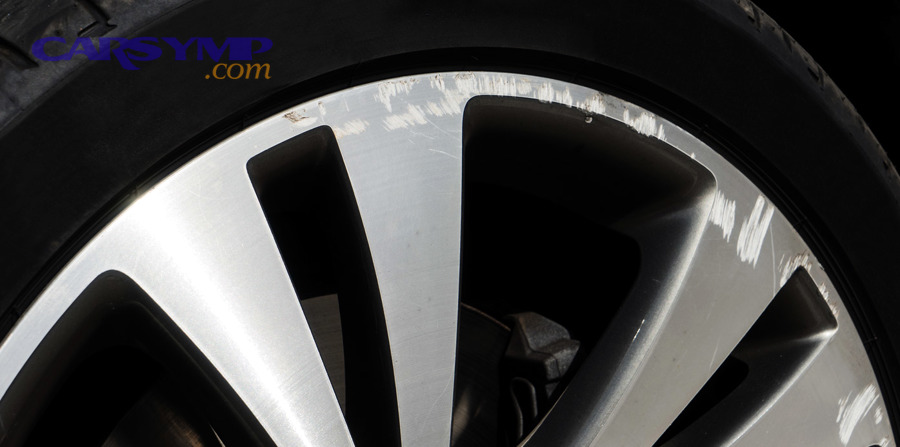
Curb rash and scraping occurs when wheels contact curbs during parking or tight turns, creating surface scratches, gouges, and paint removal along the rim’s outer edge. While often cosmetic initially, exposed metal from curb rash becomes vulnerable to corrosion that can spread and weaken rim structure over time. Cosmetic curb rash repair options include sanding, filling, repainting, and clear coating to restore appearance and prevent rust.
Cracks and fractures develop from severe impacts or metal fatigue in areas of high stress concentration, creating structural failures that can lead to catastrophic tire blowouts. Cracks typically start small but propagate through the rim material under repeated stress cycles, making early detection critical. Professional inspection using dye penetrant testing or magnetic particle inspection can reveal hairline cracks invisible to visual examination.
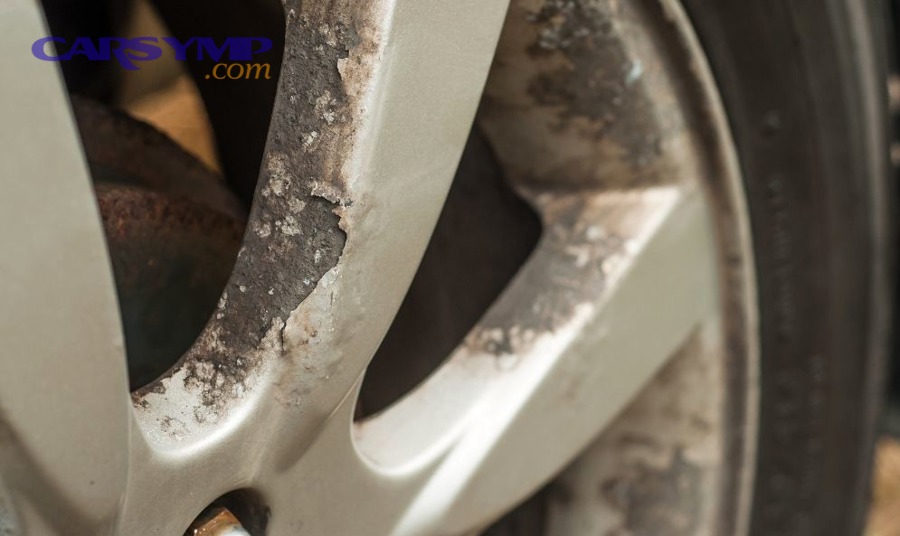
Corrosion and oxidation gradually eat away rim material when road salt, moisture, and brake dust breach protective coatings and attack the underlying metal. Winter driving in regions using road salt accelerates corrosion rates dramatically, with salt penetrating small scratches or nicks to initiate rust formation. Once corrosion reaches the rim bead area where the tire seals against the wheel, air leaks develop that cause persistent tire pressure loss.
Chipping and gouging removes chunks of rim material, typically around the bead seat where tire mounting equipment or severe curb impacts break off metal fragments. Chips compromise the air seal between tire and rim while creating stress concentration points where cracks may initiate. Unlike surface scratches, deep chips often require professional welding and machining to restore structural integrity.
How Does Rim Damage Affect Your Vehicle’s Safety and Performance?
Rim damage creates cascading safety and performance problems that extend beyond the wheel itself:
Tire pressure loss and blowout risks emerge when damaged rims fail to maintain proper air seal with the tire bead. Bent rims create gaps allowing slow pressure leaks, while cracks or chips can cause sudden catastrophic failures at highway speeds. Underinflated tires generate excessive heat buildup that further weakens both tire and rim structures, creating a dangerous failure cycle. Wheel vibration from rim damage diagnosis requires professional dynamic balancing to distinguish bent rims from tire defects or suspension issues.
Alignment and handling issues develop when bent or cracked rims prevent wheels from rolling concentrically, forcing steering and suspension components to compensate for the irregular motion. Vehicles pull to one side, requiring constant steering correction that creates driver fatigue and reduces emergency maneuver responsiveness. Alignment problems accelerate tire wear in irregular patterns, necessitating premature tire replacement even when tread depth remains adequate.
Vibration and steering problems manifest as oscillations felt through the steering wheel, seat, or floorboard at specific speed ranges, typically 50-70 mph for front wheel damage. These vibrations indicate the wheel assembly no longer rotates in a balanced circular path, creating repetitive impacts as the high spot contacts the road surface. Persistent vibration damages wheel bearings, ball joints, tie rod ends, and shock absorbers through repetitive stress loading.
Progressive damage to suspension components occurs when damaged rims transfer impact forces unevenly through the suspension system, overloading individual components and causing premature wear. Control arm bushings, strut mounts, and spring seats all experience increased stress when supporting wheels that no longer distribute loads symmetrically. The cumulative cost of suspension repairs triggered by ignored rim damage often exceeds the original rim repair expense by several multiples.
According to research by the American Automobile Association, pothole-related vehicle damage costs individual drivers an average of $406 per incident, with rim and wheel damage accounting for approximately 35% of repair expenses.
How Can You Avoid Pothole Damage to Your Rims?
Avoiding pothole damage to your rims requires reducing impact speed before contact, maintaining optimal tire pressure for cushioning, and developing hazard scanning habits to identify potholes before they’re unavoidable. These three complementary strategies work together because even when potholes cannot be avoided entirely, reduced speed and proper tire inflation dramatically decrease the force transmitted to rim structures during impact.
More specifically, implementing systematic pothole avoidance techniques transforms reactive emergency maneuvers into proactive hazard management.
What Driving Techniques Prevent Pothole Impact?
Strategic driving techniques create time and space for pothole avoidance before emergency reactions become necessary:
Speed reduction strategies before impact multiply protection effectiveness because kinetic energy increases exponentially with velocity—halving your speed quarters the impact energy transmitted to your rims. When approaching known pothole zones or unfamiliar road sections, reducing speed by 10-15 mph provides sufficient reaction time to steer around hazards while minimizing damage if contact occurs. Gentle braking before impact allows suspension to extend downward, increasing ground clearance and reducing the severity of rim-to-pothole contact.
Road scanning and hazard identification requires looking 12-15 seconds ahead rather than focusing on the road immediately in front of your vehicle, creating early warning time that enables smooth avoidance maneuvers. Develop the habit of scanning the entire lane width systematically, as potholes often lurk in tire tracks where accumulated traffic concentrates road stress. During daylight, watch for darker patches on asphalt that indicate depressions filled with water or debris, and note areas where pavement color or texture changes abruptly.
Following traffic patterns to spot hidden potholes leverages other drivers’ reactions as early warning indicators—when vehicles ahead swerve suddenly without obvious cause, assume pothole presence and prepare to maneuver. Maintain 3-4 second following distances in pothole season to allow safe lane changes when hazards appear. In highway traffic, observe the travel paths of large trucks and buses, as commercial drivers often know road conditions from repeated routes and avoid the worst damage areas.
Night driving visibility tactics become critical because headlight illumination creates shadows that can reveal or conceal potholes depending on approach angle. Angle headlights slightly toward the road edge rather than straight ahead, as side-lighting casts shadows inside depressions that make them visible from greater distances. Reduce speed by 20% during night driving in pothole-prone areas, and use high beams on empty roads to extend hazard detection range. Watch for water splashes from vehicles ahead that create taller fountains over deep potholes compared to shallow puddles.
Does Proper Tire Pressure Protect Against Pothole Damage?
Yes, proper tire pressure protects against pothole damage by creating an air cushion that absorbs impact forces before they reach the rim, reducing pothole-related rim damage by 40-60% compared to underinflated tires according to tire industry testing. Maintaining tire pressure within the upper half of manufacturer specifications provides optimal protection while preserving ride quality and fuel efficiency.
Specifically, the relationship between tire pressure and rim protection operates through several mechanical principles that maximize structural resilience.
Optimal pressure ranges for rim protection exist within the manufacturer’s recommended range printed on the driver’s door jamb, typically spanning 4-6 psi between minimum and maximum values. Running tires at the upper 50-75% of this range—for example, 35 psi in tires rated for 32-36 psi—provides firmer sidewalls that resist bottoming out during impacts. This increased firmness reduces the distance the tire compresses before the rim contacts the pothole edge, maintaining crucial clearance that prevents damage. However, exceeding maximum pressure ratings decreases the tire’s ability to deform around obstacles, transferring more shock to suspension components.
Seasonal pressure adjustments (temperature effects) compensate for the physical law that air pressure decreases approximately 1 psi for every 10°F temperature drop, meaning winter cold can reduce tire pressure by 5-8 psi in regions experiencing 50-80°F seasonal temperature swings. Check and adjust tire pressure monthly during fall and winter months, adding 2-3 psi above summer pressures to account for temperature-related losses. Spring warming requires reducing pressure as temperatures climb to prevent overinflation that creates harsh ride quality and increased center tread wear.
Under-inflation vs over-inflation risks create different damage patterns—underinflated tires allow rim-to-road contact during impacts while overinflated tires transfer excessive shock to suspension. Tires running 5 psi below specification lose sidewall stiffness that normally keeps rims elevated above road obstacles, increasing pothole damage probability by 35%. Conversely, tires inflated 5 psi above maximum ratings reduce impact absorption capacity and may suffer sidewall splitting from excessive internal stress during sharp impacts.
Monthly pressure check protocols should occur when tires are cold (driven less than one mile), using a quality digital gauge rather than gas station air tower gauges that often read 3-5 psi inaccurately. Record baseline pressures for all four tires plus the spare, noting the vehicle’s recommended specification for reference. Investigate any tire losing more than 2 psi per month, as gradual leaks indicate potential rim damage, valve stem deterioration, or tire bead sealing problems that require professional inspection.
How Do You Prevent Curb Damage When Parking?
Preventing curb damage when parking requires maintaining minimum one-inch clearance from curb faces, using visual reference points and technology aids for spatial awareness, and practicing parking maneuvers in low-risk environments before attempting tight urban spaces. These strategies combine because even experienced drivers benefit from systematic approaches that eliminate guesswork from proximity judgments.
In addition, developing consistent parking techniques creates muscle memory that functions automatically during stressful parking situations.
What Parking Techniques Protect Your Rims from Curb Rash?
Specific parking techniques eliminate the trial-and-error approach that leads to curb contact:
Safe distance maintenance (minimum 1 inch clearance) prevents the majority of curb rash incidents while allowing full door opening and passenger exit clearance. Establish visual reference points by noting where curb tops align with door sills, mirror bases, or dashboard corners from the driver’s seat when wheels are positioned correctly. Practice positioning in empty parking lots until you can reliably place wheels 2-3 inches from curbs without looking, then apply this spatial awareness to real parking situations.
Using mirrors and sensors effectively requires understanding what each technology reveals and conceals—side mirrors show lateral distance to curbs but distort depth perception, while backup cameras display rear obstacles but lack peripheral vision. Adjust side mirrors to show a sliver of your vehicle’s body panel for reference scaling, allowing accurate distance estimation to curb edges. Modern parking sensors chirp at increasing frequencies as obstacles approach, with continuous tones indicating less than 6 inches clearance—stop immediately when hearing continuous alerts rather than creeping forward for “just a little closer.”
Parallel parking best practices start with positioning your vehicle parallel to and 12 inches from the car ahead before beginning the backing maneuver, creating adequate starting distance that prevents curb contact during the turn-in phase. Turn the steering wheel fully toward the curb only after your vehicle’s rear axle passes the rear bumper of the forward car, then immediately counter-steer to straighten the vehicle before rear wheels contact the curb. Final positioning should leave front and rear bumpers equidistant from adjacent vehicles with wheels 1-2 inches from the curb face.
Tight space navigation strategies benefit from the two-step approach: first position the vehicle in the approximate location, then make fine adjustments using multiple small movements rather than attempting perfect placement in one maneuver. When squeezing into narrow spots, prioritize rim protection over perfect centering—parking 6 inches from the curb beats risking $200 rim repair to gain 4 inches. In extremely tight situations, accept that you may need to exit passengers before final positioning or choose an alternative parking location rather than forcing the vehicle into inadequate spaces.
Can Technology Help You Avoid Curb Contact?
Yes, technology can help you avoid curb contact through backup cameras, parking sensors, 360-degree camera systems, and parking assist automation that eliminate blind spots and provide real-time proximity warnings. These technologies reduce parking-related rim damage by approximately 70% when drivers respond appropriately to system alerts.
Especially important is understanding each technology’s capabilities and limitations to avoid over-reliance that creates new risk patterns.
Backup cameras and parking assist systems display rear obstacle positions on dashboard or infotainment screens with overlay guidelines showing projected vehicle paths. The color-coded distance markers—typically green (safe), yellow (caution), and red (stop)—provide intuitive proximity feedback, though camera lens distortion can make obstacles appear farther than actual distance. Clean camera lenses regularly, as dirt, snow, or water droplets create blind spots that defeat the safety purpose.
Curb detection sensors use ultrasonic or electromagnetic technology to detect obstacles within 6-8 feet, generating audible chirps that increase in frequency as distance decreases. Front sensors prevent forward curb contact during pull-in parking, while rear sensors protect during backing maneuvers. However, sensors may not detect low curbs, parking blocks, or obstacles below bumper height, requiring visual confirmation before relying entirely on sensor feedback.
360-degree camera systems combine four or more cameras positioned around the vehicle to create a synthesized overhead view showing the vehicle’s position relative to surrounding obstacles. This bird’s-eye perspective eliminates traditional blind spots and reveals proximity to curbs on both sides simultaneously, making it particularly valuable for parallel parking and navigating narrow lanes. The virtual overhead view requires mental adaptation to interpret correctly, as the synthesized perspective differs from natural visual perception.
Parking practice in low-risk areas accelerates technology mastery without the stress of tight urban parking situations—empty parking lots on weekends provide ideal practice environments. Set up cone markers or chalk lines to simulate curbs, practicing parking sequences until technology feedback becomes intuitive. Experiment with different approach angles and speeds to learn how each parking assist system responds, building confidence that transfers to real-world parking challenges.
What Protective Products Prevent Rim Damage?
Protective products that prevent rim damage include physical rim protectors that create sacrificial barriers against curb contact and protective coatings that shield against corrosion, brake dust, and environmental contaminants. These two product categories work synergistically—rim protectors handle mechanical impacts while coatings defend against chemical deterioration—providing comprehensive protection that extends rim lifespan by 3-5 years.
Moreover, the relatively modest investment in protective products typically costs 10-20% of rim replacement expenses while delivering substantial long-term value.
Do Rim Protectors and Guards Work?
Yes, rim protectors and guards work by absorbing curb impact forces through flexible materials that deform on contact, preventing direct metal-to-concrete contact that causes curb rash, with effectiveness rates of 85-90% for typical parking contact scenarios. These devices function as sacrificial barriers that sustain damage in place of the rim itself, though they cannot prevent severe impact damage from high-speed collisions.
To illustrate how these protective devices function, examining the various types and their installation methods clarifies their protective mechanisms.
Types of rim protectors (alloy bands, rubber strips) include three main categories serving different protection needs. Alloy rim protector bands install between the tire bead and rim edge, creating a 5-8mm raised barrier that contacts curbs first during side approaches—these metal or hard plastic guards provide excellent protection but may affect tire mounting and wheel balance. Rubber adhesive rim protectors stick to the wheel face just above the outer edge, using flexible elastomer compounds that absorb scraping contact while maintaining factory aesthetics. Screw-on rim guards attach to existing bolt holes or create their own mounting points, offering maximum security against detachment but requiring permanent modification to rim structures.
Installation methods vary by product design but generally fall into three categories. Adhesive rim protectors require thorough surface cleaning with alcohol or degreaser, followed by careful alignment and firm pressure application around the entire rim circumference—allow 24 hours curing time before driving to ensure proper bonding. Insert-style protectors install during tire mounting between the tire bead and rim flange, requiring professional installation with tire mounting equipment. Mechanical attachment protectors bolt or clip onto rim edges, using either existing holes or self-tapping fasteners that demand careful torque specification to avoid rim cracking.
Effectiveness against curb rash reaches 85-95% for low-speed parking contact (under 5 mph) where the protector’s sacrificial material absorbs scraping forces. Testing demonstrates that quality rim protectors reduce paint damage, prevent deep gouging, and minimize the need for cosmetic curb rash repair options that typically cost $75-150 per wheel. However, protectors offer limited defense against high-impact collisions exceeding 10 mph or direct frontal curb strikes that compress the tire and contact the rim face directly.
Aesthetic considerations influence product selection, as some rim protectors alter the wheel’s appearance through contrasting colors, visible bands, or raised profiles. Color-matched protectors blend with factory wheel finishes, maintaining original aesthetics while providing protection. Chrome or polished protectors create accent lines that some owners prefer as styling enhancements. Low-profile adhesive strips offer nearly invisible protection that preserves factory appearance while sacrificing some impact absorption capacity compared to thicker guards.
What Protective Coatings Shield Rims from Damage?
Protective coatings that shield rims from damage include ceramic coatings providing 2-5 year hydrophobic barriers, powder coating offering permanent chemical resistance, clear coat protection preserving original finishes, and temporary sealants creating renewable barriers against brake dust and corrosion. Each coating type delivers specific protective properties suited to different damage prevention needs and maintenance preferences.
Specifically, understanding the distinct advantages of each coating technology enables informed selection based on your driving environment and protection priorities.
Ceramic coatings for corrosion resistance bond chemically to rim surfaces at the molecular level, creating 2-4 micron thick protective layers that repel water, road salt, and contaminants while withstanding temperatures exceeding 1200°F generated by brake systems. Professional-grade ceramic coatings like CQuartz or Gtechniq C5 provide 2-5 year protection with proper maintenance, reducing brake dust adhesion by 70% and simplifying cleaning to simple water rinsing in many cases. Application requires meticulous surface preparation including degreasing, clay bar treatment, and sometimes paint correction to remove existing contaminants and scratches before coating application.
Powder coating durability exceeds liquid paints by 3-5 times through electrostatic application of dry powder particles that cure into cross-linked polymer networks, creating impact-resistant finishes that resist chipping, chemicals, and UV degradation. The powder coating process requires complete wheel removal and stripping to bare metal, making it ideal for refurbishing damaged rims or changing wheel colors permanently. Powder coating thickness of 2-4 mils provides superior edge coverage compared to spray paints, protecting vulnerable rim edges where curb rash typically initiates.
Clear coat protection preserves original factory finishes while adding 1.5-2 mil protective layers that absorb minor abrasions and chemical attacks before reaching the base paint and metal substrate. OEM clear coats typically last 3-5 years before UV degradation causes yellowing and reduced protection effectiveness. Aftermarket clear coating restores factory-level protection to refurbished or bare wheels, with two-part urethane clear coats offering superior durability compared to single-component formulations.
Sealants and waxes for brake dust prevention create temporary hydrophobic barriers lasting 1-3 months that cause brake dust particles and road contaminants to bead and rinse away rather than bonding to rim surfaces. Carnauba-based waxes provide warm aesthetic enhancement but require monthly reapplication, while synthetic polymer sealants extend protection duration to 8-12 weeks with superior chemical resistance. Spray-on wheel sealants like Wolfgang Wheel Coating or Meguiar’s Hot Rims offer convenient application without removing wheels, though durability remains lower than ceramic coatings or powder coating.
How Does Regular Maintenance Prevent Rim Damage?
Regular maintenance prevents rim damage by removing corrosive contaminants before they penetrate protective coatings, identifying early-stage damage when repairs remain simple and inexpensive, and maintaining the protective barrier systems that shield rim materials from environmental attack. These maintenance activities create a defensive layer that interrupts damage progression before minor issues escalate into structural failures requiring rim replacement.
Then, establishing systematic maintenance routines transforms episodic crisis responses into proactive preservation that extends rim lifespan indefinitely.
How Often Should You Clean Your Rims to Prevent Corrosion?
You should clean your rims weekly during winter months when road salt exposure is high, and bi-weekly during other seasons to prevent brake dust and environmental contaminant accumulation that initiates corrosion processes. This cleaning frequency removes aggressive chemicals before they breach protective coatings and attack underlying metal substrates.
Below are the specific cleaning protocols that maximize corrosion prevention effectiveness:
Brake dust removal techniques require pH-neutral wheel cleaners rather than acidic formulations that can damage clear coats, powder coating, or painted finishes. Spray cleaner on cool rims (not immediately after driving when heat accelerates chemical reactions), allowing 30-60 seconds dwell time for the surfactants to penetrate and suspend brake dust particles. Use soft-bristle brushes with synthetic fibers that reach into rim spoke valleys and lug nut recesses where brake dust accumulates most heavily—avoid stiff brushes or abrasive pads that create scratches providing corrosion initiation points.
Winter cleaning frequency (salt removal) increases to 1-2 times weekly in regions using road salt, as sodium chloride and calcium chloride brine solutions create electrochemical reactions that accelerate aluminum and steel corrosion by 400-600% compared to clean water exposure. Thorough rinsing with high-pressure water (minimum 1200 psi) dislodges salt crystals from rim crevices, wheel wells, and suspension components. Apply cleaning solution immediately after rinsing while salt residues remain hydrated and easier to remove, focusing particular attention on inner barrel areas hidden behind brake components where salt accumulation goes unnoticed.
Appropriate cleaning products and tools match rim material and finish types—aluminum and alloy wheels require non-acidic cleaners (pH 7-9), while chrome plating tolerates mild acid formulations (pH 4-6) that remove stubborn oxidation. Microfiber wash mitts with deep pile structure trap and lift contaminants away from rim surfaces rather than dragging abrasive particles across finishes. Two-bucket washing systems maintain clean rinse water and contaminated wash water separation, preventing redepositing of removed brake dust and road grime. Wheel woolies with long, flexible handles access inner barrel areas unreachable with standard brushes, ensuring complete cleaning coverage.
Corrosive substance prevention extends beyond washing to include protective measures that reduce contaminant contact frequency. Apply wheel wax or sealant after every cleaning to create hydrophobic surfaces that cause water and dissolved salts to bead and run off rather than pooling in crevices. Consider installing mudguards or splash shields that intercept road spray before it reaches wheel surfaces, reducing exposure to salt-laden water by 40-60% during winter driving. When possible, garage parking protects wheels from overnight freezing of residual salt solutions that concentrate brine as water evaporates, multiplying corrosive attack intensity.
What Should You Inspect During Regular Rim Checks?
During regular rim checks, you should inspect for structural damage including bends, cracks, and chips; surface deterioration like corrosion, peeling clear coat, and curb rash; and functional symptoms such as vibration, air pressure loss, and unusual tire wear patterns that indicate hidden rim problems. Comprehensive inspections conducted monthly and after any significant impact reveal developing issues while repairs remain feasible.
Let’s explore the specific inspection protocols that catch problems at the earliest detectable stages:
Visual inspection for bends, cracks, chips requires removing wheels or using a floor jack to rotate each wheel through complete revolutions while examining the rim profile against a fixed reference point. Bends appear as lateral wobbles where the rim edge deviates from the expected circular path, typically most visible when spinning the wheel slowly and sighting along the rim edge from the side. Cracks manifest as dark lines radiating from high-stress areas like spoke junctions or lug nut holes—use a flashlight held at acute angles to cast shadows that reveal hairline cracks invisible under direct lighting. Chips show as missing metal fragments around the bead seat or outer rim edge, often with sharp edges that can damage tire beads during mounting.
Early warning signs (vibration, pulling, pressure loss) indicate rim damage before visual confirmation becomes possible. Steering wheel vibration at 50-70 mph suggests front wheel imbalance from bent rims or damaged tire structures, while seat/floorboard vibration points to rear wheel issues—document the speed at which vibration begins and whether it increases, decreases, or remains constant with further acceleration. Vehicle pulling to one side despite proper alignment indicates a bent rim causing that wheel to roll at an effective diameter different from the opposite wheel. Persistent tire pressure loss requiring inflation more frequently than monthly suggests rim bead damage preventing proper air seal.
Seasonal inspection schedules align inspection timing with damage risk periods—conduct thorough inspections in early spring after winter pothole season, mid-summer before vacation travel, and late fall before winter weather arrives. Post-winter inspections identify accumulated damage from salt corrosion and pothole impacts, allowing repair before summer driving generates heat stress that propagates cracks. Pre-winter inspections ensure rim integrity before harsh weather exposure begins, preventing minor damage from escalating under freeze-thaw cycling.
When to seek professional assessment becomes necessary when visual inspections reveal questionable conditions or performance symptoms persist despite proper tire pressure and balance. Professional shops use dynamic balancing machines that measure force variations around the wheel circumference, detecting bends too subtle for visual detection. Dye penetrant testing reveals cracks invisible to naked eye inspection by drawing colored liquid into surface openings under capillary action. Professional assessment costs $30-50 per wheel but prevents the false economy of continuing to drive on questionable rims until catastrophic failure occurs at highway speeds.
According to testing by Tire Review magazine, wheels with lateral runout (bending) exceeding 0.060 inches create vibration noticeable to drivers, while runout beyond 0.125 inches causes tire wear and potential separation issues requiring immediate wheel replacement or professional straightening.
Can Vehicle Load Management Prevent Rim Damage?
Yes, vehicle load management can prevent rim damage by maintaining weight within manufacturer specifications that rim structures are engineered to support, distributing loads evenly across all four wheels, and avoiding dynamic stress concentration that occurs when heavy cargo shifts or bounces during driving. Proper load management reduces stress-related rim failures by 60-80% compared to routinely overloaded vehicles.
However, understanding your vehicle’s specific weight limits and load distribution principles requires consulting manufacturer documentation and applying systematic loading strategies.
What Are Your Vehicle’s Rim Weight Limits?
Your vehicle’s rim weight limits appear on the certification label located on the driver’s door jamb, specifying Gross Vehicle Weight Rating (GVWR) and Gross Axle Weight Ratings (GAWR) that determine maximum safe loads each rim must support. These ratings include vehicle weight plus cargo plus passengers, with individual rim load calculated by dividing axle rating by two—exceeding these limits creates stress levels rims are not designed to withstand.
More specifically, interpreting weight ratings and understanding their safety margins prevents inadvertent overloading that weakens rim structures.
Understanding load capacity ratings requires distinguishing between several related specifications. GVWR represents total vehicle weight including chassis, fluids, passengers, and cargo that the vehicle can safely support—for example, a midsize SUV might have 6,200 lb GVWR. GAWR divides this capacity between front and rear axles based on weight distribution, perhaps 2,800 lb front and 3,400 lb rear. Each rim then supports half the axle rating during static loading, or 1,400 lb front and 1,700 lb rear per wheel in this example. However, dynamic loading during acceleration, braking, and cornering can momentarily exceed static ratings by 150-200%, making it critical to maintain safety margins below maximum ratings.
Effects of exceeding weight limits accumulate through two mechanisms—immediate stress concentration and fatigue crack propagation. Overloading by 10-15% creates stress levels 25-35% above design thresholds because stress increases non-linearly with load due to metal elastic properties. This excessive stress causes permanent plastic deformation (bending) that weakens the rim structure even after load removal. Repeated overloading initiates fatigue cracks at stress concentration points like spoke junctions, with crack growth accelerating exponentially with each load cycle until sudden catastrophic failure occurs.
Stress fracture development follows predictable patterns beginning at high-stress locations—the junction between rim barrel and spoke attachment points experiences maximum stress concentration where geometry changes abruptly. Initial microcracks form at these junctions when loads exceed material fatigue limits, propagating slowly through the metal crystalline structure. Each subsequent loading cycle extends crack length incrementally, with growth rate doubling approximately every 100 load cycles. Eventually cracks reach critical length where remaining metal cannot support imposed loads, causing sudden fracture often during pothole impact or hard cornering when dynamic loads peak.
Heavy-duty rim alternatives provide increased load capacity through thicker materials, reinforced spoke designs, and higher-strength alloys that elevate fatigue limits by 40-60% compared to standard rims. Steel wheels offer superior strength and damage tolerance compared to aluminum alloy wheels, making them preferred for commercial vehicles, towing applications, and off-road use despite weight penalties of 5-8 pounds per wheel. Forged aluminum rims provide strength approaching steel with weight savings of 30-40%, though cost increases of 200-400% over cast aluminum limit adoption primarily to performance applications.
How Should You Distribute Weight to Protect Your Rims?
You should distribute weight to protect your rims by centering heavy cargo between axles to balance loads equally across all four wheels, securing loads to prevent shifting that creates dynamic stress spikes, and using cargo management systems that spread weight over larger areas rather than concentrating loads on specific rim sections. Proper distribution maintains stress levels within design parameters while preventing the resonance effects that amplify damage from road irregularities.
Especially when carrying near-maximum loads, systematic weight distribution becomes critical for rim protection and overall vehicle safety.
Balanced loading techniques start with positioning the heaviest items as close to the vehicle centerline (longitudinal and lateral) as possible to minimize the moment arms that create uneven axle loading. Place dense cargo items low in the cargo area near the floor, reducing the center of gravity elevation that increases dynamic weight transfer during acceleration, braking, and cornering. When loading a pickup truck bed, center weight over or slightly forward of the rear axle rather than at the tailgate, maintaining front axle loading adequate for steering control while preventing rear axle overload.
Pannier and cargo placement for vehicles with roof racks, cargo boxes, or bike carriers requires understanding that elevated loads multiply stress effects through leverage—every pound of cargo 4 feet above the axle centerline creates stress equivalent to 2-3 pounds at floor level during emergency maneuvers. Manufacturer roof load limits typically range 100-165 pounds including rack weight, with individual crossbar ratings of 165-200 pounds that tempt overloading when multiple mounting points exist. Distribute roof cargo length-wise along the vehicle centerline rather than concentrating weight at front or rear, maintaining fore-aft balance that prevents excessive loading of either axle.
Trailer weight considerations introduce tongue weight—the downward force the trailer coupler exerts on the hitch—that directly loads the tow vehicle’s rear axle and rims. Proper tongue weight ranges 10-15% of total trailer weight, so a 5,000 lb trailer should exert 500-750 lb tongue load. Insufficient tongue weight causes trailer sway instability, while excessive tongue load overloads rear axle and may elevate the front axle, reducing steering control and front brake effectiveness. Adjust trailer load distribution by moving cargo forward to increase tongue weight or rearward to decrease it, using a bathroom scale under the coupler to measure actual tongue weight.
Avoiding uneven weight distribution prevents the situation where one rim carries significantly more load than its opposite-side counterpart, creating asymmetric stress patterns that accelerate fatigue crack formation. Load cargo symmetrically side-to-side whenever possible—if carrying a single heavy object that cannot be centered, place counterbalancing weight on the opposite side to equalize loads. Recognize that fuel tank position creates inherent asymmetry (typically 6-8 pounds per gallon × 15-20 gallons = 90-160 pounds), and account for this built-in imbalance when loading additional cargo.

How Do Driving Habits Affect Rim Longevity?
Driving habits affect rim longevity by determining impact frequency and severity from road hazards, speed during obstacle contacts, and the accumulated fatigue cycles that govern crack initiation and propagation timelines. Conservative driving habits that prioritize hazard avoidance and moderate speeds extend rim lifespan by 40-70% compared to aggressive driving that maximizes impact forces through high-speed rough road operation.
In addition, developing awareness of high-risk road conditions and adjusting driving behavior accordingly creates a behavioral safety margin that protects rims when physical protection systems reach their limits.
What Road Conditions Require Extra Caution?
Road conditions requiring extra caution include construction zones with temporary pavement edges and debris, gravel surfaces that mask potholes and create tire puncture risks, wet weather that conceals pothole depth, and railroad crossings with metal-to-metal impact potential that transmits maximum force to rim structures. Each condition type demands specific speed reductions and awareness patterns.
Below are the detailed risk factors and appropriate responses for each hazardous road condition:
Construction zones and debris create constantly changing hazard patterns—fresh milling exposes abrupt 2-4 inch pavement edges where old asphalt has been removed, creating impact equivalent to hitting a curb if crossed at normal speeds. Temporary patches using cold-mix asphalt deteriorate rapidly under traffic, developing potholes within weeks rather than months typical of hot-mix permanent repairs. Construction debris including wood, metal, and concrete fragments puncture tires and damage rims when struck at speed. Reduce speed by 30-40% through active construction zones, increase following distance to 4-5 seconds for improved hazard visibility, and expect the unexpected from rapidly changing lane configurations and surface conditions.
Gravel and unpaved surfaces hide potholes under loose stone layers while propelling rocks that impact rims, tires, and vehicle underbody. Washboard surface oscillations at 15-25 mph create resonance frequencies that multiply impact forces as suspension rebounds from one ripple into the next. Soft gravel allows wheels to sink deeper than paved surfaces, reducing ground clearance and increasing rim exposure to rock contact. Maintain speeds under 25 mph on gravel roads, avoid sudden braking or acceleration that causes loss of directional control, and stay in established wheel tracks where the surface has been compressed and stabilized by previous traffic.
Wet weather pothole concealment makes hazard detection nearly impossible when water fills depressions, creating mirror-smooth surfaces that hide deep voids capable of destroying rims. Puddle depth provides no reliable indication of pothole severity—a 1-inch deep puddle might conceal a 6-inch pothole depending on water volume and depression shape. Nighttime wet conditions compound detection difficulty through headlight reflection and glare. Treat all puddles as potential potholes by slowing to 15-20 mph before entry, and never swerve suddenly to avoid puddles if traffic conditions prevent safe lane changes.
Railroad crossings and speed bumps demand complete speed reduction to walking pace (5-10 mph) because the abrupt vertical transitions concentrate impact forces on small rim contact areas. Railroad tracks sit 3-4 inches above surrounding pavement with essentially no transition ramp, creating impacts that bend rims if crossed above 15 mph. Speed bumps vary from gentle 2-inch rises to aggressive 6-inch obstacles, with some jurisdictions installing particularly severe bumps in school zones. Approach all railroad crossings and marked speed bumps at 10 mph or less, accelerating only after all wheels have cleared the obstacle completely.
Does Defensive Driving Reduce Rim Damage Risk?
Yes, defensive driving reduces rim damage risk by creating time buffers that enable hazard avoidance, maintaining vehicle positioning that optimizes sightlines for early threat detection, and managing speed to minimize impact forces when contact becomes unavoidable. Defensive driving techniques reduce accident involvement by 30-50% according to insurance industry data, with corresponding reductions in rim damage from collisions and emergency maneuvers.
Especially important is recognizing that defensive driving extends beyond collision avoidance to include proactive road hazard management that preserves vehicle components including rims.
Maintaining safe following distances of 3-4 seconds under ideal conditions and 5-6 seconds in adverse weather creates visual space that reveals road surface hazards before you reach them. Following distance measured in seconds (rather than feet) automatically adjusts for speed—at 60 mph, 3 seconds equals 264 feet, while at 30 mph it equals 132 feet. This time buffer allows observation of how vehicles ahead navigate around potholes or over rough patches, providing advance warning to prepare for or avoid the same hazards. Increased following distance also reduces brake dust accumulation on your rims by minimizing hard braking events that generate maximum brake pad wear and dust production.
Anticipating road hazards requires actively scanning 12-15 seconds ahead (approximately one city block or quarter-mile highway distance) rather than fixating on the vehicle immediately in front. Develop the habit of noting pavement condition changes including color variations that signal different asphalt types or patches, linear cracks that indicate upcoming pavement failure areas, and utility work patches that often settle below surrounding pavement creating rim-damaging depressions. During highway driving, watch brake lights several vehicles ahead for early indication of traffic slowdowns that may signal accident debris or potholes causing the disruption.
Speed management on rough roads follows the principle that impact force increases exponentially with speed—doubling speed quadruples impact energy transmitted to rims and suspension. Reduce speed by 25-30% on roads showing visible distress including alligator cracking, potholes, or rough patches. On familiar routes, note locations of permanent rough sections and proactively slow before reaching them rather than reacting after the first wheel contacts the hazard. Speed reduction provides dual benefits: decreased impact severity when contact occurs and increased reaction time to steer around hazards that appear suddenly.
Alternative route selection eliminates high-risk road segments entirely when options exist—many navigation apps now overlay pavement condition data allowing route selection that avoids roads rated in poor condition. Accept minor time penalties (5-10 minutes on typical commutes) to use better-maintained routes, recognizing that the time cost is negligible compared to rim repair downtime. Residential streets often receive lower maintenance priority than arterial roads, suggesting preference for main roads where pavement condition typically exceeds side streets despite higher traffic volumes.
What Tire Selection Strategies Protect Your Rims?
Tire selection strategies that protect your rims include choosing tires with adequate sidewall height to create cushioning between rims and road surfaces, selecting appropriate tire width that optimizes the tire footprint, matching tire load ratings to vehicle weight and usage patterns, and considering seasonal tire changes that adapt protection to varying road conditions. These selection criteria work together because tire construction directly determines the mechanical buffer between road hazards and rim structures.
Moreover, tire selection represents a proactive rim protection investment that costs no more than standard tire purchases while delivering substantial damage prevention benefits.
How Do Tire Sidewalls Protect Rims from Impact?
Tire sidewalls protect rims from impact by flexing to absorb vertical forces that would otherwise transmit directly to rigid rim structures, maintaining clearance between the rim edge and road surface during compression, and distributing impact loads over larger tire footprints that reduce peak stress levels. Sidewall height determines the available deflection distance before the rim contacts road obstacles, with taller sidewalls providing proportionally greater protection.
To illustrate these protective mechanisms, comparing different sidewall heights and tire constructions reveals the quantitative protection differences:
Sidewall height and cushioning effect follows the aspect ratio number in tire sizing—a 215/60R16 tire has a sidewall height of 60% of the 215mm section width, equaling 129mm or approximately 5.1 inches. Stepping up to a 215/65R16 increases sidewall height to 65% × 215mm = 140mm or 5.5 inches, providing 11mm (0.43 inches) additional cushioning. This extra cushioning translates to approximately 15-20% greater impact absorption capacity before rim contact occurs. Modern low-profile performance tires using 40-45 aspect ratios provide minimal rim protection, with sidewalls deflecting only 3-3.5 inches before rim contact compared to 4.5-5.5 inches for traditional 60-65 aspect ratios.
45-series vs 50-series profile comparison demonstrates the practical rim protection differences within commonly available tire sizes. A 225/45R17 performance tire offers 101mm (4.0 inch) sidewall height, while a 225/50R17 touring tire provides 113mm (4.4 inch) height—this 12mm difference represents 30% more deflection capacity before rim strike. Testing shows that 50-series tires reduce pothole-related rim damage by 25-35% compared to 45-series equivalents on the same vehicle. However, the taller sidewall reduces steering precision and increases sidewall flex during cornering, creating handling trade-offs that performance-oriented drivers may find unacceptable.
Low-profile tire rim exposure risks increase dramatically below 45 aspect ratios as sidewall height approaches the minimum necessary to maintain tire structural integrity. Ultra-low-profile 35 and 40 series tires provide excellent handling responsiveness through minimal sidewall flex but expose rims to damage from obstacles as small as 2-3 inches—impacts that taller sidewalls would absorb without rim contact. Vehicles equipped with low-profile tires from the factory often include run-flat construction with reinforced sidewalls that maintain structure even with complete air pressure loss, though run-flat tires create harsh ride quality and cost 50-100% more than conventional tires.
Optimal tire size for rim protection balances rim protection, handling precision, fuel efficiency, and speedometer accuracy within manufacturer-approved tire diameter ranges. Most vehicles allow ±3% overall diameter variation (typically one aspect ratio step up or down) without affecting speedometer calibration or suspension geometry. Prioritizing rim protection suggests selecting the tallest approved aspect ratio, accepting minor handling responsiveness reduction as a worthwhile trade-off. Consult the tire information placard on the driver’s door jamb for all approved tire sizes, and choose the option with the highest aspect ratio when protection is the primary concern.
Should You Use Different Tires for Winter to Protect Rims?
Yes, you should use different tires for winter to protect rims because dedicated winter tires typically feature taller sidewalls than all-season equivalents, specialized rubber compounds that remain flexible at low temperatures for improved impact absorption, and tread designs that reduce salt and slush accumulation that accelerates corrosion. Winter tire sidewalls provide 20-30% better impact protection than summer tires in freezing conditions where all-season rubber hardens and loses flexibility.
Specifically, winter tire construction addresses the unique rim protection challenges presented by frozen road conditions and winter hazard patterns.
Winter tire sidewall advantages include rubber compounds formulated to maintain flexibility below 45°F when all-season tire rubber begins hardening and losing impact absorption capacity. This temperature-dependent flexibility difference becomes critical during pothole impacts in freezing weather—winter tire sidewalls compress and rebound smoothly while all-season sidewalls transfer more impact energy directly to rims through reduced deflection. Winter tires also typically use taller sidewalls than performance-oriented all-season tires, with many winter models offering 55-60 aspect ratios where all-season equivalents use 50-55, providing the additional cushioning height that protects rims during impact.
All-season vs seasonal tire protection presents trade-offs between convenience and optimized performance. All-season tires deliver year-round usability with acceptable performance across a wide temperature range but compromise winter impact protection through harder rubber compounds and often lower aspect ratios optimized for summer handling. Seasonal tire changeovers require storage space for the off-season set and twice-yearly mounting costs of $60-100, but provide 25-40% better rim protection during winter months when pothole risks peak. The rim protection benefit alone often justifies seasonal tire costs for drivers in harsh winter climates where pothole damage probability exceeds 30% annually.
Studded tire considerations add metal or carbide studs protruding 1-2mm from the tread surface to improve ice traction, but studies show studded tires actually increase rim damage risk by 15-20% compared to studless winter tires. The rigid studs transmit road impacts with less absorption than rubber alone, and aggressive acceleration or braking on dry pavement can cause studs to pull free and damage aluminum wheels from the inside. Many jurisdictions restrict or prohibit studded tires due to pavement damage concerns, limiting availability. Studless winter tires using advanced silica-based rubber compounds and aggressive siping patterns provide equivalent ice traction without rim damage risks.
Overall diameter maintenance (within 3%) prevents speedometer and odometer error while maintaining factory suspension geometry that affects handling and ride quality. Winter tire upsizing by one aspect ratio—for example, from 225/50R17 to 225/55R17—increases overall diameter by approximately 2.2%, well within the acceptable 3% tolerance. This modest size increase provides measurable rim protection improvement through taller sidewalls while maintaining proper wheel well clearance and avoiding speedometer recalibration requirements. Calculate overall diameter using the formula: (2 × section width × aspect ratio ÷ 25.4) + wheel diameter, ensuring winter tire diameter remains within ±3% of the original equipment tire specification.
What Should You Do When Rim Damage Occurs Despite Prevention?
When rim damage occurs despite prevention efforts, you should immediately assess damage severity to determine whether safe driving can continue, schedule professional inspection within 24-48 hours for structural evaluation, and decide between repair and replacement based on damage extent, repair costs, and safety considerations. Swift action prevents minor damage from escalating into catastrophic failures while preserving options for cost-effective repairs before structural compromise becomes irreversible.
However, the Rim repair vs replacement decision depends on multiple factors including damage type, location, severity, and the affected rim’s structural role in vehicle safety systems.
How Can You Tell If Rim Damage Is Repairable or Requires Replacement?
You can tell if rim damage is repairable by examining damage location (cosmetic edge damage usually repairable, structural spoke or barrel cracks typically require replacement), severity (bends under 0.125 inches often straightenable, multiple cracks or bends beyond 0.25 inches necessitate replacement), and material condition (minor corrosion treatable, extensive rust compromising structure demands replacement). Professional assessment using specialized equipment provides definitive evaluation when visual inspection leaves uncertainty.
Let’s explore the specific assessment criteria that distinguish repairable from replacement-required damage:
Severity classification (cosmetic vs structural) divides rim damage into three categories determining repair feasibility. Cosmetic damage including curb rash, paint chips, and surface corrosion affects appearance without compromising structural integrity—these issues repair successfully through sanding, filling, refinishing, and protective coating application at costs of $75-150 per wheel. Minor structural damage including small bends (under 0.125 inches runout), single hairline cracks in low-stress areas, and limited corrosion pitting may be repairable through hydraulic straightening, welding, or machining, though repair costs of $150-250 per wheel approach replacement costs for standard wheels. Major structural damage including multiple cracks, fractures in high-stress spoke junctions, bends exceeding 0.25 inches, or extensive corrosion penetrating more than 25% through rim wall thickness requires replacement for safety, as repair cannot restore original structural integrity.
DIY assessment techniques enable preliminary damage evaluation before professional consultation. Spin each wheel while watching the rim edge against a fixed reference point like a brake caliper or suspension component—lateral wobble exceeding 3-4mm (0.125-0.150 inches) indicates bending requiring professional straightening. Inspect spoke junctions and lug nut holes with a bright flashlight held at low angles to cast shadows into cracks—any visible dark lines radiating from these high-stress areas warrant professional evaluation regardless of crack length. Check for air leaks by coating the rim-to-tire bead area with soapy water while the tire holds pressure—bubbles indicate sealing surface damage from bends or corrosion requiring repair before continued use.
Professional inspection criteria employ precision measurement tools unavailable to consumers. Dynamic balancing machines with force variation measurement detect bends as small as 0.020 inches that escape visual detection but cause vibration and premature tire wear. Dye penetrant testing or magnetic particle inspection reveals subsurface cracks extending into rim material but not yet visible on the surface—these hidden cracks frequently exist after severe impacts even when external damage appears minimal. Ultrasonic thickness gauges measure remaining material in corroded areas, quantifying whether sufficient metal remains for safe operation. Professional inspection costs $30-50 per wheel but prevents the catastrophic consequences of driving on structurally compromised rims.
Safety thresholds for replacement become absolute when damage exceeds specific limits. Any crack visible to naked eye inspection requires immediate replacement unless professional welding evaluation determines the crack arrestable through proper repair procedures—cracks propagate unpredictably and can cause sudden catastrophic failure without warning. Corrosion penetrating more than 1-2mm (about 25% of typical 3-4mm rim wall thickness) compromises structural integrity beyond safe repair limits. Multiple bends in the same wheel indicate material fatigue that persists after straightening, requiring replacement to prevent re-bending or fracture. Damage to wheels with integrated tire pressure sensors or advanced driver assistance system (ADAS) mounting points may require replacement due to sensor/equipment integrity concerns even when the rim structure itself could be repaired.
What Is the Difference Between DIY Rim Repair and Professional Services?
The difference between DIY rim repair and professional services is that DIY methods address cosmetic damage through sanding, filling, painting, and sealing at $20-50 material cost but cannot correct structural issues, while professional services use hydraulic presses, welding equipment, CNC machining, and precision balancing to restore structural integrity at $100-250 cost with quality guarantees. Professional repairs also include verification testing that ensures safety standards are met before returning wheels to service.
More specifically, understanding what each repair approach can accomplish enables appropriate selection based on damage characteristics and safety requirements.
Surface-level cosmetic fixes (sanding, painting) successfully remove curb rash and restore appearance when damage only affects the clear coat and paint layers without gouging into underlying metal. The DIY process involves progressive sanding with 220-grit through 2000-grit sandpaper to smooth scratches and level the damaged area, applying automotive body filler for deeper gouges, priming with corrosion-resistant primer, painting with color-matched wheel paint, and finishing with multiple clear coat layers. Material costs range $30-50 for complete refinishing kits, with results approaching professional quality when proper technique is followed. However, DIY repairs cannot address any structural damage, and improper technique can worsen damage through excessive material removal or contamination introduction.
Structural repairs (hydraulic straightening, welding) require specialized equipment and metallurgical knowledge beyond DIY capability. Hydraulic rim straightening uses precision presses applying controlled force to specific rim areas, gradually reforming bent sections back to original specifications while monitoring with dial indicators to prevent over-correction or crack propagation. Professional straightening costs $125-200 per wheel and successfully corrects bends up to 0.25 inches when performed by experienced technicians. Crack welding using TIG (Tungsten Inert Gas) methods heats damaged areas to 1200-1400°F to fuse metal without introducing brittleness, followed by stress-relief heat treatment and precision machining to restore original dimensions—welding costs $175-250 per wheel and requires specialized aluminum welding expertise to prevent weld cracking or porosity.
Cost comparison ($50 DIY vs $100-250 professional) demonstrates that DIY approaches provide excellent value for purely cosmetic damage where appearance restoration is the only goal. Professional repair becomes cost-effective when structural damage exists, as attempting DIY structural repairs risks catastrophic wheel failure with potential for serious accidents. The break-even point occurs around $150-175 total damage repair cost—below this threshold, DIY cosmetic repair plus professional structural assessment makes sense, while damage exceeding this level warrants complete professional repair or replacement. Premium wheels costing $500-1500 each justify professional repair at virtually any damage level short of complete destruction, while standard steel or basic aluminum wheels under $150 replacement cost may not warrant professional repair expenses.
Warranty and safety considerations favor professional repairs when structural damage exists or when the vehicle serves critical transportation needs. Professional rim repair shops typically provide 30-90 day warranties covering repair workmanship and guaranteeing that corrected wheels meet manufacturer specifications for lateral runout, radial runout, and balance. Many shops refuse to repair wheels with cracks or severe bends due to liability concerns, recommending replacement instead—this refusal indicates damage beyond safe repair limits and should guide replacement decisions. Insurance coverage often requires professional repair documentation to approve claims, while self-performed repairs may void coverage if damage recurs or causes subsequent failures.
When Is Rim Replacement More Cost-Effective Than Repair?
Rim replacement becomes more cost-effective than repair when damage requires repairs exceeding 60-70% of replacement cost, when multiple repairs are needed on the same wheel indicating progressive failure, when replacement wheels are readily available under $200, or when the damaged wheel has previously been repaired and damaged again in the same area. The decision matrix balances immediate repair costs against replacement longevity and safety assurance.
Especially when replacement wheels match or improve upon original equipment specifications, replacement often provides superior long-term value despite higher initial costs.
Multiple fractures or extensive cracks render wheels unsafe for repair regardless of cost considerations—any wheel exhibiting more than one crack or cracks exceeding 1 inch length should be replaced immediately. Multiple cracks indicate material fatigue or metallurgical defects that persist throughout the wheel structure, making additional cracks likely even after visible damage is repaired. The catastrophic failure risk from driving on multiply-cracked wheels far exceeds any cost savings from attempted repairs. Some rim manufacturers specify that any visible crack voids all warranties and requires immediate replacement, reflecting engineering assessments that cracked wheels cannot be safely returned to service.
Severe corrosion compromising structure progresses from surface appearance issues to structural failures when rust penetrates more than 25-30% through rim wall thickness. Advanced corrosion typically appears as flaking, scaling, or pitting that reveals dark rust beneath the surface finish—when visible rust covers more than 30% of rim surface area, subsurface corrosion likely compromises structural integrity throughout the affected area. Attempting to repair severely corroded wheels through surface treatment only addresses cosmetic concerns while hidden internal corrosion continues weakening the structure. Replacement provides the only safe solution when corrosion advances beyond early surface stages.
Repeated bending in the same location indicates permanent material property changes from work hardening that occurs during straightening processes. When rims bend, the affected material undergoes plastic deformation that alters the metal’s crystalline structure and reduces ductility—straightening reverses the shape but cannot restore original material properties. A wheel bent and straightened once may bend again under impacts that the original wheel would have survived, with each subsequent bending-straightening cycle further degrading material integrity. Replace any wheel that bends a second time in the same location rather than attempting another straightening that will likely fail again.
Resale value considerations affect replacement decisions when vehicles approach sale or trade-in timing. Cosmetically damaged wheels reduce vehicle resale value by $400-800 according to used car market data, while replacement with quality wheels maintains or enhances value. If planning to sell within 12-18 months, investing in wheel replacement rather than minimal repairs improves market appeal and may return 70-90% of replacement cost through higher sale prices or faster sales. Conversely, vehicles retained for 5+ additional years justify repair investments that preserve function even if cosmetic perfection isn’t achieved.
How Do Bicycle Rim Prevention Strategies Differ from Vehicle Rims?
Bicycle rim prevention strategies differ from vehicle rims in that bicycle rims require spoke tension maintenance to preserve structural integrity, demand brake pad alignment to prevent rim sidewall wear, need lower inflation pressures to cushion against impacts despite smaller wheel diameters, and experience different damage patterns from lower-speed impacts with more frequent but less severe hazard exposure. Material selection also differs significantly, with bicycle rims using aluminum alloys optimized for light weight rather than maximum impact resistance.
Particularly important is recognizing that bicycle rim damage typically progresses gradually through spoke-related stress rather than sudden impact failures common in vehicle applications.
Material differences (aluminum vs carbon bike rims) create distinct vulnerability patterns and maintenance requirements. Aluminum bicycle rims use 6061 or 7075 alloy series providing good fatigue resistance and damage tolerance—minor dents or scratches rarely compromise aluminum rim structure, and damage remains visible through surface deformation. Carbon fiber bicycle rims offer superior strength-to-weight ratios but suffer invisible damage from impacts insufficient to create visible surface indications—internal delamination weakens structure while the outer surface appears undamaged. Carbon rims cost 3-5 times more than aluminum equivalents but require replacement after impacts that aluminum would survive with only cosmetic damage.
Brake pad alignment and rim wear applies to rim-brake bicycles where brake pads contact the rim sidewall directly, creating friction that generates stopping force but also gradually wears away aluminum over thousands of braking cycles. Misaligned brake pads that contact the tire sidewall or overhang the rim edge accelerate wear and may damage tire sidewalls, while pads positioned too low contact the curved rim transition and wear through the sidewall prematurely. Inspect rim sidewalls monthly for the concave wear pattern that indicates approaching wear limit—most aluminum rims include wear indicator grooves or dimples that disappear when remaining sidewall thickness drops below safe minimums, signaling replacement need before catastrophic sidewall failure during braking.
Spoke tension and rim trueness interact because properly tensioned spokes support rim structure and resist deformation from impacts. Loose spokes allow rim sections to flex excessively when hitting obstacles, creating local bends that propagate into larger wobbles affecting multiple spoke attachment points. Check spoke tension by squeezing parallel spoke pairs and comparing resistance—all spoke pairs should feel similarly tight, with loose spokes indicating needed tension adjustment before rim damage occurs. True (straight) rims distribute impact forces evenly across all spokes, while untrue rims concentrate stress on spokes where the rim deviates from center, accelerating spoke breakage and further damage progression.
Weight load distribution on bike frames concentrates more load on the rear wheel (typically 60-65% of total weight including rider and cargo) compared to relatively balanced vehicle weight distribution. This rear-bias means bicycle rear rims experience more spoke tension, brake wear, and impact stress than front rims, explaining why rear wheel replacements occur twice as frequently as front wheel replacements. Panniers and cargo racks should distribute weight as low and centered as possible to minimize the additional stress on rear rim structures, with total cargo weight ideally not exceeding 30-40 pounds for standard touring rims or 50-70 pounds for heavy-duty expedition rims with reinforced spoke patterns.