


Wheel bearing noise and tire noise are two of the most commonly confused vehicle sounds — and telling them apart is the difference between a $30 tire rotation and a $300+ bearing replacement. The key differentiator is simple: wheel bearing noise changes when you turn the steering wheel, while tire noise generally does not. If the hum or growl shifts in volume or pitch as you weave gently left and right at highway speed, a failing wheel bearing is the most likely culprit. If the sound stays constant regardless of steering input but amplifies on rough pavement, your tires are almost certainly responsible.
Understanding the distinct sound profiles of each component is the first step toward an accurate tire noise diagnosis. Wheel bearings produce a low-pitched, rhythmic growl or humming that oscillates in intensity — often peaking around 40 mph and fading at very low or very high speeds. Tire noise, by contrast, presents as a consistent road hum or a rhythmic whap-whap pattern that scales more predictably with speed and shifts character depending on pavement texture.
Beyond simply listening, a handful of practical tests can help any driver or technician isolate the source with confidence. From the steering weave test you can perform on any empty road to the lift-and-spin hand test that reveals roughness in the bearing race, these diagnostic methods require no special equipment and deliver reliable results. Applying the right test at the right time shortens the diagnostic process and prevents unnecessary parts replacement.
What makes this comparison particularly challenging is that the two components can influence each other: a failing wheel bearing accelerates uneven tire wear, and worn tires put additional stress on bearings. Next, this article walks through every diagnostic layer — sound profiles, physical tests, visual inspection, and safety urgency — so you can pinpoint the problem from the driver’s seat or the garage floor.
What Is the Difference Between Wheel Bearing Noise and Tire Noise?
Wheel bearing noise is a low-pitched mechanical growl or hum that varies with steering input and speed, while tire noise is a surface-driven hum or rhythmic pattern that changes with road texture but stays consistent regardless of steering angle.
To better understand why these two sounds are so easily confused, it helps to look at what generates each one. Both noises originate near the wheel, both increase with vehicle speed, and both fall within a similar frequency range that the human ear processes as a drone or hum. That overlap is exactly why so many drivers — and even some technicians — misdiagnose one for the other.
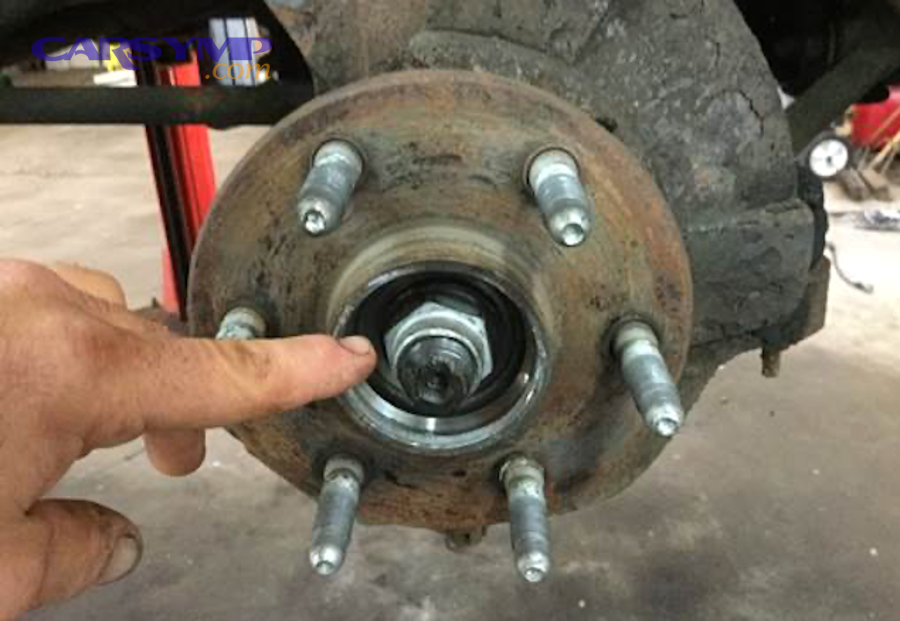
However, the root cause of each sound is fundamentally different. A wheel bearing is a set of steel balls or tapered rollers housed in a metal ring, and its job is to allow the wheel to spin freely while supporting the vehicle’s weight. When the bearing’s races or rolling elements wear down, the metal-on-metal contact produces that characteristic growl. A tire, on the other hand, generates noise through the interaction between its rubber tread blocks and the road surface — air being compressed and released in the tread grooves, rubber deforming under load, and tread blocks striking pavement at varying angles.
The table below summarizes the core differences at a glance:
| Characteristic | Wheel Bearing Noise | Tire Noise |
|---|---|---|
| Sound type | Low growl, hum, grinding | Road hum, whap-whap, drone |
| Changes when turning? | Yes — increases on loaded side | No — remains constant |
| Road surface effect | Minimal change | Amplifies on rough pavement |
| Speed behavior | Peaks ~40 mph, may fade at extremes | Scales consistently with speed |
| Visual clue | Grease leak, hub wear | Cupped/feathered tread pattern |
This side-by-side view sets the foundation for every diagnostic test that follows.
What Does a Bad Wheel Bearing Sound Like?
A bad wheel bearing produces a low-pitched growling, humming, or whirring sound — often described as a “whuh-whuh-whuh” rhythm — that is mechanically generated by metal contact inside the bearing race and varies in both volume and pitch with vehicle speed.
Specifically, the sound tends to be most noticeable at speeds between 35 and 50 mph. Below that range, the rotation speed may not be fast enough to generate significant noise. Above it, road and wind noise can sometimes mask the bearing sound, creating the misleading impression that the problem has resolved. The oscillating, wave-like quality of the volume is one of the clearest clues: rather than a flat, steady drone, a failing bearing tends to pulse — growing louder and quieter in a repeating cycle as the damaged contact point rotates through each revolution.
Another defining characteristic is that the sound often varies with lateral load shifts. When you change lanes, navigate a gentle curve, or shift body weight in the vehicle, the bearing noise may momentarily change in volume. This load-sensitivity is the single most useful diagnostic trait that separates bearing noise from any other source.
What Does Tire Noise Sound Like?
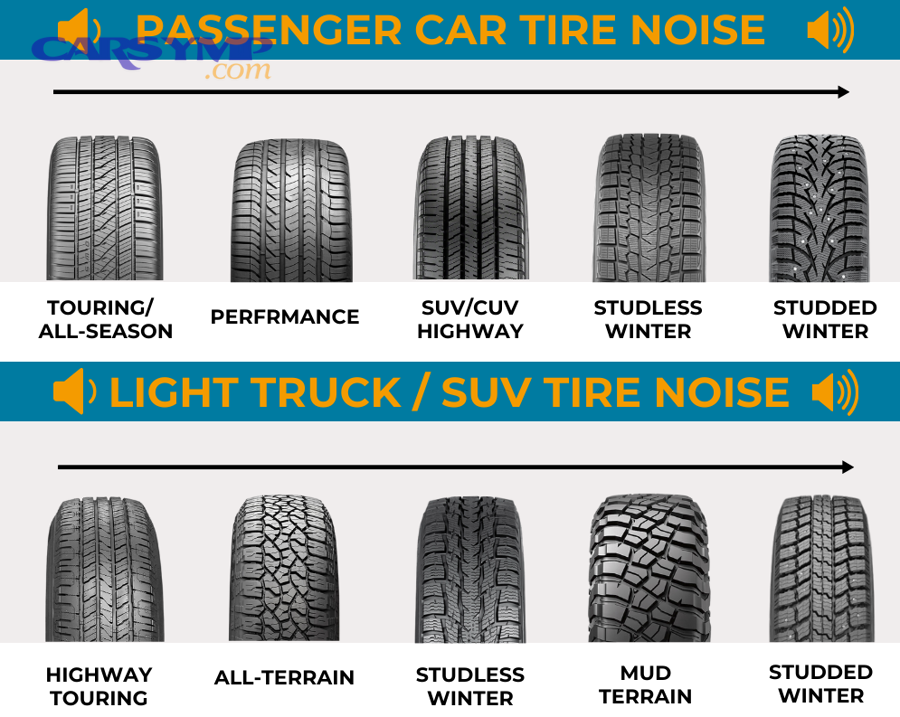
Tire noise is typically a consistent road hum, high-pitched drone, or rhythmic whap-whap-whap pattern generated by the interaction between tire tread and pavement — and it changes character based on road surface texture rather than steering input.
Among the most common tire noise types — hum, roar, and rhythmic thumping — each has a distinct cause. A steady hum or roar is usually produced by worn or aggressive tread patterns dragging across pavement. The rhythmic whap-whap pattern is a classic sign of uneven wear, often caused by under-inflation, worn shocks, or misalignment. A high-pitched whine at lower speeds frequently points to a tire with a feathered tread edge — a pattern created by toe misalignment — while a broader roar at highway speed often indicates cupped or scalloped tread from worn suspension components.
One of the most reliable clues that you are dealing with tire noise rather than a bearing issue is how tire noise changes with road surface. On coarse asphalt or chip-seal roads, tire noise amplifies noticeably. On smooth concrete or newly paved roads, the same tire will sound considerably quieter. A wheel bearing, by contrast, generates its noise internally and is largely indifferent to what the road surface feels like.
How Are Wheel Bearing Noise and Tire Noise Similar?
The two noise types share three primary characteristics that cause them to be regularly confused: both increase in intensity with vehicle speed, both originate near the wheel assembly, and both can produce a low-frequency hum that is difficult to localize from inside the cabin.
For example, at 60 mph on a smooth highway, a moderately worn tire and an early-stage failing wheel bearing can sound nearly identical to a driver listening from the front seat. Neither may produce vibration at that stage. Neither may change noticeably with braking. And because both noises come from the wheel corners of the vehicle, directional isolation — deciding whether the sound is front-left, front-right, or rear — requires deliberate attention rather than a casual listen. This is precisely why systematic diagnostic testing, rather than audio impression alone, is the reliable path to a correct diagnosis.
How Do You Tell the Difference Between Wheel Bearing and Tire Noise While Driving?
You can tell the difference between wheel bearing and tire noise while driving by performing a gentle steering weave test at 40–50 mph: if the noise changes in volume when you turn slightly left or right, a wheel bearing is the likely cause; if it stays constant, tires are the more probable source.
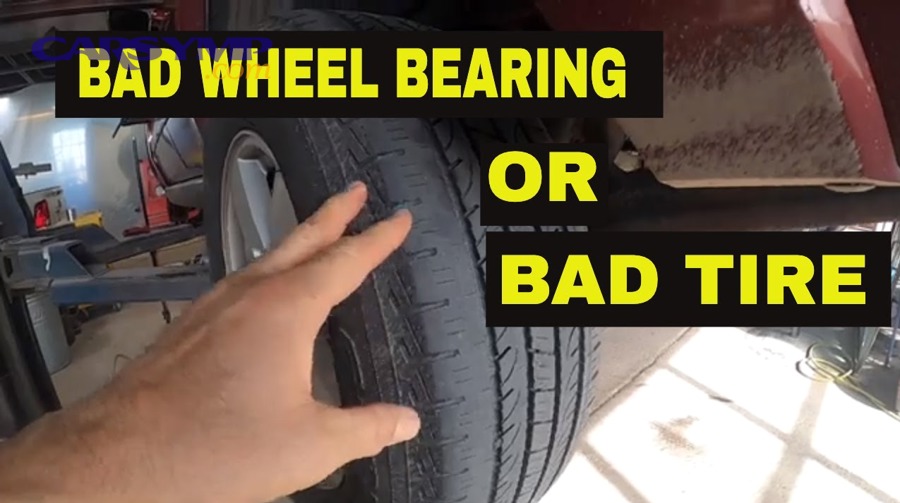
This method works because of a straightforward physics principle. Specifically, when a vehicle turns, the lateral load on the wheel bearings shifts. The bearing on the outside of the turn — the one carrying more of the vehicle’s weight — experiences greater stress, and if it is worn, it produces more noise under that increased load. A tire, which contacts the road at a relatively consistent angle through minor steering adjustments, does not experience the same internal load change and therefore does not significantly alter its noise output.
Does the Noise Change When You Turn the Steering Wheel?
Yes — if the noise changes when you turn the steering wheel while driving at 40–50 mph, a wheel bearing failure is strongly indicated; the bearing on the outside of the turn experiences greater load and produces more noise if it is worn.
Here is the specific diagnostic logic to apply:
- Noise gets louder when turning LEFT → the right wheel bearing is likely the source (right side is on the outside of a left turn, bearing more load)
- Noise gets louder when turning RIGHT → the left wheel bearing is likely the source
- Noise stays the same regardless of steering direction → points strongly toward tire noise
Perform this test on an open, straight road with no traffic. Make gradual, shallow steering inputs — you do not need a sharp turn. Even a 10–15 degree lane-change-style weave is sufficient to shift lateral load meaningfully onto the relevant bearing.
Does the Noise Get Louder at Higher Speeds?
Yes, both wheel bearing noise and tire noise get louder at higher speeds — but the pattern of that increase differs, and recognizing the difference is an important part of tire noise diagnosis.
Tire noise tends to scale in a relatively linear, predictable way: double the speed and the noise roughly doubles in intensity. It is a steady, proportional relationship. Wheel bearing noise, by contrast, often has a non-linear quality. Many drivers report that bearing noise is most prominent in a specific speed window — typically 35 to 55 mph — and then seems to plateau or even decrease slightly at very high speeds. Additionally, bearing noise often has an oscillating, wave-like quality at its peak range, while tire noise at the same speed sounds more like a flat, continuous drone.
If you notice that a hum seems to peak at a certain speed, fade slightly, and then reappear, that oscillating behavior is a strong indicator of a bearing issue rather than a tire problem.
Does the Noise Come from the Front or the Rear?
Wheel bearing and tire noise can originate from either the front or the rear of the vehicle, but front wheel bearings are more likely to fail first because they carry greater loads from steering, acceleration, and braking forces.
To isolate whether a noise is coming from the front or rear, try this simple technique: ask a passenger to ride in the back seat during a test drive and report whether the noise seems closer to them than to the driver. Rear-seat passengers are physically closer to the rear wheels, and a rear noise will often seem louder and more present to them. From the driver’s seat, front noises are typically easier to hear through the steering column and firewall, while rear noises have a slightly more diffuse quality.
For rear tire noise specifically, keep in mind that Alignment issues causing tire noise are often more pronounced at the rear on vehicles with independent rear suspension, where toe settings can drift with worn bushings. If a rear hum appears after a suspension repair or alignment adjustment, checking rear toe settings is a worthwhile step.
What Are the 5 DIY Tests to Diagnose Wheel Bearing vs. Tire Noise?
There are 5 main DIY diagnostic tests for identifying wheel bearing vs. tire noise: the steering weave test, the tire rotation swap, the lift-and-spin hand test, a visual tread wear inspection, and the road surface change test — each targeting a different physical characteristic of the noise source.
These tests are designed to build on one another. Together, they move from the least invasive (no tools, done while driving) to the most hands-on (vehicle raised off the ground). Following them in order narrows the diagnosis efficiently without requiring specialized shop equipment.
Test 1 — The Steering Weave Test (While Driving)
The steering weave test is the fastest and most accessible diagnostic method: at 40–50 mph on a safe, empty road, make gentle left and right steering inputs and listen for any change in noise volume or pitch.
- Drive to an empty stretch of road — a quiet industrial street or parking lot exit ramp works well
- Maintain a consistent speed between 40 and 55 mph
- Make a slow, shallow weave to the left — hold for 2–3 seconds — then weave right
- Listen carefully for the noise to increase on either the left or right input
- If noise increases on a left turn → suspect right wheel bearing
- If noise increases on a right turn → suspect left wheel bearing
- If no change in either direction → proceed to tire-focused tests
This test takes less than two minutes and immediately narrows the diagnosis to either the bearing system or the tire/road noise system. It requires no tools, no lift, and no disassembly.
Test 2 — The Tire Rotation Swap Test
The tire rotation swap test is the most definitive method for separating tire noise from wheel bearing noise: rotate the tires front-to-rear (or cross-rotate) and test drive to determine whether the noise follows the tires or stays fixed at the same corner.
This test works because a tire noise problem is physically attached to the tire. If the noisy tire moves from the front-right to the rear-right position after rotation, the noise should follow it. A wheel bearing, being fixed to the vehicle’s hub assembly, will continue to make noise from the same corner regardless of which tire is mounted there.
- Schedule a standard tire rotation (or perform one yourself if equipped)
- Drive the same route at the same speed as before the rotation
- Note whether the noise has moved to a different corner, intensified in a new location, or disappeared entirely
- If noise follows a specific tire → the tire is the source; inspect that tire for cupping, feathering, or abnormal wear
- If noise stays at the same corner → the wheel bearing or hub assembly at that corner requires inspection
This is the test that most professional technicians use as a primary confirmation step after the steering weave test points toward tires.
Test 3 — The Lift-and-Spin Hand Test
The lift-and-spin hand test directly assesses bearing condition by raising each wheel off the ground, spinning it by hand, and feeling and listening for roughness, grinding, or mechanical resistance in the bearing.
Follow these steps safely:
- Jack up the vehicle using a floor jack at the correct lift points
- Place jack stands before going under or reaching near the wheel
- Grip the tire at the 12 and 6 o’clock positions and spin it firmly
- Listen: a healthy bearing is nearly silent with soft, smooth rotation; a worn bearing produces grinding, rumbling, or a rough “catching” sensation
- Next, grip the tire at the 3 and 9 o’clock positions and rock it firmly in and out
- Any detectable play, wobble, or clunk indicates worn bearing races or a loose hub assembly
- Repeat on all four corners and compare — a side-by-side comparison makes early-stage bearing wear much easier to detect
A tire in good condition will spin freely and silently. A tire with a cupped or out-of-round surface may feel slightly uneven as it rotates, which is a useful secondary finding from this same test.
Test 4 — Visual Inspection of Tire Wear Patterns
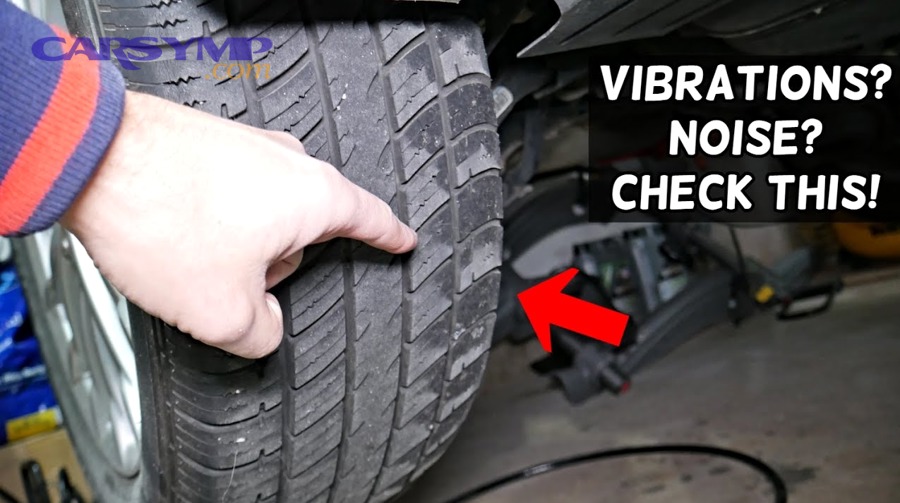
Inspecting tire wear patterns visually is an essential part of tire noise diagnosis — the shape and distribution of tread wear tells you whether noise is being generated by the tire itself and what is causing it.
Run the flat of your hand firmly across each tire’s tread surface. You are feeling for:
- Cupping or scalloping: A series of high-and-low spots around the circumference, caused by worn shock absorbers or struts allowing the tire to bounce. This pattern creates a rhythmic thumping or rumbling noise.
- Feathering: Tread blocks that are sharp on one side and rounded on the other when you run your hand across the tread laterally. This is a sign of toe misalignment — alignment issues causing tire noise are one of the most underdiagnosed sources of road hum.
- One-sided wear: Excessive wear on the inner or outer shoulder of the tread, indicating camber misalignment or an overloaded suspension component.
- Smooth center, worn edges: Chronic over-inflation wears the center tread down faster and can increase road noise at highway speed.
Any of these wear patterns confirms that the tire is contributing to the noise and indicates which underlying issue — suspension wear, alignment, or inflation — is the root cause.
Test 5 — The Road Surface Change Test
The road surface change test uses pavement texture as a natural diagnostic tool: tire noise amplifies significantly on coarse or rough surfaces, while wheel bearing noise persists largely unchanged regardless of what the road surface feels like.
To apply this test:
- Drive a consistent speed — 45–55 mph — across different road surfaces
- Compare noise level on coarse chip-seal or rough asphalt vs. smooth concrete or freshly paved road
- If the noise drops noticeably on smooth pavement and returns on rough surfaces → the tires are the primary noise source; this is a classic example of how Tire noise changes with road surface clues
- If the noise level stays roughly the same across all surface types → the bearing is the more likely source, since it generates noise internally through mechanical contact rather than through road-surface interaction
This test is particularly useful as a quick field check when you are traveling and want to gather more information before scheduling a formal inspection.
What Are the Visual Signs of a Bad Wheel Bearing vs. Worn Tires?
There are distinct visual signs for each condition: a failing wheel bearing typically shows grease leakage at the hub, rust or pitting on the bearing race, and bearing-induced uneven tire wear, while worn tire problems appear as cupping, feathering, or one-sided tread wear directly on the tire surface.
Beyond the sounds a vehicle makes, visual clues provide important confirmation — and in some cases, they reveal a problem before it becomes audible. More importantly, some bearing failures present no audible warning at all until they are severely damaged, making regular visual inspection an essential habit.
What Does a Failing Wheel Bearing Look Like on Inspection?
A failing wheel bearing shows visible grease leakage, dark staining or discoloration around the wheel hub flange, and — when the wheel is lifted — detectable lateral play when the tire is rocked at the 3 and 9 o’clock positions.
Additional visual indicators include:
- Grease residue: Dark, oily staining on the inside of the wheel rim or around the brake rotor hat area. This indicates the bearing seal has failed and protective grease is escaping.
- Rust streaks: Rust running from the hub outward onto the rotor face or wheel mounting surface, suggesting moisture has entered the bearing assembly.
- Uneven tire wear caused by bearing play: When a bearing has enough wear to allow slight wheel misalignment, it produces an irregular wear pattern on the tire — often resembling camber wear, with heavier wear on one shoulder.
- Scored or pitted races: If the hub assembly is removed during a comprehensive inspection, the bearing races may show visible scoring, pitting, or spalling — the classic signs of rolling element fatigue.
What Does Tire-Caused Noise Look Like on the Tread?
Tire-caused noise is visible in the tread pattern as cupping (scalloped dips around the circumference), feathering (angled wear on tread block edges), one-sided shoulder wear, or tread wear indicators flush with the tread surface — each pattern pointing to a specific cause of the noise.
The following table matches each wear pattern to its probable cause and associated noise type:
| Wear Pattern | Appearance | Likely Cause | Noise Type |
|---|---|---|---|
| Cupping/Scalloping | Repeated high-low patches around tread | Worn shocks/struts | Rhythmic thump or rumble |
| Feathering | Sharp edge on one side of tread block | Toe misalignment | High-pitched hum or whine |
| One-sided wear | Heavy wear on inner or outer shoulder | Camber misalignment | Persistent drone at highway speed |
| Center wear | Smooth center, intact edges | Over-inflation | Increased road noise at speed |
| Flat spots | Localized bald patches | Locked-wheel braking | Rhythmic thump at low speed |
Tread wear indicators — the small rubber bridges molded into the tread grooves — become visible and flush with the tread surface when a tire has worn to its legal minimum depth of 2/32″. At that point, the tire is not only noisy but unsafe. Any tire showing wear indicators at or near the tread surface should be replaced immediately regardless of noise level.
Is It Safe to Drive With Wheel Bearing Noise or Tire Noise?
No — it is not safe to drive indefinitely with either wheel bearing noise or tire noise; a failing wheel bearing carries a risk of catastrophic wheel separation at speed, while persistent tire noise signals wear or alignment conditions that can lead to blowout or loss of vehicle control.
The safety urgency of each condition differs significantly in timeline and severity, but neither should be treated as a background nuisance to monitor indefinitely. Both represent mechanical degradation that compounds over time — and both become more expensive and dangerous the longer they are left unaddressed.
How Long Can You Drive on a Bad Wheel Bearing?
Driving on a confirmed bad wheel bearing is not recommended beyond a short, necessary trip to a repair facility — because wheel bearing failure is a progressive mechanical process that can end in complete wheel lockup or separation at highway speed with no further warning.
In early stages, a failing bearing may produce noise without any vibration or handling change, which tempts drivers to monitor and delay. However, the internal damage is continuing with every mile. As the rolling elements and races deteriorate further, the bearing loses its ability to support lateral and axial loads. The sequence of failure typically follows this path:
- Early stage: Audible noise, no vibration, full directional control
- Mid stage: Vibration felt through steering wheel or floor, noise more constant
- Late stage: ABS warning light illuminated (wheel speed sensor affected), significant vibration, possible wobble
- Failure: Bearing seizes or disintegrates, wheel tilts violently outward or locks completely
At stage three or four, the vehicle is no longer safe to operate at any speed. The general professional recommendation is to have the vehicle inspected within 1,000 miles of first noticing noise — sooner if any vibration or ABS warnings are present.
Is Tire Noise a Safety Risk?
Yes — persistent tire noise is a safety risk, because it consistently signals one or more underlying conditions — worn tread, abnormal wear patterns, misalignment, or under-inflation — each of which degrades braking performance, handling stability, and blowout resistance.
The risk level depends on the cause. A mild road hum from an aggressive tread pattern on a healthy, properly inflated tire in good condition carries minimal safety risk. However, the following tire noise scenarios represent genuine hazards:
- Severely cupped tires reduce the contact patch consistency with the road, degrading wet braking performance
- Feathered tires from alignment issues indicate that the vehicle’s suspension geometry is placing stress at incorrect angles on every tire continuously — accelerating wear toward the point of failure
- Tires worn to or below minimum tread depth have dramatically reduced wet traction and are significantly more susceptible to hydroplaning and sudden pressure loss
- A rhythmic thump that grows rapidly louder can indicate a structural failure developing inside the tire carcass — a condition that can lead to sudden, violent blowout without further warning
According to data published by the National Highway Traffic Safety Administration (NHTSA), tire-related failures contribute to approximately 11,000 crashes annually in the United States, with worn tread and under-inflation cited as the two most common contributing factors. Treating tire noise as a diagnostic signal — rather than a nuisance — is one of the most effective steps a driver can take to reduce this risk.
What Else Can Cause a Humming or Grinding Noise That Sounds Like Wheel Bearing or Tire Noise?
There are at least three other mechanical sources that can produce a humming or grinding noise easily mistaken for wheel bearing or tire noise: a worn CV joint, brake drag or a warped rotor, and a noisy rear differential in AWD vehicles — each with distinct differentiating symptoms.
Understanding these alternative sources is critical because misdiagnosing a CV joint as a bearing — or brake drag as tire noise — leads to unnecessary parts replacement and leaves the actual problem unresolved. The following sub-sections explain how to separate each confounding noise source from the two primary candidates.
Can a Worn CV Joint Sound Like a Wheel Bearing?
No — a worn CV joint does not typically sound like a wheel bearing; a failing CV joint produces a sharp clicking or popping sound during tight, slow-speed turns, while a wheel bearing produces a continuous hum or growl that is most prominent at highway speed.
The distinction is straightforward once you know the operating conditions that trigger each sound. A CV joint transfers power through an angled joint at the axle, and it fails by losing the grease that lubricates its internal ball bearings. When the grease is gone, the metal-on-metal contact inside the joint produces a clicking noise — but only when the joint is operating at a significant angle, which happens during tight, low-speed turns such as parking lot maneuvers or U-turns.
If you hear a clicking or snapping sound when turning sharply at low speed and that sound disappears when driving straight at highway speed, the CV axle is the likely source. If the noise is a continuous hum that appears at speed and changes with steering input at highway velocity, return to the wheel bearing diagnostic path.
Can Brake Drag or a Warped Rotor Mimic Wheel Bearing Noise?
Yes — brake drag and a warped rotor can produce sounds that initially resemble wheel bearing noise, but both are accompanied by additional symptoms that distinguish them: brake drag produces heat and a burning smell, while a warped rotor causes a pulsating brake pedal during deceleration.
Brake drag occurs when a caliper fails to fully release after braking, keeping the brake pad in partial contact with the rotor. The resulting friction generates both noise — a grinding or scraping hum from the affected corner — and significant heat. After a highway drive, a dragging caliper will cause the affected wheel’s lug nuts to feel noticeably warm or hot compared to the other wheels. This lug-nut warmth test is a quick field check: run your hand carefully near (not on) each wheel after a 10-minute highway drive and compare temperatures.
A warped rotor produces a very different symptom set: the characteristic brake pedal pulsation under moderate braking is almost never present with wheel bearing failure and immediately narrows the diagnosis to the rotor or brake system.
Can a Noisy Rear Differential Be Confused With Wheel Bearing or Tire Noise in AWD Vehicles?
Yes — a worn ring-and-pinion gear set in a rear differential can produce a humming or howling noise that closely resembles either wheel bearing noise or tire noise, and it is one of the most commonly misdiagnosed noise sources in AWD and 4WD trucks and SUVs.
The key differentiating characteristics of differential noise are:
- It does not change significantly with steering input, making it behave similarly to tire noise on the steering weave test — which is one reason it is frequently misdiagnosed as tires
- It often changes under load vs. coast conditions: differential noise typically changes in tone or volume when you accelerate versus when you lift off the throttle and coast at the same speed; wheel bearing and tire noise generally do not
- It can persist for very high mileages — ring-and-pinion noise, unlike bearing failure, can remain at the same level for tens of thousands of miles without catastrophic progression
To test for differential noise specifically, drive at a consistent speed on a flat road and alternate between light throttle and coasting with your foot completely off the accelerator. If the noise noticeably changes in pitch or character between those two states, suspect the differential rather than the bearings or tires.
How Can a Mechanic’s Stethoscope or Smartphone App Pinpoint the Noise Source?
A mechanic’s stethoscope or a smartphone sound meter app can pinpoint a noise source by measuring relative sound intensity at each wheel corner on a lift, allowing direct comparison that makes even subtle bearing roughness audible and measurable.
These acoustic diagnostic tools are particularly valuable when the noise is early-stage, intermittent, or present at more than one corner simultaneously — conditions where the standard driving tests may produce ambiguous results.
- Mechanic’s stethoscope: A long-probe acoustic stethoscope (available for $15–30 at any auto parts store) can be pressed against the wheel hub, CV axle, differential housing, or brake caliper bracket while the vehicle runs on a lift. The probe transmits mechanical vibration directly to the ear, making bearing roughness audible even at low speeds.
- Smartphone as a listening device: A technique documented in automotive forums involves securing a smartphone with rubber bands to the brake line near the hub, recording while the vehicle runs on a lift, and comparing audio playback from each wheel corner. Volume and frequency differences between corners reveal which bearing is producing mechanical noise.
- Sound meter apps: Applications that display real-time dB levels can be used inside the cabin to measure whether noise in a specific speed range is increasing — useful for documenting early-stage bearing progression over multiple weeks.
When these tools still produce ambiguous results, the appropriate next step is a professional inspection using a chassis ear — a multi-channel electronic listening system that clips to several locations simultaneously and allows the technician to compare noise from all four corners in real time while the vehicle is driven on a road test.