


Driving with tire noise is not automatically dangerous, but it is never something to ignore. Whether it is safe to continue driving depends entirely on the type of sound you hear, its source, and how your vehicle behaves alongside it. A faint hum from a new set of all-terrain tires is very different from a grinding roar that vibrates through your steering wheel — and confusing the two can put you and everyone else on the road at serious risk. Understanding the difference is the first step every driver must take.
Tire noise is generated by the interaction between your tires, the road surface, and the mechanical components connected to your wheels. While some noise is a natural byproduct of normal driving conditions, abnormal sounds are diagnostic signals — each type pointing toward a specific cause, from uneven tread wear and low pressure to failing wheel bearings and damaged suspension parts. A structured tire noise diagnosis gives you the information you need to make a fast, confident decision about whether to keep driving or stop.
Once you identify what your tires are telling you, the next question is clear: what do you do about it? Some situations call for monitoring and a scheduled workshop visit. Others demand that you pull over immediately. Knowing the threshold between those two outcomes, and recognizing the warning signs that push you across it, is what separates a minor inconvenience from a preventable accident.
Beyond the immediate response, the way you maintain your tires over time determines whether dangerous noise ever develops in the first place. Rotation schedules, alignment checks, pressure monitoring, and tire selection all play a direct role in keeping road noise within the safe range. Next, this guide walks through every layer of that picture — from root causes and noise types to safety thresholds, fixes, and prevention — so you can drive with confidence no matter what you hear.
What Is Tire Noise and Why Does It Happen?
Tire noise is any audible sound produced when a rolling tire interacts with the road surface, air, and the mechanical systems attached to the wheel — including tread pattern vibration, air compression in grooves, and component wear. Understanding this definition matters because not all tire noise points to a problem. Some of it is simply physics in motion.
Specifically, tires generate sound through several overlapping mechanisms. As the tread contacts the road, air gets trapped inside the grooves and compresses. When that air is released, it produces sound — and the larger the groove voids, the louder the release. The rubber compound, tread block shape, and tire width all affect how much noise this process generates. On top of that, the road surface itself plays a major role: coarse or porous asphalt amplifies tire noise significantly compared to smooth blacktop.

Mechanical issues add another layer. Worn wheel bearings, damaged suspension components like struts and CV joints, misaligned wheels, and imbalanced tires all introduce abnormal sounds that drivers often mistake for road noise. Recognizing whether your noise comes from the tire surface interaction or from a failing mechanical part is the foundation of every safe driving decision.
What Are the Most Common Causes of Tire Noise While Driving?
There are six primary causes of tire noise while driving, each linked to a specific part of the tire or vehicle system.
- Uneven tread wear — When tires wear inconsistently due to misalignment or skipped rotations, irregular surface patterns develop. These create a rhythmic roar or hum that increases with speed.
- Underinflation — A tire without enough air pressure flexes more with each rotation, generating a low thudding sound and accelerating tread wear.
- Wheel misalignment — Misaligned wheels force tires to contact the road at an angle, causing feathered or one-sided wear that produces a persistent whistling or whining.
- Wheel imbalance — Uneven weight distribution across a tire leads to vibration and rhythmic thumping, particularly at highway speeds.
- Worn wheel bearings — A failing bearing produces a grinding or growling sound that increases in intensity as vehicle speed rises — a key signal in any Wheel bearing vs tire noise comparison.
- Debris in the tread — Rocks, sticks, or road debris caught between the tread blocks create a repetitive clicking or tapping with every rotation.
In many cases, two or more of these causes occur simultaneously, making the noise louder and the diagnosis less straightforward.
Is Some Tire Noise Considered Normal?
Yes, some tire noise is completely normal, particularly in specific tire types and road conditions. All-terrain tires produce a characteristic hum on smooth asphalt because their aggressive, widely spaced tread blocks are engineered for off-road traction, not acoustic efficiency. New tires, regardless of type, may also sound slightly louder than expected during the first few hundred miles while the rubber compound settles and the tread surface breaks in.
Highway speeds naturally increase noise levels across all tire types, since air compression in the grooves happens more rapidly. Driving on coarse chip-seal pavement or grooved concrete amplifies this effect further. The key distinction is consistency: normal tire noise remains steady and predictable under the same conditions. Noise that changes in pitch, grows louder over days or weeks, or appears suddenly is the signal that something has shifted — and that shift warrants a closer look.
What Do Different Types of Tire Noise Mean?
There are four main types of tire noise — humming, grinding, thumping, and squealing or clicking — each corresponding to a different root cause and carrying a different level of urgency for the driver.
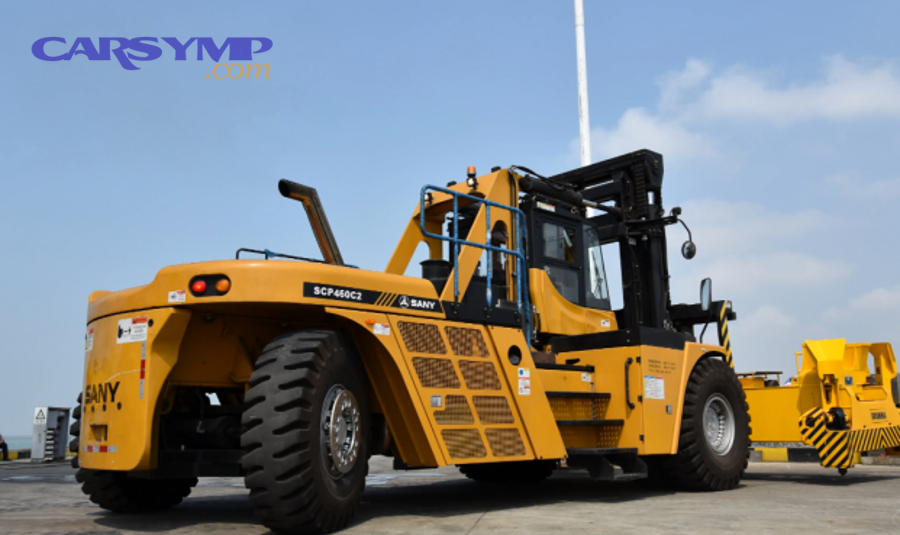
To better understand which noise demands immediate action and which can wait for a scheduled inspection, the following table maps each sound to its most likely cause and recommended response.
| Noise Type | Most Likely Cause | Risk Level | Recommended Action |
|---|---|---|---|
| Humming / Droning | Uneven wear, worn bearing | Moderate | Inspect soon |
| Grinding / Growling | Severe bearing wear, brake contact | High | Stop driving |
| Thumping / Knocking | Belt separation, severe imbalance | High | Pull over safely |
| Squealing / Clicking | Underinflation, CV joint, debris | Moderate–High | Diagnose promptly |
More specifically, each noise type carries its own diagnostic logic, which is why tire noise diagnosis should always begin with identifying the sound before inspecting the component.
What Does a Humming or Droning Noise from Tires Indicate?
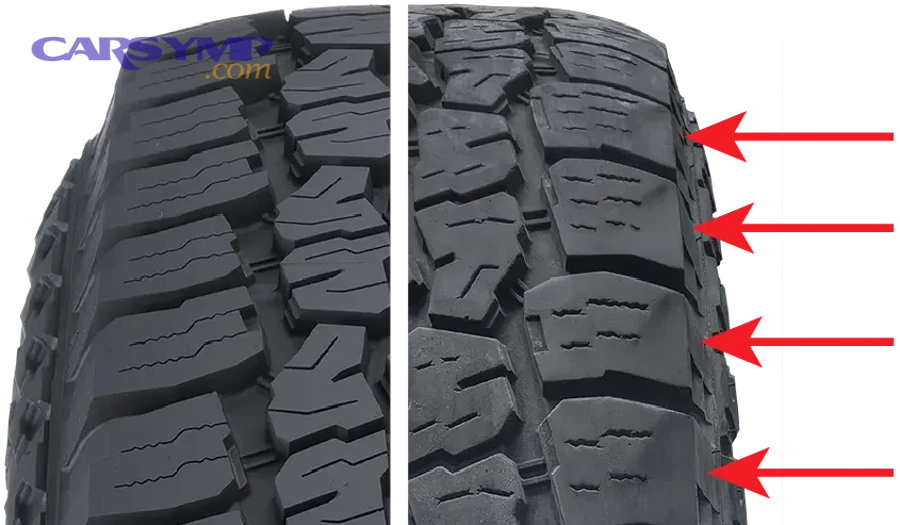
A humming or droning sound is the most common tire noise complaint and typically signals uneven tread wear — particularly cupping (scalloped dips across the tread) or feathered edges caused by misalignment. The sound tends to be consistent at cruising speeds and may shift pitch slightly when changing lanes, as the load transfers between tires.
When the hum has a deeper, growling quality that intensifies steadily as speed increases, a worn wheel bearing is the more likely culprit. In a wheel bearing vs tire noise comparison, the key differentiator is directionality: bearing noise often changes when you gently sway the vehicle side to side at highway speed, because lateral load shifts stress the bearing differently. Tread-wear hum does not change in the same way. Both causes carry moderate risk — the tire may still be drivable in the short term — but neither should be left unaddressed, as both worsen progressively.
What Does a Grinding or Growling Noise from Tires Mean?
A grinding or growling noise is a high-priority warning that demands attention immediately. This sound typically indicates a wheel bearing that has progressed well beyond the humming stage into structural failure, or direct metal-to-metal contact between a brake component and the rotor.
Either cause represents an immediate safety risk. A severely worn wheel bearing can seize, causing loss of wheel control. Brake contact that goes unaddressed damages the rotor rapidly and compromises stopping power. If you hear a grinding noise while driving, especially one that grows louder at higher speeds or during turns, treat it as a stop-now situation rather than a monitor-and-wait one.
What Does a Thumping or Knocking Noise from Tires Signal?
A rhythmic thumping or knocking from the undercarriage most often points to a flat spot on the tire, a separated belt inside the tire carcass, or severe wheel imbalance. Each of these conditions creates an uneven contact surface with the road, producing that distinctive repeating impact with every rotation.
A separated belt is particularly dangerous because the internal structure of the tire is compromised — meaning the tire is at risk of sudden blowout, not just noisy driving. Flat spots can develop when a vehicle sits stationary for extended periods, especially in cold conditions, though many resolve after the tire warms up. Imbalance-driven thumping is usually accompanied by steering wheel vibration. In any case, a thumping noise that does not resolve within the first few minutes of driving is grounds for immediate inspection.
What Do Squealing or Clicking Noises from Tires Suggest?
Squealing from tires most commonly indicates underinflation, misalignment, or brake wear — and in many vehicles, the brake wear indicator is designed specifically to produce a high-pitched squeal when pads reach their minimum thickness. Dismissing a squeal as a tire issue when it is actually a brake warning can have serious consequences.
Clicking or popping sounds, particularly ones that appear or intensify during turns, are strongly associated with a worn or damaged CV joint. The CV joint allows the axle to flex as the wheel turns, and when it degrades, it loses flexibility — producing a distinct click with each rotation of the joint. A loose hubcap can also generate a rhythmic rattle that sounds like it originates from the tire itself, though this is generally lower in urgency. Any clicking that appears during turns should be evaluated by a mechanic promptly, as CV joint failure can leave a vehicle undrivable.
Is It Safe to Drive with Tire Noise?
It depends on the noise type — some tire noises are safe to monitor briefly, while others, such as grinding or thumping, indicate conditions that make continued driving dangerous and potentially life-threatening.
This is the question every driver asks when an unfamiliar sound appears, and the honest answer is that there is no single yes or no. Instead, safety depends on a combination of factors: what the noise sounds like, what it is paired with, how long it has been present, and how your vehicle is handling. A structured three-tier framework helps make that judgment fast and clear.
When Is It Safe to Continue Driving with Tire Noise?
Continued driving is reasonably safe when the noise is consistent with known, low-risk causes and is not accompanied by changes in vehicle handling.
Conditions where short-term continued driving is acceptable include:
- New tires breaking in — mild hum during the first 200–300 miles is normal
- All-terrain tires on smooth roads — tread design creates inherent noise on asphalt
- Debris in the tread — a rhythmic ticking that stops after you remove lodged material
- Road surface change — noise that appears on rough pavement and disappears on smooth roads
Before deciding to continue driving, run through this quick checklist:
- Tread depth is above 2/32″ (penny test passes)
- Tire pressure matches manufacturer specification
- No vibration in the steering wheel or seat
- Vehicle tracks straight without pulling
- Noise is consistent, not worsening
If all of the above are true and the noise matches a low-risk profile, it is reasonable to schedule a professional inspection rather than pulling over immediately.
When Should You Pull Over Immediately Due to Tire Noise?
You should pull over immediately when tire noise is sudden, severe, or accompanied by changes in vehicle control. These are not situations to monitor — they are situations to act on within seconds.
Pull over without delay if you experience:
- A sudden loud thumping or flapping sound, especially at highway speed
- Grinding that appears while braking or accelerating
- Steering wheel vibration that begins at the same time as the noise
- The vehicle pulling hard to one side
- Any noise that appears immediately after hitting a pothole, curb, or road debris
According to the National Highway Traffic Safety Administration (NHTSA), tire-related crashes account for approximately 11,000 accidents per year in the United States, with blowouts and tread separations among the leading contributors. Many of these events are preceded by warning noises that drivers did not act on.
How Long Can You Drive on a Noisy Tire Before It Becomes Dangerous?
There is no universal mileage limit — the answer depends entirely on the noise type and what is causing it. A mild hum from uneven tread wear may remain stable for several hundred miles with no further risk, giving you time to book an appointment. A grinding roar from a failing wheel bearing, on the other hand, has no safe mileage window: the bearing can seize at any point, causing sudden wheel lockup.
The most important principle is this: if the noise is getting louder, it is getting worse. Tire noise rarely stabilizes on its own. A moderate hum that doubles in volume over two weeks is telling you the underlying cause is accelerating. Using that progression as your guide — rather than a fixed mileage number — gives you a more accurate picture of urgency.
What Are the Warning Signs That Tire Noise Is a Serious Safety Issue?
There are two major categories of warning signs that tire noise has crossed into serious safety territory: visual clues on the tire itself, and changes in how your vehicle handles while driving.
These warning signs are the body language of your tires. Tires communicate through appearance and through the feedback they send through the steering wheel, floor, and seat. Learning to read both channels gives you the earliest possible warning before a manageable problem becomes a roadside emergency.
What Visual Clues on a Tire Confirm a Safety Risk?
Visual inspection is the fastest way to confirm whether a noise-producing tire is structurally unsafe to drive on. Look for these specific indicators:
- Bulges or bubbles on the sidewall — indicate internal belt or carcass damage; a blowout risk
- Exposed cords or fabric — the tire’s structural layer is visible, meaning the tire is critically worn
- Cracks in the sidewall or tread — common in tires older than six years; indicate rubber degradation
- Uneven wear patterns — one-sided wear (alignment), cupping (imbalance or worn shocks), center wear (chronic overinflation)
- Tread depth at or below 2/32″ — the legal minimum in most U.S. states; the penny test confirms this when Lincoln’s head is fully visible

Any one of these visual conditions, combined with unusual noise, means the tire should be replaced before further driving — not inspected at a future appointment.
What Vehicle Behavior Alongside Tire Noise Means You Must Stop Driving?
Vehicle behavior changes are the most reliable real-time signal that a tire or related component has reached a critical failure point. Stop driving when you experience any of the following alongside tire noise:
- Steering wheel vibration — particularly vibration that starts suddenly or worsens with speed
- Vehicle pulling to one side — indicates unequal tire contact with the road, possible blowout beginning, or severe alignment failure
- TPMS warning light — a lit tire pressure monitoring system indicator alongside noise means at least one tire has dropped below safe operating pressure
- Shaking through the seat or floor — suggests severe imbalance, a separated belt, or wheel bearing failure
- Reduced steering responsiveness — a tire that has partially failed reduces the driver’s ability to control direction, particularly in emergency maneuvers
Any combination of these behaviors with noise is a compound warning. Do not attempt to drive to a shop. Pull over safely, assess the tires visually, and call for roadside assistance if the cause is not immediately obvious and correctable.
How Do You Fix or Reduce Tire Noise?
Fixing tire noise involves three main approaches — maintenance correction, professional service, and tire replacement — applied based on the identified cause, with most noise problems resolvable before they escalate to safety concerns.

The right fix depends on the root cause identified during tire noise diagnosis. Some solutions take five minutes at a gas station. Others require a full wheel service. Below is a structured approach starting with the simplest interventions.
What Tire Maintenance Steps Reduce Road Noise Immediately?
Several maintenance steps can reduce or eliminate tire noise without a workshop visit, particularly when the cause is debris, pressure, or minor imbalance.
Check and correct tire pressure first. Underinflated tires are one of the most common and easily fixed causes of abnormal road noise. Use a calibrated gauge and inflate to the PSI listed on the vehicle’s door jamb sticker — not the maximum PSI printed on the tire sidewall. Correcting pressure also improves fuel economy and extends tread life.
Remove debris from the tread. If you hear a rhythmic clicking or tapping, inspect each tire for lodged stones, nails, or road material between the tread blocks. Use a non-metal tool to remove embedded material carefully. Note: if a nail or screw has penetrated the tread deeply, do not remove it until you are at a repair shop — the object may be sealing the puncture.
Request a wheel balance and alignment check. Both are routine services available at most tire shops, typically costing between $20 and $100 depending on your location and vehicle type. Correcting imbalance eliminates thumping and vibration; correcting alignment stops the feathered wear patterns that generate whining and humming. These two services together address the majority of progressive tire noise cases.
When Should You Replace Tires Due to Noise?
Tire replacement becomes necessary when noise persists after maintenance correction, when tread depth is at or near the legal minimum, or when visual damage is present.
The following conditions indicate that maintenance will not resolve the noise — replacement is the only safe path forward:
- Tread depth at or below 2/32″ (confirmed by penny test)
- Cupping, feathering, or one-sided wear that has already developed (these patterns do not reverse with rotation or alignment)
- Noise that began after the tire sustained impact damage — pothole, curb strike, or road debris collision
- Tire age exceeding six to ten years, regardless of tread appearance (rubber degrades internally over time)
- Sidewall bulges, cracks, or exposed cords confirmed during visual inspection
According to the Rubber Manufacturers Association, drivers should replace tires no later than ten years from the date of manufacture, indicated by the four-digit DOT code on the sidewall — even if the tires appear visually acceptable and the noise is minimal.
How Can You Prevent Dangerous Tire Noise from Developing?
Preventing dangerous tire noise involves three interconnected habits: following a consistent maintenance schedule, monitoring tire condition between services, and selecting tires that match your vehicle’s specifications and typical driving conditions.
Prevention is significantly cheaper than repair. A tire rotation costs a fraction of what a wheel bearing replacement costs, and a monthly pressure check takes less than two minutes. The following breakdown shows exactly where to invest that time.
What Routine Maintenance Schedule Prevents Tire Noise?
A four-point maintenance schedule covers the vast majority of conditions that lead to noise-generating tire wear and component failure.
| Maintenance Task | Frequency | Purpose |
|---|---|---|
| Tire rotation | Every 5,000–7,500 miles | Evens out wear across all four tires |
| Wheel alignment check | Annually or after impact | Prevents feathered and one-sided wear |
| Tire pressure inspection | Monthly + after temperature change | Prevents underinflation wear and thumping |
| Wheel rebalancing | Every 6,000 miles or at noise onset | Eliminates vibration-driven wear patterns |
The above table provides a reference for building a maintenance calendar that keeps tires quiet and safe across their full lifespan.
Temperature deserves special mention: tire pressure drops approximately 1 PSI for every 10°F decrease in ambient temperature. This means tires that were correctly inflated in summer may be significantly underinflated by January — a common seasonal driver of increased road noise that many drivers overlook.
Does Choosing the Right Tire for Your Vehicle Reduce Noise Risk?
Yes, choosing the correct tire for your vehicle and driving conditions directly reduces the risk of abnormal noise development, because tire design features either contribute to or mitigate the acoustic interaction between the tire and the road.
Tires engineered for quieter performance share several structural features: varied tread block shapes that disrupt harmonic air resonance, smaller tread voids that reduce air compression noise, narrower section widths that generate less road contact sound, and softer rubber compounds that absorb vibration rather than transmitting it. Touring and grand touring tires are specifically optimized for these characteristics.
In contrast, all-terrain and mud-terrain tires are designed for traction, not acoustic performance. Fitting these tires to a vehicle used primarily on highways and city roads introduces noise that no amount of maintenance will fully resolve — because the design itself is the source. Matching tire category to actual driving conditions eliminates that noise before it starts, and also extends tread life by ensuring the rubber compound and tread pattern are operating within the conditions they were engineered for.
Are There Special Tire Noise Situations Drivers Often Overlook?
Beyond the standard causes covered in the main sections, there are four specific tire noise scenarios that drivers frequently misidentify, delay acting on, or encounter without realizing their vehicle type or drivetrain creates a different acoustic context.
These situations sit at the intersection of tire noise and other mechanical systems — which is exactly why they get missed. A driver focused on the tire may not consider that the sound is coming from the axle, the drivetrain, or a system unique to their vehicle platform.
Why Is Tire Noise Louder in Electric Vehicles Than Gas-Powered Cars?
Tire noise is significantly more noticeable in electric vehicles because the absence of an internal combustion engine removes the ambient sound layer that masks road and tire noise in conventional cars. In a gas-powered vehicle, engine vibration and exhaust noise create a constant acoustic background that partially absorbs tire hum. In an EV, that masking effect simply does not exist.
This means EV drivers often report tire noise at levels that would go unnoticed in a comparable gas vehicle — not because the tires are in worse condition, but because the cabin is fundamentally quieter. Many EV manufacturers now specify acoustic foam-lined tires (sometimes called “acoustic comfort tires”) that contain a layer of sound-absorbing material inside the inner liner. These tires reduce cavity resonance — the drum-like hum generated by air vibrating inside the tire — by up to 9 decibels according to Continental Tires’ product engineering data. EV drivers who experience sudden increases in road noise should verify whether their replacement tires meet the acoustic specification recommended by their vehicle manufacturer.
Can Tire Noise Be an Early Warning Sign of CV Joint or Strut Failure?
Yes, tire noise is frequently the first symptom drivers notice when a CV joint or strut is beginning to fail — because both components affect how the tire contacts the road, which changes the acoustic signature of the tire’s rolling motion.
A worn CV joint produces a distinctive clicking or popping sound, most audible during low-speed turns. Because the CV joint connects the axle to the wheel, its degradation affects wheel angle and creates lateral stress on the tire — which is why the noise intensifies in turns and may seem to come from the tire itself. Left unaddressed, a failed CV joint renders the vehicle undrivable.
Worn struts operate differently but create a similar acoustic misdirection. Struts absorb vertical road impact, and when they degrade, every bump and road irregularity transmits more force into the tire and wheel assembly. This produces thumping and vibration that drivers naturally attribute to the tire. The distinction: if replacing or rotating tires does not resolve a thumping noise, the struts are the next component to inspect.
How Does Tire Noise Differ Between Front-Wheel, Rear-Wheel, and All-Wheel Drive Vehicles?
Tire noise behavior varies by drivetrain because each configuration places different mechanical loads and wear patterns on different axles.
In front-wheel drive (FWD) vehicles, the front tires handle both propulsion and steering, which accelerates their wear relative to the rear. This means FWD drivers more often hear noise originating from the front axle — typically a hum or whine that worsens during acceleration. Front wheel bearings also tend to wear faster in FWD vehicles due to the combined rotational and lateral forces applied to them.
In rear-wheel drive (RWD) vehicles, the rear tires carry the propulsion load, making rear-axle bearing noise and rear tread wear more common noise sources. A growl from the rear that increases with speed in an RWD vehicle warrants a rear wheel bearing check before assuming tread wear is the cause.
In all-wheel drive (AWD) vehicles, tire noise diagnosis becomes more complex because uneven tire wear across all four corners — caused by mixing tire brands, sizes, or tread depths — can strain the center differential or transfer case. An AWD vehicle driven with mismatched tires may produce noise that originates from the drivetrain rather than the tires themselves, and some AWD systems can sustain expensive internal damage from that imbalance over time.
Do Local Roadworthiness Laws Require Action on Noisy Tires?
Tire noise itself is not directly regulated by roadworthiness laws in most U.S. jurisdictions — but the mechanical conditions that cause dangerous tire noise almost always are. The distinction matters: a tire that sounds bad may be perfectly legal, while a quiet tire with a sidewall bulge may fail a roadworthiness inspection.
Most U.S. states require that tires meet minimum tread depth standards (2/32″ is the federal standard), show no visible structural damage such as exposed cords or sidewall bulges, and be correctly sized for the vehicle. Many states include tire condition as a mandatory inspection item during annual vehicle safety checks. A tire that passes the visual portion of that inspection may still be producing abnormal noise — which is why roadworthiness compliance and personal safety are two separate thresholds, and the personal safety standard is always higher.
In short, do not use a passed inspection as a reason to delay addressing tire noise. Inspections test minimum legal thresholds. Your safety margin begins well above that floor.