


Diagnosing torque converter problems accurately requires more than simply reading a code off an OBD-II scanner. The torque converter sits at the heart of every automatic transmission system, and when it begins to fail, the powertrain control module generates a specific family of diagnostic trouble codes — most commonly in the P0740 through P0744 range — that point technicians and informed vehicle owners toward the root cause. Understanding what each code means, how scan data confirms or contradicts it, and which live parameters tell the real story is the difference between a precise repair and an expensive misdiagnosis.
Torque converter failure symptoms often overlap with other drivetrain issues, which makes scan data interpretation a critical skill. A shuddering transmission at highway speeds, unexpected stalling at low speed, or a noticeable drop in fuel economy can all originate from the torque converter clutch circuit — but they can just as easily come from a faulty solenoid, degraded transmission fluid, or a misbehaving transmission control module. The right diagnostic path starts by understanding the converter itself, then systematically working through the code definitions, live data parameters, and circuit-level testing before any part is replaced.
Lock-up clutch problems explained correctly require a clear grasp of how the torque converter clutch engages, what electrical and hydraulic conditions must be met, and how the PCM monitors the system in real time. When the lock-up clutch slips, sticks, or loses electrical control, the vehicle’s computer records freeze-frame data alongside the DTC — giving a diagnostic snapshot of exactly what the engine, transmission, and converter were doing at the moment of the fault. Reading that data intelligently shortens diagnosis time and builds confidence in the repair decision.
For vehicles where no trouble code appears despite clear symptoms, or where diagnosis escalates beyond a standard OBD-II reader into oscilloscope-level signal analysis, the approach must expand further. Repair vs rebuild vs replacement options for the converter itself only make sense after the true root cause is isolated. This article walks through every layer of that diagnostic process — from the foundational mechanics of the converter, through each specific trouble code, into live scan data interpretation, and finally into the advanced edge cases that standard guides rarely cover.
What Is a Torque Converter and Why Does It Trigger Diagnostic Trouble Codes?
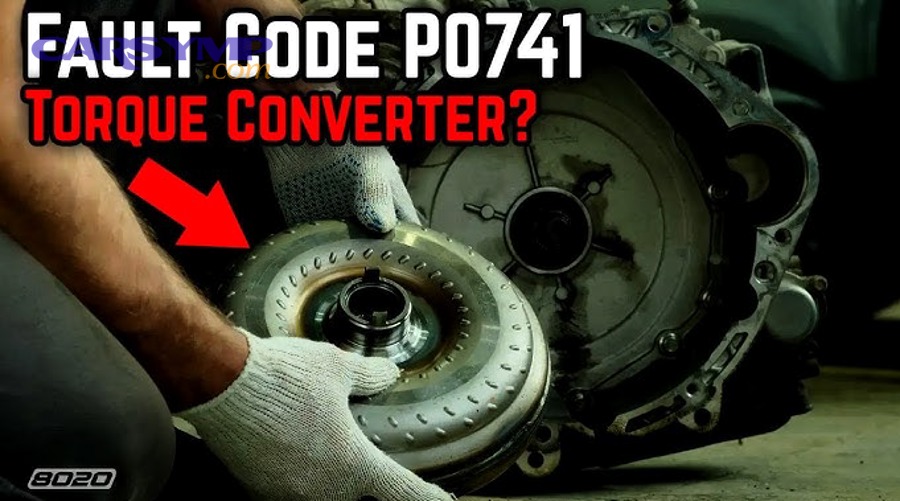
A torque converter is a hydraulic coupling device — a fluid-filled, doughnut-shaped component positioned between the engine’s flexplate and the transmission input shaft — that transfers and multiplies engine torque to the transmission without a mechanical clutch, while also allowing the engine to idle with the vehicle stationary.
To better understand why this component generates trouble codes, it helps to start with exactly how the torque converter operates and how the vehicle’s computer monitors it.

The torque converter houses four core components that work together to move power from the engine to the transmission. The impeller (pump) is bolted to the converter housing and spins with the engine, flinging transmission fluid outward. That fluid strikes the blades of the turbine, which is connected to the transmission input shaft and begins to rotate, transferring torque. The stator sits between the two and redirects returning fluid to multiply torque at low speeds, improving efficiency. Finally, the lock-up clutch (TCC) mechanically locks the turbine to the converter housing at higher speeds, eliminating fluid slip and creating a direct 1:1 mechanical connection between the engine and transmission.
The transmission control module (TCM) or powertrain control module (PCM) continuously monitors the converter’s behavior by comparing the rotational speed of the converter to the transmission input shaft speed. When the difference between those two readings falls outside acceptable parameters — or when the electrical circuit controlling the TCC solenoid shows abnormal resistance, voltage, or signal patterns — the PCM logs a diagnostic trouble code and illuminates the check engine light.
How Does the Torque Converter Clutch (TCC) Work in Normal Operation?
The TCC engages automatically once the vehicle reaches a calibrated speed threshold — typically above 37 mph under light throttle — to lock the engine’s output directly to the transmission input shaft at a 1:1 ratio.
Before lock-up, the converter operates in pure fluid-coupling mode, which allows some slip between the impeller and turbine. This slip is intentional at low speeds because it cushions power delivery and prevents stalling. However, at highway speeds, that same slip wastes fuel and generates heat. The TCC eliminates it.
The PCM commands TCC engagement by sending a pulse-width modulated (PWM) signal to the TCC solenoid, a small electro-hydraulic valve inside the transmission. The solenoid opens and closes a hydraulic circuit that applies fluid pressure to engage the lock-up clutch. The PCM controls the solenoid’s duty cycle — the percentage of time the signal is “on” — to modulate clutch engagement smoothly, preventing a jarring mechanical clunk when lock-up occurs.
Throughout this process, the PCM compares the actual turbine input shaft speed to the calculated converter speed. If the TCC is commanded on but the two speeds remain unequal, the PCM recognizes that the clutch is slipping and logs a fault.
What Conditions Cause the PCM to Set a Torque Converter Trouble Code?
The PCM sets a torque converter trouble code whenever it detects one of three conditions: a speed differential that exceeds calibrated slip thresholds, an electrical anomaly in the TCC circuit, or an inability to command the solenoid within expected parameters.
The RPM delta trigger is the most common mechanical path to a code. If the converter RPM and transmission input shaft RPM diverge beyond the PCM’s calibrated window while the TCC is commanded on, the PCM interprets this as clutch slippage and logs a P0740 or P0741. This can happen because of worn clutch material inside the converter, reduced hydraulic pressure from a faulty solenoid, or contaminated ATF blocking the hydraulic passages.
The electrical trigger path is distinct. The PCM monitors circuit continuity, resistance, and signal quality on the TCC solenoid wiring at all times. A short to ground, an open circuit, a wiring harness damaged by heat or abrasion, or a solenoid whose internal resistance has drifted outside specification will all trigger circuit-specific codes such as P0743 (solenoid electrical fault) or P2769/P2770 (low/high circuit voltage).
Contaminated or degraded transmission fluid is a less obvious but frequent trigger. Dirty ATF increases internal resistance in hydraulic passages, changes the viscosity of the fluid acting on the solenoid valve, and can prevent full hydraulic engagement of the TCC — causing enough slip to trigger a fault even when all electrical components are functioning correctly.
What Are the Torque Converter OBD-II Trouble Codes and What Does Each One Mean?
There are six primary OBD-II diagnostic trouble codes associated with torque converter problems: P0740, P0741, P0742, P0743, P0744, P2769, and P2770 — grouped into the P074X family for circuit and mechanical faults, and the P276X family for electrical signal level faults.

Specifically, each code within this family targets a different aspect of TCC circuit operation, which means the correct repair path varies significantly depending on which code — or combination of codes — is present.
What Does Code P0740 Mean and How Serious Is It?
P0740 means the PCM has detected a malfunction in the torque converter clutch circuit — specifically, that the ECU has lost reliable control over the converter clutch, and drivability problems are imminent.
This is a high-severity code. Because the torque converter is responsible for transferring all engine power to the transmission, a compromised TCC circuit leads directly to reduced efficiency, increased transmission fluid temperatures, potential for transmission slippage, and in some cases complete loss of certain gear ranges. Driving with an active P0740 over extended distances risks damage to internal transmission components that are far more expensive to repair than the original fault.
The most common root causes of P0740 include:
- A faulty or stuck TCC solenoid
- Contaminated or low-level ATF blocking solenoid valve operation
- Damaged wiring or connectors in the transmission harness
- A failed or miscommunicating TCM/PCM
- Internal converter clutch wear or failure
Importantly, P0740 does not by itself identify which of these causes is responsible — it is a general circuit malfunction flag. Scan data and component testing are required to isolate the specific fault.
What Is the Difference Between P0741, P0742, P0743, and P0744?
P0741 indicates the TCC is stuck off (slipping when commanded on); P0742 indicates the TCC is stuck on (locked when it should be disengaged); P0743 identifies an electrical fault in the solenoid circuit; and P0744 flags intermittent solenoid signal behavior.
Understanding the distinctions between these codes prevents misdiagnosis and unnecessary part replacement. The following table summarizes each code, its mechanical or electrical meaning, the stuck position (if applicable), and the primary component to suspect first.
| Code | Meaning | Stuck Position | Primary Suspect |
|---|---|---|---|
| P0741 | TCC circuit performance — stuck off | Off (slipping) | TCC solenoid, dirty ATF, valve body |
| P0742 | TCC circuit stuck on | On (locked) | TCC solenoid (closed failure), TCM |
| P0743 | TCC solenoid electrical fault | N/A — electrical | Solenoid wiring, solenoid coil, harness |
| P0744 | TCC solenoid circuit intermittent | Intermittent | Connector corrosion, chafed wire, loose pin |
P0741 is the most common of the four. When the converter is stuck off — meaning the TCC never locks up despite PCM commands — the result is excessive slip at highway speeds, poor fuel economy, and elevated ATF temperatures. P0742 is the more dangerous condition: a TCC locked permanently in engagement will stall the engine when the vehicle slows to a stop, because the transmission cannot disconnect from the engine. P0743 and P0744 are circuit-level codes that point the diagnosis toward wiring, connectors, and solenoid coil resistance testing rather than hydraulic or mechanical components.
When Do Codes P2769 and P2770 Appear Instead of P074X Codes?
P2769 appears when the PCM detects an abnormally low voltage or signal level in the TCC circuit, while P2770 appears when the signal level is abnormally high — both indicating that the electrical supply to the TCC solenoid is outside calibrated parameters.
These codes represent a more specific level of electrical diagnosis than the P074X family. Where P0743 simply flags a general solenoid circuit fault, P2769 and P2770 tell the technician the direction of the electrical deviation — low or high — which narrows the diagnosis considerably. A P2769 low signal commonly points to a short to ground, a failed driver circuit in the TCM, or a broken wire with partial continuity. A P2770 high signal more often indicates a short to voltage, a faulty relay supplying the solenoid, or an internal TCM fault creating an overdriven signal.
A critical diagnostic note: the simultaneous presence of multiple transmission trouble codes — for example, P0740 alongside P2769 — is a strong indicator of an electrical failure rather than a mechanical converter problem. Professional diagnostic guidelines consistently recommend that multiple transmission codes together should direct the diagnosis toward circuit testing before any hydraulic or converter components are inspected.
What Are the Symptoms of Each Torque Converter Trouble Code?
There are four primary symptom categories associated with torque converter trouble codes: check engine light illumination, drivability disturbances (shudder, stall, or hesitation), reduced fuel economy, and abnormal shifting behavior — each presenting with varying intensity depending on the specific active code.

However, these symptoms are rarely unique to the torque converter, which is precisely why scan data and systematic diagnosis are essential. Symptoms alone cannot confirm which component has failed.
Is a Shuddering or Vibrating Transmission Always a Torque Converter Code?
No — a shuddering or vibrating transmission is not always caused by a torque converter code, though shuddering felt specifically at highway cruise speeds between 40 and 55 mph during light throttle is the most characteristic symptom of TCC slip.
The challenge with transmission shudder is that it closely mimics the feel of an engine misfire, a failing driveshaft U-joint, or a worn transmission mount. Without scan data confirming an active TCC slip code or abnormal RPM delta between the converter and input shaft, a shudder diagnosis can go in the wrong direction entirely.
To distinguish torque converter shudder from other sources, technicians use live scan data to monitor TCC slip percentage and TCC engagement status in real time during a road test. Genuine TCC shudder will appear as a fluctuating or inconsistent TCC engagement status on the scanner precisely when the shudder occurs — typically when the PCM is attempting to engage the lock-up clutch but the clutch material is worn or the hydraulic pressure is insufficient for a clean lock. Engine misfire, by contrast, will show up as a misfire counter increment on the relevant cylinder, with no correlation to TCC status.
Can a Torque Converter Fail Without Setting Any Diagnostic Trouble Code?
Yes — a torque converter can fail mechanically without triggering any OBD-II diagnostic trouble code, particularly in the early stages of wear or when the failure mode does not cross the PCM’s programmed detection thresholds.
This is one of the most important and frequently overlooked realities in torque converter diagnosis. The PCM monitors specific, quantifiable parameters — RPM delta, solenoid circuit voltage and resistance, duty cycle compliance. If a failing converter is still operating within the outer limits of those parameters despite producing noticeable symptoms, no DTC will be stored. The check engine light will remain off, and a basic code scan will return clean results.
Torque converter failure symptoms that commonly appear without a stored DTC include:
- A firm, banging 1-to-2 gear shift (often misdiagnosed as a valve body or solenoid issue)
- Loss of acceleration power at speed despite rising RPM (converter slipping under load but not yet reaching DTC threshold)
- Burnt-smelling ATF indicating excessive heat generation inside the converter
- Slight hesitation when pulling away from a stop under heavy load
In these cases, a stall-speed test becomes the primary diagnostic tool. With the transmission in Drive or Reverse, brakes fully applied, and the accelerator pressed to full throttle for no more than five seconds, the peak RPM reached before the vehicle strains to move reveals whether the converter is functioning within its designed stall speed range. A stall speed significantly lower than specification indicates a worn or damaged impeller or stator. A stall speed significantly higher than specification suggests the TCC clutch or internal converter components are not holding under load.
How Do You Use a Scan Tool to Read Torque Converter Live Data?
Accurate torque converter diagnosis using a scan tool requires accessing live PIDs (Parameter IDs) from the transmission control module — real-time data streams that reveal what the converter and TCC solenoid are actually doing, separate from any stored fault codes.

Specifically, the distinction between reading stored DTCs and monitoring live data is fundamental to accurate diagnosis. A stored DTC is a historical record — a snapshot of conditions at the moment a fault threshold was crossed. Live data, by contrast, shows the system’s behavior right now, under the exact driving conditions that reproduce the symptom.
Not all scan tools access the same data depth. Basic OBD-II code readers retrieve generic DTCs and limited freeze-frame data — they cannot communicate with the TCM for enhanced live PIDs or bidirectional solenoid testing. Enhanced or professional-grade transmission scanners access manufacturer-specific PIDs, full live data streams from the TCM, and in many cases allow the technician to command the TCC solenoid directly to verify response.
What Live Data Parameters Should You Monitor for Torque Converter Problems?
The five most diagnostically critical live PIDs for torque converter diagnosis are TCC slip speed, TCC duty cycle, transmission fluid temperature, TCC engagement status, and the engine RPM-to-vehicle speed ratio.
Each of these parameters tells a different part of the story, and monitoring them simultaneously during a road test provides a complete picture of converter behavior. The following breakdown explains what each PID reveals and what abnormal values indicate.
TCC Slip Speed / RPM Delta
This PID displays the difference between converter RPM and transmission input shaft RPM. In normal operation, once the TCC is commanded on and fully engaged, this value should be at or near zero — confirming a solid 1:1 mechanical lock. If TCC slip speed remains elevated (typically above 50–100 RPM) while the PCM shows TCC commanded on, the clutch is slipping. This is the most direct confirmation of a P0741-type fault.
TCC Duty Cycle
This PID shows the percentage of time the PCM is energizing the TCC solenoid. A normal commanded engagement at highway speed shows a duty cycle in the range of 90–100%. A duty cycle stuck at 0% while lock-up is expected means the PCM is not commanding the solenoid — pointing to a TCM fault or a wiring break between the TCM and solenoid. A duty cycle at 100% that never changes suggests the solenoid driver circuit is shorted or the TCM has lost the ability to modulate the signal.
Transmission Fluid Temperature
Elevated ATF temperature during normal driving is a secondary indicator of TCC slip. Every degree of slip generates heat inside the converter. If ATF temperature climbs rapidly under light highway driving where the converter should be locked, it confirms that converter efficiency is compromised even if the slip speed PID appears borderline.
TCC Engagement Status
Many enhanced scan platforms show a binary or multi-state TCC status PID — values such as “Commanded On / Actual Off” or “Engaged / Slipping.” This PID directly confirms whether the PCM’s command matches the converter’s actual behavior, isolating whether the fault is in the control command (TCM side) or the mechanical/hydraulic response (solenoid and converter side).
Engine RPM vs. Vehicle Speed Ratio
At a known gear ratio and vehicle speed, engine RPM should be predictable. If RPM is disproportionately high for a given vehicle speed during TCC engagement, it confirms the converter is not holding lock-up — even before the dedicated TCC PIDs are analyzed.
How Do You Monitor TCM Commands to the TCC Solenoid with a Scan Tool?
Monitoring TCM commands to the TCC solenoid requires connecting the scan tool to the OBD-II port and navigating to the transmission or TCC-specific live data channel, then conducting a controlled road test that brings the vehicle into the exact operating conditions under which TCC lock-up is commanded.
Because the TCC solenoid only activates under specific conditions — light throttle, vehicle speed above the lock-up threshold, transmission fluid at operating temperature — it is not possible to evaluate TCC solenoid behavior while the vehicle is stationary in a driveway. The road test must replicate the fault condition.
During the test, the technician monitors TCC duty cycle and TCC status simultaneously. If the PCM shows a high duty cycle command (90%+) but TCC slip speed remains elevated and TCC status shows “slipping” or “off,” the diagnosis shifts to the solenoid, hydraulic circuit, or mechanical converter. If the PCM shows a duty cycle near 0% when lock-up is expected, the problem is upstream — either in the TCM’s ability to generate the command or in the wiring between TCM and solenoid.
For circuit-level confirmation, a digital volt/ohmmeter (DVOM) can be connected with the positive lead on the TCM wiring harness pin and the negative lead to chassis ground, replicating the duty cycle reading electrically. A duty cycle that stays intermittent, spikes, or reads 0% or 100% without transitioning confirms a TCM output driver fault or a wiring fault between TCM and solenoid, guiding the next step of diagnosis.
How Do You Accurately Diagnose the Root Cause of a Torque Converter Trouble Code?
Accurately diagnosing a torque converter trouble code requires a structured 6-step diagnostic sequence — beginning with ATF condition inspection and ending with TCM fault isolation — producing a confirmed component-level root cause before any part is replaced.
This approach is critical because the most common and costly mistake in torque converter diagnosis is replacing the converter or solenoid without first eliminating fluid contamination, wiring faults, and TCM issues. Each step eliminates a fault category and narrows the diagnosis.
What Is the Correct Diagnostic Sequence for P0740 and Related Codes?
The correct diagnostic sequence for P0740 and related torque converter codes follows six ordered steps, each building on the findings of the previous one.
Step 1 — Assess ATF Condition
Remove the transmission dipstick (or use the drain plug on sealed transmissions) and evaluate the fluid visually and by smell. Healthy ATF is translucent red with no odor. Dark brown or black fluid with a burnt smell indicates degraded ATF or internal converter wear generating friction material contamination. Contaminated fluid can restrict solenoid valve operation and hydraulic passages sufficiently to trigger slip codes without any electrical or mechanical component being faulty. If ATF is visibly degraded, a fluid change is the first repair step — not solenoid or converter replacement.
Step 2 — Inspect Wiring and Connectors
With the key off and transmission harness connectors unplugged, visually inspect all TCC solenoid wiring for chafing, heat damage, corrosion at connector pins, spread or backed-out terminals, and broken wire strands. Many P0743 and P0744 codes resolve entirely after a connector is reseated or a corroded terminal is cleaned and treated. This step costs nothing and rules out the most common cause of circuit codes before any component is tested.
Step 3 — Test TCC Solenoid Resistance
With the solenoid connector unplugged, use a DVOM to measure resistance across the solenoid terminals. Compare the reading to the manufacturer specification (typically between 10 and 30 ohms depending on vehicle make). A reading of zero ohms indicates a short circuit inside the solenoid coil. An open-circuit reading (OL or infinite resistance) indicates a broken coil wire. Either result confirms solenoid replacement is needed.
Step 4 — Monitor Live TCC Duty Cycle Under Driving Conditions
Connect the enhanced scan tool and conduct the road test described in the previous section. Capture TCC duty cycle, TCC slip speed, and TCC status simultaneously during conditions that should trigger lock-up. Analyze whether the fault is in the PCM command (duty cycle absent or erratic) or in the solenoid/hydraulic response (duty cycle present but no lock-up occurring).
Step 5 — Evaluate TCM Output Signal Quality
If Steps 1 through 4 produce no clear finding, connect a digital storage oscilloscope or graphing multimeter to the TCM output pin for the TCC solenoid control circuit. A healthy PWM waveform shows clean, consistent square waves at the commanded duty cycle frequency. A degraded, noisy, or absent waveform at the TCM output — even when the scan tool shows a duty cycle command — confirms an internal TCM driver fault.
Step 6 — Evaluate TCM Software and Hardware
If all wiring, solenoids, and hydraulic components check out, the TCM itself may require updated calibration software, a reset, or replacement. Some manufacturers have issued technical service bulletins (TSBs) for TCM software updates that resolve false TCC fault codes in specific model years. Checking for active TSBs before replacing a TCM can save significant time and cost.
How Do You Tell the Difference Between a Faulty TCC Solenoid and a Faulty TCM?
A faulty TCC solenoid is confirmed by abnormal resistance on a DVOM test, no hydraulic response to a verified duty cycle command, and codes P0743 or P0744; a faulty TCM is indicated by a correct resistance reading at the solenoid, zero or fixed 100% duty cycle despite lock-up conditions being met, and often multiple unrelated transmission codes appearing simultaneously.
This distinction is the single most important judgment call in torque converter diagnosis, and it is also the point where misdiagnosis most frequently occurs. The decision tree is straightforward when followed in order:
- If solenoid resistance is out of spec → replace solenoid first
- If solenoid resistance is normal AND wiring is intact AND duty cycle is absent or fixed → suspect TCM
- If duty cycle is present and correct AND solenoid responds electrically AND hydraulic TCC slip persists → suspect valve body or internal converter
Replacing the solenoid when the TCM is the actual fault wastes the cost of the part and labor to drop the transmission pan. Replacing the converter when a solenoid or fluid issue is responsible is far more expensive — converter replacement typically requires full transmission removal, and repair vs rebuild vs replacement decisions for the converter itself only become relevant after all upstream causes have been conclusively eliminated.
Does Contaminated Transmission Fluid Alone Trigger Torque Converter Codes?
Yes — contaminated transmission fluid alone can trigger torque converter trouble codes, including P0740 and P0741, without any electrical component or mechanical converter part having failed.
This is one of the most important facts in torque converter diagnosis, and it represents the most cost-effective resolution path when the code is caught early. ATF serves as both the hydraulic medium for TCC solenoid valve actuation and the lubricant for all internal converter components. When ATF degrades, its viscosity changes, its anti-wear additives break down, and friction material shed from the clutch packs or TCC clutch itself circulates through the fluid. This contamination can partially block the small orifices in the TCC solenoid valve, reducing hydraulic pressure below the threshold needed for full clutch engagement — creating measurable TCC slip that the PCM logs as a fault.
A complete ATF and filter service — using the manufacturer-specified fluid type — is always the first repair action when P074X codes are present alongside discolored or degraded fluid. In many cases, particularly on vehicles with moderate mileage and no prior fluid service history, this single repair resolves the code and the symptom entirely. However, a fluid service will not repair a converter with mechanically worn clutch material, a damaged stator, or a failed solenoid with abnormal resistance. Those conditions require component testing to confirm, and fluid flush alone will not resolve them regardless of what some online sources suggest.
What Are the Advanced and Edge-Case Scenarios in Torque Converter Fault Diagnosis?
Beyond standard OBD-II code reading and live data monitoring, there are four advanced diagnostic scenarios where conventional scan tool methods are insufficient: oscilloscope-level solenoid signal analysis, stall-speed testing for no-code mechanical failure, the use of scan data as legal or warranty evidence, and the comparison between basic and professional scan tool capability for TCC diagnosis.

These scenarios represent the boundary between a successful DIY or independent shop diagnosis and the limits of standard equipment — and understanding them ensures that a diagnosis doesn’t stall simply because the standard path ran out of answers.
How Do You Use an Oscilloscope to Diagnose TCC Solenoid Signal Quality?
An oscilloscope diagnoses TCC solenoid signal quality by displaying the actual voltage waveform generated by the TCM at the solenoid control wire in real time, revealing signal degradation, electrical noise, or erratic switching behavior that a DVOM duty cycle reading cannot detect.
A DVOM averages the duty cycle over time and returns a single percentage. This is useful for confirming whether a signal is present, but it cannot reveal whether the signal’s waveform is clean. A TCM with a partially failing solenoid driver circuit may show 75% duty cycle on a DVOM while generating a ragged, inconsistent waveform with voltage spikes or signal drop-outs that prevent the solenoid from responding predictably.
To perform oscilloscope diagnosis on the TCC solenoid circuit, connect the oscilloscope’s positive probe to the TCM’s solenoid control output pin at the harness connector, and the negative probe to a known good chassis ground. Conduct the road test under TCC engagement conditions and observe the waveform. A healthy signal shows clean, consistent square waves with fast rise and fall times and stable high and low voltage levels that match the commanded duty cycle. A degraded signal shows rounded transitions, voltage spikes at switching edges, inconsistent frequency, or random drop-outs — all of which indicate either a failing TCM driver stage or excessive resistance in the wiring between TCM and solenoid.
This level of diagnosis is particularly valuable for P0744 intermittent solenoid codes, where the fault only appears under specific thermal or load conditions and cannot be reproduced consistently on a scan tool.
How Is a Stall-Speed Test Used When No Torque Converter Code Is Present?
A stall-speed test diagnoses mechanical torque converter condition when no DTC is stored but symptoms suggest converter failure, by measuring peak engine RPM under maximum load with the transmission in gear and the vehicle stationary.
The stall-speed test is performed as follows: with the engine fully warmed, ATF at operating temperature, the parking brake firmly applied, and the service brakes depressed with full foot pressure, the throttle is pressed to the floor while the transmission is held in Drive (or Reverse to test that direction). The peak RPM reached just before the vehicle strains against the brakes is recorded. This test should not exceed five seconds per attempt, with a cool-down period between tests to prevent ATF overheating.
Normal stall speed varies by manufacturer but typically falls between 1,800 and 2,500 RPM. A stall speed significantly below specification indicates that the converter’s impeller or stator is not generating adequate fluid force — pointing to internal converter wear or a damaged stator one-way clutch. A stall speed significantly above specification suggests the TCC clutch is not holding under load, or the converter’s torque multiplication ratio is compromised. Either result points toward converter internal failure and guides the repair vs. rebuild vs. replacement decision for the unit itself.
How Can Torque Converter Scan Data Be Used as Evidence in Warranty or Insurance Disputes?
Torque converter scan data — including stored DTCs, freeze-frame records, and transmission fluid condition assessments — can function as documented evidence in warranty claims and insurance disputes by establishing a timeline of when a fault condition first appeared and whether it predates a vehicle sale, repair, or coverage event.
Modern OBD-II systems store not just the active code but also the freeze-frame data captured at the moment the fault threshold was crossed — including vehicle speed, engine load, ATF temperature, and RPM at the time of the fault. For warranty disputes, this data can demonstrate that a torque converter defect existed before a service event or before a coverage period ended. For insurance or fraud investigation purposes, vehicle expert witnesses use this same data alongside fluid analysis and wear inspection records to determine whether a failure was pre-existing or sudden.
The distinction between OEM and remanufactured converter units also becomes relevant in these contexts. OEM converters match factory specifications precisely, and any deviation from those specs after installation can be traced in scan data. Remanufactured converters may use different clutch material or modified internal specifications, and if a remanufactured unit fails early, the dispute often centers on rebuild quality — with scan data and part numbers forming the documentary evidence base.
What Is the Difference Between Diagnosing a Torque Converter Code on a Basic OBD-II Reader vs. a Professional Transmission Scanner?
A basic OBD-II reader retrieves generic P074X codes and basic freeze-frame data only; a professional transmission scanner accesses manufacturer-specific codes, full live TCC PIDs, TCM bidirectional actuation tests, and transmission-specific diagnostic routines — making it significantly more capable for accurate torque converter fault isolation.
The capability gap between these two tool categories determines how far a diagnosis can go without a shop visit. The following table outlines the key differences between a basic OBD-II reader and a professional transmission scanner across the diagnostic capabilities that matter most for torque converter fault detection.
| Capability | Basic OBD-II Reader | Professional Transmission Scanner |
|---|---|---|
| Generic DTCs (P074X) | ✓ Yes | ✓ Yes |
| Manufacturer-specific codes | ✗ No | ✓ Yes |
| Live TCC slip speed PID | ✗ No | ✓ Yes |
| Live TCC duty cycle PID | ✗ No | ✓ Yes |
| TCC engagement status PID | ✗ No | ✓ Yes |
| Bidirectional solenoid test | ✗ No | ✓ Yes |
| Freeze-frame data | ✓ Basic | ✓ Full |
| TCM communication access | ✗ Limited | ✓ Full |
For any diagnosis beyond confirming the presence of a P074X code, a professional or enhanced scanner is not optional — it is required. Tools such as the Autel MaxiSys series, Launch X431, and factory diagnostic platforms (such as GM Tech2 or Ford IDS) provide the full transmission PID suite and bidirectional testing capability that make torque converter diagnosis possible at the component level. Professional transmission scan fees at independent shops typically range from $60 to $125, a cost that is routinely waived when the repair is performed at the same facility.
For vehicle owners who want to self-diagnose beyond basic code reading, mid-range enhanced OBD-II scanners from brands like Autel and Innova that include transmission-specific live data access provide a meaningful step up from a basic reader — at a fraction of the cost of a full professional platform — and are sufficient for monitoring TCC slip speed and duty cycle during a road test.