


When an engine sputters or a machine breaks down, you face one of the most consequential decisions in asset management: repair it, rebuild it, or replace it entirely. Repair wins on speed and cost for isolated failures, rebuild is best when multiple systems are degraded but the asset still has structural value, and replacement is the right call when operating costs consistently outpace ownership value. Choosing correctly can save thousands of dollars and years of productive life — choosing wrong can drain your budget and stall your operations.
Understanding what separates these three options is the foundation of the decision. Repair addresses specific, isolated faults without touching the broader system. A rebuild disassembles the asset entirely, inspects every component, and restores it to near-new condition. Replacement substitutes the entire unit — new, used, or remanufactured — and resets the asset lifecycle from scratch. Each option carries a distinct cost profile, downtime requirement, and long-term performance outcome.
The decision is never purely financial. Warranty status, machine age, parts availability, and operational urgency all push the decision in different directions. A machine under active warranty should almost always be repaired first. An asset that has burned through multiple repair cycles but still has a sound structural frame is a strong rebuild candidate. One that is technologically obsolete or has no available OEM parts is a replacement case, regardless of what the repair estimate says.
For organizations managing fleets or high-value industrial equipment, the stakes are even higher. Advanced tools like Lifecycle Cost Analysis (LCCA) and Computerized Maintenance Management Systems (CMMS) transform what was once a gut-feel decision into a data-driven one. Below, this guide walks through every layer of the repair vs. rebuild vs. replace decision — from foundational definitions to specialized frameworks — so you can make the right call with confidence.
What Are Repair, Rebuild, and Replacement — and How Are They Different?
Repair, rebuild, and replacement are three distinct service tiers for a failing asset: repair fixes isolated faults, rebuild restores the entire system to near-new condition, and replacement substitutes the asset entirely with a new, used, or remanufactured unit.
To better understand how each option works in practice, it helps to examine each one on its own terms before comparing them side by side.

What Does “Repair” Mean in the Context of Equipment or Engine Service?
Repair is the most targeted of the three options — it isolates a specific malfunction and corrects it without disturbing the surrounding systems. Specifically, a repair might involve replacing a leaking gasket, swapping out a worn timing belt, fixing a faulty thermostat, or addressing torque converter problems that are causing transmission slip. The scope is narrow, the turnaround is fast, and the cost is the lowest of the three options.
This makes repair the logical default for assets that are otherwise in good health. If a vehicle is still under warranty, the manufacturer covers most or all of the repair cost, making it the financially obvious path. Similarly, if a machine is still being financed and has not been fully paid off, extending its life through targeted repairs preserves the value of that ongoing investment. The key qualifier is isolation — repair works best when the fault is contained to one or two components and has not spread to adjacent systems.
What Does “Rebuild” Mean — and Is It the Same as Refurbishing or Overhauling?
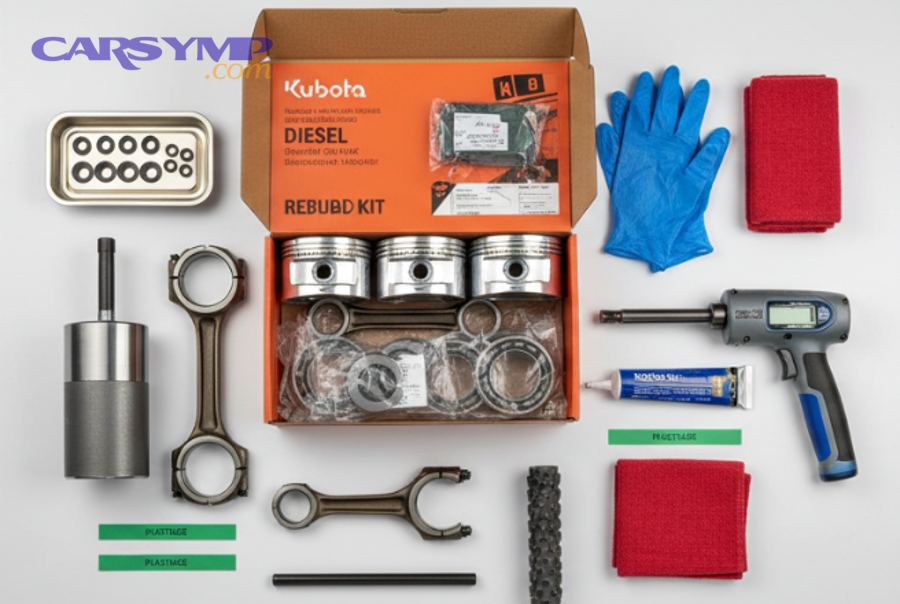
A rebuild — also referred to as refurbishing, reconditioning, or overhauling — is a comprehensive process that involves full disassembly of the asset, inspection of every major and minor component, and replacement of all worn, damaged, or out-of-tolerance parts. The goal is to return the asset to a condition that matches, or closely approaches, its original factory performance.
Unlike a repair, a rebuild does not target a single fault. It addresses the cumulative wear that affects every system simultaneously. During a rebuild, a mechanic or certified technician will replace bearings, pistons, seals, rings, and other internal components that have degraded over time — even if they have not yet caused a visible failure. This proactive replacement is what distinguishes a rebuild from even the most extensive repair job. Rebuilding also creates an opportunity to upgrade outdated technology, improve fuel efficiency, and increase the asset’s resale value — outcomes that a repair cannot deliver. It is worth noting that Lock-up clutch problems explained in detail during an overhaul are often discovered at this stage, as the lock-up mechanism is fully exposed and inspectable only during complete disassembly.
What Does “Replacement” Mean — New, Used, or Remanufactured?
Replacement means substituting the entire asset — or a major assembly such as an engine — with a different unit. That replacement unit can take three forms: new (purchased directly from the OEM or dealer), used (sourced from a salvage yard or secondary market), or remanufactured (a factory-rebuilt unit restored to OEM specifications and backed by a performance warranty).
Each replacement type carries a different cost and risk profile. A new unit is the most expensive but provides the latest technology, full warranty coverage, and zero accumulated wear. A used unit is the cheapest but carries unknown wear history and limited warranty protection — and for many equipment categories, quality used units are increasingly hard to source. A remanufactured unit sits between the two: it has been rebuilt to OEM standards, tested to performance specs, and typically backed by a warranty comparable to a new unit, but at a fraction of the cost. For many fleet managers, a remanufactured engine or drivetrain assembly is the most practical form of replacement.
What Are the Key Factors to Consider When Choosing Between Repair, Rebuild, and Replace?
There are five critical decision factors when choosing between repair, rebuild, and replace: asset age and condition, warranty status, downtime tolerance, total cost of ownership, and operational requirements — and the right answer changes depending on how those variables align.

These factors rarely point in the same direction simultaneously, which is why the decision is challenging. However, systematically working through each one produces a clear picture of which path delivers the best outcome.
How Does the Age and Condition of the Asset Affect the Decision?
Age and condition are the two most immediate filters in the decision process. A young asset with a single fault is almost always a repair candidate. A mid-life asset with multiple degraded systems is a rebuild candidate. An old, repeatedly failing, or technologically obsolete asset is a replacement candidate.
As a practical guideline for automotive engines, a rebuild or replacement makes economic sense for vehicles between four and twelve years old that are otherwise in good structural condition. For vehicles older than twelve to fourteen years, replacement is rarely worth the investment unless the asset is a classic, a specialty vehicle, or has significant sentimental or commercial value. For heavy equipment, the calculus is similar but scaled — a machine that has accumulated significant operating hours but still has a sound frame and driveline may be a strong rebuild candidate even if it is older, while a machine with chronic structural fatigue is a replacement case regardless of age.
How Does Warranty Status Influence Whether You Should Repair or Replace?
Warranty status is one of the clearest decision triggers available. If an asset is under an active manufacturer’s or dealer warranty, repair is almost always the correct first response — the warranty covers the cost of fixing covered faults, and pursuing a rebuild or replacement prematurely sacrifices that financial protection.
The calculus shifts after the warranty expires, especially as failures become more frequent and severe. At that point, you are fully absorbing repair costs without a financial backstop, and cumulative repair spending can quickly approach or exceed rebuild cost. Financing obligations add another layer: if you still owe payments on the asset, it is financially rational to extend its life through repair or rebuild rather than replace it — since a replacement would require a new capital commitment while the old one is still being paid off.
How Do Downtime and Operational Urgency Factor Into the Decision?
Repair returns an asset to service faster than any other option — often within hours or days. Rebuild requires planned downtime that typically spans days to weeks, depending on the depth of the work and parts availability. Replacement involves sourcing a new or rebuilt unit, coordinating delivery, and completing installation — a timeline that can stretch from days to months for specialized heavy equipment.
For operations where the asset in question is mission-critical — a piece of construction equipment needed for an upcoming project, or a fleet vehicle that cannot be taken out of rotation — the speed of repair may override its other limitations. Torque converter failure symptoms, for example, can manifest suddenly during operation, and addressing them quickly through a targeted repair may be the only viable option when a machine is needed on a job site within days. For longer-term planning cycles, however, the additional downtime of a rebuild is a manageable tradeoff for the years of extended life it produces.
What Role Does Budget and Total Cost of Ownership Play?
Total Cost of Ownership (TCO) is the most comprehensive financial lens for this decision. TCO encompasses the initial purchase price, financing costs, routine maintenance, fuel and energy consumption, unplanned repair costs, and eventual resale or scrap value — across the full operational lifespan of the asset.
The crossover point that signals replacement is when monthly operating costs (maintenance, fuel, downtime losses, repair frequency) consistently exceed the monthly cost of owning a replacement unit. Before that crossover, repair or rebuild typically delivers a better return. A practical TCO analysis models three scenarios — continue repairing, rebuild now, or replace — and compares their projected five-year cost curves to identify which path minimizes total spend while meeting operational requirements.
Is It Better to Repair or Rebuild? A Direct Comparison
Repair wins when the fault is isolated, the asset is under warranty, and speed matters — rebuild wins when multiple systems are degraded, the asset has structural life remaining, and a long-term performance restoration is the goal.
However, the boundary between these two options is not always obvious, and crossing it in the wrong direction is one of the most common and costly mistakes in asset management.

When Is Repairing More Cost-Effective Than Rebuilding?
Repair is the superior option when the fault is contained to a single or small number of components and the rest of the asset is in good working order. Specifically, repair is the right call when: the asset is still under warranty or being financed, the equipment is needed back in service immediately, and the repair cost is a small fraction of both rebuild and replacement cost.
Consider a scenario where a piece of equipment is experiencing lock-up clutch problems — if diagnostics confirm that the fault is isolated to the lock-up solenoid or a single clutch pack, replacing that component is far faster and cheaper than rebuilding the entire transmission. The asset goes back to work quickly, the cost is minimal, and no structural value is lost. Repair’s advantage evaporates, however, when that same equipment returns for a different fault two months later, and then again two months after that — a pattern that signals systemic degradation that repair cannot address.
When Does Rebuilding Become the Smarter Long-Term Investment?
Rebuilding becomes the better investment when cumulative repair costs are approaching or exceeding rebuild cost, when the asset has shown multiple simultaneous system failures, or when the asset has structural integrity but needs comprehensive restoration to remain competitive in performance.
The financial logic is compelling: a certified rebuild of heavy equipment can restore performance to near-new levels at roughly 40–60% of the cost of a full replacement. Rebuilding also allows for targeted technology upgrades — newer hydraulic systems, improved fuel efficiency components, updated electronics — that extend the asset’s competitive lifespan beyond what its original specification would have allowed. Importantly, a rebuilt asset carries higher resale value than a repeatedly repaired one, because the rebuild process documents the systematic restoration of all major components, giving buyers confidence in the machine’s condition.
Should You Rebuild or Replace? How to Make the Final Call
Replacing wins over rebuilding when operating costs consistently exceed ownership costs, when the asset is technologically obsolete, or when parts are no longer available from the OEM or reliable suppliers.
This is the hardest decision in the trio, because replacement carries the largest upfront capital commitment — and it is tempting to defer it through successive rebuilds. But there is a point at which further rebuilding delivers diminishing returns.
What Is the 50% Rule — and When Should You Apply It?
The 50% Rule states that if the cost of repairing or rebuilding an asset exceeds 50% of its current replacement value, replacement is the more cost-effective choice. This heuristic is widely used in fleet management and maintenance planning as a quick-filter before deeper analysis.
However, the 50% Rule has significant limitations when applied to complex heavy equipment. It treats all assets as if they have equivalent value profiles, ignores the productivity and technology gap between the existing and replacement unit, and fails to account for the middle option of a rebuild. Some organizations — including the United States Marine Corps, which uses a 65% threshold — have found that the standard 50% figure leads to premature replacement for high-value, long-lifecycle equipment. The rule is best used as a first-pass screening tool, not a final verdict. If the estimated rebuild cost clears the 50% threshold, that is a signal to run a full Lifecycle Cost Analysis rather than an automatic trigger for replacement.
What Are the Signs That Replacement Is the Only Viable Option?
Replacement becomes the only viable option when four conditions converge: repeated breakdowns occurring despite preventive maintenance, parts that are discontinued or unavailable from OEM or secondary suppliers, technology obsolescence that prevents the asset from meeting current performance requirements, and operating costs that consistently exceed the monthly cost of a replacement unit.
Preventing converter problems through regular fluid maintenance and early diagnostic intervention can delay this point for transmission-heavy equipment — but it cannot prevent it indefinitely. When a machine reaches the stage where every operating cycle risks an unplanned failure, the cost of that operational uncertainty (emergency downtime, lost productivity, emergency repair premiums) must be added to the visible repair bill. At that stage, the true cost of continued operation frequently exceeds the cost of replacement, even when the replacement sticker price looks prohibitive.
What Are the Pros and Cons of Each Option?
The following table summarizes the key advantages and disadvantages of repair, rebuild, and replacement across six evaluation dimensions — cost, turnaround time, risk profile, performance outcome, lifespan impact, and resale value. Use this as a consolidated reference alongside the detailed analysis in each section above.

| Dimension | Repair | Rebuild | Replacement |
|---|---|---|---|
| Upfront Cost | Lowest | Moderate–High | Highest |
| Turnaround Time | Fastest (hours–days) | Medium (days–weeks) | Longest (days–months) |
| Risk Profile | Low (known, limited scope) | Medium (quality depends on provider) | Low (new/reman warranty) |
| Performance Outcome | Partial (addresses fault only) | Near-new | New or better |
| Lifespan Impact | Minimal extension | Significant extension (3–5+ years) | Full reset |
| Resale Value Impact | None or minimal | Moderate improvement | Highest (new unit) |
What Are the Advantages and Disadvantages of Repairing?
Repair’s primary advantages are cost, speed, and minimal operational disruption. It is the only option that can be completed on-site in many cases — particularly for heavy equipment in remote construction or mining environments, where a field technician can address the fault without transporting the machine to a workshop. For assets under warranty, repair is essentially cost-neutral from the owner’s perspective.
Its disadvantages, however, are equally clear. Repair does not address underlying wear — it fixes the symptom while leaving the systemic degradation that caused it intact. This means the repaired asset will return with a new fault, often sooner than expected. Repeated repairs accumulate cost over time, and each incident carries its own downtime penalty. Repair also offers no opportunity for performance upgrades, meaning the asset returns to service at exactly the same capability level it had before the failure.
What Are the Advantages and Disadvantages of Rebuilding?
Rebuilding delivers a fundamentally different outcome from repair: instead of fixing what broke, it restores everything. The major advantages are a dramatic extension of asset life, near-new performance, the ability to incorporate technology upgrades, and an improvement in resale value — all at a cost that is typically 40–60% below that of a full replacement.
The disadvantages center on time and provider quality. A rebuild requires the asset to be out of service for an extended period, which must be planned carefully to avoid operational disruption. More critically, the quality of a rebuild is entirely dependent on the expertise and standards of the provider performing it. For branded heavy equipment, using a non-certified rebuilder risks poor workmanship, non-OEM parts, and voidance of any remaining coverage. For Cat equipment, for example, a Cat Certified Rebuild involves more than 350 inspections, replacement of over 7,000 parts, and application of the latest engineering updates — a standard that independent shops cannot replicate.
What Are the Advantages and Disadvantages of Replacing?
Replacement resets the asset lifecycle entirely. It eliminates accumulated wear, delivers the latest available technology, and typically comes with a full manufacturer warranty — providing financial protection against early failures. For organizations looking to expand operational capacity or improve competitive performance, a new or remanufactured unit represents the cleanest and most predictable path forward.
The disadvantages are capital intensity and depreciation. A new asset begins losing value the moment it enters service, and the upfront financial commitment is substantially higher than either repair or rebuild. For organizations operating under capital expenditure freezes or tight budget cycles, replacement may not be financially feasible even when it is operationally warranted. In those cases, a certified rebuild serves as an effective interim strategy — restoring performance to near-replacement levels while deferring the capital outlay of a full purchase.
Advanced Tools and Strategies to Make Smarter Repair, Rebuild, or Replace Decisions
Beyond the foundational framework above, professionals managing high-value assets use four advanced tools to systematize and improve the repair-rebuild-replace decision: Lifecycle Cost Analysis, CMMS platforms, OEM-certified rebuild programs, and sustainability-aligned asset strategies.

These tools are especially valuable for fleet managers, operations directors, and procurement teams who must justify asset decisions to financial stakeholders with data rather than intuition.
How Does a Lifecycle Cost Analysis (LCCA) Help You Choose Between Repair, Rebuild, and Replace?
Lifecycle Cost Analysis is a financial modeling method that calculates the total projected cost of an asset across its full operational lifespan, under each of the three decision scenarios — continue repairing, rebuild now, or replace — and identifies which path minimizes total spend per unit of productive output.
A complete LCCA for a piece of heavy equipment would model: current purchase or book value, remaining useful life under each scenario, projected annual maintenance cost under each scenario, fuel and energy cost differences, expected downtime frequency and cost, and eventual resale or salvage value. By projecting these cost curves five to ten years forward and comparing them, decision-makers can identify not just which option is cheaper today, but which option produces the best return over the realistic remaining useful life of the asset. For assets with complex or irregular failure patterns, LCCA is the only reliable way to make this determination.
How Can a CMMS (Computerized Maintenance Management System) Improve Repair vs. Replace Decisions?
A CMMS improves repair-rebuild-replace decisions by converting maintenance history into actionable data. Specifically, a well-implemented CMMS tracks every repair event — date, fault type, parts used, labor hours, cost — and aggregates that history into trend analysis that reveals whether an asset’s failure rate is accelerating, whether specific systems are generating disproportionate cost, and whether total maintenance spend is approaching rebuild or replacement thresholds.
Without a CMMS, repair decisions are often reactive — made under operational pressure without visibility into the full cost context. With a CMMS, maintenance managers can set automated alerts when cumulative repair cost on a single asset crosses a defined threshold (such as 50% of replacement value), triggering a formal rebuild or replace evaluation before the next breakdown forces a rushed decision. This shift from reactive to proactive decision-making is one of the highest-value operational improvements available to asset-intensive organizations.
According to research published by Plant Engineering, organizations that implement CMMS-driven maintenance strategies reduce unplanned downtime by an average of 20–25% and cut overall maintenance costs by 10–15% within the first two years of deployment.
What Is a Certified OEM Rebuild — and Why Does It Matter More Than a Standard Rebuild?
A certified OEM rebuild is a structured, manufacturer-approved restoration process that follows strict inspection protocols, uses only OEM or OEM-approved parts, and applies the latest engineering updates — producing an outcome that is verifiably close to new-unit performance.
The difference between a certified rebuild and a standard shop rebuild is not incremental — it is fundamental. An OEM-certified rebuild for Cat equipment, for example, involves over 350 individual tests and inspections and the replacement of more than 7,000 parts. Every critical system is assessed against current factory standards, and any component that does not meet reusability criteria is automatically replaced. This process produces a documented, warranted result that can be used to justify the rebuild decision to financial stakeholders and that carries resale value comparable to a newer machine. A standard rebuild performed by an uncertified provider offers no such assurance — and in some cases, a poor rebuild can damage the asset more severely than continued operation would have. For this reason, choosing a certified provider is not optional for high-value assets: it is a core part of the rebuild strategy itself. Remanufactured (Reman) components provide a parallel path — individual assemblies such as engines, transmissions, and hydraulic pumps are restored to OEM specifications at the component level and can be used to reduce rebuild cost while maintaining certified quality standards.
Does Rebuilding Instead of Replacing Have Environmental and Sustainability Benefits?
Yes — rebuilding instead of replacing delivers measurable environmental and sustainability benefits, making it the preferred choice under ESG frameworks for organizations that track environmental impact alongside financial performance.
Manufacturing a new piece of heavy equipment requires significant raw material extraction, energy-intensive production processes, and transportation — all of which generate greenhouse gas emissions and consume finite resources. A rebuild, by contrast, retains the existing structural components and replaces only what is worn, consuming a fraction of the materials and energy required to produce a new unit. Preventing converter problems through proactive maintenance and scheduled rebuilds, rather than allowing full failure and replacement, further reduces the environmental cost of the asset’s operational lifecycle. For corporations subject to ESG reporting requirements or seeking to reduce their Scope 3 emissions, a formal rebuild-first policy for heavy equipment and engine assets is a quantifiable sustainability measure — one that simultaneously reduces capital expenditure and supports environmental targets. As regulators and investors increasingly scrutinize corporate sustainability disclosures, the decision to rebuild rather than replace carries strategic value that extends well beyond the maintenance department.
Making the right choice between repair, rebuild, and replacement is not a single decision — it is a structured process that weighs asset condition, financial exposure, operational requirements, and long-term strategy simultaneously. Repair solves immediate, isolated problems at the lowest cost. Rebuild restores full-system performance and extends asset life at a fraction of replacement cost. Replacement resets the lifecycle entirely when the other two options no longer deliver adequate return. By applying the frameworks, rules of thumb, and advanced tools covered in this guide, you can move beyond reactive decision-making and build an asset management approach that consistently minimizes cost, maximizes uptime, and extends the productive life of every machine in your operation.