


When a cooler line starts leaking, you have more repair options than most drivers realize — ranging from a $10 rubber hose splice to a $250 aftermarket kit to a full professional line replacement. The right choice depends on where the leak is, how severe the damage is, and how long you plan to keep the vehicle. Understanding all your options before picking up a wrench saves you from doing the same job twice.
Knowing why cooler lines leak is just as important as knowing how to fix them. The most common failure points are factory-crimped rubber-to-metal junctions, corroded steel tubing, and heat-hardened rubber hose sections. Each failure type responds differently to repair methods, so a correct diagnosis is the first step toward a lasting fix.
Cost is one of the most searched dimensions of this topic — and for good reason. A shop quote for a cooler line repair can run anywhere from $70 at a hydraulic rebuild shop to $750 or more at a dealership. DIY repairs using compression couplers, hose splices, or aftermarket kits can cut that cost dramatically, as long as you match the method to the damage.
Choosing between a DIY patch and full line replacement is ultimately a decision about permanence, vehicle value, and personal skill level. Below, this guide walks through every repair option in detail — with step-by-step guidance, a full Transmission leak repair cost breakdown, and a clear framework for picking the right fix for your specific situation.
What Is a Cooler Line Leak and Why Does It Matter?
A cooler line leak is a failure in the hydraulic hose or metal tubing circuit that transports hot fluid — either automatic transmission fluid (ATF) or engine oil — away from the transmission or engine to an external heat exchanger and back.
To better understand why this matters, it helps to know exactly what these lines do and what happens when they fail.
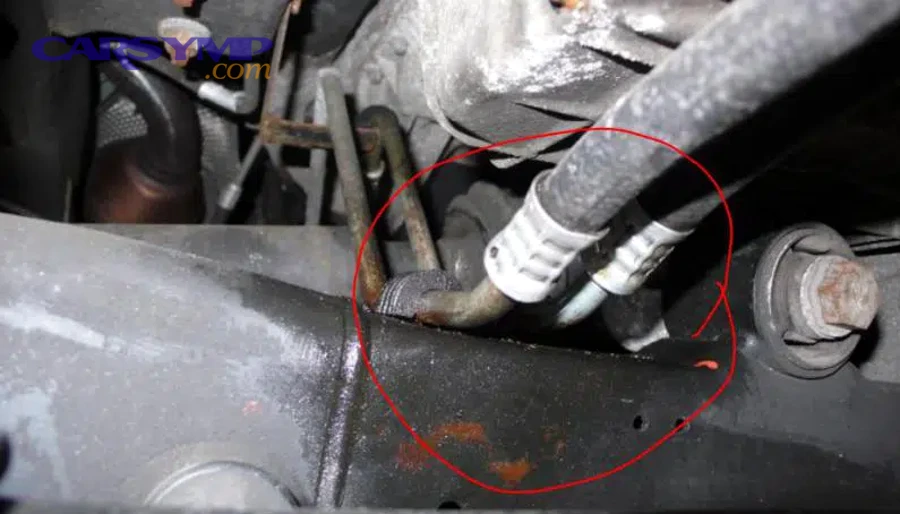
Transmission cooler lines (also called TCLs) and oil cooler lines are part of a closed-loop cooling circuit. Hot ATF or oil is pumped out of the transmission or engine, routed through lines to a heat exchanger — often integrated into the main radiator or mounted as a standalone auxiliary cooler — where it sheds heat before returning to the unit at a lower temperature. This circuit keeps the fluid within the thermal range needed to properly lubricate internal components and sustain the hydraulic pressure required for gear changes.
When that circuit is breached, the consequences escalate quickly. A small seep from a crimped fitting might lose only a few drops per drive cycle at first, but it progresses. Low ATF reduces lubrication and disrupts hydraulic pressure, causing rough or delayed shifting. Sustained low fluid levels generate excessive heat inside the transmission, accelerating internal wear on clutch packs, bands, and seals. In a worst-case scenario, a line that blows apart completely — as happens with rubber hose failure under pressure — can dump the entire fluid supply in minutes, leaving the driver stranded and the transmission critically damaged.
What Are the Most Common Signs of a Cooler Line Leak?
The most visible sign of a cooler line leak is a reddish or reddish-brown puddle forming beneath the vehicle, typically near the front or middle undercarriage where the lines run between the transmission and the radiator. ATF has a distinct, slightly sweet burning smell when it contacts hot exhaust components, making it identifiable even before a puddle is visible. Other signs include a dropping fluid level on the transmission dipstick, a transmission temperature warning light, or noticeably sluggish and rough shifting as fluid pressure drops.
Pinpointing the exact leak location requires a methodical approach:
- Clean the suspect area thoroughly with brake cleaner or a degreaser spray to remove accumulated grime and old fluid residue.
- Run the engine briefly — just long enough to build pressure in the system — then shut it off and inspect while the area is still wet.
- Look for the active weep point: a pinhole in a metal tube leaves a localized stain; a failing crimp fitting seeps from the back of the fitting where the rubber meets the metal; a cracked rubber section shows a line of wetness along its length.
This diagnostic step is worth taking seriously. Misidentifying the leak source leads to a repair that doesn’t solve the problem, wasting time and materials.
What Causes Cooler Lines to Leak?
Cooler lines leak due to five primary causes, each producing a distinct failure pattern that determines which repair method is appropriate.
1. Corrosion of metal tubing. Steel cooler lines are continuously exposed to road moisture, salt spray, and debris. Over years of use, the outer wall of the tube corrodes, eventually creating a pinhole that weeps fluid slowly. This type of leak is common in northern states and coastal regions where road salt is heavily used in winter — a direct connection to Axle seal leak repair basics, where the same corrosive environment that destroys axle seals also attacks cooler line tubing.
2. Crimp fitting failure. The factory-crimped junctions where flexible rubber hose meets the rigid metal line are the single most common leak point on modern vehicles, particularly GM trucks and SUVs. The crimp band that holds the rubber hose to the metal line fatigues over time, allowing fluid to seep from the back of the fitting. This is a design-driven failure rather than an abuse-driven one — it happens on vehicles across a wide mileage range.
3. Rubber hose degradation. The rubber sections of cooler lines are continuously subjected to heat cycling — expanding when hot, contracting when cold. Over time, the rubber hardens, becomes brittle, and develops surface cracks. In severe cases, the interior lining of the hose breaks down and begins to flake, which can contaminate the transmission with debris.
4. Vibration-induced loosening. Normal engine and drivetrain vibration gradually works fittings loose at the transmission case and radiator connection points. This produces a slow seep at the fitting face rather than along the line body.
5. Physical damage from road debris. A rock strike or grounding event can kink, dent, or puncture a metal line, particularly along sections that run close to the chassis. A kinked line restricts flow and concentrates stress at the deformation point, leading to eventual cracking.
What Are All the Cooler Line Leak Repair Options Available?
There are five main cooler line leak repair options, ranging from temporary patch methods to permanent full replacement, classified by permanence, cost, and required skill level.
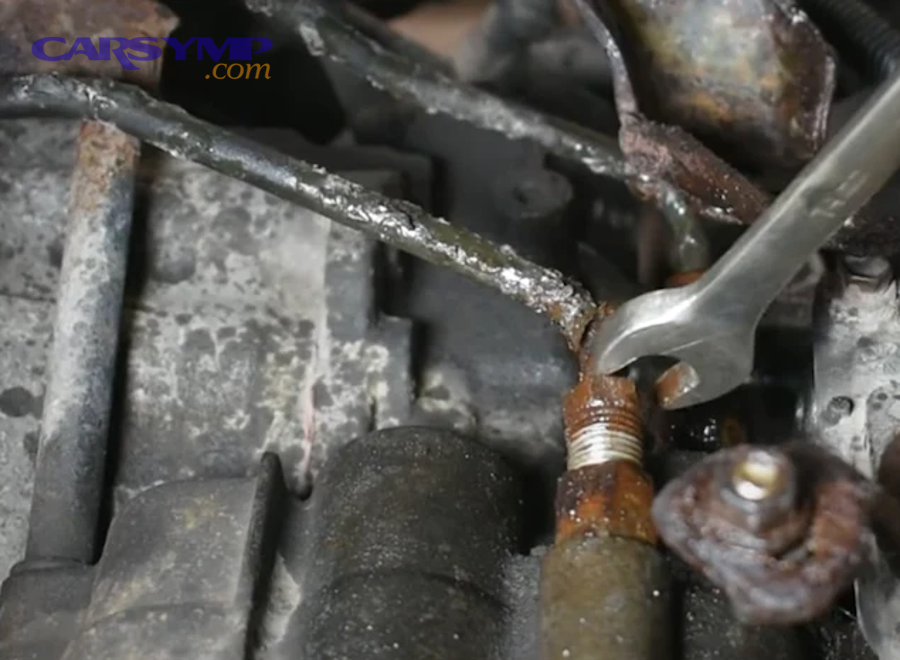
Specifically, each method is suited to a different damage type and budget — and understanding all five prevents the common mistake of choosing the wrong fix for the wrong problem.
The table below summarizes all five repair options at a glance before each is covered in detail.
| Repair Method | Best For | Approx. Cost | Permanence | Skill Level |
|---|---|---|---|---|
| Teflon tape / epoxy patch | Thread seep, emergency stopgap | $3–$10 | Temporary | Beginner |
| Rubber hose splice + clamps | Localized damage on steel line | $10–$20 | Semi-permanent | Beginner |
| Compression coupler / union | Pinhole or section damage | $5–$15 | Permanent | Beginner–Intermediate |
| Hydraulic shop hose rebuild | Crimp fitting failure | ~$70 | Permanent | Professional |
| Full OEM / aftermarket line replacement | Extensive corrosion, repeat failure | $50–$250+ | Most permanent | Intermediate–Professional |
Can You Temporarily Fix a Cooler Line Leak with Teflon Tape or Epoxy?
Yes, Teflon tape and epoxy can temporarily stop a cooler line leak, but only under specific conditions and with a clear understanding that neither is a long-term solution.
Teflon tape works on threaded fitting connections where the leak originates from the thread interface rather than from the line body itself. Wrap one to two layers of Teflon tape around the male threads of the fitting before reinstalling it. Teflon tape rated for hydraulic or gas applications — the yellow variety — handles heat better than the standard white plumbing tape and is the correct choice for this application. The limitation is significant: Teflon tape does nothing for leaks at the crimp band, along the rubber hose section, or through a pinhole in the metal tube. Attempting to wrap tape around a rubber hose leak will fail immediately once pressure is applied.
Epoxy-based sealants and repair putties are sometimes used on small pinhole leaks in metal tubing. While some automotive-grade epoxy products claim high heat and pressure resistance, the thermal cycling experienced by an active cooling circuit — combined with the constant vibration of a running engine — degrades epoxy bonds relatively quickly. This approach can buy enough time to drive to a parts store or schedule a proper repair, but it should not be treated as a fix.
The clear guidance here: use Teflon tape or epoxy only if immediate professional repair is unavailable. Plan to perform a proper mechanical repair as soon as possible.
How Do You Repair a Cooler Line Leak with a Rubber Hose Splice?
The rubber hose splice method cuts out the damaged section of a steel cooler line and bridges the gap with a short length of high-pressure transmission cooler hose, secured with hose clamps on each end. This is one of the most widely used DIY transmission leak repair methods because it requires only basic tools and inexpensive materials.
Follow these steps for a reliable splice:
- Use the correct hose. Purchase hose specifically rated for transmission cooler or oil cooler service — SAE J1019 or equivalent. Standard fuel line hose and vacuum line hose are not rated for the temperature or fluid type and will fail at the clamp points, sometimes within a single drive cycle. This is a critical distinction.
- Cut cleanly. Use a mini tubing cutter rather than a hacksaw to produce a clean, square cut on the metal line. A rough or angled cut creates a poor sealing surface against the inside of the rubber hose.
- Flare the metal line end (optional but recommended). Using a brake line flare tool, apply a single bubble flare to the end of each cut metal tube. This raised lip prevents the rubber hose from sliding off the metal under pressure and gives the clamp a more positive seat. Without a flare, the hose relies entirely on clamp force, which can loosen.
- Install and position the hose. Slide the rubber hose over both metal ends with at least one inch of overlap on each side.
- Use heavy-duty worm gear clamps or full saddle clamps. Position one clamp on each end, seated just inside the edge of the hose, and tighten until snug. Do not overtighten — doing so cuts into the hose material and creates a new failure point.
- Check clearance. Ensure the repaired section has clearance from exhaust components, sharp chassis edges, and moving parts.
Cost for this repair is typically $10–$20, making it the most affordable option for a steel line with localized damage.
How Do Compression Couplers and Union Fittings Fix a Leaking Cooler Line?
Compression couplers and union fittings provide a fully mechanical connection between two cut ends of a cooler line, eliminating the need for rubber hose in the repair zone. This method is preferred when a cleaner, more rigid repair is desired or when the damaged section is in a location where rubber hose would have poor clearance from heat sources.
The process is straightforward:
- Cut out the damaged section using a tubing cutter, leaving two clean, square-cut line ends.
- Select the correct fitting size. Measure the outer diameter of the line — common sizes are 5/16″, 3/8″, and 1/2″ — and purchase matching compression couplers or flare union fittings from any auto parts store.
- Install fittings on each cut end. Slide the compression sleeve and nut onto each line end, then insert the line into the fitting body and tighten.
- Connect with a union. If additional length is needed to span the removed section, insert a short length of replacement line between two fittings joined by a union fitting.
Flare fittings are considered more reliable than compression fittings for this application. A proper flare creates a metal-to-metal seal that resists vibration and thermal cycling better than a compression sleeve alone. The total cost for this repair runs $5–$15, making it nearly as affordable as the rubber hose splice while delivering a more rigid repair. This is the method that many professional mechanics recommend for permanent DIY transmission leak repair on steel lines.
When Should You Replace the Entire Cooler Line Instead of Patching It?
Full cooler line replacement becomes the correct choice when the damage is too widespread to address with a localized repair, when corrosion affects multiple sections of the line, or when a prior patch repair has failed.
Three replacement pathways are available, each at a different price point:
OEM line replacement ($50–$100 for the line assembly). A direct-fit replacement line that matches the original routing and fittings. This is the correct choice for vehicles where the original routing is clean and accessible. The drawback is that OEM lines on some vehicles — particularly GM trucks — use the same factory crimped hose design and may fail again within a few years under the same conditions.
Hydraulic shop hose rebuild (~$70). Removing the original line and taking it to a hydraulic hose shop, where technicians cut off the failed crimped ends and re-terminate the hose with new high-pressure crimped fittings. This produces a line with professional-grade crimps rather than factory-quality ones and is often more durable than buying a new OEM assembly. This is a particularly strong value option for Duramax and other diesel truck owners where the lines are expensive to purchase as full assemblies.
Aftermarket repair kit ($150–$250). Kits from suppliers like Merchant Automotive replace the entire line assembly with upgraded braided or heavy-duty hose and hardware. These kits are designed to be a permanent, overbuilt fix for vehicles with known OEM line failure issues. The higher upfront cost is justified for vehicles that will be kept long-term or used for heavy towing, where transmission cooling reliability is critical.
How Do DIY Cooler Line Repairs Compare to Professional Shop Repairs?
DIY repairs win on cost, professional repairs win on warranty and convenience, and the hydraulic shop rebuild strikes the best balance between price and professional-quality results for most vehicle owners.
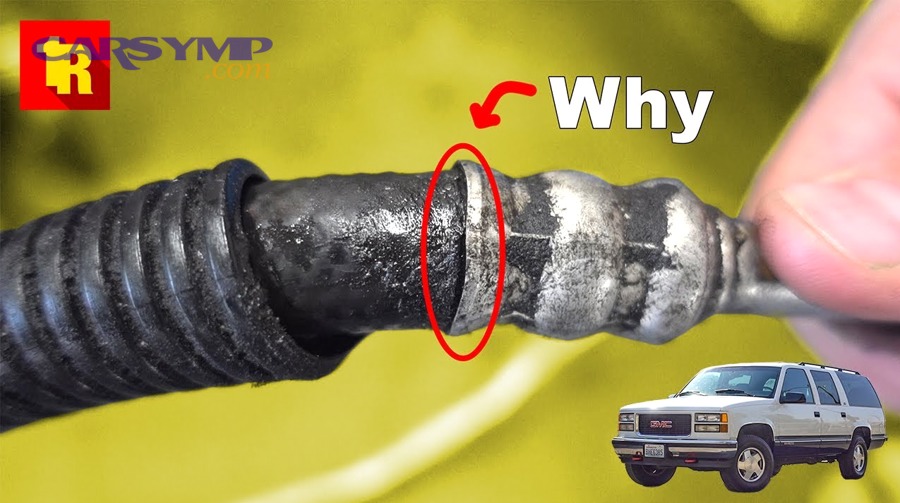
However, the right choice depends on more than just price — skill confidence, tool availability, and vehicle-specific complexity all factor in. The following breakdown covers both cost and capability in detail.
How Much Does It Cost to Fix a Cooler Line Leak Yourself vs. at a Shop?
The transmission leak repair cost breakdown across all repair paths reveals a wide range that reflects both method and labor.
The table below presents a direct cost comparison to make the decision clearer.
| Repair Path | Parts Cost | Labor Cost | Total Range | Durability |
|---|---|---|---|---|
| DIY hose splice | $10–$20 | $0 | $10–$20 | 2–5 years |
| DIY compression coupler | $5–$15 | $0 | $5–$15 | 5+ years |
| DIY aftermarket kit | $150–$250 | $0 | $150–$250 | Long-term |
| Hydraulic shop rebuild | $20–$40 | $30–$40 | ~$70 | Long-term |
| Independent shop full repair | $50–$150 | $100–$200 | $150–$350 | Long-term |
| Dealership full repair | $100–$250 | $300–$500 | $373–$750+ | Long-term |
Several forum users across GM truck communities have documented receiving reimbursement checks from GM for cooler line repairs — in one case, $373 — after a technical service bulletin (TSB) was issued. This illustrates that shop repair costs are sometimes recoverable when a known manufacturer defect is involved.
The most cost-effective permanent fix for a competent DIYer is the compression coupler repair at $5–$15. For those less comfortable with tubing cutters and flare tools, the rubber hose splice at $10–$20 is nearly as reliable and requires no specialized tools beyond a tubing cutter and a screwdriver.
What Tools Do You Need to Repair a Cooler Line Leak at Home?
A rubber hose splice or compression coupler repair requires 6 to 8 common hand tools, all available at any auto parts store or hardware retailer.
Essential tools:
- Mini tubing cutter — produces a clean square cut on the metal line; a hacksaw can substitute but produces a rougher cut
- Line wrenches (also called flare nut wrenches) — required for removing and reinstalling the fittings at the transmission and radiator without rounding the soft metal fitting hex
- Drain pan — positioned under the work area to catch ATF during the repair; a 2-gallon capacity is sufficient for most jobs
- Brake cleaner spray — for cleaning the area before diagnosis and after repair
- Heavy-duty hose clamps — full saddle type preferred over standard worm gear for better clamping force distribution
Optional but useful:
- Brake line flare tool kit — enables bubble flares on cut metal line ends for a more secure hose-to-line seal; kits start at approximately $20
- Die grinder with cutoff wheel — useful for splitting factory crimp bands when performing the hose rebuild method
- Needle-nose pliers — helpful for stretching and seating stiff rubber hose sections over metal line ends
The skill level required for most cooler line splice and coupler repairs is beginner to intermediate. The ability to change an oil filter and use a socket set is sufficient for the rubber hose splice. Flare tool use adds one additional skill but is straightforward with basic instruction.
How Do You Choose the Right Cooler Line Repair Option for Your Situation?
Choosing the right repair comes down to matching four variables — leak location, damage severity, vehicle age and value, and available skill and tools — to the appropriate method from the five options covered above.

To better understand this decision, the following two sub-sections walk through the two most common decision points that vehicle owners face.
Is a Patch Repair Good Enough, or Do You Need Full Line Replacement?
Yes, a patch repair is good enough in three specific situations: when the damage is localized to a single point on an otherwise sound line, when the line is accessible and free from additional corrosion, and when the vehicle is older and a full replacement investment is not economically justified.
Full line replacement becomes necessary when any of the following conditions are present:
- Multiple failure points on the same line — corrosion at more than one location, or a crimp failure alongside rust damage on the metal tube
- Extensive surface corrosion along the metal section, indicating that additional failures are likely even after a localized repair
- A prior patch that has already failed — if the line has been spliced once and is leaking again nearby, the line is past its service life
- Vehicle is used for heavy towing — the additional thermal stress of towing makes cooler line reliability critical, and a patch adds a weak point to a high-stress circuit
Vehicle age and value are honest factors. A $10 splice on a 270,000-mile truck that may only be kept for another year is a reasonable economic decision. A $250 aftermarket kit on a late-model daily driver that will be kept for another decade is equally justified.
What Fluid Must You Refill After Repairing a Cooler Line Leak?
After any cooler line repair, the lost automatic transmission fluid (ATF) or engine oil must be replenished with the exact fluid type specified by the vehicle manufacturer before the vehicle is returned to service.
This step is non-negotiable, and using the wrong fluid type compounds the problem rather than solving it. ATF formulations are vehicle-specific. A GM vehicle requiring Dexron VI, a Ford requiring Mercon LV, or a Honda requiring Honda DW-1 will experience friction characteristic disruption and compromised hydraulic performance if the wrong fluid is added — even if the correct viscosity is used.
Post-repair fluid refill procedure:
- Add the manufacturer-specified ATF through the dipstick tube in small increments, checking the level on the dipstick after each addition. Start with enough to bring the level to the “cold” mark.
- Start the engine and allow the transmission to cycle through all gear positions (P-R-N-D-2-1 on a column-shifted vehicle) to distribute the fresh fluid through the valve body and torque converter.
- With the engine at idle and the transmission in Park, recheck the dipstick. Add additional fluid as needed to reach the “hot” operating range mark.
- With the vehicle stationary, observe the repair area for 2–3 minutes while the engine runs. Look for any seepage at the repaired joint, the fittings, and the adjacent line sections.
- Drive the vehicle a short distance to bring the transmission up to operating temperature (typically 150–180°F on the transmission temperature gauge), then reinspect the repair area after returning.
What Else Should You Know About Cooler Line Leaks Beyond the Basic Repair?
Beyond choosing and executing a repair, three additional areas of knowledge help vehicle owners prevent future failures, consider permanent upgrades, and understand manufacturer accountability — all of which are relevant for Preventing repeat leaks after the immediate problem is solved.

Are There Factory Recalls or Service Bulletins Covering Cooler Line Leaks?
Yes, factory recalls and technical service bulletins (TSBs) exist for cooler line leaks on specific vehicle platforms, most notably certain General Motors trucks and SUVs equipped with the 6.6L Duramax diesel engine and associated automatic transmissions.
GM issued documentation acknowledging transmission cooler line failure as a recurring issue, and a number of owners received reimbursement checks — documented amounts ranging from $373 to the full repair cost — after presenting receipts to the manufacturer. Coverage under these bulletins was generally limited to specific model years and engine combinations, with LMM-generation and later Duramax trucks more commonly covered than earlier LB7 models.
How to check for active TSBs or recalls on your vehicle:
- Visit the NHTSA (National Highway Traffic Safety Administration) website at nhtsa.gov and enter your Vehicle Identification Number (VIN) in the recall lookup tool
- Contact your dealership’s service department and request a VIN-specific TSB search
- Search the NHTSA complaints database for your vehicle’s year, make, model, and component (Powertrain → Automatic Transmission → Cooler Lines)
Even when no recall exists, a TSB can serve as negotiating leverage with a dealership for partial or full cost coverage on repairs that fall outside the standard warranty period.
Can You Upgrade to Braided Stainless AN Fittings Instead of OEM Lines?
Yes, upgrading to braided stainless lines with AN (Army-Navy) fittings is a viable permanent replacement for factory OEM cooler lines, and it represents the most durable repair pathway available for vehicles in high-stress applications.
AN fittings use a 37-degree flare interface rather than a crimp or compression seal. The braided stainless outer jacket of AN-compatible hose is highly resistant to abrasion, heat, and road debris damage — failure modes that regularly affect rubber-jacketed OEM lines. The inner lining of quality AN hose is also resistant to the chemical breakdown that eventually causes standard rubber hose interiors to degrade and contaminate the transmission circuit.
The practical tradeoffs of an AN upgrade are cost and complexity. A full AN line conversion requires sourcing the correct hose diameter and AN fitting sizes for the transmission and cooler ports, fabricating the line to the correct length with proper routing, and ensuring adequate clearance from exhaust components. The total cost for a full AN conversion typically runs $150–$300 in parts, comparable to a premium aftermarket kit but with a higher degree of customization. This upgrade is most justified for:
- Performance or modified vehicles where OEM line routing has been altered
- Heavy-duty trucks used for sustained towing or hauling in high-ambient-temperature environments
- Vehicles operating in high road-salt environments where standard steel OEM lines corrode within two to three winters
Should You Consider a Cooler Line Delete or Bypass Modification?
A cooler line delete is a modification that removes the external oil cooler from the circuit entirely, allowing the oil filter to thread directly onto the engine block adapter without routing fluid through an external cooler. This modification eliminates the cooler lines as a leak source by removing them from the system.
This approach is occasionally discussed in light truck communities — particularly for S-10 and similar platforms — as a permanent solution to chronic oil cooler line failure. The appeal is obvious: no cooler lines means no cooler line leaks.
However, the risks must be understood before pursuing this route. The oil cooler was engineered into the vehicle as part of the thermal management system. Removing it reduces the system’s ability to dissipate heat from the engine oil, which raises sustained oil temperatures during demanding use. For light-duty, mostly highway driving in a temperate climate, the thermal impact may be negligible. For a vehicle used for towing, extended idling, or operation in high-ambient-temperature conditions, the cooler delete removes a thermal safety margin that the engine was designed to rely on.
When a cooler line delete may be reasonable:
- Light-duty use only, no towing or hauling
- Temperate or cool climate operation
- Older, high-mileage vehicle where the cooler system has failed repeatedly and continued replacement is not cost-effective
When a cooler line delete should be avoided:
- Any vehicle used for towing, hauling, or sustained high-load driving
- Vehicles in hot climates where ambient temperatures regularly exceed 90°F
- Newer vehicles still within their expected service life
How Does Seasonal Weather Affect Cooler Line Leak Risk and Repair Choice?
Seasonal weather directly influences both the rate at which cooler lines degrade and the performance of certain repair materials, making it a practical factor in both repair timing and method selection.
Winter and road salt exposure is the dominant seasonal threat to metal cooler lines. Road deicing salt accelerates electrochemical corrosion on steel tubing, particularly at joints, brackets, and sections with chipped or compromised protective coating. Vehicles driven in northern U.S. states, Canada, and other regions with aggressive winter road treatment programs commonly develop their first cooler line failures within five to seven years of service — significantly earlier than the same vehicle operated in a salt-free environment. This seasonal factor also connects to broader underbody corrosion patterns, including the axle seal leak repair basics that affect rubber seals and metal housings in the same underbody environment.
Summer heat accelerates rubber hose degradation. High ambient temperatures combined with the thermal cycling of normal engine operation cause rubber sections to harden and lose elasticity faster than in moderate-temperature conditions. Teflon tape, notably, performs better as a temporary thread seal in summer conditions because the warmer thread temperatures allow it to conform more effectively to the thread surface.
Practical seasonal maintenance recommendations:
- Late fall (before first salt application): Inspect all visible cooler line sections for surface rust, soft spots in rubber, and weeping at crimp fittings. Address any active seepage before winter accelerates it.
- Early spring (after winter salt season): Clean the entire undercarriage with a pressure washer to remove salt accumulation, then reinspect cooler lines for new corrosion that developed over winter. This is the optimal window for performing preventive hose splice or coupler repairs before small seeps become active leaks.
- Summer: Inspect rubber hose sections for hardness, surface cracking, and bulging. A rubber section that has visibly stiffened or developed surface cracks is within one to two heat seasons of failing, and proactive replacement is more cost-effective than an emergency roadside repair.
Preventing repeat leaks over the long term comes down to combining the right repair method with a consistent seasonal inspection habit. The vehicles that avoid repeat cooler line failures are, in most cases, the ones whose owners spend ten minutes each spring and fall looking at the undercarriage — catching the next failure point before it becomes a crisis.