


Diagnosing a torque converter seal leak correctly is the most critical step before spending money on any transmission leak repair. A torque converter seal leak occurs when the rubber lip seal surrounding the converter hub wears out or becomes displaced, allowing automatic transmission fluid (ATF) to escape from the front of the transmission into the bell housing. The challenge is that this leak rarely announces itself cleanly — fluid from multiple nearby sources drains to the same location, making the TC seal one of the most misidentified leaks in the drivetrain. Getting the diagnosis right the first time saves hundreds of dollars and prevents unnecessary disassembly.
Understanding what the torque converter seal actually does and where it sits is the foundation of any accurate diagnosis. The seal exists to contain ATF under hydraulic pressure inside the front pump circuit, which is essential for smooth torque transfer from the engine to the transmission. When it fails, the first signs are often subtle — a faint red puddle after an overnight park, a slight hesitation when pulling away from a stop, or a low whine that disappears once the transmission warms up. Recognizing these early symptoms before ATF loss becomes severe is the difference between a straightforward seal replacement and a full transmission rebuild.
Beyond the symptoms, the root causes of TC seal failure follow a predictable chain that DIY mechanics and shop technicians can trace systematically. Worn front pump bushings, contaminated ATF, converter wobble, and even a scored hub shaft are all upstream causes that will destroy a new seal if left unaddressed. Replacing the seal in isolation — without resolving the underlying cause — is one of the most common and costly mistakes in automatic transmission service.
This guide walks through every stage of the diagnostic process in sequence: from understanding the seal’s function, to isolating the leak source, to confirming the fault and executing a lasting fix. It also addresses the Seal conditioner myths and realities that circulate online, clarifies when a minor leak signals a broader drivetrain problem, and explains what else can mimic a TC seal leak so you don’t waste time chasing the wrong component.
What Is a Torque Converter Seal and What Does It Do?
The torque converter seal is a precision lip seal — typically made of nitrile or PTFE rubber — that forms a hydraulic barrier between the spinning converter hub and the stationary front pump housing of an automatic transmission.
To better understand its role, it helps to place it within the transmission system as a whole. The torque converter is responsible for transferring engine torque to the transmission input shaft using ATF as the working medium. The seal’s job is deceptively simple: keep that fluid inside the circuit. Without it, the hydraulic pressure that powers gear engagement, torque multiplication, and lock-up clutch operation cannot be maintained.
Where Is the Torque Converter Seal Located in the Transmission?
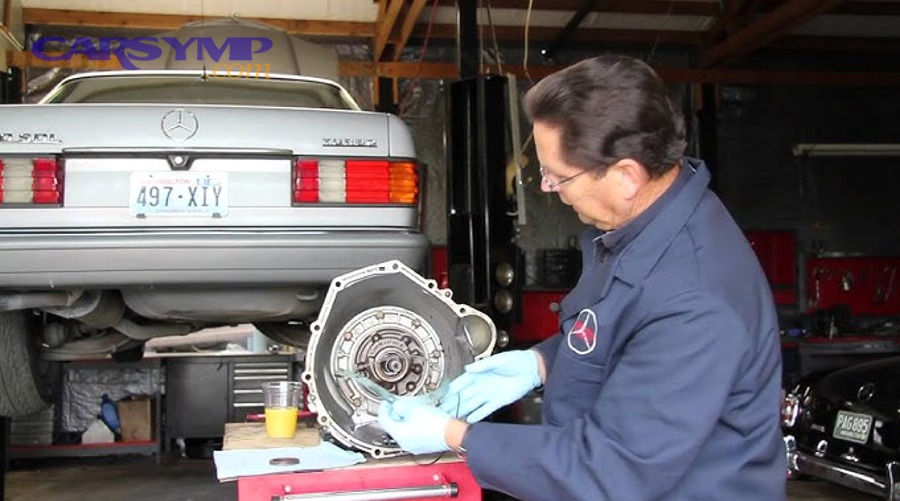
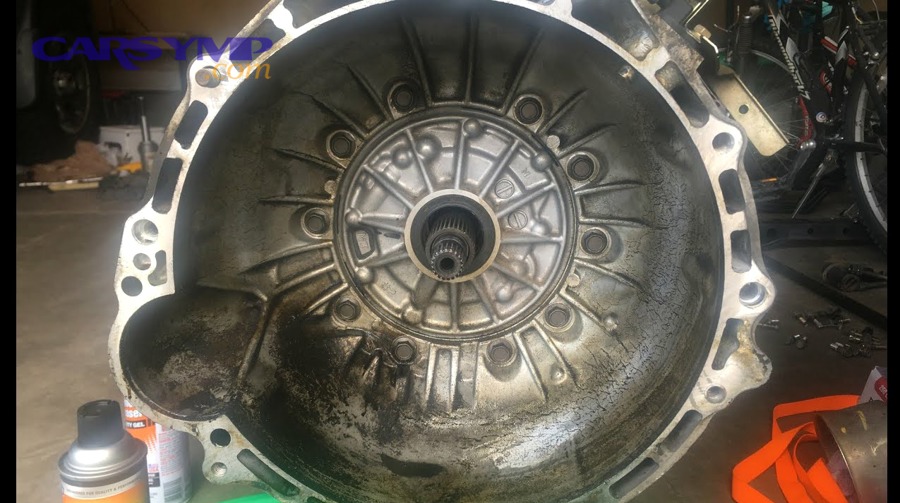
The torque converter seal sits at the very front of the transmission, pressed into the pump housing bore, with its lip contacting the smooth outer surface of the converter hub shaft. It is enclosed inside the bell housing, which means it is not visible from outside the vehicle without removing an inspection cover or separating the drivetrain.
This concealed position is precisely why TC seal leaks are so difficult to diagnose from the outside. Fluid that escapes past the seal coats the interior of the bell housing and drains downward, pooling near the transmission-to-engine junction — the same area where the rear main seal, front pump O-ring, and input shaft seal also drain. Distinguishing which seal is the source requires deliberate isolation, not guesswork.
Nearby seals to distinguish from the TC seal:
- Rear main seal — located at the back of the engine crankshaft; leaks engine oil, not ATF
- Front pump O-ring — a static square-cut O-ring on the outer diameter of the pump body; rarely leaks but possible
- Input shaft seal — found on some transmission designs between the pump and the input shaft; leaks ATF but is a separate component from the TC seal
- Pump attaching bolt weepage — can seep ATF around the bolt threads if torque specs are not met
How Does ATF Flow Through the Torque Converter System?
ATF flows continuously through the torque converter circuit whenever the engine is running. The front pump draws fluid from the transmission pan, pressurizes it, and drives it into the converter. This pressurized fluid fills the converter housing, powers the turbine and stator assembly, and returns to the cooler through the return line.
When the engine is shut off, the pump stops. Without pressure to hold the fluid in place, ATF can slowly drain back through the converter and return line toward the transmission pan. On vehicles with a worn or failed internal check valve, this drain-back is accelerated — and as the converter empties, the fluid level inside the transmission pan temporarily rises above its normal operating range. This behavior is a key diagnostic clue: if the transmission appears overfilled on the dipstick after a cold start but returns to normal after idling, converter drain-back rather than an external seal leak may be the real issue.
Is a Torque Converter Seal Leak Easy to Misdiagnose?
Yes, a torque converter seal leak is easy to misdiagnose — because the bell housing acts as a shared drain point for at least four distinct leak sources, all of which produce similar visual evidence in the same location.

This is one of the core reasons DIY mechanics and even some general repair shops mistake a front pump seal failure or a rear main seal weep for a TC seal problem. The consequence is a repair that does not fix the leak: the transmission gets dropped, the TC seal gets replaced, everything is reassembled — and the drip continues because the actual source was the pump O-ring or an engine oil leak migrating downward.
How Do You Tell a Torque Converter Seal Leak Apart from a Rear Main Seal Leak?
A rear main seal leak produces brown or black engine oil; a torque converter seal leak produces red or pink ATF. That color difference is the fastest first-level diagnostic filter available without tools.
However, on vehicles with very high mileage, engine oil can become dark reddish-brown as it oxidizes — making color alone unreliable. In those cases, the clean-and-monitor method is the definitive approach:
- Degrease the entire bell housing, engine block base, and transmission front with brake cleaner spray until completely dry
- Place a clean sheet of white cardboard or paper under the vehicle
- Drive the vehicle for 20–30 minutes at mixed speeds, including some highway driving to build heat and pressure
- Park and allow the vehicle to sit for one to two hours
- Inspect the cardboard for fresh fluid, then use a flashlight to trace the fluid trail back to its highest visible origin point
A TC seal leak will show fresh red fluid tracing from the front of the transmission housing. A rear main seal leak will show the origin at the back of the engine block, behind the flywheel/flexplate. Engine oil leaking from higher points — valve cover gaskets, cam seals, oil pressure sender — will also track downward and pool in the bell housing area, which is why the clean-and-monitor trace must be followed all the way up to the source.
How Do You Distinguish a Torque Converter Seal Leak from a Front Pump Seal Leak?
Both the torque converter seal and the front pump seal produce red ATF leaking from inside the bell housing, making external visual inspection alone insufficient to separate them.
The key behavioral difference is when each leak is most active. A front pump seal — which is a dynamic seal against the rotating converter hub — tends to leak most actively while the engine is running and the pump is pressurized. A TC seal leak, particularly one worsened by drain-back, tends to show the most visible evidence after shutdown as fluid seeps past the worn seal lip under gravity. This pattern is not absolute, but it is a useful preliminary filter before dropping the transmission.
The definitive test requires transmission removal:
- Inspect the pump face and outer O-ring groove for ATF weepage
- Check pump attaching bolts for fluid tracking down the bolt shanks
- Inspect the TC seal lip for cracking, hardening, or displaced seal material
- Check the hub shaft surface for scoring — any surface irregularity you can feel with a fingernail will cause a new seal to leak immediately
Can a Torque Converter Itself Leak Without the Seal Failing?
Yes, the torque converter body itself can develop a crack or weld seam failure that leaks ATF independently of the seal condition.
This failure mode is uncommon but important to rule out — especially on high-mileage units or transmissions that have experienced overheating. A cracked converter may show no visible defect at room temperature but will leak under the combination of heat and rotational stress during normal driving. The diagnostic test used by professional shops is submerging the pressurized converter in water and looking for bubbles — a method sometimes called the pressure-in-water test. Because heat-induced cracks may only open at operating temperature, some shops elect to replace the converter preemptively when the transmission is already out for a seal replacement, avoiding the cost of a second disassembly if a crack develops later.
What Are the Symptoms of a Torque Converter Seal Leak?
There are four primary symptom categories that indicate a torque converter seal leak: visible fluid loss, abnormal sounds, drivability changes, and transmission temperature behavior.
Recognizing these symptoms early is critical because ATF is not just a lubricant — it is also the hydraulic medium that controls gear engagement, lock-up clutch operation, and transmission cooling. A slow leak that goes unnoticed for weeks can progress from a minor seal weep to a low-fluid event that damages the valve body, clutch packs, and pump internals.
What Does a Torque Converter Seal Leak Look, Sound, and Feel Like?
A torque converter seal leak typically presents across three sensory channels simultaneously — visual, auditory, and tactile — with the severity of each symptom increasing as ATF loss progresses.
Visually, the most reliable indicator is a red or pink fluid puddle forming beneath the front-center of the vehicle after it has been parked for several hours. The puddle may be small initially — just a few drops — but will grow as the seal deteriorates. In some cases, the fluid collects on the bell housing inspection cover and is only visible when the vehicle is raised.
Audibly, a hissing or whining sound that appears when the transmission is in gear — and particularly under load — suggests that hydraulic pressure is dropping due to fluid loss. On some vehicles this manifests as a subtle drone at highway speeds when the lock-up clutch engages; on others it is a pronounced whine that disappears when the transmission is placed in Park or Neutral.
In terms of feel, gear slippage is the most alarming symptom. When ATF level drops below the minimum, the front pump cannot maintain sufficient pressure to fully apply clutch packs and bands. The result is a transmission that hesitates before engaging a gear, unexpectedly drops out of a gear under acceleration, or struggles to hold a consistent speed on a grade. Delayed engagement from Park or Neutral into Drive or Reverse — particularly when the vehicle is cold — is another common early complaint that owners often attribute to a tune-up issue before the leak is discovered.
Does a Torque Converter Seal Leak Get Worse Over Time?
Yes, a torque converter seal leak will worsen progressively over time — and the rate of deterioration accelerates once the seal lip begins to harden or fragment.
A new leak may seep only a few drops per day, losing so little fluid that the dipstick level appears stable for weeks. However, once the seal material begins to crack or displace, the leak rate increases rapidly. The following table summarizes the progression from minor seep to critical fluid loss and the associated risk at each stage:
| Stage | Leak Rate | Observable Symptoms | Risk Level |
|---|---|---|---|
| 1 – Seep | A few drops after parking | Faint red stain on driveway | Low — monitor and schedule repair |
| 2 – Drip | Visible puddle forming daily | Low ATF on dipstick, occasional slip | Moderate — repair within weeks |
| 3 – Flow | Steady drip while running | Frequent slipping, whine in gear | High — repair immediately |
| 4 – Critical loss | Significant ATF loss per drive | No gear engagement, overheating | Severe — risk of full transmission failure |
The table above illustrates why a small TC seal leak should never be dismissed as a cosmetic issue. Allowing the leak to reach Stage 3 or 4 puts the entire transmission at risk. More importantly, at Stage 3 the fluid loss rate is high enough that the vehicle can become undriveable within days.
What Causes a Torque Converter Seal to Leak?
There are four primary causes of torque converter seal failure: front pump bushing wear, ATF contamination, converter wobble from improper seating, and age-related seal hardening.
Understanding the root cause before beginning a repair is essential. A technician who replaces only the seal without addressing the bushing wear, contaminated fluid, or scored hub shaft will face the same leak within months. Each cause produces a distinct pattern of seal wear that can be identified during the transmission disassembly.
How Does Front Pump Bushing Wear Cause a Torque Converter Seal Leak?
Front pump bushing wear is the single most common mechanical cause of torque converter seal failure in automatic transmissions with high mileage.
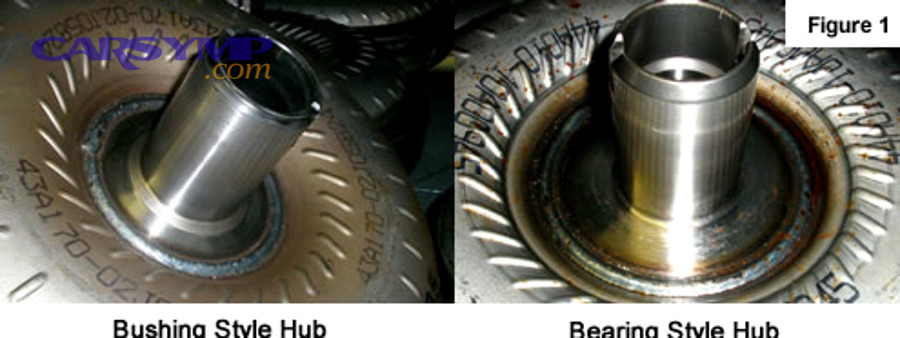
The bushing — a thin bronze sleeve pressed into the front pump bore — centers the converter hub as it rotates. When the bushing wears, it allows the hub to move off-center under load. This eccentric movement creates an uneven contact pattern against the seal lip: one portion of the seal is over-compressed while the opposite side is under-compressed, creating a gap through which ATF escapes.
The practical implication is critical: replacing the TC seal without replacing the worn bushing will result in seal failure within a short period, often within a few thousand miles. Any complete TC seal service should include bushing replacement as a matter of course. Replacement bushings are inexpensive — typically $5 to $20 — and can be installed during the same transmission drop that the seal service requires.
Can ATF Contamination Cause the Torque Converter Seal to Fail?
Yes, degraded or contaminated ATF is a direct cause of accelerated torque converter seal deterioration, and it operates through a chain of failures rather than a single event.
The contamination sequence typically begins with friction lining wear inside the torque converter lock-up clutch. As the lining material breaks down, fine metallic and organic debris enters the ATF. This debris circulates through the valve body, gradually clogging solenoids and damaging valve bore surfaces. The resulting erratic pressure spikes expose the TC seal to intermittent over-pressurization, stressing the seal lip beyond its design tolerance. Over time, the rubber hardens, loses its sealing contact, and allows ATF to bypass.
This failure chain highlights why the condition of the ATF itself is part of the diagnostic checklist. During any TC seal diagnosis, inspect the fluid on the dipstick: burnt smell, dark brown color, or a gritty texture on the dipstick tip all indicate contamination that must be addressed alongside the seal replacement.
What Role Does Converter Wobble Play in Seal Leaks?
Converter wobble — the off-axis oscillation of the torque converter during rotation — directly damages the TC seal by creating a constantly shifting contact point against the seal lip rather than a steady, concentric contact zone.
Wobble occurs primarily in two scenarios: worn front pump bushing (already covered above) and an improperly seated converter. When the converter is not fully engaged on the input shaft splines and pump drive during installation, it sits at a slight angle. Even a fraction of a millimeter of misalignment is enough to produce seal-destroying wobble at the several thousand RPM that the converter rotates during highway driving.
How to check for wobble damage during disassembly:
- Inspect the hub shaft surface for an off-center wear ring rather than a clean, concentric polished band
- Look for an uneven wear pattern on the old seal lip — one side worn significantly more than the other
- Run a fingernail around the hub shaft surface; any groove or ridge that can be felt will leak past a new seal regardless of seal quality
- If scoring is present, the converter must be replaced or the hub polished before a new seal is installed
How Do I Know If My Seal Is Just Old and Hardened?
Age-related seal hardening is a failure mode driven by heat cycling and mileage rather than any mechanical fault, and it is the dominant cause of TC seal failure on vehicles with over 150,000 miles that have been otherwise well-maintained.
Rubber seal compounds degrade over time when exposed to the heat generated by a working transmission — typically 175°F to 200°F under normal driving conditions, and higher during towing or performance driving. The rubber loses its elasticity, shrinks slightly, and can no longer conform to the hub surface under the light spring tension of the seal lip. The result is a seal that looks intact but no longer maintains contact across its full circumference.
This is also the context in which seal conditioner myths and realities become relevant. Various aftermarket additives claim to “re-swell” hardened seals and stop transmission leaks without disassembly. While some petroleum-based conditioners can cause minor swelling in nitrile rubber — temporarily slowing a seep — they do not restore mechanical elasticity or repair a displaced seal lip. More importantly, they do not address bushing wear, converter wobble, or a scored hub shaft. Seal conditioner products may buy a few hundred miles of reduced seepage, but they are not a permanent transmission leak repair and should not substitute for proper seal replacement on a vehicle that will be driven regularly.
How Do You Diagnose a Torque Converter Seal Leak Step by Step?
Diagnosing a torque converter seal leak accurately follows a four-stage method — visual pre-inspection, fluid identification, clean-and-monitor isolation, and physical confirmation — producing a reliable fault conclusion before any parts are purchased.
This structured approach is important because it prevents the most common diagnostic mistake: dropping the transmission based on an assumption rather than confirmed evidence. Each stage filters out alternative leak sources, so by the time a technician reaches Stage 4, the TC seal is confirmed as the fault with high confidence.
What Tools and Supplies Do You Need to Diagnose a TC Seal Leak?
Before beginning the diagnostic process, gather the following tools and supplies to ensure each stage can be completed properly:
| Tool / Supply | Purpose |
|---|---|
| Brake cleaner spray (aerosol) | Degrease the bell housing area for clean-and-monitor test |
| Clean white cardboard or paper | Catch drips and identify fluid color and origin |
| UV dye kit + UV lamp | Trace ATF that has mixed with other fluids in heavily contaminated areas |
| Flashlight or LED work light | Illuminate the bell housing and inspection cover area |
| Borescope / inspection camera | Inspect the bell housing interior without dropping the transmission |
| Floor jack + jack stands | Safely raise the vehicle for undercarriage inspection |
| Drain pan | Capture any fluid during the inspection phase |
| Nitrile gloves + safety glasses | Personal protection |
The UV dye kit is particularly useful on vehicles with multiple simultaneous leaks — engine oil, coolant, and ATF all fluoresce differently under ultraviolet light, eliminating the color-identification ambiguity that occurs when fluids mix.
How Do You Use the Clean-and-Monitor Method to Confirm the Leak Source?
The clean-and-monitor method is the most reliable non-disassembly technique for isolating a torque converter seal leak from other bell housing leaks, and it requires no special equipment beyond brake cleaner and a light source.
Follow this sequence precisely:
- Raise the vehicle safely on jack stands and place the clean cardboard beneath the drivetrain
- Degrease completely — spray brake cleaner on the entire bell housing, the engine-transmission junction, the transmission pan area, and the bottom of the engine block. Allow it to dry fully (approximately five minutes)
- Lower the vehicle and drive for 20–30 minutes at mixed city and highway speeds. Highway driving is important because it generates the operating temperature and pressure that active leaks require
- Park and wait for at least one hour without moving the vehicle
- Re-raise the vehicle and use the flashlight to trace fresh fluid from its lowest visible point upward to its origin
- Document the origin — photograph or mark the exact location before cleaning again
If fresh red ATF traces back to the front pump housing at the transmission-to-bell-housing interface, the TC seal or front pump seal is confirmed as the source. If the fluid originates higher on the engine block and has tracked downward, the leak is engine-side and the transmission does not need to be removed.
When Do You Need to Drop the Transmission to Confirm the Diagnosis?
You need to drop the transmission when the clean-and-monitor method confirms ATF leaking from the bell housing but cannot distinguish between the torque converter seal, the front pump O-ring, the pump face gasket, or the input shaft seal.
Transmission removal is the only way to physically inspect these components and confirm which one has failed. Once the transmission is separated from the engine and the torque converter is removed, conduct the following inspection sequence to avoid reassembling the same leak:
- Inspect the TC seal — check the lip for cracking, displacement, or hardening; look for an eccentric wear pattern on the hub contact zone
- Inspect the hub shaft — run a fingernail around the full circumference; any ridge or groove requires converter replacement or professional hub polishing
- Inspect the pump bushing — check for excessive radial play; replace regardless of appearance if mileage exceeds 100,000
- Inspect the front pump O-ring — check the square-cut groove for compression set or surface damage
- Inspect pump face and attaching bolts — look for ATF weepage at the bolt threads or pump-to-case mating surface
- Inspect the front pump seal (if separate from TC seal) — check the lip seal behind the pump body if the transmission design uses a separate seal at this location
Completing this full inspection during a single transmission drop is essential. Reassembling after replacing only one component, only to discover a second source leaking afterward, doubles the labor cost unnecessarily.
How Do You Fix a Torque Converter Seal Leak?
Fixing a torque converter seal leak requires transmission removal followed by seal replacement, bushing replacement, hub surface inspection, and a controlled reinstallation — a process most experienced DIY mechanics can complete in a full day.
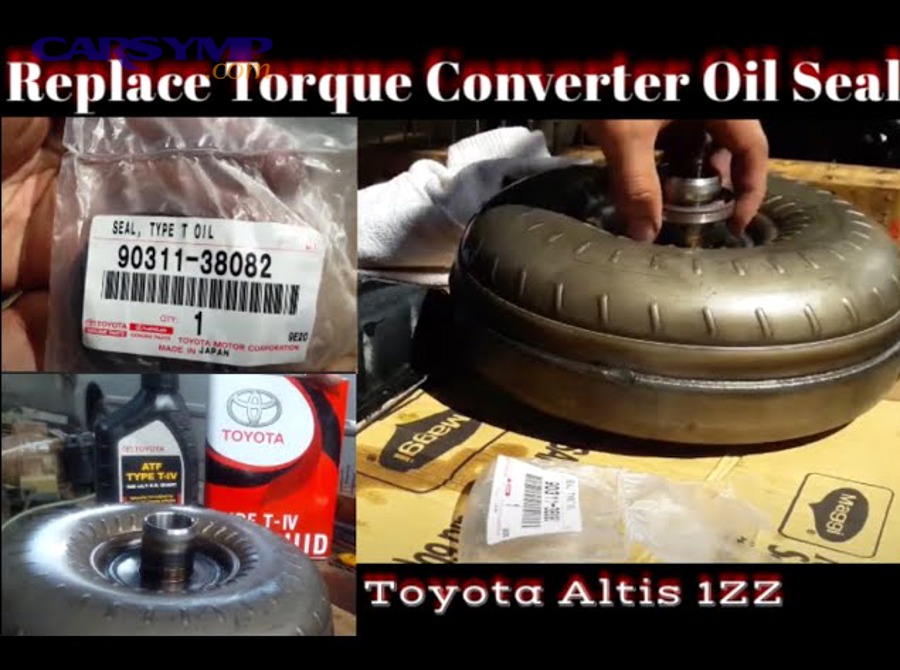
The repair itself is straightforward once the transmission is out. The complexity and cost of the job come almost entirely from the labor of dropping and reinstalling the transmission, not from the seal itself.
Can You Replace a Torque Converter Seal Yourself?
Yes, a DIY mechanic with intermediate experience can replace a torque converter seal, provided they are comfortable with transmission removal and have access to a floor jack, jack stands, and basic hand tools.
The full repair sequence is as follows:
- Drain the ATF from the transmission pan before beginning disassembly
- Disconnect all transmission connections — shift linkage, wiring harness, cooler lines, driveshaft or CV axles depending on drivetrain configuration
- Support the engine with an engine support bar or jack to prevent it from dropping when the transmission crossmember is removed
- Remove the transmission crossmember and lower the transmission carefully
- Unbolt the torque converter from the flexplate (typically 3–4 bolts accessed through the starter aperture)
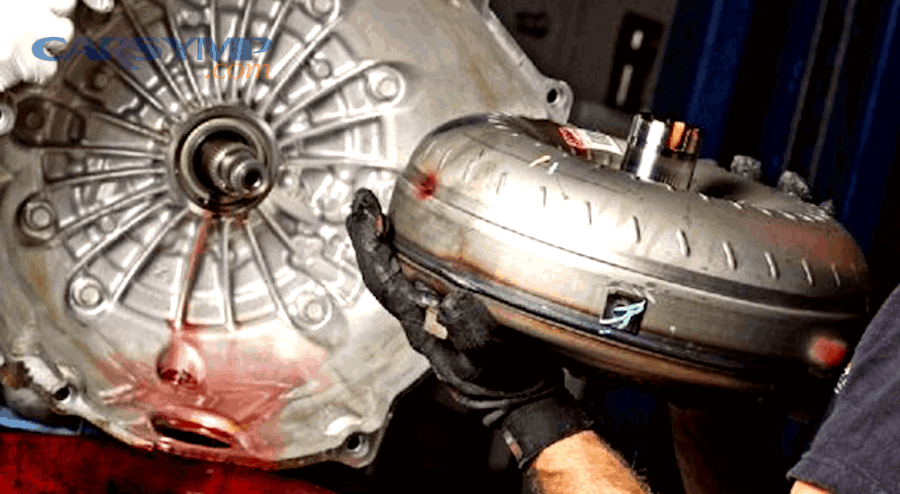
- Separate the transmission from the engine and slide it rearward clear of the converter
- Remove the old TC seal using a seal pick or flathead screwdriver — take care not to score the bore
- Inspect the hub shaft and bushing as described above before installing anything
- Install the new seal using a correctly sized socket or section of PVC pipe to drive it flush and square into the bore — never use a punch or screwdriver to drive the seal, as this will damage the lip or distort the seal body
- Apply a thin bead of RTV sealant around the outer diameter of the seal before installation — this seals the press-fit between the seal body and the bore, preventing the leak that occurs when fluid bypasses the outer edge of the seal rather than passing beneath the lip
This last point — the RTV outer-edge application — is a step that many first-time seal replacers omit, and it is a primary cause of leaks that persist after an apparently successful seal job. The seal manufacturer’s instructions often include this step, but it is easily missed.
What Is the Cost to Fix a Torque Converter Seal Leak?
The cost to fix a torque converter seal leak ranges from approximately $200 to $600 at an independent shop, with the majority of the cost being labor for transmission removal rather than parts.
The following table provides a realistic cost breakdown across DIY, independent shop, and dealership repair scenarios:
| Repair Scenario | Parts Cost | Labor Cost | Total Estimated Cost |
|---|---|---|---|
| DIY (experienced) | $15–$40 (seal + bushing + RTV) | $0 (own labor) | $15–$40 + fluids |
| Independent transmission shop | $20–$50 | $200–$500 | $220–$550 |
| Dealership | $30–$80 | $350–$600 | $380–$680 |
| Torque converter replacement included | $150–$400 (converter) | $250–$500 | $400–$900 |
Pan gasket and filter replacement overview: since the transmission pan must be removed to drain the ATF before the transmission can be dropped safely, this is an ideal time to replace the pan gasket and filter simultaneously. The parts cost is minimal ($15–$40) and the labor is already included in the transmission drop procedure. Most transmission specialists recommend combining these services whenever the transmission is out of the vehicle.
The decision of When to rebuild instead of fixing leaks is also relevant here. If the inspection during seal replacement reveals significant internal damage — contaminated ATF with metallic debris, worn clutch pack material, or a damaged valve body — the cost calculus changes. A seal replacement on a mechanically failing transmission delays rather than prevents a larger expense. In those cases, a rebuild or remanufactured transmission may represent better long-term value than a seal-only repair.
What Else Can Cause ATF Loss That Mimics a Torque Converter Seal Leak?
There are four main conditions that can produce ATF loss or bell housing fluid accumulation that closely mimics a torque converter seal leak: internal converter check valve failure (drain-back), rear main seal migration, transmission overfilling, and CVT front seal failure.
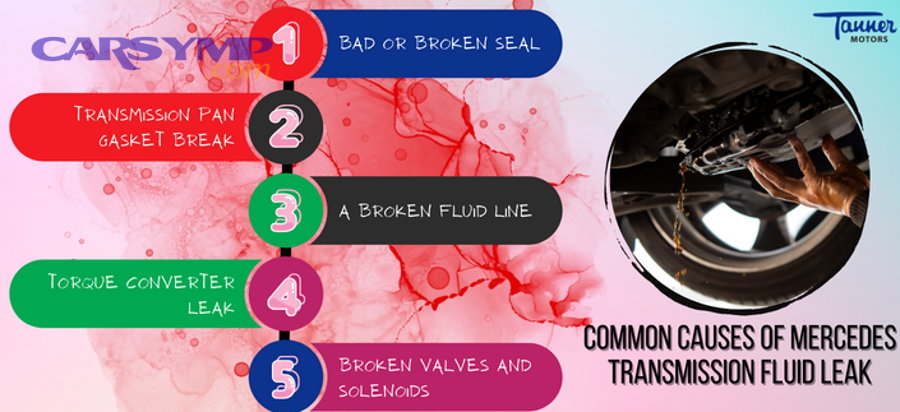
Each of these conditions is significant because a mechanic who assumes the TC seal without ruling out these alternatives risks performing an unnecessary transmission drop. Understanding how each mimics the TC seal — and what distinguishes it — protects both time and repair budget.
What Is Torque Converter Leak-Down and How Is It Different from a Seal Leak?
Torque converter leak-down is an internal condition in which ATF drains from the converter housing back into the transmission pan when the engine is off, caused by a failed or missing internal check valve — not by any external seal breach.
Leak-down does not produce a drip under the vehicle. Instead, the drained ATF overfills the transmission pan and is expelled through the transmission vent tube, which can appear as fluid weeping from the top or side of the transmission case. On some vehicles it drips from the vent tube onto the exhaust or subframe — which owners notice as a drip from an unexpected location and incorrectly attribute to a seal.
The diagnostic distinction:
- TC seal leak: Red ATF puddle under the front of the transmission; low fluid on dipstick after driving
- Leak-down: Transmission dipstick reads overfull cold (before the converter refills on startup); no external drip; possible vent weep
The fix for leak-down is an inline check valve installed on the transmission cooler return line — a simple, inexpensive repair that requires no transmission removal.
Can a Crankshaft Rear Main Seal Failure Be Mistaken for a TC Seal Leak on High-Mileage Vehicles?
Yes, rear main seal failure on high-mileage engines can easily be mistaken for a torque converter seal leak because the leaked engine oil migrates forward along the bell housing and accumulates at the transmission-to-engine junction — the same location where TC seal fluid appears.
On vehicles with over 150,000 miles, crankshaft end-play — the small amount of fore-and-aft movement in the crankshaft — can increase beyond specification as main bearings wear. Excessive crankshaft end-play accelerates rear main seal failure by allowing the seal to be pressurized unevenly as the crank shifts axially. This is a condition that typically only manifests in high-mileage engines and is often overlooked during a transmission leak diagnosis. If the clean-and-monitor test traces the origin to the back of the engine block rather than the front of the transmission, rear main seal replacement addresses the issue — and the transmission does not need to be touched.
How Does Transmission Overfilling Cause Bell Housing Leaks Without Seal Failure?
Transmission overfilling causes ATF expulsion through the vent tube and inspection cover weep holes, creating the appearance of an active leak from the bell housing without any seal having failed.
This condition most commonly occurs after a fluid service where ATF was added without checking the level with the engine running and the transmission at operating temperature. Automatic transmission fluid expands significantly with heat — a cold fluid check can show a low reading that leads a technician to overfill the system. When the fluid reaches operating temperature and expands, the excess is pushed out through the path of least resistance.
Always verify ATF level by following the manufacturer’s specified procedure — typically with the engine running, the transmission fully warmed, and the gear selector cycled through all positions before taking the dipstick reading. Correcting an overfill requires nothing more than draining the excess fluid to the correct level.
Can a Torque Converter Seal Leak Occur on CVT Transmissions?
Yes, continuously variable transmissions (CVTs) use a front pump and converter seal arrangement that is functionally similar to a conventional automatic, and the TC seal in a CVT can fail by the same mechanisms — bushing wear, fluid contamination, and age hardening.
However, CVT diagnosis and repair carries important distinctions. CVT fluid (CVTF) is a specialized formulation distinct from conventional ATF, with different viscosity, friction coefficients, and additive packages. Using the wrong fluid — or topping up a leaking CVT with standard ATF — can accelerate internal damage dramatically. Additionally, CVT internal tolerances are tighter than those in conventional automatics, meaning contamination from a leaking seal that carries debris into the fluid has more severe consequences.
The external diagnostic process is identical — clean-and-monitor, fluid color check, and transmission removal for physical confirmation — but the repair itself should be treated with greater caution, and the fluid condition should be evaluated carefully alongside the seal condition before deciding between a seal replacement and a broader transmission service.