


If your vehicle still shakes after a normal tire service, road force balancing is often the next diagnostic step because it measures how the tire-and-wheel assembly behaves under load, not just how its weight is distributed. That makes it especially useful when a driver feels a smooth-road highway-speed vibration that standard correction did not fully remove. (discounttire.com)
The first question most car owners ask is simple: what makes this service different from a normal balance? The short answer is that a conventional machine corrects imbalance, while a road force machine also uses a load roller to simulate road pressure and reveal force variation, runout, and other uniformity issues that may only show up when the vehicle is actually moving. (discounttire.com)
The second question is practical: when is it worth paying for? In most cases, it helps most when a vehicle has persistent vibration at speed, when new tires do not feel as smooth as expected, or when a sensitive wheel-and-tire setup magnifies small imperfections. It is usually not the first answer to every shake complaint, but it is often the best next answer when basic balance does not finish the job. (discounttire.com)
A final question matters just as much: what can this service not fix? Some vibrations come from alignment, suspension wear, brake pulsation, bent wheels, or driveline problems rather than tire uniformity. Introduce a new idea: the main content below explains what road force balancing does, when it helps most, and how to decide whether it is the right move for your car. (discounttire.com)
What Is Road Force Balancing and How Does It Work?
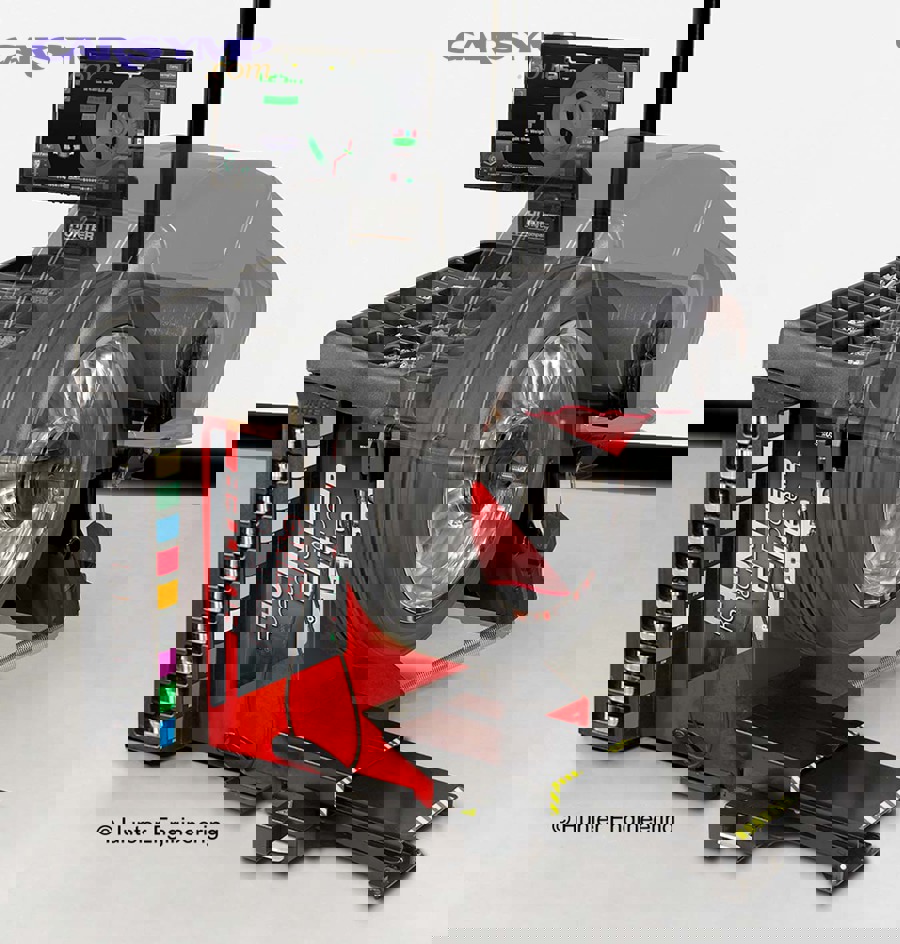
Road force balancing is an advanced wheel-and-tire diagnostic and correction method that uses a load roller to simulate road pressure and identify imbalance, runout, and force variation in the complete assembly. (discounttire.com)
To better understand why this matters, it helps to start with the core problem drivers actually feel: a vibration that appears on the road even when a standard balance machine says the assembly is balanced.
Is Road Force Balancing the Same as Regular Wheel Balancing?
No, road force balancing is not the same as regular wheel balancing because it checks more than weight, measures how the tire reacts under load, and helps diagnose complex ride complaints that standard balancing can miss. (discounttire.com)
More specifically, regular wheel balancing focuses on distributing weight evenly around the wheel-and-tire assembly. A technician spins the assembly, identifies heavy spots, and adds clip-on or adhesive weights so the assembly rotates more smoothly. That fixes ordinary imbalance, which is one of the most common causes of shaking through the steering wheel, seat, or floor. (discounttire.com)
Road force balancing goes further. Instead of stopping at weight correction, the machine presses a roller against the tire to mimic the force the tire sees on the road. That extra step lets the machine measure force variation and runout in the full assembly, and in many cases it can also guide the technician toward corrective steps such as remounting or match mounting the tire on the wheel. (discounttire.com)
This difference is exactly why drivers sometimes feel confused after a basic service. A normal balance can be technically correct, yet the vehicle can still shake because the assembly may be slightly out of round or may generate uneven force as it rolls. In other words, a standard balance corrects weight problems; road force balancing diagnoses loaded rolling problems as well. (discounttire.com)
That distinction also helps clarify a common service question around Balance vs alignment: when each is needed. Balancing addresses uneven rotation and vibration caused by the wheel-and-tire assembly. Alignment adjusts the wheel angles so the tires point and track properly. If the complaint is a shake at speed, balancing is often investigated first. If the complaint is pulling, crooked steering, or abnormal tread wear patterns, alignment becomes more relevant.
How Does Road Force Balancing Measure Tire and Wheel Problems Under Load?
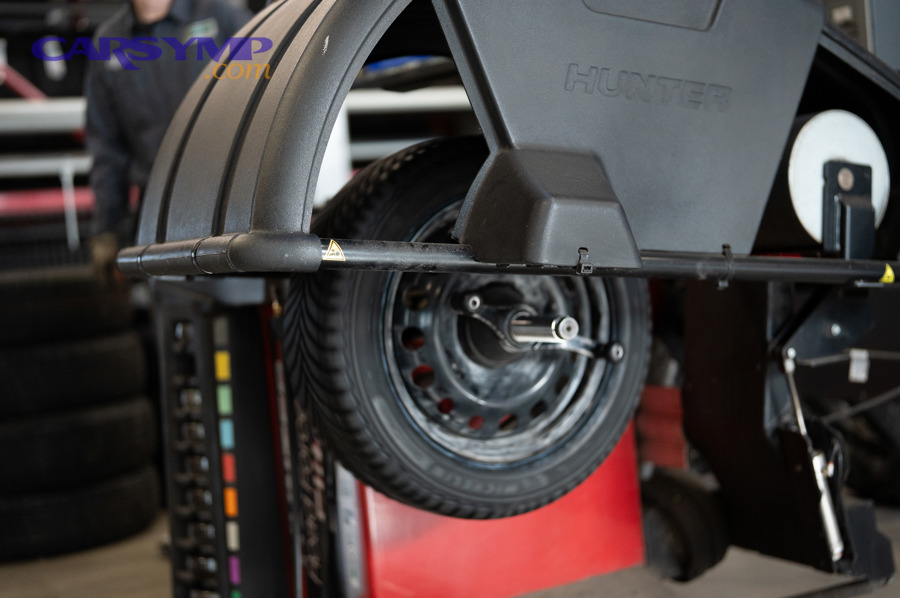
Road force balancing measures loaded tire-and-wheel behavior by pressing a roller against the tire, simulating road pressure, and calculating force variation and runout that may not appear in a conventional free-spin test. (discounttire.com)
Specifically, the roller applies controlled pressure to the tire as the assembly spins. The machine then compares how uniformly the tire and wheel behave throughout the rotation. If one part of the assembly acts like a high spot, a stiff spot, or a low spot, the machine detects that variation and tells the technician what type of correction may help. (discounttire.com)
That correction can take several forms. Sometimes the answer is simple weight placement, just like in ordinary wheel balancing. Sometimes the better answer is repositioning the tire on the wheel so the high spot of one component offsets the low spot of the other. Discount Tire describes this process in the context of match mounting, where the tire and wheel are aligned to reduce the combined effect of irregularities. (discounttire.com)
This is why road force balancing often feels more diagnostic than routine. A normal balance tells a shop where the weight should go. A road force balancer can also tell the shop whether the assembly itself is behaving unevenly under pressure. That makes it valuable when a vehicle returns with the same complaint after a standard service. (discounttire.com)
According to GM service information published through NHTSA in April 2024, smooth-road highway-speed shake can be caused by imbalance, out-of-round conditions, and tire force variation, and all three conditions must be addressed during diagnosis. (static.nhtsa.gov)
When Does Road Force Balancing Help Most?
Yes, road force balancing helps most when vibration remains after standard balancing, when the shake appears mainly at highway speed, and when the tire-and-wheel assembly has uniformity issues that ordinary balancing does not fully correct. (discounttire.com)
Next, the useful question is not whether the service is advanced, but whether it matches the symptom the driver actually feels.
Does Road Force Balancing Help When You Feel Vibration at Highway Speeds?
Yes, road force balancing often helps when you feel vibration at highway speeds because speed-sensitive shake commonly points to tire or wheel issues, because loaded variation can hide behind a normal balance result, and because highway cruising exposes small uniformity defects more clearly. (discounttire.com)
For example, many drivers describe the problem as a steering wheel tremor between roughly 60 and 75 mph, a buzz through the seat, or a faint but repeating body shake on smooth pavement. Those are classic conditions under which tire force variation and out-of-round conditions become easier to notice. GM’s service bulletin specifically ties smooth-road highway-speed shake to imbalance, out of round, and tire force variation. (static.nhtsa.gov)
Location also matters. Discount Tire notes that vibration in the steering wheel often points toward the front tire-and-wheel assemblies, while vibration in the seat or floor can point toward the rear. That is not a perfect diagnostic rule, but it helps narrow the complaint before more advanced measurement begins. (discounttire.com)
This is also where many common Wheel balancing symptoms overlap. A driver may notice a shimmy through the steering wheel, faster tire wear, or a car that feels fine in town but rough on the highway. Those symptoms do not automatically prove the need for road force service, but they do support moving beyond a simple spin balance when the first repair does not hold. (discounttire.com)
What Types of Ride Problems Can Road Force Balancing Actually Solve?
There are 4 main ride problems road force balancing can solve: persistent highway vibration, unresolved post-installation shake, repeat balance complaints, and loaded rolling irregularity caused by force variation or runout. (discounttire.com)
To illustrate, the first group includes vehicles that already had standard wheel balancing but still feel unsettled at cruising speed. In these cases, road force balancing helps identify whether the assembly has a loaded irregularity that simple weight correction did not address. (discounttire.com)
The second group includes new-tire installations that never felt truly smooth from day one. Les Schwab explicitly notes that a road-force machine can be used when new tires are installed or when standard balancing has not remedied an issue. That makes it a practical next step for customers who expected a fresh set of tires to improve comfort but instead feel a new shimmy. (lesschwab.com)
The third group includes repeat comebacks. A car owner gets a balance, the vibration improves a little, then returns. In that situation, the problem may not be loose weights or technician error. The issue may be that the tire and wheel assembly behaves inconsistently under load, which is exactly what this service is built to diagnose. (discounttire.com)
The fourth group includes vehicles with slight out-of-round conditions, force variation, or high/low spot mismatch between tire and wheel. These issues can produce a repeated disturbance even when the assembly looks acceptable in a basic balancing routine. (discounttire.com)
According to Discount Tire, road force balancing is “the most effective way” to resolve runout or force variation vibrations, especially when standard balancing proves ineffective. (discounttire.com)
Which Vehicles, Tires, and Situations Benefit the Most From Road Force Balancing?
There are 4 main situations that benefit most from road force balancing: vehicles with persistent shake complaints, new tire installations that still feel rough, sensitive low-profile or performance setups, and cars that repeatedly return for the same vibration issue. (discounttire.com)
Besides the symptom itself, the type of tire-and-wheel package often determines how noticeable a small uniformity problem becomes.
Which Tire and Wheel Setups Are Most Likely to Need Road Force Balancing?
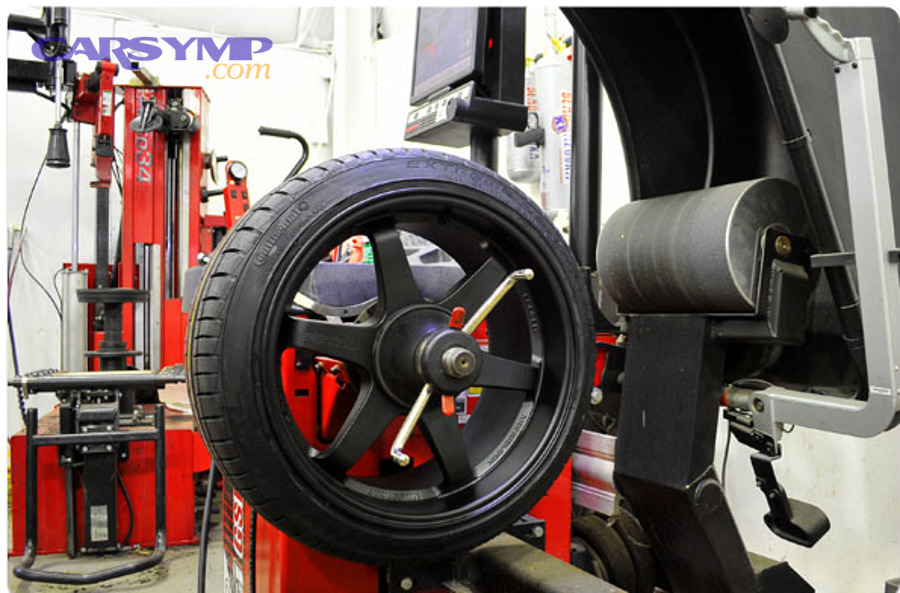
The setups most likely to need road force balancing are larger wheels, lower-profile tires, more performance-oriented vehicles, and any assembly that has already shown a repeated vibration complaint after ordinary service. (lesschwab.com)
Low-profile tires leave less sidewall to absorb minor non-uniformities, so the driver often feels small disturbances more directly. Likewise, larger-diameter wheels and stiffer suspensions can make minor variations more obvious because they reduce the amount of cushioning between the road and the cabin. This does not mean every sporty vehicle needs road force service, but it does mean those vehicles are often less forgiving. That is one reason shops frequently recommend this approach when premium ride quality is the expectation. (lesschwab.com)
Vehicles that tow, carry heavy loads, or spend a lot of time at freeway speed can also make loaded tire behavior more noticeable. Since road force balancing specifically evaluates how the assembly behaves under pressure, it can reveal issues that a free-spin machine may not show clearly. (discounttire.com)
A final group includes cars with aftermarket wheel-and-tire combinations. GM’s service guidance notes that diagnosis should consider the possibility that aftermarket wheels or tires can affect shake conditions. That does not mean aftermarket parts are automatically the problem, but it does mean specialized measurement becomes more useful when fitment, centering, or uniformity are in question. (static.nhtsa.gov)
Is Road Force Balancing Worth It After Getting New Tires?
Yes, road force balancing can be worth it after getting new tires when vibration appears immediately, when the vehicle is especially sensitive to ride quality, and when the first standard balance did not deliver the smooth result you expected. (lesschwab.com)
However, it is not mandatory for every tire purchase. Many new-tire installs leave the shop perfectly smooth with ordinary wheel balancing. In routine situations, a normal balance is the appropriate first service, and many retailers bundle it into standard tire installation. The more advanced service becomes worthwhile when the result is not satisfactory or the setup is unusually vibration-sensitive. (discounttire.com)
This is also the right place to think about a Wheel balancing cost estimate. The added cost should be weighed against the value of solving a recurring highway vibration, preventing repeated return visits, and avoiding guesswork. A normal balance is usually the lower-cost baseline, while road force service adds diagnostic depth. For a driver who already paid once for a standard correction that did not work, the more advanced measurement can be more cost-effective than repeating the same incomplete step. (lesschwab.com)
How Can You Tell Whether Road Force Balancing Is Worth It or Overkill?
Road force balancing is worth it when the complaint is vibration that survives standard balancing, but it is overkill when the symptom clearly points to alignment, brake, suspension, or damage-related problems instead. (discounttire.com)
More importantly, good diagnosis means choosing the right test at the right time rather than jumping to the most advanced service first.
When Should You Choose Road Force Balancing Instead of Standard Balancing First?
Standard balancing is best for ordinary imbalance complaints, road force balancing is best for persistent or unresolved vibration, and alignment is best for pull, uneven tracking, or angle-related tire wear. (discounttire.com)
In practice, start with the complaint pattern. If the issue is a new shake that matches common wheel balancing symptoms, a standard balance usually comes first because imbalance is the simplest condition to correct. GM’s service guidance says imbalance is normally addressed first for that reason. (static.nhtsa.gov)
Move to road force balancing when the first repair does not solve the problem, when the vibration occurs mainly at highway speed on smooth pavement, or when the vehicle setup makes minor assembly variation easier to feel. That escalation path keeps the diagnosis efficient and prevents replacing parts blindly. (lesschwab.com)
Use alignment when the car pulls to one side, the steering wheel sits off-center, or the tires show angle-related wear patterns. This is the practical answer to balance vs alignment: when each is needed. The two services solve different problems, and choosing the wrong one can leave the original complaint unchanged.
Can Road Force Balancing Fix Problems Caused by Alignment, Suspension, or Damaged Parts?
No, road force balancing cannot fix alignment errors, worn suspension, brake pulsation, or damaged wheels and tires because those faults require different repairs even if they create similar symptoms. (discounttire.com)
For example, a bent rim flange, irregular tire wear, missing weights, incomplete bead seating, stones in the tread, or mud and ice buildup can all affect how the assembly behaves. GM’s bulletin recommends inspecting for those issues before or during diagnosis because they can mimic or worsen vibration. (static.nhtsa.gov)
Brake-related pulsation is another common trap. If the vibration gets worse when the brakes are applied lightly, the issue may belong in brake diagnosis, not tire balancing. The same principle applies to worn bushings, bad hubs, or driveline disturbances, all of which can produce a complaint that feels like an imbalance from the driver’s seat. (static.nhtsa.gov)
That is why a good shop does not treat road force balancing as magic. It is a highly useful diagnostic tool for a specific class of tire-and-wheel problems, but it cannot correct mechanical faults outside that system. (static.nhtsa.gov)
What Should Car Owners Expect From the Road Force Balancing Process?
Road force balancing usually involves 4 stages: inspection, measurement under load, corrective adjustment, and verification through recheck or road test. (discounttire.com)
Then, once you know the service is appropriate, it helps to understand what actually happens in the shop.
What Happens During a Road Force Balancing Service?
A road force balancing service measures the assembly under load, identifies force variation or runout, applies weights or match mounting as needed, and then verifies whether the vibration level has improved. (discounttire.com)
The process often starts with basic checks: tire pressure, visible wheel or tire damage, missing weights, debris, and proper centering on the machine. Those steps matter because a bad setup can create misleading measurements. GM’s bulletin emphasizes correct centering, clean mounting surfaces, and proper preparation before evaluation. (static.nhtsa.gov)
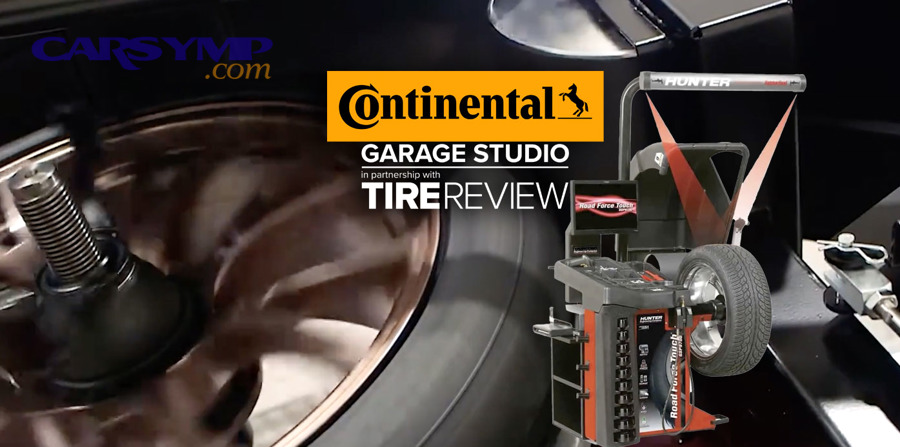
Next, the technician mounts the assembly on a road force balancer and applies the load roller. The machine records how the tire and wheel behave under simulated road pressure and identifies whether imbalance alone is present or whether the assembly also has non-uniformity issues. (discounttire.com)
If needed, the technician may rotate the tire relative to the wheel to reduce the combined high-spot/low-spot effect. This match-mounting step can lower the assembly’s effective variation before final weights are added. Discount Tire explains that the balancer can guide the technician toward remounting or other corrective actions, not just weight placement. (discounttire.com)
Some OEM procedures also reference target road force values. In one Volkswagen-group bulletin published through NHTSA, technicians are instructed to use 18 lbs (80 N) or less as the maximum first harmonic vibration threshold in the cited procedure, and to verify repairs in the speed range where the complaint occurred. That kind of threshold shows how road force measurement becomes part of structured vibration diagnosis rather than guesswork. (static.nhtsa.gov)
What Results Indicate the Service Actually Helped?
Yes, the service actually helped when highway-speed vibration decreases, repeat shake complaints stop, the vehicle feels smoother on the same roads, and follow-up measurement confirms lower variation or a better-corrected assembly. (discounttire.com)
The most obvious result is driver feel. The steering wheel stops trembling, the seat no longer buzzes at cruising speed, and the vehicle tracks with less harshness on smooth pavement. That subjective improvement matters because the entire reason for road force balancing is to solve a complaint the driver can feel. (lesschwab.com)
A second result is fewer repeat visits. When a vibration disappears after a more complete diagnosis, the service proves its value by ending the cycle of rebalance-drive-return. Shops also look for better machine readings after correction, especially when the tire has been repositioned or the worst assembly has been placed away from the steering axle in accordance with procedure. (static.nhtsa.gov)
A third result is diagnostic clarity. Sometimes the “success” of road force balancing is that it proves the tire-and-wheel assembly is no longer the main suspect. If the shake remains after a careful road force procedure, that points the shop more confidently toward alignment, brake, suspension, hub, or driveline investigation. (static.nhtsa.gov)
According to Hunter’s product literature, the Road Force system is designed to solve vibration problems and deliver a “new car ride” by using a diagnostic load roller rather than relying on conventional balancing alone. (delanguage-dev.hunter.com)
What Specialized Factors Can Change Whether Road Force Balancing Helps?
There are 4 specialized factors that can change whether road force balancing helps: force variation and runout severity, match-mounting potential, low-profile or performance sensitivity, and the possibility that the true fault is outside the tire-and-wheel assembly. (discounttire.com)
Below, those more technical details broaden the picture and explain why this service works brilliantly in some cases and only partially in others.
How Do Force Variation, Runout, and Match Mounting Affect Ride Quality?
Force variation affects how evenly the tire pushes back against the road, runout affects how true the assembly rolls, and match mounting reduces the combined high-spot and low-spot effect between tire and wheel. (discounttire.com)
A tire can be balanced in terms of weight yet still act slightly oval or uneven under load. That is where force variation becomes important. Runout describes how much the tire or wheel deviates from a perfectly true rotation. Match mounting tries to pair the tire and wheel in a way that minimizes the combined imperfection. Together, these concepts explain why an assembly can “balance” yet still not feel smooth. (discounttire.com)
Are Low-Profile Tires and Performance Cars More Sensitive to Road Force Issues?
Yes, low-profile tires and performance cars are often more sensitive to road force issues because stiffer sidewalls, larger wheels, and firmer suspensions transmit small variations more directly to the driver. (lesschwab.com)
That sensitivity does not make road force balancing mandatory, but it does raise the value of precise diagnosis. Drivers who expect a premium, smooth, high-speed feel tend to notice imperfections earlier, and those vehicles often benefit more from advanced balance methods when a problem appears. (lesschwab.com)
What Road Force Numbers Do Technicians Look At, and What Do They Mean?
Technicians look at road force values as a way to judge how much loaded variation remains, and lower values generally indicate a smoother assembly, though acceptable thresholds can vary by manufacturer and procedure. (static.nhtsa.gov)
The key point for car owners is not memorizing one universal number. It is understanding that the machine provides a measurable way to compare assemblies, verify whether remounting helped, and decide whether a tire still falls outside acceptable limits in a given OEM process. One published VW-group procedure cited 18 lbs (80 N) or less as a maximum first harmonic threshold in that specific workflow, which shows how road force data can guide actual repair decisions. (static.nhtsa.gov)
When Is Road Force Balancing Overkill or the Wrong Diagnostic Path?
Road force balancing is overkill when the complaint clearly comes from alignment, brake pulsation, suspension wear, bent hardware, or a driveline problem rather than from loaded tire-and-wheel variation. (discounttire.com)
In short, use it when the symptom and prior repair history point toward unresolved tire-and-wheel vibration. Do not use it as a substitute for basic inspection or for unrelated repairs. The best result comes when the service is matched to the right complaint, in the right order, after the obvious causes have been checked first. (static.nhtsa.gov)