


timing belt replacement labor time typically ranges from 2.2 to 8 hours, depending on your vehicle’s make, model, engine layout, and whether additional components like the water pump or tensioner are replaced at the same time. For most standard 4-cylinder engines, a professional mechanic works within a 2–4 hour window using flat-rate book time from databases like AllData or Mitchell1. V6 and V8 engines demand significantly more disassembly, pushing real-world labor hours to 5–8 hours or beyond. Understanding this range upfront arms you with the knowledge to budget accurately and evaluate any shop estimate with confidence.
Several variables directly stretch or compress how long the job takes. Engine design is the single biggest driver — a transverse-mounted V6 in a minivan requires far more component removal than a longitudinally mounted 4-cylinder in a compact sedan. Adding the water pump, tensioner, idler pulleys, and cam seals to the same service appointment increases labor time modestly but saves you from paying full labor again when those parts inevitably wear out. Mechanic experience and access to the right specialty tools also play a measurable role in how quickly the job is completed.
Connecting labor hours to actual dollar cost is where this information becomes most actionable. Shop labor rates vary considerably — from roughly $80 per hour at a local independent garage to $200 per hour at a franchised dealership — meaning a 3-hour job can cost anywhere from $240 to $600 in labor alone, before parts are even factored in. Knowing the flat-rate book time for your specific vehicle gives you a reliable baseline to calculate a fair cost estimate and compare quotes intelligently.
Many car owners bring their vehicle in for a quote only to discover the shop’s billed hours seem inflated compared to what online resources suggest. This disconnect between flat-rate book time and what gets charged is one of the most common friction points between mechanics and customers. The following sections break down every element of timing belt replacement labor time — from standard hours by engine type to the real cost of neglect — so you can approach this service as an informed decision-maker rather than a passive payer.
What Is Timing Belt Replacement Labor Time?
Timing belt replacement labor time is the number of billable hours a mechanic charges to remove and install a new timing belt, measured against a standardized flat-rate guide used across the auto repair industry.
To better understand why labor time varies so widely between shops and vehicles, it helps to examine exactly how labor time is defined and calculated in a professional repair environment.
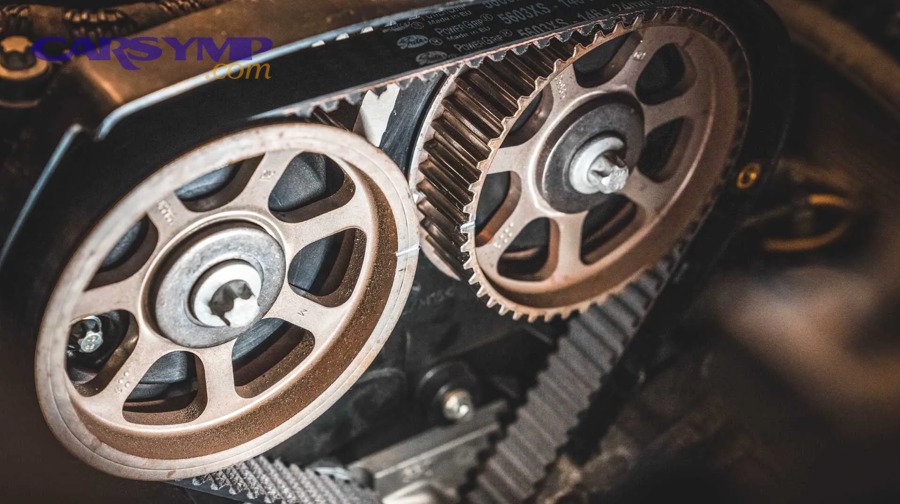
What Is the Standard Flat-Rate Labor Time for a Timing Belt Replacement?
Flat-rate labor time is the industry-standard number of hours assigned to a specific repair task, published in reference databases such as AllData and Mitchell1, which shops use as the billing benchmark regardless of how long the job physically takes.
Specifically, for most timing belt replacements, flat-rate book time falls between 2.2 and 5 hours depending on the vehicle. A Subaru 2009 Outback, for example, carries a posted labor time of 2.2 hours for the belt alone, with an additional 0.2 hours for pulley and tensioner replacement and 0.6 hours if the water pump is included, according to data shared on the Subaru Outback Forums. Toyota V8 engines like the 2UZFE in the Tundra are assigned approximately 3 hours of book time for the timing belt, with additional increments for the water pump and crank gear removal.
The flat-rate system means a mechanic who finishes the job in 1.8 hours still bills 2.2 hours, and one who takes 3 hours on the same job is paid the same rate. For customers, this system is largely neutral — you pay for the task, not the clock. The practical implication is that a highly experienced technician using the correct specialty tools can complete the job efficiently, while a shop that inflates flat-rate hours beyond published guidelines is a red flag worth addressing directly.
How Does Real-World Labor Time Compare to Book Time?
Real-world timing belt replacement routinely takes 4–8 hours, which is significantly longer than flat-rate book time, because actual shop conditions introduce variables that standardized guides do not fully account for.
However, the gap between book time and clock time is not evidence of inefficiency — it reflects the complexity of real vehicles. Cooling system bleeding, bringing the engine up to operating temperature, inspecting for leaks post-reassembly, and road-testing the vehicle all consume time that falls outside the labor task itself. Forum data from Toyota Tundra owners and Sienna drivers consistently reports real-world times of 5–9 hours for V6 and V8 timing belt jobs, even when booked at 3–4 hours. For older vehicles, corrosion and seized fasteners alone can add 1–2 hours to any estimate.
The key takeaway for car owners is straightforward: book time tells you what a shop should bill; real-world time explains why your car might be at the shop all day. These are not the same metric, and conflating them leads to unrealistic expectations on both sides of the service counter.
How Many Labor Hours Does a Timing Belt Replacement Actually Take?
There are three main categories for timing belt labor hours — short (2–4 hours), moderate (4–6 hours), and long (6–8+ hours) — determined primarily by engine configuration: 4-cylinder, V6, or V8 with add-on services.
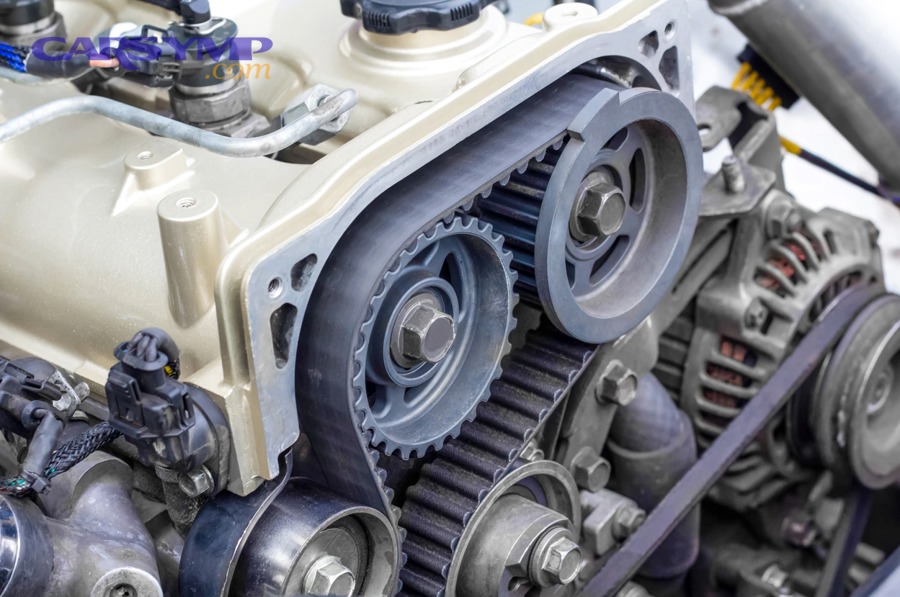
Next, the specific hours associated with each engine type and common add-on services deserve a closer look, because choosing a bundle package versus a belt-only replacement has a direct and measurable impact on both time and long-term cost.
How Long Does a Timing Belt Replacement Take on 4-Cylinder Engines?
On a 4-cylinder engine, timing belt replacement typically takes 2–4 hours of labor, making it the most straightforward version of the job across common passenger vehicles.
Inline 4-cylinder engines — common in vehicles like the Honda Civic, Toyota Corolla, and many Subaru models — offer relatively accessible timing covers and simpler cam/crank configurations. The timing cover is usually reachable without major component removal, the drive belt is single-cam in many cases, and the working space is adequate for most standard tools. Mechanics with experience on these platforms can complete the job close to or within book time, which typically sits at 2.2–3 hours depending on the specific vehicle. For owners of standard commuter vehicles with transverse-mounted 4-cylinders, a same-day turnaround for a timing belt replacement is a reasonable expectation.
How Long Does a Timing Belt Replacement Take on V6 and V8 Engines?
On V6 and V8 engines, timing belt replacement typically takes 4–8 hours of labor, and in some cases longer, because these engines require substantially more disassembly to access the timing system.
More specifically, V6 engines like the Toyota 3MZ in the Sienna or Acura’s J-series V6 in the MDX involve dual overhead camshafts, multiple idler pulleys, and a more tightly packaged engine bay. A Toyota Tundra V8 service advisor quoted on the Tundra Solutions forum noted that AllData book time for the water pump alone on the 2UZFE is 3.4 hours, with timing belt time adding another 3 hours separately. At independent shops, the same combined job often falls between 5 and 7 hours billed. On engines where the harmonic balancer requires a dedicated puller tool — which many V8 setups do — a mechanic without the correct tool faces significant added time. For owners of trucks, full-size SUVs, and performance-oriented V6 sedans, a two-day shop window is not unusual for a complete timing belt service.
How Much Extra Labor Time Does a Water Pump or Tensioner Add?
Replacing the water pump, tensioner, and idler pulleys during a timing belt service adds approximately 0.6–1.5 hours total, a modest increase that delivers significant long-term value by eliminating the need to repeat the entire job when these components fail.
The table below summarizes the incremental labor time for each common add-on service, based on published flat-rate data and real-world shop experience:
| Add-On Service | Additional Labor Time | Notes |
|---|---|---|
| Water pump | +0.4–1.0 hr | Minimal, as timing cover is already removed |
| Tensioner & idler pulleys | +0.2–0.4 hr | Minimal access time once belt is removed |
| Cam/crank oil seals | +0.5–1.0 hr | Slightly more involved; requires seal puller |
| Accessory/drive belts | +0.2–0.5 hr | Often bundled at no extra labor charge |
| Thermostat | +0.3–0.5 hr | Easy access during cooling system service |
This table reflects the incremental hours added to a baseline timing belt replacement — not the total job time. Because the timing cover is already removed during a standard belt replacement, adding the water pump at the same appointment represents exceptional labor efficiency. According to AutoZone’s timing belt service guide, if the water pump is replaced simultaneously, the additional labor should be less than one hour, since the disassembly required to access it is already completed as part of the belt job. Skipping these components and returning later means paying full labor again for an identical teardown.
What Factors Affect Timing Belt Replacement Labor Time?
Four main factors affect timing belt replacement labor time: vehicle make and model, engine type (interference vs. non-interference), vehicle age and condition, and mechanic experience with the platform.

To better understand how each of these variables interacts with the final labor bill, it’s worth examining them individually — because any one of them can shift your estimate by several hours and hundreds of dollars.
Does the Vehicle Make and Model Change How Long the Job Takes?
Yes, the vehicle make and model directly determines how long a timing belt replacement takes, because engine bay packaging, cam configuration, and component accessibility vary significantly across manufacturers.
Some platforms are widely regarded as labor-efficient timing belt jobs. Honda 4-cylinders, Toyota inline engines, and many Hyundai/Kia 4-cylinders offer reasonable access and well-documented procedures. On the other end of the spectrum, Volkswagen and Audi transverse-mounted engines — particularly 1.8T and 2.0T variants — are notorious for requiring subframe drops, auxiliary component removals, and precise alignment tools that add hours to any standard estimate.
The table below provides a general complexity classification by vehicle category to help set expectations before you call a shop:
| Complexity Level | Vehicle Examples | Estimated Labor Hours |
|---|---|---|
| Low | Honda Civic 1.8L, Toyota Corolla 1.8L, Subaru Legacy 2.5L EJ | 2–3.5 hours |
| Moderate | Acura MDX V6, Toyota Sienna V6, Honda Odyssey 3.5L | 4–6 hours |
| High | Toyota Tundra V8 2UZFE, VW/Audi 1.8T/2.0T, Mitsubishi 3000GT V6 | 6–9+ hours |
This classification is a general guide, not a substitute for a model-specific AllData lookup. Always ask the shop which labor time database they reference and verify that the hours quoted align with the published flat-rate for your specific year, make, model, and engine.
Does Engine Type (Interference vs. Non-Interference) Affect Labor Time?
No, the distinction between an interference and non-interference engine does not directly add labor hours to a timing belt replacement — the physical replacement procedure is largely the same for both engine types.
However, this distinction critically affects how urgently the service needs to be performed and how carefully the mechanic must work during reassembly. In an interference engine, the pistons and valves share overlapping travel paths, meaning a belt that breaks or is installed with incorrect timing alignment can cause immediate, catastrophic internal engine damage — bent valves, cracked pistons, and destroyed cylinder heads. Non-interference engines allow the pistons and valves to clear each other even if timing is lost, limiting the consequence of belt failure to a stalled engine rather than destroyed internals.
For labor time, the interference engine classification means mechanics exercise heightened precision during the reinstallation phase, particularly when aligning timing marks on the camshaft and crankshaft pulleys. This care is appropriate but does not typically add billable hours to the standard flat-rate — it simply reflects professional diligence on a high-stakes task.
How Does Vehicle Age and Condition Affect Timing Belt Labor Hours?
Vehicle age and condition can significantly extend timing belt labor time, often adding 1–3 hours beyond the flat-rate estimate, because corrosion, rust, and seized components are not reflected in any published book time.
This is one of the most important and frequently overlooked variables in any timing belt cost estimate. A 2009 vehicle with original fasteners in a northern climate, where road salt accelerates corrosion, presents a fundamentally different challenge than a 2009 vehicle from Arizona with clean hardware. Seized harmonic balancer bolts, corroded cam seal housings, and fasteners that strip under torque all require additional diagnostic time, penetrating oil treatments, and sometimes replacement hardware. Forum discussions on Tundra Solutions and Subaru Outback communities consistently note that older vehicles “often break something” during a timing belt service — and that time is absorbed either as additional labor charges or as warranty work, depending on the shop’s policy.
For vehicles over 12–15 years old or those with 150,000+ miles and no documented timing belt history, building a labor buffer of 1–2 extra hours into your budget is a prudent approach when estimating total cost.
How Much Does Timing Belt Replacement Labor Cost?
Timing belt replacement labor cost ranges from $240 to $1,200+, calculated by multiplying the flat-rate labor hours by the shop’s hourly rate, which varies from approximately $80 at independent garages to $200 at franchised dealerships.
In addition to the hours themselves, understanding the components of this cost calculation — and where dealer versus independent shops differ in their billing practices — gives you the leverage to evaluate quotes accurately and push back when numbers seem inflated.
How Do You Calculate Timing Belt Labor Cost From Hours?
Timing belt labor cost is calculated using a simple formula: Labor Hours × Shop Hourly Rate = Labor Cost, and when combined with parts cost, this produces your total Timing belt replacement cost estimate.
For example:
- A 4-cylinder engine job at 3 hours × $100/hr (independent) = $300 labor
- A V6 job at 5 hours × $140/hr (independent) = $700 labor
- A V8 job at 6 hours × $175/hr (dealer) = $1,050 labor
Parts cost — the timing belt kit itself, water pump, tensioner, and seals — typically adds $150–$400 on top of labor, depending on whether OEM or aftermarket components are used and how many items are replaced simultaneously. AutoZone estimates that the total timing belt replacement cost including parts and labor falls between $400 and $1,000 for most standard vehicles, with complex engines and dealer rates pushing past that ceiling. Water pump replacement with timing belt represents the most cost-efficient way to handle both services — the incremental parts cost is modest, and the labor overlap eliminates what would otherwise be a full-cost repeat job.
Is a Dealer or Independent Shop Faster (and Cheaper) for Timing Belt Labor?
Independent shops win on cost for most timing belt replacements, while dealers may have a slight edge on platform-specific efficiency — but the labor time difference between the two is rarely significant enough to change the total outcome by more than one hour.
The more meaningful variable is the hourly rate charged, not the time billed. An independent mechanic with 15 years of Honda experience will complete a Civic timing belt replacement as quickly or faster than a dealer technician — and at $85/hr versus $165/hr, the savings are substantial. Dealer service departments, on the other hand, carry OEM-specific tools, technical service bulletins, and factory training that can marginally reduce job time on complex engines and reduce the risk of an alignment error on interference engines.
The critical red flag for both channels is hours billed beyond the published flat-rate without a documented reason. A standard 4-cylinder timing belt job billed at 6 hours warrants a direct question to the service advisor: “What is the AllData or Mitchell1 book time for my vehicle, and why are you billing above it?” Legitimate answers include documented complications like seized fasteners, required oil seal replacement, or a corroded water pump housing. Vague answers without documentation are a sign to seek a second opinion. According to data from RepairPal, the fair price range for timing belt replacement on most 4-cylinder vehicles falls between $422 and $864 total including parts — a useful benchmark when evaluating quotes in your area.
What Else Should You Know Before Scheduling a Timing Belt Replacement?
Before scheduling a timing belt replacement, car owners should consider four key areas: whether DIY is a realistic option, whether a kit replacement is smarter than a belt-only swap, what the financial consequences of delay truly are, and whether their vehicle even uses a timing belt at all.

Moreover, these considerations directly influence not just how much you spend, but whether you spend it at the right time and in the right way — a distinction that can mean the difference between a $700 maintenance appointment and a $5,000 engine rebuild.
How Long Does a DIY Timing Belt Replacement Take vs. a Professional?
A DIY timing belt replacement takes 6–12 hours for a first-time home mechanic compared to 2–5 hours for a professional, because access to specialty tools, familiarity with timing mark alignment, and efficient workflow all compress professional labor time significantly.
Specifically, the harmonic balancer removal is the most frequently cited DIY obstacle. Without a dedicated crankshaft holding tool, many home mechanics resort to improvised methods that consume additional time and risk component damage. Cam lock tools — required on many Japanese and European engines to hold the camshafts in position while the belt is removed — are vehicle-specific and must be either purchased or rented. YouTube tutorials and factory service manuals bridge much of the knowledge gap, but the physical process of finding correct torque specs, managing multiple timing marks simultaneously, and bleeding the cooling system after reassembly extends the timeline considerably. For first-timers, a full weekend should be reserved. For home mechanics with prior timing belt experience on the same platform, 4–6 hours is a realistic target.
The primary advantage of DIY is cost — parts for a complete timing belt kit on a typical 4-cylinder run $80–$250, compared to $400–$900 total at a professional shop. The primary risk is timing misalignment on an interference engine, where a single tooth of offset at reassembly can result in valve-to-piston contact on the first crank rotation. If you are not confident in your ability to verify and set timing marks precisely, professional service is the safer financial decision.
Does a Timing Belt Kit Save Labor Time Compared to Replacing Just the Belt?
Yes, replacing a complete timing belt kit — including the tensioner, idler pulleys, and water pump — saves labor time in the long run by eliminating the need to perform the full teardown again when individual components fail shortly after a belt-only replacement.
Timing belt vs. timing chain differences aside, the belt-only replacement approach is widely discouraged by professional mechanics precisely because of this labor inefficiency. Tensioners and idler pulleys carry comparable mileage intervals to the belt itself — typically 60,000–100,000 miles — meaning a belt-only replacement at 90,000 miles leaves behind components that are likely to fail within 10,000–20,000 miles. When they do, the shop must perform an identical teardown and bill full labor again. The incremental cost of adding a $40–$80 tensioner and pulley set during the original service is trivially small compared to the $300–$700 in repeat labor charges.
The complete timing belt replacement cost estimate, inclusive of belt, tensioner, idler pulleys, water pump, and cam/crank seals, is consistently described by service advisors as the most cost-efficient version of this job — both for the shop and the customer.
What Happens If You Delay a Timing Belt Replacement?
Delaying a timing belt replacement on an interference engine risks catastrophic internal engine damage costing $2,000–$5,000+, representing five to ten times the cost of a proactive replacement service.
More importantly, timing belts provide virtually no warning before failure. Unlike brake pads that squeal, or coolant hoses that bulge, a timing belt typically snaps without audible or visual warning — one rotation the engine is running normally, the next it is not. Virginia Tire & Auto notes that on an interference engine, belt failure causes the valves and pistons to collide immediately, resulting in bent or broken valves, damaged cylinder heads, and in severe cases, cracked pistons or destroyed engine blocks. The repair bill for this level of damage frequently approaches or exceeds the market value of the vehicle itself.
The financial logic of proactive replacement is unambiguous: a $500–$1,000 timing belt service performed at the manufacturer’s recommended interval prevents a potential $3,000–$6,000 engine repair or total vehicle loss. Manufacturer intervals vary — most rubber timing belts are rated for 60,000–100,000 miles — but age is an equally important factor. A vehicle with 40,000 miles on a 20-year-old original belt is overdue for replacement by calendar age alone, regardless of mileage, because rubber degrades through oxidation, heat cycling, and oil contamination independent of rotational wear.
Does Your Car Even Have a Timing Belt — or a Timing Chain Instead?
Many modern vehicles use a timing chain rather than a timing belt, and electric vehicles have neither, meaning a significant portion of drivers asking about timing belt replacement labor time may not need this service at all.
Timing belt vs. timing chain differences come down to materials and maintenance schedules. A timing belt is made of reinforced rubber with nylon teeth and requires scheduled replacement; a timing chain is made of metal links similar to a bicycle chain and is designed to last the life of the engine under normal maintenance conditions. Most manufacturers began phasing out timing belts in favor of chains through the 2000s and 2010s, though many Honda, Subaru, Mitsubishi, and some Toyota and Hyundai/Kia engines continued using belts into the 2010s.
The fastest way to confirm which system your vehicle uses is to check the owner’s manual under the maintenance schedule section — if a timing belt replacement interval is listed, your vehicle has a belt. If no such interval appears, it likely has a chain. A VIN-based lookup on your manufacturer’s website or a 60-second inspection by a trusted mechanic can also confirm this within minutes. For EV and plug-in hybrid owners, neither a belt nor a chain is present in the drive system, making this service category irrelevant entirely. Understanding this distinction before scheduling service saves you from unnecessary consultation time and ensures the appointment you book is actually the one your vehicle requires.