


2-wheel vs 4-wheel wheel alignment differences come down to adjustment scope, vehicle design, and service purpose. A 2-wheel alignment usually focuses on the front wheels, while a 4-wheel alignment measures all four wheels and typically adjusts both front and rear angles when the suspension design allows it. For most readers, the real question is not which sounds better, but which service matches the vehicle they actually drive.
That decision starts with vehicle layout. Many trucks and older rear solid-axle vehicles often receive a front-end or thrust-style alignment, while many modern passenger cars, crossovers, front-wheel-drive vehicles, and all-wheel-drive vehicles are more commonly matched with a 4-wheel alignment. This is why two cars with similar symptoms can still need different alignment procedures.
The next layer is technical but still practical: alignment angles. Toe, camber, caster, and thrust angle affect how the vehicle tracks, how the steering wheel sits, and how evenly the tires wear. Once you understand what those angles do, the difference between front-end and full alignment becomes much easier to evaluate.
Drivers also want a usable answer, not just a definition. They want to know when wheel alignment helps, when it does not, what Alignment frequency recommendations make sense, and what habits support Preventing alignment problems over time. Introduce a new idea: the sections below move from the core comparison into vehicle fit, symptoms, service choice, and post-repair timing.
What Is the Difference Between 2-Wheel Alignment and 4-Wheel Alignment?
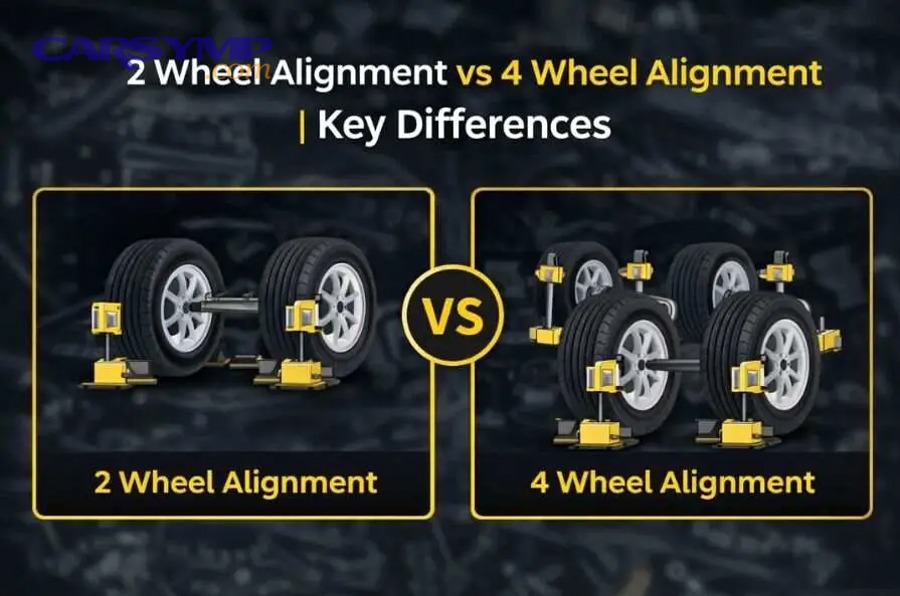
The difference is simple: 2-wheel alignment usually adjusts the front wheels, while 4-wheel alignment measures all four wheels and adjusts the front and rear when the vehicle allows it.
To better understand that difference, it helps to separate the service label from the actual suspension design on the vehicle.
What Is 2-Wheel Alignment?
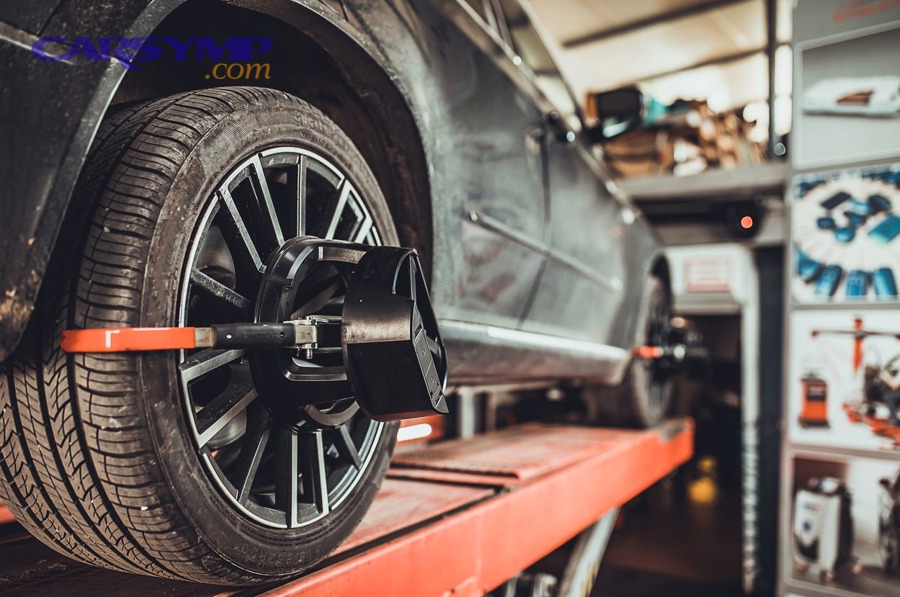
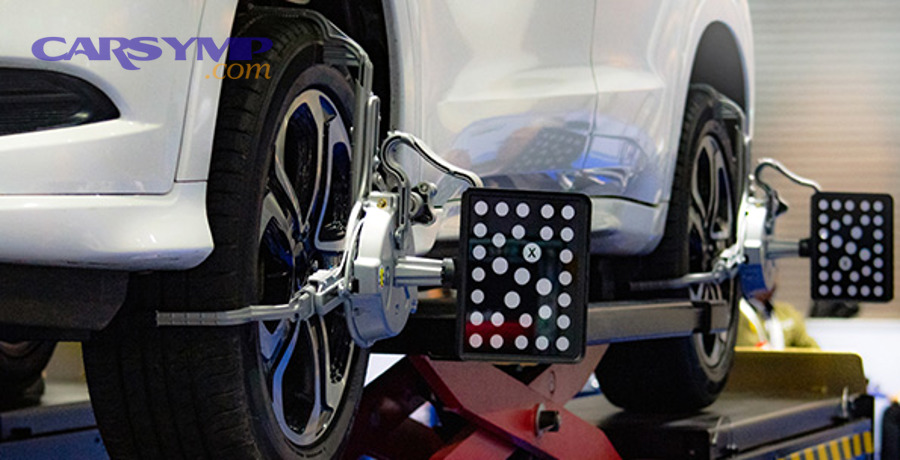
2-wheel alignment is a front-end alignment service that primarily adjusts the front suspension and steering geometry. In common shop language, it is often recommended for vehicles whose rear axle does not offer normal alignment adjustment, especially trucks or SUVs with a solid rear axle.
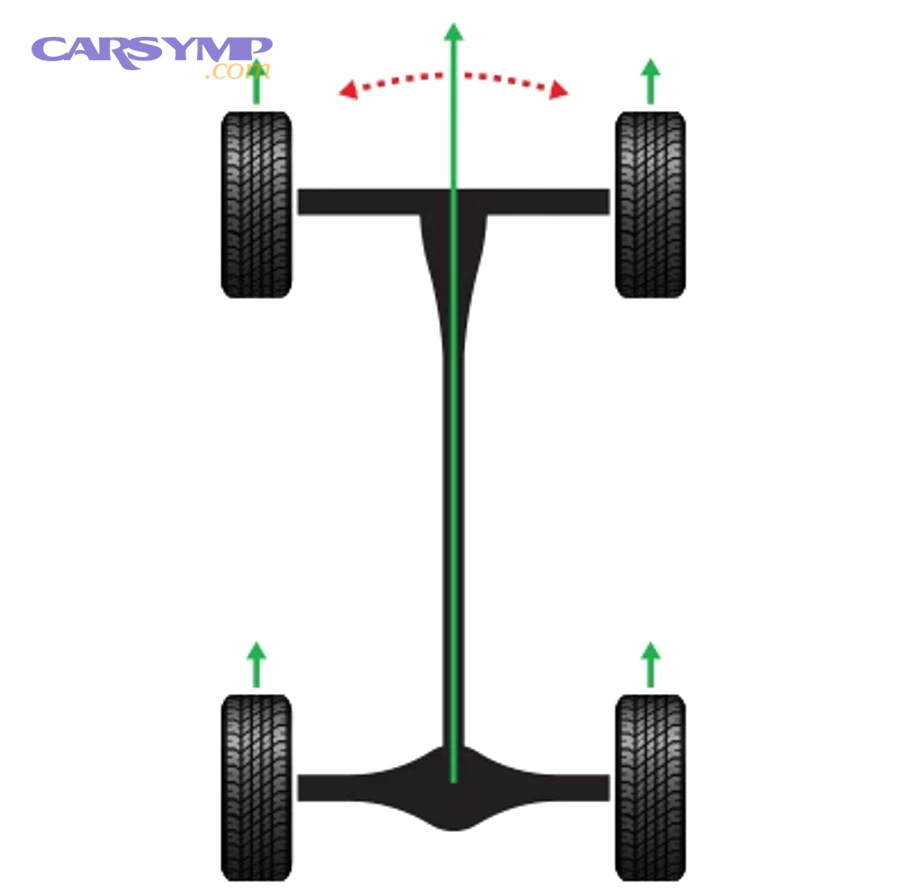
That does not mean the rear of the vehicle is irrelevant. In practice, a technician still has to reference the rear wheel direction or thrust line to make sure the front wheels point correctly relative to the rest of the chassis. If the rear axle is fixed and not adjustable, the technician may align the front wheels to the rear thrust line as closely as possible. That is why some shops describe a 2-wheel service as a thrust alignment rather than only a front-end alignment.
For car owners, the key takeaway is that 2-wheel alignment is not a “cheap shortcut” by definition. It is the correct method for some vehicles because only the front geometry is designed to be adjusted in the normal service process. Problems appear when drivers assume every vehicle can be treated that way. On a platform that depends on rear suspension alignment for straight tracking, a front-only service may leave the root issue untouched.
What Is 4-Wheel Alignment?
4-wheel alignment is a full alignment process that measures all four wheels and adjusts both front and rear alignment angles where the vehicle has adjustable components. This is common on many modern cars, crossovers, SUVs, and AWD platforms.
In real-world service, 4-wheel alignment usually means the technician checks the complete geometric relationship among the wheels rather than treating the front axle in isolation. That matters because the rear suspension can steer the vehicle’s path even when the driver feels the symptom at the steering wheel. A vehicle can drift, dog-track slightly, or show uneven tire wear because rear toe or rear camber is off.
This is why the phrase “full alignment” resonates with consumers: it suggests the whole vehicle is being evaluated, not just the front end. Still, 4-wheel alignment is not automatically superior in every case. It is superior when the suspension design and symptom pattern make full measurement necessary. That distinction keeps the article grounded in search intent instead of generic upsell language.
Does Your Vehicle Need 2-Wheel Alignment or 4-Wheel Alignment?
Your vehicle needs 2-wheel or 4-wheel alignment based mainly on rear suspension design, drivetrain layout, and whether the rear axle has meaningful adjustment points.
Next, the easiest way to answer this is to group vehicles by construction rather than by brand alone.
Which Vehicles Usually Need 2-Wheel Alignment?
Vehicles that usually need 2-wheel alignment include many larger trucks, some body-on-frame SUVs, and other vehicles with a solid rear axle that is not normally adjusted like an independent rear suspension.
The reason is mechanical. If the rear axle is fixed, the service procedure often centers on front toe, front camber, and front caster where adjustable, while referencing the rear thrust line. Many owners of pickups and older utility vehicles hear “front-end alignment” because that is the practical service category that matches the hardware underneath the vehicle.
That said, “usually” matters. Some trucks and specialized platforms still require broader measurement across all four corners, especially when drivability concerns point to rear tracking issues or when the shop’s equipment is designed to read the entire vehicle before deciding what can actually be adjusted. According to service guidance surfaced by NHTSA bulletins, technicians are also expected to inspect tires, wheel bearings, steering, and suspension parts before treating the problem as alignment alone.
Which Vehicles Usually Need 4-Wheel Alignment?
Vehicles that usually need 4-wheel alignment include many front-wheel-drive sedans, all-wheel-drive models, crossovers, and passenger vehicles with independent rear suspension.
These vehicles benefit from full measurement because the rear suspension plays a direct role in tracking and tire wear. Even when the steering complaint feels like a front issue, rear camber or toe can alter the thrust angle and force the front end to compensate. That is why a car can leave a shop with the steering wheel straighter but still not feel fully settled if the rear geometry was never addressed.
Modern packaging is part of the answer too. Passenger vehicles increasingly rely on multi-link and independent rear setups for ride quality, stability, and packaging efficiency. Because those systems can influence wheel direction under load, a correct wheel alignment process often starts by measuring all four wheel positions instead of assuming the front alone tells the story.
What Alignment Angles Are Adjusted in 2-Wheel and 4-Wheel Alignment?
The main alignment angles are toe, camber, and caster, while thrust angle helps explain how the front and rear wheels relate to the vehicle’s actual path.
Specifically, once these terms are clear, the difference between front-end and full alignment stops sounding abstract.
What Are Toe, Camber, and Caster in Simple Terms?
Toe describes whether the tires point inward or outward when viewed from above; camber describes whether the top of the tire leans inward or outward; caster describes steering-axis tilt, which influences straight-line stability and steering feel.
For everyday drivers, toe is the most immediately important angle because it strongly affects tire scrubbing and steering response. A small toe error can wear tires surprisingly fast and make the vehicle feel nervous or reluctant to track straight. Camber matters because excessive inward or outward tilt loads one edge of the tire more than the other. Caster matters because it contributes to return-to-center feel and directional stability, especially at speed.
These angles also explain why wheel alignment is measured in tiny increments. Firestone notes that modern equipment works to manufacturer camber, caster, and toe specifications in fractions of a degree, which is why visual judgment alone is not enough for accurate service.
How Does Thrust Angle Change the Difference Between Front-End and Full Alignment?
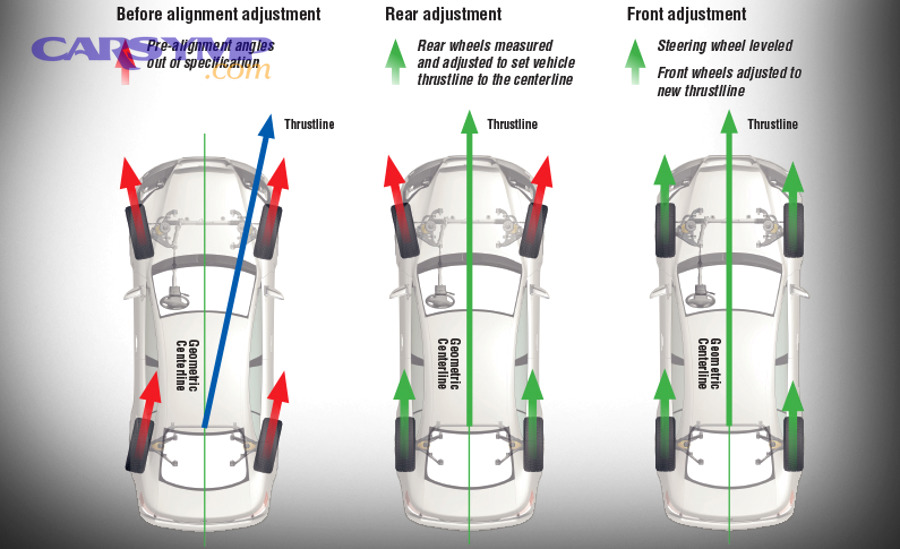
Thrust angle shows the direction the rear wheels push the vehicle, and it can make a front-end problem appear worse or create one that begins in the rear.
This matters because a steering wheel that sits off-center does not always prove the front suspension is the sole problem. If the rear wheels point slightly left or right relative to the chassis centerline, the vehicle may travel at a subtle angle while the driver unconsciously corrects with the steering wheel. A technician who only adjusts the front without considering thrust angle may reduce the symptom without eliminating the cause.
For that reason, thrust-angle thinking bridges the gap between 2-wheel and 4-wheel service categories. Even on vehicles that only allow front adjustment, the rear still matters as a reference. On vehicles with rear adjustability, thrust angle becomes one of the strongest arguments for full measurement and correction.
Is 4-Wheel Alignment Better Than 2-Wheel Alignment?
No, 4-wheel alignment is not always better; it is better when the vehicle design, rear adjustability, and symptom pattern require full measurement and rear correction.
However, consumers often ask this as a value question, so the answer has to connect service type to outcome rather than price alone.
Is 4-Wheel Alignment Always Necessary?
No, 4-wheel alignment is not always necessary because some vehicles are designed around front-only adjustment, some rear axles are not adjustable in standard service, and correct procedure depends on the suspension architecture.
That is why the word “better” can mislead. A 4-wheel alignment on a vehicle without meaningful rear adjustment does not automatically create more value just because the service label sounds more complete. The better alignment is the one that matches the vehicle and correctly addresses the geometry that can and should be adjusted.
At the same time, 4-wheel alignment becomes hard to ignore on many newer passenger vehicles because rear geometry meaningfully affects how the vehicle drives. In those cases, skipping rear measurement can leave the job incomplete. So the best answer is conditional, not absolute: choose the right procedure, not the most impressive phrase.
When Is 2-Wheel Alignment Enough?
2-wheel alignment is enough when the vehicle uses a solid rear axle or another non-adjustable rear design, the front geometry is the adjustable service point, and no evidence suggests a broader chassis or rear-suspension issue.
It is also enough when the shop verifies the rest of the system first. NHTSA-linked service material emphasizes checking tire condition, wheel bearing play, steering linkage drag, trim height, and worn suspension parts before treating the concern as pure alignment. That matters because a correct front-end alignment cannot compensate for looseness, bent parts, or tire-related pull.
So a front-end service is “enough” when it is the correct remedy, not when it is simply the fastest ticket item on the menu. That distinction protects the owner from both overspending and underdiagnosis.
What Problems Can 2-Wheel or 4-Wheel Alignment Fix?
Wheel alignment can fix some steering pull, off-center steering, and uneven tire wear issues, but it cannot fix worn parts, damaged suspension, or tire-force problems by itself.
In addition, understanding what alignment can and cannot solve helps readers book the right service with the right expectations.
Can Alignment Fix Uneven Tire Wear and Steering Pull?
Yes, alignment can fix uneven tire wear and steering pull when incorrect toe, camber, caster, or thrust angle is the real cause. It helps because proper geometry reduces scrub, improves straight tracking, and keeps load more even across the tire tread.
Uneven inner-edge or outer-edge wear often points owners toward alignment because camber and toe errors can wear tires in recognizable patterns. Steering pull can also be alignment-related, especially when the front and rear are no longer working together as intended. In those cases, proper wheel alignment restores directional balance and reduces the need for constant steering correction.
Still, the best shops do not assume every pull equals alignment. NHTSA-linked guidance warns that some pulling complaints come from tire lateral force, road crown, or worn and damaged components. Performing alignment alone in those cases can even move settings outside specification while failing to cure the actual complaint.
Can the Wrong Type of Alignment Leave Problems Unsolved?
Yes, the wrong type of alignment can leave problems unsolved because the technician may adjust only the front while the rear geometry still pushes the vehicle off line, or because the true cause is not alignment at all.
This is the practical heart of the 2-wheel vs 4-wheel debate. A car that really needs full four-corner measurement may still leave the shop feeling “better” after a front-end adjustment, yet continue wearing tires unevenly or holding the steering wheel slightly off-center. Conversely, a truck with a solid rear axle does not become more correct just because a customer paid for a service marketed as 4-wheel.
Evidence matters here. According to an NHTSA-linked technical service bulletin on pull and alignment best practices, tire force, worn components, and road conditions can mimic alignment symptoms, and performing a wheel alignment when tire force is the real cause can create additional problems such as uneven tire wear.
How Should Car Owners Choose Between Front-End and Full Alignment?
Car owners should choose between front-end and full alignment by checking suspension design, reviewing symptoms, asking what can actually be adjusted, and matching the service to manufacturer specifications.
More importantly, a good decision process is what keeps wheel alignment from turning into guesswork.
What Questions Should You Ask Before Booking an Alignment?
Ask four practical questions: Does my vehicle have an adjustable rear suspension, what symptoms am I seeing, have I recently hit something or replaced parts, and what alignment type does the shop recommend based on the vehicle’s design?
Those questions help sort real need from generic sales language. If the shop cannot explain whether the rear suspension is adjustable or why the service recommendation matches your platform, that is a warning sign. If you recently replaced tie rods, control arms, struts, or steering components, alignment becomes more urgent because those parts directly influence suspension geometry.
This is also the right place to think about Alignment frequency recommendations. Most vehicles do not need alignment on a rigid calendar like oil changes, but they do benefit from inspection when symptoms appear, after pothole impacts, after curb strikes, when tires show abnormal wear, or after steering and suspension work. A symptom-based approach tied to tire inspections is more useful than memorizing a one-size-fits-all mileage rule.
Should You Follow the Vehicle Design or the Shop Recommendation?
You should follow the vehicle design first and the shop recommendation second, unless the shop clearly explains how its recommendation matches the design and measured condition of the vehicle.
That is not anti-shop advice. It is pro-diagnosis advice. A trustworthy recommendation should reference the suspension layout, rear adjustability, and actual measurements, not just a menu board. Firestone and Les Schwab both describe alignment choices in terms of vehicle type and suspension configuration, which shows that the right answer begins with the hardware under the car.
For owners, this mindset also supports Preventing alignment problems. When you understand what the vehicle is designed to accept, you are less likely to ignore warning signs, buy the wrong service, or blame alignment for problems caused by worn components, underinflated tires, or previous damage.
When Should You Get an Alignment After Tire, Suspension, or Steering Work?
You should get an alignment after tire, suspension, or steering work whenever the work changes wheel position, steering geometry, ride height, or the way the vehicle contacts the road.
Below, the timing details matter because post-repair alignment is often where drivers either protect tire life or waste it.
Should You Get an Alignment After Replacing Tires?
Not every tire replacement automatically requires alignment, but new tires make alignment problems easier to notice and more expensive to ignore because fresh tread will show abnormal wear patterns quickly.
If the old tires wore evenly and the vehicle tracks straight, replacement alone may not prove alignment is needed that same day. But if the old tires showed inside-edge wear, feathering, or a steering pull, fitting new tires without checking wheel alignment can shorten the life of the new set. NHTSA notes that proper tire maintenance, including alignment, helps tires last longer and can reduce wasted fuel from poor maintenance habits.
This is one of the most practical Alignment frequency recommendations for owners: align based on symptoms, tread evidence, and repair events, especially when money has just been invested in new tires.
Do Suspension or Steering Repairs Change Whether You Need 2-Wheel or 4-Wheel Alignment?
Yes, suspension or steering repairs can change which type of alignment you need because parts such as tie rods, control arms, ball joints, struts, and rack components directly affect geometry and may alter both measurement needs and adjustment scope.
For example, front steering repairs often make front-end alignment unavoidable because toe and steering-wheel position are almost certain to change. Rear suspension work on a vehicle with adjustable rear geometry makes a stronger case for full alignment because the repaired components influence the rear wheel relationship to the chassis. Even changes in ride height can shift camber and toe enough to justify immediate measurement.
The lesson is simple: the repair event can change the correct answer. A vehicle that previously only needed front-end service might need a broader check after suspension work, especially if the job involved components that locate the wheel in space.
Do AWD, Lowered, or Performance Vehicles Need Special Alignment Considerations?
Yes, AWD, lowered, and performance vehicles often need more careful alignment consideration because they are more sensitive to small geometry changes, tire-load differences, and rear-suspension settings. This frequently makes full measurement more valuable.
A lowered vehicle changes control-arm angles and can push factory settings out of their original relationship. A performance setup may intentionally use nonstandard camber or toe targets for grip, but that same choice can accelerate tire wear on the street. AWD vehicles also magnify the cost of tire wear problems because tire circumference differences can become more consequential over time.
This does not mean every enthusiast vehicle needs exotic alignment strategy. It means owners should be even more disciplined about measurement, specs, and tire inspection. That is one of the clearest examples of Preventing alignment problems before they become expensive drivability or tire-life issues.
Can Manufacturer Specifications Override Generic Front-End vs Full Alignment Advice?
Yes, manufacturer specifications should override generic front-end vs full alignment advice because factory service data defines the correct targets and adjustment logic for the exact platform.
Generic advice is helpful for understanding the category, but the final service decision should still be rooted in the vehicle’s actual specification. NHTSA-linked material and manufacturer-oriented best-practice documents emphasize calibration, current specs, and disciplined inspection procedures because alignment is measured in very small tolerances. That is why reputable service depends on data, not only labels.
In short, the smartest path for car owners is to use the 2-wheel vs 4-wheel comparison as a decision framework, then confirm the final choice through vehicle design, inspection results, and factory specifications. That approach answers the search intent fully while also giving readers a practical way to protect tires, steering feel, and long-term maintenance value.