


If you want fewer surprises at pickup, the fastest path is asking the right questions up front to verify mechanic credentials before you authorize work.
Beyond “Can you fix it?”, you also want proof: who is responsible for the repair, what standards they follow, and what documents back up their promises.
You’ll also learn how to evaluate a shop’s process—because real competence shows up in how they diagnose, estimate, document, and warranty the work.
To begin, here’s a practical question-by-question script you can use on the phone or at the counter—Giới thiệu ý mới—so you can confirm credibility without sounding confrontational.
Entity: mechanic credentials; Root attributes: license status, insurance, written estimate, authorization rules, diagnostic process, parts sourcing, warranty terms, quality control, dispute resolution.
Unique/Rare attributes: OEM-equivalent parts policy, customer satisfaction thresholds, third-party inspection cadence, technician recertification cycles, returned-parts policy, EV/high-voltage training, specialty tooling verification.
Related entities: ASE, AAA Approved Auto Repair, FTC auto repair consumer rights, Attorney General consumer protection, service visit share, trust as a decision driver.
Which documents should you ask to see before authorizing repairs?
Ask for proof of the shop’s legal identity, insurance, and authorization process so you can verify accountability before any parts come off your car.
To start, use a simple three-bucket request: “business identity,” “coverage,” and “work authorization,” then match each document to the exact service you’re approving.

Business identity questions
Ask: “What is the legal business name on the invoice, and is it the same name on your license/registration?” If the shop can’t show consistency across documents, it’s hard to hold anyone accountable later.
Ask: “Who is the responsible manager on duty, and who signs off on final quality control?” A credible shop can name roles clearly, not just people.
To make this practical, request that the same business name appear on the written estimate, repair order, and final invoice—otherwise warranties and disputes become messy.
Insurance and liability questions
Ask: “Do you carry garage liability and garagekeepers coverage, and what does it cover if my vehicle is damaged or stolen here?” You’re verifying that the shop is prepared for worst-case scenarios, not predicting them.
Ask: “If a road test is needed, how is the vehicle insured during test drives?” This matters for intermittent issues where test drives are part of diagnosis.
Next, confirm whether subcontractors are used (glass, alignment, programming) and whether their work is covered under the shop’s warranty or a separate policy.
Work authorization questions
Ask: “Will you provide a written estimate before any paid work begins, and will you get my approval before increasing the price?” This is the most important protection you can ask for upfront.
To understand why this matters, the FTC’s consumer guidance emphasizes knowing what you’re approving and keeping documentation for disputes.
After that, ask how they document approvals—text, email, recorded call, or signed repair order—and request that approvals include line-item detail, not a vague total.
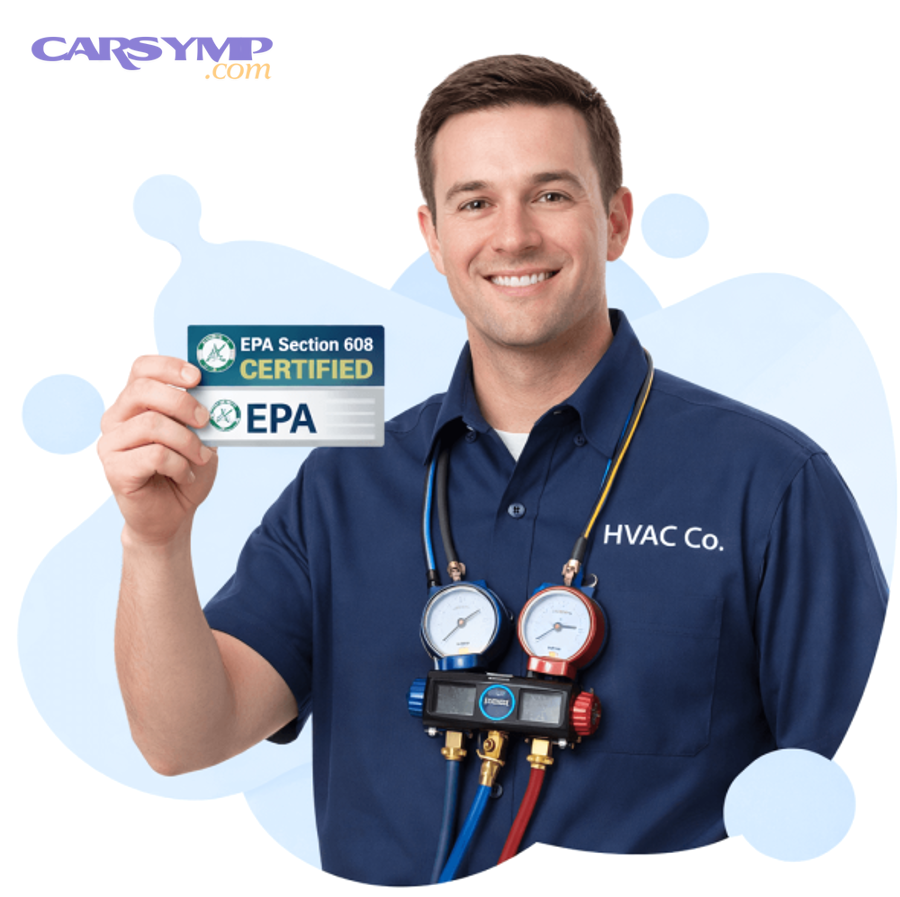
How do you confirm a license is active and tied to the shop?
Confirming a license is active means checking it against an official database and matching it to the shop’s legal name and address on your paperwork.
Next, you’re not just verifying a number—you’re verifying a chain of responsibility from the technician to the business entity that will warranty the work.
Verification script you can read out loud
Ask: “What is your license number (or registration number), and which agency issues it in this state/city?” A legitimate shop expects this question.
Ask: “Is the license issued to this location address, or to an owner with multiple locations?” If it’s multi-location, request the exact location listing.
After that, say: “I’m going to match that to the name on my estimate and invoice.” This gentle statement signals you’re documentation-minded.
What to do if the shop says “we don’t need a license”
Some areas don’t require a specific “auto repair license,” but reputable shops still have business registration, tax identity, and consumer-facing documentation standards.
Next, pivot to accountability: “Who is legally responsible for the warranty and dispute resolution—this shop, a parent company, or a franchise operator?”
If the answers get vague, treat it as a risk signal and move your verification to documents: written estimate, authorization records, and warranty terms in writing.
Evidence-based context you can use in conversation
The point of verification is not paranoia—it’s rational consumer behavior in a market where trust shapes where people service their cars.
Theo nghiên cứu của Cox Automotive từ bộ phận Market & Customer Research, vào 12/2023, 33% chủ xe nói “general repair shops” là lựa chọn ưu tiên, và “trust” là động lực then chốt khi chọn nơi sửa.
To connect that to your situation, your questions are simply a way to manufacture trust with proof, not with promises.
What do training credentials and test-based certifications really prove?
Certifications prove a technician met a defined standard at a point in time, while training records show what systems they’ve been taught to service safely and correctly.
Next, the goal is not collecting badges—it’s confirming the credential matches your problem (electrical, brakes, drivability, ADAS calibration, EV systems).
Questions that separate “badge” from “fit”
Ask: “Which credentials do you have that directly apply to my symptom or system?” Then pause—let them map the credential to the job.
Ask: “When was it last renewed, and what do you do to stay current with new models?” Renewal and continuing education matter for fast-changing systems.
To keep the conversation practical, request to see credential numbers or a posted credential list, then match names to the person actually diagnosing your vehicle.
What to ask specifically about ASE and similar programs
Ask: “Which test areas are you currently certified in (engine performance, electrical/electronics, brakes, HVAC, etc.)?” Specificity is your friend.
Ask: “Who will perform the diagnostic steps—an experienced technician or an entry-level helper—and what is the supervision process?”
Theo nghiên cứu của AAA (tài liệu mạng lưới Approved Auto Repair), vào 05/2008, chương trình yêu cầu tiêu chuẩn về ước tính bằng văn bản và quy trình giải quyết tranh chấp, giúp khách hàng có cơ chế bảo vệ khi có bất đồng.
Use the phrase you want—without being sold by it
It’s fine to ask whether you’re working with a certified mechanic, but don’t stop there—ask what the certification covers, how current it is, and whether it matches the work you’re approving.
Next, treat “certified” as a starting filter, then verify the shop’s process: documentation, testing logic, parts policy, and warranty clarity.
How can you test a technician’s diagnostic process in five questions?
You can test diagnostic competence by asking for a clear plan: what they will measure, what results mean, and what decision changes the next step.
To begin, use five questions that force a logical workflow—symptom confirmation, data capture, hypothesis, test, and proof-of-fix.

The five diagnostic questions
Ask: “How will you verify the symptom, and under what conditions does it happen?” This checks whether they respect reproducibility.
Ask: “What data will you capture first—codes, freeze-frame, live data, voltage drop, pressure, smoke test?” You’re listening for specifics, not jargon.
Ask: “What are your top two likely causes, and what test would disprove each?” Real diagnosticians think in falsifiable steps.
Ask: “If the first test is inconclusive, what is step two?” Competence includes contingency planning.
Ask: “How will you prove the fix—road test, re-scan, monitor readiness, leak check, post-repair measurements?” Proof-of-fix prevents comebacks.
What good answers sound like
Good answers sound like: “We’ll confirm the symptom, collect baseline data, test the most likely cause, and only replace parts after the test supports it.”
Next, ask them to write that plan as a short note on the estimate or inspection sheet—written thinking is harder to fake than confident talk.
Video to reinforce the conversation
If you want a quick refresher before calling shops, watch a short video on how professionals structure diagnosis and documentation—then mirror that language when you ask your questions.
What should a written estimate include, and what changes require approval?
A proper written estimate lists line items for labor, parts, fees, and the scope of work—and any price change should require your explicit approval before work continues.
Next, your goal is to eliminate “surprise totals” by turning every meaningful decision into a documented yes/no moment.
Questions that make the estimate enforceable
Ask: “Will the estimate show labor hours, labor rate, part numbers, shop fees, taxes, and diagnostic fees separately?” Itemization makes comparisons fair.
Ask: “Does diagnosis apply toward the repair, or is it separate?” You’re preventing double-payment confusion.
Ask: “What is your policy for additional findings—do you stop and call me with options?” This is where trust becomes process.
Use a clear approval threshold
Say: “If anything changes, I want a text/email with the revised total and line items before you proceed.” That single sentence is a strong consumer boundary.
Theo nghiên cứu của AAA (brochure về Approved Auto Repair Network), vào 05/2008, chi phí cuối cùng không nên vượt quá ước tính bằng văn bản quá 10% nếu khách hàng chưa phê duyệt trước.
Even where local rules differ, that “approval before increase” principle is the behavior you’re screening for.
What to ask about authorization records
Ask: “How do you record approvals—signed RO, email, text, or recorded call—and will I get a copy?” You’re building a paper trail for peace of mind.
To connect this to consumer protection basics, the FTC guidance encourages documenting transactions, names, and costs if disputes arise.
How do you verify parts quality, warranty terms, and documentation?
You verify parts quality by asking for the part source, part numbers, warranty coverage, and whether the shop uses OEM or equivalent parts for safety-critical systems.
Next, you’re confirming that “quality” is defined in writing—because quality without documentation is just marketing.
Parts sourcing questions
Ask: “What brand and part number are you installing, and can you note it on the estimate?” Part numbers enable apples-to-apples comparisons.
Ask: “Is this new, remanufactured, or used—and why is that appropriate for this repair?” That’s a legitimate engineering question, not a negotiation trick.
Theo nghiên cứu của AAA (bài viết về Approved Auto Repair), vào 11/2025, các cơ sở tham gia phải đáp ứng tiêu chuẩn, bao gồm sử dụng phụ tùng OEM hoặc tương đương và quy trình kiểm tra định kỳ.
Warranty clarity questions
Ask: “What warranty do you provide on parts and labor, and what is excluded?” You’re looking for clear time/mileage terms and exclusions.
Ask: “If the part fails, who pays labor the second time?” This separates strong warranties from weak ones.
Next, ask where warranty work must be performed—same shop only, any affiliate, or nationwide coverage—so you don’t discover limitations when you’re traveling.
Returned parts and proof questions
Ask: “Can you return replaced parts if I request them?” This deters unethical billing and gives you proof that work occurred.
Theo nghiên cứu của AAA (brochure), vào 05/2008, khách hàng có thể yêu cầu trả lại phụ tùng thay thế và có quyền xem phụ tùng phải giữ lại theo chương trình bảo hành/đổi trả.
What questions reveal whether the shop follows safety and quality controls?
Quality control shows up in checklists, torque specs, calibration steps, and a documented final inspection—not in confidence or speed.
To begin, ask questions that force them to describe a repeatable process for safety-critical work.
Safety-critical process questions
Ask: “For brakes/steering/suspension, what is your torque and verification process?” You’re listening for “torque spec,” “double-check,” and “test drive.”
Ask: “Do you follow OEM procedures for calibrations (ADAS, steering angle, throttle relearn), and do you document completion?” Calibration errors can create new hazards.
Next, ask who is allowed to road test, and whether the shop documents road test results—especially for noise, vibration, or drivability complaints.
Quality control ownership questions
Ask: “Who performs the final inspection, and what do they verify before releasing the car?” Great shops assign QC to a role, not a mood.
Ask: “What is your comeback policy if the symptom returns?” A transparent policy signals confidence and accountability.
Facility discipline questions
Ask: “How do you prevent mix-ups—labels, parts staging, photo documentation, and technician notes?” Mistakes often come from chaos, not ignorance.
To connect that to independent oversight, AAA program materials describe standards around facility appearance, staff training, and customer-service discipline as part of a broader reliability model.
How do you check reputation and dispute paths without relying on reviews alone?
You check reputation by verifying how the shop handles complaints, what third-party oversight exists, and whether they provide documentation that supports fair dispute resolution.
Next, you’re moving from “likes and stars” to “systems and safeguards.”
Reputation questions that matter
Ask: “If there’s a dispute, what is your escalation path—service manager, owner, third-party program, or mediation?”
Ask: “Do you keep photos, technician notes, and test results that can be reviewed if I have questions later?” Documentation turns conflict into facts.
Theo nghiên cứu của FTC (hướng dẫn Auto Repair Basics), vào 2012, người tiêu dùng nên lưu hồ sơ giao dịch, ngày giờ, chi phí và tên người làm việc để giải quyết tranh chấp hiệu quả hơn.
Third-party programs and what they signal
Programs can signal standards, but you still verify details. A strong signal is a published set of requirements plus an actual dispute-resolution pathway.
Theo nghiên cứu của AAA (bài viết về Approved Auto Repair), vào 11/2025, các cơ sở tham gia được kiểm tra định kỳ, theo dõi mức hài lòng khách hàng và có cơ chế AAA can thiệp khi xảy ra tranh chấp.
Next, ask whether the shop participates in any recognized network, and what that network requires in writing—then request the policy in plain language.
Quick reality check on “trust” as a decision driver
If a shop gets defensive about verification, treat that as data. Trust grows when questions are welcomed, not punished.
Theo nghiên cứu của Cox Automotive (khảo sát 2,493 chủ xe), vào 12/2023, “trust” giảm như một lý do quay lại đại lý và ảnh hưởng trực tiếp đến mức hài lòng và lòng trung thành.
What are the biggest red flags that signal credentials don’t match competence?
Yes—red flags exist, and you should treat them as reasons to pause, verify, or walk away before you authorize expensive work.
Next, use red flags as a filter: if a shop fails basic transparency, it’s not the right place for complex diagnosis or safety-critical repairs.
Process red flags
Red flag: They refuse a written estimate, refuse to document approvals, or pressure you to “just sign” without line items.
Red flag: They jump to replacing parts without describing tests that prove the part is faulty.
Red flag: They can’t explain how they will confirm the fix—no road test plan, no re-scan, no verification steps.
Next, if the shop’s language is all certainty and no method, your best move is to request the diagnostic plan in writing and compare it elsewhere.
Credential red flags
Red flag: Credentials are displayed, but the person diagnosing cannot explain what the credential covers or when it was renewed.
Red flag: The shop uses impressive words (“factory-level,” “dealer-grade”) but won’t provide part numbers, labor hours, or procedure notes.
To keep this grounded, remember: credible shops don’t mind verification because it aligns with how they already run their work.
Billing and documentation red flags
Red flag: The final invoice includes vague lines (“misc,” “shop supplies,” “labor”) without explanation or amounts that match the estimate.
Red flag: They refuse to return replaced parts when requested (unless warranty exchange requires retention—and even then, they should allow inspection).
Next, if a shop is unclear on documentation, it’s often unclear on accountability—so treat documentation clarity as a proxy for integrity.
Before the table below: This table gives you a ready-to-use checklist of questions, what a strong answer sounds like, and what to do if you hear a weak answer.
Use it to compare shops quickly and consistently, especially when quotes are similar but transparency is not.
| What you ask | Strong answer sounds like | Weak answer sounds like | Your next move |
|---|---|---|---|
| “Will you provide a written estimate with line items?” | “Yes—labor hours/rate, parts, fees, taxes; you approve changes.” | “We’ll tell you the total later.” | Pause; request written estimate policy in writing. |
| “What tests will you run before replacing parts?” | “We’ll verify the symptom, capture data, run X test, then decide.” | “It’s probably the part; we replace those all the time.” | Get a second diagnostic opinion. |
| “What brand/part number are you installing?” | “Here’s the part number; OEM or equivalent for this system.” | “It’s good quality; don’t worry.” | Ask for part number on estimate; compare alternatives. |
| “What warranty covers parts and labor?” | “X months/Y miles; exclusions listed; labor covered on failures.” | “We’ll take care of you.” | Request warranty terms printed on the invoice. |
| “How do you handle disputes?” | “Escalation path + documentation review + third-party option.” | “We never have disputes.” | Ask how disputes are documented and resolved in writing. |
Contextual Border: The main verification work above checks accountability, documentation, and technical method. Below are extra signals (micro context) that help you choose confidently when multiple shops “seem fine.”
What extra signals help you choose confidently when several shops look similar?
When multiple shops pass basic credential checks, choose based on fit: specialization, communication discipline, and how transparently they compare options and tradeoffs.
Next, these signals reduce the chance you pay for the “right part” but the wrong diagnosis, or the “right repair” with weak follow-through.
Signal 1: How they compare options without pressuring you
A strong shop explains options (OEM vs equivalent, repair vs replace, immediate vs monitor) with risks and evidence—then lets you decide.
To make this measurable, ask: “Can you show me two options and the tradeoffs, in writing?” The best shops can do this quickly.
Signal 2: Chain vs independent—how to think about tradeoffs
Instead of stereotypes, ask about processes: training cadence, warranty handling, parts sourcing, and who owns quality control.
Here’s a useful prompt to keep the conversation neutral: Pros/cons of chain shops vs local certified techs—then ask them to describe their own model and how it affects your specific repair.
Signal 3: When a specialist is the smarter choice
Some problems are “general,” others are system-specific (advanced electrical, EV high-voltage, ADAS calibration, transmission internal faults, complex drivability).
Use this direct phrase in your notes: When to choose a specialist mechanic—then ask: “Do you have the tooling, data access, and repeat experience for this system, or should this go to a specialist?”
Signal 4: Quick FAQ you can use at the counter
Q: “Can I get my old parts back?” A: Yes—request it at drop-off; if warranty exchange requires retention, ask to inspect them at pickup.
Q: “What if you find more problems?” A: Ask them to stop and send a revised estimate before proceeding; approvals should be documented.
Q: “How do I avoid overpaying for guesses?” A: Require a test-based diagnostic plan and proof-of-fix steps before authorizing major parts replacement.
Q: “Why is ‘trust’ mentioned so much?” A: Because research on service behavior shows trust influences preference and satisfaction; verification is how you build trust with evidence.