


Slide pin service and lubrication is a practical brake maintenance procedure that keeps a floating (sliding) caliper moving smoothly, so the pads clamp evenly and release cleanly after you let off the pedal.
It matters because neglected pins often cause drag, uneven pad wear, heat, and noise—problems that can look like bigger failures even when the rest of the system is fine.
It also helps you prevent repeat brake issues after routine work, because clean pins with the right grease support stable braking feel, predictable pad life, and consistent rotor temperatures.
To begin, “Giới thiệu ý mới”: below you’ll learn the correct process, the correct lubricants, and the common mistakes that quietly ruin new pads and rotors.
What is slide pin service and lubrication, and what parts does it include?
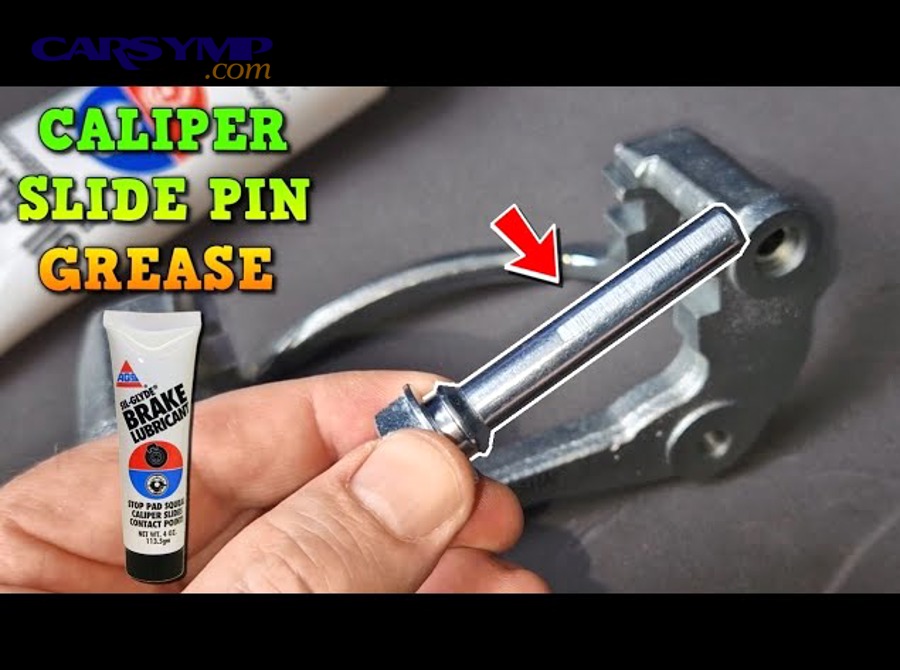
Slide pin service and lubrication is a brake caliper maintenance task that cleans, inspects, and re-greases the caliper guide pins, boots, and bracket contact points so the caliper can “float” and self-center—specifically the guide pin meronymy (pins, boots, bores, and hardware) that enables even pad pressure.
After that direct definition, the key idea is simple: the caliper must move freely on its pins to apply and release the pads evenly; otherwise, one pad drags and the other underworks.
Which brake designs rely on slide pins the most?
Floating calipers rely on slide pins the most because the piston pushes only one pad directly and the caliper body must slide to pull the outer pad into the rotor, which means pin friction directly becomes braking imbalance.
Next, this explains why fixed multi-piston calipers can have different issues: they do not “float” on guide pins in the same way, so the service focus shifts toward pad abutments and piston condition.
Specifically, the classic single-piston floating caliper found on many commuter vehicles is the most sensitive to dirty or dry pins, because it has fewer redundant paths to equalize clamping force.
What are the core components you are actually servicing?
You are servicing the guide pins, pin bores, rubber boots, bracket lands, and the pad hardware that interfaces with the bracket—each part must be clean, smooth, and compatible with the grease you choose.
After that, think in “contact pairs”: metal-to-metal sliding (pin to bore), rubber sealing (boot to pin and boot to bracket), and pad-to-bracket sliding (abutment clips).
Concretely, if the pin plating is damaged, the boot is torn, or the bore is corroded, grease alone cannot solve binding—those parts must be corrected or replaced.
Why does lubrication type matter more than “any grease”?
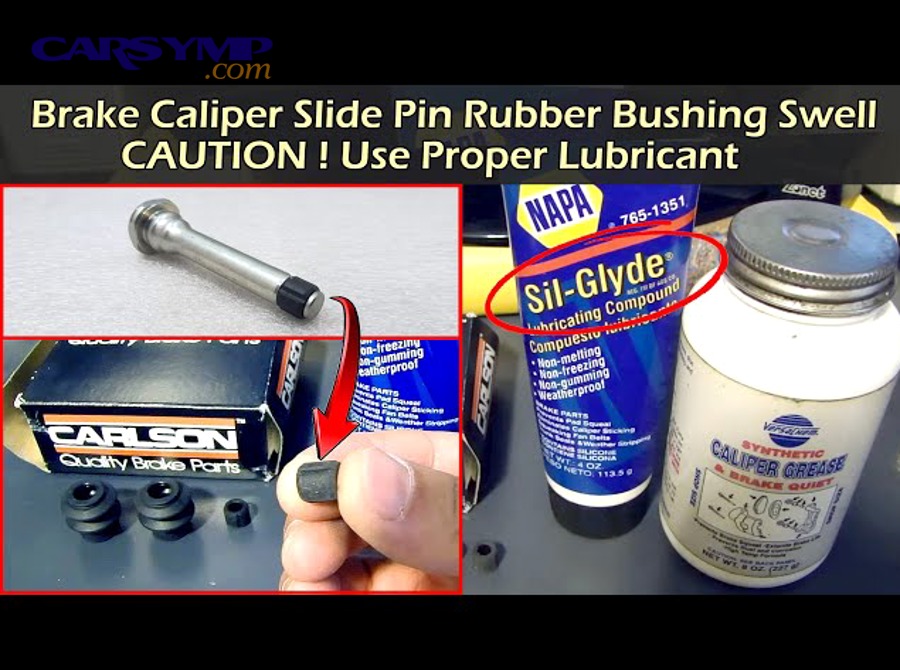
Lubrication type matters because the wrong grease can swell rubber boots, wash out with heat/water, or harden and turn into sticky paste, which creates the same binding you were trying to fix.
Next, the grease must also survive brake temperatures and resist water intrusion while staying compatible with EPDM rubber used in most caliper boots.
To illustrate, petroleum-based greases can damage certain elastomers; a “works on bearings” grease is not automatically safe for caliper boots and pins.
How do you know your slide pins need service before brakes start dragging?
Yes—there are clear early signals that slide pins need service: uneven pad wear side-to-side on the same caliper, intermittent squeaks after braking, and a wheel that runs hotter than the others even after normal driving.
After that quick answer, the best approach is to look for “pattern evidence” instead of guessing, because multiple brake faults can mimic each other.
What pad-wear patterns suggest pin binding instead of a bad piston?
Pin binding often shows as the inner and outer pad wearing unevenly on the same caliper, with the outer pad frequently wearing more in some cases because the caliper cannot retract or center smoothly.
Next, a sticking piston more commonly creates a consistently “always clamped” inner pad wear bias, because the piston side stays pressed harder.
Concretely, remove the pads and check if one pad is tapered (thicker at one end): taper can happen when a single pin binds and the caliper twists during application.
What driving symptoms should make you inspect pins first?
Inspect pins first if you notice pulling under light braking, a burning smell near one wheel, increased fuel consumption, or a steering vibration that appears after braking and fades as the brakes cool.
After that, do a quick “heat check” safely: after a normal drive with minimal braking, compare wheel temperature carefully (do not touch hot metal), because a dragging brake often stands out.
More importantly, a dragging caliper can overheat pads and rotors quickly, so early pin service is a preventive fix, not just a comfort upgrade.
How can you confirm pin condition on the bench in under a minute?
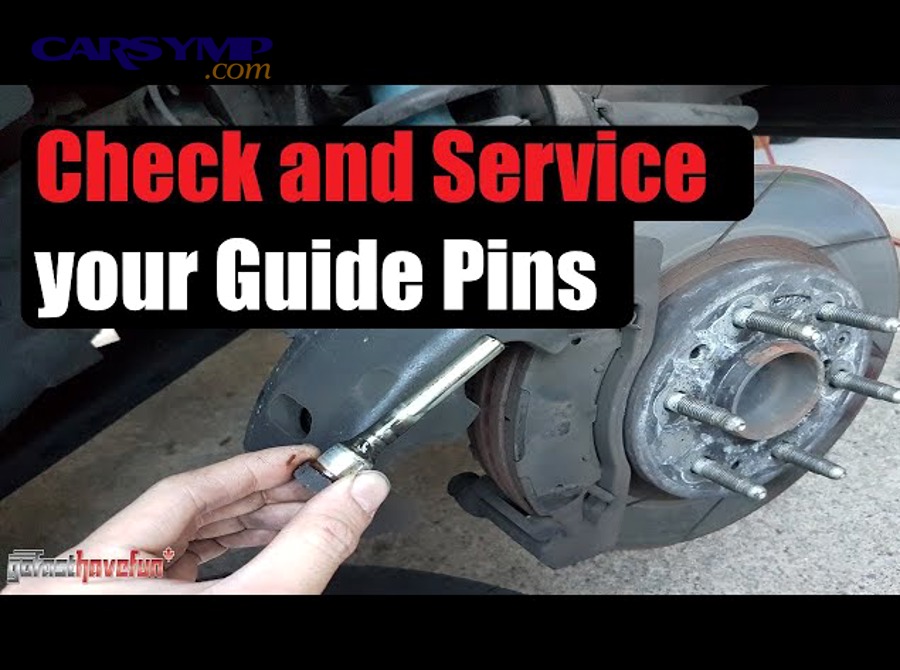
You can confirm pin condition quickly by pulling each guide pin out and checking for smooth, finger-light motion, uniform grease coverage, intact boot sealing, and a straight pin with no corrosion ridges.
Next, hold the pin under light: pitting, rust “rings,” or worn plating zones indicate the pin has been binding, especially if the bore shows rust staining.
To illustrate, if one pin is dry and the other is wet with grease, that imbalance often explains why the caliper was applying unevenly.
How to do slide pin service and lubrication step-by-step safely?
The best method is a structured 10-step process—lift safely, remove caliper, extract pins, clean bores, inspect boots, select correct grease, lubricate lightly, reassemble, verify free movement, and road-test—because skipping inspection is the #1 reason the problem returns.
After that, the most important step is inspection before re-greasing: grease cannot “heal” torn boots, corroded bores, or bent pins.
Step 1–3: Preparation, lifting, and caliper removal
Start by securing the vehicle on level ground, loosening lug nuts slightly, lifting with a proper jack point, and supporting with stands—then remove the wheel and access the caliper.
Next, remove the caliper guide bolts carefully and support the caliper with a hook or wire so the brake hose is not stretched or twisted.
Specifically, do not let the caliper hang by the hose; that can damage the hose internally and create a separate braking issue later.
Step 4–6: Extract pins, clean properly, and inspect like a technician
Pull the pins out one at a time and keep track of their positions, because some systems use a different pin design (or damping sleeve) for top vs bottom.
After that, clean the pins with a non-residue brake-safe cleaner and wipe until the metal is smooth; clean the bore with a suitable brush and remove old grease completely.
To illustrate, if the boot lip is packed with grit, the new grease becomes abrasive paste; cleaning the boot sealing surfaces is as important as cleaning the pin itself.
Step 7–8: Choose the right lubricant and apply the correct amount
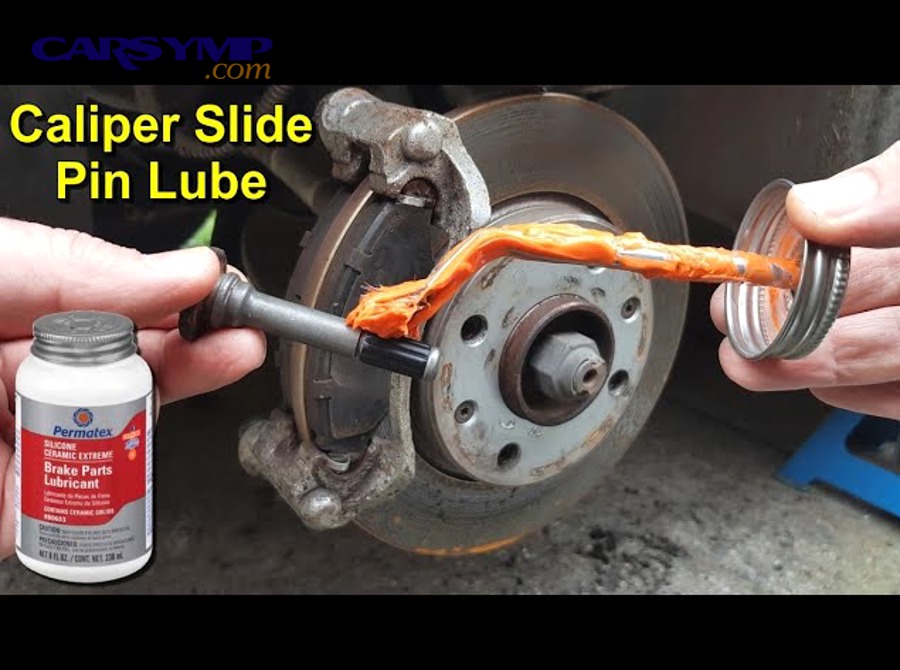
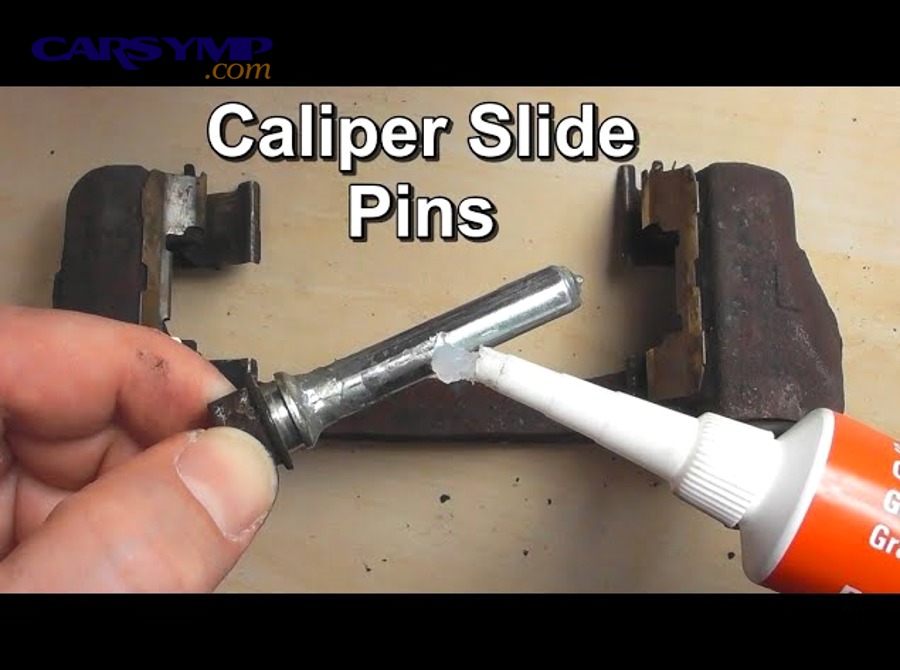
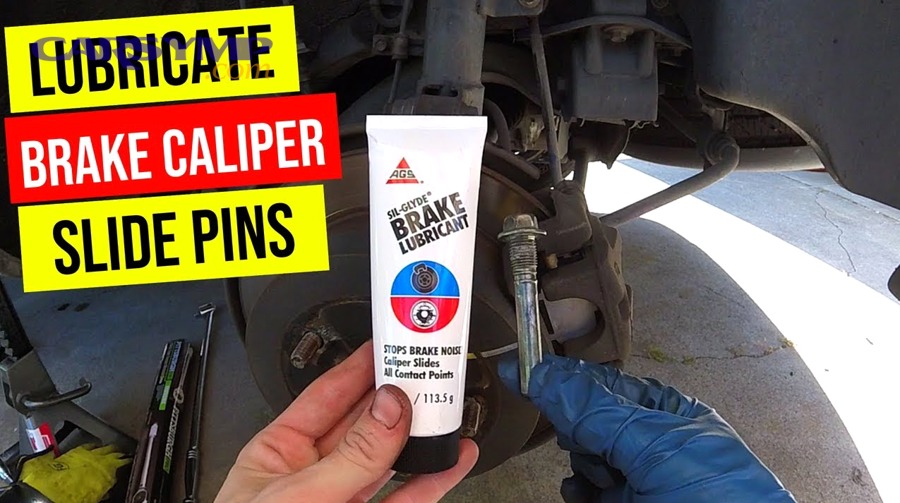
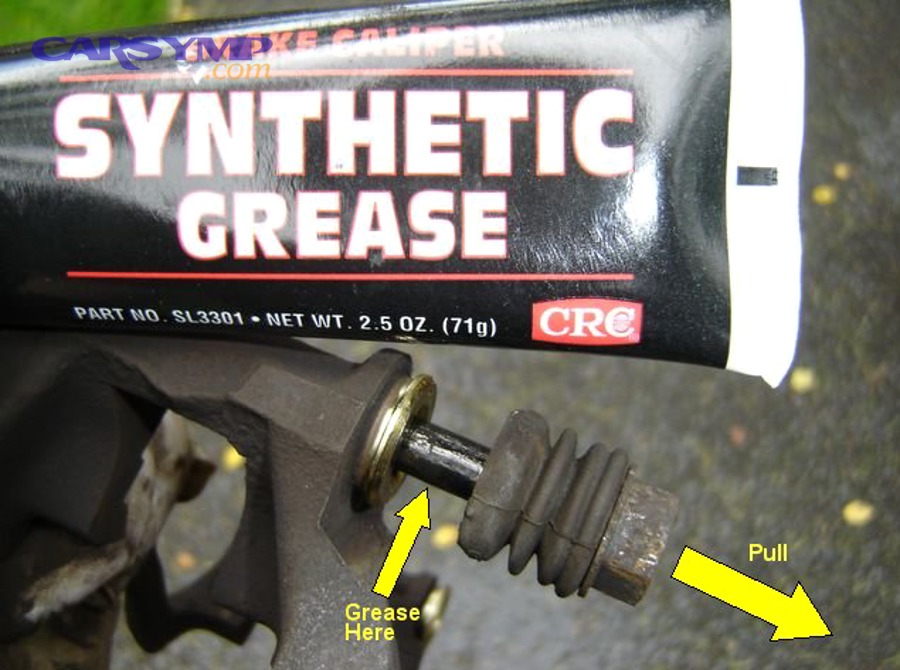
Use a high-temperature, brake-specific silicone or synthetic caliper grease that is compatible with EPDM rubber, then apply a thin, even film—enough to coat, not enough to hydraulically lock the pin inside the bore.
Next, lubricate the pin where it contacts the bore and where the boot seals, then seat the boot correctly so it seals all around without twisting.
Concretely, overfilling the bore can trap air/grease and make the pin “spring back,” which prevents full caliper release and mimics a sticking brake.
Step 9–10: Reassemble, verify free movement, and road-test correctly
Reinstall the pins/bolts to spec, confirm the caliper slides freely by hand on the bracket, then reinstall the wheel and perform a cautious road-test with gradual stops.
After that, recheck for abnormal heat or noise and ensure the pedal feel is normal; if anything feels wrong, stop and inspect before driving further.
To summarize, the goal is not “greasy pins,” but repeatable, low-friction caliper movement with intact sealing and correct hardware seating.
Which grease should you use for slide pins, and which products should you avoid?
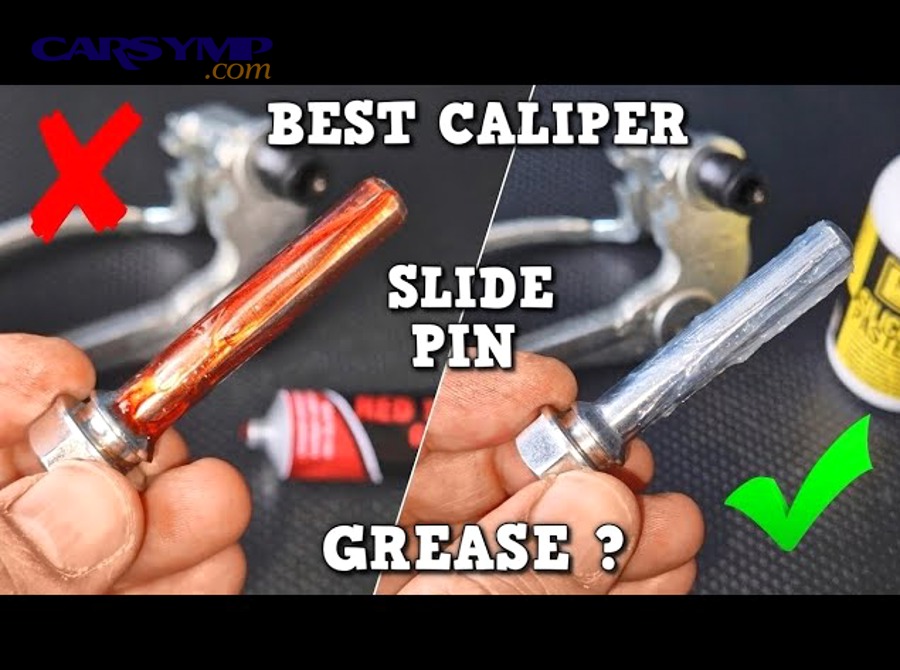
You should use a brake-caliper-specific high-temperature silicone or synthetic grease designed for guide pins, because it resists washout and stays compatible with EPDM boots; avoid general petroleum chassis grease and avoid anti-seize on pins because it can cause binding and boot damage.
Next, matching grease to the material system (metal + EPDM rubber + heat + water) is the most reliable way to prevent repeat failures.
Silicone caliper grease vs synthetic caliper grease: what’s the practical difference?
Silicone caliper grease is often preferred for rubber compatibility and water resistance, while synthetic caliper grease can offer excellent high-temperature stability and load handling depending on formulation.
However, the practical takeaway is to use a product explicitly labeled for caliper guide pins and rubber components rather than choosing based on brand alone.
For example, if you drive in heavy rain or salted winter roads, water resistance and corrosion prevention become more important than extreme-temperature margin.
Why anti-seize is a bad idea for guide pins
Anti-seize is a bad idea for guide pins because it is not designed as a low-friction sliding lubricant in a sealed bore, and its metallic particles can increase wear or create gritty binding as contaminants enter.
Next, anti-seize can also migrate, contaminate friction surfaces, and may not be rubber-friendly depending on the formulation.
Concretely, anti-seize is better reserved for specific fastener threads or rotor-to-hub interfaces in thin amounts—never as a substitute for pin grease.
How much grease is “just right”?
Just right is a thin, uniform coating that leaves no dry metal but does not pool inside the bore, because pooling can prevent full pin travel and can push boots off their seats.
Next, a good check is insertion feel: the pin should slide in smoothly and seat fully without excessive resistance or hydraulic pushback.
To illustrate, if you insert the pin and it slowly rebounds, remove it, wipe excess grease, and confirm the bore venting and boot seating are correct.
What common mistakes ruin slide pin service and cause repeat brake problems?
Yes—common mistakes can undo the whole job: using the wrong lubricant, skipping bore cleaning, tearing or mis-seating boots, mixing hardware, and failing to verify slide travel after reassembly.
After that, focus on the highest-impact mistake: boot sealing failure, because it invites water and grit that quickly turn new grease into abrasive sludge.
Mistake 1: Greasing without removing old contaminated grease
Greasing without removing old grease is a mistake because the old material often contains moisture, rust, and grit, so you are simply diluting contamination rather than restoring smooth sliding.
Next, contamination is what accelerates wear: it scratches pin plating and enlarges bore clearances, leading to noise and uneven braking over time.
Specifically, a pin with micro-pitting will hold contaminants, so take extra time to clean and evaluate whether replacement is more reliable than reuse.
Mistake 2: Damaging or mis-seating the boots
Damaging or mis-seating the boots is a mistake because boots are the primary seal that keeps water and dirt out; once compromised, corrosion begins quickly and pins bind again.
Next, boots can be torn by sharp edges, twisted during assembly, or stretched incorrectly when pins are inserted at an angle.
To illustrate, if a boot lip is not fully seated in its groove, the boot can pop out during braking and the pin will dry out within weeks in wet climates.
Mistake 3: Ignoring bracket hardware and pad abutment points
Ignoring bracket hardware is a mistake because even perfect pins cannot overcome pads that are stuck in rusty abutment clips; the caliper can slide, but the pad cannot retract cleanly.
Next, clean the bracket lands and replace corroded clips so pads can move with light fingertip pressure in their channels.
Concretely, if pads must be forced into place, they will likely stick when hot, causing noise and heat—even if your pins are lubricated perfectly.
Mistake 4: Failing to confirm smooth slide travel after torqueing bolts
Failing to confirm smooth travel is a mistake because some binding shows only after bolts are tightened and boots are compressed into their final positions.
Next, always move the caliper by hand on the bracket after assembly; it should glide without sticking points across its normal range.
More importantly, this final check helps you catch pin hydraulic lock, mis-seated boots, and mismatched pins before the wheel goes back on.
When should you replace slide pins, boots, or the caliper bracket instead of servicing?
You should replace pins or boots when corrosion, pitting, bent pins, torn boots, or damaged plating prevents smooth travel—even after cleaning—because repeated binding will quickly waste pads and overheat rotors.
After that, the decision comes down to whether the hardware can maintain a seal and a low-friction surface under heat and water exposure.
Pin replacement triggers you should not ignore
Replace the pin if you see deep rust pits, flaking plating, a groove worn into the contact surface, or if the pin does not roll straight on a flat surface.
Next, even mild pitting can accelerate boot wear and trap water; in harsh climates, replacing questionable pins is often cheaper than replacing pads again soon.
To illustrate, a pin that “sticks” at one point in the bore often has a corrosion ridge that polishing cannot safely remove without changing dimensions.
Boot replacement triggers that predict repeat failure
Replace the boot if it is torn, hardened, swollen, or cannot seat firmly in its grooves, because sealing integrity is the real long-term protection system for the pins.
Next, if the boot has been exposed to incompatible grease, it may swell and hold the pin too tightly, creating drag even though the pin looks clean.
Concretely, boot kits are usually inexpensive; replacing them during pin service is a high ROI move if any doubt exists.
When the bracket bore is the real problem
The bracket bore is the real problem when it is heavily corroded, ovaled, or scored, because the pin can never glide consistently and the boot cannot seal against damaged surfaces.
Next, if cleaning reveals deep scaling inside the bore, consider bracket replacement or professionally reconditioned components if available.
More importantly, a damaged bore often causes intermittent sticking: it may feel fine cold and bind hot—making diagnosis frustrating unless you inspect carefully.
How does slide pin service affect pad life, noise, and rotor heat over time?
Slide pin service improves pad life, reduces noise, and stabilizes rotor heat because it restores even clamping and clean release, which prevents one pad from dragging and turning braking energy into constant friction heat.
After that, the mechanism is straightforward: balanced caliper movement distributes pressure, equalizes temperatures, and reduces localized hot spots that can glaze pads or warp rotors.
Why uneven pressure creates squeal and vibration
Uneven pressure creates squeal and vibration because pads resonate when they intermittently stick-slip against the rotor, and heat-glazed surfaces amplify that resonance.
Next, when one pad drags, it can leave uneven transfer film on the rotor, which feels like vibration even if the rotor thickness is within spec.
To illustrate, drivers often replace rotors for “warping” when the real issue is a dragging pad from sticky slide pins that created uneven deposits.
How pin friction increases heat and accelerates wear
Pin friction increases heat because the caliper cannot retract fully, so a small constant drag persists; over miles, that drag becomes enough to overheat pads and discolor rotors.
Next, higher temperatures also cook the grease faster, which accelerates drying and creates a feedback loop of more friction and more heat.
Concretely, if you see one rotor consistently blued or darker than the others, sticky pins are a prime suspect—even before you blame hydraulics.
A simple table to connect symptoms to pin-related causes
This table summarizes common symptoms and how slide pin condition can contribute, helping you decide what to inspect first.
| Symptom | What you may observe | Pin-related cause | Best next check |
|---|---|---|---|
| Uneven pad wear | Inner vs outer pad thickness mismatch | One pin binds or dries out | Pull pins and compare feel/grease |
| Brake squeal after stops | Noise fades when cooled | Pad drag from restricted slide | Check caliper free movement on bracket |
| Hot wheel/rotor | One side noticeably hotter | Incomplete release due to pin friction or boot mis-seat | Inspect boots, bore fill, and slide travel |
| Pulling under light braking | Vehicle drifts to one side | Asymmetric caliper movement causing uneven clamp force | Compare pin condition left vs right |
How often should you service slide pins, and what changes the interval?
You should service slide pins at least during every pad replacement and more often in wet, salted, or dusty conditions, because water and grit contamination shorten grease life and accelerate corrosion.
Next, your real interval driver is environment plus braking load: frequent stop-and-go, mountainous descents, towing, and winter salt all increase heat and contamination exposure.
Environmental factors that shorten service life
Road salt and coastal humidity shorten service life because they promote corrosion inside bores and around boot lips, especially after heat cycles draw moisture inward as components cool.
Next, deep puddles or frequent rain can wash contaminants toward the boots; if sealing is imperfect, the grease becomes milky and loses performance.
To illustrate, vehicles in snowbelt regions often need pin inspection annually even if pad thickness still looks good, because corrosion can build without obvious wear until it binds.
Driving patterns that increase heat cycling
City driving increases heat cycling because brakes apply and release repeatedly, which thins grease temporarily and encourages migration; repeated heating can also dry out marginal lubricants.
Next, towing or steep descents raise temperatures significantly, and higher heat can oxidize grease faster while hardening rubber boots over time.
More importantly, if you notice frequent brake smell or rapid dust buildup on one wheel, treat that as an “interval override” and inspect pins sooner.
How does slide pin service connect to broader brake work without repeating mistakes?
Slide pin service connects directly to any brake job because free caliper movement is a prerequisite for reliable pad bedding, consistent pedal feel, and stable braking—so pin service should be treated as a default step, not an optional add-on.
After that, this is where many people lose time and money: they replace pads/rotors, but leave the “motion system” (pins and hardware) dirty, so the new parts fail early.
What to do during pad replacement to support clean slide behavior
During pad replacement, clean and de-rust bracket lands, replace abutment clips if corroded, ensure pads slide freely, and then service the pins so the caliper can center properly.
Next, confirm the piston retracts smoothly and the rubber dust boot is intact, because a stiff piston can mimic pin problems and vice versa.
Concretely, smooth pad movement plus smooth caliper slide is what prevents taper wear and squeal—each supports the other like a system, not isolated parts.
When you should add a relevant video reference for technique clarity
Adding a video reference is helpful when you want to see correct boot seating and correct grease quantity, because these are visual skills that prevent hydraulic lock and misalignment.
Next, a clear demonstration of pin removal, bore cleaning, and caliper movement verification can reduce beginner mistakes dramatically.
Contextual Border
This boundary separates the core how-to diagnosis-and-action content from optional micro-details that help you optimize outcomes in special cases.
Supplementary: Advanced pin lubrication nuances and lexical contrasts
Dry vs over-greased pins: which failure mode is worse?
Dry pins fail faster in corrosion-prone conditions, while over-greased pins can cause immediate retraction problems; dry pins tend to create progressive binding, but over-greasing can create “spring-back” that keeps pads lightly clamped—so both are bad, just on different timelines.
Next, the safe strategy is controlled grease volume plus perfect boot sealing, because that prevents both corrosion and hydraulic lock.
To illustrate, if you repeatedly see one pad wearing quickly right after service, overfill and boot seating are prime suspects before you blame hydraulics.
Top pin vs bottom pin: why some systems use different designs
Some systems use different top vs bottom pin designs (such as a damper sleeve) to reduce noise and vibration, which means swapping pin positions can create chatter or uneven movement.
Next, mark pins during disassembly and reinstall them in their original locations unless the service manual specifies otherwise.
Concretely, a damped pin installed in the wrong hole can feel “sticky” by design, confusing diagnosis unless you recognize the intended difference.
Winter salt strategy: prevention beats repeated service
In winter salt environments, prevention is better than repeated service: intact boots, correct grease, and clean bracket lands slow corrosion so pins remain stable for longer intervals.
Next, washing undercarriage after storms and avoiding long periods of parking with wet salty slush packed near wheels can reduce corrosion pressure on brake hardware.
More importantly, if you catch boot damage early, replacing boots/pins can save you from rotor discoloration and pad glazing later.
Noise control: pins are not the only sliding interface
Pins are not the only sliding interface: pad ears and abutment clips must also slide, so addressing only pins can leave noise unchanged if pad hardware is rusted or tight.
Next, treat the system as “two slides”: caliper slide (pins) and pad slide (hardware), and ensure both move freely before you judge the result.
To illustrate, if you lubricate pins but pads still bind in clips, you may still get squeal and heat even though pin movement feels perfect.
FAQ
Can you service slide pins without removing the caliper bracket?
Yes, you can often service slide pins without removing the bracket by removing the guide bolts and extracting the pins, but you should still inspect pad hardware and bracket lands; otherwise you may fix pin slide but leave pad slide binding.
Next, if the bore corrosion is heavy, bracket removal may be necessary to clean thoroughly and evaluate whether replacement is the smarter choice.
Do you need to bleed brakes after slide pin service?
No, you typically do not need to bleed brakes after slide pin service because you are not opening the hydraulic system; however, if you accidentally damage a hose or open a bleeder, then bleeding becomes necessary.
Next, keep the caliper supported and avoid twisting the hose to reduce the risk of creating a separate issue that would force extra work.
What if the pins move fine but the brake still drags?
If pins move fine but the brake still drags, the issue may be the piston not retracting, a collapsed hose acting like a check valve, or master cylinder/ABS control issues—so treat pin service as one branch of diagnosis, not the final answer.
Next, compare wheel temperatures and check if opening the bleeder releases the drag; that can help separate mechanical bind from hydraulic pressure retention.
Should you lubricate the pad friction material or rotor surface?
No, you should never lubricate pad friction material or rotor surfaces because it reduces braking and can be dangerous; lubrication is only for the correct sliding/contact points such as pins, boots’ sealing surfaces, and pad hardware interfaces.
Next, if grease contaminates pads/rotors, clean immediately with brake cleaner and replace contaminated pads if saturation occurred.