


Uneven brake pad wear usually means one or more wheels are not applying (or releasing) braking force evenly, so the pads don’t share the workload the way the system was designed to.
Next, the practical goal is to match the wear pattern (inner/outer, tapered, one-wheel hot) to the most likely mechanical “root cause” so you can stop guessing and stop replacing good parts.
Besides that, a correct fix includes restoring smooth sliding, correct clamping, stable rotor runout, and clean mounting surfaces—because any one of these can silently “re-create” the same wear pattern after new pads.
To begin, this guide walks from quick pattern recognition to confirmation checks, then to durable repairs and prevention so the wear stays even for the full life of the pads.
What does uneven brake pad wear mean, and why does it matter?
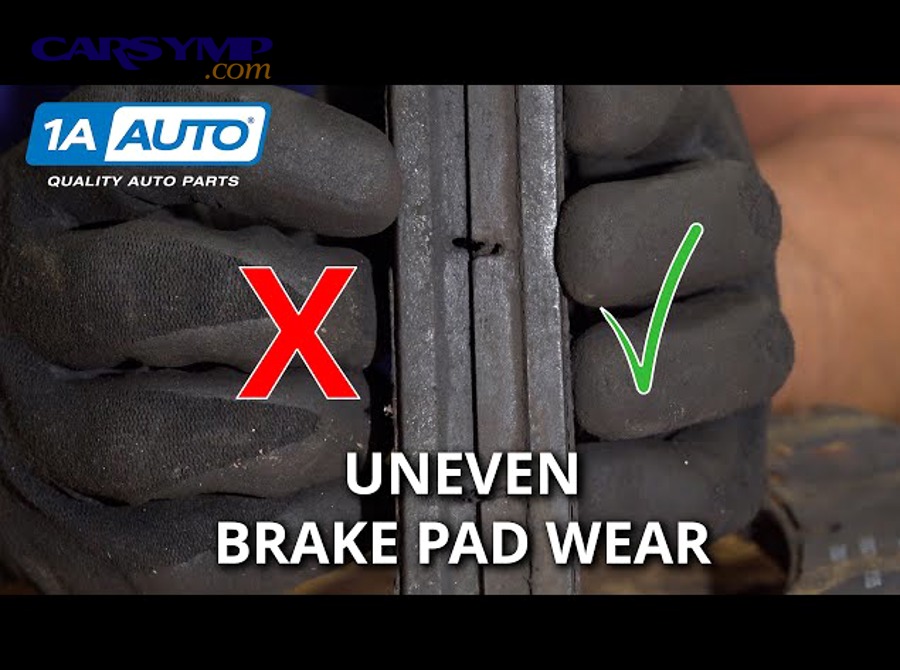
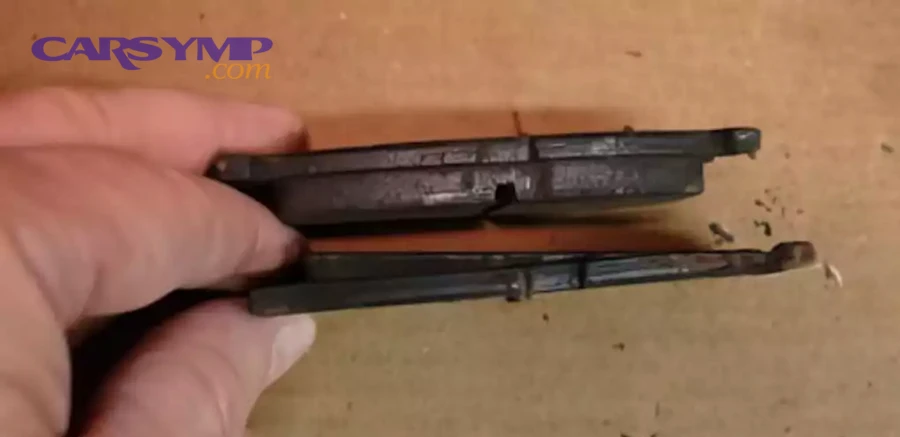
Uneven brake pad wear is when pad material thickness differs significantly between pads on the same axle or between the inner and outer pads on one wheel, indicating an imbalance in how braking force is applied or released.
After that, the reason it matters is simple: uneven wear is rarely “just the pads.” It often signals heat, drag, vibration, or a sliding/clamping issue that can reduce stopping consistency and shorten rotor life.
Which uneven wear situations are urgent?
Yes—uneven wear can be urgent when it comes with pulling, burning smell, smoke, a wheel that’s too hot to touch, or a rapidly dropping pad thickness on one corner, because those signs point to drag and overheating.
Besides that, overheating can boil brake fluid locally, glaze pads, and warp rotors, which turns a “wear” problem into a braking performance problem.
- Immediate stop-and-check: one wheel is dramatically hotter than the others after normal driving.
- Immediate tow/repair: you see smoke, fluid leakage near the wheel, or the car pulls hard under braking.
- Prompt service: grinding noise, metal-on-metal, or a pad that is worn to the backing plate.
How much unevenness is “normal” vs. a fault?
No—large differences are not normal; small differences can be normal. A slight inner-vs-outer difference can happen on some designs, but a big gap usually means the sliding or clamping action is not symmetric.
However, the threshold that matters is practical: if one pad is near end-of-life while its mate still looks healthy, you should treat it as a fault and diagnose before installing new pads.
- Normal-ish: minor inner pad wear bias on certain floating caliper setups.
- Not normal: one pad is half the thickness of the other on the same wheel.
- Not normal: one wheel’s pads are far more worn than the same axle’s other wheel.
What basic physics causes uneven wear?
Uneven wear happens because friction work (pressure × time × speed) is not distributed equally, so one pad does more work or stays in contact longer than intended.
To illustrate, extra contact time can come from drag (not releasing), while extra pressure can come from uneven caliper force, misaligned hardware, or rotor/pad geometry issues.
- Drag: pad stays touching the rotor when you’re not braking.
- Uneven clamping: one side presses harder than the other.
- Geometry issues: tapered contact from misalignment, rotor runout, or loose mounting.
What uneven pad wear patterns should you recognize first?
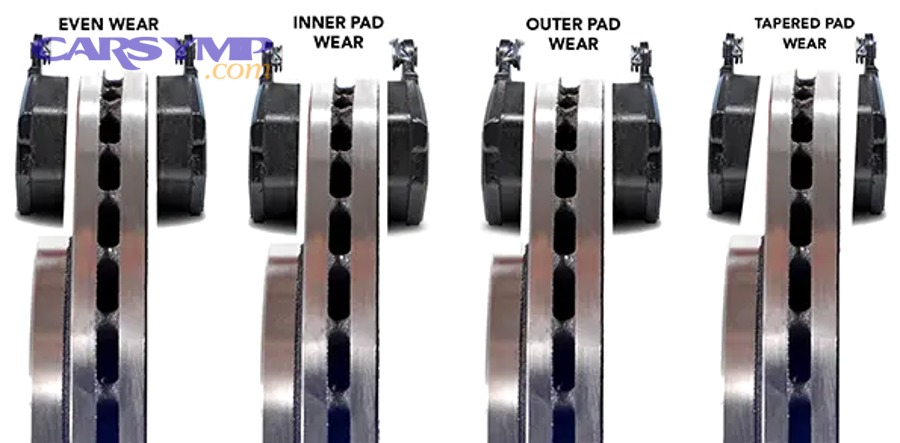
There are five common uneven pad wear patterns—inner-only, outer-only, tapered, diagonal/edge wear, and one-wheel/one-axle fast wear—each pointing to a different set of likely causes.
Next, recognizing the pattern saves time because you can choose confirmation checks that match how the force is supposed to travel through the caliper, bracket, pads, and rotor.
This table lists common uneven wear patterns, what they usually indicate, and the fastest checks to confirm them before you buy parts.
| Wear pattern | Most likely direction | Fast confirmation checks |
|---|---|---|
| Inner pad thinner than outer (same wheel) | Sliding problem or piston not retracting cleanly | Check slide pin motion, pad ears fit, piston push-back feel, boot condition |
| Outer pad thinner than inner (same wheel) | Caliper not sliding toward the outer pad | Inspect slide pins for corrosion, torn boots, bracket rust “jacking,” seized pin |
| Tapered wear (thicker at one end) | Pad not square to rotor; hardware/rotor runout issues | Check pad abutments, missing clips, loose bracket bolts, rotor runout, hub rust |
| Edge wear / “shoulders” | Pad binding, wrong hardware, rotor surface issues | Verify correct clips, clean abutments, check rotor scoring/lip, pad fit in bracket |
| One wheel wears much faster than the other on same axle | Corner-specific drag or weak release | Temperature compare after drive, wheel spin test, hose/bleeder release test |
Inner pad wearing faster: what does it usually point to?
Most of the time, inner pad faster wear points to incomplete release on the piston side or binding that keeps the inboard pad closer to the rotor than it should be.
After that, the key is to separate “piston not retracting” from “pads not sliding” because the fixes are different and replacing pads alone won’t help.
- Common: sticky piston seals, corrosion under boots, contaminated fluid, overheated seals.
- Also common: pad ears too tight in the bracket, rust on abutments, wrong clips.
- Less common: rotor runout causing knock-back/drag cycles.
Outer pad wearing faster: what does it usually point to?
Outer pad faster wear typically points to a floating caliper that cannot slide freely toward the outer pad, so the outer pad is dragged or forced into contact unevenly.
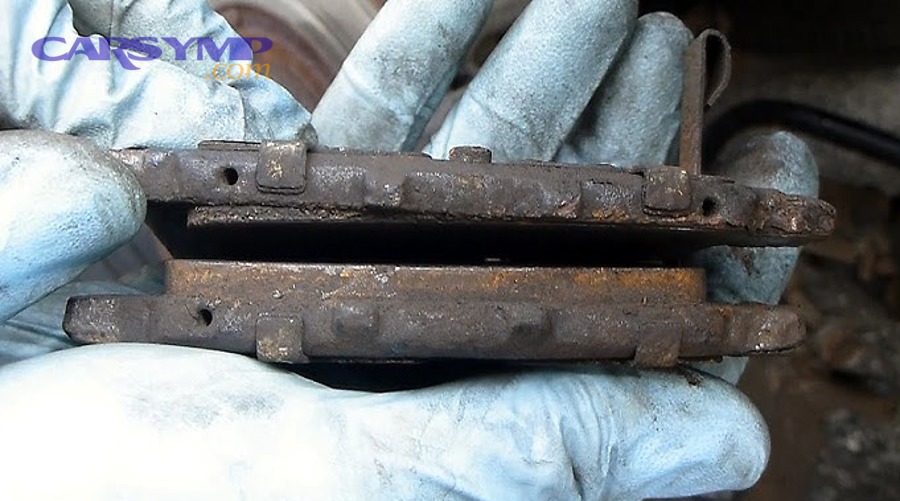
Besides that, a seized or dry slide pin can make the caliper “hinge,” creating angled contact that eats the outer pad and can taper the pad at the same time.
- Common: seized slide pin(s), torn pin boots, water intrusion, wrong grease.
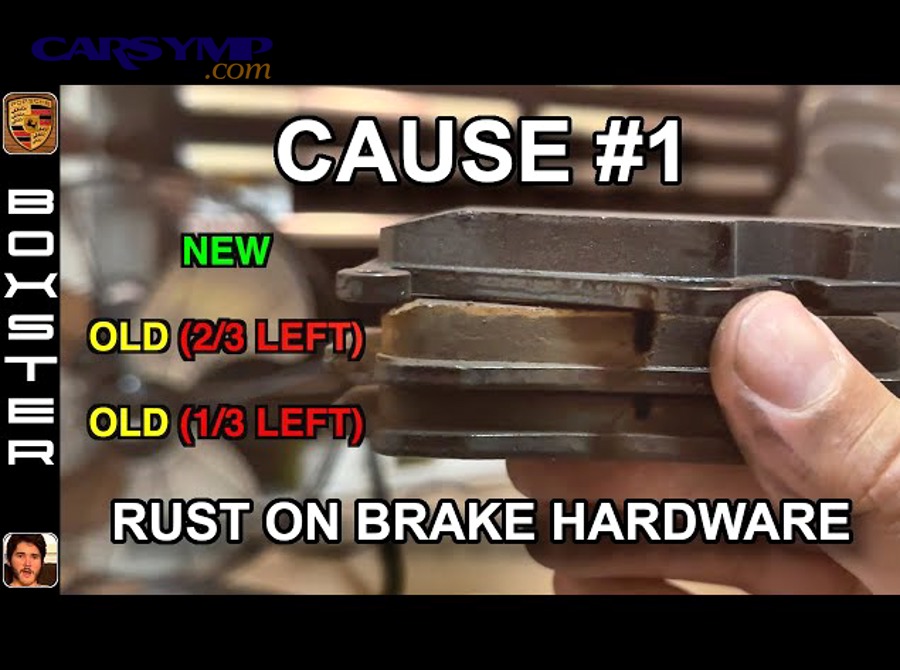
- Common: bracket corrosion lifting the stainless clips (“rust jacking”).
- Sometimes: bent hardware from improper installation or impact.
Tapered or diagonal wear: what does it usually point to?
Tapered or diagonal wear usually means the pad is not staying square to the rotor face, so one end of the pad does more friction work than the other end.
However, the “square” relationship depends on multiple layers—hub face, rotor hat, bracket alignment, pad abutments, and pin movement—so you confirm step by step instead of guessing.
- Likely: pad binding at one abutment, missing/incorrect clips, or bracket misalignment.
- Likely: rotor runout from hub rust or rotor not seated flush.
- Possible: loose wheel bearing or suspension play causing rotor wobble under load.
Is the cause in the sliding parts, hydraulic release, or rotor alignment?
Yes—most uneven wear causes fall into three buckets: sliding friction (pins/pad fit), hydraulic release problems (pressure not letting go), or alignment/runout issues (rotor not running true), and each bucket has simple confirmation tests.
Next, you’ll use quick “separate and isolate” checks so you don’t replace a caliper when the real problem is pad hardware, or blame the rotor when the real issue is trapped pressure.
How do you tell if sliding friction is the primary problem?
Sliding friction is the primary problem when the caliper/pads feel mechanically stuck even with no hydraulic pressure, meaning the parts don’t move smoothly by hand during inspection.
After that, focus on where the sticking occurs: slide pins, pad ears in the bracket, or corrosion under hardware clips—because each location needs a different cleaning and lubrication approach.
- Pin check: pins should glide smoothly, not “snap” or bind near the end of travel.
- Pad fit check: pads should move in the bracket with light finger pressure after clips are installed.
- Bracket check: rust under clips should be removed so the clip sits flat, not lifted.
How do you tell if hydraulic pressure is being trapped?
Trapped hydraulic pressure is likely when the wheel is hard to spin after a drive and then suddenly frees up when you open the bleeder screw, which indicates pressure wasn’t releasing upstream.
To understand the source, compare “bleeder release” versus “caliper push-back”: if opening the bleeder frees the wheel, the restriction is usually in the hose or master/ABS pathway.
- Quick test: after drag occurs, crack bleeder—if wheel frees, suspect trapped pressure.
- Pedal feel clue: pedal may feel firm but the wheel stays dragging.
- Heat clue: one wheel is much hotter than the others without heavy braking.
How do you tell if rotor runout or mounting alignment is driving the wear?
Rotor/runout alignment is likely when you see repeatable tapered wear, steering wheel shake under braking, or “new pads wore uneven quickly” even after slides and piston were serviced correctly.
Besides that, the hidden culprit is often rust or debris between the hub and rotor hat, which creates runout that pushes the pads back and forth and changes contact across the pad.
- Visual clue: shiny high spot banding on the rotor face, matched to tapered pad wear.
- Mounting clue: hub face has flaky rust; rotor doesn’t sit flush when torqued.
- Measurement clue: runout exceeds spec (dial indicator), even with new rotor.
How do you diagnose uneven pad wear step by step at home?
Use a four-stage process—pattern identification, temperature/drag check, mechanical movement check, and hydraulic release check—to pinpoint uneven pad wear causes with minimal tools and a clear stop/go decision at each stage.
After that, the workflow prevents parts-cannon repairs because every step confirms or eliminates a bucket of causes before you move on.
Step 1: What should you document before you disassemble anything?
Document the wear pattern, pad thicknesses, and rotor surface condition on all wheels first, because uneven wear is a comparison problem and single-wheel inspection can hide the true pattern.
Next, simple photos and quick notes create a “map” that makes your diagnosis consistent if you need to pause, order parts, or compare left vs right later.
- Record: inner and outer pad thickness for each front and rear wheel.
- Record: rotor scoring, heat spots (blue/purple tint), and lip formation.
- Record: clip/hardware condition and whether the pads slide freely in the bracket.
Step 2: How do you perform a safe temperature and drag comparison?
Drive normally for 10–15 minutes without heavy braking, then carefully compare wheel temperatures—by touch cautiously near the wheel or using an infrared thermometer—to find an outlier that suggests drag.
After that, confirm drag with a wheel spin check (safely lifted) to see if one corner spins dramatically worse than the others.
- Safety: do not touch rotor surfaces; they can exceed burn temperatures quickly.
- Pattern: one hot wheel often matches the corner with fastest pad wear.
- Follow-up: if the wheel is hot and tight, go directly to release tests.
Step 3: How do you check slide pins and pad movement correctly?
Remove the caliper and verify that slide pins move smoothly through their full travel and that pads slide in the bracket with light force; any binding means you fix the sliding system before blaming hydraulics.
To illustrate, a pin that moves “okay” halfway but jams near the end can still cause tapered wear because the caliper loads the pad at an angle under braking.
- Pin surface: look for pitting, rust, or dark cooked grease—signs of overheating or water intrusion.
- Boot seal: torn boots invite corrosion; replace boots or hardware when compromised.
- Pad ears: clean abutments to bare metal, then ensure clips sit flat and pads move freely.
Step 4: How do you check piston condition without special tools?
Push the piston back slowly with a proper tool and observe the feel: smooth, steady resistance is normal, while jerky movement, extreme force, or a piston that won’t retract suggests internal corrosion or seal problems.
Besides that, inspect the dust boot—if it’s torn or full of debris, the piston can corrode and stick even if the outside of the caliper looks fine.
- Normal: piston retracts evenly; boot is intact; no wetness around the piston area.
- Suspicious: piston fights you, then suddenly jumps; boot is torn; pad was glazed from heat.
- High risk: piston won’t retract enough to install new pads or retracts then creeps back out.
Step 5: How do you isolate a hose or upstream release problem?
After a drag event, crack the bleeder screw: if the wheel immediately frees and fluid spurts under pressure, you’ve proven trapped pressure and should suspect a restricted hose, ABS unit pathway, or master cylinder release issue.
Next, compare that result with piston push-back: if opening the bleeder makes push-back easy, you’re dealing with pressure—not pure mechanical sticking.
- Result A: bleeder opens and wheel frees → trapped pressure likely.
- Result B: bleeder opens but wheel stays tight → mechanical binding likely.
- Result C: both tight and piston won’t retract → piston/seal issue plus heat damage possible.
How do you fix uneven pad wear without wasting money on unnecessary parts?
Fix uneven pad wear by correcting the root cause first—restoring free sliding, proper pad fit, correct torque and clean mounting, and reliable hydraulic release—then installing pads/rotors only after the system moves and releases correctly.
After that, the repairs become predictable: if the system slides, clamps, and releases evenly, the pads wear evenly—so your job is to make those three behaviors true again.
Fix 1: How do you restore smooth sliding (pins, boots, and brackets)?
Restore smooth sliding by removing corrosion, replacing damaged boots/clips, and applying the correct brake-safe lubricant only where designed, so the caliper can center itself and clamp both pads evenly.
Next, treat slide and abutment work as precision cleaning—not “grease everywhere”—because excess or wrong grease can swell rubber, attract grit, and recreate sticking.
- Clean: bracket abutments to bare metal; remove rust under stainless clips so the clips sit flat.
- Replace: hardware clips if deformed, rusty, or loose; replace boots if torn.
- Lubricate: pins with appropriate synthetic brake grease; avoid contaminating pad friction material.
Hơn nữa, don’t ignore slide pin service and lubrication: it’s often the single highest-leverage fix for uneven inner/outer wear on floating calipers.
Fix 2: How do you correct pad fit and prevent binding?
Correct pad fit by verifying the pads match the application, ensuring pad ears move freely in the bracket with clips installed, and removing burrs or heavy paint that creates interference.
After that, confirm the pad can retract microscopically after braking—pads don’t “spring back” much, but they must not be wedged in place.
- Check: pads slide with light force; they do not require prying to seat.
- Check: anti-rattle shims and clips are installed in the correct orientation.
- Avoid: filing friction surfaces; only address edge burrs or coating interference on pad ears.
Fix 3: How do you address tapered wear from mounting and runout issues?
Address taper by cleaning hub faces, ensuring rotors seat flush, torquing wheels evenly, and correcting runout when measured high, so the rotor runs true and the pad contacts evenly across its length.
Besides that, wheel torque matters more than many people think: uneven torque can distort the rotor hat and create runout that shows up as taper and vibration.
- Clean: hub face with a proper abrasive disc or wire brush; remove scale and high spots.
- Torque: lug nuts in a star pattern to spec; avoid impact-only tightening.
- Measure: if runout persists, use a dial indicator and follow manufacturer correction steps.
Fix 4: How do you solve trapped-pressure drag the right way?
Solve trapped-pressure drag by identifying the restriction point—often the flexible hose or upstream control path—and replacing the restricted component, then flushing fluid and confirming the wheel releases normally after repeated brake applications.
After that, verify the fix with the same test that proved the problem: if cracking the bleeder used to free the wheel, your repair should make that symptom disappear.
- Hose clue: one wheel drags and releases when bleeder opens; hose may be internally collapsed like a one-way valve.
- Upstream clue: both wheels on an axle show odd release behavior; consider master/ABS pathway diagnosis.
- Finish: flush fluid if overheating occurred; heat-stressed fluid accelerates future seal issues.
In real-world repairs, you may reach a point where brake caliper replacement is the most reliable option—especially if the piston is pitted, the bore is corroded, or the caliper repeatedly sticks after correct slide and hardware service.
When you’re inspecting the unit, How to tell if caliper is leaking comes down to evidence: wetness around the piston boot, fluid trails, damp dust buildup, or a reservoir level that drops without external line leaks.
And if you’re budgeting, a realistic Caliper replacement cost estimate should include hardware, brake fluid, and any rotor/pad damage caused by overheating—not just the caliper itself—because uneven wear often has “secondary damage” costs.
When should you replace pads, rotors, or calipers—and what should be serviced together?
Replace parts when measurements or condition prove they can’t deliver even contact: pads below safe thickness, rotors below spec or heat-damaged, and calipers that fail movement/retraction checks; service hardware and fluid as part of the same corrective system.
Next, pairing decisions matter because new pads on a misbehaving slide system can wear uneven again in a few hundred miles, which feels like “bad pads” but is really unresolved root cause.
Pad and rotor replacement: what conditions justify it?
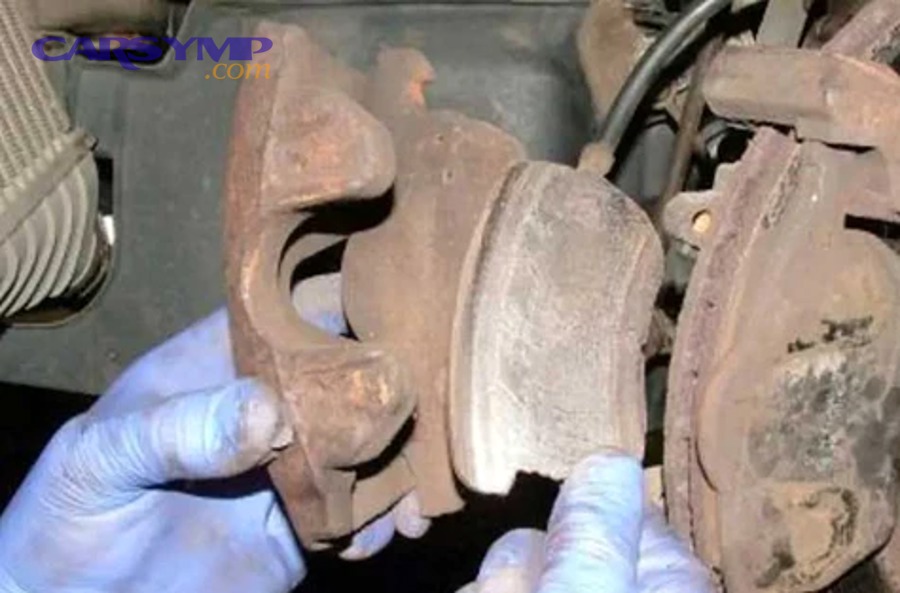
Replace pads when they’re near minimum thickness, heat-cracked, glazed, or contaminated, and replace or machine rotors when they’re below spec, deeply scored, cracked, or have hard spots that keep causing vibration and uneven contact.
After that, the “fix” includes creating a stable friction pair: pads and rotor surfaces must match and bed-in properly, or you can get patchy transfer layers that mimic uneven wear symptoms.
- Replace pads: thin, unevenly worn beyond correction, or heat-damaged.
- Replace rotors: cracked, below thickness spec, severe heat spots, or persistent runout.
- Service together: install new hardware, clean abutments, and verify caliper movement.
Caliper decision: what proves the caliper is the root cause?
The caliper is the root cause when the piston movement is rough, the boot is compromised with internal corrosion, the piston won’t retract smoothly, or the caliper repeatedly sticks even after correct slide/hardware work.
Besides that, don’t confuse a sticky piston with a sticky pad: if the pads slide freely and pins move freely, yet the wheel still drags, the piston/seal pathway becomes the prime suspect.
- Pro-caliper evidence: piston won’t retract, retracts unevenly, or binds; boot torn with corrosion.
- Pro-hardware evidence: pins seized, clips lifted by rust, pads wedged in bracket.
- Pro-hydraulic evidence: drag disappears instantly when bleeder is opened.
What “supporting services” prevent repeat uneven wear after repairs?
Supporting services that prevent repeat uneven wear include new hardware clips, verified pin lubrication, clean hub faces, correct wheel torque, fluid condition checks, and a controlled break-in to stabilize pad transfer onto the rotor.
After that, you’re not just installing parts—you’re restoring the brake system’s ability to self-center and release, which is the real prevention mechanism.
- Hardware kit: clips and boots are cheap compared with repeat pad sets.
- Fluid: old or heat-stressed fluid can accelerate seal issues and uneven behavior.
- Torque discipline: consistent torque reduces runout-related taper and vibration.
How do you prevent uneven pad wear from coming back?
Prevent uneven pad wear by maintaining free movement (clean slides and abutments), controlling heat (proper bedding and driving habits), and preserving alignment (clean hubs and correct torque), then rechecking for early warning signs during tire rotations.
Next, prevention works best when you treat brake service as a repeatable process rather than a one-time part swap—because small friction and alignment issues accumulate over months.
What routine checks catch uneven wear early?
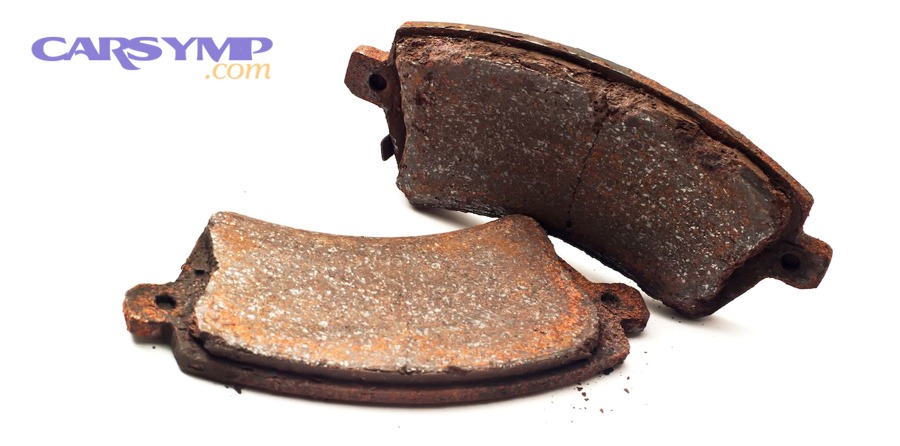
Routine checks that catch uneven wear early include visual pad thickness checks, listening for scraping or chirping, feeling for pull or vibration, and comparing wheel temperatures after normal driving when you suspect drag.
Besides that, pairing brake checks with tire rotations is practical because the wheels are already off and you can spot pattern changes before they become expensive damage.
- Every rotation: look at pad thickness, rotor surface, and boot condition.
- Anytime you feel pull: inspect for a hot wheel and binding or trapped pressure.
- Anytime you hear noise: confirm pad hardware is intact and pads aren’t binding.
How does driving style influence uneven wear?
Driving style influences uneven wear because repeated heavy braking and heat cycling can degrade grease, harden seals, and create pad deposits, while gentle but frequent “resting” brakes can promote constant light drag on a weak-release corner.
After that, the most effective habit is controlled braking with full release between events, which reduces heat soak and gives seals and pads a chance to normalize contact.
- Avoid: riding the brakes downhill; use lower gears when appropriate.
- Avoid: stopping hard then holding the pedal firmly on hot brakes for long periods.
- Do: allow cooldown after aggressive braking before parking.
What installation habits make the biggest difference long-term?
The biggest installation habits are cleaning contact surfaces, using the right torque, using correct brake-safe lubricants sparingly, and ensuring pads and caliper components move freely before the wheel goes back on.
To begin, think of it as “movement verification”: if it doesn’t move smoothly on the lift, it won’t magically move smoothly on the road.
- Verify: pads slide freely; pins glide; caliper centers without force.
- Verify: rotor seats flush; hub face is clean; wheel torques evenly.
- Verify: pedal feel and wheel release after a short road test.
FAQs about uneven brake pad wear
Yes—most common questions have direct answers based on pattern, heat, and movement checks, and you can use them to decide whether you can safely drive or need immediate repair.
Next, use these FAQs to sanity-check your diagnosis before you buy parts, especially when symptoms seem to overlap.
Can new pads wear unevenly quickly even after a brake job?
Yes, if the root cause wasn’t corrected—most commonly pad binding at abutments, seized slide pins, or rotor runout from hub rust—new pads can show uneven patterns within a short mileage window.
After that, re-check movement and mounting surfaces before blaming the pad material itself.
Does uneven pad wear always mean the caliper is bad?
No—uneven wear often comes from pad hardware, bracket corrosion, or mounting/runout issues, and those can mimic caliper problems; you confirm the caliper only after slide and release tests point to piston behavior.
Besides that, isolating the bucket (sliding vs pressure vs alignment) saves money and increases reliability.
Should you replace pads on both sides of the axle if only one side is worn?
Yes, you should replace pads in axle pairs for balanced friction, but you must diagnose why one side wore faster—otherwise the new pair can become uneven again and performance may remain inconsistent.
Next, compare the two sides’ slide hardware and temperatures to find the corner-specific root cause.
Is it safe to drive with uneven pad wear if the car still stops?
No, it’s not reliably safe if the uneven wear is severe or associated with heat, pull, noise, or vibration, because the condition can worsen suddenly and reduce control under emergency braking.
After that, the safest move is to diagnose promptly and repair before rotor damage or fluid overheating occurs.
Contextual Border: Up to this point, you’ve handled the core diagnosis and repair actions. Next, we’ll shift into advanced nuances—rare attributes and edge cases—that can change the “obvious” conclusion even when the wear pattern looks familiar.
Advanced nuances that can change an uneven wear diagnosis
Advanced uneven wear cases usually come from system interactions—electronic parking brakes, stability control modulation, hub/bearing play, or installation stack-ups—so the best approach is to confirm each influence before repeating the same repair.
After that, these nuances help you solve “repeat offenders,” where the basic slide-and-pad service was done correctly but the wear still returns.
How do electronic parking brakes and rear caliper mechanisms affect wear?
Electronic parking brake mechanisms can cause rear pad drag if the actuator doesn’t release fully or if the caliper’s internal screw mechanism is stiff, leading to persistent light contact and faster wear on one side.
Besides that, some systems require a proper service mode for retraction and calibration, and skipping it can leave the mechanism mispositioned.
- Clue: rear pads wear quickly without aggressive driving.
- Clue: parking brake feels inconsistent or makes unusual sounds.
- Check: confirm full release, correct retraction procedure, and smooth mechanism travel.
How can wheel bearing play or hub corrosion create repeat taper?
Wheel bearing play or hub corrosion can create changing rotor alignment under load, which produces persistent taper even with perfect slides, because the rotor face no longer tracks true relative to the pad.
After that, a dial indicator runout check and a careful hub-face cleaning inspection are the fastest ways to confirm whether the issue is “under the rotor,” not in the caliper.
- Clue: taper returns quickly after new pads and hardware.
- Clue: vibration under braking plus uneven pad face contact.
- Check: bearing play test, runout measurement, hub surface flatness.
How do stability control and ABS events influence pad wear patterns?
ABS and stability control can increase pad wear on specific corners if the system frequently applies corrective braking due to tire mismatch, alignment issues, or traction differences, creating a subtle “one-corner does extra work” pattern over time.
However, this rarely causes extreme inner/outer mismatch by itself; it usually amplifies an underlying slide or release weakness.
- Clue: frequent traction control activity in normal driving.
- Clue: tire sizes/pressures differ or alignment is off.
- Check: tire match, alignment, and whether the wear pattern is corner-specific over months.
What installation stack-ups commonly mimic a “bad part”?
Installation stack-ups—wrong clips, thick coating on pad ears, uneven lug torque, or debris between rotor and hub—can mimic a bad caliper by creating binding, runout, or angled contact that eats pads unevenly.
To begin, treat any repeat issue as a “stack-up audit”: re-check each interface surface and each moving contact point, not just the component you replaced last time.
- Audit: correct hardware for the exact pad shape and bracket.
- Audit: clean seating surfaces and consistent torque procedure.
- Audit: pad movement in bracket before final assembly.