


An electronic parking brake (EPB) is a button-controlled system that holds your car in place when parked by applying the rear brakes electronically, so you can secure the vehicle without a hand lever or foot pedal. It’s designed to be simple to use, but it still relies on clear cues—icons, messages, and normal motor sounds—so you know it actually engaged.
Then, to understand why EPB behavior differs between vehicles, you need the “inside” story: the switch sends a request to a control module, which commands an actuator (either on the caliper or via a cable) to clamp the brakes with a controlled amount of force. That architecture is why some EPB systems feel instant, while others sound like a short electric whir.
Moreover, when an EPB warning light appears—or the brake won’t release—the right response is usually a safe, voltage-first checklist before you assume a major failure. Many “stuck” complaints come down to low battery voltage, interlock conditions, or the need for a proper service procedure, not immediate parts replacement.
Introduce a new idea: once you can operate EPB confidently, you can also compare it fairly against a manual handbrake and avoid common mistakes during brake jobs—especially the situations that turn a routine pad swap into parking brake repair.
What is an electronic parking brake (EPB), and what does it do when your car is parked?
An electronic parking brake (EPB) is an electronically controlled braking system that replaces a manual handbrake lever/pedal with a switch, using electric actuators to clamp the rear brakes and prevent roll-away when the vehicle is parked.
Next, because “parking” sounds passive, it helps to connect EPB to what it actually does in real life: it creates and holds brake clamping force even after you take your foot off the service brake.
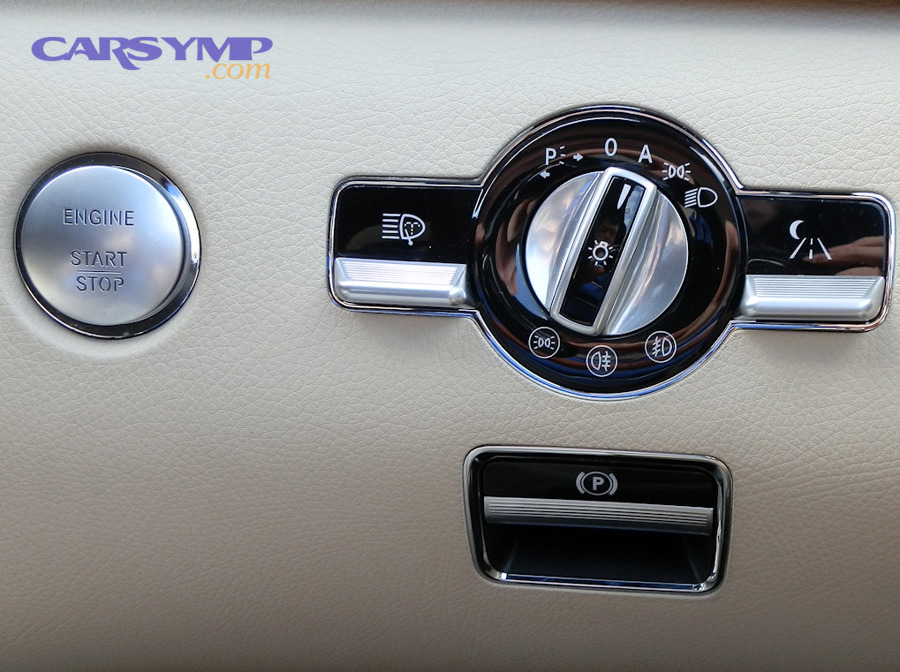
Is EPB the same thing as an “electronic handbrake”?
Yes—EPB and “electronic handbrake” refer to the same central system, and the name difference mainly comes from regional vocabulary and vehicle design trends.
Specifically, drivers often say “handbrake” even when there is no hand lever anymore, because the function is familiar: secure the vehicle when parked. Manufacturers and service information more commonly use EPB (Electronic Parking Brake), which is why you’ll see EPB in dashboards, scan tools, and repair procedures.
Does EPB work on the rear brakes, the front brakes, or both?
Mostly, EPB works on the rear brakes, because rear application stabilizes the vehicle on slopes and matches the traditional parking-brake layout on passenger cars.
Moreover, many EPB systems are designed around rear disc brake assemblies, where an actuator can either pull a cable mechanism or mount directly to the caliper (motor-on-caliper). That common layout is also why rear brake servicing often requires EPB-specific steps before you retract pistons.
How does an electronic parking brake work step by step?
An EPB works by sending a driver command from a switch to a control module, which then drives an electric actuator to apply controlled clamping force at the rear brakes and hold that force until release conditions are met.
To better understand why it sometimes feels “automatic,” you need to see the chain of decisions and hardware that turns a button press into brake force.
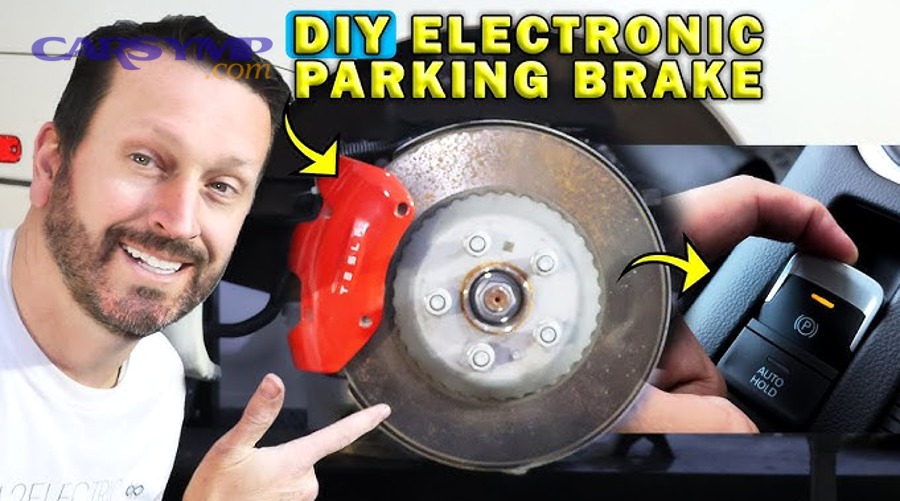
What parts make up an EPB system?
There are 6 main parts of an EPB system: the switch, the control module (ECU), the actuator(s), the brake mechanism (caliper or cable), the wiring/communication network, and the driver feedback layer (icons/messages), based on how force is commanded and confirmed.
More known parts (what you touch/see):
- EPB switch/button: your on/off command (often pull to apply, push to release—varies by brand).
- Indicator light / dash message: the system’s confirmation and warning channel.
Less obvious parts (what does the work):
- EPB control module / integrated brake control: checks conditions (vehicle speed, door state, gear position, brake pedal input) and decides whether to apply/release.
- Actuator(s): electric motors that create mechanical movement.
- Mechanism at the brakes: either a cable-puller assembly or a motor on the caliper.
- Power + network wiring: supplies voltage and communicates commands/status.
This breakdown matters because many “it won’t release” events are not the actuator itself—they’re voltage, interlock logic, or communication faults that stop the module from completing the release. (pmmonline.co.uk)
What are the main EPB designs (motor-on-caliper vs cable-puller), and how are they different?
Motor-on-caliper wins in packaging simplicity at the wheel, cable-puller is best for adapting traditional cable layouts, and both are optimal in different vehicle platforms depending on cost and brake design constraints.
However, the day-to-day difference you’ll notice is service behavior: motor-on-caliper designs often require a scan-tool or built-in routine to retract the motor for brake work, while cable-puller systems may behave more like a traditional cable setup—still with electronic control and interlocks.
A quick comparison table helps you “diagnose the design” before you diagnose the problem:
| EPB design | Where the motor sits | Typical strength | Typical service implication |
|---|---|---|---|
| Motor-on-caliper (MoC) | On the rear caliper | Direct actuation, fewer cables | Often needs service mode/retract routine before pad/rotor work |
| Cable-puller | Central actuator pulling cable(s) | Adapts legacy layouts well | May still need service mode, but hardware resembles cable systems |
Evidence: According to a study by National Chiao Tung University from the Department of Mechanical Engineering, in 2007, an EPB mechanism design analysis reported a maximum stress of 75.6 MPa under a defined loading case, supporting that EPB hardware is engineered with specific force and durability targets rather than “just a button.” (bsmi.gov.tw)
How do you use an electronic parking brake correctly in daily driving?
You use EPB correctly by applying it when fully stopped and ready to park, confirming the indicator/message, and releasing it only when you’re in a safe drive-off condition—often with the brake pedal pressed and the vehicle in gear.
Then, because different cars handle “automatic release” differently, the safest habit is to treat the EPB indicator as your truth source, not your assumption.

How do you apply and release EPB safely (what should you see/hear)?
To apply and release EPB safely, follow 4 factors—stop, command, confirm, and re-check—so you get a predictable outcome every time.
Specifically, a safe universal routine looks like this (your car’s switch direction may vary):
- Stop fully and keep your foot on the brake pedal.
- Apply EPB using the switch (often pull up/press—check the symbol).
- Confirm engagement: look for the EPB/parking brake icon or message. Listen for a brief motor sound (common).
- Release only when ready to drive off: press the brake pedal, select gear, and command release (or let auto-release do it only if your vehicle supports it).
This routine prevents two common problems: (1) thinking it engaged when it didn’t, and (2) fighting interlocks that block release. When drivers skip confirmation, they often mislabel the situation as “Parking brake stuck on causes,” when it’s really “not engaged properly” or “interlock not satisfied.”
Does EPB release automatically when you drive away?
Yes, EPB can release automatically on many vehicles, but only when 3 conditions are satisfied: the system detects a valid driver present, a drive-off request (gear/throttle), and a safe state (doors/seatbelt/brake input depending on model).
Moreover, “auto-release” is not a promise across all cars—some require a deliberate switch action every time. That’s why your best habit is to glance at the EPB icon during the first roll, especially after someone else drove the car or after a battery event. (link.springer.com)
What is Auto Hold, and how is it related to the electronic parking brake?
Auto Hold is a driver-assist braking function that keeps the vehicle held at a stop without continuous pedal pressure, and it is related to EPB because many vehicles coordinate Auto Hold logic with the same braking control systems that manage EPB.
Next, because the words “hold” and “park” sound similar, you need a clean boundary: Auto Hold is for stopping, EPB is for parking.
Is Auto Hold the same as the parking brake?
No—Auto Hold is not the same as the parking brake because it targets temporary stops, it may release as soon as you accelerate, and it isn’t the primary system intended to secure the car when parked for long periods.
However, some vehicles will transition behaviors—like applying EPB automatically when you shift to Park after using Auto Hold—so the experience feels connected even when the functions are distinct. (link.springer.com)
When should you use EPB vs Auto Hold (traffic, slopes, parking)?
EPB wins for parking security, Auto Hold is best for stop-and-go comfort, and using both is optimal when your vehicle is designed to coordinate them (for example: Auto Hold in traffic, EPB when you park).
More specifically:
- Use Auto Hold in heavy traffic, long red lights, drive-thrus, or hill stop situations where you want foot relief.
- Use EPB whenever you park, especially on slopes, when leaving the vehicle, or when loading/unloading.
- Use EPB even if Auto Hold exists when you’re done driving—Auto Hold is not a substitute for a parking brake.
That distinction reduces confusion when you later troubleshoot: an Auto Hold quirk is rarely a parking brake repair issue, while an EPB fault light is more directly tied to the parking brake system.
What does an EPB warning light or “parking brake malfunction” message mean?
An EPB warning light or malfunction message means the vehicle detected a fault, an interlock conflict, or an incomplete apply/release event, so the system may not reliably secure the vehicle—or may not release when commanded.
Then, because the risk is situational, your next step is to decide whether it’s a “park safely and inspect” message or a “stop driving and get help” message.
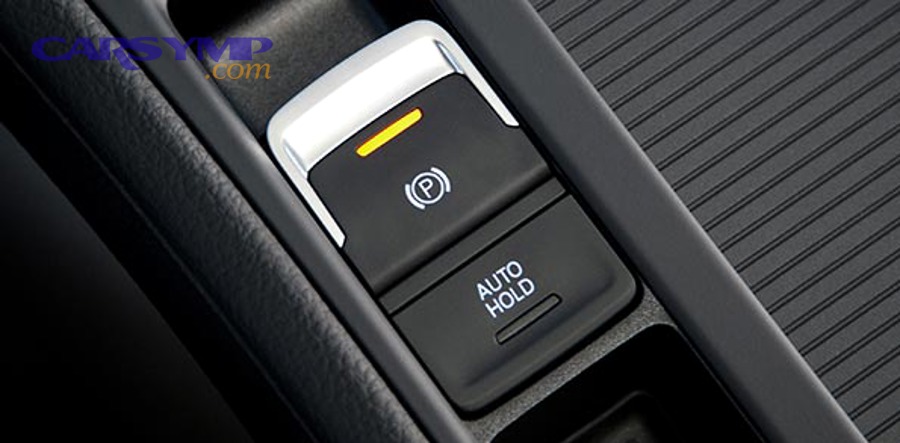
Can you drive with an EPB warning on?
Yes, you can sometimes drive with an EPB warning on, but only if 3 safety checks pass: the service brakes work normally, the car can be secured safely when you stop, and the warning is not paired with broader brake system warnings.
Moreover, if the message suggests reduced braking, multiple brake indicators illuminate, or the vehicle cannot reliably hold when parked, treat it as a high-risk issue and seek professional diagnosis. A warning that affects parking security can quickly become a towing problem, especially on slopes.
What are the most common causes of EPB issues?
There are 6 common EPB problem groups: low battery/voltage, switch faults, actuator/caliper mechanical issues, wiring/connector faults, control-module communication faults, and brake hardware conditions (seized slides, worn pads) based on where the apply/release sequence fails.
Here’s what those groups look like in the real world:
- Low voltage: intermittent warnings after sitting, slow or failed release, clicking/whirring without completion.
- Switch issues: inconsistent response to button press.
- Actuator/caliper binding: one rear wheel drags, burning smell, uneven pad wear.
- Wiring/connectors: faults that appear after wet conditions or recent repair work.
- Module/communication: persistent malfunction message, codes that return immediately.
- Brake hardware conditions: corrosion, stuck caliper slide pins, or pads worn to the point the system reaches its travel limit.
This is the practical “Parking brake stuck on causes” list that helps you triage before you replace parts.
How do you reset or restore EPB function when it won’t release or won’t apply?
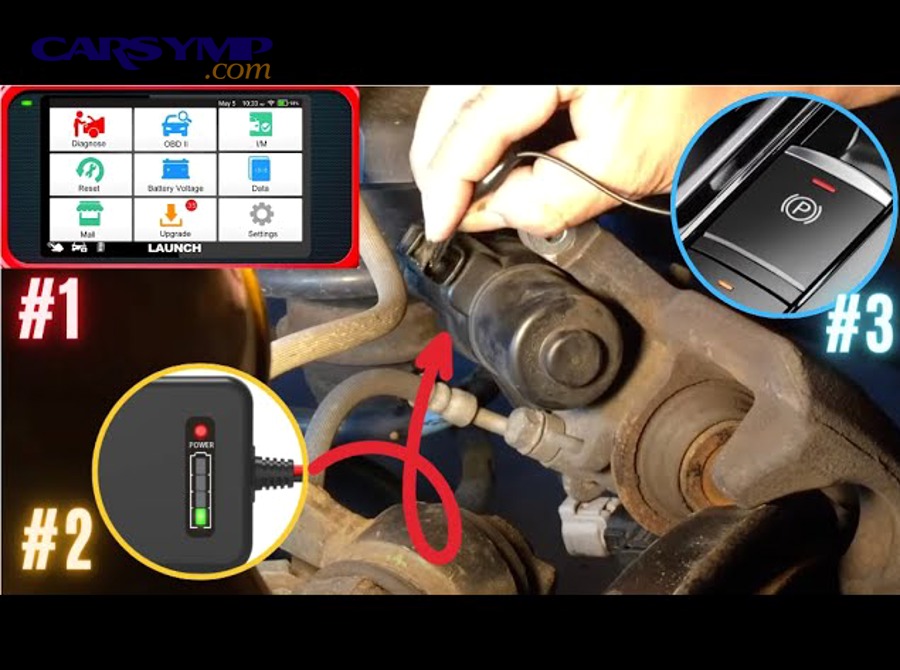
To reset or restore EPB function, use a safety-first method with 5 steps—secure the vehicle, confirm interlocks, stabilize battery voltage, cycle the system correctly, and escalate to scan-tool diagnostics if the fault persists.
Below, the key idea is simple: most EPB systems protect you from unsafe release/apply, so you must satisfy the conditions the module expects before you blame the hardware.
Can a low or dead 12V battery cause EPB problems?
Yes, a low or dead 12V battery can cause EPB problems because the actuator needs adequate voltage/current, the control module may block operation to protect electronics, and low voltage can trigger false fault flags during apply/release cycles.
Moreover, voltage-related EPB complaints often appear after the car sits, after battery replacement, or during cold weather starts—so stabilizing voltage is a logical first move before scheduling parking brake repair.
What are safe first steps to try before calling a tow (without guessing brand-specific button sequences)?
A safe “no-guess” checklist has 7 steps: stabilize, confirm, command, observe, isolate, avoid forcing movement, and document.
Specifically:
- Secure the vehicle: keep foot on brake; use wheel chocks if on a slope.
- Confirm gear state: Park (automatic) or neutral with clutch depressed (manual—if applicable).
- Check interlocks: door closed, seatbelt (if required), ignition on, brake pedal firmly pressed.
- Stabilize voltage: if battery is weak, charge it or jump-start safely.
- Cycle the system: ignition off → wait → ignition on → attempt release/apply again.
- Observe symptoms: does the motor whirr? Does one wheel drag? Do messages change?
- Avoid forcing movement: dragging a clamped brake can overheat components and worsen the fault.
This process keeps you from turning a recoverable fault into collateral damage and helps a technician diagnose faster if towing becomes necessary.
When do you need “service mode” or a scan tool to reset EPB?
Yes, you often need service mode or a scan tool when 3 situations apply: you’re doing rear brake pad/rotor work, the system requires motor retraction/calibration, or fault codes persist after voltage and interlock checks.
In addition, scan tools can do what a button sequence cannot: command the EPB motors to retract/extend, run calibration routines, and read codes that identify which corner or circuit is failing. That is why “resetting” is sometimes not a simple driver action—it’s a controlled service procedure. (pmmonline.co.uk)
Is an electronic parking brake better than a manual handbrake for drivers?
An electronic parking brake is better for many drivers because it improves convenience, enables automation features, and saves cabin space, while a manual handbrake is better for mechanical simplicity and some edge-case control—so the “winner” depends on priorities.
However, the most honest comparison is not “button vs lever,” but integration vs simplicity: EPB integrates with modern brake logic, while a manual system is easier to understand and sometimes easier to troubleshoot.
What are the advantages and disadvantages of EPB vs a manual handbrake?
EPB wins in convenience, packaging, and automation; a manual handbrake is best for simplicity, direct mechanical feedback, and often lower repair complexity; both are optimal when maintained properly and used with correct parking habits.
EPB advantages
- One-touch operation (helpful in tight parking spots and frequent stops).
- Potential auto-features: auto-release, Auto Hold integration, hill-assist behaviors. (link.springer.com)
- Cabin space: frees console area for storage/design.
EPB disadvantages
- More complexity: modules, wiring, actuator motors.
- Service procedure requirements: rear brake jobs may require EPB service mode and brake work precautions.
- Potentially higher costs if actuator or module replacement is needed (common in parking brake repair cases).
Manual handbrake advantages
- Mechanical simplicity: fewer electronic dependencies.
- Clear tactile feedback: drivers feel engagement strength.
- Often easier DIY inspection for cables/adjustment.
Manual disadvantages
- More effort and less integration with automated safety behaviors.
- Space and ergonomics: lever/pedal placement can be awkward in some cars.
Which is safer on hills: EPB or a manual handbrake?
EPB is safer on hills when it engages fully and the driver confirms it, a manual handbrake is safer when the driver applies adequate tension and understands adjustment, and the safest outcome overall comes from combining the brake with proper parking technique (gear selection + wheel-to-curb habits).
More importantly, no parking brake—electronic or manual—replaces common-sense slope security:
- Point wheels toward the curb when appropriate.
- Use “Park” (automatic) or low gear (manual) as a backup to the brake.
- Don’t ignore a warning light that suggests the system may not hold.
This is where the antonym in the title matters: EPB vs manual handbrake is less about style and more about how you verify engagement and respond to faults.
How do you put an EPB into service mode for rear brake work, and what mistakes should you avoid?
You put an EPB into service mode by using the vehicle’s built-in maintenance routine or a scan tool to retract/disable the parking brake actuator for brake work, and you avoid damage by not forcing pistons or motors while the system is still applied.
To better understand the risk, remember the simple truth: EPB hardware can apply force even when the car is off, so you must manage it intentionally before you start disassembly.

What is “EPB service mode,” and why is it required on some vehicles?
EPB service mode is a maintenance state that retracts or relaxes the EPB actuator so the rear caliper pistons can be moved safely during pad/rotor replacement, and it’s required because motor-driven mechanisms can be damaged if you force them mechanically.
Moreover, “EPB service mode and brake work precautions” aren’t just best practices—they’re often the difference between a clean brake job and a repeat visit for parking brake repair due to stripped gears, seized motors, or persistent fault codes.
Can you retract EPB without a scan tool (and when is it risky)?
Yes, some vehicles allow EPB retraction without a scan tool, but it’s risky when 3 factors apply: your vehicle requires a motor retraction command, you’re unsure of the correct procedure, or the system already shows faults that prevent a clean maintenance routine.
However, many modern systems are designed with scan-tool support precisely to avoid “guesswork retraction.” If you’re doing a DIY job, using the correct procedure for your model protects you from the most expensive failure mode: damaging the actuator while trying to save time.
What calibration or relearn steps might be needed after rear brake replacement?
There are 4 common post-brake-job needs: actuator re-extend, pad clearance calibration, fault code clearing, and a controlled bedding-in drive routine, based on how your vehicle confirms parking brake clamping force.
Specifically:
- Actuator re-extend: the system re-applies the EPB to set its baseline.
- Calibration/relearn: some cars measure travel or current draw to confirm clamp force.
- Code clearing: needed if the module logged a fault during service.
- Bedding-in: ensures consistent friction surfaces for predictable braking.
If the EPB still behaves oddly after correct service mode use, that’s when professional diagnostics can distinguish “normal adaptation” from a true hardware fault.
What should you do if EPB fails with a dead battery or during towing/transport?
If EPB fails with a dead battery or during towing, you should secure the vehicle mechanically (chocks), restore battery power first when possible, and choose transport methods that avoid dragging locked rear wheels—because forced movement can overheat brakes and damage driveline components.
In short, dead-battery EPB problems are not always “broken brakes”; they’re often “no power to release,” which is why the safest first move is controlled power restoration, not brute force.
Evidence (if any)
According to a study by National Chiao Tung University from the Department of Mechanical Engineering, in 2007, an EPB mechanism design analysis reported a maximum stress of 75.6 MPa under a defined loading case, supporting that EPB systems are engineered around measurable force and durability targets rather than purely user-interface convenience. (bsmi.gov.tw)