


If you’re searching for DIY cabin air filter replacement steps, the fastest win is a clean, repeatable process: find the access door, remove the old filter neatly, install the new one with correct airflow direction, then verify airflow and odor changes in minutes.
Beyond the basic swap, many drivers also want to avoid cracked glove-box tabs, blown fuses, and that “still-stuffy” cabin feeling—so this guide adds practical checks that keep the job simple and clean.
You may also be wondering whether a different filter material is worth it for dust, smoke, or city traffic, and how to confirm you didn’t install it backwards.
Giới thiệu ý mới: below is a step-by-step workflow you can reuse on nearly any vehicle, with model-specific notes you can apply by matching what you see in front of you.
What tools and parts do you need before starting the job?
You only need the correct filter and basic hand-safety habits to finish this DIY in 5–20 minutes. Next, set yourself up so you don’t drop debris into the housing or break plastic clips.
Parts checklist that prevents repeat trips
Start with the exact filter that matches your
Bring a small trash bag or disposable grocery bag to wrap the old filter immediately. This keeps dust, leaves, and soot from falling onto carpets or into the
Tools that help, even if the job is “tool-free”
- Flashlight (phone light works) to read airflow arrows and latch positions.
- Trim tool or plastic pry tool to pop covers without gouging.
- Small Phillips screwdriver (some vehicles use 1–3 screws on the access cover).
- Vacuum with crevice tool to clean the housing lip and surrounding debris.
According to Cars.com editors, in May 2025, a common interval mentioned for changing a cabin filter is about once a year or every 12,000–15,000 miles, which is why it’s smart to keep a spare on hand if you drive in dusty or smoky conditions.
Quick safety setup
Park on level ground, set the parking brake, and turn the ignition fully off. If your vehicle uses a push-button start, keep the key fob away from the cabin to avoid accidental accessory power cycling while your hands are near the glove box.
Where is the cabin filter located in most vehicles?
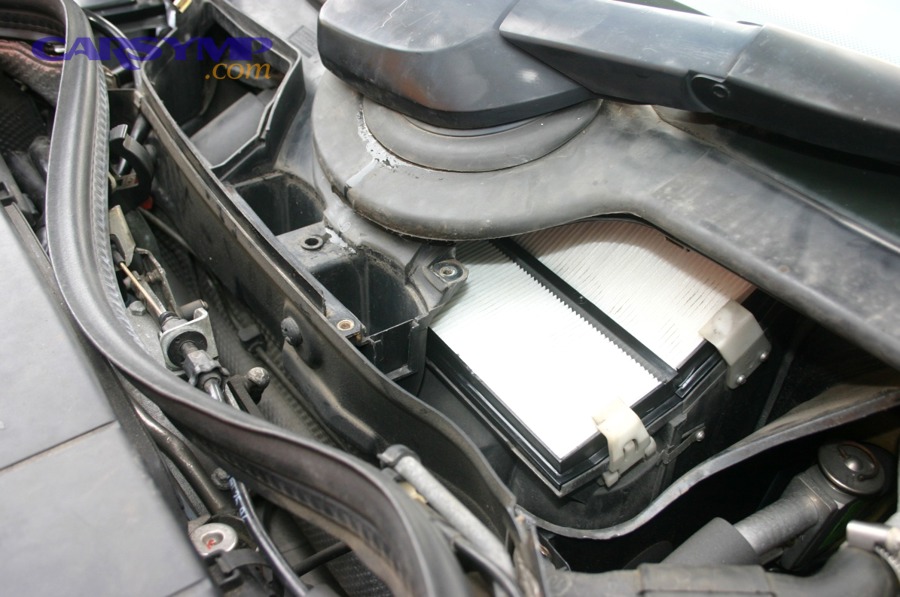
In most cars, the filter sits behind the glove box or under the passenger-side dash in a rectangular slot with a small access door. Next, you’ll confirm the access path by looking for a labeled cover, tabs, or a shallow “tray” shape in the HVAC case.
Three common locations you can identify in under a minute
- Behind the glove box: you lower the glove box past its stops to reach a narrow door.
- Under the passenger dash: a small cover faces downward; you remove a panel or twist clips.
- At the cowl/engine-bay area: access near the base of the windshield (less common on newer mainstream models, but still seen).
To keep the process consistent, treat the housing as a meronym of the interior climate system: the filter slot is one “part” of the HVAC case, so you’re not dismantling the entire dashboard—just opening the correct door.
How to confirm you found the right door
Look for a door that is roughly the size of a paperback book, often with two squeeze tabs. If you see wiring harnesses and airbag labels, stop and reposition—those are not part of the filter access path.
How do you remove the old filter without making a mess?
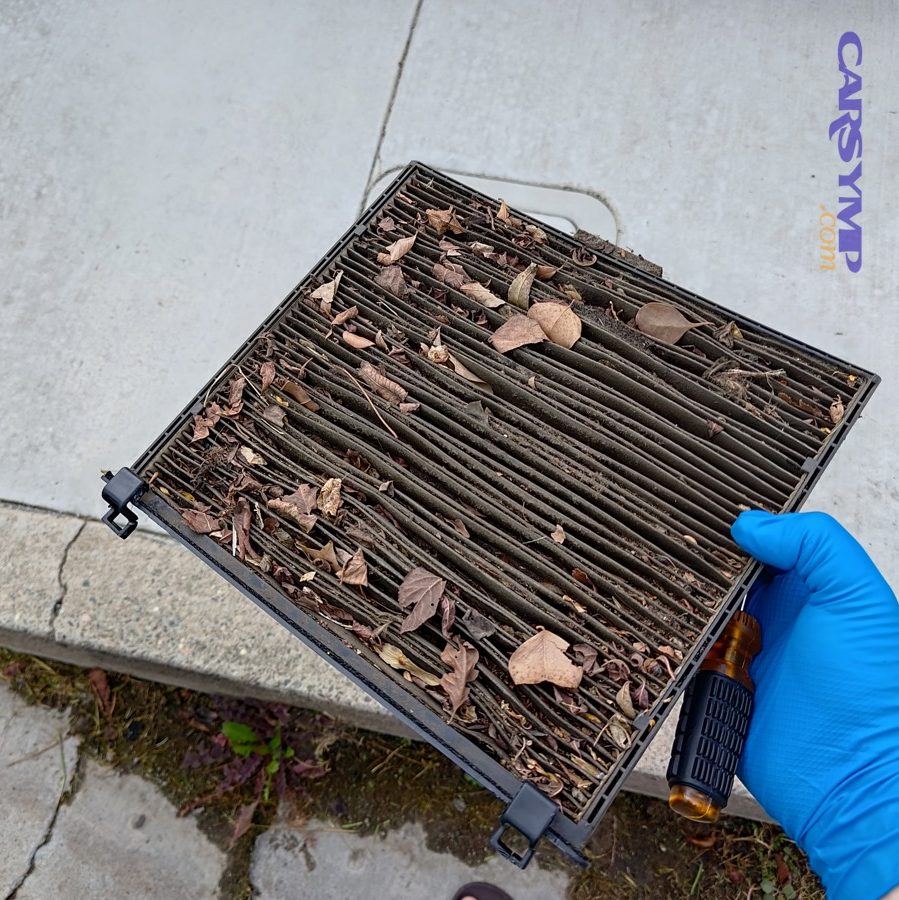
Remove it by opening the access door, sliding the filter straight out, and immediately bagging it so loose debris can’t fall into the blower area. Next, you’ll clean the slot lip and inspect for leaves, dampness, or torn foam that can cause persistent odors.
Step-by-step removal workflow
- Open the glove box and empty it so nothing drops behind panels.
- Release glove box stops (press sides inward) or remove a small damper arm if equipped.
- Find the filter access door and pinch tabs or remove screws.
- Slide the filter out slowly while keeping it level.
- Seal it in a bag immediately before you move your hands away from the slot.
Clean the housing the smart way
Use a vacuum to clean the housing lip and the area just outside the slot. Don’t push the nozzle deep into the ducts—your goal is to remove loose debris, not to scrape internal plastic vanes.
According to researchers at the University Hospital, Umeå (Department of Occupational and Environmental Medicine), in April 1999, a controlled exposure study found that adding activated charcoal to particle filtration could reduce diesel-exhaust-related discomfort compared with particle-only filtration, highlighting why removing odor sources and sealing the slot properly matters.
Watch the process once, then copy it
How do you install the new filter correctly the first time?
Install it by matching the frame orientation and airflow arrow, then sliding it fully into the guides until it seats flat without bending or buckling. Next, you’ll close the access door securely and restore the glove box stops so nothing rattles later.
Understand the airflow arrow in plain language
The arrow indicates which direction air should pass through the filter media. In many glove-box designs, airflow moves top-to-bottom (downward) into the blower; in some dash-side designs, it moves front-to-back. Always follow the housing marking first if it exists.
Seat the filter so it can’t bypass around the edges
Guide the filter into the rails so the gasket (or foam edge) presses evenly against the housing lip. If the filter slides in crooked, you can create a gap where air bypasses the media—airflow may feel strong, but filtration becomes weaker.
Reassemble without breaking tabs
Close the access door until you hear or feel both tabs click. Then lift the glove box back into place, reattach the damper arm (if equipped), and gently return the glove box stops to their original position.
In the next section, you’ll verify the result so you’re not guessing.
How can you verify airflow and smell changes after the swap?
You can verify success by checking fan airflow at multiple speeds, confirming the blower sounds normal, and ensuring odors diminish after a short run with the system in fresh and recirculation modes. Next, you’ll use a quick two-minute test sequence that catches most mistakes immediately.
Two-minute functional test
- Start the car and set the fan to medium with fresh air mode for 30 seconds.
- Switch to recirculation for 30 seconds (windows closed).
- Turn the fan to high for 30 seconds and listen for fluttering or ticking.
- Cycle temperature from cool to warm briefly and confirm airflow remains steady.
What “good” results look like
- Airflow feels more consistent at low fan speeds.
- Noise is smooth (no leaf “scrape” sound).
- Odor improves over the next few drives, especially after the first full heat/cool cycle.
According to researchers publishing in PLOS ONE, in November 2017, using a high-efficiency cabin filter with windows closed reduced in-cabin
Which filter type should you choose for your driving conditions?
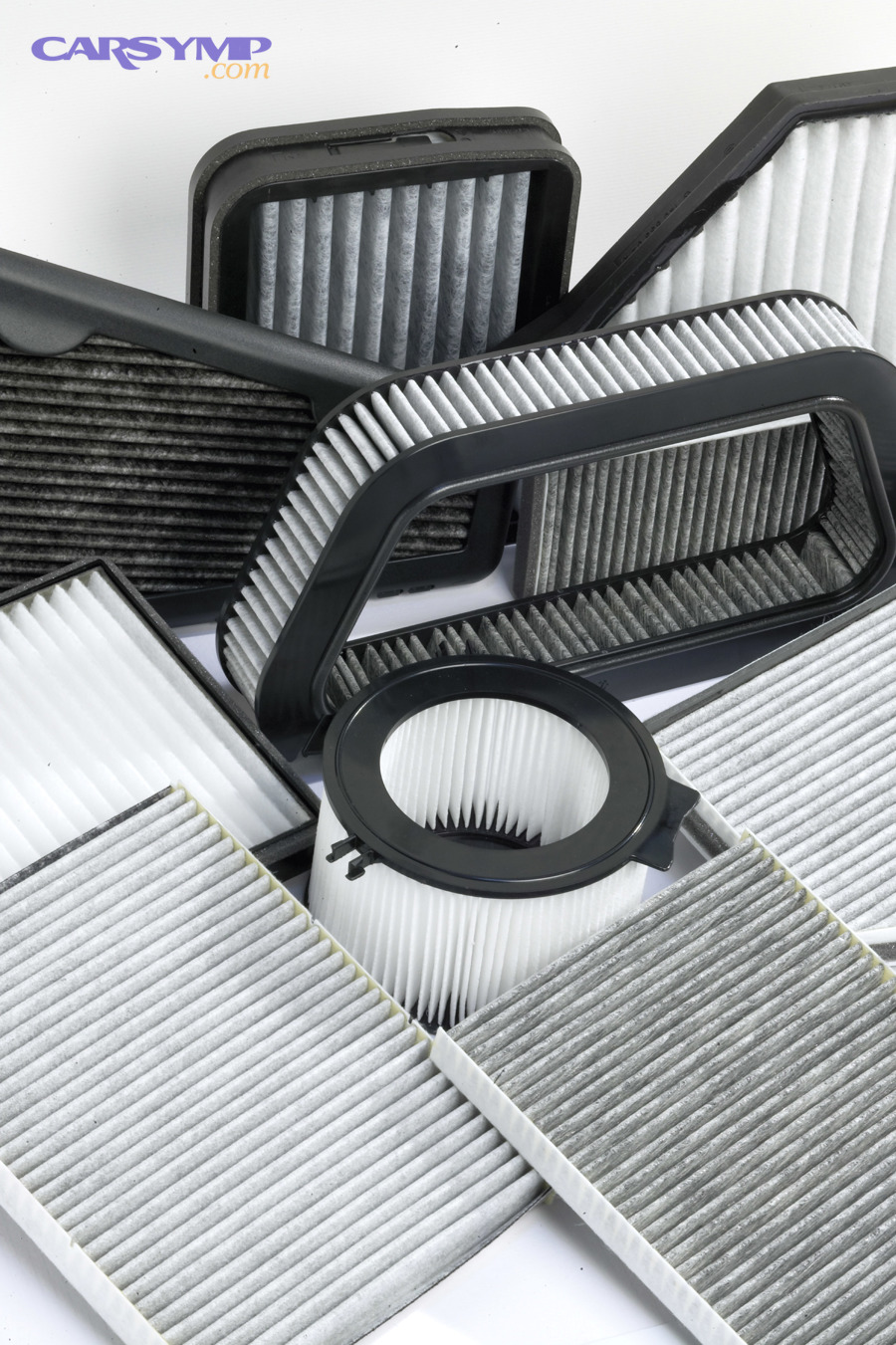
You should choose a filter type based on what you want to reduce—dust/pollen particles, odors and gases, or higher-efficiency fine-particle capture—because each design trades cost and airflow resistance differently. Next, you’ll match your environment to the right media so you’re not overpaying or under-filtering.
Below is a clear comparison of common options so you can decide quickly without guessing.
| Filter type | Best for | Trade-offs | Good fit if you… |
|---|---|---|---|
| Standard particulate | Dust, pollen, larger particles | Least odor control; quality varies | Drive mostly suburban/highway with low smoke exposure |
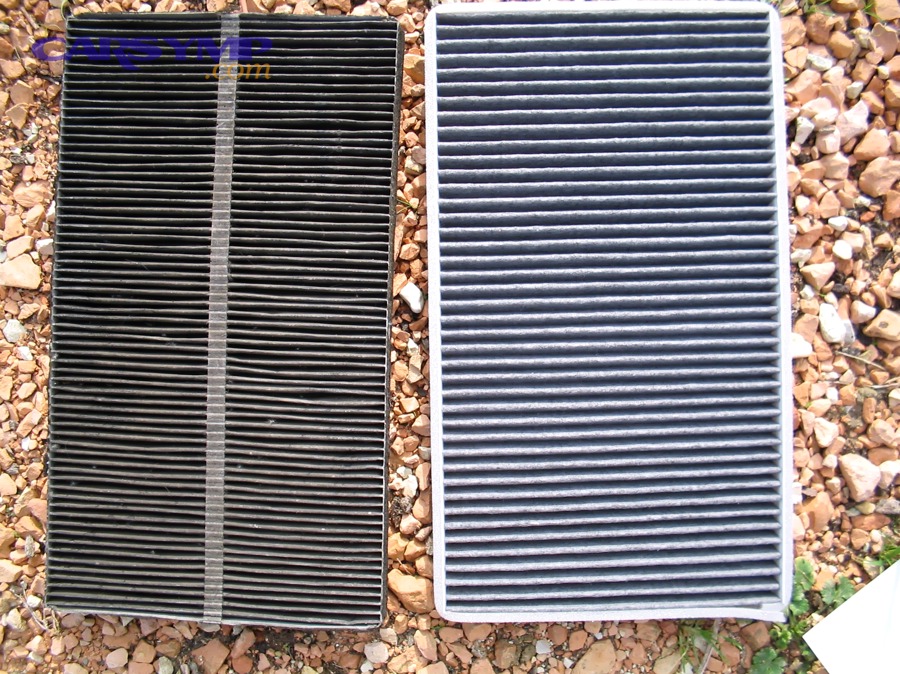
| Activated carbon | Odors and some gaseous pollutants | Often costs more; can restrict airflow if very dense | Drive in traffic, tunnels, or areas with frequent exhaust smell |
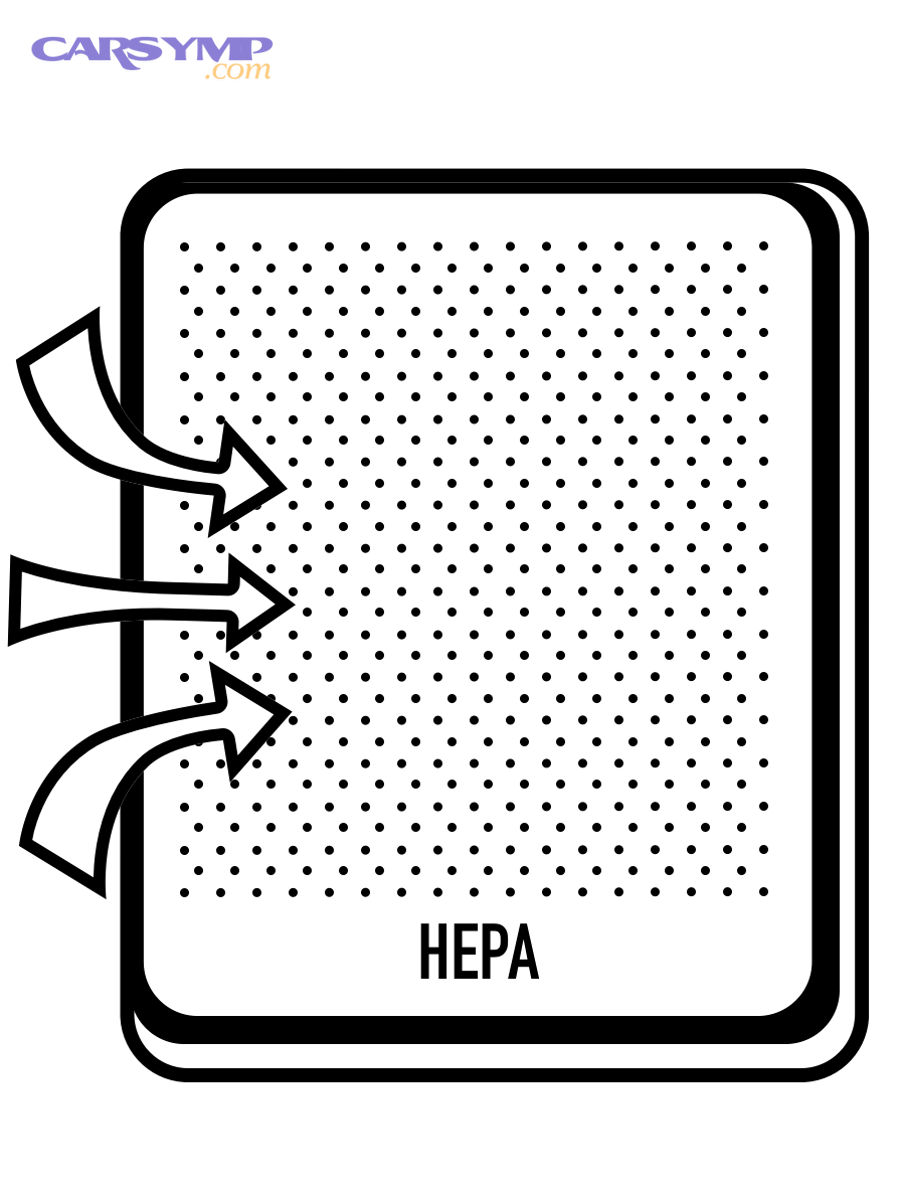
| High-efficiency (premium media) | Finer particles and higher capture potential | May reduce airflow slightly as it loads | Have allergies or commute in heavy congestion |
According to researchers publishing in Applied Sciences (MDPI), in September 2021, laboratory testing of 11 vehicular cabin filters showed wide variability in filtration performance, and charcoal media showed measurable removal of BTEX compounds—supporting the idea that “filter grade” matters more than most people assume.
How to choose without overthinking it
If you mainly fight dust and pollen, a quality particulate filter is usually enough. If you notice frequent exhaust odor, choose activated carbon. If you drive long hours in dense traffic or wildfire smoke seasons, a higher-efficiency option can be a sensible upgrade.
Where the extra phrases matter in real life
In practice, cabin air filter replacement is one of the few maintenance tasks that can immediately change the feel of the interior air, even when the engine runs perfectly. If you want a simple rule, write this note in your maintenance log: How often to replace cabin air filter depends on dust exposure and smoke seasons more than on mileage alone, so inspect it sooner if airflow drops or odors spike.
What small mistakes cause problems, and how do you prevent them?
Most problems come from incorrect seating, reversed airflow direction, or broken access-door tabs that let air bypass the media. Next, you’ll use a short checklist that prevents rattles, weak airflow, and recurring smells—without adding time to the job.
Five-minute prevention checklist
- Airflow arrow: confirm it matches housing markings or the direction of fan intake.
- Flat seating: ensure the filter frame is not bowed or pinched.
- Door seal: close the cover until both sides latch evenly.
- Glove box stops: restore stops so the glove box doesn’t hang or squeak.
- Debris cleanup: vacuum the surrounding area so leaves don’t fall back in.
Why airflow can feel worse after a “fresh” filter
A premium filter can be denser by design; that’s normal. However, if airflow becomes dramatically weaker, the filter may be misaligned and blocking the duct opening. This is where Signs of incorrect filter installation show up quickly: a whistling noise, fluttering at certain fan speeds, or a filter that shifts when you tap the housing.
Comfort tie-in you’ll notice immediately
A clogged filter can make the fan work harder to push air, while a properly seated filter supports smoother cabin airflow. Many drivers describe the AC and heater performance impact as “more responsive” rather than “colder or hotter,” because the system can move the same air volume with less restriction.
When should you stop and get help instead of forcing it?
You should stop if access requires removing airbag-related panels, if you must disconnect complex wiring, or if the filter housing is buried behind structural dash pieces you can’t safely reassemble. Next, you’ll use a simple decision rule so DIY stays low-risk and cost-effective.

Red flags that mean “pause”
- You can’t identify a dedicated filter door after removing the glove box stops.
- The job requires removing the passenger airbag module or structural dash beam.
- The filter frame must be sharply bent to fit (beyond gentle flex).
- You see broken foam seals or crumbling plastic rails inside the slot.
Smart alternative if access is difficult
If the filter is hard to reach, you can still inspect it and decide whether a shop visit makes sense. Take a photo of the filter slot, read the part number, and bring it with you—this prevents upsell confusion and ensures the correct media is installed.
Contextual Border: From here, we move beyond the core how-to steps and focus on deeper troubleshooting and best-practice details that help your filter perform longer and avoid repeat issues.
Extra troubleshooting and pro tips beyond the basic steps
These refinements help you solve the “it still doesn’t feel right” cases—without turning a simple filter swap into a dashboard project. Next, use the matching scenario below to pinpoint what to adjust.
What if the airflow arrow seems to conflict with the housing?
Follow the housing marking first, because it reflects actual airflow through that specific HVAC case. If there is no marking, infer airflow by noting where the blower fan sits (usually downstream of the filter) and orient the arrow toward the blower intake direction. If the filter has no arrow, match the pleat support pattern and frame tabs to the rails so it seats flat.
Why do you hear a new rattle, tick, or flutter?
This usually means the filter isn’t fully in its guides, the access door isn’t latched evenly, or a leaf fell into the blower inlet while you removed the old media. Reopen the door, reseat the frame, vacuum the housing lip, and re-latch both sides with equal pressure.
What if musty odors return quickly?
A new filter can’t fix moisture already living on the evaporator core or in the ducts. Run the fan for a minute with the A/C off before you shut the car down (when practical), and consider an HVAC-safe cleaning method appropriate for your vehicle. If you see damp leaves near the intake, check cowl drains and seals so the housing doesn’t re-contaminate.
How do you extend filter life without compromising comfort?
Inspect the filter earlier during heavy pollen, smoke, or construction dust seasons, and avoid leaving windows down on dusty roads for long periods when the system is pulling air. If you drive in dense traffic, use recirculation strategically (not continuously) to reduce pollutant spikes, then refresh the cabin air periodically for comfort.
To anchor expectations, remember the evidence: according to PLOS ONE researchers in November 2017, filtration strategy measurably changed in-cabin particle levels during on-road driving—so small operational choices can matter as much as the filter itself.