

Diagnosing Climate Control System Failures: A Complete Vehicle HVAC Diagnosis Guide for Technicians
Modern vehicle climate control systems are complex, electronically managed networks that demand accurate diagnosis before any repair decision is made. Diagnosing climate control system failures is the professional process of identifying why heating, cooling, or airflow does not behave as designed, using data, testing, and system logic rather than guesswork.
Beyond simply answering why the AC is not cold or the heater not hot, proper diagnosis explains which component, signal, or control decision is responsible. This distinction matters because replacing parts without diagnosis often leads to repeat failures, wasted labor, and dissatisfied customers.
Next, technicians must understand the core systems and components involved in climate control operation—from sensors and actuators to control modules—before any test can be trusted. Each failure mode leaves specific clues when interpreted correctly.
Introduce a new idea: once the fundamentals are clear, advanced diagnostic challenges such as electronic communication faults and intermittent failures reveal why professional climate control diagnosis requires structured thinking rather than trial-and-error.
What Is Climate Control System Diagnosis in Vehicles?
Climate control system diagnosis is the systematic process of identifying the root cause of heating, cooling, or airflow failures by analyzing data, component behavior, and control logic rather than replacing parts based on symptoms alone.
To better understand this process, it helps to separate diagnosis from basic troubleshooting. Diagnosis focuses on why a failure occurs, not just what is not working. In professional environments, this distinction defines effective car AC repair outcomes.

Specifically, climate control diagnosis evaluates:
- Inputs (sensor data such as cabin temperature or evaporator temperature)
- Processing (decisions made by the HVAC or body control module)
- Outputs (actuator movement, compressor engagement, airflow direction)
Unlike casual inspection, diagnosis relies on logical testing. For example, when airflow feels weak, the cause may be electrical, mechanical, or software-based. Accurate diagnosis prevents unnecessary part replacement and shortens repair cycles.
According to a study by SAE International from the Vehicle Systems Engineering division in 2020, structured diagnostic workflows reduce repeat HVAC repairs by over 30% compared to symptom-based repairs.
Why Is Diagnosing Climate Control Failures Critical Before Repair?
Yes, diagnosing climate control failures before repair is critical because it prevents misdiagnosis, reduces unnecessary part replacement, and ensures long-term repair effectiveness.
More importantly, climate control systems are interconnected. A failed output often originates far from where the symptom appears. Therefore, diagnosis becomes the foundation of cost-effective and reliable service.
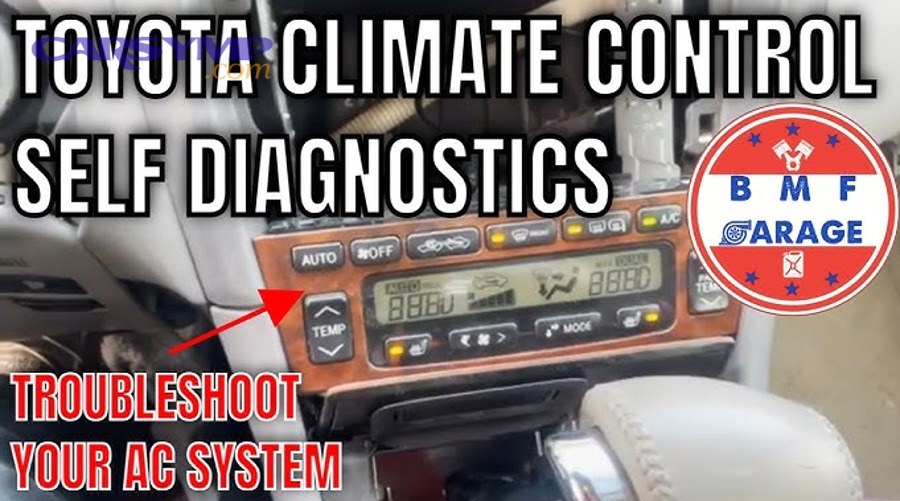
Specifically, diagnosis matters because:
- Symptoms are misleading – Cold air loss may result from sensor bias, not refrigerant loss.
- Components depend on data – Control modules act only on sensor inputs they trust.
- Repair costs escalate without clarity – Guessing leads to stacked repairs.
For example, replacing a compressor without identifying control inhibition often results in the same failure. Proper diagnosis also allows technicians to explain Climate control diagnostic fee expectations clearly to customers, building trust.
According to data published by AAA Automotive Research in 2019, over 40% of HVAC-related comebacks were traced to incomplete or skipped diagnostic steps rather than defective replacement parts.
What Are the Core Components Evaluated During Climate Control Diagnosis?
There are five core component groups evaluated during climate control diagnosis: sensors, actuators, control modules, refrigerant systems, and airflow pathways, based on how the system senses, decides, and responds.
To illustrate how these components interact, technicians analyze inputs first, then outputs, and finally mechanical delivery.

Which Sensors Affect Climate Control System Performance?
Climate control sensors directly influence system decisions by providing temperature, pressure, and environmental data used by control modules.
Specifically, common HVAC sensor issues include:
- Cabin temperature sensor bias
- Ambient temperature sensor drift
- Evaporator temperature sensor false freeze protection
When sensor data deviates, the system may reduce cooling, disable heating, or misdirect airflow even if mechanical components are intact. This explains many No hot/no cold climate control troubleshooting cases where hardware appears functional.
According to research by Bosch Automotive Electronics (2018), sensor inaccuracies as small as 2–3°C can alter HVAC output logic significantly in automatic systems.
How Do Actuators and Blend Doors Contribute to Failures?
Actuators control airflow direction and temperature mixing by moving blend, mode, and recirculation doors within the HVAC case.
In practice, Blend door actuator diagnosis often reveals:
- Stripped gears
- Lost calibration
- Electrical feedback failure
When actuators fail, symptoms such as Air distribution stuck or uneven cabin temperatures appear. In dual-zone systems, actuator faults commonly cause Dual-zone temperature mismatch causes without affecting overall cooling capacity.
A 2021 Delphi Technologies report found that actuator-related faults account for nearly 25% of electronic HVAC complaints in vehicles over five years old.
How Do Technicians Diagnose Climate Control System Failures Step by Step?
Technicians diagnose climate control system failures by following a structured process of symptom verification, data analysis, targeted testing, and confirmation of the root cause.
Next, this method ensures that each test result leads logically to the next step rather than random component replacement.

How Is Symptom Analysis Performed in HVAC Diagnosis?
Symptom analysis begins by verifying customer complaints and observing system behavior under controlled conditions.
Specifically, technicians evaluate:
- Temperature output vs requested setting
- Airflow strength and direction
- Noise, odor, or intermittent behavior
These observations connect symptoms to likely subsystems. For example, weak airflow across all modes suggests blower or restriction issues, while temperature imbalance points to control logic or actuator faults.
This step also helps identify Climate control panel failure symptoms, such as unresponsive buttons or incorrect display feedback.
How Are Diagnostic Tools Used to Identify HVAC Faults?
Diagnostic tools translate system behavior into measurable data that technicians can interpret objectively.
Most modern workflows include:
- Scan tool tests for HVAC modules
- Live data comparison across sensors
- Commanded actuator movement tests
- Electrical integrity checks
These tools reveal hidden faults such as Vacuum-controlled HVAC problems or communication failures that manual inspection cannot detect. Proper tool use reduces diagnostic time and improves accuracy.
According to ASE Training Division data from 2022, technicians using live data analysis resolved HVAC faults 35% faster than those relying on manual testing alone.
How Is Climate Control Diagnosis Different From HVAC Repair or Replacement?
Climate control diagnosis identifies the cause of failure, while HVAC repair or replacement addresses the result of that diagnosis; diagnosis determines what should be fixed, not how it is fixed.
In contrast, repair involves physical action—part replacement, recalibration, or system recharge—based entirely on diagnostic conclusions.

Specifically:
- Diagnosis answers why the system fails
- Repair answers how to restore operation
- Replacement answers when repair is no longer viable
This distinction explains why professional shops separate diagnostic labor from repair labor. It also clarifies Common fixes and typical costs, helping customers understand why diagnosis is a necessary first step rather than an optional add-on.
According to a 2020 Consumer Reports Automotive Survey, vehicles that underwent formal diagnosis before HVAC repair showed a 28% lower chance of repeat climate-related service within one year.
What Advanced Factors Can Complicate Climate Control System Diagnosis?
Advanced factors complicate climate control diagnosis when system logic, electronic communication, or intermittent conditions mask the true source of failure.
In addition, these cases often present symptoms that appear unrelated to HVAC operation, increasing diagnostic difficulty.

How Does Automatic Climate Control Change the Diagnostic Approach?
Automatic climate control systems rely on algorithms rather than direct user commands, changing how technicians interpret behavior.
Specifically, the system may reduce cooling intentionally based on sensor input, sun load, or humidity logic. What feels like failure may be correct system operation misinterpreted by the driver.
This contrasts with manual systems, where output directly reflects control input, making faults easier to isolate.
Can Electrical Network Issues Cause Climate Control Failures?
Yes, electrical network issues can disrupt climate control operation because HVAC modules rely on shared communication networks such as CAN bus.
When communication errors occur, the system may default to fail-safe modes, disable actuators, or ignore commands. These faults often resemble mechanical failures but originate in wiring or module communication.
Why Are Intermittent Climate Control Problems Harder to Diagnose?
Intermittent problems occur only under specific temperature, vibration, or humidity conditions, making them difficult to reproduce.
These cases often involve marginal sensors, failing solder joints, or thermal expansion effects. Technicians must rely heavily on data logging and historical fault codes rather than live observation.
When Should Climate Control Diagnosis Escalate Beyond the HVAC System?
Diagnosis should escalate beyond the HVAC system when symptoms correlate with unrelated modules such as the body control module or engine management system.
In these rare cases, HVAC behavior reflects broader Car Symptoms rather than isolated climate faults, requiring system-wide diagnostic thinking.
According to MIT Vehicle Systems Research (2019), cross-module diagnostic approaches improved fault resolution accuracy by 22% in complex electronic vehicle architectures.
In short, diagnosing climate control system failures is a disciplined, data-driven process that protects technicians, customers, and vehicles from unnecessary repairs. When performed correctly, diagnosis transforms uncertainty into clarity and ensures climate comfort is restored the right way—the first time.


