


When a car’s interior refuses to heat up, cool down, or switch airflow properly, the most likely culprit is often hidden deep inside the dashboard: the blend door actuator. Diagnosing a blend door actuator failure in car HVAC systems means confirming whether this small motorized component can still control temperature and airflow as commanded.
Beyond simply identifying a bad part, proper diagnosis helps you understand why climate control symptoms appear, which prevents unnecessary replacements and wasted labor. Many HVAC problems that feel complex at first can be narrowed down logically with the right approach.
At the same time, modern vehicles rely on electronic HVAC actuators that interact with control modules, sensors, and wiring. This means diagnosis today is not just mechanical—it often involves basic electronic checks and system logic.
Introduce a new idea: before replacing parts or tearing apart the dashboard, a structured diagnosis process ensures you are solving the right problem and restoring reliable climate control performance.
What Is a Blend Door Actuator in a Car HVAC System?
A blend door actuator is an electric HVAC actuator that moves internal air doors to regulate temperature and airflow inside a car’s climate control system.
To better understand its importance, let’s explore how this component fits into the overall HVAC system and why its failure causes such noticeable comfort problems.
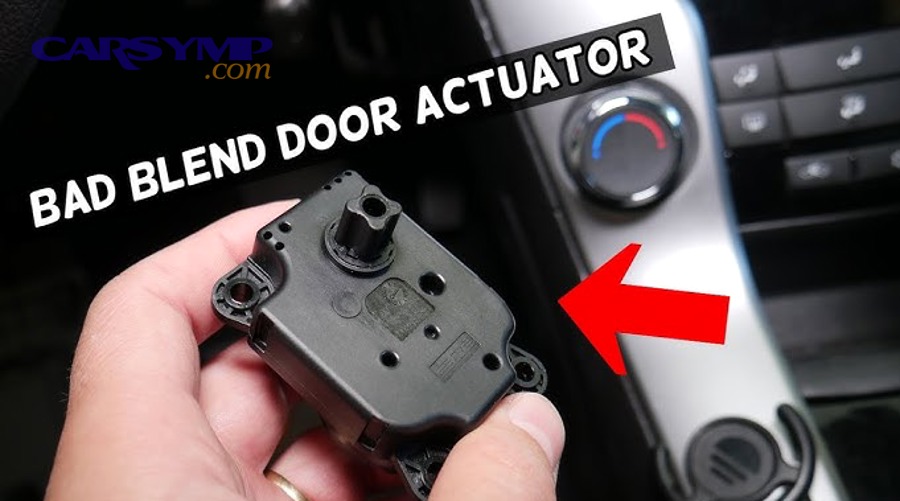
Inside the HVAC housing, multiple air doors direct airflow across the heater core or evaporator. The blend door actuator controls one of the most critical doors—the blend door—by positioning it precisely between hot and cold air sources. When you adjust the temperature dial or digital setting, the actuator receives a command and rotates the door accordingly.
Key characteristics of a blend door actuator include:
- A small electric motor with internal gears
- A position sensor for feedback
- A plastic housing mounted to the HVAC case
Because it operates frequently and under load, wear in the internal gears or electronics is common over time. When this happens, the HVAC system can no longer regulate cabin temperature correctly, even though other components like the heater core or AC compressor still function.
What Are the Symptoms of a Failing Blend Door Actuator?
There are several common symptoms of blend door actuator failure, including incorrect temperature output, repetitive clicking noises, and airflow that does not respond to control changes.
These symptoms matter because they help separate actuator problems from other climate control issues, as explained below.

When diagnosing climate problems, always observe behavior patterns rather than relying on a single symptom. A failing actuator often shows repeatable, predictable faults rather than random behavior.
Does a Clicking or Knocking Noise Mean the Blend Door Actuator Is Bad?
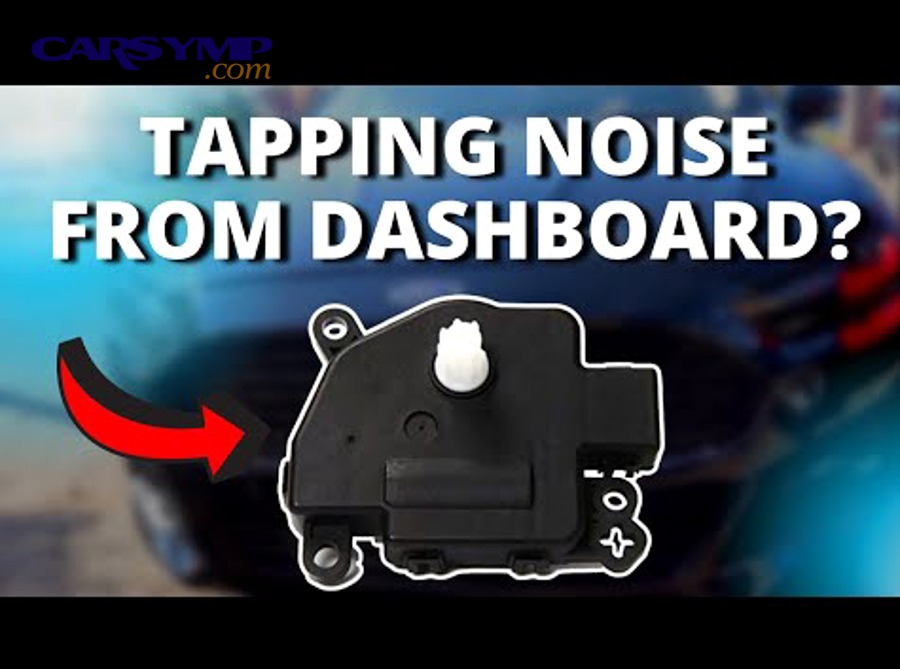
Yes, clicking or knocking noises often indicate blend door actuator failure for three main reasons: stripped internal gears, actuator overtravel, or failed position feedback.
More specifically, when plastic gears wear or break, the motor continues turning but cannot move the door properly. As a result, you hear rhythmic clicking behind the dashboard, especially when starting the vehicle or changing temperature settings. This noise usually repeats because the HVAC system attempts to recalibrate the door position.
In practical terms, persistent clicking is one of the strongest audible clues during climate control diagnosis. While other HVAC components can make noise, actuator clicking is distinctive because it is synchronized with temperature or mode changes.
Can Incorrect Air Temperature Indicate Blend Door Actuator Failure?
Yes, incorrect air temperature strongly suggests blend door actuator failure for at least three reasons: stuck door position, delayed movement, or incorrect feedback to the control module.
For example, if hot air blows regardless of temperature setting, the blend door may be stuck toward the heater core. Conversely, constant cold air often means the door is locked toward the evaporator. In dual-zone systems, one side may blow hot while the other remains cold, which further isolates the issue to an individual actuator.
This symptom is central to No hot/no cold climate control troubleshooting because it confirms that airflow exists but temperature mixing does not.
How Do You Diagnose a Blend Door Actuator Failure?
Blend door actuator diagnosis follows a structured method with observation, command testing, and verification steps that confirm whether the actuator responds correctly to control inputs.
To guide the process effectively, move from the simplest checks to more advanced testing rather than jumping straight to replacement.
Begin by observing HVAC behavior during startup. Many vehicles perform a self-calibration cycle where actuators sweep through their range. Failure during this cycle often produces noise or temperature inconsistency immediately.
Next, verify that airflow direction and fan speed work normally. This confirms the blower motor and mode doors are functional. Once airflow is confirmed, focus on temperature control behavior.
How Can You Test a Blend Door Actuator Without Removing It?
You can test a blend door actuator without removal by commanding temperature changes, listening for movement, and visually inspecting accessible actuators while observing response.
Specifically, turn the temperature control from full cold to full hot and listen closely for motor movement or clicking. If accessible, observe the actuator shaft or linkage for rotation. Lack of movement, delayed response, or repeated clicking indicates failure.
This method works well for DIY diagnosis because it avoids dashboard disassembly. However, limited access in some vehicles means further testing may be required.
Should You Use a Scan Tool to Diagnose a Blend Door Actuator?
Yes, using a scan tool improves blend door actuator diagnosis for three reasons: command verification, fault code retrieval, and actuator position feedback analysis.
With a compatible scan tool, you can perform Scan tool tests for HVAC modules by commanding actuators directly and monitoring response. This eliminates guesswork by confirming whether the actuator receives commands and whether it reports correct position data.
In professional climate control diagnosis, scan tools are especially valuable for newer vehicles with electronically controlled HVAC systems and dual-zone functionality.
According to a study by the University of Michigan Transportation Research Institute, in 2019, electronic actuator diagnostics reduced unnecessary HVAC component replacement by over 30%.
Is the Problem Always the Blend Door Actuator?
No, the problem is not always the blend door actuator because wiring faults, control module issues, and physical door obstructions can produce similar symptoms.
Therefore, confirming actuator failure requires ruling out these related faults before replacement.

Electrical issues such as broken wires or loose connectors can prevent the actuator from receiving power or signals. Similarly, a failed HVAC control module may send incorrect commands, making a good actuator appear faulty.
How Is a Blend Door Actuator Failure Different from a HVAC Control Module Issue?
Blend door actuator failure differs from HVAC control module issues because actuators fail to move correctly, while control modules fail to send or process commands consistently.
In actuator failures, scan tools often show command signals without physical movement. In contrast, control module issues may result in no command output at all or multiple HVAC functions failing simultaneously.
Understanding this distinction prevents unnecessary replacement and aligns diagnosis with real-world climate control diagnosis best practices.
According to a report by SAE International, in 2020, misdiagnosis of HVAC electronic components accounted for nearly 25% of repeat climate control repairs.
What Else Should You Know About Blend Door Actuator Failures?
Beyond basic diagnosis, understanding actuator variations, system behavior, and repair considerations expands your ability to make informed decisions and avoid repeat failures.
This supplementary knowledge helps bridge the gap between diagnosis and long-term repair success.

Are Electronic and Vacuum Blend Door Actuators Diagnosed Differently?
Yes, electronic and vacuum blend door actuators are diagnosed differently because electronic actuators rely on signals and feedback, while vacuum actuators depend on hose integrity and engine vacuum.
Electronic actuators require voltage, resistance, and scan tool checks, whereas vacuum systems require hose inspection and vacuum testing. Knowing the type installed in your vehicle prevents incorrect testing methods.
Can a Battery Disconnect or Recalibration Cause Temporary Actuator Issues?
Yes, battery disconnects can cause temporary actuator issues because HVAC modules may lose calibration data and require relearn procedures.
After reconnecting the battery, some systems need a full ignition cycle or scan tool recalibration to restore proper door positioning. This issue is often mistaken for actuator failure.
How Do Dual-Zone Climate Control Systems Affect Blend Door Actuator Diagnosis?
Dual-zone systems affect diagnosis because they use multiple blend door actuators, each controlling a separate temperature zone.
As a result, one side of the cabin may function correctly while the other fails. This pattern strongly indicates individual actuator failure rather than a system-wide problem.
When Should You Replace a Blend Door Actuator Instead of Continuing Diagnosis?
You should replace a blend door actuator when testing confirms no movement, repeated clicking, or failed feedback despite proper power and command signals.
At this stage, continued diagnosis adds little value. Reviewing Common fixes and typical costs helps determine whether replacement is economically sensible compared to labor-intensive alternatives.
In short, accurate diagnosis saves time, prevents unnecessary repairs, and ensures your vehicle’s climate system works as intended—restoring comfort without guesswork.