


If your check engine light turns on after repairs, you can usually narrow it down fast by verifying what changed, reading the stored data correctly, and confirming the system completes its self-tests—rather than guessing or clearing codes repeatedly.
To avoid wasting time and money, you’ll want to separate “same problem came back” from “new problem introduced,” then follow a simple comeback workflow that checks connectors, vacuum routing, parts fitment, and readiness monitors.
You’ll also learn how to decide whether the car is safe to drive, which checks you can do at home with basic tools, and what evidence to document so a shop can re-check the work efficiently.
To begin, “Giới thiệu ý mới” we’ll start with the most common reasons the light returns, then move step-by-step through a reliable post-repair verification process.
Why does the check engine light come back after a repair?
Yes—this happens often, and it’s usually due to an incomplete fix, a disturbed connector/hosing, or a system that needs time and drive cycles to confirm it’s healthy. To make progress, the key is treating this as a verification problem, not a reset problem.
After that, the fastest “móc xích” is to compare what was repaired with what the computer is now reporting, because the overlap (or mismatch) tells you whether you’re chasing the same fault or a new one.

Three root buckets: same fault, new fault, or unfinished self-tests
1) Same fault returned (root cause not solved): The shop replaced a part, but the underlying cause remained (air leak, wiring damage, fuel delivery issue, exhaust leak, low compression, etc.). In this case, the light returning is a useful signal that the original diagnostic path needs one more layer of proof.
2) New fault introduced (disturbance during repair): A connector didn’t fully seat, a vacuum line got swapped, a harness got pinched, a gasket tore, or an aftermarket part didn’t match the electrical characteristics the ECU expects. This is more common than people think—especially around sensors, intake ducting, battery work, and any job that requires moving harnesses.
3) Monitor not ready yet (not a “failure,” just incomplete checks): Many emissions systems run self-tests only under certain temperatures, speeds, and soak times. A vehicle can throw a code quickly for something obvious, but it may also hold “pending” issues until the right conditions appear. That’s why simply clearing codes after repairs can delay the moment you get a confident “fixed.”
Why “clearing codes” can backfire after repairs
Clearing codes erases evidence: freeze-frame conditions (RPM, load, coolant temp), fuel trim history, and readiness status. Specifically, that data is what helps you prove whether the repair worked under the same conditions that triggered the fault originally.
In addition, clearing can trigger relearns (idle, throttle, transmission shift adapts on some cars), which may create drivability complaints that weren’t there before—then you’re debugging two things at once.
What should you do first before clearing anything?
Do not clear codes first; instead, read and save the codes, freeze-frame, and “pending” data, then perform a quick visual verification of anything touched during the repair. Next, you’ll use that snapshot to decide whether the comeback is immediate (installation/wiring) or conditional (drive cycle/monitor).
To connect the dots, the “móc xích” is simple: if you capture the conditions when the light returned, you can reproduce them and confirm the fix with far fewer guesses.

Step 1: Capture the evidence (2 minutes, huge payoff)
Write down (or screenshot) all stored codes and pending codes. Then record:
- Freeze-frame data for the primary code (coolant temp, RPM, vehicle speed, load, fuel trims if available).
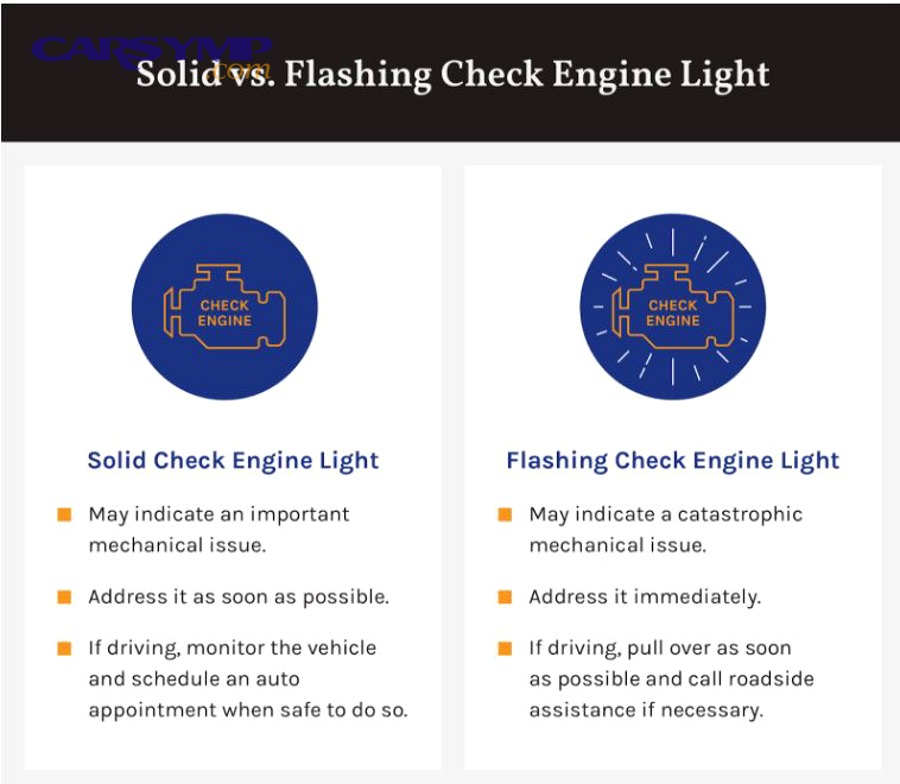
- Whether the light is steady or flashing.
- When it happens: cold start, idle, highway cruise, acceleration, after refueling, in rain, after battery disconnect.
- Any symptoms: rough idle, hesitation, fuel smell, hard starting, poor mpg, stalling.
In deeper troubleshooting notes, you may see phrases like “check engine light diagnosis” used to describe this evidence-first approach, but the idea is straightforward: save the data before you erase it.
Step 2: Do the “touched area” inspection (the highest-yield check)
Inspect every connector, hose, clamp, and ground that was moved. Specifically:
- Look for partially latched connectors (they often “click” twice—once for alignment, once for lock).
- Check for bent pins, oil intrusion, torn seals, and broken lock tabs.
- Confirm vacuum lines are routed correctly and not split at the ends.
- Verify intake ducts are tight (loose clamps can create unmetered air).
- Inspect harness routing for rub-through or pinch points near brackets and heat shields.
For many comebacks, this is the fix: reseat a connector, correct a hose, or repair a pinched wire. However, if everything looks perfect, you move to data-based confirmation rather than repeating the same visual checks.
How do you interpret codes after repairs without getting misled?
You interpret post-repair codes by ranking them: prioritize the first-returning, most specific code, then confirm whether supporting codes are causes or consequences. Next, you’ll use freeze-frame and fuel trim behavior to validate whether the engine is actually running lean/rich/misfiring—or just reporting a sensor disagreement.
To keep the flow, the “móc xích” here is translating the code into a testable hypothesis, then checking the simplest proof first (air leaks, connectors, power/ground, obvious exhaust leaks).

Start with “first to return” and “most specific”
If you clear nothing and the light comes back quickly, the first code to reappear is often the most valuable. A generic catalyst code after an exhaust repair might actually be triggered by a small upstream leak or an O2 sensor connector issue—so you verify upstream conditions before condemning the converter.
If multiple codes appear at once, treat them as a story: one primary fault can trigger secondary codes. For example, a major intake leak can cause lean codes and random misfire codes; a low system voltage event can trigger multiple module complaints.
Use freeze-frame to match the fault to a driving condition
Freeze-frame is your “time machine.” If the fault happened at warm idle, you inspect vacuum leaks and idle air control behavior. If it happened at highway cruise, you think about EVAP purge flow, exhaust leaks, and O2 sensor switching stability.
Some troubleshooting guides summarize decision-making using wording such as “OBD2 codes list and what they mean,” but you’ll get better results by focusing on your specific code’s conditions rather than reading every possible code description.
Fuel trims: the fastest reality check for air/fuel problems
Short-term fuel trim (STFT) and long-term fuel trim (LTFT) are powerful after repairs. A big positive trim suggests the engine is adding fuel (often unmetered air, low fuel pressure, exhaust leak ahead of O2). A big negative trim suggests it’s pulling fuel (leaking injector, excessive fuel pressure, saturated charcoal canister, incorrect MAF readings).
If trims look normal but a sensor code persists, that points you toward wiring, sensor heater circuits, reference voltage issues, or a sensor signal that’s out of expected range despite normal combustion.
How do you verify the repair worked using readiness monitors and a drive cycle?
You verify a repair by confirming the relevant readiness monitors run and pass, and by ensuring no pending codes return under the same conditions that originally triggered the light. Next, you’ll use a structured drive routine (varied speeds, steady cruise, idle) to help the ECU complete self-tests.
To bridge to action, the “móc xích” is this: a repair isn’t truly confirmed until the system can test itself and decide it’s healthy.
Readiness monitors explained in plain language
Readiness monitors are the car’s self-checks (catalyst efficiency, O2 sensor behavior, EVAP leaks, EGR flow on some engines, secondary air on some engines). After codes are cleared—or after a battery disconnect—many monitors reset to “not ready.” That doesn’t mean the car is broken; it means the car hasn’t finished testing itself.
So, if your check engine light after repairs troubleshooting keeps ending with “it seems fine,” verify the monitor status: if the monitor related to your repair hasn’t completed, you don’t yet have proof of success.
A practical post-repair drive routine (generic, safe, and repeatable)
Because manufacturers vary, use a conservative approach that often helps monitors run:
- Cold start and idle 2–3 minutes (no accessories if possible).
- City driving with gentle acceleration and deceleration (10–15 minutes).
- Steady highway cruise 55–65 mph for 10–15 minutes.
- Coast down smoothly (no hard braking), then a few minutes of idle.
Check for pending codes after each segment. If a pending code appears consistently under a specific condition, you’ve found your reproduction window—then you test the most likely cause (leak, connector, voltage, heat-related wiring issue) rather than replacing parts blindly.
One helpful video to visualize scanning and monitor checks
What are the most common “after repair” mistakes that trigger a comeback light?
Most comeback lights after a repair come from connector seating issues, vacuum/air leaks, swapped hoses, damaged wiring, or parts that don’t match OEM calibration. Next, you’ll use a focused checklist to verify the highest-failure points without disassembling the whole car.
To keep momentum, the “móc xích” is to inspect what humans touched first—because machines usually fail more slowly than a missed latch or a cracked hose.

Connector and harness errors (the #1 category)
- Half-latched connectors: The plug looks connected but the lock isn’t engaged, causing intermittent signal loss.
- Bent pins: A single pushed pin can break a circuit while appearing “plugged in.”
- Broken lock tabs: Vibration slowly loosens the connector, and the light returns days later.
- Harness pinch/rub: After reassembly, the harness sits against a sharp bracket or hot component.
Check for shiny rub spots, melted loom, or a wire stretched tight. If the light returns only during acceleration or bumps, suspect a harness movement issue.
Air and vacuum leaks introduced during reassembly
Any time intake tubing, throttle bodies, manifolds, PCV hoses, or EVAP hoses are disturbed, a small leak can cause a big fuel-trim shift. Common culprits include split hose ends, mis-seated gaskets, and loose clamps behind the airbox where it’s hard to see.
Some diagnostic notes compare multiple families of faults with wording like “Misfire vs EVAP vs oxygen sensor diagnosis,” but you’ll get further by checking the disturbed air/vacuum path first, because it can mimic all three categories.
Aftermarket parts and calibration mismatch
Some aftermarket sensors and catalytic converters can physically fit but behave differently electrically (heater resistance, response time, voltage range). The ECU expects patterns; if the pattern doesn’t match, the light returns even though the engine “seems okay.”
When that happens, compare the old part number, verify the connector keying, and consider an OEM-equivalent component if the fault is stubborn and all wiring checks pass.
Can you safely drive with the check engine light on after repairs?
It depends: a steady light often means “drive cautiously and diagnose soon,” while a flashing light usually means active misfire that can damage the catalytic converter and should be addressed immediately. Next, you’ll use symptoms plus simple checks to decide whether to stop or proceed.
To guide the next step, the “móc xích” is prioritizing safety: you protect the engine and catalyst first, then you protect your wallet by preventing secondary damage.

Stop driving (or limit driving) if you notice these
- Flashing check engine light (often active misfire).
- Severe shaking, loss of power, or backfiring.
- Strong fuel smell, smoke, or overheating.
- Transmission slipping, harsh shifting right after battery disconnect, or limp mode.
In these cases, continuing to drive can turn a simple comeback into expensive damage. If you must move the car, keep RPM low, avoid heavy throttle, and get it scanned as soon as possible.
You can usually drive gently if all of these are true
- Light is steady, not flashing.
- No major drivability symptoms (no severe shake, no overheating, no stalling).
- Oil pressure and coolant temperature are normal.
- You’re using the drive time to collect data (conditions, pending codes, trims).
However, don’t use “it drives fine” as proof it’s fixed. Many emissions-related faults won’t feel dramatic, but they still matter for fuel economy, reliability, and inspection readiness.
How do you organize comeback troubleshooting so you don’t chase your tail?
The most efficient approach is a structured workflow: confirm the complaint, capture data, inspect touched areas, run a targeted test, then verify with readiness and a repeatable drive condition. Next, you’ll use a simple table to match common comeback scenarios to quick checks.
To maintain flow, the “móc xích” is moving from highest-probability checks to highest-proof checks—so each step either fixes the issue or produces clearer evidence.
This table contains common post-repair check engine light scenarios and the fastest verification checks to perform first. It helps you avoid jumping straight to part replacement when the issue is often a simple reassembly detail.
Use it as a “triage map” before deeper testing.
| Comeback pattern | What it usually suggests | Fastest checks |
|---|---|---|
| Light returns immediately after leaving shop | Connector/installation issue | Reseat connectors, inspect pins, verify grounds, check for unplugged vacuum line |
| Light returns 1–3 days later | Monitor ran and failed, or intermittent wiring | Check pending codes, inspect harness routing, verify clamps and gaskets, review freeze-frame |
| Light returns only at highway speed | Exhaust leak, sensor response, fuel delivery under load | Listen for exhaust tick, inspect upstream seals, monitor fuel trims at cruise |
| Light returns after refueling | EVAP system issue | Check gas cap seal, inspect EVAP hoses near purge valve and canister, look for loose connections |
| Rough idle + light returns | Air leak, misfire, or incorrect assembly | Inspect intake boots/PCV hoses, check coil connectors, watch misfire counters if available |
Use “one-change testing” to avoid confusion
Change only one thing at a time, then re-check. If you reseat three connectors, replace a hose, and clear codes all at once, you won’t know what actually fixed it—or what created the next issue.
Instead, reseat the most suspicious connector, run the same short drive condition, and re-scan for pending codes. This controlled method reduces wasted parts and prevents “random wins” that don’t teach you anything.
Confirm power and grounds when the codes look unrelated
If you suddenly see multiple unrelated sensor codes after repairs, check battery voltage, charging voltage, and key grounds. A loose ground strap or low voltage event can cause multiple systems to complain at once, especially right after major work.
Contextual Border: From here, we move beyond the “usual comeback checklist” into advanced verification topics—cases where the light keeps returning despite careful re-checks, and you need deeper system confirmation.
Advanced verification when the light returns repeatedly
When a post-repair check engine light keeps returning, the solution is usually in monitor completion, relearn behavior, software calibration, or parts compatibility—not in repeatedly replacing the same component. Next, you’ll use advanced checks to confirm the system is truly stable over time.
To keep the “móc xích” intact, think of this section as the final proof layer: it helps you distinguish a stubborn root cause from a testing-condition problem.

Drive cycle completion and “false comeback” patterns
Some faults appear only when a monitor finally runs. That means the repair can seem successful for a day, then fail the moment the ECU checks that subsystem under specific conditions (fuel level range for EVAP testing, steady cruise for catalyst efficiency, certain temperature windows for O2 sensor checks).
If the code returns on a predictable schedule—like “always the next morning” or “always after a long highway drive”—log the pattern and replicate it deliberately. Once you can reproduce it, the diagnosis becomes much more precise.
Relearns, battery disconnect side effects, and software updates
After battery work or module resets, the car may relearn idle, throttle, or fuel trims. During relearn, it can run slightly rough or set temporary codes, especially if the engine has borderline issues (small vacuum leak, slightly weak ignition component).
If the light started right after a battery disconnect or module replacement, confirm whether the vehicle needs a relearn procedure or a calibration update. On some models, a shop-level scan tool can run “relearn” functions that a basic code reader cannot.
Aftermarket parts, fitment tolerances, and “works-but-fails-tests”
A part can make the car drive “okay” but still fail an emissions test routine. Common examples include catalytic converters with different oxygen storage characteristics, or sensors with slower response time. If wiring checks out and the code is consistent, compare the installed part brand and spec with OEM-equivalent options.
Also confirm the repair didn’t introduce a tiny exhaust leak upstream of the sensor—small leaks can skew readings enough to trigger efficiency or sensor performance faults.
FAQ: quick answers after repairs
Should I clear the code if the repair is “supposed to be done”? Only after you’ve saved freeze-frame and pending data. Clearing too early removes the evidence you need to confirm the fix.
Why did the light return but the car feels normal? Many emissions faults don’t create obvious symptoms. Use scan data and monitor status to verify the repair rather than relying on feel.
What if the shop says “it needs time to reset”? Sometimes true for readiness monitors, but a stored code means the ECU detected a problem. Ask what monitor needs to run and what conditions are required, then verify with a scan tool.
What’s the fastest way to communicate a comeback to a shop? Provide the code(s), freeze-frame snapshot, when it happens, and what work was performed. The more precise your reproduction conditions, the faster they can validate the issue.
- Include the date/time the light returned and whether it was steady or flashing.
- Note any changes after the repair (idle quality, fuel economy, starting behavior).
- List anything you checked (connectors reseated, hoses inspected) so efforts aren’t duplicated.