


Yes, you can sometimes drive with the check engine light on, but only if the situation is low-risk: the light is steady (not flashing), the car feels normal, and you can keep speeds and loads gentle until you get it checked.
However, the same icon can represent very different problems—from a loose gas cap to a catalyst-damaging misfire—so the “right” decision depends on the light behavior and what the car is doing right now.
To make a confident call, you’ll use a simple triage: flashing vs steady, symptoms vs no symptoms, and “safe-to-limp” vs “stop-and-tow” indicators.
To start, here’s the fast decision logic you can apply in under a minute, then we’ll expand each branch with clear next steps.
Can you drive with the check engine light on right now?
Yes—sometimes—but only if it’s a steady light with no alarming symptoms, because a flashing light or severe drivability issues can signal damage risk, safety risk, or rapid escalation.
To begin, think of your choice as “drive gently to a safe place” versus “stop driving now,” then match your situation to the checklist below.

Here are the three decision anchors that keep you from guessing:
- Light behavior: steady usually means “service soon,” flashing often means “reduce speed and seek service immediately.”
- Drivability: smooth idle, normal power, and stable temperature suggest you may limp; shaking, stalling, or overheating suggest you should stop.
- Risk window: some faults are inconvenient (EVAP leak), others can become expensive quickly (severe misfire overheating the catalytic converter).
Before you read deeper, this table helps you decide what “okay to drive” actually means in practice.
This table summarizes what the light behavior and symptoms typically indicate and what action best matches the risk level.
| What you see | What it often means | Best action |
|---|---|---|
| Steady check engine light, car feels normal | Non-immediate fault or emissions-related issue; service soon | Drive gently, avoid hard acceleration, schedule diagnosis |
| Flashing check engine light | Severe misfire level; can damage emissions components quickly | Reduce speed, minimize driving, seek service ASAP (often tow) |
| Light + rough shaking, loss of power, stalling | Active misfire, fuel/air/ignition control problem, or sensor failure affecting operation | Stop when safe; avoid continued driving to prevent compounding damage |
| Light + overheating, steam, coolant smell | Cooling system or engine protection event | Stop immediately; overheating can cause major engine damage |
| Light + oil pressure warning or loud knocking | Possible lubrication failure or internal damage | Shut off engine; tow |
Theo nghiên cứu của U.S. EPA từ Office of Mobile Sources, vào May 1997, đèn “Check Engine” nhấp nháy cho thấy mức misfire nghiêm trọng và misfire nặng trong thời gian ngắn có thể gây hư hại lớn cho hệ thống kiểm soát khí thải, đặc biệt là catalytic converter.
What “yes, you can drive” really means
It means you’re choosing a controlled, short, low-load drive—no racing merges, no towing, no steep hills—so you reduce heat, stress, and misfire escalation.
Next, you’ll sort steady vs flashing, because that single difference changes the entire risk profile.
Is the light flashing or steady—and what does each mean?
A steady light usually means “service soon,” while a flashing light often indicates a severe misfire condition where you should reduce speed and seek service as soon as possible.
To make this actionable, match your light behavior to the risk category, then use the symptom list in the next section to confirm.

Here’s the practical interpretation you can trust:
- Steady MIL (Malfunction Indicator Lamp): the system detected a fault, stored a
Diagnostic Trouble Code (DTC) , and wants service—not necessarily a roadside stop. - Flashing MIL: indicates a severe level of engine misfire; you should reduce speed and seek service as soon as possible because damage can occur quickly.
Theo nghiên cứu của U.S. EPA từ Office of Mobile Sources, vào May 1997, hệ thống OBD lưu DTC trong bộ nhớ và bật đèn để báo cần dịch vụ; riêng trường hợp đèn nhấp nháy là tín hiệu misfire nặng và nên giảm tốc để đi kiểm tra ngay.
Why the system uses “flash” as a stronger warning
A flashing pattern is a “priority flag” because severe misfire can push raw fuel into the exhaust stream, overheating emissions components and escalating repair costs.
Next, you’ll confirm urgency by checking for specific “stop driving” symptoms.
What symptoms mean you should stop driving immediately?
No—you should not keep driving if the light is flashing or you have overheating, severe shaking, loud mechanical noise, or sudden power loss, because these signs suggest immediate safety or damage risk.
To clarify, use the symptom groups below like a medical triage: the moment you match one, your best move is to stop safely and reassess.

Group A: Heat and fluids (highest engine-risk)
If the temperature gauge climbs rapidly, you see steam, or you smell coolant, stop driving—overheating can damage head gaskets and warp components long before a check engine code tells the full story.
Next, if heat isn’t the issue, move to drivability because misfires can be destructive even without overheating.
Group B: Misfire and drivability (highest emissions-risk)
If the engine shakes, stumbles, or the car feels like it’s “buckling,” treat it as an active misfire and minimize driving; a severe misfire can damage emissions components over a short period.
To continue, confirm whether the light is flashing—flashing plus shaking is a strong “tow” pattern for many vehicles.
Group C: Mechanical warning signs (highest safety-risk)
Loud knocking, metal-on-metal sounds, or an oil pressure warning means you should shut the engine off; these conditions can turn a repair into an engine replacement.
Next, if none of these symptoms appear, you may be in the “cautious driving” category—so let’s cover the common low-risk causes.
Theo nghiên cứu của U.S. EPA từ Office of Mobile Sources, vào May 1997, misfire nghiêm trọng trong thời gian ngắn có thể gây hư hại nghiêm trọng cho hệ thống kiểm soát khí thải, đặc biệt là catalytic converter.
What are the most common low-risk causes where you can drive cautiously?
Yes—often you can drive cautiously when the light is steady and the car feels normal, because many steady-light triggers are emissions or sensor issues that don’t create an immediate drivability emergency.
To stay safe, you’ll still treat it as “service soon,” because “low-risk” does not mean “ignore for months.”

Loose gas cap or EVAP leak (common and often non-urgent)
A loose gas cap can trigger an EVAP leak detection; after tightening, the light may turn off within a few days of normal driving once the system rechecks and passes.
Next, even if the cap is fine, other EVAP leaks can behave similarly—so you’ll want to scan the code instead of guessing.
Oxygen sensor or fuel trim-related codes (often drivable, still important)
Some oxygen sensor issues won’t strand you immediately, but they can reduce fuel economy and, in some cases, stress the catalyst over time—so treat them as “soon,” not “someday.”

Intermittent electrical or wiring faults (can be mild or messy)
Electrical issues can create intermittent sensor readings that trigger the light; the car may still drive fine, but diagnosis can take longer if the fault isn’t present during testing.
Next, because “drivable” problems can become expensive if you push too long, let’s define how to minimize risk when you must keep moving.

Theo nghiên cứu của U.S. EPA từ Office of Mobile Sources, vào May 1997, OBD có thể phát hiện vấn đề trước khi người lái cảm nhận được giảm hiệu năng, nhằm thúc đẩy sửa chữa kịp thời trước khi khí thải tăng đáng kể.
How far can you drive, and how do you minimize risk if you must?
You can sometimes drive a short distance with a steady light and no symptoms, but you should minimize distance and load because uncertainty is the real risk—driving hard can turn a small fault into a costly cascade.
To keep the situation stable, follow a “limp strategy” that reduces heat, misfire likelihood, and stress on emissions components.
Use the “limp strategy” in five rules
- Keep RPM and load low: gentle acceleration, early upshifts, avoid passing maneuvers.
- Avoid hills, towing, and heavy payloads: these spike exhaust temperatures and cylinder load.
- Watch temperature and behavior: if shaking starts or temp rises, stop and reassess.
- Turn off nonessential loads: A/C at max, heavy electrical loads, and aggressive driving add stress.
- Plan a safe endpoint: home, a shop, or a safe parking area—not “keep driving until it gets worse.”
When the “limp strategy” is NOT enough
If the light is flashing, your car is misfiring severely enough that you should reduce speed and seek service as soon as possible.
Next, let’s do the quick checks you can safely do in the next 30 minutes to reduce uncertainty.
Theo nghiên cứu của U.S. EPA từ Office of Mobile Sources, vào May 1997, mục tiêu của OBD là cảnh báo sớm để xe được sửa trước khi khí thải tăng đáng kể, vì vậy “lái tạm” chỉ nên là cầu nối đến chẩn đoán, không phải giải pháp lâu dài.
What should you do in the next 30 minutes before driving more?
Do a quick, safe inspection—gas cap, visible hoses, fluid levels, and obvious misfire clues—because a few minutes of checking can prevent hours of risky driving.
To keep it safe, do only checks that don’t require reaching near hot exhaust parts or moving belts.
Step 1: Confirm the basics (fast wins)
- Gas cap: tighten until it clicks; if the cap seal is cracked, note it.
- Dashboard context: check for other warning lights (oil pressure, temperature, brake warnings) that change your priority.
- Idle behavior: listen for a steady idle; if it hunts or shakes, treat it as a higher-risk condition.
Next, if basics don’t clarify it, the most useful step is reading the stored code—so you stop guessing.
Step 2: Look for obvious intake or vacuum issues
A loose intake tube, split vacuum line, or disconnected sensor connector can trigger faults; if you find a clearly disconnected part, reseat it gently.
Next, if nothing is obvious, don’t keep “poking”—move to code reading for a cleaner decision path.
Step 3: Decide whether to scan now or drive to a shop
If you can access a scanner, you can start a basic check engine light diagnosis at home to understand severity before you commit to miles of driving.
To continue, we’ll cover how to scan codes responsibly—without turning one code into an expensive parts cannon.
Theo nghiên cứu của U.S. EPA từ Office of Mobile Sources, vào May 1997, DTC giúp kỹ thuật viên truy xuất lỗi nhanh hơn và chính xác hơn, vì vậy đọc mã lỗi là bước “đòn bẩy” giúp giảm phỏng đoán.
How can you read OBD-II codes at home without guessing?
You can read codes using an OBD-II reader and treat the result as a direction, not a verdict, because a code identifies a system and condition—not automatically the failed part.
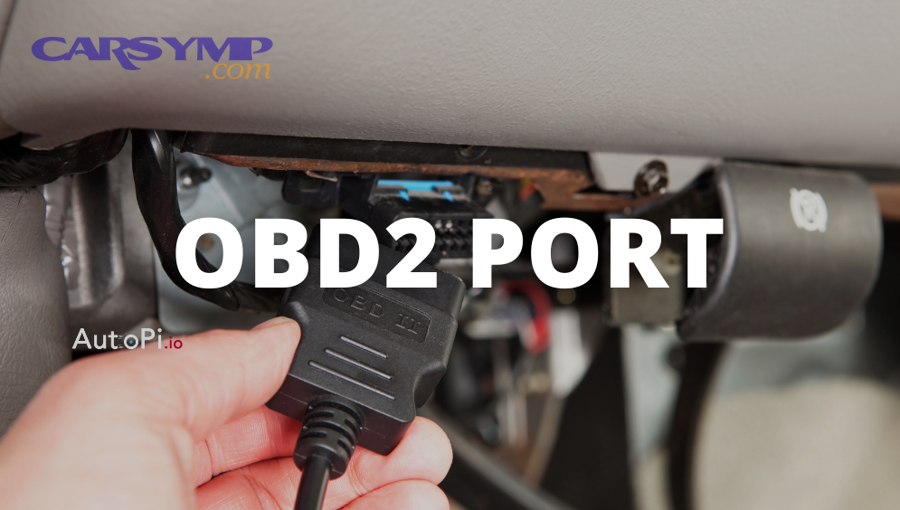
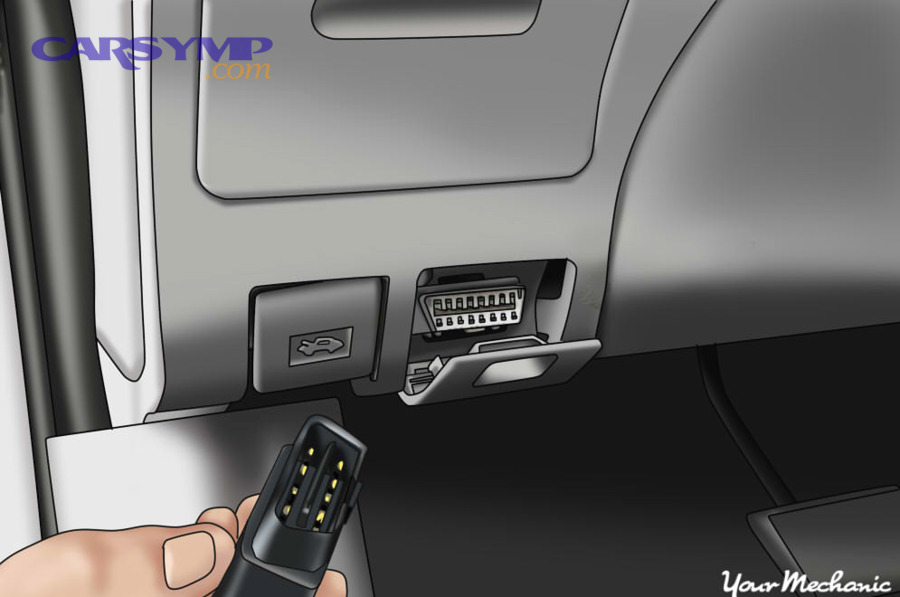
To begin, you’ll connect to the diagnostic port, read stored and pending codes, and capture freeze-frame data if available.

Where the port is and what you’re actually reading
The
The safe workflow (capture first, clear later)
- Record: write down codes, whether they are “pending” or “confirmed,” and any freeze-frame snapshot.
- Interpret category: misfire (P0300–P030x), EVAP (P0440–P045x), oxygen sensor/fuel trim (P013x/P017x), catalyst efficiency (P0420/P0430).
- Do not clear immediately: clearing erases clues and can reset readiness monitors, complicating emissions testing and troubleshooting.
Next, if you’re unsure, a short video demonstration can reduce connection mistakes and help you capture the right data the first time.
Common misread that leads to wasted money
People see “oxygen sensor” codes and replace sensors, but the true cause can be exhaust leaks, wiring faults, or mixture problems; use the code as a map, then verify with symptoms and simple checks.
To connect this to your keywords: “How to use an OBD2 scanner at home” is mainly about capturing codes and context correctly—then choosing the next diagnostic step, not instantly buying parts.
Theo nghiên cứu của U.S. EPA từ Office of Mobile Sources, vào May 1997, khi OBD xác định có vấn đề, nó lưu DTC và bật đèn để người lái biết cần dịch vụ; công cụ chẩn đoán giúp kỹ thuật viên truy xuất mã lỗi nhanh và chính xác hơn.
What does a shop do next, and what should diagnosis cost look like?
A professional shop verifies the complaint, scans for codes and data, inspects the likely systems, and tests before replacing parts, because many check-engine issues share symptoms but differ in root cause.
To set expectations, you’ll look at the normal workflow and the typical cost structure so you can avoid both under-service and over-selling.
The typical workflow (what “good process” looks like)
- Interview + symptom replication: when did it start, any fuel fill-up, weather, repairs, rough running.
- Scan + freeze-frame review: confirm DTCs, load, temperature, fuel trims when the fault set.
- Targeted tests: smoke test for EVAP, ignition checks for misfire, intake leak checks, sensor circuit checks.
- Confirm fix: road test, monitor data, ensure fault does not return.
Next, understand that the “Diagnosis cost and shop process” is usually cheaper than random part replacements, because it prevents unnecessary components from being installed.
What “typical cost” means in the real world
Costs vary by region and vehicle, but catalytic converter replacement is commonly far more expensive than upstream fixes—so early diagnosis often protects your wallet.
To keep this practical: ask what tests will be performed, what evidence supports the recommendation, and whether the shop will document data (codes, freeze-frame, test results) for you.
Theo nghiên cứu của U.S. EPA từ Office of Mobile Sources, vào May 1997, OBD được thiết kế để giúp chẩn đoán sớm và sửa chữa kịp thời nhằm tránh sửa chữa đắt đỏ hơn về sau—đặc biệt với catalytic converter vốn thường là hạng mục tốn kém.
Can driving with the check engine light on damage the catalytic converter or engine?
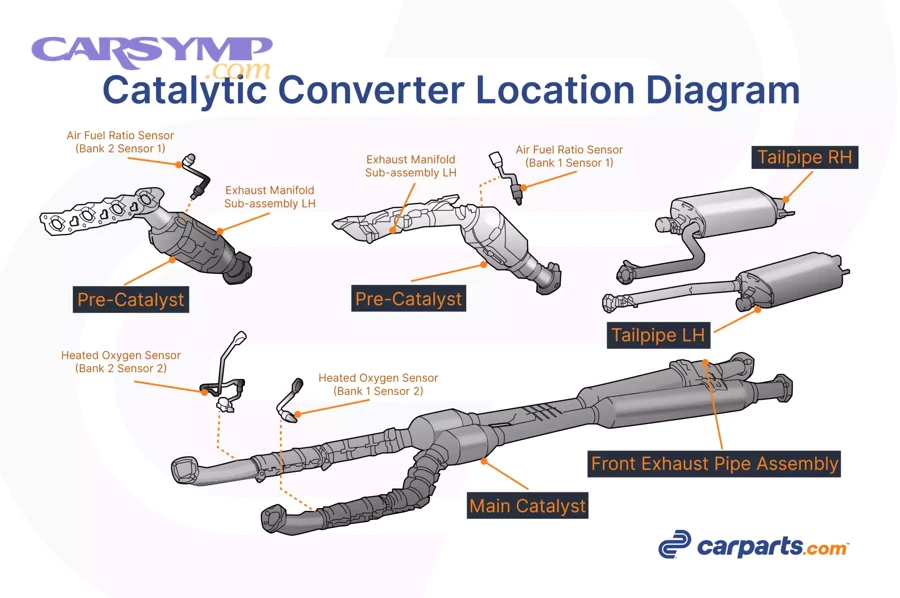
Yes—it can—because the underlying fault may increase exhaust heat, send unburned fuel downstream, or create a lean/rich condition that stresses emissions and engine components over time.
To understand the mechanism, you’ll separate “slow harm” from “fast harm,” then match your symptoms and light behavior to the risk type.
Fast harm: severe misfire + flashing light
When the light flashes, it indicates a severe misfire level; severe misfire over a short period can seriously damage emission control components, especially the catalytic converter.
Next, this is why “just drive it for a week” is a risky plan if you feel shaking, smell fuel, or see flashing behavior.
Slow harm: prolonged mixture/sensor issues
Some faults mainly raise emissions or reduce fuel economy, but months of rich running, oil burning, or persistent fuel trim issues can shorten catalyst life and create secondary failures.
Next, because the catalyst is expensive, you want to catch misfire and mixture faults early rather than “waiting for it to get worse.”
Why OBD systems watch misfire and emissions so closely
Regulatory requirements for OBD-II systems include monitoring misfires that can cause catalyst damage and misfires that cause excess emissions—meaning the system is intentionally built to flag these risks.
To continue, we’ll cover a common frustration: the light stays on even after you “fixed something.”
Theo nghiên cứu của U.S. EPA từ Office of Mobile Sources, vào May 1997, misfire có thể nhanh chóng làm suy giảm hiệu năng catalytic converter; OBD cảnh báo sớm để bạn xử lý khi chi phí còn thấp (ví dụ sửa bugi) thay vì đến mức phải thay catalytic converter.
Why is the check engine light still on after a repair?
It can stay on because the original condition isn’t fully resolved, a related issue exists, or the computer needs multiple “drive cycles” to confirm the fix and turn the light off.
To troubleshoot effectively, you’ll separate “light didn’t clear yet” from “fault returned,” then decide whether to rescan or revisit the repair step.
Drive cycles and automatic light-off (the non-obvious rule)
Even after conditions improve, the system may require repeated successful checks before turning the light off; EPA notes the light can turn off automatically after the system evaluates the component and no longer detects the problem across multiple checks.
Next, if the light remains on beyond a reasonable period or drivability changes, rescan to see what code is present now.
Common reasons a repair “didn’t stick”
- Incorrect root cause: a part was replaced, but the underlying condition remained (vacuum leak, wiring fault, exhaust leak).
- New fault introduced: a connector left loose, hose misrouted, gasket pinched.
- Multiple related faults: one fix reveals another, especially on older vehicles.
Next, if you’re in this situation, the phrase “Check engine light after repairs troubleshooting” should mean: rescan, compare old vs new codes, and verify the repair step-by-step before buying more parts.
Quick FAQ inside the repair-follow-up flow
Q: Should I clear the code after repairs? A: Only after you’ve recorded the codes; clearing too early can erase valuable evidence and reset readiness.
Q: The light turned off by itself—am I safe? A: It may mean the condition is no longer present, but you should still scan for “pending” codes and watch for recurrence.
Q: Can I fail emissions testing if I clear codes? A: Many regions require readiness monitors to be set; clearing can reset them, delaying testing.
Theo nghiên cứu của U.S. EPA từ Office of Mobile Sources, vào May 1997, có trường hợp đèn tự tắt sau khi hệ thống kiểm tra liên tiếp và không còn phát hiện lỗi; ví dụ nắp xăng siết chặt lại có thể làm đèn tắt sau vài ngày.
Contextual Border: The sections above answered the core “drive or not” decision using macro-level risk signals. Next, we’ll switch to micro-level insights that improve accuracy, reduce repeat lights, and help you communicate with a shop.
Micro-insights that prevent repeat check engine light events
Use these micro-level habits to reduce repeat warnings, avoid wrong parts, and shorten diagnosis time, because consistency and evidence beat guesswork when the same icon can represent many faults.
To apply them, treat each light event like a small case file: capture, categorize, confirm, then close the loop.
False alarm vs real fault (antonym lens that saves time)
A “false alarm” is usually an intermittent condition that self-resolves; a “real fault” repeats under similar conditions—so write down when it happened (fuel fill-up, rain, highway cruise) and look for patterns.
Next, if you keep a simple log, you’ll help a technician reproduce the condition faster and avoid a “no fault found” cycle.
Why a code is a clue, not a conviction
A DTC points to where the computer saw a problem, not always the part that failed; for example, mixture issues can trigger oxygen sensor-related codes even when the sensor is responding correctly to bad exhaust content.
Next, use the code to decide which test comes first (smoke test, ignition test, circuit test) rather than which part to buy first.
Readiness and emissions timing (a hidden consequence of clearing)
If you clear codes, you may reset readiness monitors; that can delay emissions testing and can hide intermittent faults until they reoccur—so record first, then clear only with a plan.
Next, if a shop cleared your codes, ask whether monitors were re-checked and whether a post-repair drive verification was performed.
The “one-page case file” you should keep
- Codes: confirmed + pending, with date and mileage
- Freeze-frame: load, rpm, coolant temp, fuel trims (if available)
- Symptoms: none / rough idle / hesitation / smell / overheating
- Action taken: tightened cap, replaced part, repaired hose, etc.
- Outcome: light off / on / returned after X miles
Next, when you bring this to a shop, you transform “mystery light” into an evidence-based workflow—and that’s the fastest path to a correct fix.
Theo nghiên cứu của U.S. EPA từ Office of Mobile Sources, vào May 1997, OBD được thiết kế để giúp kỹ thuật viên truy xuất mã lỗi và sửa đúng hơn ngay lần đầu, từ đó tiết kiệm thời gian và tiền cho người tiêu dùng—nhưng điều đó chỉ xảy ra khi bạn giữ lại thông tin thay vì xóa sạch ngay lập tức.