


A clicking noise coming from the front of your vehicle is not random—it is usually an early mechanical warning. In most real-world cases, that sound points to wear inside the CV joint long before the axle fails completely. Diagnosing the issue early helps prevent breakdowns, loss of drive, and costly secondary damage.
Beyond identifying the sound itself, drivers often struggle to understand when CV joint clicking occurs and why it gets worse during specific maneuvers. Conditions such as turning, accelerating, or driving at low speeds place unique stress on the CV axle, making diagnosis possible without special tools.
Another common challenge is confusion. A CV axle click can sound similar to suspension clunks, wheel bearing hums, or even steering-related noises. Without a structured diagnostic approach, many people misidentify the source and delay repairs.
Introduce a new idea: by following a clear diagnostic flow—from sound recognition to physical inspection—you can confidently determine whether a CV joint is the cause and how urgent the repair is.
What Is a CV Joint Clicking Noise?
A CV joint clicking noise is a sharp, rhythmic mechanical sound produced by worn constant velocity joint components as they rotate under load, most noticeably during turns.
To better understand why this noise matters, it helps to look at how the CV joint functions and what changes when wear begins.
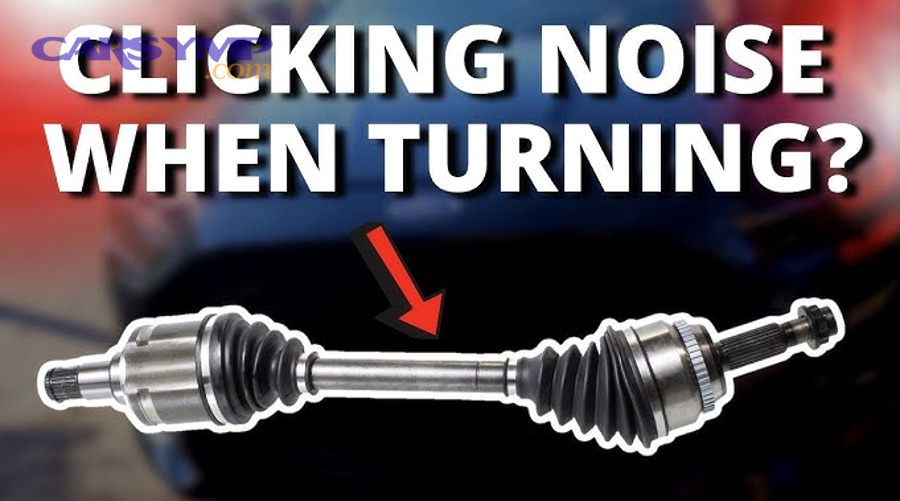
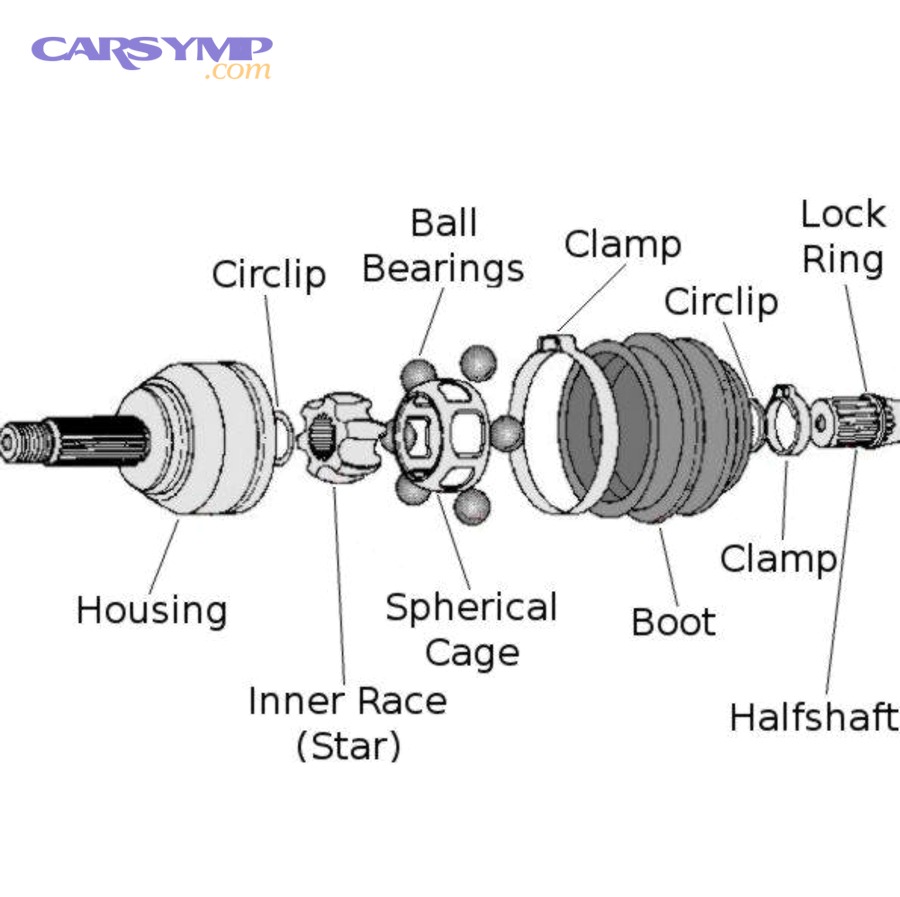
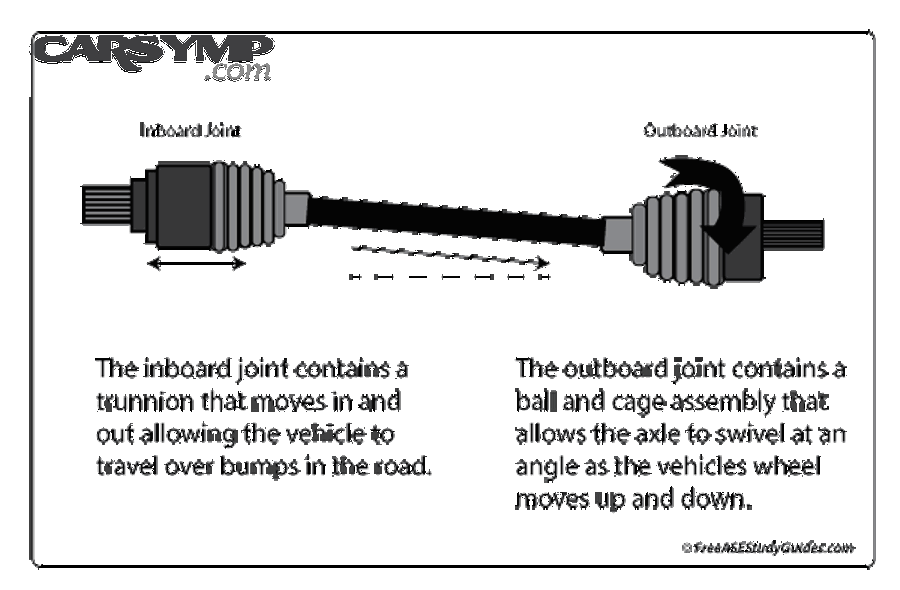
CV joints transfer engine power from the transmission to the wheels while allowing suspension movement and steering articulation. Inside the joint, hardened steel bearings ride in precision grooves. When these grooves wear or lose lubrication, the bearings no longer move smoothly. Instead, they snap between worn paths, creating a clicking or popping sound.
This noise is not constant. It typically appears:
- At low speeds
- During sharp turns
- Under acceleration
The sound is essentially the joint “skipping” under stress, which is why it serves as an early diagnostic signal rather than a random annoyance.
Is a Clicking Noise a Sign of a Bad CV Joint?
Yes, a clicking noise is a strong indicator of a bad CV joint because it reflects internal bearing wear, loss of lubrication, and increased joint play.
To understand why this noise is so specific, it is important to look at when and how it occurs.
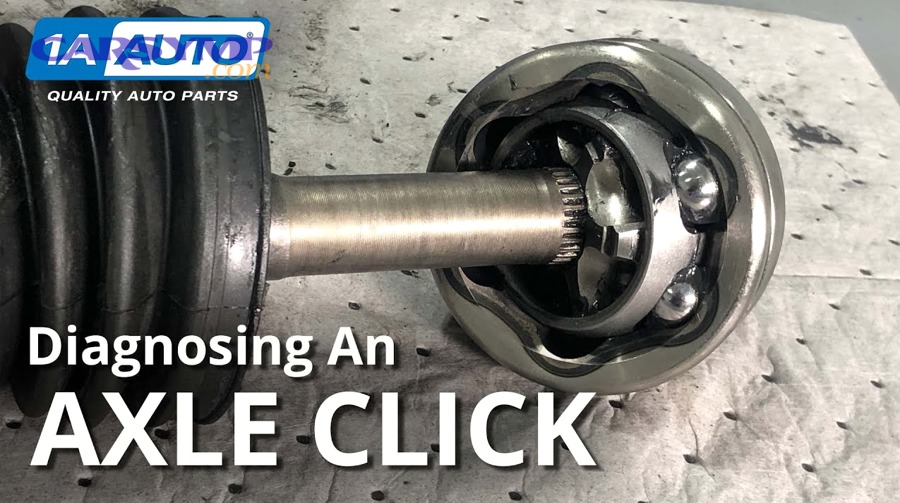
First, CV joints operate under varying angles. During straight driving, stress is minimal. During turns, especially sharp ones, the joint operates near its design limit. A worn joint cannot maintain smooth rotation at these angles, producing audible clicking.
Second, CV joints are sealed systems. Once grease escapes or contaminants enter, wear accelerates rapidly. The clicking noise signals that this internal damage is already underway.
Third, other components rarely click in such a consistent, turn-dependent pattern. This predictability makes CV joint clicking one of the most reliable drivetrain symptoms.
Does CV Joint Clicking Usually Happen While Turning?
Yes, CV joint clicking usually happens while turning because steering angles place maximum stress on the outer CV joint.
To better understand this, consider how force distribution changes during a turn.
When you turn the steering wheel, the outer CV joint bends sharply while transmitting engine torque. If the joint’s bearing tracks are worn, the bearings jump between grooves instead of gliding smoothly. This produces the classic clicking noise when turning, especially during tight left or right turns.
The sound is often louder:
- During parking maneuvers
- When accelerating through a turn
- When the steering wheel is near full lock
This behavior helps distinguish CV joint problems from other front-end issues.
Can a CV Joint Click Before the Axle Fails?
Yes, a CV joint can click for thousands of miles before complete axle failure occurs.
This early-warning phase is critical for preventive maintenance.
At first, wear is limited to surface pitting inside the joint. Clicking may only occur occasionally. As grease escapes and debris enters, wear accelerates. Eventually, the joint may bind, vibrate, or break, resulting in loss of drive.
Diagnosing clicking early allows replacement of the axle assembly before:
- Roadside breakdowns
- Damage to the transmission
- Safety risks during driving
How Do You Diagnose CV Joint Clicking Noise Step by Step?
Diagnosing CV joint clicking noise involves a simple driving test, followed by a visual inspection, to confirm joint wear and rule out other causes.
Let’s explore this process in a structured way.
How Do You Test for CV Joint Clicking While Driving?
The most effective driving test involves slow-speed turns under light acceleration.
Specifically, follow these steps:
- Drive in an empty parking lot
- Turn the steering wheel fully left or right
- Apply gentle acceleration
- Listen for rhythmic clicking or popping
If the noise appears consistently during turns but fades when driving straight, the outer CV joint is the primary suspect. This test also helps confirm complaints like a clicking noise when turning reported by many drivers.
How Do You Visually Inspect a CV Joint for Damage?
A visual inspection focuses on the CV boot, which protects the joint from contamination.
To perform an Axle boot tear inspection checklist, look for:
- Cracked or split rubber boots
- Grease splattered on suspension parts
- Excessive joint movement when rotated by hand
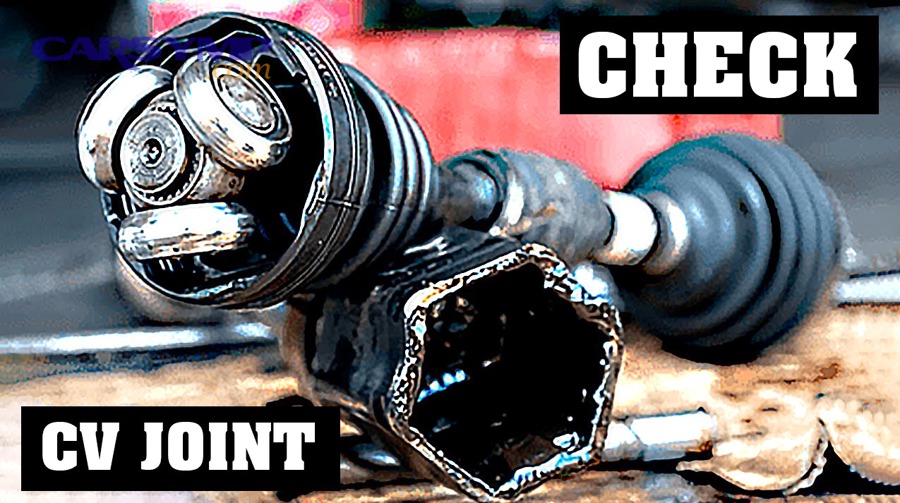
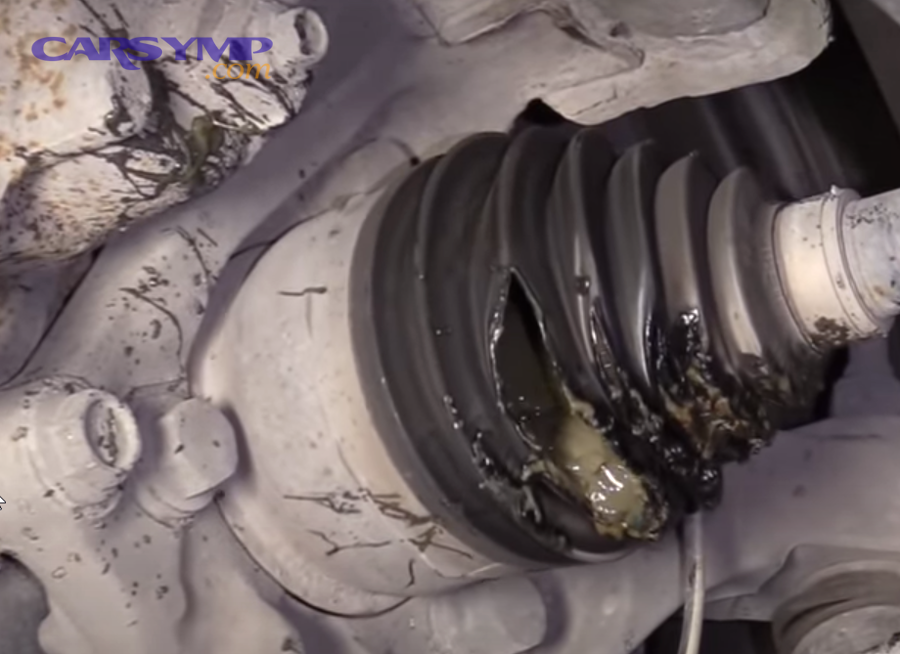
A torn boot almost always precedes CV joint failure. Even if clicking is mild, boot damage confirms that internal wear is progressing.
What Are the Common Causes of CV Joint Clicking?
There are three main causes of CV joint clicking: lubrication loss, bearing wear, and contamination, all of which affect joint movement under load.
Understanding these causes helps prioritize repairs.
What Types of CV Joint Wear Cause Clicking Sounds?
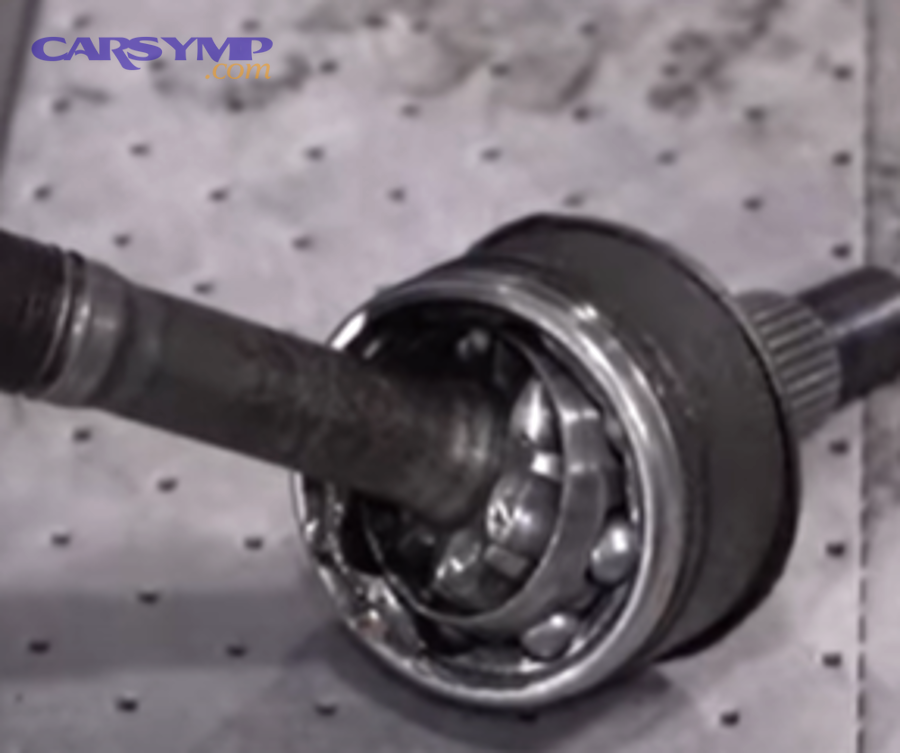
The most common wear patterns include:
- Groove pitting inside the joint housing
- Flattened bearing surfaces
- Heat-related metal fatigue
These wear patterns develop gradually and worsen when lubrication is compromised. The result is the familiar CV axle click during steering maneuvers.
Can a Damaged CV Boot Cause Clicking Noise?
Yes, a damaged CV boot directly causes clicking noise by allowing grease to escape and dirt to enter the joint.
Once contamination begins, internal wear accelerates rapidly.
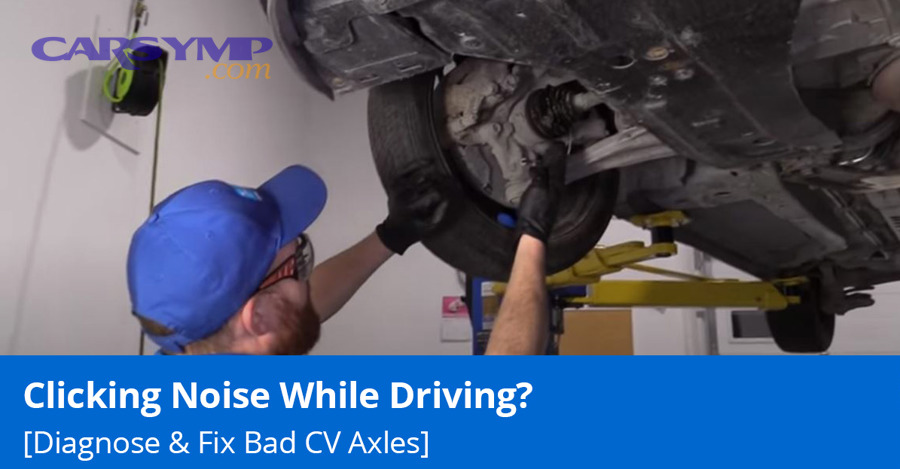
In many cases, drivers first notice grease on the inside of the wheel well before hearing noise. Ignoring boot damage almost guarantees future clicking and eventual axle failure.
How Is CV Joint Clicking Different From Other Front-End Noises?
CV joint clicking is distinct because it is rhythmic, turn-dependent, and torque-sensitive, unlike most other front-end noises.
Comparing these sounds helps avoid misdiagnosis.
Is CV Joint Clicking the Same as Wheel Bearing Noise?
No, CV joint clicking differs from wheel bearing noise in both sound pattern and driving conditions.
In a Wheel bearing vs CV joint noise comparison:
- CV joints click during turns
- Wheel bearings hum or growl during straight driving
- CV noise changes with acceleration
- Bearing noise changes with vehicle speed
This distinction is crucial for accurate diagnosis.
How Is CV Joint Clicking Different From Suspension Clunks?
Suspension clunks occur over bumps and uneven surfaces, not during smooth turning.
They are often caused by worn ball joints or bushings rather than rotating drivetrain parts.
Additionally, drivers sometimes mistake steering-related noises—such as Low power steering fluid noise confusion—for CV joint issues. Power steering noise typically whines during steering input, not clicks rhythmically.
What Else Should You Know About CV Joint Clicking Noises?
Beyond diagnosis, understanding edge cases and driving risks helps determine the right repair timeline.
What Is the Difference Between Inner and Outer CV Joint Clicking?
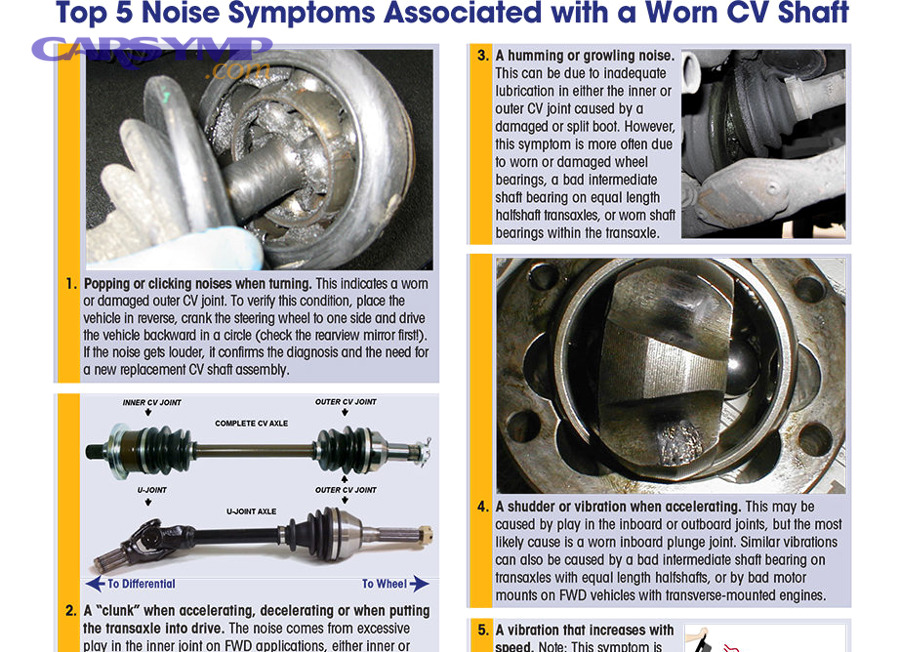
Outer CV joints click during turns, while inner CV joints often cause vibration or shudder during straight-line acceleration.
Inner joint issues are less audible but still serious.
Can CV Joint Clicking Come and Go With Temperature Changes?
Yes, clicking may worsen in cold weather as grease thickens.
However, temperature-related silence does not mean the problem is resolved—it simply masks wear temporarily.
Is It Safe to Drive With a Clicking CV Joint?
Short-term driving may be possible, but continued use increases the risk of axle failure.
Loss of drive can occur suddenly, especially during acceleration or cornering.
When Should CV Joint Clicking Be Diagnosed by a Professional?
Professional diagnosis is recommended when:
- Clicking becomes louder or constant
- Vibration accompanies noise
- Grease leakage is visible
According to a study by the Society of Automotive Engineers (SAE) Drivetrain Systems Division in 2019, early CV joint replacement reduced secondary drivetrain damage by over 60% in monitored vehicles.
In short, diagnosing CV joint clicking early protects your axle, improves safety, and prevents expensive repairs. A systematic approach—listening, testing, and inspecting—turns a confusing noise into a clear mechanical answer.