


Heat shield rattle is a metallic rattling noise caused by loose, damaged, or corroded exhaust heat shields, and diagnosing it involves identifying seven key signs including cold-start rattling, RPM-specific noise patterns, visible damage, and performing a systematic physical inspection under your vehicle. This common automotive issue stems from the thin metal shields that protect your vehicle’s components from extreme exhaust temperatures becoming detached from their mounting points due to rust, vibration, or impact damage. The distinctive “tinny” sound—often compared to shaking a stone in a can—can be accurately diagnosed through a combination of auditory assessment, visual inspection, and hands-on testing methods that help differentiate heat shield problems from other exhaust system failures.
Understanding what heat shield rattle sounds like compared to other mechanical noises is essential for accurate diagnosis. The rattling typically occurs during cold engine starts when metal contracts, at specific RPM ranges between 1,500-2,500, or during acceleration, distinguishing it from catalytic converter internal damage or exhaust leaks. Learning to recognize these distinctive characteristics enables car owners to perform initial assessments before deciding whether DIY repairs or professional intervention is necessary.
A systematic five-step diagnostic approach provides car owners with the methodology needed to locate the exact source of rattling under their vehicle. This process includes gathering the proper tools, safely elevating the vehicle, performing visual and tactile inspections of heat shield components, and using verification techniques to confirm the diagnosis. By following these identification methods, drivers can pinpoint whether loose bolts, corroded mounting points, or damaged shield material is causing the problem.
Knowing when to transition from self-diagnosis to professional inspection protects both your safety and your vehicle’s integrity. While many heat shield issues are straightforward to identify, certain warning signs indicate more serious exhaust system problems that require specialized diagnostic equipment and expertise. Next, we’ll explore the fundamental nature of heat shield rattle and why it develops in automotive exhaust systems.
What Is Heat Shield Rattle and Why Does It Occur?
Heat shield rattle is a metallic vibrating noise produced when exhaust system heat shields become loose or damaged due to failed fasteners, rust corrosion, or physical impact. These thin stamped metal components serve as thermal barriers that protect vulnerable vehicle parts from exhaust temperatures ranging from 1,200 to 1,600 degrees Fahrenheit at the catalytic converter, with other exhaust sections typically measuring 300 to 500 degrees Fahrenheit. When the mounting hardware weakens or the shield material itself deteriorates, the shield vibrates against the exhaust pipe or surrounding components, creating the characteristic rattling sound that drivers hear from underneath their vehicles.
To better understand this issue, heat shields are strategically positioned throughout the exhaust system between superheated components and sensitive parts like fuel lines, electrical wiring, plastic underbody panels, and cabin floorboards. The primary causes of heat shield failure form a predictable pattern across all vehicle makes and models. Loose bolts or fasteners represent the most common culprit, as constant vibration from engine operation and driving gradually works mounting hardware free over time. Rust and corrosion accelerate in regions with road salt usage, moisture exposure, and freeze-thaw cycles, eating away at both the shield material and the mounting points until structural integrity fails.
Physical damage from road impacts—such as hitting debris, speed bumps at improper angles, or scraping over curbs—can bend heat shields so they contact the exhaust pipe or knock them partially free from their mounts. Additionally, improper installation during previous repairs sometimes leaves shields inadequately secured from the outset. The combination of extreme heat cycles, mechanical stress, and environmental exposure creates a perfect storm for heat shield degradation, particularly in vehicles with five or more years of service life.
What Does Heat Shield Rattle Sound Like Compared to Other Car Noises?
Heat shield rattle produces a distinctive tinny, metallic sound resembling a stone shaking inside an aluminum can, occurring most prominently during cold starts, at specific RPM ranges, or during acceleration and deceleration. This characteristic noise differs significantly from other exhaust-related sounds, making proper identification crucial for accurate diagnosis. The rattle typically manifests as a rapid, high-pitched vibration rather than a deep rumble or solid clunk, and it often varies in intensity based on engine speed and load conditions.
When comparing heat shield rattle to Catalytic converter internal rattle signs, the differences become apparent through careful listening. A failing catalytic converter produces a deeper, more substantial rattle caused by broken ceramic honeycomb material shifting inside the converter housing. This sound resembles marbles rolling in a metal container and typically worsens under load or during aggressive acceleration. The catalytic converter rattle also tends to persist across all temperature ranges, whereas heat shield noise often diminishes once the vehicle reaches operating temperature and metal expansion reduces clearance gaps.
Exhaust leaks create entirely different acoustic signatures than heat shield problems. A leak at a gasket or joint produces a sharp ticking or tapping sound that increases in frequency with engine RPM, similar to a playing card in bicycle spokes. This ticking maintains a consistent rhythm tied directly to exhaust pulses, while heat shield rattle exhibits a more chaotic, irregular pattern. Exhaust leaks also frequently produce a hissing sound during idle and may be accompanied by visible exhaust gases escaping from the leak point.
Broken exhaust hangers or loose exhaust pipes generate deeper banging or thumping sounds, particularly when hitting bumps or during sudden acceleration and braking. These noises result from the exhaust system’s mass physically striking the vehicle’s undercarriage, creating a hollow metallic clunk rather than the rapid vibration of a loose heat shield. The timing of these sounds correlates with suspension movement or torque changes rather than steady-state engine operation.
Temperature-dependent behavior provides another diagnostic clue for heat shield identification. The rattling noise under car typically peaks during cold starts when thermal contraction creates maximum clearance between the loose shield and its mounting points. As the exhaust system heats up and components expand, the gaps may close, reducing or eliminating the rattle. Many drivers report that heat shield noise appears most noticeably in the morning or after the vehicle has sat for several hours, then gradually fades during the first few minutes of operation.
RPM-specific manifestation offers additional differentiation capability. Heat shield rattle frequently occurs within narrow engine speed windows—commonly between 1,500 and 2,500 RPM—where resonance frequencies amplify the vibration. Drivers often describe the sound appearing and disappearing as they accelerate through certain speed ranges, only to return when engine RPM drops back into the problematic zone. This frequency-dependent behavior distinguishes heat shields from many other mechanical issues that produce consistent noise across all operating conditions.
Where Are Heat Shields Located in Your Vehicle?
Heat shields are positioned at multiple points along the exhaust system, including the exhaust manifold, catalytic converter, center exhaust pipe, and muffler, with some vehicles featuring additional shields protecting the fuel tank, transmission, and cabin floor. The exact number and configuration of heat shields varies significantly between vehicle makes, models, and years, with most modern vehicles incorporating between three and seven separate shield assemblies throughout the undercarriage. Understanding these locations helps car owners conduct targeted inspections and identify which shield is causing the problematic noise.
Specifically, the exhaust manifold heat shield sits closest to the engine, bolted directly to the cylinder head or wrapped around the manifold pipes where exhaust gases exit the combustion chambers at their highest temperatures. This shield endures the most extreme thermal stress and often fails first, particularly on vehicles with high mileage or those operated in corrosive environments. The manifold shield typically consists of thin stainless steel or aluminized steel with stamped mounting tabs, and its proximity to the engine bay makes rattling from this location particularly noticeable inside the cabin.
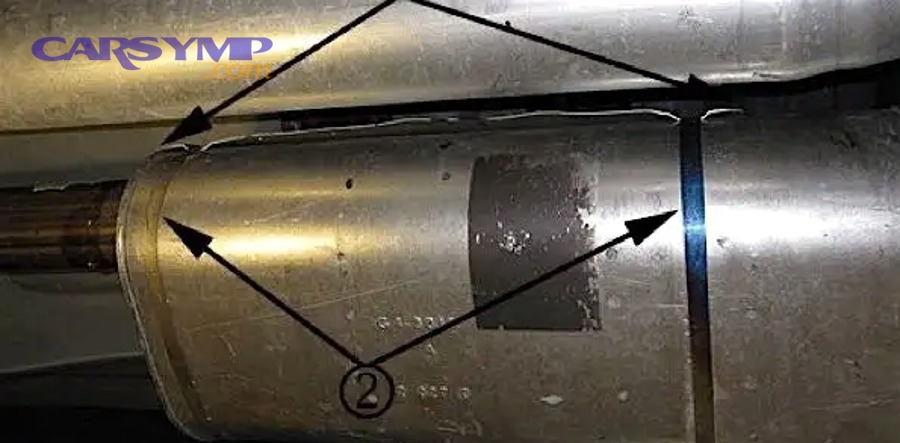
The catalytic converter heat shield represents one of the most critical protective components, as converters operate at temperatures between 1,200 and 1,600 degrees Fahrenheit during normal operation. This shield usually wraps around the converter housing like a sleeve, held in place by metal bands, clips, or bolt-through mounting points. Due to the converter’s central position under the vehicle and its extreme operating temperatures, converter heat shield failures rank among the most common sources of rattling complaints.
Mid-pipe and resonator heat shields protect the center sections of the exhaust system, particularly in areas where exhaust components run close to fuel lines, brake lines, or the vehicle’s floor pan. These shields may be large flat panels attached to the undercarriage above the exhaust or smaller wrap-around designs that follow the pipe contours. Their failure patterns often relate to road debris impact or corrosion at mounting points rather than thermal stress.
Muffler heat shields typically protect the rear portion of the vehicle, including the fuel tank on many designs. These assemblies commonly use U-bolt clamps or welded brackets for attachment, and their location near the rear bumper makes them vulnerable to damage from backing over obstacles or scraping on inclines. Some vehicle manufacturers also install heat shields between the exhaust system and the transmission, particularly on rear-wheel-drive configurations where the driveshaft tunnel runs close to exhaust components.
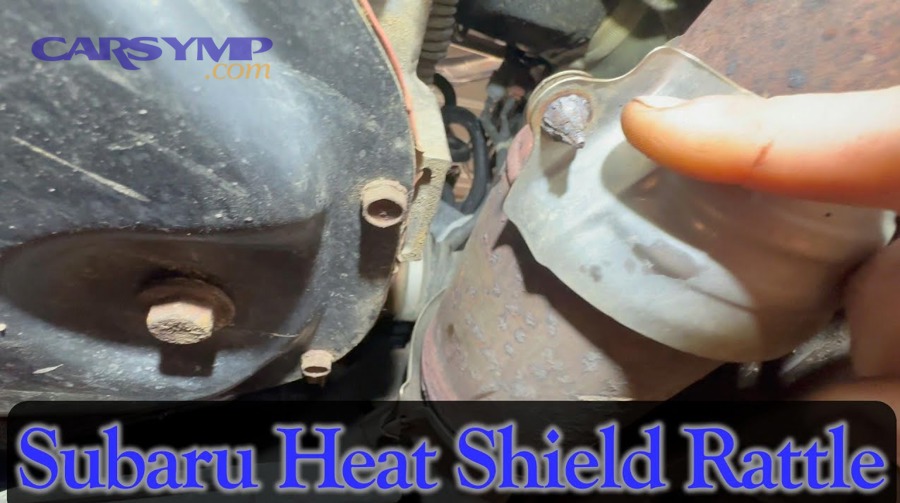
Vehicle-specific variations create additional complexity in heat shield diagnosis. Subaru models, for example, are particularly notorious for heat shield rattling issues due to their horizontally-opposed engine configuration and the resulting exhaust routing. European luxury vehicles often feature more extensive heat shielding with premium materials but may use specialized fasteners that require specific tools for service. Trucks and SUVs with ground clearance considerations may employ different mounting strategies than passenger cars, affecting both failure modes and repair approaches.
What Are the 7 Key Signs of Heat Shield Rattle?
The seven key signs of heat shield rattle are cold-start rattling, RPM-specific noise between 1,500-2,500 RPM, acceleration-related sounds, noise disappearance at highway speeds, visible rust or damage, dangling shields underneath the vehicle, and corroded or missing fasteners. Identifying these symptoms through systematic observation allows car owners to distinguish heat shield problems from other mechanical issues and assess the urgency of required repairs. Each sign provides diagnostic value, and the presence of multiple indicators increases confidence in the heat shield rattle diagnosis.
More specifically, recognizing these seven signs requires understanding both when and how they manifest during vehicle operation. The timing, environmental conditions, and driving circumstances under which rattling occurs reveal important information about the underlying problem’s nature and severity. By systematically checking for each sign, drivers can build a comprehensive picture of their heat shield’s condition without immediately requiring professional diagnostic services.
The progression from minor rattling to complete heat shield failure follows a predictable trajectory. Early detection through awareness of these seven signs enables preventive action before the shield detaches completely or causes secondary damage to surrounding components. Let’s explore how temperature and operating conditions affect the manifestation of heat shield problems, followed by the physical inspection indicators that confirm the diagnosis.
Does the Rattle Occur During Cold Starts or at Specific RPMs?
Yes, heat shield rattle characteristically occurs during cold engine starts due to thermal contraction creating gaps in mounting points, at specific RPM ranges typically between 1,500-2,500 where resonance frequencies amplify vibration, during acceleration when exhaust gas velocity increases, and often disappears at sustained highway speeds once thermal expansion reduces clearances. These four temperature and speed-dependent patterns form the most reliable auditory diagnostic criteria for heat shield problems, distinguishing them from mechanical failures that produce consistent noise across all operating conditions.
The cold-start rattling phenomenon represents Sign #1 in the diagnostic checklist. When a vehicle sits overnight or for several hours, exhaust system components cool to ambient temperature, causing metal to contract. This thermal contraction enlarges any existing gaps where heat shield mounting hardware has loosened or corroded, allowing maximum movement of the shield relative to the exhaust pipe. Upon starting the engine, vibrations from combustion and exhaust pulses immediately set the loose shield into motion, creating the characteristic metallic rattling. Many drivers report this cold-start rattle as particularly loud and jarring, often persisting for 30 seconds to several minutes until exhaust heat begins warming and expanding the components.
Sign #2 manifests as RPM-specific rattling that appears and disappears within narrow engine speed windows. This behavior results from resonance frequencies where the vibration frequency of the engine or exhaust system matches the natural frequency of the loose heat shield, causing amplified oscillation. Most commonly, this occurs between 1,500 and 2,500 RPM during light acceleration or steady-state cruising. Drivers frequently describe the sound as appearing suddenly as they accelerate through a specific speed range, then mysteriously vanishing as RPM increases further. This pattern indicates the shield has sufficient clearance to vibrate but remains close enough to its mounting points to be affected by subtle frequency changes.
Acceleration-related rattling comprises Sign #3, occurring when throttle application increases exhaust gas velocity and pressure through the system. The higher flow rates create stronger vibrations in the exhaust pipes, which transfer to any loosely attached heat shields. Additionally, torque-induced engine movement can shift the entire exhaust system slightly within its mounting points, causing a loose shield to contact adjacent components. This acceleration rattle often combines with the RPM-specific pattern, creating a double-layer diagnostic signature that strongly indicates heat shield problems rather than other exhaust issues.
Sign #4 emerges as the notable absence or significant reduction of rattling during sustained highway driving. Once the exhaust system reaches full operating temperature, thermal expansion causes metal components to grow dimensionally. A heat shield that rattles when cold may expand sufficiently to eliminate gaps between its surface and the exhaust pipe, or expansion may tighten loose mounting points enough to reduce vibration. The sound that plagued the driver during city driving or cold starts essentially disappears at highway speeds, only to return during the next cold-start cycle. This temperature-dependent behavior proves particularly diagnostic for heat shield issues, as mechanical failures like worn bearings or damaged engine mounts produce consistent noise regardless of temperature.
Environmental factors influence these patterns significantly. In cold climates, the cold-start rattle may be more pronounced and longer-lasting due to greater thermal contraction and the time required for the exhaust to reach operating temperature. Vehicles operated in stop-and-go traffic may never fully warm up their exhaust systems, causing persistent rattling throughout the drive. Conversely, after highway driving or in hot weather, the exhaust may remain warm enough between short trips to minimize cold-start symptoms.
The interaction between these four signs creates a diagnostic fingerprint unique to heat shield problems. When a driver reports loud rattling during morning starts that fades after a few minutes, returns briefly around 2,000 RPM during acceleration, but becomes inaudible on the highway, the evidence strongly points toward Loose exhaust hanger and clamp issues affecting the heat shield rather than internal engine problems or exhaust system structural damage.
Are There Visible Signs of Heat Shield Damage?
Yes, visible signs of heat shield damage include rust or corrosion on the shield material and mounting hardware, warping or bent sections from heat stress or impact, cracks along fold lines or mounting points, dangling shields hanging from single attachment points, and enlarged or broken-out bolt holes where fasteners no longer secure the shield. These three physical inspection criteria—rust damage, structural deformation, and fastener failure—provide definitive confirmation of heat shield problems during under-vehicle inspection.
Sign #5 focuses on identifying rust, warping, and cracks through visual assessment. Rust typically begins at mounting points where dissimilar metals contact each other or where road salt and moisture accumulate in crevices. The oxidation appears as brown or orange discoloration that spreads across the shield surface, eventually causing material thinning and perforation. In severe cases, entire sections of the shield may have rusted through, leaving jagged holes or causing the material to flake away when touched. Warping manifests as ripples, waves, or bent sections in what should be a relatively flat or smoothly curved shield surface, often resulting from extreme heat cycles that exceeded the material’s thermal expansion limits or from physical impact with road obstacles.
Cracks develop along stress concentration points, particularly at the corners of mounting tabs, along fold lines where the metal was formed into shape, and around bolt holes where cyclical vibration has fatigued the material. These cracks may start small—sometimes barely visible to the naked eye—but propagate over time until sections of the shield separate completely. Drivers conducting visual inspections should look for linear fractures, separated seams where spot welds have failed, or sections of shield that move independently from the main body, indicating crack progression through the material.
Sign #6 addresses dangling or partially detached shields that remain connected by only one or two mounting points while the rest hang free. This condition represents an advanced stage of heat shield failure where multiple fasteners have corroded away, broken, or pulled through enlarged holes. The dangling shield swings freely during vehicle operation, contacting the exhaust pipe, driveshaft, or undercarriage components with each bump or vibration. This condition is particularly hazardous because the loose shield can catch on road obstacles, wrap around rotating components like the driveshaft, or detach completely and fall onto the roadway.
Inspecting for dangling shields requires safely elevating the vehicle and visually tracing the exhaust system from front to rear, looking for any components that appear out of position or hang lower than the surrounding exhaust pipes. Mechanics often recommend using a flashlight to illuminate dark areas and looking for shields that have obvious gaps between their surface and the exhaust component they’re supposed to protect. Gently pushing upward on suspected shields with a gloved hand reveals whether they’re properly secured or free to move excessively.
Sign #7 involves examining mounting hardware for corrosion damage and failure. Corroded bolt holes appear enlarged with irregular, ragged edges where rust has eaten away the metal surrounding the fastener. In some cases, the original bolt hole completely disintegrates, leaving only a slot or tear where the hardware once attached. Missing fasteners represent another aspect of Sign #7—empty holes where bolts should be present, or studs that have broken off flush with the mounting surface. Some heat shields use spring clips or metal bands rather than traditional bolts, and these can fail through rust, metal fatigue, or improper tension.
The inspection process for these visual signs requires proper safety precautions. The vehicle must be parked on a level surface with the engine completely cool—exhaust components can remain hot enough to cause burns for 30 minutes or more after shutdown. Using a hydraulic floor jack with properly rated jack stands provides safe access underneath the vehicle, significantly superior to the limited clearance and stability of the emergency scissor jack included with most vehicles. A mechanic’s creeper facilitates comfortable positioning for extended inspection time, and a bright LED work light reveals details that would be invisible in the shadows of the undercarriage.
Photographers and inspectors should document findings with cell phone photos, capturing the location and extent of damage for future reference or to share with repair professionals. Taking pictures from multiple angles helps identify which specific shield is affected when discussing the problem with parts suppliers or mechanics. The combination of temperature-dependent auditory symptoms from the first four signs plus visual confirmation through these three physical inspection signs provides comprehensive diagnostic certainty about heat shield rattle.
How Do You Perform a Step-by-Step Heat Shield Diagnosis?
A systematic heat shield diagnosis involves five essential steps: gathering proper tools and preparing the workspace safely, elevating the vehicle to access the undercarriage, conducting visual inspection to identify obvious damage, performing tactile pressure and knock tests to locate the specific rattling component, and having an assistant rev the engine while observing shield behavior. This methodical approach ensures accurate identification of the problem shield among multiple components while maintaining safety throughout the inspection process.
Moreover, this diagnostic procedure builds from simple observations requiring minimal equipment to more sophisticated tests that pinpoint exact failure points. The progression allows car owners to stop at any point if they’ve gathered sufficient information to make repair decisions, or to continue deeper into the diagnosis if the problem remains elusive. Beginning with proper preparation minimizes injury risk and streamlines the inspection workflow, while the hands-on testing phases provide tactile and auditory feedback that confirms or rules out heat shield involvement.
Professional mechanics follow similar diagnostic protocols but may supplement these basic steps with specialized equipment like mechanic’s stethoscopes to isolate sound sources or thermal imaging cameras to visualize heat patterns around shields. However, the five-step approach outlined here provides sufficient diagnostic capability for most heat shield problems using only common household and automotive tools. Let’s examine the preparation requirements before proceeding to the hands-on inspection techniques.
What Tools and Preparation Are Needed for DIY Diagnosis?
DIY heat shield diagnosis requires a hydraulic floor jack with 2-ton minimum capacity, four jack stands rated for the vehicle’s weight, a bright LED flashlight or work light, leather work gloves for hand protection, and a basic socket set for fastener assessment. Optional but helpful tools include a mechanic’s creeper for comfortable undercarriage access, an infrared temperature gun to measure heat distribution, a mechanic’s stethoscope to pinpoint sound sources, and a cell phone camera to document findings.
To begin, workspace preparation establishes the foundation for safe diagnosis. The vehicle must be parked on a flat, level concrete or asphalt surface—never on dirt, gravel, or sloped driveways where jack stands might sink or shift. Engaging the parking brake and placing wheel chocks behind the rear tires (for front-end elevation) or front tires (for rear-end elevation) prevents rolling. Automatic transmission vehicles should be in Park position, while manual transmissions require first gear engagement plus the parking brake.
The engine must be completely cold before beginning inspection, requiring at least 30 minutes of cooling time after the last drive, or ideally conducting the inspection before the day’s first trip. Touching hot exhaust components causes severe burns, as catalytic converters can exceed 1,000 degrees Fahrenheit and remain dangerously hot for extended periods. Mechanics recommend checking exhaust temperature by carefully bringing the back of your hand near (not touching) the exhaust pipes—if radiant heat is noticeable, the system remains too hot for safe inspection.
Safety gear appropriate for undercarriage work includes the leather work gloves already mentioned, plus safety glasses to protect eyes from falling debris, rust flakes, and dirt when working beneath the vehicle. Long sleeves and long pants protect skin from sharp metal edges and abrasive surfaces common in the undercarriage environment. A bump cap or beanie provides skull protection from accidental contact with protruding components, though it doesn’t substitute for the protection of a hard hat.
The hydraulic floor jack should be positioned according to the vehicle manufacturer’s jacking points—typically reinforced frame sections or pinch welds marked in the owner’s manual. Using improper jacking locations can crush body panels, damage fuel lines, or cause catastrophic failure of structural components. Once elevated, jack stands must be positioned under designated support points, and the vehicle should be gently lowered onto the stands before removing any body parts from under the vehicle. Never rely solely on a hydraulic jack to support a vehicle during inspection—jacks can fail, leak, or be accidentally released, causing the vehicle to drop suddenly.
Lighting considerations significantly impact inspection quality. A single handheld flashlight limits effectiveness because it occupies one hand needed for testing components. Instead, position a bright LED work light (corded or battery-powered) on the ground aimed upward into the undercarriage, supplemented with a headlamp worn by the inspector to illuminate wherever they’re looking. Modern LED technology provides excellent illumination in compact, affordable packages—work lights producing 1,000+ lumens with magnetic bases or hanging hooks prove particularly valuable.
Additional preparation items enhance diagnosis efficiency. Having several clean shop rags available helps wipe away dirt and oil from components to better see cracks or corrosion. A spray bottle with water or degreaser can clean heavily soiled shields for inspection. Bringing a notebook or using a phone’s note-taking app to record observations maintains organized documentation of findings, particularly helpful when inspecting vehicles with multiple shields where remembering which component exhibited which symptom becomes challenging.
Socket set requirements for heat shield diagnosis need not be extensive—most heat shield fasteners use common sizes between 10mm and 14mm. A basic combination wrench set or socket set with ratchet handle suffices for checking fastener tightness. However, extreme rust may require penetrating oil like PB Blaster or Liquid Wrench applied 15-30 minutes before attempting to turn corroded fasteners, allowing the solvent to infiltrate rust layers and reduce breakage risk.
The optional mechanic’s stethoscope mentioned earlier consists of a long metal probe connected to earpieces, allowing the inspector to place the probe tip against various components while listening through the earpieces. Sound transmission through solid metal provides precise localization of rattling sources when multiple shields are present. Similarly, an infrared temperature gun (often available for under $30) enables non-contact temperature measurement of various exhaust components, identifying unusually hot areas where heat shield protection has failed or confirming that components have cooled sufficiently for safe handling.
How to Locate the Source of the Rattle Under Your Vehicle?
Locating the rattle source requires four sequential techniques: visual scanning of the entire exhaust system for obvious damage, palm-pressure testing by pushing against shields to detect movement, fist-knock testing to reproduce the rattle sound, and having an assistant rev the engine while you observe shield behavior from underneath. These hands-on methods identify the specific shield causing problems among the multiple shields present on most vehicles.
Visual scanning forms Step 1 of the location process. With the vehicle safely elevated on jack stands and proper lighting positioned, slide underneath on a creeper or lie on your back, beginning inspection at the exhaust manifold near the engine. Slowly trace the entire exhaust path from front to rear, looking for shields that appear misaligned, hang lower than expected, show gaps between the shield and exhaust pipe, or display obvious damage like cracks or rust-through sections. Pay particular attention to mounting points—the bolts, clips, or brackets that secure shields to the exhaust or vehicle chassis. Missing bolts, broken clips, or rust-corroded mounting tabs immediately identify problematic areas.
During visual scanning, note any shields that have unusual contact marks, wear patterns, or shiny spots where repeated rubbing has polished the metal. These witness marks indicate that the shield has been moving and contacting adjacent components, even if it’s not currently rattling. Also observe whether any shields have been previously “repaired” with wire, zip ties, or hose clamps—these makeshift fixes often fail after short periods, and their presence indicates recurring problems at that location.
The palm-pressure test comprises Step 2, providing tactile feedback about shield attachment security. Wearing leather gloves for hand protection and ensuring all exhaust components are cool, place the palm of your hand flat against each heat shield in succession, applying gentle upward or inward pressure. A properly secured shield will feel solid and immobile, resisting your pressure with minimal deflection. A loose or damaged shield will move noticeably under hand pressure, often with visible gaps opening and closing at mounting points. Most importantly, if applying pressure stops or changes the rattle you’ve been hearing while driving, you’ve identified the problematic shield.
Work systematically during palm-pressure testing, checking each shield section individually. Large shields may be loose in one area while secure in another, requiring multiple test points along their length. When testing shields that wrap around exhaust pipes, apply pressure from different angles—sometimes a shield is secure on top but loose underneath, or vice versa. The goal is to find which specific shield or shield section exhibits excessive movement.
Step 3 introduces the fist-knock test, which actively reproduces the rattling sound for confirmation. Using a gloved fist, gently but firmly strike each heat shield you suspect may be loose. A properly secured shield produces a solid “thunk” sound with minimal resonance or vibration. A loose shield rattles distinctly when struck, producing the same metallic tinny sound you’ve been hearing while driving. This acoustic feedback confirms not just that a shield is loose, but that it’s loose enough to rattle during normal driving conditions.
The knock test works because it simulates the vibration forces the shield experiences from engine operation and road bumps, but in a controlled manner you can directly observe and correlate with sound output. When you strike a loose shield and hear the characteristic rattle, you’ve definitively identified the source. Some mechanics recommend varying the strike force from gentle taps to firmer knocks, listening for how the sound changes—this reveals how much clearance exists and how vigorous the vibration needs to be to cause rattling.
Step 4 involves having an assistant start the engine and gently increase throttle while you remain safely positioned underneath observing the shields. This dynamic test shows how shields behave under actual operating conditions, revealing vibration patterns that static testing cannot reproduce. As your assistant increases RPM through the range where rattling typically occurs (often 1,500-2,500 RPM), watch the suspect shields carefully. The loose shield will visibly vibrate, sometimes showing blur-like motion, and you may see it repeatedly striking the exhaust pipe or adjacent shields.
Safety becomes paramount during this engine-running test. Ensure the vehicle remains in Park (automatic) or Neutral (manual) with the parking brake engaged and wheel chocks in place. Position yourself where you can quickly roll away if needed, never placing your head or torso directly under heavy components. Be aware that even a cold exhaust system will begin warming immediately upon engine start, limiting the safe observation window to perhaps 60-90 seconds. If longer observation time is needed, shut down the engine, wait for cooling, and repeat the test.
During the dynamic observation, note not just which shield rattles, but exactly where on that shield the movement originates. Large shields may vibrate predominantly at one end or in the center, indicating that specific mounting points have failed while others remain secure. This level of detail helps focus repair efforts on the actual failure points rather than replacing or servicing the entire shield assembly.
Additional diagnostic nuance can be gained by comparing how different shields respond to engine vibration. You might discover that multiple shields are loose to some degree, but only one rattles audibly due to its specific resonance frequency or proximity to the exhaust pipe. This explains why sometimes Rattle after recent repairs diagnosis becomes necessary—a mechanic may have tightened the loudest shield without addressing secondary loose shields that subsequently became the new rattle source.
Mark or photograph identified problem areas immediately after testing. Once you slide out from under the vehicle, remembering exactly which of several similar-looking shields exhibited problems becomes surprisingly difficult. Using tape flags, chalk marks, or simply taking photos from underneath with your phone provides reference points for the repair phase.
How to Verify It’s the Heat Shield and Not Another Exhaust Issue?
Verification that rattling originates from heat shields rather than other exhaust components requires differential diagnosis using shake tests for shields, inspection of rubber exhaust hangers for deterioration, listening for ceramic rattle inside the catalytic converter, and checking exhaust joints and gaskets for leaks that produce ticking sounds. These four confirmation techniques systematically eliminate other common rattling noise under car causes, narrowing diagnosis to heat shield problems.
The differential shake test focuses specifically on distinguishing heat shield movement from exhaust pipe or component movement. While performing the palm-pressure test described earlier, simultaneously grasp the exhaust pipe itself with your other hand. If the shield moves independently of the pipe when pressure is applied—meaning the pipe remains stationary while the shield flexes or rattles—you’ve confirmed the shield as the problem source. Conversely, if the entire exhaust system moves together when you push on the shield, the problem may be exhaust mounting rather than the shield specifically.
Exhaust hanger inspection addresses a common misdiagnosis scenario where loose exhaust system mounts create rattling that gets mistakenly attributed to heat shields. Rubber exhaust hangers are D-shaped or square rubber isolators that suspend the exhaust system from the vehicle’s chassis, allowing movement while damping vibration. These rubber components deteriorate over time, developing cracks or tearing partially through, which allows excessive exhaust system movement. During inspection, visually examine each rubber hanger for cracks, tears, or separation from its metal mounting points. Attempt to pull the hanger—if it stretches excessively or tears easily, replacement is necessary.
Additionally, push upward and downward on the exhaust system at various points while watching the hangers. Excessive vertical movement or hangers that appear to barely hold the exhaust indicate worn components. Some vehicles use metal rod hangers welded to the exhaust with rubber grommets at the chassis mount—these grommets can deteriorate or the rods can crack at the weld, creating similar symptoms to heat shield rattle but with a different mechanical source.
Catalytic converter internal rattle signs present distinct characteristics that differ from heat shield problems. A failing catalytic converter develops internal rattle when the ceramic honeycomb substrate breaks apart, allowing fragments to shift inside the converter housing. To test for this condition, strike the catalytic converter body (not the heat shield around it) with your palm or fist while it’s cool. An internal rattle sounds deeper and more solid than the tinny heat shield vibration, resembling rocks tumbling in a metal container. The sound comes unmistakably from inside the converter rather than from its surface or surrounding shields.
Further testing for catalytic converter failure includes checking for excessive backpressure, though this requires a pressure gauge for definitive diagnosis. Observational clues include poor engine performance, reduced acceleration, and a rotten egg sulfur smell from the exhaust—symptoms that heat shield problems don’t produce. If you suspect catalytic converter internal damage, professional diagnosis with backpressure testing and scan tool checks for efficiency codes becomes necessary, as continued driving with a failing converter can cause engine damage.
Exhaust leak detection differentiates the sharp ticking or tapping sound of escaping exhaust gases from heat shield rattling. Leaks typically occur at flange joints where exhaust sections connect, at the manifold-to-head gasket, or where rust has perforated the exhaust pipe itself. The ticking sound from a leak follows engine RPM precisely—faster RPM produces faster ticking in direct correlation—whereas heat shield rattle exhibits more irregular timing and doesn’t match RPM directly.
To test for leaks, feel carefully around joints and flanges with a gloved hand while an assistant runs the engine at idle (never at high RPM, which can cause burns). You may feel exhaust pulses escaping, or observe soot deposits that accumulate around leak points. Some mechanics use soapy water sprayed on suspect joints—leaks will bubble as exhaust pressure forces air through. Visual inspection for rust-through spots on pipes shows orange or brown perforation areas with black soot staining around the hole.
The decision tree for final verification follows this logic: If physical testing shows the shield moves independently and produces the characteristic tinny rattle when struck, and no other symptoms of exhaust leaks or hanger failure exist, the diagnosis is confirmed as heat shield rattle. If the shield appears secure but you hear rattling, investigate catalytic converter internal condition and exhaust mounting next. If ticking sounds accompany the rattle or change precisely with RPM, prioritize leak diagnosis over heat shield repair.
Understanding these differential diagnostic techniques prevents the frustration of replacing heat shields only to discover the rattling continues because the actual problem was a loose exhaust hanger and clamp issues or exhaust leak. The few additional minutes invested in verification testing save hours of misdirected repair effort and expense for unnecessary parts replacement.
When Should You Seek Professional Diagnosis Instead of DIY?
Professional diagnosis becomes necessary when you lack the tools or safe workspace for vehicle elevation, when rattling is accompanied by check engine lights or performance issues, when multiple exhaust components appear damaged requiring comprehensive assessment, or when you’re uncomfortable working under vehicles due to physical limitations or experience. While many heat shield diagnoses fit within DIY capabilities, these four circumstances indicate that professional inspection provides better outcomes for accuracy, safety, and repair efficiency.
Specifically, the decision to seek professional help should balance your diagnostic confidence against potential risks and repair complexity. Simple cases of obviously loose single heat shields with accessible mounting points favor DIY diagnosis and repair, potentially saving $100-200 in shop labor charges. Complex scenarios involving multiple symptoms, hard-to-reach components, or uncertainty about whether the problem is truly heat shield-related justify the investment in professional diagnostic services, which typically cost $50-100 but include comprehensive exhaust system evaluation using specialized equipment.
Professional technicians bring advantages beyond just tools and experience—they have access to service bulletins for your specific vehicle make and model that may describe common heat shield issues and recommended solutions, along with warranty information if your vehicle remains under coverage. Additionally, if diagnosis reveals problems beyond simple heat shield rattling, such as catalytic converter failure or exhaust system structural damage, professional shops can provide accurate repair estimates and often complete multiple related repairs in a single service visit.
What Are the Risks of Ignoring Heat Shield Rattle?
Ignoring heat shield rattle creates four serious risks: fire hazards from heat exposure to fuel lines and wiring, accelerated deterioration of plastic and rubber components near the exhaust, potential for complete shield detachment that can damage other undercarriage parts or create road hazards, and cost escalation as minor rattle problems progress to require major exhaust system repairs. These consequences range from annoying and expensive to potentially dangerous, making prompt attention to heat shield issues an important maintenance priority.
Fire hazard represents the most severe consequence of failed heat shields. Exhaust components operate at temperatures sufficient to ignite flammable materials—catalytic converters reach 1,200-1,600°F, while exhaust pipes measure 300-500°F during normal operation. When heat shields fail to protect nearby components, this thermal energy radiates directly to vulnerable parts. Fuel lines, particularly older rubber hoses, can degrade and rupture when exposed to excessive heat, causing fuel to drip onto hot exhaust surfaces. Similarly, electrical wiring insulation melts or becomes brittle, potentially causing short circuits that generate sparks near fuel vapors.
According to data from the National Fire Protection Association, vehicle fires account for approximately 19% of all reported fires annually in the United States, with mechanical or electrical failures being leading causes. While not all of these stem from heat shield failure, the organization notes that exposure of flammable materials to excessive heat from exhaust systems contributes to a significant portion of vehicle fire incidents. The risk increases in vehicles that have recently driven through dry grass or accumulated leaves and debris in the undercarriage, as these materials can ignite when contacting unshielded exhaust components.
Component damage beyond immediate fire risk develops progressively as excessive heat affects surrounding parts. Plastic fuel tank shields can warp and melt, transmission wiring harnesses can fail causing erratic shifting, and floor pan sound-deadening materials can deteriorate, leading to increased cabin noise and reduced insulation effectiveness. The rubber boots protecting CV joints and driveshaft components can crack and split when exposed to exhaust heat, allowing lubricant to escape and contaminants to enter, ultimately causing expensive bearing and joint failures.
Additionally, excessive heat penetration into the cabin creates uncomfortable driving conditions. Drivers report that failed heat shields allow floor pans and transmission tunnels to become uncomfortably hot to touch, making footwell areas unpleasant during summer driving or after extended highway trips. In extreme cases, adhesives binding carpet and insulation materials can soften or fail, causing interior trim pieces to separate and requiring costly interior repairs.
Complete shield detachment hazards occur when partially failed shields eventually separate entirely from their mounting points. A detached shield can drop onto the roadway, creating hazards for following vehicles. More commonly, the shield catches on a component like the driveshaft and wraps around the spinning component, potentially damaging drive components, ripping brake lines or fuel lines, or causing immediate loss of vehicle control if it jams steering or suspension components. Tow truck operators and roadside assistance services report that detached heat shields wrapping around driveshafts represent a common cause of stranded vehicle calls.
The dragging shield also creates secondary damage to the shield itself and undercarriage components. As the loose shield scrapes along the road surface, it can tear loose fuel and brake lines, damage exhaust pipes by creating stress cracks at mounting points, and gouge the vehicle’s body panels and subframe. This transforms what might have been a $20 fix for a loose bolt into a several-hundred-dollar repair addressing multiple damaged components.
Cost escalation from delayed repairs follows a predictable trajectory. A heat shield that begins rattling due to one or two loose bolts can be repaired in 15-30 minutes with $5-10 worth of hardware and perhaps a $50 shop labor charge if professionally serviced. Ignoring this initial symptom allows vibration to enlarge mounting holes, propagate cracks through the shield material, and accelerate corrosion through increased movement and moisture intrusion. Within months, the simple bolt-tightening fix evolves into a $100-200 shield replacement, and if exhaust components become damaged from the thrashing shield, repair costs can exceed $500-1,000 for replacement exhaust sections, new shields, and ancillary component repairs.
Insurance and safety inspection considerations add another dimension to the risks. Some vehicle safety inspections include undercarriage examination, and obvious heat shield damage or missing shields can result in inspection failure, preventing vehicle registration renewal. If a heat shield-related fire occurs, insurance investigators examine the vehicle’s maintenance history—evidence of ignoring known problems like prolonged heat shield rattling may affect claim outcomes or insurance coverage.
Can Heat Shield Rattle Indicate More Serious Problems?
Yes, heat shield rattle can indicate more serious exhaust system problems when accompanied by check engine lights, significant performance loss, unusual exhaust smells, or visible exhaust system damage beyond the shield itself. These four warning signs distinguish simple heat shield attachment failure from underlying issues like catalytic converter failure, exhaust manifold cracks, or structural exhaust damage that require professional diagnosis and more extensive repairs.
Check engine light illumination in combination with heat shield rattle suggests potential catalytic converter problems. Modern vehicles use oxygen sensors upstream and downstream of the catalytic converter to monitor its efficiency—if the converter’s internal substrate breaks down, triggering the rattling sound, the downstream oxygen sensor detects abnormal exhaust composition and sets diagnostic trouble codes. Common codes include P0420 (Catalyst System Efficiency Below Threshold) or P0430 for Bank 2 on V6 and V8 engines. These codes indicate the catalytic converter is no longer properly processing exhaust emissions, a condition that will eventually cause emissions test failure and progressive engine performance issues.
When a check engine light accompanies rattling, connecting an OBD-II diagnostic scanner becomes essential to read stored codes. Basic code readers cost $20-50 and plug into the diagnostic port under the dashboard, displaying codes and their meanings. If converter efficiency codes appear alongside physical converter rattling confirmed through the inspection methods described earlier, professional diagnosis should address both issues simultaneously—replacing a failed converter without addressing heat shield damage wastes effort, and vice versa.
Performance loss symptoms that exceed what minor rattling would suggest indicate deeper exhaust problems. Significant power reduction during acceleration, engine hesitation, or reduced fuel economy beyond 5-10% may signal exhaust restriction from damaged catalytic converter substrates, crushed exhaust pipes, or severely clogged exhaust systems. These conditions create backpressure that impedes engine breathing, reducing power output and forcing the engine to work harder for equivalent performance, increasing fuel consumption.
Testing for excessive backpressure requires a pressure gauge installed in the oxygen sensor port or through specialized tools available at professional shops. Backpressure readings above 2-3 PSI at 2,000 RPM typically indicate restriction requiring correction. While backpressure testing exceeds typical DIY diagnostic capabilities, observing whether the vehicle feels significantly underpowered relative to its normal performance provides a preliminary indication that exhaust system problems extend beyond simple heat shield rattling.
Unusual exhaust smells provide another diagnostic clue about underlying problems. A strong sulfur or rotten egg odor indicates catalytic converter overheating or failure—as the converter substrate breaks down, it can no longer properly process sulfur compounds in fuel, allowing hydrogen sulfide to escape into the exhaust stream. This smell often accompanies catalytic converter internal rattle and should prompt immediate professional evaluation. Similarly, a strong gasoline smell from the exhaust suggests rich fuel mixture or incomplete combustion, potentially indicating problems with the engine management system that may coincidentally occur alongside heat shield issues but require separate attention.
Visible exhaust system damage beyond heat shield problems demands comprehensive professional assessment. During your inspection, if you observe cracked exhaust manifolds, separated exhaust pipe joints, severely rusted sections of exhaust pipe with holes or thinning, or damaged exhaust hangers at multiple points, the vehicle needs more than simple heat shield repair. Exhaust system work often requires cutting corroded bolts, removing seized fasteners, and occasionally cutting and welding sections—procedures that exceed DIY capabilities for most car owners and benefit from professional equipment like exhaust pipe expanders, cutoff wheels, and welding equipment.
Timing of rattle development provides contextual clues about serious underlying problems. Heat shield rattle that appears gradually over months to years of vehicle operation typically reflects normal wear and corrosion of shield mounting hardware—a benign process requiring simple repair. Conversely, sudden rattling that appears immediately after engine work, exhaust system repairs, or accident damage suggests possible installation errors, impact damage to exhaust components, or that recent repairs disturbed previously marginal heat shields. This rattle after recent repairs diagnosis warrants professional re-evaluation to ensure work was completed properly and no components were damaged during service.
Professional diagnostic capabilities that exceed DIY methods include exhaust gas analyzers that measure combustion efficiency and catalyst performance, infrared thermometers that map temperature distribution across exhaust components to identify abnormal hot spots, and specialized tools for measuring exhaust flow rates. These instruments identify problems that visual inspection and basic testing cannot detect, providing definitive diagnosis when symptoms suggest complex issues beyond simple heat shield attachment failure.
The practical decision framework for determining whether heat shield rattle indicates serious problems follows this logic: If the only symptom is the rattle itself with no performance changes, no warning lights, and inspection reveals only obviously loose heat shield mounting, DIY diagnosis and repair makes sense. If additional symptoms like check engine lights, performance loss, or unusual smells accompany the rattle, or if inspection reveals extensive exhaust system damage, professional diagnosis provides better value through comprehensive assessment and appropriate repair recommendations.
What Are the Repair Options After Diagnosing Heat Shield Rattle?
The primary repair options after diagnosing heat shield rattle include temporary fixes using hose clamps and heat-resistant fasteners costing $1-20, professional welding or bracket replacement ranging from $90-270, and complete heat shield replacement when damage is severe. These three approaches vary in permanence, cost, and required skill level, with the optimal choice depending on the extent of heat shield damage, your mechanical ability, and whether you prioritize immediate noise elimination or long-term reliability.
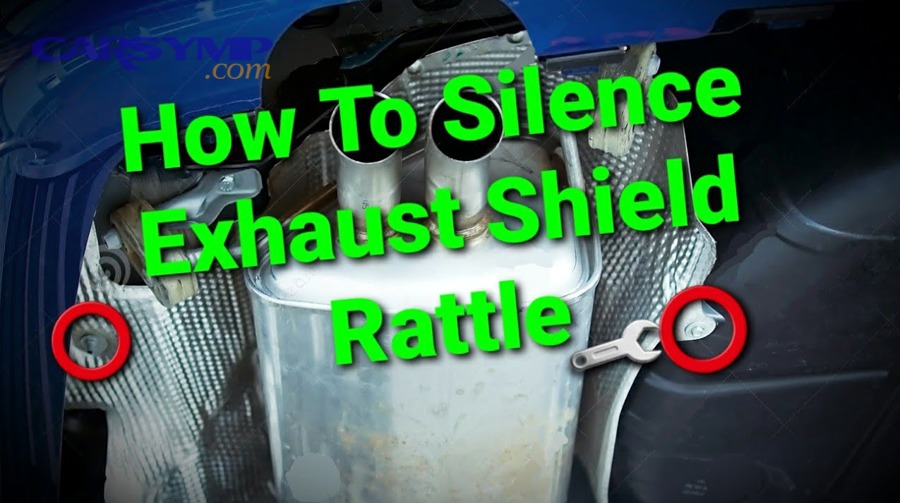
In addition, understanding the differences between temporary and permanent solutions helps car owners make informed decisions about repair timing and budget allocation. Temporary fixes provide immediate rattle elimination at minimal cost, buying time until comprehensive repairs can be scheduled or budgeted. Permanent solutions address root causes, ensuring the repair lasts for years rather than months. The choice between approaches often depends on vehicle value, expected ownership duration, and how quickly the rattling progresses from annoying to potentially dangerous.
The repair decision tree also considers practical factors like tool availability, workspace access, and personal mechanical skill. Hose clamp repairs require only basic hand tools and 10-30 minutes of time, making them accessible to nearly any car owner. Welding repairs necessitate specialized equipment and skills possessed by professional shops. Shield replacement falls somewhere between—bolting on a new shield uses basic tools, but accessing mounting points and removing corroded fasteners can challenge DIY mechanics.
Let’s examine how temporary and permanent approaches compare in terms of effectiveness, durability, and appropriate application scenarios, followed by the critical decision about whether to remove heat shields entirely or always pursue replacement.
What Are Quick Temporary Fixes vs. Permanent Solutions?
Quick temporary fixes include installing stainless steel hose clamps around rattling shields ($3-15 and 10-30 minutes), securing with heat-resistant zip ties rated for 500°F+ ($10-20 and 15 minutes), or using self-tapping screws with large washers to create new mounting points ($5-15 and 30-60 minutes). Permanent solutions involve professional welding of separated mounting points ($100-150 labor), bracket replacement with new OEM or aftermarket hardware ($50-100 parts plus labor), or complete heat shield replacement ($90-270 total).
Temporary hose clamp repairs represent the most popular DIY fix due to their simplicity and effectiveness. Stainless steel hose clamps in 2-4 inch diameter sizes wrap around the heat shield and exhaust pipe, cinching tight to clamp the shield against the pipe and eliminate vibration clearance. The installation process requires sliding the clamp around both components, positioning the screw housing where it’s accessible for tightening, and using a screwdriver or nut driver to tighten until the shield no longer moves freely. Multiple clamps may be necessary on large shields—positioning clamps every 8-12 inches along the shield’s length typically provides adequate security.
The effectiveness of hose clamp repairs depends on proper sizing and placement. Clamps that are too small won’t reach around the exhaust components, while oversized clamps may not tighten sufficiently. Measuring the circumference of the exhaust section where the shield attaches helps select appropriate clamp sizes. Marine-grade stainless steel clamps withstand heat and corrosion better than standard hardware-store clamps, and the additional $2-3 per clamp cost provides significantly extended service life.
However, temporary hose clamp fixes have limitations and drawbacks. The clamps can loosen over time as thermal cycling causes repeated expansion and contraction, requiring periodic re-tightening every 6-12 months. Overtightening clamps can crush thin heat shield material or damage exhaust pipes, particularly on aluminum components. Additionally, hose clamps only secure the shield to the exhaust pipe—they don’t address shields designed to mount to chassis brackets rather than directly to exhaust components. For these applications, alternative temporary fixes are necessary.
Heat-resistant zip ties rated for high temperature service provide another quick fix option, though with shorter service life than metal clamps. Standard plastic zip ties melt at temperatures well below exhaust system operating heat, but specialized high-temperature zip ties use materials like polyetheretherketone (PEEK) or stainless steel cable ties that withstand 500-800°F. These secure loose shields by binding them to adjacent exhaust pipes or mounting points, similar to hose clamps but with greater installation flexibility in tight spaces.
The installation simplicity of zip ties—threading through mounting holes and cinching tight—makes them attractive for roadside emergency repairs or situations where traditional hardware won’t fit. However, even high-temperature zip ties eventually degrade from heat exposure and UV radiation, typically lasting 6-18 months before replacement becomes necessary. They also lack the structural strength of metal clamps, making them unsuitable for large, heavy heat shields or areas experiencing high vibration.
Self-tapping screw solutions address the common problem of corroded or enlarged mounting holes that no longer secure original bolts. This approach uses sheet metal screws with large-diameter washers to create new attachment points by drilling into fresh material adjacent to failed original holes. The process involves positioning a large fender washer over the heat shield, drilling a pilot hole through both the shield and mounting bracket, and driving a self-tapping screw through the assembly until the shield is firmly secured.
This method’s advantages include creating secure mounting points in undamaged material and using readily available hardware from any auto parts store or hardware store. Self-tapping screws specifically designed for metal provide better thread engagement than wood screws, and stainless steel varieties resist corrosion. The large washers distribute clamping force across a wider area, preventing the screw head from pulling through thin shield material. However, this repair requires more time and skill than clamp methods, along with a drill and appropriate bits—factors that may exceed some DIYers’ capabilities or tool availability.
Permanent welding repairs offer the most durable solution when heat shield mounting tabs have separated from the exhaust pipe or broken off at spot welds. Professional welders use MIG or TIG welding equipment to reattach tabs, repair cracks in shield material, or weld new mounting brackets into place. This approach restores factory-like durability and typically lasts the remaining life of the vehicle, making it ideal for newer vehicles or classic cars worth investing in proper repairs.
Welding repairs require specialized equipment, training, and safety awareness—attempting to weld automotive exhaust components without proper experience risks fire, toxic fume exposure, and structural damage that could worsen rather than fix the problem. Professional shops charge $80-150 for typical heat shield welding repairs, with variation based on accessibility and the number of attachment points requiring welding. Mobile welding services sometimes cost less than traditional shop rates by eliminating overhead, though quality verification becomes more challenging with mobile providers.
Bracket replacement addresses situations where mounting hardware itself has failed—broken studs, stripped threads in exhaust flanges, or corroded chassis brackets. Replacement brackets are available from dealerships, aftermarket suppliers, and salvage yards, with OEM parts typically costing $20-50 per bracket while aftermarket alternatives often cost 30-50% less. Installation involves removing old brackets (which may require cutting corroded bolts with angle grinders or torch cutting in severe cases), cleaning mounting surfaces, and bolting new brackets in place with anti-seize compound on threads to prevent future corrosion.
Complete heat shield replacement becomes necessary when shield material itself has rusted through, cracked extensively, or warped beyond repair through temporary methods. Replacement shields from dealerships ensure proper fit and often include new mounting hardware, but can cost $100-300 depending on vehicle make and model. Aftermarket shields provide budget alternatives at $40-120, though fit and material quality may vary. Some vehicle owners report success finding used shields in good condition at salvage yards for $20-50, particularly for older vehicles where new parts availability decreases.
The replacement process involves removing old shields (dealing with corroded fasteners using penetrating oil, breaker bars, and sometimes heat or cutting tools), cleaning mounting areas of rust and debris, positioning new shields, and torquing fasteners to manufacturer specifications. This work typically takes 1-3 hours depending on vehicle design and rust severity, with labor charges at professional shops adding $75-150 to parts costs.
Cost comparison across approaches reveals significant differences. A $15 hose clamp repair taking 20 minutes of DIY time contrasts sharply with $250 for professional shield replacement. However, longevity considerations shift this calculation—if hose clamps require replacement every year while a new shield lasts 5-10 years, the higher upfront investment provides better long-term value. Vehicle age and expected ownership duration influence this decision: temporary fixes make sense for older vehicles near end-of-life or if you plan to sell soon, while permanent repairs suit newer vehicles you intend to keep for years.
Timeline expectations also differ markedly. Temporary fixes can be implemented immediately using parts from any auto parts store, eliminating rattling within an hour of problem identification. Permanent repairs may require ordering parts, scheduling shop time, and waiting days or weeks for completion, during which the rattling continues and potentially worsens. Balancing these factors—cost, durability, convenience, and vehicle value—guides repair method selection.
Should You Remove the Heat Shield or Always Replace It?
Heat shields should generally be replaced rather than permanently removed because they protect critical components from exhaust temperatures that can melt wiring, damage fuel lines, prematurely age rubber and plastic parts, and create fire hazards, though temporary removal for up to several weeks while sourcing replacement parts poses minimal risk if the vehicle is not operated in extreme conditions or parked near flammable materials. The safety functions that heat shields perform justify replacement investment in most cases, with permanent removal only defensible on vehicles used exclusively for off-road racing or those undergoing comprehensive performance exhaust system upgrades that incorporate alternative heat management solutions.
To expand on this guidance, understanding what specific components heat shields protect clarifies why removal creates risks. The proximity of fuel lines to exhaust systems in most vehicles means that line temperatures can reach 200°F+ without heat shielding—approaching the maximum service temperature for rubber fuel hoses and causing premature hardening and cracking. Modern vehicles with plastic fuel lines face even greater risk, as many plastic formulations soften or melt above 250°F. While fuel lines typically route to avoid direct exhaust contact, radiant heat transfer from unshielded exhaust components can still elevate line temperatures dangerously.
Electrical wiring harnesses running near exhaust components face similar threats. Wire insulation materials like PVC and polyethylene degrade when exposed to sustained temperatures above their design limits—typically 150-200°F for automotive wiring. Degraded insulation becomes brittle and cracks, exposing conductors and creating short circuit risk. Critical circuits like oxygen sensor wiring, transmission control harnesses, and engine management wiring often route near exhaust components by necessity, making heat shield protection essential for preventing electrical problems.
The vehicle’s cabin floor and transmission tunnel also depend on heat shielding for occupant comfort. Without shields, floor pans can reach uncomfortable or even unsafe temperatures, particularly during summer driving or in stop-and-go traffic where exhaust heat builds with minimal cooling airflow. Some owners report floor temperatures exceeding 150°F when heat shields are missing—hot enough to cause discomfort through shoe soles and potentially dangerous if skin contacts the floor directly. Carpet adhesives and sound-deadening materials can also degrade under excessive heat, leading to interior trim problems.
Alternative heat management solutions exist for enthusiasts who remove original heat shields as part of performance modifications. Ceramic exhaust coatings reduce surface temperatures by 300-500°F, significantly decreasing radiant heat transfer to surrounding components. Heat-reflective wraps made from basalt fiber or similar materials provide another option, though they can trap moisture against exhaust pipes and potentially accelerate rust formation if not properly installed. Heat-resistant spray coatings applied to nearby components can increase their temperature tolerance, and custom fabricated heat shields using stainless steel or aluminum can replace factory shields while accommodating modified exhaust routings.
Fire risk from missing heat shields increases in specific situations. Parking over dry grass, leaves, or paper in a parking lot can ignite these materials when they contact an unshielded exhaust system operating at 300-500°F. Automotive firefighters report that parking-related vehicle fires often stem from catalytic converter heat igniting vegetation or debris accumulated in the undercarriage. While these incidents remain relatively rare, their severity—potentially destroying the vehicle and spreading to structures or wildlands—justifies taking heat shield protection seriously.
Some vehicle owners in online forums argue they’ve driven without heat shields for years without problems, and they present these anecdotes as evidence that shields are unnecessary. Several factors explain these experiences: Luck plays a role—the absence of negative outcomes doesn’t prove safety, just fortunate circumstance. Environmental conditions matter significantly—vehicles in dry climates face less rust and may have heat shields that last longer before needing replacement, and those same vehicles may pose less ignition risk than vehicles operated in areas with dry vegetation. Driving patterns influence outcomes—highway driving provides substantial cooling airflow that reduces temperatures around exhaust components, potentially compensating for missing shields, while city driving with frequent idling in traffic generates more heat with less cooling.
The cost-benefit calculation for heat shield replacement depends heavily on vehicle value and usage. For an older vehicle worth $2,000 where a $200 professional heat shield replacement represents 10% of the car’s value, some owners decide that temporary removal or makeshift repairs make economic sense for the remaining service life. Conversely, for a newer vehicle worth $20,000, investing $200 in proper heat shield replacement represents only 1% of value and clearly makes sense to protect the larger investment and avoid risk of fire or component damage.
Professional mechanics universally recommend replacement over permanent removal, both for liability reasons and based on experience with heat-related failures. Service facilities understand that removing safety components creates potential liability if subsequent problems occur, and their experience includes seeing the consequences of missing heat shields—melted wiring harnesses requiring $500-1,500 repairs, damaged fuel lines, and interior heat problems. These observations inform professional recommendations to always replace rather than remove heat shields.
Situations where temporary removal during parts sourcing or pending repair might be acceptable include: Short durations of 1-4 weeks while waiting for parts delivery, operating the vehicle minimally and only for essential transportation, avoiding parking over flammable materials or in enclosed structures where fire risk affects property beyond just the vehicle, and monitoring nearby components for heat damage signs like discolored wiring or melted plastic. These precautions reduce though don’t eliminate risks during the temporary removal period.
Documentation of heat shield condition and any temporary removal decisions protects vehicle value during sale. Disclosing to potential buyers that heat shields have been removed or temporarily repaired with hose clamps demonstrates honesty and allows buyers to make informed decisions. Conversely, discovering missing heat shields during a pre-purchase inspection often causes buyers to negotiate price reductions or walk away from deals, as they assume additional neglected maintenance likely exists.
How Much Does Professional Heat Shield Repair Cost?
Professional heat shield repair costs range from $90 to $270 for most standard vehicles, comprising $40-120 for replacement shield parts, $50-150 in labor charges for 0.5-2.0 hours of work, and potential diagnostic fees of $50-100 if the shop must first identify which shield is causing the rattle. Luxury and performance vehicles incur higher costs due to specialized parts and more complex exhaust configurations, while simple bolt-tightening repairs at the lower end may cost only $30-50 in labor if no parts are required.
More specifically, parts costs vary significantly based on heat shield location and vehicle type. Catalytic converter heat shields typically cost more ($80-120) than simple pipe wrap shields ($30-60) due to their size and the precision required for proper fitment around the converter. OEM dealership parts command premium prices compared to aftermarket alternatives—a Toyota exhaust manifold heat shield might cost $95 from the dealer but only $45 from an aftermarket supplier, with the tradeoff being guaranteed fitment versus potential minor installation complications.
Labor rates fluctuate based on shop type and geographic location. Independent repair shops in rural or suburban areas often charge $80-120 per hour for labor, while dealerships in urban markets may charge $150-200 per hour. The actual labor time required depends heavily on heat shield accessibility—shields on the exhaust manifold near the engine often require removing other components for access, extending labor time to 1.5-2.0 hours. Shields under the vehicle’s center section with clear access may take only 0.3-0.5 hours to replace, significantly reducing labor charges.
Comparing DIY costs to professional repair reveals substantial savings potential for capable owners. A $50 aftermarket shield plus 1 hour of DIY labor eliminates the $50-150 professional labor charge, reducing total cost from $190 to just $50. However, this calculation must account for tool costs if you don’t already own jack stands, appropriate wrenches, and penetrating oil—these items might add $100-150 to your initial investment, though they remain available for future repairs. Additionally, the time value of your own labor matters: spending 2 hours researching procedures, acquiring parts, and completing the repair might not represent savings if your time is worth $50+ per hour professionally.
Hidden costs sometimes inflate professional repair bills beyond initial estimates. Corroded exhaust fasteners frequently break during shield removal, requiring additional labor time to extract broken bolts or studs. In severe cases, mechanics may need to cut off shields with angle grinders and use cutting tools on fasteners, adding 0.5-1.0 hours to the job. Similarly, discovering that adjacent exhaust components are also damaged during shield removal—such as cracked exhaust pipes or failed hangers—can convert a $150 shield replacement into a $500+ exhaust repair.
Regional price variations reflect local economic conditions and competition levels. Metropolitan areas with high living costs see correspondingly higher labor rates, while regions with strong automotive repair competition may experience pricing pressure that keeps costs lower. Getting quotes from multiple shops in your area provides realistic local pricing information—most shops offer free estimates for repair work, making price comparison straightforward. National chain repair shops like Meineke, Midas, and Pep Boys often advertise promotional pricing on exhaust work, potentially offering better deals than independent shops, though some consumers report concerns about upselling tactics at chains.
Bundling heat shield repair with other exhaust work can reduce overall costs through shared labor efficiencies. If your vehicle needs exhaust work like muffler replacement or oxygen sensor replacement, adding heat shield repair to the same service appointment saves the duplicate labor charges for lifting the vehicle, removing wheel assemblies, and accessing the exhaust system. Many shops offer package deals on comprehensive exhaust service that include shield inspection and minor repairs at no additional cost beyond primary repair work.
Insurance coverage for heat shield repair rarely applies, as this maintenance item falls under normal wear and tear rather than accident damage. Comprehensive insurance covers exhaust damage from road debris impact only if you can demonstrate sudden, unexpected damage from a specific incident, and even then, the deductible often exceeds repair costs for heat shields. Extended warranty coverage likewise typically excludes exhaust components from coverage, classifying them as wear items along with brakes and tires.
Cost-effectiveness analysis for heat shield repair must consider the alternative of ignoring the problem. As discussed in the risks section, failed heat shields can lead to $500-1,500 in secondary damage from melted wiring or damaged components, making the $150-250 investment in proper repair financially rational. Additionally, persistent rattling decreases vehicle resale value more than the cost of repair—potential buyers discount offers by several hundred dollars when test drives reveal annoying mechanical noises, even if explained as minor heat shield issues.
Negotiation possibilities exist with independent repair shops, particularly if you provide your own parts or have repeat customer relationships. Offering to purchase aftermarket shields yourself and pay only for labor installation can save 20-30% on the total bill, though some shops decline this arrangement due to liability concerns about parts they didn’t supply. Requesting quotes in writing with parts and labor broken out separately enables apples-to-apples comparison shopping and provides leverage for negotiation. Being a regular customer or getting repairs done during slower business periods (typically mid-week mornings) sometimes yields modest discounts when you ask politely.
How Can You Prevent Heat Shield Rattle in the Future?
Preventing future heat shield rattle requires four proactive maintenance strategies: conducting undercarriage inspections every 6-12 months to catch deterioration early, applying anti-corrosion treatments in rust-prone climates, ensuring proper installation torque specifications during any exhaust work, and avoiding road hazards that can impact heat shields. These prevention methods significantly extend heat shield service life and prevent the progression from minor looseness to complete failure, saving both repair costs and the aggravation of persistent rattling.
Regular undercarriage inspections form the foundation of preventive maintenance. During oil changes or tire rotations, requesting that the technician specifically check heat shield condition adds minimal time to the service appointment. For DIY maintenance, incorporating a 5-10 minute heat shield inspection into your quarterly or semi-annual maintenance routine catches problems at the earliest stage. Look for the same warning signs covered in the diagnostic section—rust starting at mounting points, slight looseness when pushing on shields, or visual cracks beginning to form—but address them proactively before rattling develops.
The inspection timing should align with your climate and driving conditions. Vehicles operated in winter road salt environments benefit from spring inspections after salt exposure ceases, allowing you to address corrosion damage before it progresses through summer months. Those in coastal areas with salt air should inspect twice annually due to year-round corrosion potential. Drivers who frequently travel gravel roads or rough terrain might inspect more frequently, as impact damage from road debris poses the primary heat shield threat in their use case.
Anti-corrosion treatments provide chemical protection against rust development, particularly valuable for vehicles in harsh environments. Several product categories address this need: Rubberized undercoating sprays create a thick, flexible barrier over metal surfaces, sealing out moisture and salt while dampening road noise. Products like 3M Professional Grade Rubberized Undercoating or Rust-Oleum Rubberized Undercoating sell for $15-25 per can, with most vehicles requiring 3-4 cans for complete undercarriage treatment. Application involves thoroughly cleaning the undercarriage, allowing it to dry completely, and spraying an even coat over all exposed metal surfaces including heat shields.
Fluid film lanolin-based coatings offer another approach, penetrating into crevices and providing long-lasting moisture displacement. Unlike rubberized undercoatings that form a hard barrier, Fluid Film and similar products remain somewhat soft, allowing them to creep into seams and threads while maintaining protection. Many users in severe winter climates swear by annual Fluid Film applications before winter as their primary rust prevention strategy. Professional application costs $150-300 for complete vehicle coverage, while DIY application using $30-50 worth of aerosol cans achieves similar results with careful work.
Anti-seize compound application on heat shield mounting threads prevents fastener seizure and enables future service. During installation of new shields or when tightening loose shields, applying a thin layer of nickel or copper-based anti-seize compound to bolt threads protects against corrosion bonding that can make future removal nearly impossible. This simple step costing mere pennies per fastener saves hours of frustration when shields need eventual replacement. Use high-temperature anti-seize rated for exhaust system temperatures (typically 1,600°F+) rather than standard assembly lubricants.
Proper installation torque specifications matter significantly for heat shield longevity. Over-tightening fasteners crushes mounting tabs and can crack thin shield material, while under-tightening allows vibration that eventually works hardware loose. Factory service manuals specify exact torque values for exhaust system fasteners—typically 10-20 ft-lbs for heat shield bolts. Using a torque wrench during installation ensures proper clamping force without damage, though many home mechanics skip this step and tighten by feel, risking the problems mentioned above.
Stainless steel hardware upgrades provide corrosion resistance superior to factory-installed components. When replacing heat shields or tightening loose shields, substituting stainless steel bolts, washers, and nuts for the original mild steel hardware dramatically extends service life in corrosive environments. Grade 304 or 316 stainless steel fasteners resist rust even in severe road salt and coastal conditions, though they cost 2-3 times more than standard hardware. Many automotive fastener suppliers sell stainless exhaust bolt kits specifically designed for this application.
Driving habit modifications reduce impact damage risk to heat shields. Learning your vehicle’s ground clearance and approach/departure angles helps avoid scraping obstacles that can bend shields or knock them loose. Slowing down for speed bumps, avoiding curbs and steep driveway transitions at aggressive angles, and steering around road debris when safely possible all protect undercarriage components including heat shields. While these precautions seem obvious, many drivers operate on autopilot and inadvertently damage components through inattentive driving.
Avoiding prolonged parking over flammable materials prevents not just fire risk but also accelerated shield deterioration. Dry grass under a vehicle traps heat and moisture around exhaust components, accelerating corrosion while posing ignition risk. Similarly, parking on deep snow that melts and refreezes around exhaust systems creates corrosive conditions. When parking options allow, choosing paved surfaces over vegetation or gravel protects undercarriage components.
Catching problems early through attentive listening represents perhaps the most effective prevention strategy. The instant you notice even minor rattling, investigating and addressing it prevents progression to severe damage. Heat shield problems follow predictable deterioration paths—a loose bolt today becomes an enlarged hole in three months and a completely detached shield in six months. Interrupting this progression at the first stage requires only minor effort and minimal cost compared to managing fully developed failures.
Documentation of heat shield maintenance creates service records that protect vehicle value and inform future owners of proper care. Keeping receipts for undercoating applications, recording dates of inspections, and maintaining parts receipts for any shield repairs or replacements demonstrates conscientious ownership. This documentation reassures potential buyers during vehicle sales and may qualify for insurance premium discounts with some carriers that reward documented preventive maintenance.