


If your heater suddenly blows cold, low coolant can absolutely be the direct cause—because the heater core can’t transfer heat if coolant isn’t flowing through it. This guide helps you diagnose that link quickly and safely, so you don’t chase the wrong part first.
Next, you’ll learn the most common “low coolant, no heat” companion problem: trapped air. Air pockets can block heater-core flow even when the engine seems “fine,” so we’ll cover the fastest, most reliable ways to refill and bleed the system.
Then, we’ll separate low coolant symptoms from Heater core clogged symptoms (and from thermostat or blend-door failures). That “not a clogged heater core” part matters, because both problems can feel identical from the driver’s seat.
Introduce a new idea: once you confirm the cause, we’ll move from diagnosis to action—restoring heat, preventing overheating, and understanding a realistic Repair cost estimate for common heater issues so you can decide what’s DIY and what’s shop work.
Is low coolant the real reason your car has no heat? (Yes/No)
Yes—low coolant can be the real reason your car has no heat, because (1) the heater core sits high in many systems and can run dry first, (2) air enters and blocks coolant circulation through the heater core, and (3) the water pump can’t move what isn’t there, so heat transfer stops.
Next, to connect this to what you’re feeling at the vents, you’ll confirm whether your symptoms match a coolant-flow problem rather than an HVAC control problem.
When coolant is low, the cabin heater is often the first “comfort” system to complain. The heater core is basically a small radiator inside the dash. It needs a steady stream of hot coolant to warm the air passing over it. If the coolant level drops far enough, the heater core can trap air or lose flow even before the engine temperature gauge looks scary.
Here’s what makes low coolant especially convincing as a no-heat cause:
- Heat output changes with RPM or driving speed. You may get lukewarm air when cruising, then cold air at idle.
- The heater was working recently, then suddenly wasn’t. Fast changes often point to flow interruption (air pocket / low level) more than gradual clogging.
- You’re topping up coolant more often than you used to. That pattern almost always indicates coolant loss somewhere.
Does topping off coolant temporarily bring heat back? (Yes/No)
Yes—if topping off coolant briefly brings heat back, it strongly suggests the heater core was starved for coolant or blocked by an air pocket, because (1) refilling restores coolant contact, (2) circulation resumes through the heater core, and (3) trapped air can shift and temporarily clear the heater core passages.
Then, because this “fix” can fade fast, the next step is to treat it as a diagnostic clue—not a final repair.
This is a classic scenario: the heater is blowing cold, you add coolant, and the heat comes back… for a day or a week. That usually means one of two things is happening:
- You have a leak and the level is dropping again.
- You still have air trapped and the system needs proper bleeding.
Important safety note: always check coolant level when the engine is cool. Many reservoirs are pressurized, and opening caps hot can release scalding coolant/steam. The same caution is emphasized in basic coolant-check guidance. (samarins.com)
Can you have no heat even if the temperature gauge looks normal? (Yes/No)
Yes—you can have no heat with a normal-looking temperature gauge because (1) the gauge may be damped and not reflect rapid local changes, (2) the heater core can lose flow before the engine overheats, and (3) the cooling system may still manage engine temperature while the heater circuit is air-bound.
More specifically, this is why “heater not working” does not automatically equal “engine overheating”—but it does mean the cooling system needs attention.
Think of the cooling system as multiple loops and pathways. The engine can be “just okay” while the heater circuit is failing, especially if:
- The heater core is at a high point and becomes an air trap.
- The coolant level is borderline: enough for the radiator loop, not enough to keep the heater core consistently filled.
- The thermostat is operating but circulation is inconsistent at the heater circuit.
Evidence sentence: According to a study by Clemson University from its engineering research on advanced engine cooling systems, in 2016, engine coolant temperature significantly affects engine performance and thermal control—highlighting why maintaining correct coolant level and stable temperature management matters. (open.clemson.edu)
What does “low coolant causing no heat” mean in a cooling system?
Low coolant causing no heat is a cooling-system condition where insufficient coolant volume (often with trapped air) prevents hot coolant from circulating through the heater core, so the cabin vents blow cold even though the blower fan and controls may still work normally.
Next, to make the diagnosis intuitive, it helps to understand how the heater core loses heat output before bigger warning signs appear.
The heater core doesn’t create heat—it borrows heat from engine coolant. Your HVAC blower pushes cabin air across the heater core fins. If coolant isn’t flowing through those fins, the blower is just pushing unheated air.
Low coolant creates “no heat” in three common ways:
- The heater core isn’t full of coolant. Air replaces coolant in the core, so there’s little heat to transfer.
- Coolant circulation becomes inconsistent. A water pump can cavitate when it pulls air, reducing flow.
- The system traps air after a top-off or repair. That air migrates to high points—often the heater core area.
Why does an air pocket stop cabin heat before it causes overheating?
An air pocket stops cabin heat before overheating because air naturally rises to the highest points, the heater core circuit often sits high, and air blocks coolant contact and flow through the heater core—cutting heat transfer even while the radiator loop still sheds enough heat to prevent immediate overheating.
Then, because air pockets move around, you’ll often see “inconsistent heat” that comes and goes with RPM and driving conditions.
Air is a terrible substitute for coolant in a heat-transfer loop. It compresses, it doesn’t carry heat well, and it can cause the water pump to move less coolant overall. In practical terms, an air pocket can create:
- Gurgling/sloshing sounds behind the dash
- Heat that spikes hot then turns cold
- Heat that improves only when revving
- A sudden loss of heat after you just added coolant
What “no-heat” patterns point to coolant flow issues vs an HVAC control issue?
No-heat patterns that point to coolant-flow issues are those that change with engine temperature and circulation—such as heat improving with RPM, heat fading at idle, and both heater hoses not staying evenly hot—while HVAC control issues typically keep hose temperatures normal but fail to route or blend air properly.
However, you don’t need to guess—your next checks will confirm flow versus control with simple observations.
A quick mental split helps:
- Flow-side problem (coolant-related): heat changes with engine operation; you may smell coolant; level is low or fluctuates; hoses show a hot/cold mismatch.
- Air-side problem (HVAC-related): engine warms up normally; coolant level stable; heater hoses are hot; but vents stay cold or only change on one side.
Which checks confirm low coolant is the cause of no heat?
There are 4 main checks that confirm low coolant is the cause of no heat: (A) coolant level verification when cold, (B) leak evidence inspection, (C) heater hose temperature pattern check, and (D) post-refill bleeding behavior—based on the criterion of whether coolant is present, pressurized, and circulating through the heater core.
Next, you’ll run them in an order that saves time and prevents mistakes.
Before you start: park on level ground, allow the engine to cool, and use gloves/eye protection. If the temperature warning light is on, the gauge is in the red, or you see steam, don’t “test” your way through it—prevent overheating first.
What should you check first under the hood?
Start with the checks that require no tools:
- Coolant level (engine cold).
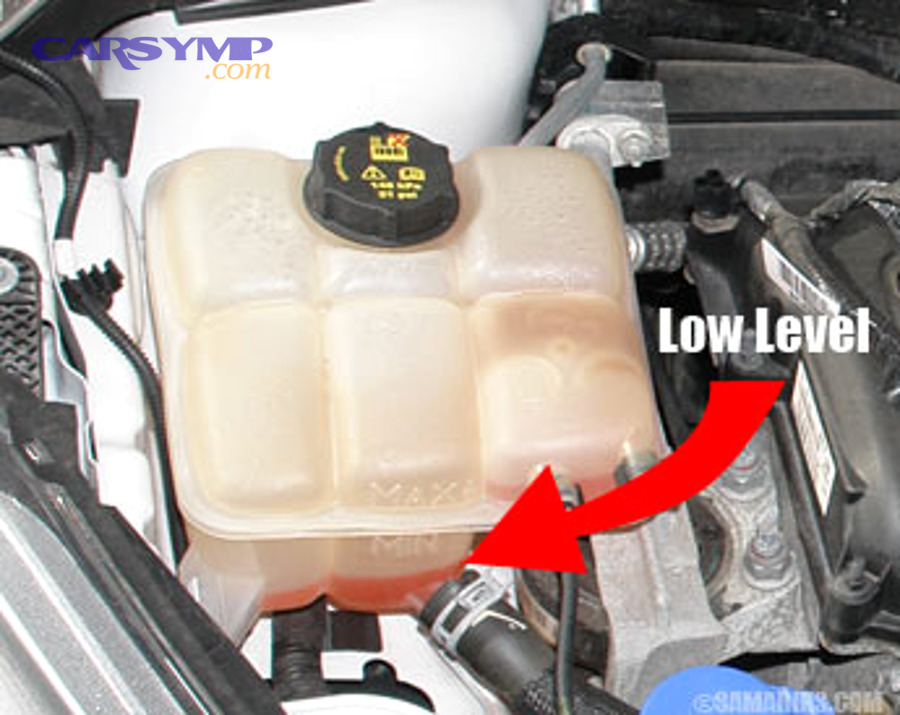
- Look at the reservoir “MIN/MAX” or “LOW/FULL” marks.
- If the reservoir is empty, don’t assume it “just evaporated.” Low coolant is a symptom, not a diagnosis. (samarins.com)
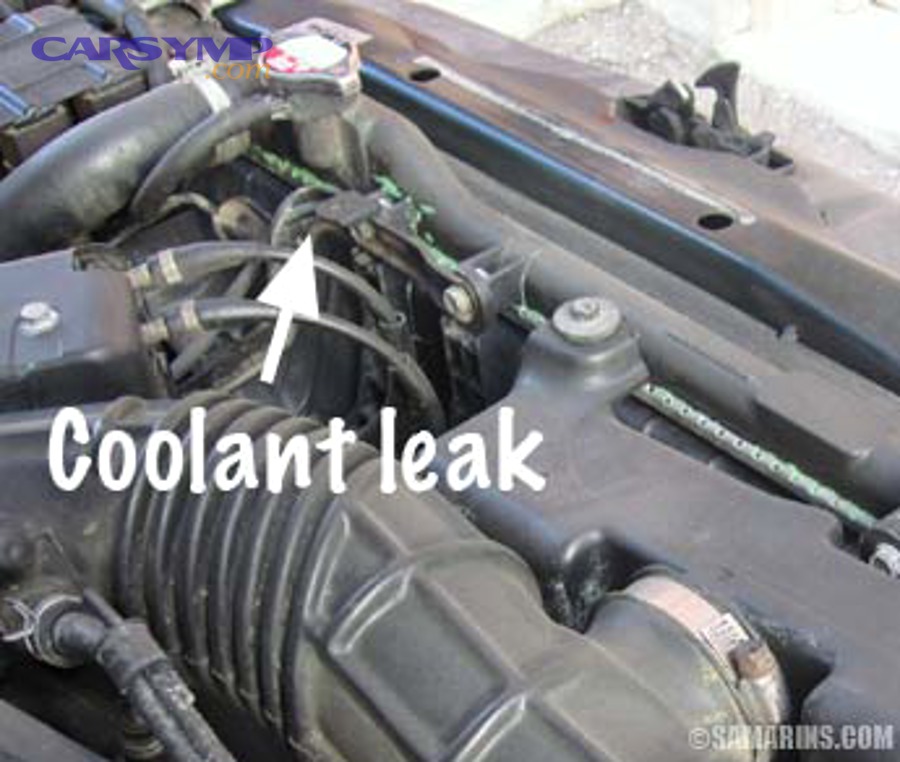
- Obvious leak clues.
- Wetness around hose connections
- Crusty dried residue (often pink/white/green depending on coolant)
- Damp undercarriage areas and fresh drips
- Sweet odor near the front of the vehicle or near the firewall
- Radiator/pressure cap area (only when cool).
- Staining around the cap or overflow neck can indicate pressure loss.
- Cabin clue: damp passenger carpet or fogging.
- A leaking heater core can put coolant inside the cabin and mimic other heater failures.
If you want a single “first decision”: if coolant is below minimum, treat low coolant as a primary suspect and move to hose-temperature confirmation next.
How do heater core hoses confirm (or rule out) coolant flow?
Your heater core has two hoses at the firewall (most vehicles). Their temperature tells a story:
- Both hoses hot (similar temp): coolant is flowing through the heater core. If you still have no heat, suspect an air-side HVAC issue (blend door, actuator, control head).
- One hose hot, one hose much cooler: coolant enters but doesn’t pass through well—this supports restriction, trapped air, a closed heater control valve (if equipped), or internal blockage.
- Both hoses cool/warm but not hot: coolant isn’t hot enough (thermostat stuck open or engine not warming) or circulation is poor due to low coolant/air.
A practical quantitative guideline used in heater-core diagnostics is that a small outlet drop suggests normal core operation, while a large drop suggests restriction. (gpdtechtips.com)
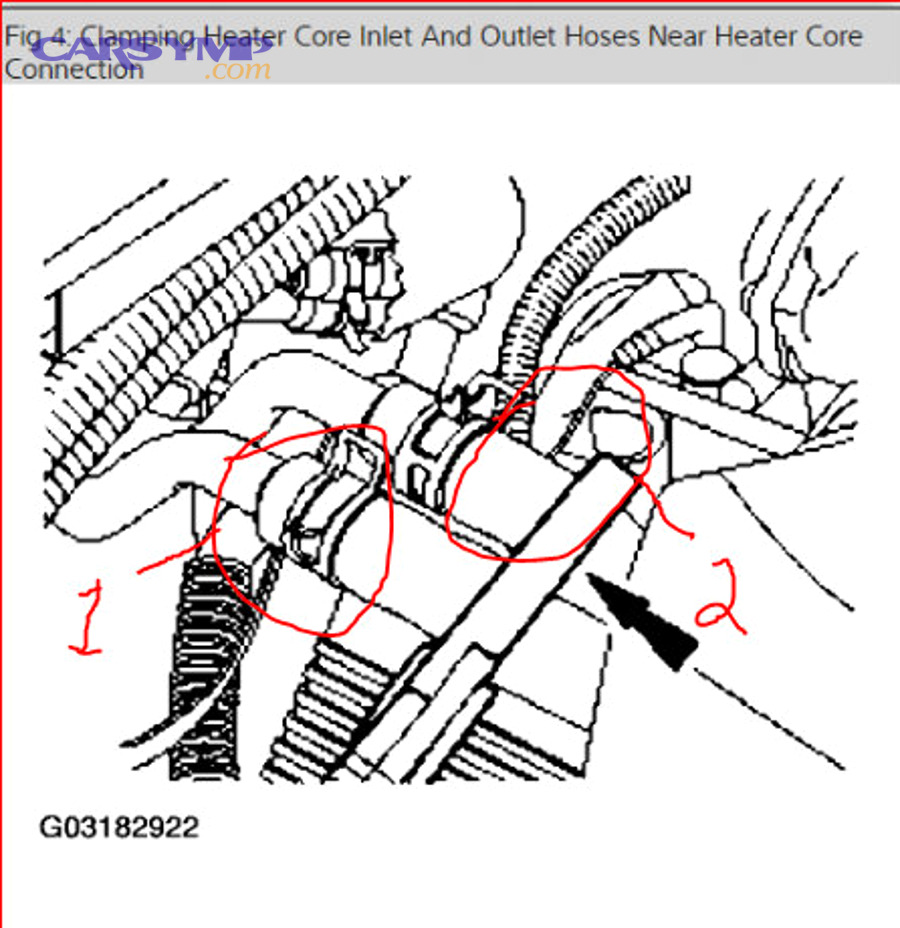
Tip: If you don’t have an infrared thermometer, you can still do a careful “touch test” with the engine warm—just avoid moving belts/fans and hot metal. Many technician guides describe checking both heater hoses at the firewall to judge flow. (tomorrowstechnician.com)
What quick signs suggest a coolant leak is behind the low level?
If coolant is low, a leak is the default assumption until proven otherwise. Look for these high-signal clues:
- Recurring top-offs: level drops again after you fill it
- Puddles after parking: especially under the radiator area
- Dried coolant crust: around hose ends, radiator seams, thermostat housing, water pump weep hole
- Sweet smell or steam: especially after shutdown
- Cabin dampness/fogging: possible heater-core leak inside the HVAC box
This matters because if you only restore the level without fixing the leak, you can get stuck in a loop of “heat comes back, heat disappears”—and you risk overheating later.
How do you diagnose low coolant vs a clogged heater core?
Low coolant wins as the most likely cause when heat changes with level/RPM and improves after refill/bleed; a clogged heater core is best matched to persistent weak heat with a large inlet–outlet hose temperature split; and a blend-door issue is optimal to suspect when both heater hoses are hot yet the vents stay cold.
Next, you’ll use a simple comparison table to avoid throwing parts at the problem.
Below is a quick comparison table showing what each failure mode usually looks like in the real world (symptoms + hose temps + what changes the result).
| Pattern you observe | Low coolant / air pocket | Heater core clog | Blend door / actuator issue |
|---|---|---|---|
| Heat comes and goes | Common | Less common | Sometimes |
| Heat improves after topping off | Very common | Rare | No |
| Heater hose temps | Often uneven or unstable | Often hot in / much cooler out | Usually both hot |
| Cabin smell / damp carpet | Possible (leak) | Sometimes (if also leaking) | Unrelated |
| Best next test | Pressure test + bleed | Hose temp delta + flush decision | Actuator movement/scan |
A large inlet-to-outlet temperature difference is a common diagnostic sign of restriction in heater-core troubleshooting references. (gpdtechtips.com)
Low coolant/air pocket vs clogged heater core: what are the key symptom differences?
Low coolant/air pocket wins on “intermittent heat and quick change,” while a clogged heater core is best matched to “consistent weak heat and a strong hose temperature drop.”
However, the overlap is real, so the tie-breaker is usually: does proper bleeding restore stable heat?
Low coolant / air pocket tends to show:
- Heat improves temporarily after refill
- Heat varies with revs or driving
- Gurgling behind dash
- Coolant level is low or recently disturbed (repair/top-off)
Heater core clogged symptoms tend to show:
- Heat is consistently weak even when fully warmed
- One heater hose is clearly cooler than the other
- Coolant may look rusty/sludgy or maintenance history is unknown
- Bleeding helps little or only briefly
If you suspect clogging, be cautious: some flush attempts help, others can trigger leaks in an already-corroded core. That’s why it’s important to confirm low coolant and air first.
Low coolant vs thermostat stuck open: how can you tell?
Low coolant wins when coolant level is below minimum or dropping and heat loss is sudden; a thermostat stuck open is best for the criterion “engine never reaches operating temperature,” leading to weak heat even though coolant level is normal.
Then, because both issues can coexist, you’ll confirm by watching warm-up behavior and heater-hose temperatures.
A thermostat stuck open often looks like this:
- Temperature gauge rises slowly and may stay low
- Heat is lukewarm even after long driving
- Heater hoses may be warm rather than hot because the engine isn’t reaching normal operating temperature
Low coolant looks more like:
- Heat can be hot one moment and cold the next
- Coolant level is below the mark or you’re topping off
- You may find leak evidence
Low coolant vs blend door actuator: what’s different?
Low coolant wins when hose temperatures and coolant level indicate poor heat transfer, while a blend door actuator issue is best when the heater core is clearly hot (both hoses hot) but the cabin air remains cold because the HVAC box isn’t routing air through the hot core.
Meanwhile, because actuator failures are common, it’s smart to rule out coolant issues first—especially if you’ve noticed coolant level changes.
Signs you’re dealing with an air-routing problem:
- Both heater hoses hot, yet vents cold
- Clicking/knocking behind the dash when changing temperature
- Temperature changes only on one side (dual-zone systems)
- No coolant loss pattern
This is the scenario where “heater not working” becomes an HVAC diagnosis rather than a cooling-system diagnosis.
What should you do after confirming low coolant is causing no heat?
There are 3 main actions after confirming low coolant is causing no heat: (1) safely restore coolant level with the correct mixture, (2) bleed air until heater output stabilizes, and (3) find and fix the leak so the no-heat problem doesn’t return—based on the criterion of restoring circulation and preventing overheating.
Next, you’ll follow a practical sequence that prioritizes safety and long-term reliability.
How do you refill and bleed the cooling system to restore heat?
Here’s a safe, general process (vehicle designs vary—always follow your owner’s manual where it differs):
- Start cold, park level, set the heater to MAX HOT.
This opens the heater circuit on many vehicles so coolant can flow through the heater core. - Check and fill the reservoir to the proper mark (or radiator if your design requires it).
Use the correct coolant type and mixture for your vehicle. - Run the engine and watch temperature and heat output.
- Turn the blower on low/medium at first.
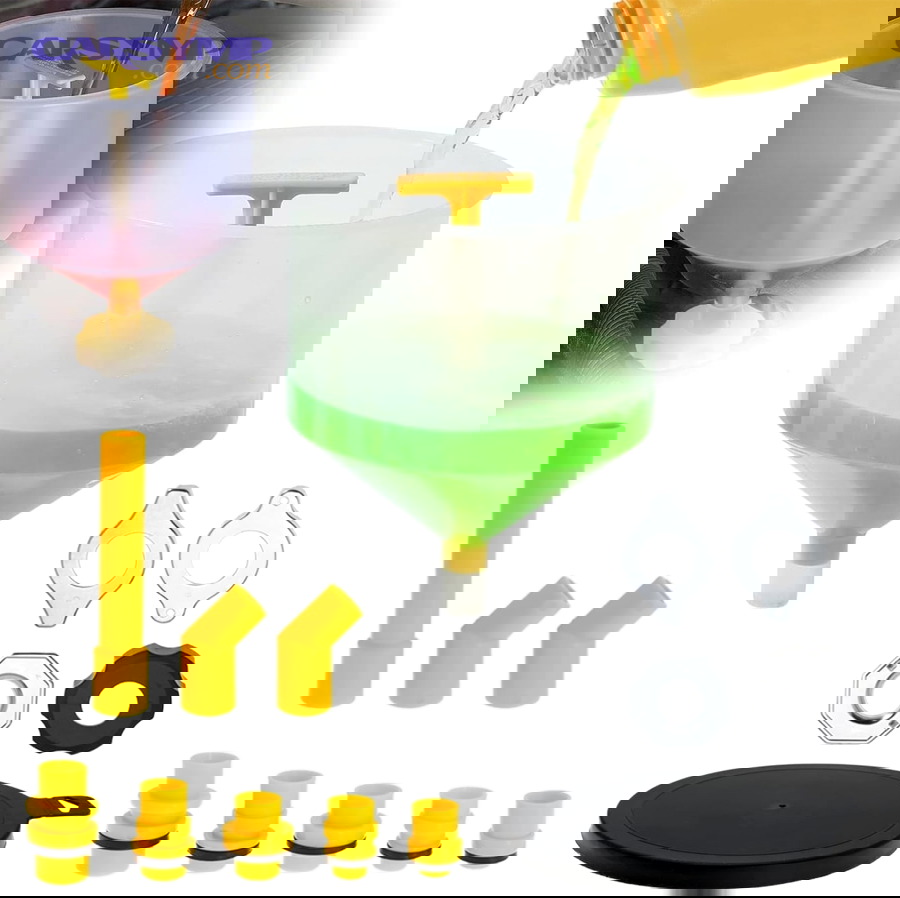
- Look for bubbles in the funnel/neck if using a spill-proof funnel.
- Bleed air using the proper method for your vehicle.
Common methods include:- Bleeder screw (some engines have a dedicated bleeder)
- Spill-proof funnel “burp” method
- Vacuum fill (best at shops; reduces trapped air risk)
- Confirm stable cabin heat and stable coolant level after cool-down.
Many systems need a cool-down cycle to fully purge air; top up to the mark again when cool.
Here’s one clear demonstration video on bleeding a cooling system:
If your heat improves but then fades again, don’t assume the heater core is clogged yet—repeat the level check after cool-down. Persistent bubble formation can indicate ongoing air entry from a leak or an incomplete bleed.
When is it unsafe to keep driving with no heat + low coolant?
Yes—it can be unsafe to keep driving with no heat and low coolant, because (1) low coolant can quickly lead to overheating and expensive engine damage, (2) the system may lose pressure and boil over without much warning, and (3) you may be driving with an active leak that can suddenly worsen.
More importantly, you should treat specific red flags as immediate stop signs.
Stop driving (or tow) if you see any of these:
- Temperature gauge climbing rapidly or entering the red
- Overheat warning light
- Steam from the engine bay
- Coolant pouring out or a growing puddle
- Heater output suddenly goes ice-cold while temperature rises (often a sign coolant is no longer circulating)
Even basic maintenance guidance warns that low coolant can contribute to overheating and that a pressure test is recommended when signs point to leaks. (samarins.com)
What’s the next best diagnostic step to stop the problem from returning?
Once heat returns, the smartest next step is finding why coolant got low. The usual progression is:
- Pressure test the cooling system.
This helps reveal slow leaks that don’t drip much when parked. - Inspect common leak points.
- Radiator seams/end tanks
- Upper/lower radiator hoses and clamps
- Thermostat housing
- Water pump weep hole
- Heater hoses at firewall
- Reservoir cracks and cap seal
- Decide whether the issue is leak-only or also restriction/contamination.
If coolant is rusty or sludgy, you may need a flush—but only after leaks are handled.
This is also the moment to consider money reality. A realistic Repair cost estimate for common heater issues depends on what failed:
- A simple hose/clamp leak can be relatively inexpensive.
- A thermostat replacement is moderate.
- A heater core replacement is often costly because of dash labor.
For example, a widely used repair cost estimator lists an average heater core replacement cost range in the four figures, emphasizing labor as the largest component. (repairpal.com)
What else can mimic low-coolant no-heat—and how do you avoid the wrong repair?
To avoid the wrong repair, compare look-alike causes by the criteria that low coolant uniquely affects: coolant level trend, heater-hose temperature pattern, and bleeding response—because (1) restrictions can imitate air pockets, (2) HVAC doors can imitate heater core failures, and (3) coolant chemistry issues can imitate both.
Next, you’ll use a few high-precision checks to prevent misdiagnosis—especially before you commit to a heater-core job.
How can an infrared thermometer test prevent misdiagnosing a heater core clog?
An infrared thermometer test prevents misdiagnosis by objectively measuring heater core inlet vs outlet temperatures so you can confirm whether coolant is actually shedding heat through the core, rather than relying on vent feel alone.
Specifically, you’re looking for whether the outlet temperature is reasonably close to the inlet (normal heat transfer) or dramatically lower (restriction).
One diagnostic guideline often cited in heater-core troubleshooting suggests that a modest outlet drop indicates normal function, while a large drop suggests blockage. (gpdtechtips.com)
Practical tips:
- Measure with the engine at operating temperature.
- Compare inlet hose and outlet hose near the firewall.
- Recheck after bleeding; air pockets can temporarily distort readings.
Can wrong coolant or sludge cause both low flow and recurring no-heat?
Yes—wrong coolant or sludge can cause low flow and recurring no-heat because (1) incompatible coolants can form deposits, (2) corrosion products can narrow heater-core passages, and (3) debris can lodge in the heater core, creating restriction that behaves like an air pocket.
Then, because flushing is not risk-free, you’ll decide based on evidence—not hope.
Clues pointing to coolant chemistry/contamination:
- Brown/rusty coolant, gritty residue
- Repeated overheating history
- Heater performance slowly worsened over months
- Large, persistent inlet-to-outlet temperature difference
If you suspect this, fix leaks first, then consider a controlled flush. Aged systems can develop new leaks after aggressive flushing because seals and thin metal have been “protected” by deposits.
When should you suspect combustion gases (head gasket) instead of a simple leak?
Yes—you should suspect combustion gases instead of a simple leak if (1) you repeatedly lose coolant with no obvious external leak, (2) air returns quickly after proper bleeding, and (3) you see overheating episodes, pressure buildup, or coolant contamination patterns that don’t match a hose/radiator leak.
More specifically, this is the scenario where the cooling system seems to “make air” endlessly.
Red flags that justify deeper testing:
- Persistent bubbles in the funnel/neck even after full warm-up
- Cooling system pressurizes very quickly from cold
- Unexplained coolant loss plus overheating
- Milky oil or coolant contamination (not always present)
At that point, shops may use a block test (combustion-gas test) and pressure diagnostics. This isn’t the most common outcome, but it’s important because it changes the repair path completely.
Should you reverse-flush the heater core or replace it?
Reverse-flush wins when the heater core shows restriction signs but is not leaking and the coolant isn’t severely contaminated; replacement is best when there’s leakage (coolant smell, wet carpet), severe clogging that returns quickly, or a temperature split that remains large even after correct bleeding and careful flushing.
In short, you choose the option that restores stable heat with the lowest risk of making things worse.
A simple decision guide:
Choose reverse-flush first if:
- Coolant level is stable (leak addressed)
- No cabin dampness or coolant smell inside
- The restriction seems mild/moderate
- You want a lower-cost attempt before major labor
Choose replacement if:
- There are leak signs inside the cabin
- Heat is consistently poor and never stabilizes
- You’ve confirmed restriction with hose temperature testing and a proper bleed
- You need reliability over experimentation
Cost reality ties in here: heater core replacements are often labor-heavy, and cost estimators regularly show four-figure totals driven by labor time. (repairpal.com)