Troubleshoot a Heater Not Working: No-Heat Furnace Fixes for Homeowners (Thermostat vs Dirty Filter)
When your heater not working complaint is really “no heat in the car,” the fix is usually not mysterious—it’s a small set of predictable failures tied to coolant temperature, airflow control, or HVAC electronics. This guide walks you through a practical No heat in car causes checklist that helps you pinpoint the most likely cause quickly and safely.
Next, you’ll start with the fastest DIY checks before visiting a shop—the ones that solve many no-heat situations without special tools—then move into symptom-based diagnosis so you can stop guessing and stop replacing good parts.
Besides that, you’ll learn how to separate a thermostat problem from an airflow problem (like a clogged filter or blocked vents), because the “engine warms up slowly” pattern points to Engine temperature not reaching normal causes, while “airflow is weak” points to an HVAC path restriction.
Introduce a new idea: once you can name the symptom accurately, you can match it to a cause, avoid Quick temporary fixes and what not to do, and decide when the safest move is professional help—especially if there’s car overheating or coolant loss involved.
What does “heater not working” mean in a no-heat situation (and what symptoms matter most)?
A “heater not working” situation in a car usually means the cabin HVAC is not delivering warm air, either because the engine’s heat is not reaching the heater core, or because the HVAC system can’t route that heat into the cabin. Next, the key is to describe the symptom precisely—because “cold air,” “weak airflow,” and “heat only while driving” each point to different systems.
Is your heater truly producing no heat, or is it producing weak/short-lived heat?
No, “heater not working” does not always mean “zero heat”—and that difference matters because weak or short-lived heat often indicates coolant temperature or flow issues rather than a dead HVAC system. Then, use three quick observations to classify your problem:
- Vent air temperature: Is it always cold, lukewarm, or briefly warm then cold?
- Airflow strength: Is the fan blowing strongly, or barely moving air?
- When it fails: Does heat improve when driving at speed, but disappear at idle?
If you get brief heat that fades, you may be dealing with low coolant, trapped air, or a partially restricted heater core—patterns that fit a Low coolant causing no heat diagnosis or early Heater core clogged symptoms. If you get lukewarm heat all the time, pay attention to engine warm-up behavior because Thermostat stuck open symptoms often show up as a cabin heater that never gets truly hot.
What does it mean if the blower runs but the air is cold?
If the blower runs but the air is cold, it usually means your cabin fan and basic HVAC power are working, but heat is not being transferred to the air stream—and that happens for three common reasons. Next, here’s how to interpret it:
- Coolant heat never arrives: low coolant, air pocket, thermostat problems, or a coolant flow restriction prevent hot coolant from reaching the heater core.
- Heat arrives but can’t enter the cabin air path: a Blend door actuator no-heat issues scenario where the door stays on “cold,” even when you command “hot.”
- Heat arrives but airflow is blocked: a clogged cabin filter, obstructed air intake, or damaged ducting causes weak heat delivery.
This is why “fan works” is helpful information—it narrows the problem away from a dead blower motor and toward coolant flow, temperature regulation, or HVAC air-mixing.
What does it mean if nothing turns on at all (no fan, no sound, no lights)?
If nothing turns on at all, the issue is usually electrical power or control, not coolant. Next, focus on these three buckets:
- Blower circuit issue: blown fuse, failed blower relay, or blower resistor/module failure (especially if the fan worked only on certain speeds before it died).
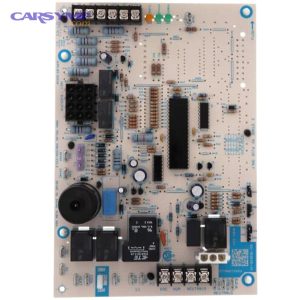
- HVAC control head issue: HVAC control panel failures can stop commands from reaching the blower circuit and blend doors.
- Power/ground or ignition feed issue: a wiring fault, bad ground, or ignition switch feed problem.
At this stage, you’re no longer diagnosing “heat” first—you’re diagnosing “HVAC system power.” That’s a different workflow than coolant-related no-heat problems.
What should homeowners check first when a heater is not working?
Yes—you should start with quick checks first because they resolve many “heater not working” cases with minimal risk, minimal time, and zero parts swapping. Next, the goal is to confirm three basics: the engine can make heat, hot coolant can reach the heater core, and the HVAC can route that heat to the cabin.
Is the thermostat set correctly (mode, setpoint, fan setting, batteries) and actually calling for heat?
Yes, you should verify the HVAC settings first because wrong settings can mimic a mechanical failure, and correcting them is instant. Then, confirm these items:
- Set temperature to full hot .
- Set mode to dash vents or defrost (some cars blend differently by mode).
- Turn recirculation off for testing (fresh air can change perceived heat).
- Confirm the blower speed changes across settings.
If nothing changes—no fan response, no mode change, no temperature change—suspect HVAC control panel failures or a power issue feeding the HVAC system.
Is the furnace getting power (breaker, service switch, door panel safety switch)?
No—your car doesn’t use a home furnace breaker or door switch, but the equivalent check in a vehicle is fuse/relay power to the blower and HVAC control circuits, and it matters for the same reason: no power means no output. Next, do the safe, owner-level version:
- Check the HVAC/blower fuse(s) in the interior fuse box and under-hood box (your owner’s manual labels these).
- If the blower is dead on all speeds, consider the blower relay.
- If the blower only works on “high,” suspect the blower resistor/module.
This is still a “quick check,” not deep electrical diagnosis, and it prevents you from chasing coolant issues when the fan simply can’t run.
Could a dirty air filter or blocked vents be causing the furnace to shut off?
Yes, a restricted cabin air filter or blocked intake can reduce airflow enough that heat feels absent, even when the heater core is hot. Next, understand why this resembles the title’s “dirty filter” idea:
- If airflow is weak, warm air can’t reach you, so you perceive “no heat.”
- A clogged filter can also cause fogging and poor defrost performance, which often gets reported as “heater not working.”
Check:
- Cabin air filter condition (many are behind the glovebox).
- Intake grille at the base of the windshield (leaves/debris).
- Vents that are accidentally closed or obstructed.
Airflow restrictions won’t usually cause car overheating, but they can absolutely cause “no heat in the cabin” as a comfort symptom.
Should you reset the system, and if so, how do you do it safely?
Yes, you can try a safe reset because it can clear minor control glitches, but you should do it only once and avoid masking serious problems. Then, follow a cautious reset approach:
- Turn the HVAC off, turn the car off, remove the key (or power down), wait 60 seconds.
- Restart, set full hot, medium fan, and test again.
- If your car has an HVAC “calibration” procedure (common on some makes), follow the owner manual instructions—don’t guess.
Here’s the “what not to do” part of quick temporary fixes and what not to do:
- Don’t keep cycling ignition repeatedly to “force it to work.”
- Don’t bypass fuses or install oversized fuses.
- Don’t open a hot cooling system cap to “check coolant” immediately after driving.
What are the most common causes of a no-heat furnace, and how do you match cause to symptom?
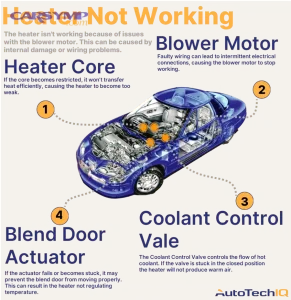
There are five main causes of a car heater blowing cold air—low coolant, thermostat faults, heater core restrictions, airflow/blower problems, and blend door/control failures—and you can narrow them fast by matching symptoms to the correct bucket. Next, use the checklist logic below before you buy parts.
Is the issue likely ignition or fuel-related (pilot/igniter/gas supply) when the furnace tries to start?
No, this does not apply to most car heater problems because a car cabin heater doesn’t rely on a pilot light or burner ignition; it relies on engine coolant heat. Next, translate that home-heater thinking into car terms:
- If the engine itself isn’t warming up, the cabin can’t get heat.
- If the engine warms up but coolant can’t flow through the heater core, the cabin can’t get heat.
- If coolant is hot but HVAC can’t mix or route air, the cabin still won’t get heat.
So instead of “ignition,” your equivalent “heat source” diagnostic is: Is the engine reaching normal operating temperature?
Could a dirty flame sensor be causing the furnace to light briefly then shut off?
No, cars don’t use flame sensors for cabin heat, but the pattern “works briefly then fails” still maps to car systems. Next, the closest analogs are:
- Low coolant: heat may come and go as coolant sloshes and air pockets shift.
- Air trapped in the cooling system: intermittent heat, often after coolant service.
- Partially clogged heater core: heat may improve at higher RPM then fade at idle.
- Blend door slipping: temperature changes unpredictably when driving over bumps.
This is where “brief heat” becomes a diagnostic clue—especially for low coolant causing no heat diagnosis and early heater core clogged symptoms.
Is overheating from poor airflow causing short cycling (high-limit switch trips)?
No, a car HVAC doesn’t use a high-limit switch the way a furnace does, but airflow still matters because low airflow can make you think there’s no heat. Next, interpret “short cycling” in car terms:
- Fan speed changes by itself could indicate a failing blower control module.
- Airflow drops after a few minutes could indicate debris shifting or a blower overheating and shutting down.
- Defrost is weak can be a cabin filter restriction rather than coolant temperature.
If your engine temperature is normal but airflow is weak, prioritize the blower circuit and cabin filter. If airflow is strong but air is cold, prioritize coolant level/flow and blend doors.
If you have a high-efficiency furnace, could a clogged condensate drain or pressure switch be stopping heat?
No, but there is a car equivalent: cooling system circulation issues or engine temperature not reaching normal causes. Next, the most common cause in that category is the thermostat—especially when it’s stuck open.
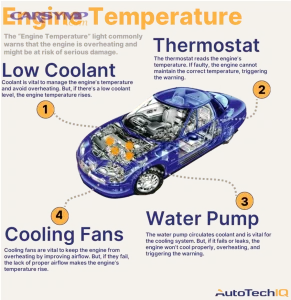
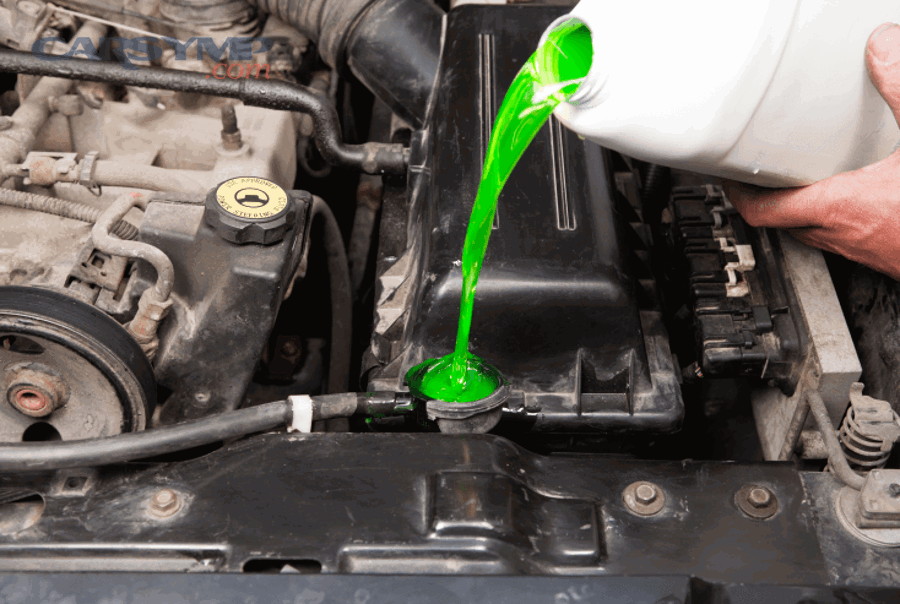
A thermostat stuck open lets coolant circulate too early, so the engine warms up slowly or never reaches proper temperature, which directly reduces heater output. Common Thermostat stuck open symptoms include:
- Temperature gauge staying lower than normal after driving.
- Heater blowing lukewarm or cold, especially at highway speed in cold weather.
- Poor fuel economy (engine runs too cool).
How do you compare thermostat problems vs dirty filter problems (and fix the right one)?
A thermostat problem wins as the likely cause when engine temperature is abnormal, while a filter/airflow problem is most likely when engine temperature is normal but cabin airflow is weak. Next, this comparison saves you time because it prevents you from replacing HVAC parts when the engine simply isn’t generating usable heat.
What signs point to a thermostat issue rather than a furnace issue?
There are 4 main signs your no-heat complaint is really an engine temperature regulation issue:
- Engine warms up slowly (long time to reach normal).
- Gauge reads low or fluctuates oddly.
- Heat is lukewarm, not truly hot, even after driving.
- You also see clues like reduced MPG or the car runs “too cool.”
That cluster is the heart of engine temperature not reaching normal causes, and it’s where thermostat diagnosis belongs. If your car also shows car overheating, that shifts toward thermostat stuck closed, coolant flow restriction, or cooling fan/radiator issues—conditions that require faster escalation.
What signs point to a dirty filter/airflow restriction rather than controls?
There are 4 main signs the heat may be present but not delivered:
- Airflow is weak at all vent positions.
- Blower sounds normal but output is low (restriction downstream).
- Defrost performance is poor, windows fog easily.
- Airflow improves when you remove/replace the cabin filter.
A dirty cabin filter doesn’t usually change the engine temperature gauge, so the gauge becomes your quick “thermostat vs airflow” discriminator.
Which fix should you try first: thermostat corrections or filter replacement?
Thermostat correction wins first when the gauge indicates low or slow warm-up, while filter replacement wins first when airflow is weak but engine temperature is normal. Next, here’s a simple decision path:
- Gauge low / slow warm-up → investigate thermostat and coolant temperature behavior first.
- Gauge normal + airflow weak → inspect cabin filter and intake path first.
- Gauge normal + airflow strong + air cold → investigate coolant level/flow, heater core, and blend door.
This is also where low coolant causing no heat diagnosis belongs: low coolant can produce strong airflow but cold air because the heater core isn’t receiving enough hot coolant.
When is a heater-not-working problem unsafe or “call a pro now”?
Yes—some no-heat problems are unsafe because they indicate coolant loss, overheating risk, or potential engine damage, and there are at least three clear “stop and escalate” triggers. Next, treat these as non-negotiable:
- Overheating or temperature gauge climbing into the red.
- Coolant loss you can’t explain or repeated low coolant.
- Sweet smell / fogging with oily film and wet passenger carpet (possible heater core leak).
If you’re seeing car overheating, your priority is cooling system protection, not cabin comfort.
Do you smell gas, see soot, or have a carbon monoxide alarm going off?
No, a typical car heater problem is not a combustion-in-cabin issue, but you should still treat any exhaust smell in the cabin as urgent because it can indicate an exhaust leak, which is a safety problem. Next, if you smell exhaust (not coolant), stop troubleshooting cabin heat and prioritize inspection.
For heater-specific safety, the bigger red flags are coolant-related:
- Sweet coolant odor inside.
- Persistent windshield fogging.
- Wet carpet on the passenger side.
Those are classic signs of a heater core leak and should be handled promptly.
Is the breaker tripping, wiring hot, or there’s a burning smell?
Yes, if you smell burning plastic, see smoke, or the blower repeatedly dies and returns, stop because electrical overheating can damage wiring and create fire risk. Next, likely culprits include:
- Blower motor drawing excessive current.
- Blower resistor/module overheating.
- Poor ground or melted connector at the blower.
This is a situation where “DIY” should stop at fuse inspection and visual checks, then move to a shop if symptoms persist.
If the furnace shows an error code, should you keep resetting it?
No, you should not keep resetting when a fault returns because repeated resets can mask a problem long enough to cause bigger damage—especially if the root issue is coolant loss or overheating. Next, translate “error code” for cars:
- If the check engine light is on and the heater is weak, a thermostat-related code (varies by vehicle) can support the “stuck open” theory.
- If the car is overheating, codes can indicate fan control or coolant temperature sensor issues.
A one-time reset is a test; repeated resets are avoidance.
What if your heater turns on but still feels “not working” (cold air, uneven rooms, or heat pump behavior)?
A heater that “works but doesn’t feel like it” usually comes down to partial heat transfer, uneven airflow control, or driver expectations, and you can diagnose it by checking coolant temperature, heater core flow, and air-mixing doors. Next, this section expands your diagnostic precision and helps you avoid unnecessary parts.
Why does a heat pump blow “cool” air sometimes, and when is that normal vs a problem?
In most standard vehicles, this doesn’t apply because they use engine heat. Next, the car-equivalent confusion is: why does the heater feel colder at idle but warmer while driving? That pattern often points to:
- Low coolant level (less coolant reaches heater core at idle).
- Air trapped in heater core circuit (flow improves at RPM).
- Heater core restriction (needs higher pump speed to push flow).
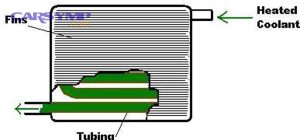
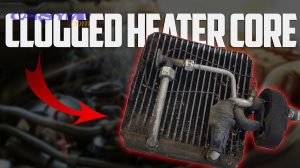
If you suspect heater core clogged symptoms, one quick owner-level clue is to carefully feel (without burning yourself) the two heater hoses after the engine is warm: if one is hot and the other is much cooler, flow through the heater core may be restricted.
What causes some rooms to stay cold even though the heater works (duct leaks, closed dampers, zoning)?
For cars, replace “rooms” with driver vs passenger temperature or “one vent is hot, another is cold.” Next, that’s usually a blend door or distribution door problem:
- Blend door actuator no-heat issues: door stuck on cold, stripped gears, clicking behind dash.
- Mode door stuck: defrost works but dash vents don’t, or vice versa.
- Dual-zone system fault: driver side hot, passenger cold.
If you hear a repeating clicking or tapping sound behind the dash when changing temperature, that strongly supports actuator trouble. This is also where HVAC control panel failures can matter—if the control head doesn’t send commands correctly, the doors may not move even if actuators are healthy.
Can a smart thermostat schedule, sensor, or app setting make it seem like the heater isn’t working?
In cars, the equivalent is Auto climate behavior: the system may blow cooler air or reduce fan speed until the engine warms up, which can feel like a failure. Next, to rule this out:
- Switch from Auto to manual fan control.
- Set temperature to maximum heat.
- Use a mid-level fan speed and wait until the engine reaches normal temperature.
If the engine never reaches normal temperature, Auto mode will never “commit” to strong heat, and you’ll loop back to thermostat or coolant temperature issues.
What maintenance prevents “heater not working” emergencies next time (filters, annual tune-up, drain care)?
Yes—maintenance prevents most heater complaints because the cabin heater is tightly linked to cooling system health and airflow hygiene. Next, the most effective prevention list is:
- Replace cabin air filter on schedule (or earlier in dusty/pollen-heavy areas).
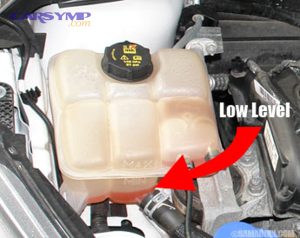
- Maintain proper coolant level and inspect for leaks.
- Flush/replace coolant according to manufacturer interval to reduce scale and sludge.
- Address thermostat issues early when you notice slow warm-up.
- Keep the cowl intake area free of debris.
To make decision-making easier, the table below summarizes common no-heat causes and typical cost ranges. Costs vary by make/model and labor access, but this gives you a realistic planning baseline.
| Problem area | What you’ll notice | Typical fix | Typical cost range (parts + labor) |
|---|---|---|---|
| Low coolant / small leak | Heat comes and goes, coolant level drops | Diagnose leak, top up, repair leak | Varies widely (minor to major) |
| Thermostat stuck open | Slow warm-up, lukewarm heat, low gauge | Replace thermostat + refill coolant | Moderate |
| Heater core clogged | Weak/uneven heat, hose temp difference | Backflush or replace heater core | Moderate to high |
| Blend door actuator | Clicking behind dash, temp won’t change | Replace actuator / recalibrate doors | Moderate |
| HVAC control head | No response to inputs, weird behavior | Diagnose wiring/control head | Moderate |
Evidence (if any)
According to a study by Weber State University from a vehicle emissions research report, in 2017, cold-start operation with low engine/coolant temperatures is associated with increased hydrocarbon and carbon monoxide emissions because engines use enriched fueling during cold conditions.
This matters for heater diagnosis because when the cabin heater is weak due to engine temperature not reaching normal, it’s not only a comfort issue—prolonged “running cool” conditions can also align with inefficient warm-up behavior and higher emissions during the cold-start phase.