


A windshield crack can often be slowed down (and sometimes stabilized) if you act quickly, keep the damage clean and dry, and reduce stress on the glass until you can get a proper repair. The goal of a quick temporary fix is not to “make it like new,” but to prevent contamination and limit the conditions that make cracks run.
Next, the most important part of any temporary plan is knowing what not to do—because the wrong “hack” can make the crack spread faster or make professional repair less effective later. Avoiding heat shock, pressure, and bad adhesives is just as valuable as the temporary fix itself.
Then, you need a clear way to decide between temporary fixes and permanent repair. Temporary steps buy time; permanent repair (resin injection) or replacement restores safety and long-term reliability. This is where crack location, size, and your visibility matter most.
Introduce a new idea: once you understand immediate stabilization, mistakes to avoid, and repair vs replacement, you can make safer “drive or don’t drive” decisions and plan the next step with fewer surprises (including ADAS calibration on newer cars).
Can you stop a windshield crack from spreading (at least temporarily)?
Yes—windshield crack spreading can often be slowed temporarily because (1) keeping the crack clean and dry reduces contamination, (2) minimizing temperature shock lowers thermal stress, and (3) reducing vibration and flex limits crack growth. Next, because “stop” usually means “stabilize long enough to reach a proper repair,” you’ll get the best results when you treat the crack like an urgent contamination-and-stress problem, not a cosmetic one.
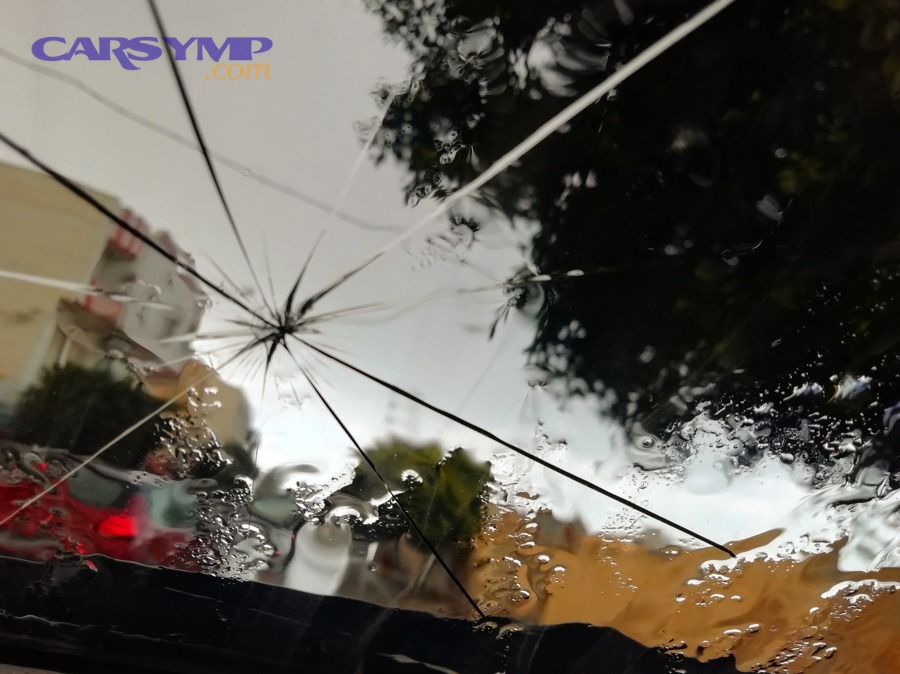
A cracked windshield spreads for two big reasons: stress and contamination.
- Stress comes from temperature swings (cold glass + hot defroster), body flex (potholes, uneven driveways), and pressure (slamming doors, leaning on the glass).
- Contamination is dirt, water, and road film that gets pulled into the crack. Once it’s inside, it can interfere with resin repair and can also worsen visibility at night due to glare.
If you’ve ever diagnosed a “heater not working” complaint, you already understand this logic: you don’t start by swapping parts; you first prevent further damage and isolate the cause. The same mindset applies here—stabilize conditions first, then choose the right repair path.
Does covering the crack with clear tape actually help?
Clear tape can help yes, because it (1) blocks dirt and moisture, (2) slows contamination that ruins repair outcomes, and (3) reduces wind-driven grime intrusion at highway speeds. Then, because tape is a barrier—not a structural fix—you must apply it correctly to avoid trapping moisture.
How to do it (fast and safe):
- Clean gently around the crack with a dry microfiber cloth. If it’s wet, dry the area first.
- Use clear packing tape (not duct tape). Apply a single strip that covers the damaged area with minimal pressure.
- Do not press hard into the crack—pressure can extend the fracture.
- Keep it on only as a short-term contamination shield until a repair appointment.
Tape is the best “quick fix” when:
- You can’t repair immediately (travel, weekend, bad weather).
- The crack is new and you want to keep it repairable.
Tape is a poor idea when:
- The glass is wet and you’d trap water under the tape.
- You plan to use a resin kit immediately (remove tape, dry, and follow kit steps).
Will a DIY windshield repair kit prevent the crack from spreading?
A DIY repair kit can help yes, because it (1) fills micro-voids with resin, (2) seals against moisture intrusion, and (3) reduces the chance of rapid crack growth—but only when the damage type is suitable (usually small chips or short cracks). Next, because kits vary and technique matters, you should treat a kit as a “best effort stabilizer,” not a guaranteed stop.
When a kit is most likely to work:
- Small chips (bullseye, star, combination) and very short cracks.
- Damage not directly at the edge.
- Damage that is still clean and relatively fresh.
When a kit is unlikely to work:
- Long cracks running across the windshield.
- Cracks that reach the edge (edge cracks tend to spread faster).
- Damage in the driver’s primary line of sight where optical distortion is unacceptable.
Here’s why cleanliness matters: even the U.S. National Highway Traffic Safety Administration (NHTSA) has discussed repair processes that inject liquid into windshield cracks and then cure/finish the area—showing that the principle (injection + curing + finishing) is a recognized repair pathway, even though outcomes depend on process and suitability. (nhtsa.gov)
What are “quick temporary fixes” for a cracked windshield—what counts and what doesn’t?
Quick temporary fixes are short-term mitigation steps that reduce contamination and stress on a windshield crack, buying time until professional repair or replacement restores long-term safety and clarity. Then, because “temporary” is often confused with “permanent,” it helps to separate what truly reduces risk from what merely hides the damage.
A temporary fix is “real” if it does at least one of these:
- Keeps the crack clean/dry (contamination control)
- Reduces stress on the glass (temperature + vibration control)
- Prevents rapid worsening until repair can happen (time-buying)
A temporary fix is mostly a myth if it:
- Claims to “restore strength permanently” without proper resin injection or replacement
- Adds stress (heat, pressure, drilling) or contaminates the crack
What’s the safest “right now” checklist to stabilize the crack?
There are 7 practical stabilization steps you can do immediately: park safely, inspect the damage, clean/dry the area, cover to block contamination, avoid temperature shock, reduce vibration, and schedule repair. Next, because most cracks worsen from routine actions, the checklist focuses on preventing “accidental damage growth.”
Right now checklist (10–15 minutes):
- Park out of direct sun if possible (reduces thermal cycling).
- Inspect crack type and location: is it a chip, a star, a long line crack, or an edge crack?
- Dry the area if wet. Water trapped in the crack is your enemy.
- Lightly clean around it with a microfiber cloth (no aggressive scrubbing).
- Apply clear packing tape to shield from dirt/moisture (only if dry).
- Avoid blasting the defroster on high heat or ice-cold A/C directly onto the glass.
- Plan the next step: repair appointment or replacement quote.
This is similar to a “Low coolant causing no heat diagnosis” approach: you don’t keep driving and hoping it fixes itself; you stabilize and prevent further damage first, then diagnose correctly.
Which products are reasonable temporary options (and why)?
There are 3 main types of temporary options: contamination barriers (tape/film), DIY resin kits (when suitable), and protective crash-wrap style films for larger openings—based on how much sealing vs filling you need. Then, because each option solves a different problem, choose the one that matches your situation.
1) Clear tape / protective film (barrier)
- Best for: fresh damage, travel, waiting on appointment
- Benefit: keeps crack clean and improves the odds of a successful professional repair later
2) DIY resin repair kit (fill + seal)
- Best for: small chips and short cracks
- Benefit: can reduce spreading risk by sealing/filling micro-cracks
3) Temporary crash-wrap film (larger coverage)
- Best for: multiple chips, badly damaged areas where you need coverage
- Benefit: broad contamination control (still not structural)
The key is honesty: if you need a short-term barrier, use a barrier. If the damage is eligible for resin, do resin properly. If it’s not eligible, don’t waste time on magic fixes—plan replacement.
What NOT to do when your windshield is cracked?
There are 6 common “don’ts” for a cracked windshield: don’t use superglue, don’t drill, don’t blast extreme heat/cold, don’t pressure-wash, don’t slam doors, and don’t ignore spreading in your line of sight—because each one either increases stress or ruins repair quality. Next, because many drivers try to “DIY their way out” under pressure, this section is designed to stop the crack from getting worse today.
In the same way that “Blend door actuator no-heat issues” can’t be solved by adding random fluids to the system, windshield cracking can’t be solved by random adhesives and heat tricks. Bad inputs create worse outcomes.
What common DIY “hacks” make cracks worse (superglue, drilling, heat, etc.)?
Avoid these hacks because they (1) contaminate the crack, (2) add stress that extends damage, and (3) reduce professional repair success. Then, because some hacks sound “logical” on social media, here’s what actually happens:
- Superglue (cyanoacrylate): It’s not designed for laminated windshield repair. It can fog, discolor, and trap contaminants. It can also complicate resin bonding later.
- Household epoxy: Similar problem—wrong chemistry and viscosity for capillary flow in micro-cracks.
- Drilling “stop holes”: This is a specialized technique sometimes used in certain materials by trained technicians, but on laminated windshield glass it can easily worsen damage and is not a safe DIY approach.
- Heating with a hair dryer / heat gun: Sudden localized heat creates thermal gradients, which increases crack growth risk.
- Pouring hot water on cold glass: Extreme thermal shock is one of the fastest ways to turn a small crack into a long one.
Why thermal shock matters: glass responds to temperature differences with stress. Research on glass fracture under thermal loading commonly highlights temperature gradients as a major driver of breakage risk. (mdpi.com)
Which everyday actions can extend the crack (defroster, car wash, potholes)?
Everyday actions can extend the crack because they combine vibration, flex, and temperature change—especially defroster blasts, automatic car washes, potholes, and door slams. Next, because you can’t avoid driving forever, the aim is to reduce the biggest triggers until repair.
High-risk daily triggers (and what to do instead):
- Defroster on full heat: Use gradual warming. Start low and increase slowly.
- Automatic car wash / pressure washing: Avoid until repaired. High pressure and temperature shifts are a bad mix.
- Potholes and rough roads: Slow down and avoid sudden impacts.
- Slamming doors: Close doors gently to reduce cabin pressure pulses.
- Parking in direct sun, then blasting A/C: Try shaded parking; ease into temperature changes.
Visibility is not just annoyance—cracks can distract and create glare. A safety-focused review from Monash University Accident Research Centre notes that windscreen damage can obscure driver vision and discusses categories of sudden impact damage like cracks and bullseyes. (monash.edu)
Temporary fix vs permanent repair: what’s the difference and which one do you need?
A temporary fix wins for short-term contamination control, permanent repair (resin injection) is best for eligible chips/short cracks, and full replacement is optimal for long cracks, edge cracks, or visibility-critical damage. Then, because the wrong choice costs time and money, you’ll use crack length, location, and visibility to decide.
Temporary fixes
- Goal: keep the crack from getting worse right now
- Outcome: buys time, doesn’t restore the glass like new
- Best for: travel, waiting for service, preventing contamination
Permanent repair (resin repair)
- Goal: stabilize damaged area by filling and bonding
- Outcome: improves strength and often improves appearance (not always invisible)
- Best for: chips and limited cracks that are still repairable
Replacement
- Goal: restore full integrity and clarity when repair isn’t viable
- Outcome: new glass (may require ADAS recalibration on many modern vehicles)
- Best for: long cracks, edge cracks, multiple cracks, severe line-of-sight issues
When is a windshield repair likely to work vs when is replacement more likely?
Repair is more likely to work for small, clean chips and short cracks, while replacement is more likely for long cracks, edge-reaching damage, multiple impact points, or distortion in the driver’s primary view. Next, because “repairable” varies by shop and vehicle, you’ll use a practical decision grid.
Repair-leaning signs
- One main chip with limited radiating cracks
- Damage not at the edge
- Damage that is fresh/clean (not filled with dirt or water)
- Minimal visual distortion
Replacement-leaning signs
- Long crack crossing large portions of the windshield
- Crack reaching or starting at the edge
- Multiple cracks or “spidering” that spreads
- Crack in driver’s direct line of sight with night glare
A useful mental model: temporary steps reduce risk; permanent actions restore function. Just like diagnosing “heater not working,” you don’t keep restarting the engine and hoping heat appears—you pick the fix that matches the failure mode.
How long can you drive with a cracked windshield after a temporary fix?
You can sometimes drive a short, careful distance with a stabilized crack because (1) reduced contamination helps, (2) gentler driving reduces stress, and (3) gradual temperature control lowers crack growth risk—but you should treat it as a “get-to-repair” window, not a long-term solution. Then, because safety and legality depend on visibility impairment, use risk-based rules instead of a fixed number of days.
Practical guidelines (risk-based):
- Short trip to a repair shop: Often reasonable if visibility is not impaired and the crack isn’t rapidly spreading.
- Avoid highways and rough roads: High vibration and wind pressure raise risk.
- Avoid extreme weather transitions: No immediate defrost blasts; no rapid cooling on hot glass.
- If the crack is growing quickly: Stop and reassess.
Is it safe to drive with a cracked windshield—and when should you stop driving?
It depends: driving with a cracked windshield can be unsafe because (1) cracks can impair visibility and create glare, (2) cracks can spread suddenly under stress, and (3) the windshield contributes to overall vehicle safety—so you should stop driving when the crack affects your vision, reaches the edge, or spreads rapidly. Next, because “safe” is situation-dependent, you’ll use specific warning signs instead of guesswork.
Even if a crack looks small in daylight, it can become a serious glare and distraction problem at night or in rain. This is one reason many safety and standards discussions focus on maintaining unobstructed vision through glazing. (nhtsa.gov)
What warning signs mean “don’t drive—get it fixed now”?
There are 7 warning signs you should treat as “stop driving” triggers: vision obstruction, crack in primary viewing area, rapid spreading, edge involvement, multiple cracks, severe distortion/glare, and water intrusion/fogging. Then, because these signs correlate with higher risk, they help you decide quickly.
Stop-driving warning signs
- Crack is in your direct line of sight or causes strong glare at night
- Crack reaches the edge or starts at the edge
- Crack is growing over hours/days, or after one drive
- You see multiple impact points or spidering
- Wipers drag across the crack and worsen it
- Water is getting in or visibility worsens in rain
- You feel unsafe because the crack distracts you (distraction matters)
A safety-oriented review from Monash MUARC notes that windscreen damage can obscure vision, and also highlights that sudden impact damage includes cracks and bullseyes—reinforcing why “visibility first” is a sound decision rule. (monash.edu)
Should you book repair first or replacement first?
Yes—book an inspection/repair first in many cases because (1) shops can confirm repair eligibility, (2) repair is often faster and cheaper when it’s possible, and (3) you avoid replacing glass unnecessarily—but book replacement immediately if the crack is long, edge-based, or visibility-critical. Next, because the outcome hinges on eligibility, “inspection first” prevents wasted time.
Book repair-first when:
- It’s a chip or short crack
- It’s clean and not edge-based
- Visibility is acceptable
Book replacement-first when:
- Long crack spans large distance
- Crack reaches edge or has multiple branches
- Your view is impaired or the crack is spreading rapidly
What affects the cost and complexity of fixing a cracked windshield (especially on newer cars)?
Cost and complexity vary because (1) damage type determines repair vs replacement, (2) glass and labor differ by vehicle, and (3) many modern vehicles require ADAS camera recalibration after replacement. Then, because “newer car” glass isn’t just glass, understanding sensors and calibration helps you avoid surprise charges and safety issues.
How do ADAS cameras/sensors change windshield replacement (calibration needs)?
ADAS can change the job because many vehicles mount forward-facing cameras behind the windshield near the rearview mirror, and replacement can require recalibration to ensure systems work correctly. Car ADAS explains that these cameras are commonly mounted behind the windshield near the mirror area, which is why glass replacement can affect them. (caradas.com)
If you’re replacing the windshield, ask the shop:
- Does my vehicle require static or dynamic calibration?
- Is calibration included in the quote?
- Will I get documentation that calibration was completed?
Safelite describes static recalibration using a target setup and notes it can take up to an hour or more depending on the vehicle, which helps explain why ADAS can add time and cost. (safelite.com)
Will insurance cover windshield repair or replacement (and when is it “worth it”)?
Insurance sometimes covers repair/replacement depending on your coverage (often comprehensive) and deductibles, but “worth it” depends on the cost difference and whether claims affect premiums. Then, because policies vary widely, the best move is to compare: out-of-pocket cash price vs deductible + potential claim impact.
What to ask your insurer (quick script):
- Is windshield repair covered with no deductible?
- Does replacement apply the deductible?
- Is there preferred-shop pricing?
- Will this claim affect premium ?
Why do edge cracks spread faster than center cracks?
Edge cracks often spread faster because the perimeter area experiences different stress patterns (frame constraints, body flex, vibration transfer). Then, because edge cracks also reduce repair eligibility in many shop policies, edge involvement is a practical replacement signal even if the crack looks “small.”
Simple explanation:
- The windshield is bonded into the frame; edges can experience stress concentrations.
- Flex from potholes and chassis twist transfers into the border.
- Once a crack reaches the edge, it has a path that can “run” with less resistance.
What should you ask an auto glass shop to avoid repeat issues after repair?
You should ask about repair expectations and aftercare because that determines long-term success and prevents repeat cracking. Then, because even a good repair might remain slightly visible, aligning expectations reduces frustration.
Ask these questions:
- Will the repair be structurally stabilizing, even if faint marks remain?
- What warranty is offered on the repair or replacement?
- If replacing: is the glass OEM-equivalent, and do you handle ADAS calibration?
- What should I avoid for 24–48 hours (car wash, harsh temperature changes)?
Evidence (if any)
According to a study by Monash University Accident Research Centre (MUARC), in their Windscreens and Safety: A Review report, windscreen damage such as cracks or chips can obscure driver vision, highlighting why visibility impact is a key safety threshold when deciding whether to drive or seek immediate repair. (monash.edu)