


HVAC control panel failures usually trace back to the system’s “brain” (the control board/control panel assembly) misreading inputs, failing to power outputs, or shutting the system down for safety. If your heating or cooling becomes intermittent, unresponsive, or stuck in a lockout, a failing control panel is a top suspect—but it’s not the only one.
Many homeowners first notice comfort complaints like uneven temperatures, short-cycling, or a system that won’t start even though the thermostat is calling. From there, the real goal is to separate “control panel failure” from look-alike issues such as low-voltage wiring faults, failed sensors, clogged drains, tripped limits, or a thermostat problem.
Next, you’ll learn the symptoms that most strongly point to the HVAC control panel, the most common causes that kill boards over time, and the safest diagnostic path you can follow without turning a simple issue into a costly repair.
Introduce a new idea: the fastest way to get confident is to understand what the control panel does, then match symptoms → likely causes → safe tests → repair/replace decisions.
What are HVAC control panel failures?
An HVAC control panel failure is a malfunction of the furnace/air-handler control board (or integrated control module) that prevents the system from correctly sequencing heating/cooling operations, interpreting safety signals, or powering components like the inducer, igniter, blower, or compressor contactor. Then, because the control panel sits between inputs (thermostat/sensors) and outputs (motors/valves/relays), a single weak connection or damaged circuit can create confusing, “random” behavior.
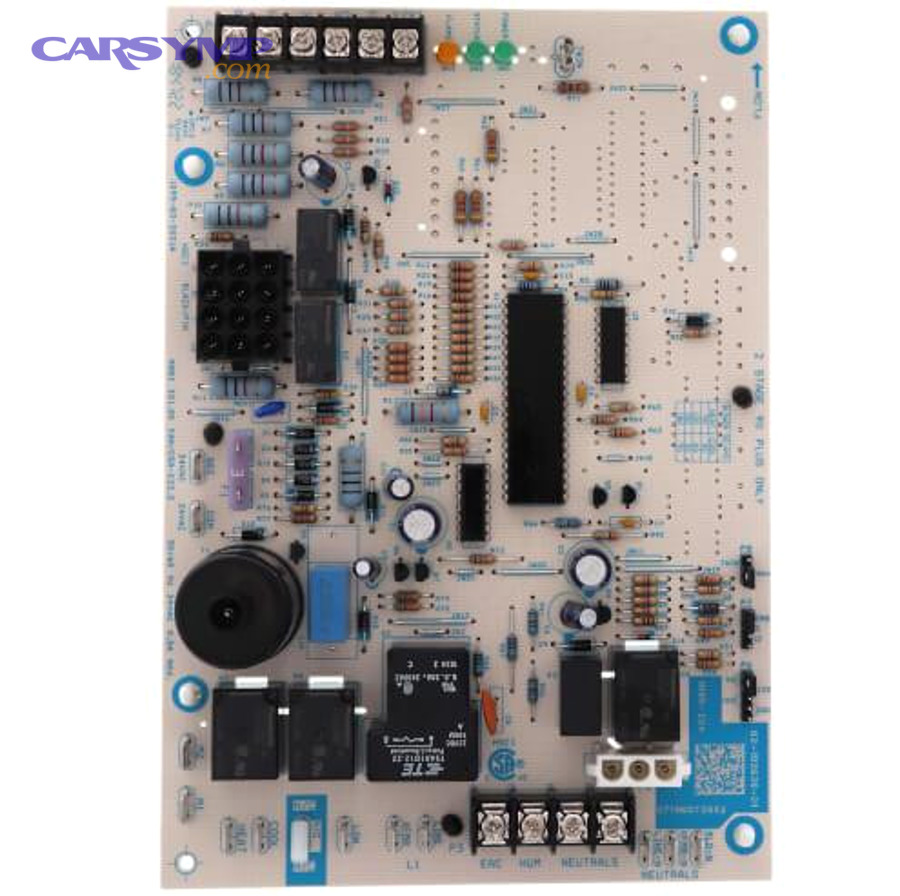
What does an HVAC control panel/control board do?
The control panel runs a timed “sequence of operation” and continuously checks safety conditions. In a typical gas furnace, that includes:
- Reading the thermostat call (W for heat, Y for cooling, G for fan)
- Confirming door switch, limit switches, and pressure switch signals
- Starting inducer motor, igniter, and gas valve in a specific order
- Proving flame via flame sensor
- Starting blower after a delay and stopping it with another delay
- Locking out and flashing fault codes if a safety condition fails
This matters because a “board problem” can show up as heater not working, blower running nonstop, ignition failing, or a unit that seems to “try” repeatedly and then stops.
Where is the control panel located?
Most control boards are:
- In the furnace’s blower compartment (behind the service door)
- In an air handler control compartment near the blower/transformer
- In some packaged units, behind an electrical access panel outdoors
You’ll often see a small LED light (or two) on the board used for diagnostics, plus a fuse (commonly 3A–5A) protecting the 24V circuit.
What symptoms indicate an HVAC control panel failure?
Yes—many comfort and start-up problems can indicate HVAC control panel failure, and the strongest clues are (1) inconsistent or incorrect sequencing, (2) repeated lockouts with board fault codes, and (3) correct thermostat input but missing outputs from the board. Next, it helps to group symptoms into “what you feel,” “what you see,” and “what you measure.”
What comfort symptoms point to the control board?
Look for patterns that feel “electrical” rather than purely mechanical:
- Heat or AC works sometimes, then fails without a clear trigger
- Short-cycling (starts, stops, retries) that repeats in a predictable rhythm
- Blower runs when it shouldn’t, or won’t run even when it should
- Temperature drifts because the system won’t complete a full cycle
In cars, people describe “Engine temperature not reaching normal causes” when a thermostat stays open; in HVAC, a similar comfort complaint can happen when the system can’t hold a stable run long enough to reach setpoint.
What visual/audible clues are most telling?
These clues increase the odds the board is involved:
- LED status light flashing a fault pattern (board label or manual decodes it)
- Burnt smell, discoloration, or visible scorching on the board
- Corrosion on board traces or connectors
- Clicking relays with no corresponding motor/valve action
- A blown low-voltage fuse that keeps blowing after replacement
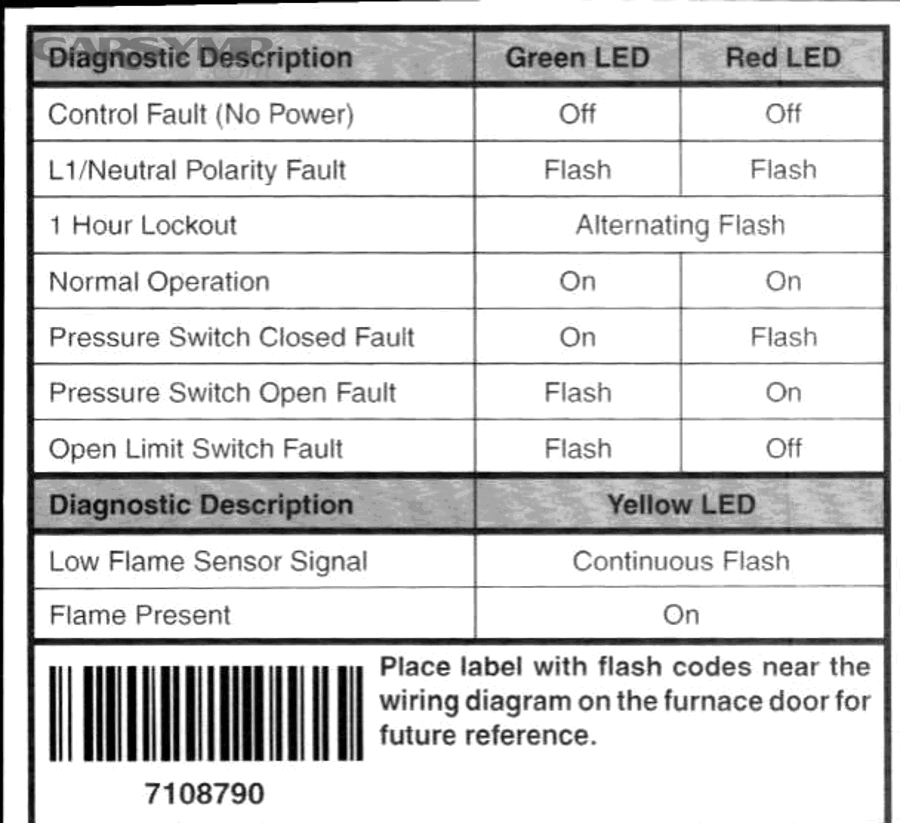
Which “hard symptoms” strongly implicate the board?
These are the highest-confidence indicators (after basic power checks):
- 24V present at transformer, thermostat is calling, but no 24V output from the board to the expected terminal/device
- Board won’t power up (no LED) despite correct line voltage and door switch closed
- Repeated “no-fault-found” behavior: technician checks parts, system works briefly, fails again (often due to heat-stressed solder joints or intermittent connectors)
A quick caution: a clogged hydronic heater core in a vehicle causes a very specific set of Heater core clogged symptoms (sweet smell, fogging, damp carpets). HVAC doesn’t have a “heater core,” but the analogy is useful: symptoms often point you toward where heat transfer or control is failing—just don’t let the terms mislead the diagnosis.
What are the most common causes of HVAC control panel failures?
There are 6 main causes of HVAC control panel failures: electrical stress (surges/sags), moisture/corrosion, overheating from airflow or enclosure heat, wiring shorts/ground faults, failing components downstream that overload outputs, and age-related solder/relay fatigue. More importantly, each cause leaves a different “fingerprint,” so you can diagnose smarter instead of guessing.
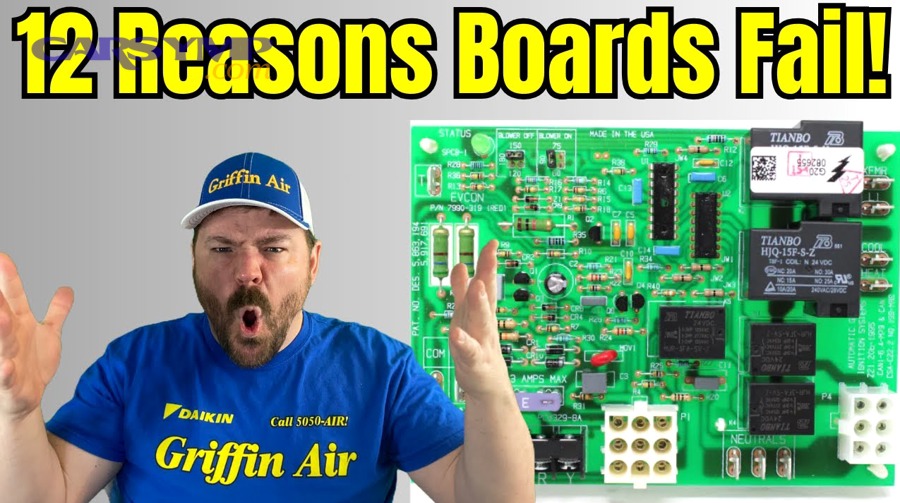
How do power surges, sags, and bad grounding damage boards?
Control boards contain sensitive electronics that dislike unstable power. Common triggers include:
- Lightning or utility switching events (surges)
- Loose neutrals or shared neutrals causing voltage irregularities
- Poor grounding that makes noise/transients worse
- Repeated brownouts/sags that stress power supplies
Evidence: According to a study by University of Córdoba from the Department of Electrotechnics and Electronics, in 2004, a university-campus power quality audit found voltage sags and surges as primary issues affecting installed equipment and linked disturbances to electronics problems and wear.
How does moisture and corrosion lead to control panel failure?
Moisture is a silent board killer, especially when paired with dust, flux residue, or ionic contamination:
- Condensate leaks dripping onto the board
- High humidity in basements/crawlspaces
- Evaporator/coil sweating near the control compartment
- Corroded spade terminals increasing resistance and heat
Evidence: According to a study by Technical University of Denmark (DTU) from the Department of Civil and Mechanical Engineering (Materials and Surface Engineering), in 2022, testing at 98% relative humidity showed how contamination, voltage, and spacing can accelerate leakage current and shorten time-to-failure on PCB surfaces due to electrochemical migration.
How does overheating (airflow restrictions or hot compartments) contribute?
Boards fail faster when they run hot. Typical reasons include:
- Dirty filters and closed registers raising furnace temperature rise
- Blocked returns starving airflow
- Blower issues (weak capacitor/ECM faults) overheating the heat exchanger area
- Tight electrical compartments near hot heat exchangers
This is where HVAC can resemble “electrical under-ventilation” failures in many devices: heat doesn’t just break parts suddenly—it weakens them until an intermittent failure becomes permanent.
How do wiring problems cause “false” board failures?
Low-voltage shorts are especially common:
- Pinched thermostat wire (staples through cable)
- Miswired thermostat terminals
- Shorted outdoor contactor coil or safety switch circuit
- Damaged humidifier/air cleaner accessory wiring
A board fuse blowing repeatedly often means “the board is protecting itself,” not necessarily “the board is bad.”
How can you diagnose HVAC control panel failures safely?
You can diagnose HVAC control panel failures safely by following 5 steps—verify power, verify thermostat call, read board diagnostics, isolate low-voltage shorts, and confirm outputs—while keeping panels secured and power off whenever you touch wiring. To better understand what’s failing, you’re trying to answer one question: Is the board receiving correct inputs but failing to deliver correct outputs?
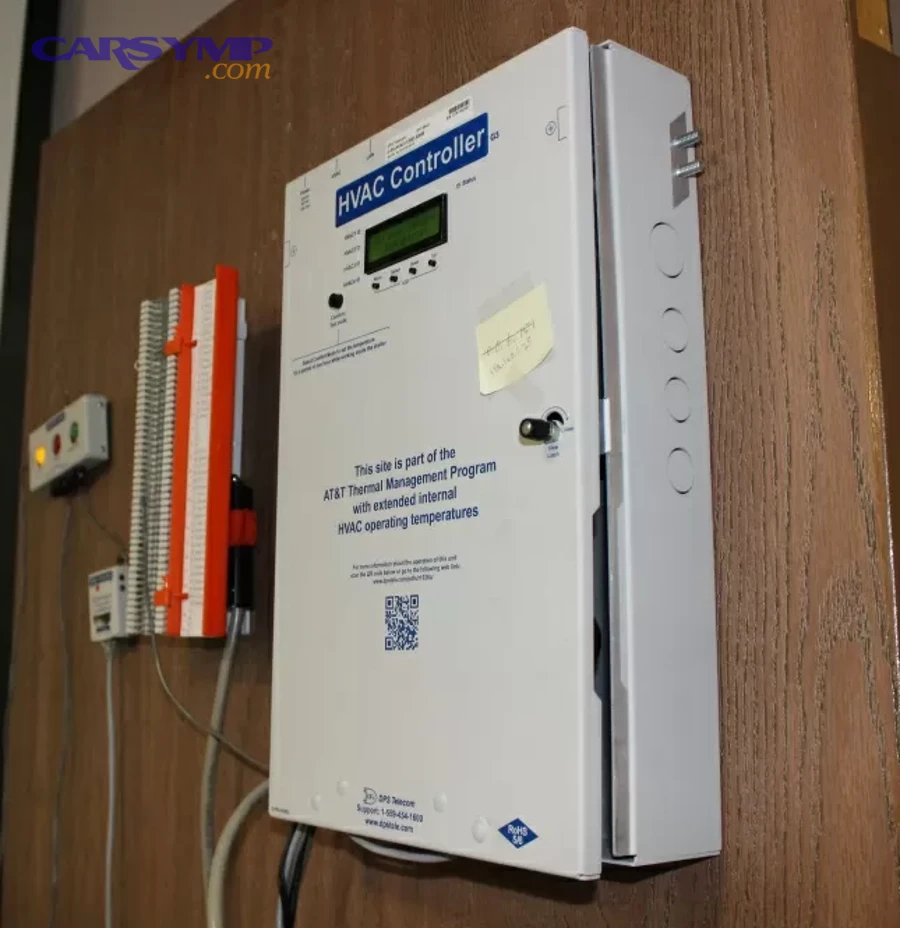
Step 1: How do you verify the right power is reaching the unit?
Start simple (and safe):
- Check the breaker and service switch (furnace switch looks like a light switch)
- Confirm the door switch is engaged (many furnaces won’t power the board with the door off)
- If you’re trained and comfortable: confirm line voltage at the unit’s L1/neutral connections
If line voltage is missing, the control board may be fine.
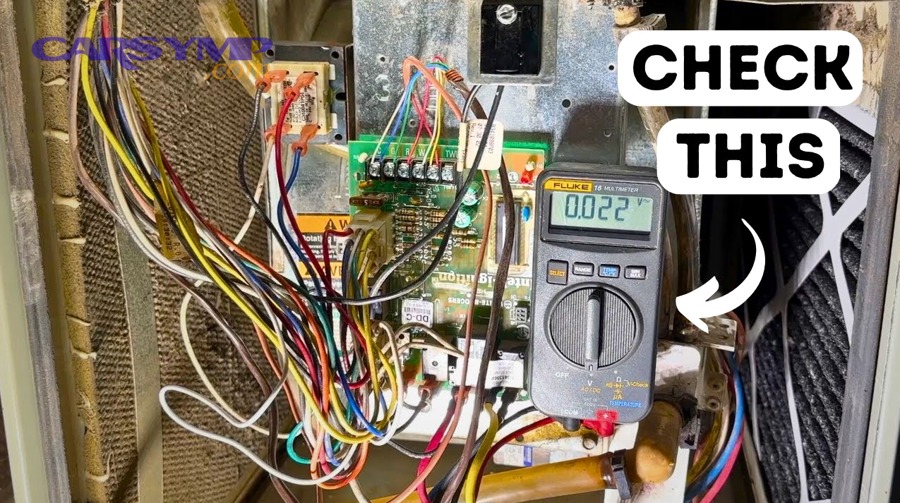
Step 2: How do you confirm 24V control power is present?
Most systems use a transformer to supply ~24V for controls:
- If the board is dead (no LED), confirm the transformer has power and is producing 24V
- Check the low-voltage fuse on the board (common failure point)
If 24V is missing, you don’t yet have a “bad board”—you may have a bad transformer, blown fuse, or short.
Step 3: How do you read LED fault codes correctly?
Boards usually flash codes for:
- Pressure switch open/closed faults
- Limit switch trips
- Ignition failure/flame sense issues
- Polarity/grounding problems
- Internal board errors
Use the door panel label or manual to decode—don’t rely on generic charts because codes vary by manufacturer.
Step 4: How do you isolate a low-voltage short without guessing?
A practical method:
- Power off.
- Disconnect thermostat wires from the board terminals (R, C, W, Y, G).
- Replace fuse (if blown).
- Power on and see if fuse holds.
- If it holds: short likely in thermostat cable/thermostat.
- If it blows: short likely in board, transformer wiring, or accessories.
If you reconnect circuits one-by-one and the fuse blows when you add a specific wire/device back, you’ve found the branch with the short.
Step 5: How do you confirm the board is failing to drive outputs?
This is where most DIYers should stop unless trained. Conceptually:
- Thermostat calls for heat (W energized) but inducer/igniter/gas valve never energize
- Thermostat calls for cool (Y energized) but outdoor contactor never energizes
- Fan call (G) doesn’t start blower, or blower runs continuously without a call
If inputs are correct and safeties are satisfied but outputs don’t happen, the board becomes the prime suspect.
Here’s a solid walkthrough video that explains sequence-of-operation thinking (not brand-specific):
What quick temporary fixes are safe, and what should you avoid?
Yes—there are safe quick temporary fixes for HVAC control panel-related symptoms, and they work because they reset lockouts, restore clean power, or remove obvious triggers; but you should avoid bypassing safeties or “jumping” circuits blindly because it can create fire, shock, or carbon monoxide risks. Next, think of this section as Quick temporary fixes and what not to do—stability first, shortcuts last.
What safe temporary steps can restore heat or cooling?
Safe “first aid” actions:
- Replace a clogged air filter and open supply/return vents (reduces overheating trips)
- Clear a blocked condensate drain and confirm the safety float switch resets
- Power-cycle the furnace/air handler once to clear a soft lockout
- Tighten a loose thermostat battery compartment / replace batteries (if applicable)
- If you have frequent storms, plug the furnace control circuit into a proper surge protective setup installed per code (ideally whole-home surge protection)
These steps can restore operation long enough to confirm patterns—especially if the issue is a limit trip, drain safety, or intermittent low-voltage connection.
What should you never do when you suspect a board problem?
Avoid these common mistakes:
- Don’t bypass limit switches, pressure switches, or rollout switches “just to see”
- Don’t upsize the low-voltage fuse (that defeats protection and can burn traces)
- Don’t spray cleaners into the board compartment while energized
- Don’t “jump R to W/Y” repeatedly if you’re unsure—missteps can short the transformer or board
- Don’t confuse HVAC symptoms with Car Symp logic (car heater core/clogged cooling system rules don’t map directly to furnaces and heat pumps)
If your system is a gas furnace and it repeatedly tries to light then shuts down, stop and call a pro—repeated ignition attempts are a safety signal, not a “keep trying” situation.
When should you repair vs replace the HVAC control panel/control board?
Repair makes sense when the failure is external (wiring, fuse, connector, moisture source) or the fix is a board-adjacent component; replacement makes sense when the board has internal damage, recurring failures, or unavailable/unsafe repair paths—especially on modern integrated controls. More specifically, you’re balancing reliability, cost, downtime, and future risk.
What issues can be repaired without replacing the board?
Often repair is “around the board,” not “on the board”:
- Replace a repeatedly blowing fuse after finding and fixing the short
- Repair thermostat wiring (staple/pinch damage) or replace thermostat
- Replace a failed condensate safety switch or clear a blocked drain
- Correct polarity/grounding issues (done by qualified technician/electrician)
- Clean and reseat corroded connectors (after addressing moisture source)
If the board is healthy, fixing the trigger prevents repeat events.
When is board replacement the smartest option?
Replace the control board when you see:
- Burn marks, cracked solder joints, melted connectors
- Repeated random resets or intermittent behavior that returns after other repairs
- Output relays that stick (blower runs nonstop) or fail (no blower) despite correct calls
- Confirmed correct inputs and safeties, but missing/incorrect outputs
In many cases, “board repair” isn’t recommended because reliability depends on component-level diagnosis, and boards are safety-critical.
How do costs and compatibility influence the decision?
Key factors:
- OEM vs universal replacement board compatibility
- Availability and lead time (downtime matters in extreme weather)
- Whether the failure was caused by a correctable issue (surge/moisture/short)
A common pro strategy is: replace the board and correct the root cause (surge protection, drain routing, wiring repair), so the new board doesn’t die the same way.
How can homeowners prevent future HVAC control panel failures?
Yes—homeowners can prevent many HVAC control panel failures, and the most effective prevention comes from (1) clean airflow, (2) moisture control, and (3) power quality protection, plus routine inspections that catch wiring and drainage problems early. Next, prevention matters because boards often fail after months of stress, not from one single event.
What maintenance habits protect the control board?
Do these consistently:
- Replace filters on schedule and keep returns unobstructed
- Keep the furnace/air handler compartment clean and dry
- Ensure condensate drains freely and doesn’t back up
- Schedule annual maintenance to inspect wiring, temperature rise, and safety controls
How do you reduce moisture exposure near controls?
Practical steps:
- Fix small cabinet air leaks that cause condensation in the wrong places
- Insulate cold surfaces near control compartments if sweating occurs
- Keep dehumidification appropriate in basements/crawlspaces
- Make sure the condensate line is pitched correctly and trapped per manufacturer guidance
How do you protect against electrical stress?
If your area has frequent storms or power events:
- Consider whole-home surge protection installed by a qualified electrician
- Verify grounding/bonding is correct
- Avoid shared neutral or DIY wiring changes that introduce voltage irregularities
Remember: prevention isn’t just about “saving the board”—it also reduces nuisance lockouts and comfort swings.
What problems look like control panel failure but aren’t?
A lot of “control panel failure” calls are actually sensor/safety trips, airflow problems, drain safeties, or thermostat/wiring faults—because the board is the messenger that shuts things down, not always the culprit. To sum up, your job is to separate “board stopped the system” from “board is broken.”
Is it just the thermostat (or thermostat wiring)?
Common look-alikes:
- Loose R wire or failing thermostat base
- Shorted thermostat cable
- Incorrect setup (heat pump vs furnace configuration)
If the system responds correctly when thermostat wiring is corrected or the thermostat is replaced, the board likely wasn’t the root issue.
Could it be a safety switch doing its job?
Examples:
- Limit switch trips from overheating (often a filter/airflow issue)
- Pressure switch faults from venting or inducer problems
- Rollout switch trip (serious—stop and call a professional)
In these cases, the control panel is functioning correctly by shutting down.
Could it be a downstream component overloading the board?
Yes—failed contactors, shorted coils, or accessory wiring can overload board outputs. That’s why replacing a board without fixing the short often leads to an immediate repeat failure.
Evidence: According to a study by University of Córdoba from the Department of Electrotechnics and Electronics, in 2004, power disturbances and electrical conditions in buildings were associated with subtle lockups and component wear and could also contribute to burnt electronics—reinforcing that “random electronics issues” often have upstream causes rather than a single bad part.
Contextual border (transition)
At this point, you’ve covered the core search intent—what HVAC control panel failures are, how to recognize them, what causes them, how to diagnose safely, what temporary steps are reasonable, and how to decide repair vs replacement. Everything beyond this is about widening coverage and preventing repeat problems, not proving the primary diagnosis.
If you want, paste your unit type (gas furnace, heat pump, air handler), brand/model, and the LED fault code pattern you’re seeing, and I’ll map it to the most likely causes and the safest next checks.