


If your temperature gauge climbs when you’re crawling in traffic or sitting at a stoplight, a clogged (blocked) radiator is one of the most common “low-speed-only” culprits because it can’t shed heat effectively when airflow is limited.
Next, you’ll learn how to separate clogged radiator symptoms from other problems that mimic the same pattern—especially overheating at idle caused by airflow or circulation issues—so you don’t replace the wrong part.
Then, you’ll get practical, safe checks you can do at home to confirm (or rule out) a radiator restriction before you spend money, including what coolant color, heater behavior, and temperature patterns can tell you.
Introduce a new idea: once you recognize the symptom pattern, you can make smarter next-step decisions—whether you need a Radiator fan not coming on diagnosis, a flush, or radiator replacement—without guessing.
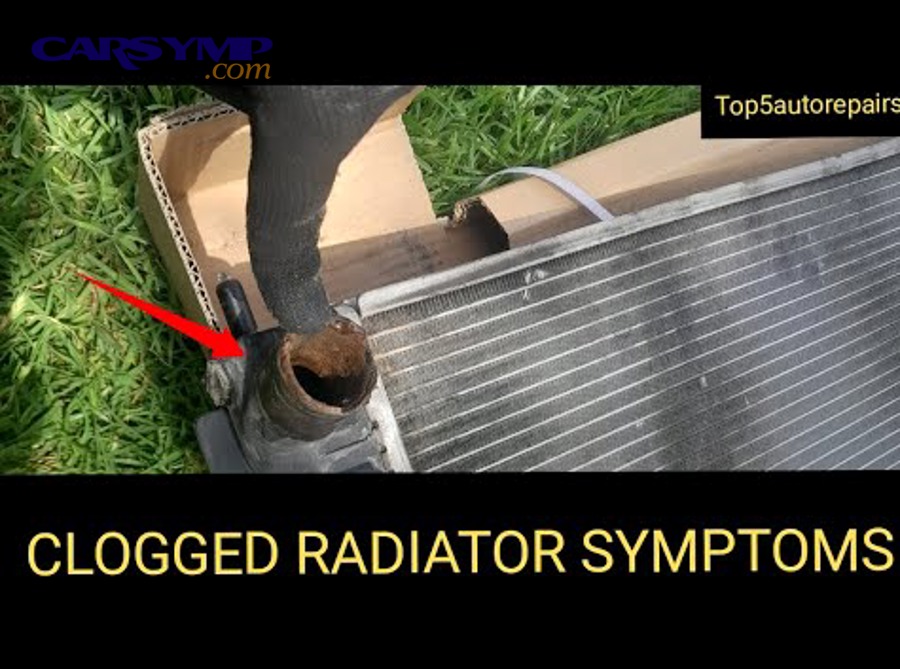
Is your radiator clogged if your car overheats at low speed but not on the highway?
Yes—your radiator may be clogged if it overheats at low speed but cools at highway speed, because low airflow, reduced heat-rejection margin, and rising coolant temperature expose restrictions faster than steady cruising. More importantly, that “traffic hot / highway okay” pattern is also shared by fan and airflow failures, so you need to confirm it with a few specific clues before blaming the radiator.
At low speed, your engine depends heavily on fan-driven airflow and an efficient radiator core to dump heat; any internal restriction reduces the radiator’s ability to transfer heat right when the system needs it most. That’s why a clogged radiator often shows up first during city driving, long idles, stop-and-go hills, or when you’re running the A/C.
Does overheating mostly happen at idle, in traffic, or while creeping in a drive-thru?
A clogged radiator most often reveals itself in predictable low-speed scenarios, because the radiator is operating with less airflow and higher under-hood heat:
- Stop-and-go traffic: temperature slowly rises, then stabilizes or drops once speed increases.
- Long idle after a highway exit: heat soak builds after you stop, and the gauge climbs even though you just “drove fine.”
- Drive-thru / parking lot crawling: very low airflow plus frequent braking increases heat load.
- Hot day + A/C on: condenser heat adds load in front of the radiator, narrowing the cooling margin.
The key is timing: a clogged radiator usually produces a gradual climb rather than an instant spike. If the gauge shoots up rapidly after a short drive, that leans more toward a circulation or coolant-level problem than a slow-developing restriction.
Can a clogged radiator still overheat at highway speeds in severe cases?
Yes—severe clogging can cause overheating even at highway speeds, because restriction reduces total heat rejection so much that even strong airflow can’t compensate. However, when overheating happens at all speeds, you should widen your suspect list to include low coolant, thermostat issues, water pump problems, combustion gas intrusion, or multiple cooling faults at once.
A simple way to interpret the pattern:
- Overheats mainly in traffic / idle: clogged radiator, cooling fan problem, airflow blockage, weak fan control strategy.
- Overheats mainly at highway load: circulation issues (pump), thermostat stuck, head gasket, radiator severely restricted, towing/grade heat load.
- Overheats randomly + coolant loss: leak, cap failure, internal engine issue, or air pockets.
What is a clogged (blocked) radiator, and why do symptoms show up at low speed?
A clogged (blocked) radiator is a heat exchanger with restricted coolant passages or obstructed airflow fins, which reduces heat transfer and makes low-speed driving the first time the engine can’t shed heat fast enough. To better understand why the symptoms appear at low speed, it helps to separate “internal” clogging from “external” blockage and connect each to airflow and coolant flow.
A radiator works by spreading hot coolant through many small tubes while air passes across fins that increase surface area. If either coolant flow or airflow is reduced, the radiator rejects less heat. At highway speed, fast airflow can mask moderate inefficiency; at idle, your cooling system has less help from the wind, so any weakness becomes obvious.
What’s the difference between an internally clogged radiator and externally blocked fins?
Internal clogging means coolant can’t flow properly through the tubes because of deposits, corrosion scale, sludge, or residue (sometimes from stop-leak products or degraded coolant). This reduces heat transfer and can create uneven temperature distribution inside the core.
External fin blockage means airflow can’t pass through the fins because of debris (dirt, leaves, bugs), bent fins, or blocked ducting. This can mimic internal clog symptoms because the radiator sees less air, especially at idle.
Quick “what you’ll notice” differences:
- Internal clogging tends to: show dirty/rusty coolant, create inconsistent cooling behavior, sometimes produce “hot spots” across the radiator face.
- External blockage tends to: be visible on inspection, worsen with A/C use, and improve after cleaning the condenser/radiator stack or restoring airflow paths.
If you’re building an Overheating at idle causes checklist, put “radiator internal restriction” and “radiator/condenser external airflow blockage” as separate line items—because the fixes are different.

Why does low airflow make radiator restrictions more obvious than highway cruising?
Low speed reduces the “free” airflow that normally pushes through the radiator at 50–70 mph. At idle, the system relies on:
- Cooling fans to pull air through the stack
- Radiator efficiency to transfer heat into that air
- Stable coolant circulation to move heat from the engine to the radiator
If the radiator is partially clogged, its effective heat-transfer capacity drops. You might not notice it at speed because airflow is abundant; but at idle, the system is operating near its limit. Any extra load—hot weather, A/C on, climbing, under-hood heat soak—pushes it over the edge.
This is why “overheats at idle, cools when moving” is such a valuable diagnostic pattern: it points you toward airflow and heat-rejection limits first, rather than immediately blaming the engine.
What are the most reliable low-speed symptoms of a clogged radiator?
There are 4 main symptom groups of a clogged radiator at low speed: temperature-pattern clues, coolant-condition clues, cabin-heater clues, and boilover/overflow clues—based on what part of heat rejection is failing. Next, you’ll use those groups to identify which symptoms are strongest indicators of a restriction rather than a fan or thermostat issue.
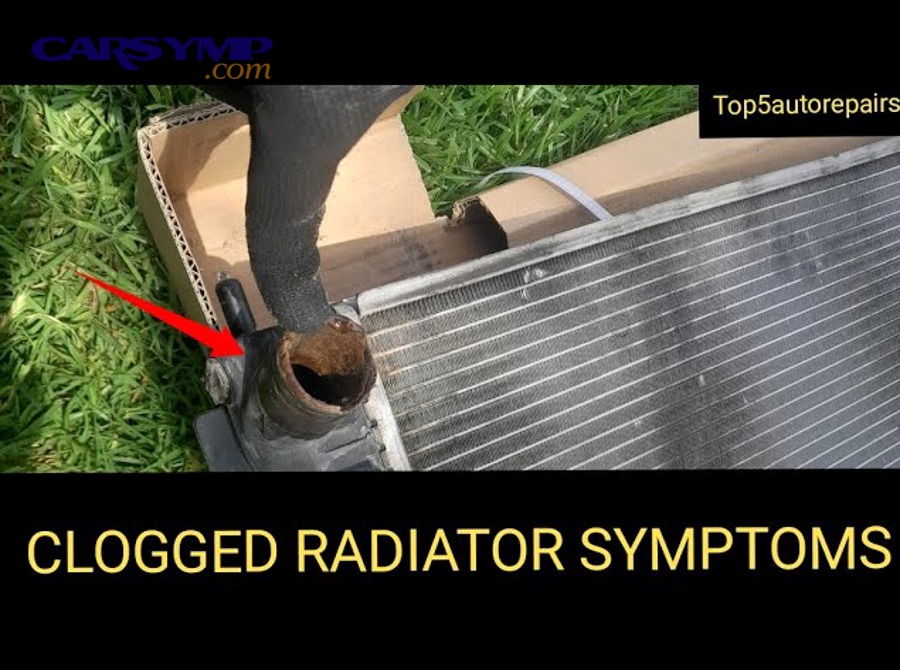
The goal isn’t to chase every possible sign—it’s to spot the combination that makes “blocked radiator” the most likely explanation.
Is the temperature gauge rising at idle, then dropping once you start driving?
Yes—this is one of the strongest classic symptoms, because it matches the airflow/heat-rejection shortage at low speed. Here’s what to watch for:
- Gauge creeps upward during idle or slow traffic
- Gauge stabilizes or drops once you reach steady speed
- Cycle repeats when you stop again
Why it matters: a radiator that is partially clogged can still work “enough” when airflow is high, but fails when airflow and cooling margin drop.
If your gauge drops quickly the moment you drive, don’t assume “it fixed itself.” That pattern is telling you the system is dependent on airflow, which is exactly why fan function and radiator efficiency are your first checks.
Do you see coolant discoloration, rust, sludge, or debris in the reservoir?
Yes—contaminated coolant strongly raises the odds of internal radiator restriction, because the same corrosion products and sludge that discolor coolant can deposit inside small tubes.
Look for:
- Brown/rust tint (corrosion scale)
- Cloudy coolant (suspended deposits)
- Sludge or gel-like residue (mixing incompatible coolant types or degraded additives)
- Floating debris in the reservoir
Dirty coolant doesn’t “prove” a clogged radiator by itself, but it strengthens the case—especially when paired with low-speed overheating and heater inconsistency.
Is the cabin heater weak at idle but improves when revving or driving?
Yes—heater behavior can be a powerful clue, because the heater core is essentially a mini-radiator. When heat is weak at idle but returns while driving, it suggests coolant flow or system stability is changing with engine speed.
Common interpretations:
- Weak heat at idle + improves when revving: possible flow weakness, air pockets, low coolant, or restriction somewhere in the system.
- Consistently weak heat: could be a heater core issue, blend-door problem, or persistent air in the system.
How this connects to a clogged radiator: if the radiator is restricted, overall system efficiency is reduced, and heat soak at idle can increase quickly. Heater clues become more meaningful when combined with gauge behavior and coolant condition.
Are there signs of boiling/steam/overflow after idling (especially with A/C on)?
Yes—boilover after a long idle is a high-risk symptom that can occur when the radiator can’t reject enough heat, especially with A/C raising the heat load in front of it.
You might notice:
- Sweet coolant smell
- Steam from the front of the engine bay
- Coolant pushed into the overflow bottle
- After shutdown, a “gurgling” sound as heat soak continues
Safety rule: if you see steam or the gauge is near the red, do not open the radiator cap. Let it cool fully before inspection.
How can you check for a clogged radiator at home without special tools?
You can do a safe, effective home check in 3 parts—fan operation, temperature/flow clues, and coolant stability—to confirm whether low-speed overheating points to a clogged radiator or a look-alike fault. Specifically, these steps reduce guessing by targeting the most common causes behind traffic overheating.
Think of this as a practical extension of an Overheating at idle causes checklist: you’re not trying to become a technician—you’re trying to avoid the wrong repair.
Is the cooling fan turning on when the engine warms up and when A/C is on?
Yes/No matters a lot here: if the fan does not run when it should, you can get the same “overheats at idle, cools when moving” pattern even with a perfectly healthy radiator.
Basic logic:
- A/C on usually commands the fan on (many vehicles do this to manage condenser pressure).
- Warm engine should trigger fan cycling as coolant temperature rises.
If the fan isn’t running, you’re immediately in Radiator fan not coming on diagnosis territory—possible causes include the fan motor, relay, fuse, wiring, temperature sensor, fan control module, or ECU command strategy. This is why you should confirm fan operation early, before blaming radiator restriction.

Do the upper and lower radiator hoses feel noticeably different in temperature?
Yes—a noticeable temperature difference can support a restriction hypothesis, but it must be interpreted carefully.
General expectations (engine warmed up, thermostat open):
- Upper hose (from engine to radiator) is hot
- Lower hose (from radiator back to engine) is cooler
What can be meaningful:
- Upper very hot + lower much cooler can occur when the radiator is removing heat or when flow through the radiator is limited.
- Both hoses stay relatively cool while gauge climbs can suggest thermostat not opening or severe coolant flow issues (dangerous).
Because touch can be misleading and burns are possible, treat hose temperature as a supporting clue, not a standalone diagnosis.
Is the coolant level stable, or do you keep topping it off?
No—if you keep topping it off, you should not assume the radiator is “just clogged,” because low coolant can create air pockets and reduce heat transfer, causing low-speed overheating even when parts are fine.
Check for:
- Wetness at hose connections, radiator end tanks, water pump area
- Dried coolant residue (crusty deposits)
- A sweet smell after shutdown
- Overflow bottle level changes over days
Low coolant can mimic radiator restriction because less coolant contact area and trapped air reduce heat removal and can cause sudden temperature spikes.
Clogged radiator vs bad fan vs thermostat vs water pump: what’s the difference at low speed?
A clogged radiator wins as the likely cause when overheating is slow and traffic-dependent, a bad fan is best explained by idle-only overheating with the fan not running, and a thermostat or water pump problem becomes more likely when temperature behavior is rapid, inconsistent, or load-dependent. However, these faults can overlap, so you’re looking for the most consistent pattern—not a single magic sign.
Below is a practical comparison that helps you prioritize checks.
How do clogged radiator symptoms differ from a failing radiator fan?
Clogged radiator tends to:
- Overheat slowly in traffic
- Show coolant contamination more often
- Sometimes improve slightly with fan running, but still runs hot under heavy idle load
Failing fan tends to:
- Overheat mainly at idle/low speed
- Improve strongly once vehicle speed increases
- Show a clear “fan not running when it should” clue
If you can confirm the fan never engages when hot (or when A/C is on), that points away from “clogged radiator” and toward Radiator fan not coming on diagnosis.
How do clogged radiator symptoms differ from a stuck thermostat?
Thermostat issues often change the warm-up story. A thermostat that won’t open can cause overheating that escalates quickly after a certain point, sometimes regardless of vehicle speed.
Common contrasts:
- Clogged radiator: gradual traffic overheating, partial recovery when moving.
- Thermostat stuck closed: faster overheating, can occur at speed too, sometimes with unstable temperature swings.
Thermostat problems can still show up as overheating at idle, but the “sudden spike” timing is often more noticeable than with mild-to-moderate radiator clogging.
How do clogged radiator symptoms differ from a weak water pump?
A weak pump (or pump with damaged impeller) can reduce circulation under certain conditions, often showing:
- Overheating under load or at higher RPM (varies by design)
- Heater issues that may change with engine speed
- Possible noise or leakage near the pump area
Compared with a clogged radiator:
- Pump problems are more “circulation” driven.
- Radiator clogging is more “heat rejection” driven.
If your symptoms intensify when climbing or under sustained load, don’t ignore the water pump possibility.
Is it safe to drive with low-speed overheating symptoms from a clogged radiator?
No—driving with low-speed overheating symptoms is not safe because repeated overheating can warp engine components, degrade oil protection, and trigger sudden coolant loss, especially if the cause is a clogged radiator or fan failure. Next, you’ll use clear red-flag rules to decide when to stop, and you’ll see what repair path fits different symptom combinations.

Even one severe overheat event can cause expensive damage. The safest approach is to treat overheating as an urgent mechanical warning, not an inconvenience.
When should you stop driving immediately (red-flag symptoms)?
Stop driving and shut down (safely) if you notice any of the following:
- Temperature gauge near red or overheating warning light on
- Steam from engine bay
- Coolant pouring or hissing sounds
- Engine misfire, loss of power, or knocking sounds
- Strong burning smell combined with rising temperature
If you must move the vehicle out of danger, do it briefly and gently—then address the cause. Continuing to “test drive” an overheating car often turns a manageable cooling issue into engine damage.
What should you do next: flush, professional cleaning, or radiator replacement?
A flush helps when deposits are mild and the radiator structure is healthy, professional cleaning helps when you need controlled restoration, and replacement is optimal when clogging is severe, corrosion is advanced, or the radiator is leaking. However, the best next step depends on what your checks revealed:
- If coolant is very dirty/sludgy: a controlled flush (often professional) may be needed, but severe sludge can also indicate the radiator is beyond saving.
- If fan isn’t operating properly: fix airflow first—otherwise even a new radiator can still overheat at idle.
- If the radiator shows leaks/corrosion: replacement is usually the correct long-term answer.
- If external fins are packed with debris: careful cleaning and restoring airflow may solve the issue without internal work.
This is also where Preventing idle overheating with maintenance becomes a real strategy, not a slogan: the cleaner and more compatible your coolant is, the less likely internal deposits form, and the less likely airflow paths get clogged by neglected debris.
Evidence (heat transfer + airflow relevance): According to a study by Lamar University from the Mechanical Engineering program, in 2012, an undergraduate radiator heat-transfer analysis highlights how radiator performance depends on both internal coolant flow and external airflow through the heat exchanger, tying heat rejection directly to those two flow paths. (lamar.edu)
What advanced clues can confirm a clogged radiator (and what rare issues mimic it)?
There are 4 advanced confirmation angles—radiator face temperature patterns, deposit chemistry causes, electrolysis risk, and “healthy system” baselines—based on micro-level heat transfer behavior rather than only dashboard symptoms. Below, you’ll deepen your diagnosis beyond the obvious by using rare but highly informative clues.

This is where many DIY diagnoses level up: not by adding random tests, but by understanding what thermal patterns mean.
What does an infrared temperature “map” across the radiator reveal (hot spots, cold spots, uneven bands)?
An infrared “map” can reveal uneven temperature distribution, which often correlates with partial blockage or uneven airflow across the core. In a healthy system, the radiator face temperature tends to be more uniform, with a consistent gradient from inlet side to outlet side.
What patterns can suggest:
- Striped or patchy zones: coolant may not be flowing evenly through all passages (possible internal restriction).
- Large cold areas: could indicate airflow blockage or “dead” sections not transferring heat.
- Uniformly hot: may indicate insufficient airflow overall or heat load exceeding capacity.
You don’t need to own an infrared camera to understand the concept; the point is that thermal contrast can expose restriction. A peer-reviewed review of infrared thermography explains how thermal imaging detects temperature differences that indicate malfunction or defects by measuring infrared radiation emitted from surfaces. (pmc.ncbi.nlm.nih.gov)
Can mixed coolant types or stop-leak products cause internal radiator blockage?
Yes—mixed coolant chemistry and some stop-leak residues can contribute to deposits that restrict small radiator tubes, especially when coolant maintenance has been inconsistent.
Why this happens:
- Coolant additives are designed to prevent corrosion and scaling.
- When coolant degrades or incompatible types are mixed, protective chemistry can break down.
- Deposits and corrosion products can accumulate and reduce heat transfer.
A technical overview of heat-transfer surface fouling explains that deposits add thermal resistance and reduce heat-transfer performance, which is exactly the failure mode behind internal radiator restriction. (pessoas.feb.unesp.br)
Can electrolysis/stray current damage radiators and accelerate clogging?
Yes—electrochemical reactions (often discussed as electrolysis or stray current corrosion) can accelerate radiator corrosion and create debris that contributes to restriction, especially in systems with poor grounding or degraded coolant inhibitors.
What makes this “rare” is that it’s not the first thing most drivers check—but it can be a hidden reason repeated radiators fail early or coolant looks contaminated quickly after service.
If your radiator issues recur unusually often, this becomes a worthwhile shop-level investigation because it can explain why a flush or new radiator doesn’t “stick” long-term.
What does “free-flowing” cooling look like , and how should temps behave when the system is healthy?
A free-flowing (healthy) cooling system—the antonym of clogged—typically shows:
- Stable operating temperature after warm-up
- Predictable fan cycling at idle
- Consistent cabin heat
- Coolant level that stays stable over weeks
- No boilover after shutdown
In real driving, a healthy system may still run warmer in traffic than on the highway, but it should remain within normal range without creeping toward the red.
Evidence (advanced system-level testing): According to a study by Clemson University from the Graduate School / engineering research, in 2016, a dissertation on advanced engine cooling systems discusses radiator heat rejection testing alongside variables like radiator air mass flow rate and fan-related performance, reinforcing that idle cooling depends heavily on airflow management and heat rejection capacity. (open.clemson.edu)