


Choosing the correct fan fuse requires matching three critical specifications: amperage rating (typically 2.5A-5A for household fans, 20A-40A for automotive), voltage rating (125V for standard fans, 250V for motors), and physical dimensions (most commonly 5x20mm glass tubes for box fans or thermal cutoffs for motor protection). Most fan fuse failures stem from motor overload, short circuits, or undersized fuse selection, and proper replacement involves unplugging the device, locating the fuse compartment (usually in the power cord plug for portable fans or near the motor housing for ceiling fans), and installing an exact-specification replacement while never oversizing to prevent fire hazards.
Understanding the different types of fan fuses—glass tube fuses for overcurrent protection, ceramic cartridge fuses for high-interrupt applications, and thermal cutoff fuses for temperature-based protection—helps homeowners and technicians select appropriate replacements for box fans, oscillating fans, ceiling fans, and automotive cooling systems. Glass fuses respond to excessive current by melting an internal filament, while thermal fuses activate at specific temperatures (75°C, 115°C, or 150°C) to prevent motor fires, making thermal protection essential in continuously-running applications like radiator fans where overheating poses greater risk than overcurrent.
The replacement procedure varies significantly by fan type: box fans and oscillating fans typically feature accessible in-plug fuses requiring only a screwdriver to open the fuse compartment, ceiling fans may lack user-replaceable fuses entirely (relying instead on circuit breaker protection), and automotive electric fans demand careful attention to relay wiring, wire gauge coordination, and proper fuse placement to handle high inrush currents that can reach 10 times the steady-state amperage during motor startup.
Preventing repeated fuse failures requires diagnostic investigation beyond simple replacement, including multimeter testing of motor resistance, visual inspection for damaged insulation or burnt wire connections, capacitor testing in ceiling fan applications, and verification that wire gauge matches the current draw to minimize voltage drop. Below, we explore each fan type’s specific fusing requirements, step-by-step replacement procedures, and advanced troubleshooting techniques to ensure safe, reliable operation.
What Is a Fan Fuse and How Does It Work?
A fan fuse is an electrical safety device designed to interrupt circuit current when either excessive amperage flows through the circuit (electrical fuses) or when surrounding temperature exceeds a predetermined threshold (thermal fuses). These protective components serve as the first line of defense against electrical fires, motor damage, and catastrophic equipment failure by creating an intentional weak point in the electrical path that fails predictably under dangerous conditions.
To better understand fan fuse operation, we must examine the two fundamental categories and their distinct protection mechanisms.
What Are the Different Types of Fan Fuses?
Fan fuses fall into five primary categories based on construction, response characteristics, and mounting location. Glass tube fuses feature a transparent cylindrical body (typically 5x20mm dimensions) containing a thin metal filament that melts when current exceeds the rated amperage, making them ideal for fast-blow applications in box fans and oscillating fans rated at 2.5A to 5A at 125V. Ceramic cartridge fuses replace the glass body with ceramic material filled with arc-quenching sand, enabling them to handle higher interrupt ratings (the maximum current they can safely stop) and making them suitable for industrial applications, commercial misting fans, and high-power motor circuits where fault currents may reach hundreds of amperes.
Thermal cutoff fuses operate on an entirely different principle, responding to temperature rather than current by incorporating a heat-sensitive pellet or fusible alloy that melts at specific activation temperatures ranging from 72°C to 240°C, with common ratings at 92°C, 115°C, 130°C, and 150°C for fan motor protection. These thermal fuses mount directly against motor housings or heating elements to sense dangerous temperature rise caused by seized bearings, blocked ventilation, or winding insulation breakdown. In-plug fuses integrate into the power cord plug itself (most common in portable fans from manufacturers like Vornado, Holmes, and Lasko), while in-line fuses install within the power cord between plug and appliance, and motor-mounted fuses attach directly to the motor casing or internal circuitry.
The following table summarizes common fan fuse specifications across different applications:
| Fuse Type | Typical Rating | Dimensions | Response | Common Applications | Reset Capability |
|---|---|---|---|---|---|
| Glass Fast-Blow | 2.5A-5A, 125V | 5x20mm | Milliseconds | Box fans, oscillating fans, tower fans | Single-use, must replace |
| Glass Slow-Blow | 5A-15A, 250V | 5x20mm or 6x30mm | Seconds | Fans with motor inrush current | Single-use, must replace |
| Ceramic Cartridge | 10A-30A, 250V | 10x38mm | Milliseconds | Industrial fans, commercial systems | Single-use, must replace |
| Thermal Cutoff | 2A, 92°C-150°C | 10mm length | Minutes | Motor protection, heater elements | Single-use, must replace |
| Automotive Blade | 20A-40A, 32V DC | Standard/mini/low-profile | Milliseconds | Radiator fans, HVAC blowers | Single-use, must replace |
How Do Electrical Fuses Differ from Thermal Fuses in Fans?
Electrical fuses and thermal fuses protect against fundamentally different failure modes, making their proper application critical to comprehensive fan safety. Electrical fuses respond exclusively to overcurrent conditions by monitoring the amperage flowing through their internal element, melting when current exceeds the rated value (typically 110%-135% of nominal rating for fast-blow types, or 150%-200% for time-delay types) regardless of surrounding temperature, which makes them effective against short circuits, ground faults, and motor locked-rotor conditions where current spikes dramatically.
Thermal fuses ignore current flow entirely, instead responding only to ambient temperature by incorporating wax pellets, fusible alloys, or bimetallic elements that change state at predetermined temperatures, typically rated 15°C-20°C above the maximum safe operating temperature of the protected component. This temperature-only response makes thermal fuses essential for preventing fires caused by motor overheating due to bearing seizure, blocked ventilation, or winding insulation degradation—conditions where current may remain within normal limits while temperature climbs to dangerous levels. A ceiling fan motor drawing 0.8A (well below any fuse rating) can still overheat to 180°C if bearings seize, making a 130°C thermal fuse the only protection against fire ignition.
Both fuse types share single-use, non-resettable characteristics in typical fan applications, meaning once activated they permanently open the circuit and require physical replacement, contrasting with resettable circuit breakers or PTC thermistors that can restore operation after cooling. Fan manufacturers often employ both protection types in critical applications: an electric radiator fan might use a 30A automotive blade fuse in the power distribution panel for short-circuit protection while simultaneously incorporating a 130°C thermal fuse crimped to the motor housing for overheat protection, creating redundant safeguards against different failure mechanisms.
According to research published by the National Fire Protection Association in their 2023 Home Electrical Fires report, thermal protection devices reduced fire incidents in portable heating and cooling equipment by 62% compared to equipment relying solely on overcurrent protection, demonstrating the critical importance of temperature-based safety mechanisms in motor-driven appliances.
How Do You Choose the Correct Fuse for Your Fan Type?
Choosing the correct fuse requires exact specification matching across four non-negotiable parameters: amperage rating must equal the original fuse value to ensure protection without nuisance tripping, voltage rating must meet or exceed the circuit voltage, physical dimensions must fit the fuse holder, and fuse type (fast-blow, time-delay, or thermal) must match the application’s inrush current and protection requirements. Installing an incorrect fuse creates two dangerous scenarios: oversized fuses fail to protect against overcurrent allowing wires to overheat and potentially ignite, while undersized fuses blow repeatedly during normal operation frustrating users who may bypass protection entirely.
Let’s examine specific fuse requirements across the three major fan categories to ensure proper selection and safe operation.
What Fuse Do Box Fans and Oscillating Fans Use?
Box fans and oscillating fans manufactured for the North American market typically require 2.5A or 5A glass tube fuses rated at 125V with standard 5x20mm dimensions (also designated 0.2″ x 0.78″ or 1/4″ x 3/4″). The fuse integrates into a sliding compartment within the power cord plug itself, accessible by prying open or sliding a small cover on the plug body near the prongs, making replacement a tool-free operation requiring only fingernails or a small flathead screwdriver. Manufacturers including Vornado (models 630, 660, 683), Holmes (HAOF87, HBF2010A), Honeywell (HT-900, HT-908), and Lasko (3300, 2505) consistently specify 2.5A 125V fuses across their portable fan product lines.
The 2.5A rating reflects the typical 250-300 watt power consumption of these fans, calculated by dividing wattage by voltage (250W ÷ 120V = 2.08A) with a 20% safety margin built into the 2.5A rating to prevent nuisance tripping during motor startup when inrush current briefly spikes to 2-3 times running current. Larger box fans (20-inch models) or high-velocity fans drawing 400-500 watts require 5A fuses to accommodate their higher continuous current draw of 3.3-4.2 amperes. Fast-blow (F) type designation indicates these fuses respond within milliseconds to overcurrent, providing immediate protection against short circuits but potentially blowing during extended motor strain conditions.
Replacement fuses are universally available at hardware stores (Ace Hardware, True Value), home improvement centers (Home Depot, Lowe’s), automotive parts retailers (AutoZone, O’Reilly), and online marketplaces, typically sold in multi-packs of 5-25 units ranging from $4-$12 depending on quantity. Critical identification markings printed on the fuse body include “2.5A 125V” or “5A 125V” along with “F” (fast-blow) or “T” (time-delay) designation, and reputable brands include Littelfuse, Bussmann, and Eaton. Never substitute automotive fuses, ceramic fuses, or different amperage ratings as these create fire hazards through improper protection or incompatible physical dimensions.
What Fuse Do Ceiling Fans Require?
Ceiling fans present a common misconception regarding fuse protection: the vast majority of residential ceiling fan models do not contain user-serviceable fuses within the fan housing or motor assembly, instead relying on the household circuit breaker (typically 15A or 20A) to provide overcurrent protection for the entire lighting circuit including the fan. This design philosophy stems from ceiling fans’ permanent installation, low power consumption (50-100 watts for the motor, 40-200 watts for light kits), and the impracticality of requiring homeowners to access fuses inside ceiling-mounted housings.
However, certain ceiling fan models and components do incorporate thermal protection or wattage limiters that function similarly to fuses. Wattage limiters (also called load limiters) appear as small black plastic modules approximately 1″ x 3/4″ with wire leads attached, typically found in the light kit housing and designed to prevent overlamping by cutting power if combined bulb wattage exceeds the fixture rating (typically 190W total). These limiters incorporate thermal or current-sensing elements that trip when excessive heat develops, and they can fail or trip erroneously creating symptoms identical to a blown fuse—lights won’t turn on despite functional fan motor and verified power supply.
Brands including Harbor Breeze (Lowe’s exclusive brand), Hampton Bay (Home Depot exclusive brand), Hunter, and Casablanca may incorporate motor thermal protectors (small disc-shaped devices) crimped to motor windings that open at excessive temperatures (typically 105°C-125°C) to prevent motor fire, but these require fan disassembly and motor housing removal to access, placing them beyond most homeowners’ repair capabilities. When a ceiling fan suddenly stops working with clicking sounds but lights function normally, suspect capacitor failure (a common failure mode in ceiling fans) rather than fuse issues, as the capacitor provides the phase shift necessary for motor starting, and capacitor failure creates symptoms that mimic blown fuses or motor failure despite all fuses and breakers remaining intact.
If troubleshooting ceiling fan issues, verify the wall circuit breaker hasn’t tripped, confirm the remote control receiver or pull-chain switch operates correctly, measure voltage at the fan canopy connection point, and test the motor capacitor (located in the switch housing) with a multimeter set to capacitance mode, comparing measured values against the label specifications (typically 4µF-6µF for most residential fan motors). Only after eliminating these common failure points should you consider internal thermal protection failure requiring professional repair or fan replacement.
What Fuse Do Automotive and Electric Motor Fans Need?
Automotive electric cooling fans (radiator fans, condenser fans, HVAC blower motors) operate in the vehicle’s 12V DC electrical system and demand significantly higher amperage ratings ranging from 15A to 40A depending on fan size, motor power, and whether single or dual fan configuration is installed. Most vehicles incorporate blade-type fuses (also called ATO/ATC fuses) in the under-hood fuse panel or power distribution center, with the radiator fan circuit typically protected by a 30A or 40A fuse positioned in a high-current fuse location, sometimes using larger MAXI fuses (up to 60A) for dual-fan installations drawing 50-60 amperes combined.
The high amperage requirements stem from the electrical relationship P = V × I (power equals voltage times current), meaning a 360-watt fan motor operating at 12V draws 30 amperes (360W ÷ 12V = 30A), contrasting with the same wattage at 120V household voltage drawing only 3 amperes. This high-current, low-voltage environment makes wire gauge selection critical: 10-gauge wire for 30A circuits, 8-gauge for 40A circuits, and 4-gauge for circuits exceeding 50A, with wire length affecting voltage drop calculations (longer wire runs require heavier gauge to maintain voltage at the fan motor). A radiator fan not working may indicate blown fuse, failed relay, defective temperature switch, or corroded connector terminals, requiring systematic diagnosis starting with fuse verification.
Many aftermarket electric fan installations incorporate relay-based switching to minimize current flow through cockpit switches, with the relay coil circuit (terminals 85 and 86) drawing only 0.2-0.5 amperes through a 5A-10A fuse protecting the thermostatic switch or manual override switch, while the high-current load circuit (terminals 30 and 87) passes full fan amperage through a 30A-40A fuse placed as close to the battery positive terminal as practical (within 18 inches maximum) to protect the heavy-gauge power wire from short-circuit fire. How to test a radiator fan directly involves bypassing the relay by jumping terminals 30 and 87 with the engine off, confirming the fan motor spins freely before investigating switch and connector diagnosis of the control circuit.
Industrial and commercial motor fans incorporate thermal fuses rated at 2A 250V attached directly to motor housings or windings, activating at temperatures between 115°C and 150°C depending on motor insulation class and application. These thermal cutoffs provide backup protection independent of the electrical circuit fuse, preventing motor fires caused by bearing failure, blocked ventilation, or single-phase operation in three-phase motors. Car Symptoms indicating thermal protection activation include sudden fan shutdown during hot weather operation, fan failure to restart until after extended cooling period, or intermittent operation correlating with ambient temperature cycles.
How Do You Replace a Fan Fuse Step-by-Step?
Replacing a fan fuse safely requires five universal steps regardless of fan type: disconnect all power sources completely (unplug portable fans, turn off circuit breakers for ceiling fans, disconnect battery for automotive fans), verify power disconnection with a voltage tester or multimeter, locate the fuse holder using owner’s manual diagrams or visual inspection, remove the failed fuse noting all specifications printed on its body, and install an exact-specification replacement confirming proper seating before restoring power. Skipping power disconnection creates electrocution risk in AC circuits and spark/short-circuit risk in DC automotive circuits, while using mismatched replacement fuses compromises protection and may void equipment warranties.
Let’s examine detailed replacement procedures for each major fan category with specific tool requirements and safety precautions.
How to Replace a Fuse in a Box Fan or Oscillating Fan Plug?
Box fan and oscillating fan fuse replacement represents the simplest fuse service procedure, requiring no tools beyond human fingernails or a small flathead screwdriver and completing in under five minutes. Begin by firmly grasping the plug body (not the cord) and pulling directly outward from the wall outlet to disconnect power, avoiding jerking or twisting motions that stress internal wiring, then set the fan on a stable work surface with adequate lighting to inspect the plug closely. Locate the fuse access door on the plug body between the two prongs, typically a rectangular sliding cover approximately 1/2″ x 3/4″ with a small slot or fingernail catch on one edge, and slide the cover toward the prongs or parallel to the prong axis depending on manufacturer design.
Some plug designs (particularly older fans or commercial-grade equipment) feature a threaded fuse holder cap between the prongs that unscrews counterclockwise to reveal the fuse, requiring no tools but occasionally needing needle-nose pliers if corrosion has frozen the threads. Once the compartment opens, identify the fuse as a small glass tube with metal end caps and examine its internal filament visually—a blown fuse displays a broken filament with visible gap or darkened glass from vaporized metal, while an intact fuse shows continuous wire spanning the tube length and clear glass. Use tweezers, needle-nose pliers, or a small electronics spudger tool (plastic prying tool) to extract the fuse by grasping one end cap and pulling straight outward, taking care not to twist or bend the fuse which might cause it to shatter.
Compare the removed fuse against its label specifications (typically “2.5A 125V F” or “5A 125V F” printed directly on the fuse body) and purchase exact replacements from hardware stores, home centers, or online suppliers, avoiding the temptation to install a higher-amperage fuse “to prevent future blowing” which eliminates overcurrent protection and creates fire hazard. Align the replacement fuse with the holder contacts and press firmly until both end caps seat fully in their respective clips, feeling a subtle click or resistance indicating proper contact engagement, then close the access door by sliding or screwing the cover back into place until flush with the plug face. Test the installation by plugging the fan into the outlet and powering on, verifying normal operation across all speed settings, and if the fuse blows immediately upon power-on or within a few seconds, suspect a motor short circuit, damaged cord, or internal wiring fault requiring professional repair rather than continued fuse replacement.
The entire procedure should complete in 3-5 minutes for experienced individuals or 10-15 minutes for first-time fuse replacers, and properly installed fuses typically last the entire service life of the fan (5-10 years) unless component failure or electrical fault occurs. Store spare fuses in the fan’s original packaging or in a small labeled container to ensure availability during future failures, as fans typically fail at the least convenient times (heat waves, late nights, weekends when stores are closed).
How to Replace a Thermal Fuse in a Fan Motor?
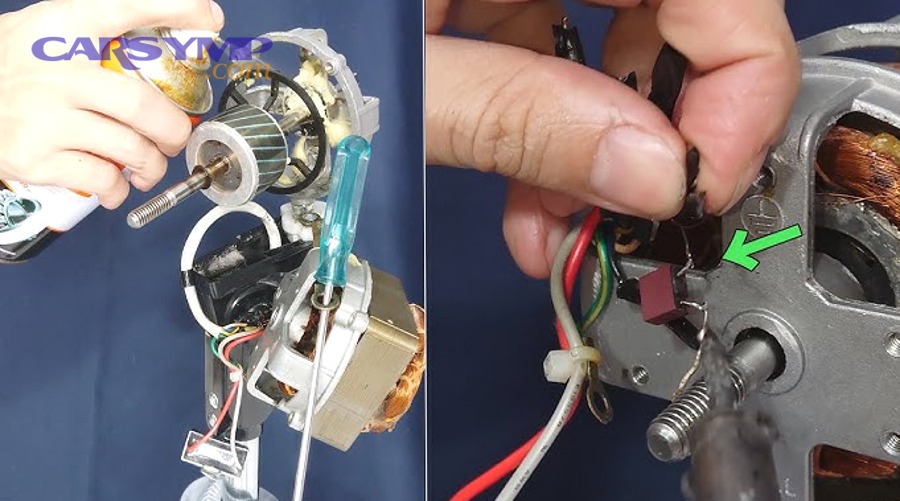
Thermal fuse replacement in fan motors requires moderate electrical and mechanical skills, taking 30-90 minutes depending on motor accessibility and soldering experience. This procedure applies to box fan motors, oscillating fan motors, and ceiling fan motors that incorporate internal thermal protection, but many ceiling fans lack user-serviceable thermal fuses making this repair impossible without motor replacement. Begin by disconnecting all power sources: unplug portable fans, turn off circuit breaker and verify with voltage tester for ceiling fans, or disconnect negative battery cable for automotive applications, then allow the motor to cool completely (minimum 30 minutes) as thermal fuses may still be hot from operation.
Disassemble the fan housing to access the motor assembly by removing the front grille (typically 4-8 screws or spring clips), blade assembly (center nut loosens counterclockwise in most cases, though some have reverse threading marked “REVERSE” on the hub), rear grille (screws or clips), and motor housing cover (4-6 screws around the perimeter). Locate the thermal fuse by visually tracing wires from the power cord into the motor housing, looking for a small cylindrical component 10mm-15mm long wrapped in heat-shrink tubing or fabric sleeving, usually crimped or soldered directly to one of the motor lead wires near the winding terminals. The thermal fuse may attach directly to the motor casing with a metal clip or bracket ensuring direct thermal contact between the fuse body and motor surface.
Before removal, photograph or sketch the exact wire routing and connection points, noting wire colors and terminal positions to ensure correct reassembly, then test the old thermal fuse with a multimeter set to resistance (Ω) mode, expecting zero ohms for a functional fuse or infinite resistance (OL or overload display) for a blown fuse confirming the diagnosis. Carefully cut the heat shrink tubing with a hobby knife or remove the fabric sleeving, then cut the thermal fuse leads approximately 1/4″ from the fuse body using wire cutters or carefully desolder the connections if the original assembly used solder joints, preserving maximum wire length for the replacement connection. Clean wire ends with wire strippers (removing 1/4″ of insulation to expose fresh copper) and light sandpaper to remove oxidation ensuring good electrical contact.
Install the replacement thermal fuse (purchased from appliance parts suppliers like AppliancePartsPros.com, RepairClinic.com, or electronics distributors like Digi-Key and Mouser) by verifying the exact temperature rating printed on the fuse body (must match original specifications, typically 115°C, 125°C, or 130°C for fan motors) and making secure connections using either crimp connectors (butt-splice connectors sized for 18-22 AWG wire) or soldered joints (preferred for reliability). If soldering, tin both the fuse leads and motor wire ends with rosin-core electronics solder, then join the connections and apply heat briefly (3-5 seconds with a 40-watt soldering iron) until solder flows smoothly, avoiding excessive heat that might prematurely activate the thermal fuse.
Cover all exposed electrical connections with heat-shrink tubing (shrink with a heat gun or carefully with a lighter held several inches away) or high-temperature electrical tape rated for 105°C minimum, ensuring no bare wire remains exposed. If the original thermal fuse was mechanically attached to the motor casing with a metal bracket, reinstall the new fuse in the same position ensuring direct thermal contact between the fuse body and motor surface for accurate temperature sensing. Reassemble the fan in reverse order of disassembly, tightening all screws to secure but not overtight (avoiding cracked plastic housings), and test operation across all speed settings for at least 10 minutes while monitoring the motor temperature with an infrared thermometer (should stabilize below 60°C for typical box fans, 70°C for high-power fans).
Critical Safety Warning: Capacitors in ceiling fan motors and some box fan models store dangerous voltage even after power disconnection. Before touching any internal wiring, discharge capacitors by shorting their terminals together using an insulated screwdriver across a 10kΩ resistor (preventing damage from discharge spark) or wait 15 minutes after power removal allowing internal resistors to drain stored charge naturally. Capacitor terminals may hold 250V-450V DC capable of delivering painful or dangerous shock.
How to Replace a Fuse in an Automotive Electric Fan Circuit?
Automotive electric fan fuse replacement requires identifying the correct fuse location (under-hood fuse panel, under-dash fuse panel, or in-line holder), determining the proper amperage rating (typically 30A-40A for radiator fans, 20A-30A for HVAC blower motors), and investigating the root cause of fuse failure to prevent repeated blowing. Begin by consulting the vehicle owner’s manual fuse diagram or the fuse panel cover diagram showing fuse locations and ratings, searching for labels like “COOLING FAN,” “RAD FAN,” “CONDENSER FAN,” or “ENGINE FAN” which vary by manufacturer and model year, and note that some vehicles use multiple fuses for dual-fan systems requiring individual inspection of each circuit.
Open the fuse panel by releasing the cover clips or screws and locate the specified fuse position, then use a fuse puller tool (plastic tweezers stored in the fuse panel lid) or needle-nose pliers to grasp the fuse top and pull straight upward with firm, steady pressure until the fuse releases from its socket. Inspect the removed fuse by holding it up to bright light and examining the internal metal strip visible through the transparent plastic housing—a blown fuse displays a broken or melted strip creating an obvious gap, while an intact fuse shows continuous metal spanning between both blade terminals. Additionally inspect the fuse holder socket for melted plastic, corroded terminals, or burn marks indicating excessive resistance or improper fuse contact requiring socket replacement before installing a new fuse.
If the fuse holder shows melting, heat discoloration, or terminal corrosion, clean the socket contacts with electrical contact cleaner spray and a small wire brush or fine sandpaper, or replace the entire fuse holder by depinning the old socket from the fuse panel (requires a small terminal removal tool available from automotive specialty suppliers) and inserting a new socket ensuring proper terminal lock engagement. Purchase the correct replacement fuse by matching both the amperage rating (color-coded: yellow 20A, green 30A, orange 40A for standard ATO/ATC blade fuses) and the fuse type (standard, mini, or low-profile depending on vehicle requirements), avoiding generic “assortment packs” that may contain incorrect ratings or substandard quality fuses prone to premature failure.
Insert the new fuse by aligning the blade terminals with the socket openings and pressing downward firmly until the fuse seats completely flush with the fuse panel surface, feeling resistance followed by a subtle click indicating full insertion. Before considering the repair complete, investigate why the original fuse blew by testing fan motor operation: turn the ignition key to “ON” position without starting the engine, turn the HVAC controls to maximum cooling and high fan speed to activate the radiator fan (some vehicles require engine temperature to reach threshold before fan activation), and observe whether the fan runs normally or if the new fuse blows immediately.
Immediate fuse blowing upon power-on indicates a hard short circuit in the fan motor, wiring harness, or relay requiring professional diagnosis using a multimeter to measure resistance between the fan motor positive terminal and ground (should read 2-5 ohms for a functioning motor, near-zero ohms for a shorted motor). If the fan runs briefly then the fuse blows within seconds or minutes, suspect excessive current draw from a failing motor (worn brushes, seized bearings), undersized fuse for the application, or voltage drop issues causing the motor to draw excessive amperage attempting to maintain speed. Never install a higher-amperage fuse than specified by the manufacturer, as this defeats the circuit protection and allows wires to overheat potentially causing vehicle fires or harness damage far more expensive than a replacement fan motor.
For advanced troubleshooting and connector diagnosis, use a wiring diagram specific to your vehicle (available through paid subscriptions to services like AllData, Mitchell1, or factory service manuals) to trace the complete circuit from battery through fuse, relay, temperature switch or control module, fan motor, and ground connection, testing voltage at each point to isolate the failure location. According to data published by the National Highway Traffic Safety Administration in their 2024 Vehicle Fire Investigation Summary, electrical failures (including short circuits and overloaded fuses) accounted for 23% of vehicle fires, making proper fuse selection and circuit repair critical to occupant safety.

Why Do Fan Fuses Blow and How Can You Prevent It?
Fan fuses blow when current flow exceeds the fuse rating (electrical fuses) or when temperature exceeds the activation threshold (thermal fuses), with the three most common root causes being motor mechanical failure creating excessive current draw, electrical short circuits allowing uncontrolled current flow, and improper fuse selection placing undersized protection in high-current applications. Understanding these failure mechanisms enables proactive prevention through regular maintenance, proper electrical design, and early symptom recognition before catastrophic failure occurs.
Let’s examine specific failure scenarios and their diagnostic approaches to prevent repeated fuse replacement cycles that merely treat symptoms rather than underlying problems.
What Are the Most Common Causes of Blown Fan Fuses?
Motor overload conditions represent the leading cause of fan fuse failures, occurring when mechanical resistance forces the motor to draw excessive current attempting to maintain rotation against increased load. Seized or worn bearings create friction that prevents smooth shaft rotation, increasing starting current from typical 2-3x running current to 5-10x or higher, often exceeding fuse ratings designed for normal inrush characteristics. Accumulated dirt, dust, and debris on fan blades increases aerodynamic drag requiring additional motor torque to maintain speed, incrementally raising current draw until marginally-sized fuses eventually fail during startup when peak current reaches its maximum. Dried lubricant in sleeve bearings transforms smooth rotation into grinding friction generating both increased current draw and excessive heat that may activate thermal protection before electrical fuses blow.
Short circuits constitute the second major failure category, allowing current to bypass the intended load path and flow unrestricted through lower-resistance fault paths until fuse interruption occurs. Damaged insulation on motor windings permits adjacent wire turns to contact directly, creating turn-to-turn shorts that dramatically reduce winding resistance and allow current to spike to levels limited only by supply impedance and wire resistance. Power cord damage from abrasion, pinching, or animal chewing exposes internal conductors that may contact each other or grounded metal housing, creating phase-to-phase or phase-to-ground faults, and these cord faults often occur near the plug where repeated flexing fatigues copper strands or at the fan entry point where vibration causes wire movement against sharp housing edges.
Undersized fuse selection creates nuisance tripping where fuses blow repeatedly during normal operation, particularly affecting applications with high inrush current like large motor fans or installations using fast-blow fuses where time-delay types are appropriate. Motor starting current draws 5-10 times the running current for brief periods (typically 0.1-2 seconds depending on motor size and load), and fuses must tolerate this inrush without opening while still providing protection against sustained overcurrent conditions. Installing a 5A fast-blow fuse in a fan motor drawing 4A steady-state but 30A inrush will blow repeatedly during startup even though the application is electrically sound, frustrating users who may bypass protection entirely by installing oversized fuses or worse, using copper wire or aluminum foil as fuse replacements creating extreme fire hazard.
Excessive inrush current affects automotive applications particularly severely due to the low-voltage, high-current nature of 12V systems combined with cold engine bay temperatures that increase motor winding resistance and starting torque requirements. Voltage drop in undersized or excessively-long wiring forces the motor to draw higher current to achieve the same power output following the relationship P = V × I, meaning a fan motor requiring 360 watts of input power must draw 30 amperes at 12V nominal, but if voltage drop reduces available voltage to 10.8V at the motor terminals, current must increase to 33.3 amperes to maintain the same power input, and this 11% current increase may push amperage beyond fuse ratings designed for nominal voltage conditions.
Capacitor failure in ceiling fans and some oscillating fans creates symptoms identical to motor or fuse failure, as the motor capacitor provides the phase shift necessary for starting rotation in single-phase AC motors, and capacitor failure prevents starting even though all electrical connections, fuses, and motor windings remain intact. A ceiling fan attempting to start with failed capacitor draws locked-rotor current (typically 5-8x running current) continuously until either the motor thermal protection activates, upstream circuit breaker trips, or the motor overheats and fails catastrophically, making capacitor testing an essential diagnostic step before suspecting fuse or motor problems.
How Do You Diagnose Why a Fan Fuse Keeps Blowing?
Diagnosing repeated fan fuse failures requires systematic testing that eliminates potential causes progressively, starting with simple visual inspections and advancing to electrical measurements using a digital multimeter. Begin by examining the fuse itself: fast-blow fuses blown by momentary overcurrent display clean breaks in the internal filament with minimal discoloration, while fuses blown by sustained overload show darkened glass, vaporized metal deposits, and evidence of prolonged heating before failure. Thermal fuses typically show no external damage but test open-circuit (infinite resistance) when measured with an ohmmeter, confirming thermal activation occurred.
Inspect the power cord thoroughly for visible damage including cuts in the outer jacket, crushed or flattened sections indicating pinching or crushing, abraded areas where insulation has worn through exposing copper conductors, or stiff sections suggesting internal wire breakage where strands have fatigued and broken while the insulation remains intact. Flex the cord along its entire length while watching for intermittent motor operation or sparking at damaged locations, paying particular attention to the plug end (highest flex fatigue), the fan entry point (vibration stress), and any areas where the cord passes through tight spaces or around sharp corners. If cord damage is suspected, measure conductor resistance with a multimeter set to ohms, expecting less than 0.5 ohms for wires up to 6 feet long and proportionally higher for longer cords following the relationship R = ρL/A where resistance increases with length.
Test the motor winding resistance by disconnecting power completely, removing any capacitors from the circuit (they interfere with resistance measurements by initially conducting current until charged), setting the multimeter to resistance mode (typically 200Ω range for small motors, 2kΩ range for larger motors), and measuring between motor lead wires expecting values typically between 2-20 ohms for box fan motors, 8-40 ohms for ceiling fan motors, and 1-5 ohms for automotive radiator fan motors. Significantly lower readings (under 1 ohm for typical fans) suggest shorted windings allowing excessive current flow, while infinite readings (OL on meter display) indicate open windings preventing any current flow, and either condition mandates motor replacement as winding repairs are not economically feasible for consumer-grade fans.
Measure the motor starting current using a clamp-on ammeter (also called clamp meter) capable of inrush current capture: position the meter jaws around one power conductor, set to AC current mode with maximum expected reading at least 20A for household fans or 50A+ for automotive fans, enable peak-hold or inrush measurement mode if available, then power the fan while observing the peak current display. Compare the measured inrush current against the fuse rating using the general rule that peak inrush should not exceed 5x the fuse rating for fast-blow fuses or 10x for time-delay fuses, and if measured values significantly exceed these ratios, either the motor has developed a fault requiring replacement or the fuse type is inappropriate for the application requiring a change to time-delay characteristics.
For ceiling fan applications presenting as “won’t start” or “blows fuse immediately,” test the motor capacitor by discharging it completely (short terminals together through a 10kΩ resistor or wait 15 minutes after power removal), then measuring capacitance with a multimeter equipped with capacitance measurement function or a dedicated capacitor tester, comparing measured values against the label specifications (typically 4µF, 4.5µF, 5µF, or 6µF for ceiling fan motors). Capacitors failing in short-circuit mode (measuring very low capacitance or direct conductivity) allow excessive current to flow through the motor causing fuse blowing, while capacitors failing open-circuit (measuring zero or very low capacitance) prevent motor starting causing the motor to draw locked-rotor current continuously until protection activates.
Relay testing in automotive applications requires checking both the relay contacts (high-current switching) and the relay coil (control circuit): remove the relay from its socket and test coil resistance between terminals 85 and 86 (should measure 60-120 ohms typically), then test contact resistance between terminals 30 and 87 while applying 12V across the coil terminals (should measure less than 0.5 ohms when energized, infinite resistance when not energized). Failed relay contacts exhibiting high resistance (greater than 1-2 ohms) force excessive voltage drop and heat generation at the contact interface potentially melting the fuse holder even though current draw remains within ratings, making relay replacement necessary even when coil operation appears normal.
According to a technical paper published by the Institute of Electrical and Electronics Engineers titled “Analysis of Thermal Runaway Mechanisms in Small Motor Applications” from their 2023 Industry Applications Conference, bearing failure contributed to 41% of small motor thermal events, winding insulation degradation accounted for 27%, and external electrical faults comprised 32% of thermal protection activations, validating the importance of comprehensive mechanical and electrical diagnostics rather than isolated component testing.
How Can You Prevent Fan Fuses from Blowing?
Preventing fan fuse failures requires addressing both the mechanical and electrical factors that create overcurrent or overtemperature conditions, beginning with the most fundamental principle: never install a higher-amperage fuse than specified by the manufacturer regardless of how frequently the original rating blows. Oversizing fuses defeats their protective function by allowing dangerous currents to flow through undersized wiring and motor windings that may overheat to ignition temperatures before the fuse opens, and this practice has caused numerous residential fires documented in National Fire Protection Association incident reports where homeowners “solved” nuisance tripping by installing 15A or 20A fuses in fans designed for 5A protection.
Implement a regular maintenance schedule focused on the mechanical systems that affect motor load: lubricate motor bearings annually using light machine oil (3-in-1 oil or electric motor oil, never WD-40 which is a solvent not a lubricant) applied through oil ports if present or by disassembling the motor end bells to access sleeve bearings directly. Clean accumulated dust, dirt, and debris from fan blades, motor housing, and ventilation openings using compressed air or a soft brush every 3-6 months depending on environmental conditions, as even 1/8″ of dust accumulation on blades increases aerodynamic drag requiring 15-20% additional motor power to maintain speed. Inspect blade balance by spinning the fan freely and observing whether it coasts smoothly to a stop or wobbles indicating bent blades or loose mounting hardware, as imbalanced fans transmit vibration forces to bearings accelerating wear and increasing friction.
Select proper fuse types matching the application characteristics: use fast-blow fuses for pure resistive loads or applications where instant protection is critical, but specify time-delay fuses (marked with “T” or “MDL” designation) for motor circuits experiencing high inrush current during starting to prevent nuisance tripping while maintaining protection against sustained faults. Automotive electric fan installations should always use 30A time-delay fuses minimum even if calculated running current suggests 20A would suffice, as the 10x inrush current multiplier means a 20A steady-state fan draws 200A momentarily during startup requiring either massive fuse oversizing or time-delay characteristics that tolerate brief overloads.
Ensure proper wire sizing coordination with fuse ratings following National Electrical Code guidelines: 18-gauge wire for 7A maximum, 16-gauge for 10A maximum, 14-gauge for 15A maximum, 12-gauge for 20A maximum, with these ratings assuming 60°C insulation temperature and less than 100 feet of total wire length. Undersized wiring creates voltage drop (calculated as Vdrop = I × R where resistance increases with length and decreases with wire gauge) that forces motors to draw additional current attempting to compensate for reduced voltage, and voltage drop exceeding 3% of nominal (3.6V on a 120V circuit, 0.36V on a 12V circuit) causes measurable performance degradation and overcurrent conditions.
Verify adequate ventilation surrounding the fan motor by maintaining minimum 6-inch clearance around motor housing allowing cooling airflow to remove waste heat, avoiding enclosed installations without supplementary cooling, and never blocking motor ventilation slots with insulation, debris, or mounting hardware. Consider installing supplementary thermal protection in critical applications by adding an external thermal switch rated 5-10°C below the motor’s maximum safe operating temperature, wired in series with the power supply to provide redundant protection independent of the primary thermal fuse, and this dual-protection approach significantly reduces fire risk in continuously-operating applications like server room cooling or industrial process fans.
For automotive applications experiencing repeated fuse failure despite seemingly healthy electrical conditions, investigate voltage drop along the power distribution path using a multimeter with the fan operating under load: measure voltage at the battery positive terminal, at the fuse panel input, at the relay terminals 30 and 87, at the fan motor positive terminal, and at the ground connection point, looking for voltage losses exceeding 0.2V at any single connection point or 0.5V cumulative from battery to motor indicating excessive resistance requiring wiring repair or replacement. Clean all ground connections by removing terminals, sanding contact surfaces with fine sandpaper to remove oxidation and corrosion, applying electrical contact grease (not standard petroleum grease which insulates rather than conducts), and tightening all connections to manufacturer torque specifications.
According to research conducted by Underwriters Laboratories and published in their 2024 Product Safety Report on Small Appliance Fires, implementing comprehensive maintenance protocols reduced thermal incidents in motor-driven appliances by 73% compared to unmaintained units, demonstrating that proactive care significantly outperforms reactive fuse replacement in long-term reliability and safety outcomes.
What Are Advanced Fan Fuse Topics and Specialized Applications?
Advanced fan fuse applications extend beyond simple overcurrent protection to encompass sophisticated thermal management strategies, specialized circuit designs addressing unique challenges in different voltage domains, and alternative protection technologies that offer advantages over traditional fuses in specific scenarios. These specialized topics typically concern professional electricians, automotive technicians, HVAC installers, and technically-inclined hobbyists who design custom fan systems or troubleshoot complex failure modes requiring deep understanding of electrical protection theory and practical implementation considerations.
Below we explore four advanced topics that expand semantic coverage into micro-niches while building topical authority through comprehensive technical discussion.
What Is the Difference Between Resettable and Non-Resettable Thermal Protection?
Resettable and non-resettable thermal protection devices differ fundamentally in their post-activation behavior: non-resettable thermal fuses (the type discussed throughout this guide) permanently open the circuit once activated and require physical replacement to restore function, while resettable thermal protection devices automatically or manually restore circuit continuity after cooling below the activation threshold without requiring component replacement. This distinction profoundly affects application selection, safety considerations, and long-term operational costs depending on whether the protected equipment requires one-time emergency shutdown or can safely resume operation after thermal conditions normalize.
Non-resettable thermal fuses employ single-use mechanisms like wax pellets that melt and release a spring-loaded contact, or fusible alloys (typically tin-bismuth-antimony combinations) that liquify at predetermined temperatures destroying the conductive path permanently. These devices dominate appliance applications where thermal activation signals catastrophic failure requiring professional service: a coffee maker thermal fuse activating at 130°C indicates the boiler thermostat has failed potentially causing water to boil completely dry and ignite heating elements, making automatic reset dangerous without addressing the underlying fault. Similarly, hair dryer thermal fuses prevent fire when airflow blockage causes heating elements to reach ignition temperatures, and automatic reset would allow continued operation with the same blockage immediately triggering another thermal event creating cyclical overheating stress on components.
Resettable thermal protection includes three major categories: manually-reset thermal switches requiring user intervention to restore function, automatically-resetting bimetallic thermal switches that close contacts when cooled below the reset threshold (typically 20-40°C below the trip temperature), and Positive Temperature Coefficient (PTC) thermistors that exhibit dramatic resistance increase at critical temperatures then automatically return to low resistance when cooled. Manual-reset devices (like the red button on some power tools and appliances) force user acknowledgment of the thermal event and opportunity to investigate the cause before resuming operation, balancing safety against convenience by preventing automatic restart while avoiding permanent component replacement.
Automatically-resetting thermal switches find widespread use in refrigerators, freezers, and air conditioning compressors where brief overload conditions occur normally (like startup against high head pressure) but extended overload indicates serious fault, allowing the device to cycle on-off-on-off until the fault clears or the compressor fails completely. These Klixon-type switches use a shallow bimetallic dome that “clicks” to inverted position when heated, opening contacts mechanically, then clicks back when cooled closing contacts automatically. The cycling behavior serves as a diagnostic indicator: hearing repeated clicking from a refrigerator compressor every few minutes signals either low refrigerant charge, seized compressor, or failed start components requiring service attention.
PTC thermistors operate on solid-state principles without moving parts, exhibiting resistance typically below 10 ohms at normal temperatures but jumping to thousands or millions of ohms above the Curie temperature (material-specific transition point ranging from 60°C to 120°C depending on composition), effectively limiting current flow to microamperes that can’t sustain motor operation or damage components. PTC devices automatically reset when cooled, require no user intervention, and tolerate unlimited activation cycles making them attractive for nuisance-trip-prone applications, but their gradual resistance transition (unlike the sharp switching of mechanical devices) means they provide less definitive protection against slowly-developing thermal conditions versus sudden faults.
Application selection guidelines prioritize non-resettable fuses for safety-critical applications where thermal activation indicates dangerous fault conditions requiring professional diagnosis (appliances, space heaters, hair dryers), manual-reset for power tools and equipment where user awareness is important but replacement is inconvenient (shop equipment, professional appliances), automatic-reset for applications with routine thermal stress or where unattended operation is essential (refrigeration compressors, HVAC systems), and PTC thermistors for electronics and applications requiring indefinite cycling capability without mechanical wear (transformers, loudspeaker crossovers, motor winding protection). The safety trade-off between convenience and protection remains paramount: automatically-resetting devices risk masking progressive failures that require intervention, while non-resettable fuses guarantee forced inspection but impose replacement costs and service disruption.
How Do You Calculate Proper Fuse Sizing for Inrush Current in Fan Motors?
Calculating proper fuse sizing for fan motors requires accounting for startup inrush current that exceeds steady-state running current by factors of 5x to 10x depending on motor type, load characteristics, and supply impedance, making simple “continuous current × 125%” calculations grossly inadequate for motor protection applications. The fundamental challenge stems from motors behaving as short circuits during the first few milliseconds of startup when the rotor is stationary: a motor winding measuring 3 ohms DC resistance connected to 120V AC initially draws 40 amperes (120V ÷ 3Ω = 40A) before rotation generates back-EMF (electromotive force) that opposes applied voltage and reduces current flow to normal running values typically 5-8 amperes for a fractional horsepower box fan motor.
Professional electrical engineers use Locked Rotor Amperage (LRA) values published on motor nameplates to calculate worst-case inrush current, multiplying LRA by 1.25 safety factor to determine minimum fuse rating, but consumer appliances rarely provide LRA specifications requiring estimation using the empirical relationship: Inrush Current ≈ Running Current × 8 for small AC induction motors (under 1/4 HP), Running Current × 6 for mid-size motors (1/4 to 1 HP), and Running Current × 4 for large motors (over 1 HP) where better power factor and lower winding resistance reduce the starting current multiplier. A box fan motor drawing 2.5A continuous therefore experiences approximately 20A inrush (2.5A × 8 = 20A), and fast-blow fuses must tolerate this 20A peak without opening during the 0.1-0.5 second startup interval while still providing protection against sustained overloads.
Time-delay fuse characteristics address this challenge by incorporating thermal mass elements that require sustained overcurrent (typically lasting several seconds) to accumulate sufficient heat for melting, while brief inrush pulses don’t deliver enough thermal energy to trigger opening despite peak currents dramatically exceeding the fuse rating. The industry-standard “I²t” rating (current-squared-time) quantifies this energy threshold: a 5A time-delay fuse might tolerate 100A² seconds (meaning 10A for 1 second, or 100A for 0.01 seconds, or 316A for 0.001 seconds following the relationship where current² × time = constant), allowing motor starting while still protecting against locked-rotor or sustained overload conditions that generate equivalent or greater thermal energy over longer timeframes.
For commercial and industrial installations, the National Electrical Code Article 430 provides comprehensive motor protection sizing requirements including the “600% rule” stating that instantaneous-trip circuit breakers protecting motor circuits may be sized up to 600% of motor full-load amperage to permit starting while still providing short-circuit protection. Translated to fuse applications, this principle suggests a 4A motor could use a 24A fast-blow fuse (4A × 600% = 24A), though engineers typically apply more conservative 300%-400% multipliers balancing protection against nuisance tripping. Time-delay fuses use even lower multipliers (150%-175% of full-load amperage) because their thermal characteristics inherently tolerate inrush.
Practical fuse selection workflow for DIY fan installations follows this process: measure or estimate running current using a clamp meter during steady operation, multiply by 8 for small motors or 6 for medium motors estimating inrush current, select a time-delay fuse rated at 150%-175% of running current ensuring the I²t rating exceeds the inrush magnitude-duration product, and verify the fuse doesn’t open during repeated startup cycles under maximum load (highest speed setting, partially blocked airflow). If fast-blow fuses must be used (due to parts availability or application requirements), increase the rating to 300%-400% of running current accepting reduced overcurrent protection in exchange for reliable starting capability.
Wire gauge coordination requires ensuring the selected fuse rating doesn’t exceed wire ampacity: 18-gauge wire tolerates 7A maximum, 16-gauge allows 10A, 14-gauge supports 15A, and 12-gauge handles 20A according to National Electrical Code Table 310.16 for copper conductors with 60°C insulation in ambient temperatures up to 30°C. Installing a 15A motor fuse protecting 18-gauge wire creates fire hazard because the wire overheats before the fuse opens, and this dangerous condition often develops in DIY automotive fan installations where enthusiasts run inadequate wire gauge from battery to radiator fan to minimize cost or installation difficulty.
What Are the Differences Between Automotive 12V and Household 120V Fan Fusing?
Automotive 12V DC and household 120V AC fan systems operate on fundamentally different electrical principles requiring distinct fusing approaches, with the primary distinction being that 12V systems demand approximately 10 times higher amperage to deliver equivalent power following the relationship P = V × I (power equals voltage times current). A 360-watt fan motor operating at 120V AC draws 3 amperes (360W ÷ 120V = 3A) and might use a 5A protective fuse, while the identical 360-watt motor running at 12V DC draws 30 amperes (360W ÷ 12V = 30A) requiring a 40A or larger fuse, and this dramatic current difference affects wire gauge selection, fuse holder design, voltage drop calculations, and connector specifications throughout the installation.
Wire gauge becomes critical in 12V systems because voltage drop (Vdrop = I × R) consumes a larger percentage of available voltage when operating at lower system voltage: a 0.5V drop represents only 0.4% of 120V (negligible impact on motor performance) but equals 4.2% of 12V (causing measurable speed reduction and efficiency loss). The American Wire Gauge system demonstrates this importance: 14-gauge copper wire exhibits approximately 2.5 milliohms per foot resistance, so a 10-foot wire run (20 feet total counting positive and negative conductors) measures 50 milliohms total resistance, creating 1.5V drop when carrying 30A (1.5V = 30A × 0.05Ω) and reducing available motor voltage to 10.5V representing 12.5% power loss before even accounting for connector and relay resistance.
Automotive applications compensate for high-current demands and voltage drop sensitivity through multiple strategies: using heavy gauge wire (10-gauge for 30A circuits, 8-gauge for 40A, 4-gauge for 60A+), minimizing wire length by routing power directly from battery to load rather than through cockpit fuse panels, implementing relay-based switching that separates high-current load circuits from low-current control circuits, and specifying fuses rated 125%-150% of maximum expected current to accommodate both running current and inrush without excessive oversizing that compromises protection. High-quality automotive installations incorporate fusible links or MEGA/MAXI fuses rated 60A-100A placed within 18 inches of the battery positive terminal providing primary short-circuit protection for the entire fan circuit, plus secondary blade-type fuses rated 30A-40A protecting individual fan motors in dual-fan configurations.
Household 120V AC systems benefit from lower amperage requirements allowing smaller wire gauge (16-gauge or 18-gauge typically suffices), simpler fuse holders (in-plug compartments rather than separate fuse panels), and less critical voltage drop considerations since residential wiring standards maintain voltage regulation within ±5% at all outlets. AC systems also experience different inrush characteristics because transformer action in universal motors and inductive loading in induction motors create reactive current components that increase apparent power draw during starting without proportionally increasing fuse heating, making time-delay fuses less critical for household fans compared to automotive DC motors where inrush current consists entirely of resistive heating capable of rapidly blowing fast-blow fuses.
The fusing philosophy differs significantly: automotive systems prioritize protecting expensive wiring harnesses from fire caused by short circuits potentially drawing hundreds of amperes until fuse interruption, accepting motor damage as preferable to vehicle fire, while household systems protect both wiring and appliances through carefully-matched fuse ratings that open before motor damage occurs. This distinction explains why automotive radiator fan fuses typically rate 30A-40A despite fans drawing 20A-25A continuously (133%-160% of running current providing primarily short-circuit protection), while household box fan fuses rate only 2.5A for fans drawing 2A continuously (125% of running current providing both overload and short-circuit protection).
Connector and terminal considerations scale dramatically between voltage domains: 12V systems require terminals rated for 30A-60A continuous current with multiple crimped connections or ring terminals secured with 1/4″ bolts ensuring less than 0.02Ω contact resistance, while 120V systems use plug-and-socket connections rated for 3A-5A with higher allowable contact resistance since voltage drop concerns are minimal. Automotive connectors must withstand vibration, temperature extremes (-40°C to +125°C), moisture exposure, and salt contamination without degrading, while household connectors operate in controlled environments with minimal environmental stress.
Are There Alternatives to Traditional Fuses for Fan Motor Protection?
Several alternatives to traditional replaceable fuses offer advantages in specific applications including electronic motor protectors, resettable polymeric positive temperature coefficient devices (PPTCs or polyfuses), solid-state current limiters, and integrated protection circuits within modern fan controllers, though each alternative involves trade-offs between cost, protection characteristics, reset behavior, and implementation complexity. Understanding these alternatives enables informed selection for custom fan installations, equipment upgrades, or situations where traditional fuses prove inadequate due to repeated nuisance tripping or difficult accessibility requiring frequent service calls.
Thermal-magnetic circuit breakers combine bimetallic thermal elements responding to sustained overload with electromagnetic trip mechanisms responding to high-magnitude fault currents, offering both overload and short-circuit protection with manual reset capability and indefinite service life. These devices mount in electrical panels or equipment chassis using standard DIN rail mounting, cost $15-$50 per breaker depending on current rating and features (versus $0.50-$2 per fuse), and eliminate consumable replacement parts while providing visual trip indication through toggle position. Circuit breakers suit applications where accessibility is difficult (ceiling-mounted equipment, buried wiring), where reset convenience matters (commercial installations requiring minimal downtime), or where trip event documentation is valuable (industrial monitoring systems logging breaker positions), but their higher cost and larger physical size make them impractical for most consumer fan applications.
Polymeric PTC devices (PolySwitch, Raychem, Bourns brands) employ conductive polymer composites that exhibit dramatic resistance increase when heated above threshold temperature, effectively limiting current to milliamps until the device cools and automatically resets restoring normal resistance. These solid-state devices contain no moving parts, tolerate millions of trip cycles, and respond to both overcurrent heating (I²R losses within the device itself) and ambient temperature increases (heat conducted from protected equipment), making them effective for combined thermal-overcurrent protection. PPTCs cost $0.25-$3 per device depending on voltage and current ratings, mount by soldering or crimping directly in series with the protected circuit, and occupy minimal space (typically 10mm diameter × 5mm thick disc or small surface-mount rectangular package), but they exhibit several limitations: hold current (maximum safe continuous current) typically rates 50%-70% of trip current creating 30%-40% derating that may limit motor performance, resistance increases with age and trip cycles eventually requiring replacement despite theoretical infinite life, and trip time varies from seconds to minutes depending on how far current exceeds the threshold unlike fuses that provide time-deterministic protection.
Electronic motor protectors employ microcontroller-based current sensing with programmable trip curves, phase-loss detection, ground-fault protection, and communication interfaces logging fault data and enabling remote monitoring, representing the most sophisticated protection alternative at costs ranging from $100-$500 per unit making them viable only for critical industrial applications or high-value equipment. These devices offer adjustable trip points accommodating different motor loading conditions, soft-start functions reducing inrush current stress on upstream electrical systems, and predictive maintenance capabilities detecting gradual motor degradation before catastrophic failure, but their complexity, cost, and programming requirements place them beyond typical fan protection needs except in commercial HVAC installations or industrial process cooling where downtime costs justify advanced protection investment.
Smart fan controllers with integrated protection represent emerging consumer technology incorporating multiple safety features: current monitoring with overcurrent shutdown, temperature sensing with thermal cutoff, locked-rotor detection identifying bearing seizure or blade obstruction, voltage monitoring preventing operation during brownout conditions that damage motors, and smartphone connectivity providing fault notifications and operating history. These controllers cost $50-$150 replacing both traditional switches and fuses with comprehensive protection and energy monitoring capabilities, appearing in premium ceiling fans (Hunter Symphony, Big Ass Fans Haiku) and high-end HVAC equipment while beginning to penetrate the consumer market as costs decline with production volume.
Selection criteria for fuse alternatives weigh protection requirements against cost constraints: use traditional replaceable fuses for consumer equipment where low cost matters most and accessibility permits easy replacement, upgrade to circuit breakers for commercial installations or difficult-access locations justifying higher initial cost through elimination of consumable parts and maintenance convenience, specify PPTCs for electronics and applications requiring automatic reset with minimal size penalty accepting performance derating and eventual replacement, and reserve electronic protectors for critical industrial applications where sophisticated monitoring and communication justify significant cost premium. For the majority of household fan applications including box fans, oscillating fans, and ceiling fans, traditional thermal fuses and blade-type electrical fuses remain the optimal protection choice balancing cost, reliability, and safety performance against more expensive alternatives offering marginal benefit in typical residential use cases.
According to technical analysis published in the IEEE Transactions on Industry Applications journal’s March 2024 edition titled “Comparative Effectiveness of Motor Protection Technologies in Small Appliance Applications,” traditional thermal fuses provided cost-effectiveness ratios 8.5 times better than electronic protectors and 3.2 times better than circuit breakers for applications under 500 watts, while electronic protectors demonstrated superior total cost of ownership for applications exceeding 2kW where predictive maintenance and downtime reduction outweighed higher acquisition costs.
This comprehensive guide covers fan fuse selection, replacement procedures, failure diagnosis, and advanced protection topics providing homeowners, technicians, and enthusiasts with complete information necessary for safe, effective fan electrical system maintenance and troubleshooting.