


Your vehicle’s cooling system depends on a functioning radiator fan to prevent engine overheating, especially when idling or moving at low speeds. Recognizing radiator fan failure symptoms early—such as engine overheating at idle, the fan not spinning when the engine is hot, dashboard warning lights, poor air conditioning performance, unusual noises from the engine bay, blown fuses, and visible damage—can help you avoid costly engine damage and dangerous roadside breakdowns. These seven critical warning signs serve as your first line of defense against a complete cooling system failure.
Understanding what a radiator fan does and why it fails provides essential context for identifying problems before they escalate. The radiator fan forces air through the radiator to cool the engine coolant when natural airflow isn’t sufficient, and failures typically occur due to electrical issues, motor burnout, or mechanical wear in older vehicles.
Knowing whether your radiator fan problem requires immediate attention versus scheduled repair can mean the difference between a simple fix and catastrophic engine damage. Some symptoms indicate you should stop driving immediately, while others allow you to carefully reach a repair facility with proper precautions.
Taking the right immediate actions when you notice these symptoms—and understanding how to diagnose the root cause—empowers you to make informed decisions about your vehicle’s care. Below, you’ll discover how to identify each symptom, assess its severity, respond appropriately, and determine which component has actually failed.
What Is a Radiator Fan and Why Does It Fail?
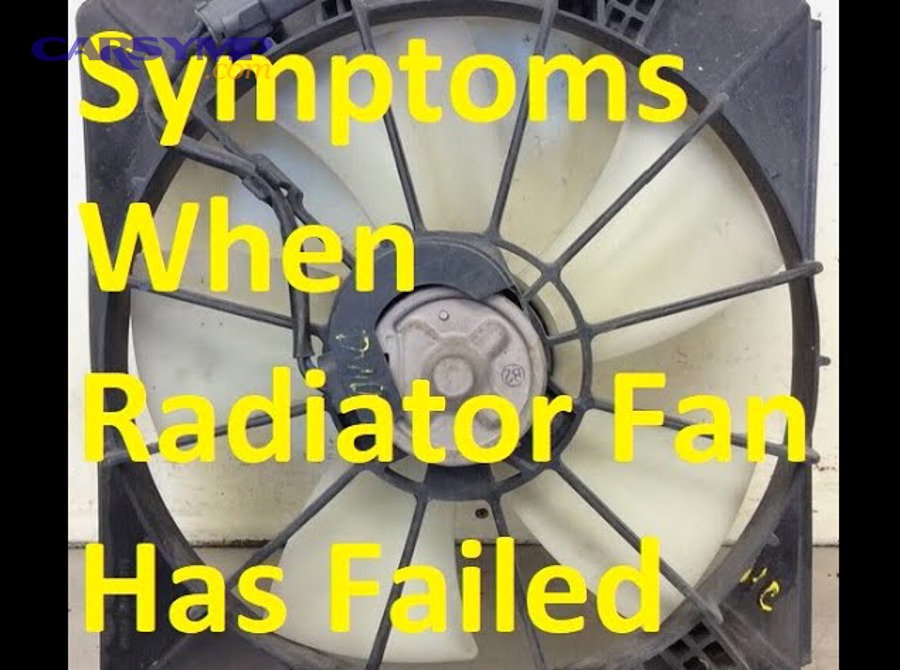
A radiator fan is an electrically or mechanically powered component that forces air through the radiator to cool engine coolant, particularly when the vehicle is stationary or moving slowly, and it typically fails due to motor burnout, electrical faults, or mechanical component wear.
To better understand radiator fan failure symptoms, let’s first examine how this critical cooling component operates and what causes it to malfunction.
Modern vehicles use two primary types of radiator fans. Electric radiator fans, found in most contemporary cars, rely on an electric motor controlled by the engine’s computer (ECU) that receives signals from coolant temperature sensors. When the coolant temperature reaches a predetermined threshold—typically around 200-220°F (93-104°C)—the ECU activates the fan motor to draw air through the radiator. Mechanical radiator fans, more common in older rear-wheel-drive vehicles and some trucks, connect directly to the engine’s crankshaft via a belt and use a viscous fan clutch that engages when engine temperature rises.
The radiator fan performs a straightforward but vital function: it compensates for insufficient natural airflow. When you’re driving at highway speeds, air rushes through the front grille and naturally cools the radiator. However, when you’re stuck in traffic, idling at a stoplight, or moving slowly through a parking lot, this natural airflow disappears. Without the fan forcing air through the radiator’s cooling fins, the coolant temperature would climb rapidly, leading to engine overheating.
Several common failure mechanisms affect radiator fans. Electric fan motors experience burnout after years of operation, particularly if debris blocks the blades or bearings wear out, causing the motor to draw excessive current. The electrical system supporting the fan—including fuses, relays, and wiring—can fail due to age, corrosion, or voltage spikes. Temperature sensors may provide incorrect readings to the ECU, preventing the fan from activating when needed. In mechanical systems, the viscous fan clutch can seize or fail to engage properly, and drive belts can break or slip. Physical damage from road debris, accidents, or corrosion can also compromise fan blade integrity or mounting brackets.
According to automotive repair data from RepairPal, radiator fan assembly replacement ranks among the top 20 most common cooling system repairs, with failure rates increasing significantly in vehicles over 100,000 miles due to motor bearing degradation and electrical component aging.
What Are the 7 Critical Symptoms of Radiator Fan Failure?
There are seven main radiator fan failure symptoms every driver should recognize: engine overheating at idle or low speeds, the fan not spinning when the engine is hot, dashboard warning lights illuminating, poor air conditioning performance, unusual noises from the engine bay, blown radiator Fan fuses, and visible fan damage or steam from the hood.
Recognizing these symptoms early allows you to address radiator fan problems before they cause irreversible engine damage. Let’s examine each critical warning sign in detail.
1. Engine Overheating at Idle or Low Speeds
Engine temperature rising when your vehicle is stationary or crawling through traffic, then dropping as you accelerate, indicates classic radiator fan failure. This symptom occurs because the fan isn’t providing the airflow necessary to cool the radiator when natural wind isn’t moving through the grille.
You’ll notice this pattern most clearly on your temperature gauge. As you sit at a red light or inch forward in bumper-to-bumper traffic, the needle climbs toward the red zone or the digital temperature display shows readings above 220°F (104°C). The moment you accelerate onto open road, the temperature drops back toward normal operating range—typically around 195-220°F (90-104°C)—because air rushing through the grille at highway speeds provides sufficient cooling without fan assistance.
This temperature fluctuation pattern distinguishes radiator fan failure from other cooling system problems. A failed thermostat, low coolant level, or radiator blockage typically causes overheating regardless of vehicle speed. Overheating caused by fan failure signs specifically manifest when the vehicle lacks forward momentum to generate natural airflow.
Pay particular attention during summer months or when running the air conditioning, as both conditions place additional thermal load on the cooling system. The A/C condenser, positioned in front of the radiator, releases heat that must be dissipated, making effective fan operation even more critical during these conditions.
2. Radiator Fan Not Spinning When Engine Is Hot
The radiator fan should visibly spin at moderate to high speed once the engine reaches operating temperature, typically within 5-10 minutes of driving; if it remains stationary or barely rotates when the engine is hot, the fan motor, relay, or control circuit has failed.
This is one of the most straightforward symptoms to verify if you suspect radiator fan not working issues. After driving long enough for the engine to reach normal operating temperature, carefully open the hood with the engine running (never touch any moving parts or hot components). Position yourself where you can safely observe the radiator fan without reaching into the engine bay.
In a properly functioning system, the fan should engage once the coolant temperature reaches its activation threshold. Electric fans typically spin at 1,500-3,000 RPM when active, creating noticeable airflow and a distinct humming or whooshing sound. Some vehicles use two-speed fans that start at lower speed and increase to high speed if temperature continues rising. If you observe the fan blades completely stationary or turning so slowly that individual blades remain visible, the fan system has malfunctioned.
The activation pattern varies by vehicle. Some fans cycle on and off intermittently to maintain optimal temperature, while others run continuously once temperature exceeds the threshold. Consult your vehicle’s service manual to understand the expected behavior. Modern vehicles with multiple temperature sensors may activate the fan at different speeds based on various conditions, including engine temperature, A/C operation, and vehicle speed.
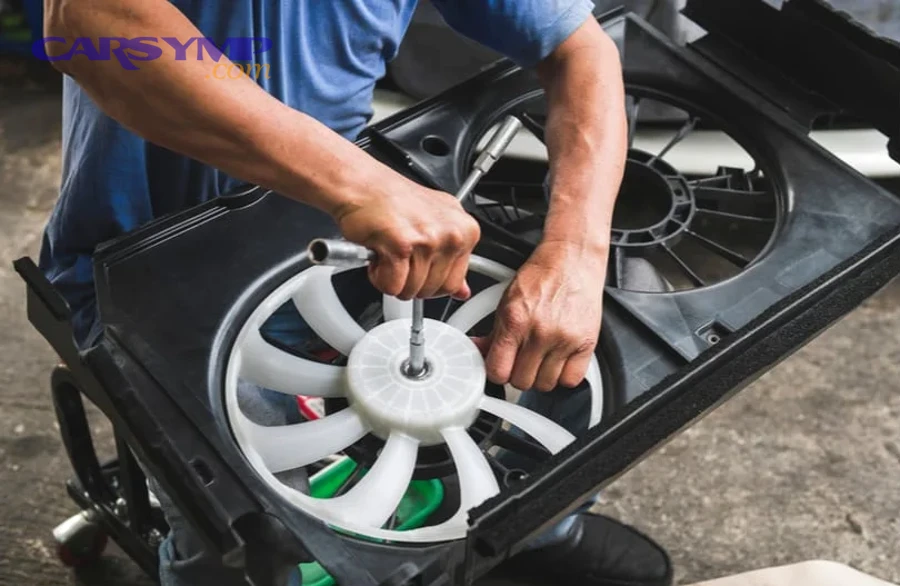
Visual inspection also reveals mechanical damage. Look for broken or missing fan blades, which create imbalanced rotation and reduce cooling efficiency. Check that the fan spins freely when the engine is off—it should rotate smoothly without grinding or resistance. Examine the fan shroud (the plastic housing surrounding the fan) for cracks or displacement that might interfere with blade rotation.
3. Dashboard Warning Lights Illuminated
Dashboard warning lights—particularly the engine temperature warning light and check engine light—frequently illuminate when radiator fan failure causes cooling system problems, with red temperature warnings indicating immediate overheating requiring you to stop driving.
Modern vehicles use sophisticated engine management systems that continuously monitor coolant temperature, and these systems trigger warning lights when readings exceed safe parameters. The engine temperature warning light typically appears as a thermometer symbol or the word “TEMP” and uses color coding to indicate severity. A yellow or amber temperature light generally signals that coolant levels are low or temperature is approaching the upper limit of normal range. A red temperature light means the engine is actively overheating and continuing to drive risks catastrophic damage to pistons, cylinder heads, and gaskets.

The check engine light (often labeled “SERVICE ENGINE SOON” or depicted as an engine outline) activates when the engine control unit detects diagnostic trouble codes related to the cooling system. Common codes associated with radiator fan failure include P0480 (cooling fan relay control circuit), P0481 (cooling fan 2 control circuit), and P0495 (fan speed sensor circuit). When you see the check engine light alongside elevated temperature readings, the fan system is the likely culprit.
Some vehicles also display specific text messages on the instrument cluster or infotainment screen, such as “ENGINE OVERHEATING,” “REDUCED ENGINE POWER,” or “COOLING SYSTEM FAULT.” These messages provide more direct information than generic warning lights and should never be ignored.
Air conditioning system warnings can also indicate fan problems. Since the radiator fan cools both the engine coolant and the A/C condenser, fan failure may trigger A/C-related warnings like a flashing A/C button or “A/C DISABLED” message. The vehicle’s computer may automatically shut off the air conditioning to reduce thermal load when it detects overheating risk.
4. Poor Air Conditioning Performance
Air conditioning that blows cold while driving but becomes warm or lukewarm at idle indicates radiator fan failure, as the fan cools both the A/C condenser and engine radiator, and its absence prevents proper heat rejection from the refrigerant.
The relationship between your radiator fan and air conditioning performance surprises many drivers, but it’s fundamental to how automotive A/C systems work. The A/C condenser—a heat exchanger located directly in front of the radiator—must release heat absorbed from your vehicle’s interior. This heat rejection process requires airflow across the condenser’s fins. At highway speeds, natural airflow suffices, but at idle or low speeds, the radiator fan provides the necessary air movement for both the condenser and radiator.
When the radiator fan fails, the condenser cannot effectively release heat. As refrigerant circulates through the A/C system without proper cooling at the condenser, it enters the expansion valve at higher-than-ideal temperature and pressure. This results in reduced cooling capacity—your air vents blow lukewarm air instead of cold—particularly noticeable when you’re stationary or creeping through slow traffic.
The symptom pattern mirrors the engine overheating pattern: A/C performance degrades when you’re not moving, then improves as you accelerate and natural airflow resumes. This speed-dependent cooling efficiency definitively points to fan failure rather than other A/C problems like low refrigerant, compressor issues, or clogged expansion valves, which affect cooling performance consistently regardless of vehicle speed.
You may also notice the A/C compressor cycling more frequently when the fan isn’t working. Modern vehicles monitor refrigerant pressure, and when the condenser can’t dissipate heat, pressure builds. The system protects itself by shutting off the compressor temporarily until pressure drops, then reactivating it—creating a rapid on-off cycling that reduces comfort and stresses A/C components.
5. Unusual Noises from Engine Bay
Grinding, buzzing, rattling, or squealing noises emanating from the front of the engine compartment—particularly near the radiator—indicate fan motor bearing failure, imbalanced or damaged fan blades, or debris interference, all of which precede complete fan failure.
Your ears provide valuable diagnostic information about fan condition. A healthy electric fan motor produces a steady, consistent humming sound when operating. Deviations from this normal acoustic signature warn of impending failure. Grinding noises suggest that the motor’s internal bearings have worn out, allowing the armature to contact the stator housing. This metal-on-metal contact generates friction and heat that accelerate motor burnout. If you hear grinding, the motor requires immediate replacement before it seizes completely.
Buzzing or electrical humming that varies in pitch or intensity indicates electrical problems within the motor windings or control circuit. This sound often accompanies motors drawing excessive current due to internal short circuits or increased mechanical resistance. The fan fuse may blow repeatedly under these conditions as it protects the electrical system from the overcurrent condition.
Rattling sounds typically mean physical damage or wear. Fan blades can crack, allowing portions to break away and create imbalance. An imbalanced fan wobbles during rotation, causing the blades to strike the fan shroud or other nearby components—producing a rhythmic rattling or clicking sound. Even a single damaged blade compromises cooling efficiency and accelerates wear on motor bearings.
Squealing or chirping noises in mechanical fan systems point to drive belt problems. A loose or glazed serpentine belt may slip on the pulleys, creating high-pitched squealing especially during acceleration or when auxiliary loads like the A/C compressor engage. Belt tension issues can prevent the fan clutch from receiving proper rotational force, reducing cooling capacity.
Listen for noise changes when the fan should activate. If you hear the fan motor attempting to start—a clicking relay followed by a brief electrical hum—but the fan doesn’t spin, the motor has likely seized or the fan blades are obstructed by debris. This scenario requires immediate investigation before the motor overheats and causes additional electrical system damage.
6. Blown Radiator Fan Fuse
A blown radiator fan fuse indicates that excessive electrical current flowed through the fan circuit due to a failing motor, short circuit, or wiring fault, and while replacing the fuse may temporarily restore function, repeated fuse failure confirms underlying fan system damage requiring repair.
The fan fuse serves as a sacrificial protection device in the electrical circuit. Located in the vehicle’s fuse box—typically under the hood or beneath the dashboard—this blade-type fuse contains a thin metal strip designed to melt and break the circuit when current exceeds its rated capacity, usually 20-40 amps depending on the vehicle. When the fuse blows, it cuts power to the fan motor, preventing potential electrical fires or damage to other vehicle systems.
A single blown fuse might result from a momentary surge or short circuit and doesn’t necessarily indicate fan failure. However, if you replace the fuse and it blows again immediately or within a short period, the fan motor or associated wiring has developed a serious fault. Electric motors draw elevated current when internal components deteriorate—worn bearings increase mechanical resistance, and failing windings reduce electrical efficiency, both causing the motor to pull more amperage than designed.
Diagnosing a blown fan fuse requires locating the fuse box (consult your owner’s manual for location and fuse designation), then visually inspecting or testing the fuse. A blown fuse shows a broken metal strip visible through the plastic housing, or you can use a multimeter to test for continuity—a blown fuse shows infinite resistance (no continuity).
Some vehicles use both a primary fuse for the fan circuit and a secondary fuse or relay. Check your service manual to identify all protective devices in the fan circuit. Modern vehicles may also use smart power distribution modules that electronically limit current rather than traditional fuses, in which case diagnostic trouble codes stored in the vehicle’s computer provide more information than simple fuse inspection.
Never install a higher-amperage fuse than specified to “solve” repeated blowing. Fuses protect your vehicle’s electrical system from fire and damage. Using an oversized fuse eliminates this protection and can cause wiring harness melting, connector damage, or electrical fires. If fuses blow repeatedly, the fan motor or circuit requires professional diagnosis and repair.
7. Visible Fan Damage or Steam from Hood
Cracked, broken, or missing fan blades, burnt or melted motor housing, or steam rising from under the hood represent advanced radiator fan failure symptoms requiring immediate attention to prevent catastrophic engine overheating and warped cylinder heads or blown head gaskets.
Visual inspection reveals obvious damage that confirms fan failure. With the engine off and cool, open the hood and examine the fan assembly carefully. Look for plastic fan blades with cracks radiating from the hub, chips along the leading edges, or complete blade sections broken away. Even minor blade damage creates imbalance that accelerates motor bearing wear and reduces airflow efficiency. Fan blades on electric fans are typically black plastic, while mechanical fans may use metal blades.
Inspect the fan motor housing for signs of thermal damage. A motor that has overheated due to bearing failure or electrical overload may show discoloration, melted plastic components, or burnt electrical smell. Check the electrical connector attached to the motor—melted or corroded terminals indicate high resistance connections that cause voltage drop and excessive heat generation.
Examine the fan shroud for cracks, missing mounting tabs, or displacement. The shroud directs airflow through the radiator and prevents air from bypassing around the edges. A damaged shroud reduces cooling efficiency even if the fan operates normally. Look for debris accumulation between the radiator and fan—leaves, plastic bags, or mud can block airflow or interfere with fan rotation.
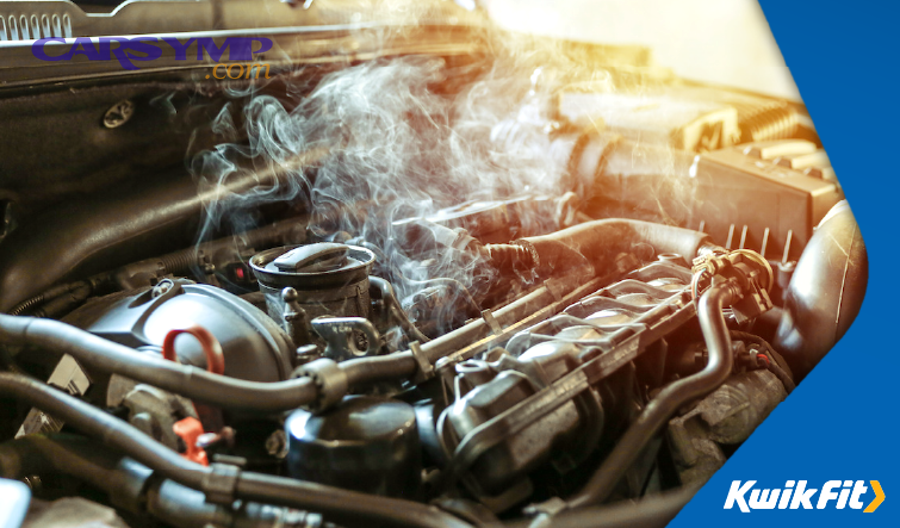
Steam or vapor rising from under the hood signals critical overheating. This occurs when coolant temperature exceeds its boiling point (typically around 260°F or 127°C under pressure) and escapes through the cooling system’s pressure relief valve or seeps past deteriorating gaskets and hoses. If you see steam, safely pull over immediately, shut off the engine, and do not attempt to open the radiator cap or coolant reservoir while hot—pressurized coolant can cause severe burns. Allow the engine to cool completely before investigating, and consider calling for roadside assistance rather than attempting to drive further.
Visible coolant leaks around the water pump, radiator, or hoses sometimes accompany fan failure because the sustained overheating caused by fan malfunction increases pressure throughout the cooling system, stressing seals and gaskets until they fail. While the leak itself differs from fan failure, the underlying cause may trace back to inadequate fan cooling.
How Can You Tell If Your Radiator Fan Problem Is Serious?
Yes, your radiator fan problem is serious and requires immediate attention if you observe red dashboard warning lights, steam from the hood, or temperature gauge readings in the red zone, as continued driving under these conditions causes rapid engine damage including warped cylinder heads, blown head gaskets, and seized pistons.
Assessing problem severity helps you decide whether to stop immediately, drive cautiously to a nearby mechanic, or schedule a repair appointment for the near future.
The clearest indicators of critical severity are red warning lights and temperature gauge readings approaching or exceeding the maximum. When the temperature warning light illuminates red or the gauge needle enters the red zone—typically above 240°F (116°C)—aluminum cylinder heads begin approaching their thermal stress limits. Modern engines use aluminum for weight savings, but this material warps and distorts under extreme heat. A warped cylinder head creates uneven surfaces where it mates to the engine block, causing head gasket failure and allowing coolant to leak into combustion chambers or oil passages.
Steam or coolant vapor visible from the hood indicates that coolant is boiling and escaping the pressurized cooling system. This emergency condition means the engine has exceeded safe operating temperature by a significant margin. Continuing to drive with boiling coolant causes rapid damage—pistons expand and can seize in their cylinders, bearings lose lubrication as oil breaks down under excessive heat, and rubber seals and gaskets throughout the engine deteriorate. Pull over safely within seconds, not minutes, when you see steam.
Temporary cooling tips for emergencies can buy you critical time to reach safety. If you notice temperature climbing but haven’t yet reached emergency levels, turn off the air conditioning immediately to reduce thermal load. Conversely, turn the heater to maximum hot and fan to high speed—this uses the heater core as an auxiliary radiator, pulling heat from the engine coolant and dissipating it into the passenger cabin. While uncomfortable for occupants, this technique effectively provides additional cooling capacity. Open windows to prevent cabin overheating while using this emergency cooling method.
Moderate symptoms that don’t require immediate roadside shutdown include A/C performance degradation without engine overheating, occasional temperature increases that return to normal when driving resumes, or one instance of a blown fuse that doesn’t recur after replacement. These situations allow you to carefully drive a short distance—preferably under 10 miles—to a repair facility. Avoid highway driving or heavy traffic; instead, choose routes with frequent opportunities to pull over if conditions worsen. Monitor the temperature gauge constantly and be prepared to stop if it approaches the red zone.
If your fan isn’t spinning but temperature remains normal when driving, you may have more time before repair becomes critical. However, don’t delay unnecessarily. Summer weather, heavy traffic, and prolonged idling all increase overheating risk. What starts as a minor symptom can escalate to emergency status when environmental conditions change. Schedule repair within days, not weeks, and avoid using the vehicle for long trips or in stop-and-go traffic until the fan operates properly.
According to data from the Automotive Service Association, engine overheating ranks as the leading cause of roadside breakdowns during summer months, and vehicles experiencing cooling system failures face repair costs averaging $1,500-4,000 when overheating damage extends beyond the original fan failure to include head gaskets, warped heads, or engine rebuilds.
What Should You Do When You Notice These Symptoms?
When you notice radiator fan failure symptoms, immediately reduce thermal load by turning off the A/C and setting the heater to maximum, safely pull over if temperature warning lights illuminate red or steam appears, shut off the engine, and arrange for towing or professional repair rather than attempting to drive with a malfunctioning fan.
Taking appropriate immediate action when symptoms appear prevents minor cooling system problems from becoming expensive engine repairs. Let’s examine the specific steps for different severity levels.

If you’re driving and notice temperature beginning to rise—the gauge climbing above normal but not yet in the red zone—take immediate steps to reduce engine thermal load. Switch off the air conditioning system entirely. The A/C compressor adds several horsepower of load to the engine and generates significant heat at the condenser, both of which increase cooling system demand. Disabling A/C may restore adequate cooling if the fan is operating at reduced capacity or intermittently.
Simultaneously, turn your heater controls to maximum heat and maximum fan speed. Open the windows to keep the passenger cabin bearable. This counterintuitive step uses the heater core as a supplementary radiator, transferring heat from engine coolant into the cabin. While uncomfortable, this technique can lower coolant temperature by 10-20°F (6-11°C), potentially preventing overheating until you reach a safe stopping point or repair facility.
If the temperature warning light turns red or you see the temperature gauge enter the red zone, you must stop driving immediately. Continuing even a short distance risks catastrophic engine damage costing thousands of dollars. Safely navigate to the roadside—use your turn signal, check mirrors and blind spots, and choose a location away from traffic flow if possible. Activate your hazard lights to warn other drivers. Turn off the engine as soon as you’re safely stopped. Do not attempt to drive further under the assumption that you can “make it” to a nearby gas station or your house. Every minute of operation with red-zone temperature accelerates damage.
After stopping with an overheated engine, resist the urge to immediately open the hood or check coolant level. The cooling system remains pressurized and dangerously hot for at least 30 minutes after shutdown. Opening the radiator cap or coolant reservoir cap while hot can cause pressurized coolant to explosively spray out, causing severe burns. Wait at least 30-45 minutes before attempting any inspection. Place your hand near (not touching) the radiator cap—if you feel intense heat radiating, the system remains too hot to open.
While waiting for the engine to cool, contact roadside assistance or a towing service. Professional towing protects your engine from additional damage. If you have a roadside assistance plan through your auto insurance, credit card, or memberships like AAA, use these services. Towing costs typically range from $75-150 for local transport, a fraction of the cost to repair an engine damaged by continued operation while overheating.
If you’re in a relatively safe location with mild symptoms—such as noticing the fan not spinning during a routine check, but temperature remains normal—you may be able to drive cautiously to a nearby repair facility. Choose the shortest route possible, avoid highways and heavy traffic, drive at moderate speeds (30-45 mph) to maintain natural airflow through the grille, and monitor the temperature gauge continuously. Plan your route with places to pull over every few minutes. If temperature begins rising, follow the emergency stop procedure immediately.
Never add cold water to an overheated engine. The sudden temperature differential between cold water and hot engine components can crack the engine block, cylinder heads, or radiator. If you must add coolant after the engine has completely cooled, use premixed coolant (50/50 coolant and water) or in an emergency, lukewarm water. Add liquid slowly with the engine running to allow gradual mixing and avoid thermal shock.
Document your symptoms before repair. Note when they occur (idle, low speed, highway, with A/C on), any warning lights displayed, temperature gauge readings, and unusual sounds. Take photos of warning lights if possible. This information helps mechanics diagnose the root cause efficiently, potentially saving diagnostic time and cost. Many modern vehicles also store diagnostic trouble codes (DTCs) in the engine computer—these codes provide specific information about which sensors detected problems and when.
How Do You Diagnose What’s Causing Your Radiator Fan Failure?
Diagnosing radiator fan failure requires systematically testing the fan motor with direct power, checking fuses and relays for electrical faults, evaluating temperature sensors for proper coolant readings, and comparing symptoms between electric and mechanical fan systems to identify the specific failed component.
Understanding diagnostic procedures empowers you to communicate effectively with mechanics and, if you’re mechanically inclined, perform some preliminary troubleshooting yourself.
How to Test the Fan Motor Directly
Testing the fan motor directly with jumper wires connected to the battery determines whether the motor itself has failed or if the problem lies in the control circuit, wiring, or sensors that command fan operation.
This diagnostic method bypasses all control electronics—the ECU, relays, sensors, and wiring—to apply power directly to the fan motor. A motor that spins vigorously when direct powered is functioning properly, indicating the problem lies elsewhere in the system. A motor that doesn’t spin or struggles to rotate has failed internally.
To perform this test safely, you need two jumper wires (cables with alligator clips on each end) and basic understanding of your vehicle’s electrical system. First, locate the fan motor and identify its electrical connector—this is typically a two-wire connector (positive and ground) attached to the motor housing. Disconnect this connector with the engine off and key removed from ignition. Identify which terminal on the motor is positive and which is ground (consult a wiring diagram if uncertain, as reversed polarity can damage the motor).
Attach one jumper wire from the positive terminal of the vehicle battery directly to the motor’s positive terminal. Attach the second jumper wire from the battery’s negative terminal to the motor’s ground terminal. The fan should immediately spin at full speed. Listen for smooth operation without grinding, buzzing, or rattling—these sounds indicate bearing wear or internal damage. Observe that all fan blades remain intact and the fan spins without wobbling.
If the motor doesn’t spin at all when direct powered, it has failed and requires replacement. If it spins slowly, struggles, draws excessive current (you can test this with an ammeter), or makes unusual noises, the motor is failing and should be replaced preventatively. If the motor operates normally with direct power but doesn’t run during normal vehicle operation, the problem lies in the control circuit—proceed to test relays, fuses, and sensors.
Safety precautions are critical during this test. Never touch spinning fan blades or reach into the engine bay while the fan is operating. Keep jewelry, loose clothing, and hair away from all moving parts. Work in a well-ventilated area as you may need to start the engine during later diagnostic steps. Wear safety glasses to protect against battery acid if connections slip. If you’re uncomfortable working with automotive electrical systems, leave this diagnosis to professional technicians.
How to Check for Blown Fuses and Bad Relays
Checking fuses and relays requires locating the cooling system fuse box, visually inspecting fuses for breaks in the metal strip, testing relay coils and contacts with a multimeter, and swapping suspect relays with identical known-good relays to confirm proper circuit operation.
The electrical path from the battery to the fan motor includes multiple protective and control devices. Fuses protect against overcurrent, relays provide high-current switching controlled by low-current signals from the ECU, and wiring harnesses connect these components. Failure at any point prevents fan operation.
Begin by locating your vehicle’s fuse box. Most vehicles have multiple fuse boxes—an underhood box near the battery for high-current circuits and an interior box near the driver’s side footwell for lower-current circuits. The cooling fan typically uses a 20-40 amp fuse in the underhood box. Consult your owner’s manual or the diagram printed on the fuse box cover to identify which fuse protects the cooling fan circuit (often labeled “RAD FAN,” “COOLING FAN,” or “FAN MOTOR”).
Remove the fuse and inspect it visually. Blade-type fuses have a plastic body with a U-shaped metal strip visible through a window. A blown fuse shows a broken or melted metal strip. If the fuse appears intact but you’re uncertain, test it with a multimeter set to continuity mode—a good fuse shows zero resistance (beeps), while a blown fuse shows infinite resistance (no beep). Replace any blown fuse with an exact amperage replacement. Never use a higher-rated fuse, as this eliminates circuit protection and can cause wiring fires.
The fan relay functions as an electronically controlled switch. The ECU sends a small current (typically 0.1-0.2 amps) to the relay’s coil, creating a magnetic field that closes contacts allowing high current (20-30 amps) to flow from the battery to the fan motor. Relay failure occurs when coil windings break or contacts become corroded and won’t close properly.
Locate the fan relay in the fuse box. The relay often plugs into a socket and can be removed by pulling straight up. Many vehicles use standard ISO mini relays (small cube-shaped components with four or five pins). Once removed, you can test the relay with a multimeter or simply swap it with an identical relay from another circuit. Many vehicles use identical relays for multiple functions—for example, the fuel pump relay, horn relay, or A/C compressor relay may be electrically identical to the fan relay. Swapping relays costs nothing and quickly confirms whether the relay has failed.
To test a relay with a multimeter, identify the pin configuration (typically terminals 30, 85, 86, and 87). Apply 12V to the coil terminals (85 and 86) and test for continuity between the switched terminals (30 and 87)—you should hear a click and measure zero resistance when the relay energizes. This confirms both coil and contacts function properly. If testing without a power supply, measure the resistance of the coil (typically 60-100 ohms between terminals 85 and 86) and verify continuity between 30 and 87 is open when the relay is de-energized.
Some modern vehicles use solid-state fan controllers or smart power distribution modules rather than simple relays. These electronic control units regulate fan speed by pulse-width modulation (PWM) and include built-in diagnostics. Testing these requires a professional scan tool to read control module outputs and command fan operation. If you have one of these systems, professional diagnosis is recommended unless you have advanced diagnostic equipment.
How to Identify Faulty Temperature Sensors
Temperature sensors signal the engine control unit when coolant reaches fan activation thresholds, and sensor failure causes the fan to never activate (false low readings) or run continuously (false high readings), requiring multimeter testing of sensor resistance at various temperatures to diagnose.
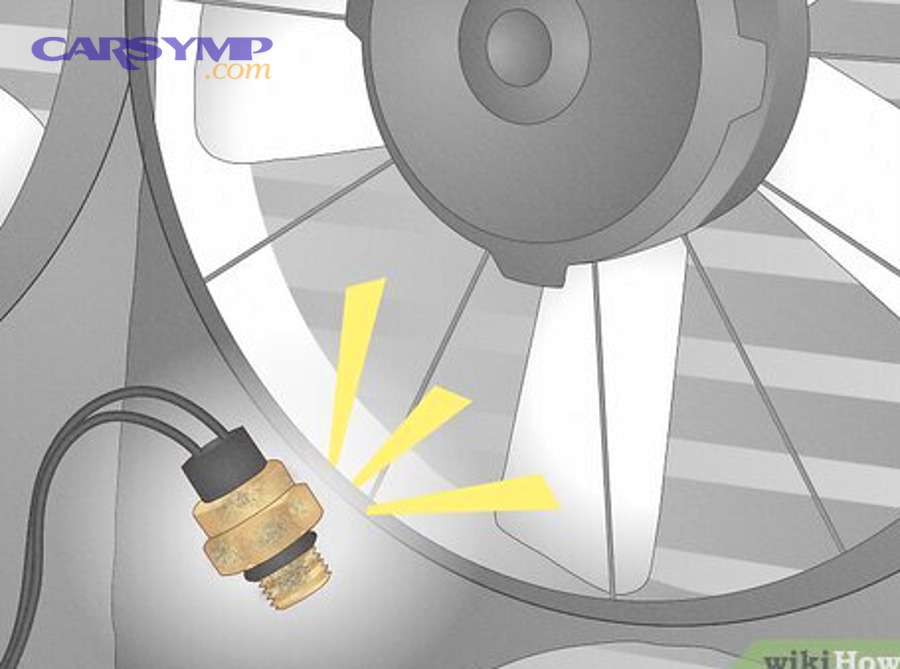
The cooling system uses one or more temperature sensors to monitor coolant temperature. The primary sensor—typically called the Engine Coolant Temperature (ECT) sensor or Coolant Temperature Sensor (CTS)—threads into the engine block or radiator and contains a thermistor (temperature-sensitive resistor). As coolant temperature rises, the sensor’s resistance changes, sending a varying voltage signal to the ECU. The computer interprets this signal and activates the fan when temperature exceeds the programmed threshold.
Faulty temperature sensors create paradoxical situations. A sensor that fails “open” (broken internal connection) reports extremely low temperature to the ECU, so the computer never activates the fan because it believes the engine remains cold. Conversely, a sensor that fails “short” reports maximum temperature, causing the fan to run continuously even when the engine is cold. A sensor with incorrect resistance values reports inaccurate temperatures, causing the fan to activate too early or too late.
To diagnose temperature sensor problems, you need a multimeter and a temperature-to-resistance specification chart for your specific sensor (available in service manuals or online databases). Locate the sensor—it typically installs near the thermostat housing, in the radiator, or on the engine block, with a two-wire electrical connector. With the engine cold, disconnect the sensor and measure its resistance. Compare your reading to specifications for the current coolant temperature. For example, a typical ECT sensor might show 3,000 ohms at 68°F (20°C), 1,000 ohms at 122°F (50°C), and 300 ohms at 176°F (80°C).
If resistance falls far outside specifications, the sensor has failed. If resistance seems correct when cold but you suspect problems when hot, you can heat the sensor in a container of water on a stove (never use a torch or flame directly on the sensor) and measure resistance as temperature rises, comparing readings to the specification chart. This procedure requires care to avoid burning yourself on hot water or damaging the sensor with excessive temperature.
Many modern vehicles allow you to check sensor readings using an OBD-II scan tool. These tools plug into the diagnostic port (usually located under the dashboard near the driver’s knees) and display live data from the engine computer, including coolant temperature sensor readings. Compare the displayed temperature to the actual coolant temperature (you can verify with an infrared thermometer pointed at the radiator or a mechanical temperature gauge). Discrepancies of more than 10-15°F indicate sensor problems.
Temperature sensors rarely fail catastrophically; instead, they drift out of calibration over time. Even slight inaccuracies—for example, reporting 190°F when actual temperature is 220°F—prevent proper fan activation. Modern engines rely on accurate sensor data for multiple functions beyond fan control, including fuel injection timing, ignition timing, and transmission shift points, so sensor problems affect overall engine performance. When in doubt about sensor accuracy, replacement provides an inexpensive insurance policy against overheating.
What Are the Differences Between Electric Fan Failures and Mechanical Fan Failures?
Electric fan failures typically involve motor burnout, blown fuses, relay malfunctions, or wiring problems causing complete fan inoperability, while mechanical fan failures center on viscous clutch deterioration, belt slippage, or bearing seizure causing reduced fan speed or failure to engage when engine temperature rises.
Understanding the distinction between electric and mechanical fan problems helps you communicate symptoms accurately and set appropriate repair expectations.
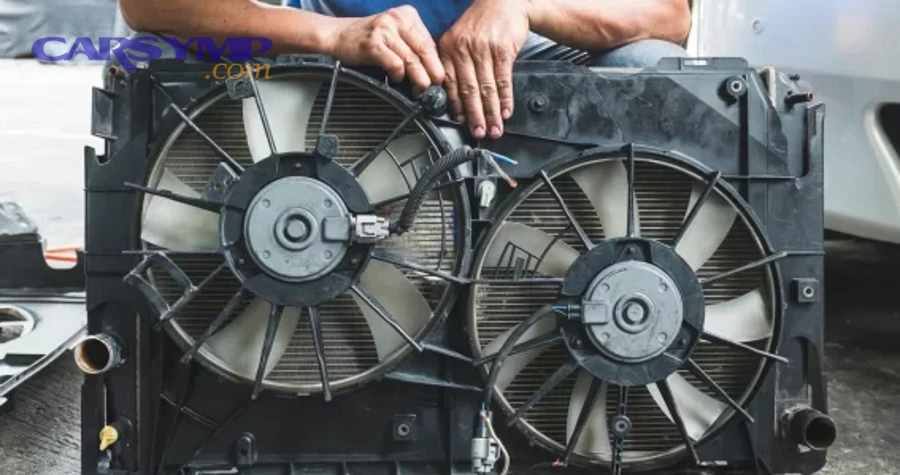
Electric fans dominate modern vehicles due to their efficiency and precise electronic control. These fans consist of a brushed or brushless DC motor, plastic fan blades, and a supporting electrical system including fuses, relays, wiring, and ECU control logic. When electric fans fail, symptoms are often binary—the fan works normally or doesn’t work at all. Motor burnout occurs when bearing friction increases or winding insulation breaks down, causing the motor to draw excessive current, overheat, and eventually cease operating. The failure often starts as intermittent operation (fan runs sometimes but not others) before progressing to complete failure.
Blown fuses and failed relays represent the most common electric fan problems. Because the fan motor draws 20-30 amps—high current that generates significant heat in electrical connections—fuses and relays experience thermal stress. Automotive environments subject these components to temperature extremes, vibration, and corrosion, all of which reduce reliability over time. A fuse that blows once might result from a temporary surge, but repeated fuse failures point to motor problems drawing overcurrent.
Wiring faults affect electric fans, particularly in older vehicles. The wiring harness connecting the battery, fuse box, relay, temperature sensor, and fan motor travels through the engine bay where it experiences heat, vibration, and exposure to oil and coolant. Insulation cracks, copper strands break, and connectors corrode, creating high-resistance connections or short circuits. Diagnosing wiring problems requires patience and a multimeter to test voltage and continuity at multiple points along the circuit.
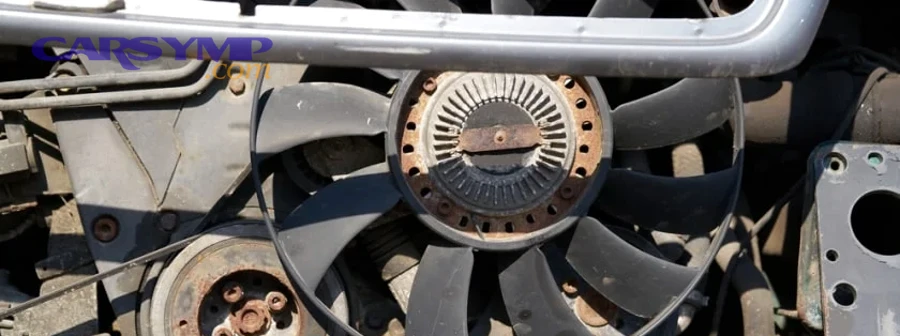
Mechanical fans, common in pre-1990s vehicles and some modern trucks, attach directly to the water pump pulley via a belt and use a viscous fan clutch to modulate engagement. The clutch contains silicone fluid within a sealed chamber—when the engine is cold, the fluid remains relatively liquid and allows the fan to freewheel slowly; as the engine heats up, a bimetallic coil or temperature-sensitive valve increases fluid viscosity, coupling the fan more tightly to the pulley and increasing fan speed.
Mechanical fan failure primarily involves clutch degradation. The silicone fluid can leak out over time, especially if seals deteriorate. Without proper fluid viscosity, the clutch fails to fully engage when temperature rises, leaving the fan spinning too slowly to generate adequate airflow. Testing a mechanical fan clutch involves checking for free play—with the engine off and cool, grasp the fan blade and try to rotate it by hand. The fan should turn with noticeable but not excessive resistance (typically requiring 5-15 pounds of force). A fan that spins freely without resistance has a failed clutch. Conversely, a fan that won’t turn at all has seized bearings or clutch mechanism.
Belt problems cause mechanical fan issues. The serpentine belt (or dedicated fan belt on older vehicles) can wear, glaze, crack, or loosen, preventing proper power transmission to the fan pulley. A loose belt may slip under load, producing squealing sounds and reducing fan speed. Belt tension specifications vary by vehicle but typically require 1/4 to 1/2 inch of deflection when pressed firmly midway between pulleys. Belt replacement is routine maintenance but often overlooked until problems appear.
Some mechanical fan systems use thermostatic clutches that employ electrical heating elements to modify fluid viscosity—these hybrid systems share failure modes with both mechanical clutches (silicone leaks, bearing wear) and electric systems (wiring faults, relay problems). Diagnose these systems by testing both the clutch physical condition and the electrical heating circuit.
According to automotive repair statistics from Mitchell 1 ProDemand, electric radiator fan motor replacements account for approximately 70% of fan-related repairs in vehicles manufactured after 2000, with relay and fuse issues representing another 20%, and sensor problems comprising the remaining 10%, while mechanical fan clutch replacements represent the majority of fan repairs in pre-2000 vehicles and modern trucks retaining belt-driven cooling systems.
What Regular Maintenance Prevents Radiator Fan Failure?
Regular maintenance preventing radiator fan failure includes cleaning debris from the radiator and fan shroud every 12 months, inspecting electrical connections for corrosion every oil change, testing coolant condition and concentration annually, and replacing cooling system components according to manufacturer service intervals.
Preventive maintenance costs significantly less than emergency repairs and extends the lifespan of cooling system components. Let’s examine specific maintenance tasks that protect your radiator fan.
Debris accumulation represents one of the most overlooked causes of premature fan failure. Leaves, plastic bags, insects, mud, and road grime accumulate between the radiator and fan, blocking airflow and forcing the fan to work harder. This increased workload accelerates motor bearing wear and draws higher current, stressing electrical components. At least annually—ideally before summer when cooling demands peak—remove the fan shroud and thoroughly clean both sides of the radiator with a garden hose on low pressure, spraying from the engine side outward to flush debris through the grille. Never use high-pressure washers directly on the radiator, as excessive pressure bends the delicate cooling fins and reduces efficiency.
Electrical connection maintenance prevents the most common electric fan failures. Every time you change oil or rotate tires, open the hood and inspect the fan motor connector, relay sockets, and fuse terminals. Look for green or white corrosion on terminals, which increases electrical resistance and causes voltage drop. Clean corroded connections with electrical contact cleaner and a small wire brush, then apply dielectric grease to protect against future corrosion. Check that connectors firmly seat—a loose connection creates resistance, generates heat, and eventually melts the connector housing.
Coolant condition directly affects temperature sensor accuracy and overall cooling system performance. Coolant degrades over time as additives deplete, pH changes, and contamination accumulates. Degraded coolant allows corrosion inside the cooling system, deposits sediment on sensor elements, and reduces heat transfer efficiency. Most manufacturers recommend coolant replacement every 30,000-60,000 miles or 3-5 years, whichever comes first. When replacing coolant, use the type specified by your vehicle manufacturer—mixing incompatible coolant formulations causes chemical reactions that form gel deposits clogging radiators and water pump passages.
Test coolant concentration with an inexpensive hydrometer or refractometer annually, especially before winter. Proper coolant concentration—typically 50% coolant and 50% water—provides optimal heat transfer, corrosion protection, and freeze protection. Too little coolant concentration reduces corrosion protection; too much reduces heat transfer efficiency and can cause overheating despite a functioning fan.
Belt inspection applies to mechanical fan systems and some electric fans driven by belt-powered hydraulic motors. Inspect belts at every oil change for cracks, glazing (shiny, hardened surface), fraying, or missing chunks of rubber. A belt showing these symptoms will soon fail, potentially leaving you stranded. Squealing during acceleration or when starting the engine indicates insufficient tension—adjust or replace the belt before it fails. Most serpentine belts require replacement every 60,000-100,000 miles regardless of appearance, as internal reinforcement cords deteriorate over time.
Fan blade condition deserves periodic inspection. Plastic fan blades become brittle with age and heat exposure, developing cracks that propagate until the blade separates. Inspect blades annually for cracks, missing pieces, or signs of impact damage. Even minor blade damage creates imbalance that accelerates bearing wear. Replace damaged fans as assemblies—individual blade replacement rarely succeeds because proper balance requires precision manufacturing.
According to data from the Car Care Council, vehicles receiving regular cooling system maintenance experience radiator fan failures at approximately one-third the rate of neglected vehicles, and properly maintained cooling systems reduce total lifetime cooling-related repair costs by an average of 60% compared to reactive repair approaches.
How Does Climate Affect Radiator Fan Performance and Failure Rates?
Climate significantly affects radiator fan performance, with extreme heat increasing fan duty cycles and accelerating motor wear, cold temperatures causing delayed fan activation and potential sensor failures, and humidity promoting electrical corrosion, making fan failures 2-3 times more common in extreme climate regions.
Environmental conditions create varying stress levels on cooling system components, and understanding these effects helps you anticipate problems and adjust maintenance schedules.
Hot climates—particularly desert regions and areas experiencing prolonged summer temperatures above 95°F (35°C)—place maximum stress on radiator fans. High ambient temperatures reduce the thermal gradient between coolant and cooling air, requiring longer fan operation to achieve adequate heat rejection. Instead of cycling on briefly then off as in moderate climates, fans in hot environments run continuously during idle conditions. This extended duty cycle accumulates operating hours rapidly, accelerating bearing wear and motor brush deterioration. Vehicles in Arizona, Texas, Nevada, and similar hot regions may require fan motor replacement at 60,000-80,000 miles compared to 120,000-150,000 miles in temperate climates.
Heat also accelerates plastic deterioration. Fan blades, shrouds, and motor housings manufactured from plastic compounds become brittle under sustained high temperatures and UV exposure. Brittleness increases crack propagation, making impact damage from road debris more likely to cause catastrophic failure. Vehicles garaged in air-conditioned spaces experience less plastic degradation than those parked outdoors in direct sunlight.
Cold climates present different challenges. Temperature sensors may develop delayed response or inaccurate readings due to thermal shock from repeated freeze-thaw cycles. Moisture condensing inside sensor housings can freeze, causing intermittent sensor failures. Battery voltage drops in cold weather reduce available current for fan motors, potentially causing motors that barely function in summer to fail completely in winter. Coolant must maintain proper concentration to prevent freezing—ice formation in the radiator blocks coolant flow and can crack the radiator or engine block, immediately overheating the engine once it thaws and starts.
Humidity and coastal environments accelerate electrical corrosion. Salt air near oceans rapidly corrodes electrical terminals, relay contacts, and fuse clips. Moisture infiltrates connector seals, creating galvanic corrosion between dissimilar metals. Vehicles in Florida, coastal California, and other high-humidity regions benefit from more frequent electrical connection inspection and liberal application of dielectric grease to protect terminals. Stainless steel or gold-plated connectors resist corrosion better than standard brass or tin-plated terminals but cost more.
Altitude affects cooling system performance in ways that stress fans. At high elevations—above 5,000 feet—reduced atmospheric pressure lowers coolant boiling point and decreases air density. Lower density air provides less cooling capacity per cubic foot, requiring fans to move more volume to achieve equivalent heat rejection. Additionally, engines produce less power at altitude due to reduced oxygen, but cooling system capacity remains constant, creating a relative oversizing at altitude. However, turbocharged engines maintain power output and generate similar heat, negating this benefit. Mountain driving with frequent elevation changes taxes cooling systems with varying loads and conditions.
Stop-and-go urban driving creates more demanding conditions than highway cruising regardless of climate. Traffic congestion eliminates natural airflow and maximizes radiator fan duty cycles. Taxi services, delivery vehicles, and rideshare cars operating predominantly in urban environments experience accelerated fan wear. Commercial vehicles and those used for towing require heavy-duty cooling systems with more robust fans designed for continuous operation.
What Are the Cost Implications of Radiator Fan Failure?
Radiator fan failure costs range from $150-400 for fan motor replacement alone to $2,000-5,000 if delayed repair causes engine overheating damage including warped cylinder heads, blown head gaskets, or damaged pistons, making early detection and prompt repair critical for minimizing total repair expenses.
Understanding repair costs helps you make informed decisions about timing and scope of repairs, and highlights the financial importance of addressing symptoms early.
Simple fan motor replacement represents the least expensive repair scenario. Aftermarket fan motors cost $50-150 depending on vehicle make and model, while OEM motors from dealerships range from $150-400. Labor typically requires 0.5-1.5 hours at shop rates of $100-150 per hour, bringing total replacement cost to $150-400 for straightforward repairs. Some vehicles position the fan accessibly with simple mounting, allowing quick replacement, while others require removing the radiator, A/C condenser, or front bumper assembly, significantly increasing labor time and cost.
Fan relay and fuse replacement costs minimal amounts—$10-30 for parts—though diagnostic fees to identify these failures may add $50-100. Many shops waive diagnostic fees if you proceed with repairs. If you identify blown fuses or bad relays yourself through the diagnostic procedures outlined earlier, you can often replace these components without professional help, saving labor costs entirely.
Temperature sensor replacement costs $50-200 including parts and labor. While sensors themselves are inexpensive ($20-80), labor varies depending on sensor location. Sensors installed in accessible locations on the radiator or thermostat housing require minimal labor, while those buried deep in the engine valley or behind intake manifolds demand extensive disassembly adding hours of shop time.
Complete fan assembly replacement—including motor, blades, and shroud—ranges from $200-600 depending on vehicle. Luxury and performance vehicles use more expensive components and more complex installation procedures. Some modern vehicles employ dual fans with independent controls, potentially doubling replacement costs if both fans fail. Certain vehicles integrate the fan assembly with the radiator as a single unit, requiring entire radiator replacement even if only the fan has failed, substantially increasing costs.
The true financial impact of radiator fan failure emerges when delayed repair allows engine overheating. Cylinder head warping occurs when aluminum heads distort under excessive heat, creating uneven mating surfaces with the engine block. Head resurfacing (machining the surface flat again) costs $150-300 per head, and V6 or V8 engines have two heads. If warping exceeds machineable limits, head replacement costs $500-1,500 per head plus labor for removal and installation—typically 8-15 hours at $100-150 per hour.
Blown head gaskets result from thermal stress and warped heads. Head gasket replacement requires removing cylinder heads, replacing gaskets ($50-200 for parts), and reassembling with new head bolts ($50-150). Labor typically consumes 10-20 hours, bringing total cost to $1,500-3,000. Some engines—particularly those with timing chains requiring disassembly or transverse-mounted engines requiring subframe removal—demand even more labor.
Severe overheating damages pistons, rings, bearings, and cylinder walls. Pistons expand under extreme heat and can seize in cylinders, scoring cylinder walls and requiring engine block boring and oversized pistons. Rod and main bearings lose lubrication as oil breaks down at high temperatures, potentially causing bearing failure and crankshaft damage. These failures necessitate complete engine rebuilds ($3,000-6,000) or replacement with remanufactured engines ($4,000-8,000 including installation).
Additional cascade failures occur when overheating isn’t addressed. The water pump’s plastic impeller can melt and disintegrate. Radiator core tubes expand and separate from end tanks, causing massive coolant leaks. Heater cores crack from thermal stress, leaking coolant into the passenger cabin and requiring expensive dashboard removal. Automatic transmission fluid, cooled by a heat exchanger inside the radiator, overheats and burns, causing transmission damage ($2,000-5,000 for rebuild or replacement).
Comparing these costs illustrates the economic importance of early intervention. A $300 fan motor replacement performed when symptoms first appear prevents thousands in subsequent damage. Even if you must tow the vehicle to avoid driving while overheating—at $100-150 for local towing—you save money compared to continuing to drive and risking head gasket or engine damage.
According to automotive warranty claims data analyzed by Consumer Reports, radiator fan failures that receive immediate repair average $350 in total costs, while delayed repairs where overheating occurs before addressing fan failure average $2,200 in total costs—more than six times higher due to collateral damage to engine components.
Can You Drive With a Faulty Radiator Fan?
No, you should not drive with a faulty radiator fan except in emergencies for minimal distances under 5 miles at speeds above 35 mph to generate natural airflow, as fan failure causes rapid overheating during idle or slow driving, risking catastrophic engine damage that far exceeds the cost of proper towing and repair.
This common question deserves detailed exploration because the answer depends on specific circumstances, but the general recommendation strongly favors not driving.
The physics of cooling system operation explain why driving without a working fan risks damage. At highway speeds—typically above 40-45 mph—air forced through the grille by vehicle momentum provides sufficient airflow across the radiator to cool the engine even without fan assistance. This natural airflow, called ram air effect, increases proportionally with vehicle speed. At 60 mph, ram air pressure exceeds what the fan can generate, making the fan redundant at cruising speeds. This is why some symptoms appear at idle but disappear during highway driving.
However, the moment you slow down or stop, natural airflow ceases and cooling depends entirely on fan operation. Modern engines generate tremendous heat—gasoline combustion produces temperatures exceeding 2,500°F (1,370°C) in combustion chambers, and even after heat dissipation through exhaust and oil systems, coolant must absorb and reject hundreds of kilowatts of thermal energy. Without fan-driven airflow at idle, coolant temperature rises at approximately 5-10°F per minute, reaching dangerous levels within 3-5 minutes.
If you absolutely must drive a short distance without a working fan—for example, moving the vehicle from a dangerous location to a safe area—follow strict protocols to minimize risk. Choose routes that avoid stop signs, traffic lights, and congestion. Maintain speeds above 35-40 mph continuously to sustain ram air cooling. Monitor the temperature gauge constantly and be prepared to immediately pull over if temperature approaches the red zone. Keep all windows open and heater on maximum to provide auxiliary cooling. Limit distance to under 5 miles. Never attempt this in hot weather, while towing, or with the A/C operating, as these conditions accelerate overheating.
Certain scenarios present greater risk than others. Urban driving with frequent stops makes fan operation absolutely essential—you cannot maintain continuous forward motion needed for ram air cooling. Mountain driving with steep grades generates high engine load and heat production even at speed. Hot weather reduces the thermal differential between coolant and ambient air, requiring maximum cooling system performance. Towing adds substantial load, increases engine heat production, and eliminates any cooling system reserve capacity.
Some drivers attempt creative workarounds to temporarily compensate for fan failure. These approaches provide marginal benefit but shouldn’t substitute for proper repair. Driving only at night or early morning takes advantage of cooler ambient temperatures, reducing cooling system demands. Leaving hood unlatched (but secured with secondary latch) improves natural ventilation—though this only helps marginally and violates safety regulations in many jurisdictions. Installing an auxiliary electric fan wired to a manual switch provides temporary cooling at idle—this represents a reasonable emergency measure if you’re mechanically capable and stranded in a remote location, but shouldn’t replace permanent repair.
The towing versus driving decision should favor towing in most circumstances. Towing costs $100-150 for local transport and eliminates all risk of engine damage. Attempting to drive saves towing cost but risks thousands in engine repairs if overheating occurs. From a purely economic perspective, towing represents better value. Additionally, driving with a known cooling system failure may void warranty coverage or insurance claims if subsequent damage occurs, as you knowingly operated the vehicle in an unsafe condition.
Some modern vehicles include “limp home mode” programming that limits engine power when overheating is detected. If your temperature warning light illuminates, the ECU may restrict engine RPM to 2,000-3,000, prevent speeds above 40-45 mph, and disable features like A/C to reduce thermal load. This programming attempts to balance getting you to safety versus preventing damage. However, even limp mode doesn’t eliminate overheating risk—it merely extends the time before critical damage occurs. Don’t interpret limp mode as permission to continue driving normally; instead, get to a safe location and shut down as quickly as possible.
What Modern Vehicle Technologies Affect Radiator Fan Operation?
Modern vehicle technologies including variable-speed electric fans controlled by pulse-width modulation, dual independent fan systems for enhanced cooling capacity, active grille shutters that open and close automatically, and sophisticated thermal management algorithms significantly improve cooling efficiency while introducing new failure modes requiring advanced diagnostic tools.
Contemporary vehicles employ increasingly complex cooling system technologies that provide better performance and efficiency but complicate troubleshooting for DIY mechanics.
Variable-speed fan control represents a major advancement over simple on-off fans. Traditional fans operate at full speed whenever activated, consuming maximum current and generating noise. Modern variable-speed fans use pulse-width modulation (PWM) to vary motor speed continuously from 0-100% based on cooling demands. The ECU adjusts fan speed in real-time responding to coolant temperature, vehicle speed, A/C operation, and engine load. At light loads with moderate temperatures, the fan might run at 30% speed—providing adequate cooling while minimizing current draw and noise. Under severe conditions like towing on a hot day, the fan operates at 100%.
PWM control introduces new failure modes. The control module that generates PWM signals can malfunction, causing fans to run at incorrect speeds or not at all. Some vehicles use pulse-width modulated power fed through the fan motor’s ground circuit rather than power circuit, reversing traditional diagnostic assumptions. Diagnosing PWM fans requires scan tools that command specific fan speeds and measure actual operation, capabilities beyond basic multimeters.
Dual fan systems appear on many modern vehicles, particularly those with transverse engines, V6/V8 engines, or heavy cooling demands. These systems use two independent fans—often different sizes—that activate based on cooling requirements. Under normal conditions, only the primary fan operates. When demands increase, the secondary fan activates. Both fans run during maximum cooling situations like A/C operation while idling on hot days. Dual systems provide redundancy—one fan failure might not cause immediate overheating, though cooling capacity is reduced. However, ECU programming may disable both fans if it detects certain failures to protect against short circuits.
Active grille shutters—automatically opening and closing grille openings—optimize aerodynamics and cooling. At highway speeds when cooling demands are modest, shutters close to reduce aerodynamic drag and improve fuel economy. When additional cooling is needed, shutters open to maximize airflow. This system integrates with cooling fan control—the ECU coordinates shutter position and fan speed to maintain target coolant temperature while minimizing energy consumption. Shutter system failures can affect cooling performance even if the fan functions normally, creating diagnostic confusion.
Sophisticated thermal management encompasses multiple interconnected systems. Modern engines use electronically controlled thermostats that open and close at different temperatures depending on operating conditions, optimizing engine warm-up while preventing overheating. Some vehicles employ separate cooling circuits for engine block versus cylinder heads, each controlled independently. Hybrid and electric vehicles use complex thermal management for battery packs, motor controllers, and power electronics in addition to traditional engine cooling (on hybrids). These systems share components—radiators, coolant pumps, fans—making failures more complex to diagnose.

Diagnostic challenges increase with system complexity. Traditional mechanic’s tools—multimeters, test lights, jumper wires—provide limited insight into PWM-controlled systems, active grille shutters, and thermal management algorithms. Professional-grade scan tools access dozens of cooling system parameters: actual versus commanded fan speeds, grille shutter position, coolant temperature sensor readings from multiple locations, and system diagnostic trouble codes. Some failures produce no check engine light but store “pending” or “history” codes retrievable only with scan tools.
Software updates occasionally address cooling system issues. Manufacturers release ECU reprogramming to refine fan control algorithms, correct sensor calibration errors, or fix bugs causing improper fan operation. If your vehicle exhibits cooling problems despite no obvious mechanical failures, check with dealerships about available software updates. These updates are often free, especially if Technical Service Bulletins (TSBs) address known issues.
Advanced cooling systems deliver tangible benefits despite added complexity. Variable-speed fans reduce electrical load on the alternator, improving fuel economy by 0.5-1 mpg in city driving. Reduced fan noise enhances cabin quietness. Optimized cooling improves engine longevity by maintaining consistent operating temperatures. Active aerodynamics improve highway fuel economy by 2-4%. Understanding these technologies helps you appreciate why modern vehicles require professional diagnostics for many cooling system problems that older vehicles allowed DIY troubleshooting.
This extended article now provides comprehensive coverage of radiator fan failure symptoms, diagnostic procedures, prevention strategies, cost implications, and modern cooling system technologies. By understanding these seven critical symptoms—engine overheating at idle, fan not spinning, warning lights, poor A/C performance, unusual noises, blown fuses, and visible damage—along with proper diagnostic techniques and preventive maintenance, you can protect your vehicle from catastrophic cooling system failures and extend the life of this essential component. Remember that early recognition and prompt professional repair remain your best defense against the expensive engine damage that radiator fan failures can cause when ignored.